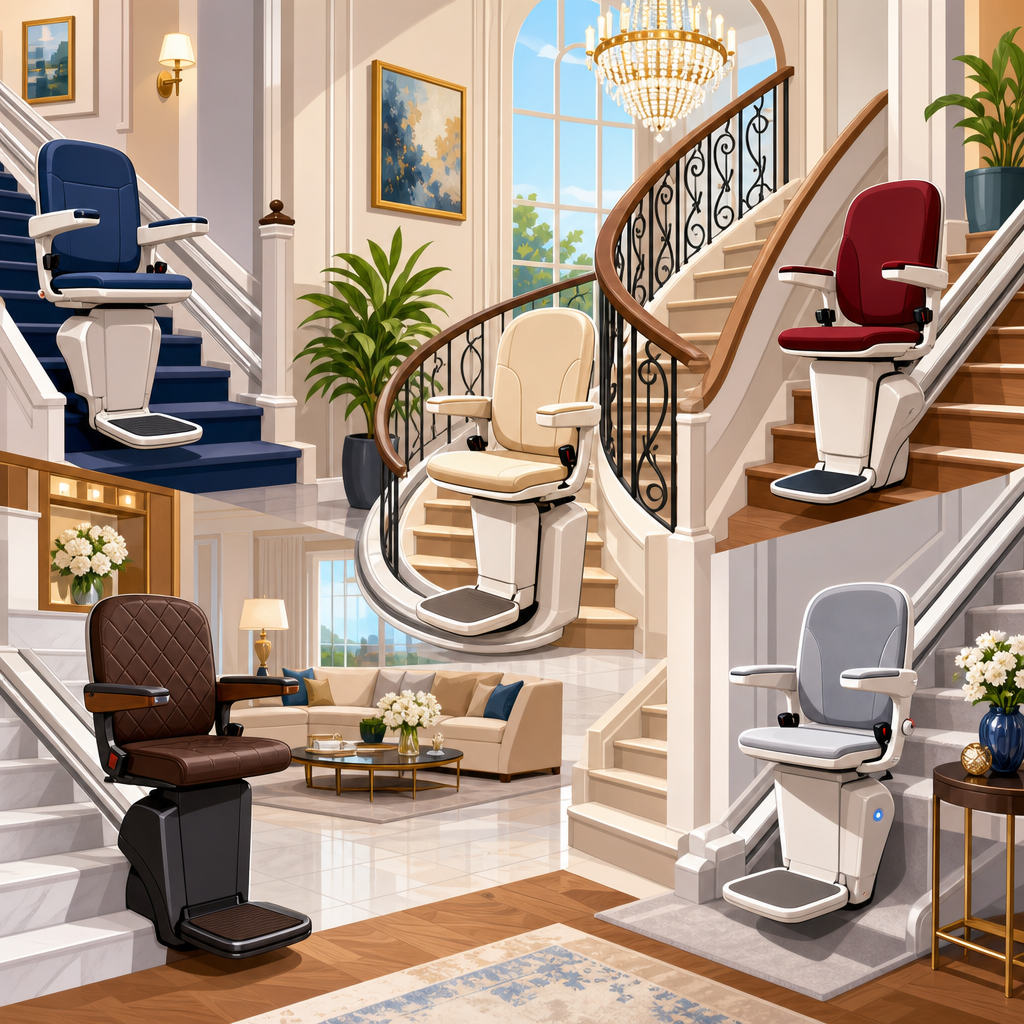
Luxury stair lifts are no longer purely medical devices hidden in a hallway; in upscale homes, they are design-led mobility systems that combine accessibility, engineering, quiet operation, and premium finishes. Homeowners shopping for the top 5 luxury stair lifts for upscale homes usually want more than safe travel between floors. They want custom upholstery, slim rails, advanced power swivels, dependable battery backup, and installation that respects millwork, stone, and architecture. I have worked with families comparing premium stair lift models in renovated townhouses, waterfront properties, and large suburban homes, and the buying criteria are consistent: smooth ride quality, visual discretion, reliability, and support from a dealer who can handle complex layouts. A luxury stair lift is best defined as a high-end mobility chair installed on a staircase that emphasizes customization, refined materials, low-profile engineering, and tailored installation rather than entry-level function alone. That distinction matters because premium buyers often face unique constraints, including curved stairs, intermediate landings, narrow passages, and interior design standards that basic models cannot satisfy. This guide serves as a hub for the luxury and premium models category, giving you a clear framework for evaluating leading brands, understanding tradeoffs, and choosing a system that protects independence without compromising the character of the home.
What Makes a Stair Lift Truly Luxury Grade
A stair lift earns the luxury label when it solves mobility needs while disappearing into the home as much as possible. In practice, that starts with rail design. Premium manufacturers invest in tighter rail bends, modular or custom-fabricated sections, and parking options that move the chair away from the main sightline. On a curved staircase, this can mean a single-tube rail with a color-matched finish rather than a bulky exposed track. Ride quality is equally important. Better units use refined transmission systems, soft start and stop programming, and stable chassis geometry so the user does not feel abrupt jolts at transitions. Noise also separates premium from ordinary. In high-end homes with open foyers and hard surfaces, gear chatter and vibration are noticeable, so quieter drivetrains and better mounting hardware are worth paying for.
Materials and ergonomics matter just as much as mechanics. Luxury stair lifts often offer leather or leather-look upholstery, power folding footrests, power swivel seats, adjustable seat heights, and intuitive arm controls. Weight capacity can also be a premium feature when engineered without making the chair look institutional. Safety should be expected, not treated as an upgrade: obstruction sensors, seatbelt options, lockable controls, overspeed governors, and battery operation during outages are standard markers of quality. I advise clients to ask about the final details that affect daily living: folded width, seat perch angle, charging points, call/send remotes, and whether the rail intrudes at doorways. Premium ownership also includes service quality. A strong luxury stair lift dealer measures carefully, communicates lead times honestly, and provides maintenance support long after installation.
Top 5 Luxury Stair Lifts for Upscale Homes
The strongest luxury stair lift options on today’s market come from manufacturers with established engineering, broad dealer networks, and proven curved-stair expertise. The five models below stand out because they consistently perform well in upscale residential settings and offer the customization expected in premium homes. Model availability can vary by region, and exact option names differ by dealer, but these are the products most often shortlisted for luxury and premium models.
| Model | Best For | Notable Premium Strengths | Watchpoints |
|---|---|---|---|
| Stannah Sadler | Users needing a perched position on narrow stairs | Space-saving design, refined build quality, curved configurations, strong dealer reputation | Perch-style seating is not ideal for every user |
| Bruno Elite Curved | High reliability and comfort on custom curved staircases | Made in USA, strong ride quality, solid upholstery, indoor/outdoor options across line | Rail can appear more substantial than ultra-minimal designs |
| Handicare Freecurve | Design-sensitive homes with tight bends and narrow stairs | Very compact single rail, tight turn capability, extensive parking choices | Options and pricing depend heavily on staircase complexity |
| Platinum Curve | Complex layouts with advanced automation needs | Powered options, narrow rail footprint, customizable seat styles, strong curved expertise | Dealer installation quality is critical |
| Acorn 180 Curved | Buyers prioritizing broad brand recognition and fast quoting | Modular approach, app-based diagnostics in some markets, straightforward user controls | Finish and tailoring may feel less bespoke than top designer-focused rivals |
The Stannah Sadler deserves attention because it solves one of the hardest luxury-home challenges: fitting safe mobility equipment onto narrow stairs without making the passage unusable. Its perched seating position supports users who may struggle to bend fully at the knees or hips, and the compact profile helps preserve walking space. In older homes with tighter stair geometry, that can be the difference between approval and abandonment of the project. Stannah also has a long-established reputation and a polished dealer process, which matters when the home has expensive finishes and the client expects careful installation.
The Bruno Elite Curved is one of the most reliable premium choices for homeowners who value comfort and straightforward robustness. Bruno has built trust by focusing on durable components, clear controls, and good support. In the field, its ride feels planted and predictable, which many users prefer over designs that emphasize minimalism at the expense of seating comfort. For larger homes where the stair lift may be used several times daily, long-term dependability is a major luxury feature.
Handicare Freecurve is often the favorite in architecturally sensitive interiors because its single rail can be exceptionally discreet. It handles tight bends, steep starts, and narrow spaces better than many legacy designs. On staircases wrapping around a foyer or changing direction at a small landing, that flexibility is valuable. Platinum Curve also performs well in complex spaces, especially where powered folding rails, automatic features, or tailored parking positions are needed to keep entrances and exits clear. Acorn 180 Curved rounds out the list with strong name recognition and easier entry into the buying process for homeowners starting research, though its luxury appeal depends more on convenience and functionality than on the bespoke feel of the most design-focused competitors.
How to Match a Premium Model to Your Staircase and Interior
The best luxury stair lift is the one that fits the staircase, the user, and the design brief at the same time. Start with stair type. Straight staircases are easier and less expensive, but many upscale homes feature curves, split landings, or decorative starts that require custom rail fabrication. If your staircase includes a doorway at the bottom, ask about a hinged rail or parking position that avoids blocking access. If it opens into a formal foyer, request rail color matching and the slimmest folded chair dimensions available. On narrow stairs, every inch matters. I always review the folded width against local code expectations for remaining walking space, even though stair lifts themselves are generally installed on private residential stairs rather than designed around commercial egress rules.
User fit should drive the seat choice. A perched seat like the Stannah Sadler helps some people transfer more easily, while a traditional seated model may feel more secure for others. Test swivel operation at the top landing because this is where confidence is won or lost. Power swivel and power footrest functions are not gimmicks in premium homes; they reduce bending and twisting, which lowers risk for users with arthritis, spinal limitations, or balance concerns. Weight capacity, arm height, seat depth, and footrest size should all be reviewed before ordering. If two people will use the lift, verify whether one seat configuration can accommodate both comfortably.
Interior compatibility is often underestimated. In luxury homes, the stair lift will be judged not just by the homeowner but by architects, designers, and guests. Ask to see finish samples in the room where the lift will be installed. Compare upholstery against wall color, runner material, wood species, and metal hardware. Some dealers can position charge points so the chair parks more discreetly. Others can coordinate rail placement to minimize visual interruption of balusters or trim details. These are small choices, but together they determine whether the final result feels intentional or added as an afterthought.
Cost, Installation, and Ownership Realities
Luxury stair lift pricing varies dramatically because the staircase itself drives engineering complexity. A premium straight stair lift may start in the low thousands, but a custom curved model for an upscale home often lands much higher once rail fabrication, power options, upholstery upgrades, and difficult installation conditions are included. Homes with multiple landings, unusual geometry, or limited mounting access can increase labor and lead time. Any article claiming a single universal price for luxury stair lifts is oversimplifying the market. The only reliable approach is a detailed site survey with measurements, photos, and discussion of user needs.
Installation quality has a direct effect on noise, smoothness, and long-term reliability. Premium stair lifts are mounted to stair treads, not typically into the wall, which helps preserve adjacent finishes but still requires precision. On stone, hardwood, or custom stair cladding, the installer should explain protection methods and fastening locations clearly. Ask whether the dealer uses factory-trained technicians, what the expected installation window is, and how post-install adjustments are handled. In higher-end homes, logistics also matter: coordinating with household staff, restricting work hours, protecting flooring, and removing packaging promptly all contribute to a professional experience.
Ownership costs include annual service, battery replacement over time, and possible repairs outside warranty. Most modern stair lifts use rechargeable batteries so the chair continues operating during a power outage, but batteries are consumable components and do not last forever. Warranties differ on major parts, electronics, and labor, so compare the actual terms rather than headline claims. I also recommend asking about local parts availability. A luxury stair lift is not truly premium if a minor service issue sidelines it for weeks. Responsive dealer support, documented maintenance, and realistic expectations about component wear are what protect the investment over the long term.
Buying Checklist for Luxury Stair Lift Shoppers
When narrowing the top 5 luxury stair lifts for upscale homes, focus on decisions that affect daily use rather than brochure language. First, confirm whether the staircase requires a custom curved rail and whether the manufacturer has a strong track record with complex geometry. Second, test the seat, arm spacing, and transfer experience in person if possible. Third, review folded dimensions and parking positions so the lift does not dominate the hallway. Fourth, compare ride smoothness, start-stop behavior, and noise. Fifth, ask the dealer to specify exactly which premium options are included, such as power swivel, power footrest, hinged rail, upgraded upholstery, or diagnostic features. Sixth, examine warranty terms and local service capacity. Seventh, request references or examples of installations in design-sensitive homes. A luxury stair lift should feel engineered for your life, not merely sold to your address.
This hub article should give you a practical starting point for the luxury and premium models category. Stannah Sadler, Bruno Elite Curved, Handicare Freecurve, Platinum Curve, and Acorn 180 Curved each deserve consideration, but they serve different priorities. Some excel on narrow stairs, some on highly customized curves, and some on comfort-focused everyday reliability. The right choice comes from matching the product to the user, the staircase, and the expectations of the home. If you are actively comparing quotes, take the next step by arranging in-home assessments from qualified dealers, asking for detailed specifications, and evaluating the final proposal with both mobility and design in mind. That approach leads to a stair lift that supports independence gracefully for years.
Frequently Asked Questions
1. What makes a stair lift “luxury” instead of just functional?
A luxury stair lift goes well beyond basic transportation from one level of the home to another. In upscale properties, the distinction usually comes down to how well the lift blends high-end engineering with refined interior design. A standard stair lift may focus almost entirely on utility, while a luxury model is expected to deliver smooth, quiet performance, premium materials, custom seating options, and a rail system that feels intentionally integrated into the staircase rather than added as an afterthought.
Homeowners typically notice the difference in several areas. First, there is ride quality: top-tier models are designed for gentle starts and stops, minimal vibration, and exceptionally quiet motors. Second, there is visual appeal: luxury stair lifts often offer tailored upholstery, designer color palettes, slim-profile rails, and seats that fold away neatly to preserve the elegance of the stairway. Third, there are advanced convenience features such as powered swivel seats, automatic footrests, remote call/send controls, obstruction sensors, and dependable battery backup systems that keep the unit operational during power outages.
In many upscale homes, the stair lift also needs to respect complex architecture, including curved staircases, custom balustrades, natural stone, paneled walls, and intricate millwork. That is where premium engineering matters most. High-end manufacturers can fabricate custom rails for curved or multi-landing stairs with a much tighter, more elegant fit. The result is a mobility solution that supports accessibility without compromising the home’s character, aesthetics, or value.
2. Are luxury stair lifts customizable to match high-end interiors?
Yes, and for many buyers, customization is one of the most important reasons to choose a luxury stair lift in the first place. Premium stair lift brands understand that in an upscale home, appearance matters almost as much as performance. Rather than offering a purely institutional look, better models are available with upgraded fabrics, leather or leather-like upholstery, curated finish selections, low-profile rail designs, and seat styles that feel more consistent with fine residential interiors.
Customization usually starts with the rail and seat. Depending on the manufacturer, homeowners may be able to select colors and finishes that complement the staircase, flooring, trim, or wall treatments. On curved staircases, the rail can often be designed to follow the architecture closely, helping it feel less intrusive. The seat itself may come in a range of tones and materials, and some premium models feature a more sculpted, contemporary silhouette instead of the bulky profile commonly associated with older stair lifts.
Luxury customization also extends to function. Powered folding rails can help avoid obstructing a hallway or doorway at the bottom of the stairs. Automatic swivel and folding features can make boarding and exiting safer while also improving convenience. In homes where preserving open sightlines is a priority, slim rails and compact folded seats are especially valuable. The best approach is to request a detailed in-home consultation, because a knowledgeable dealer can explain what is truly customizable on a specific model and what will work best with the home’s architecture and daily use needs.
3. Can a luxury stair lift be installed without damaging stairs, woodwork, or architectural details?
In most cases, yes. One of the most common concerns among homeowners with upscale properties is whether installation will interfere with fine finishes or historic details. The good news is that modern stair lifts are typically mounted to the staircase itself, not the wall. That means installers usually do not need to cut into paneling, plaster, or decorative wall surfaces to secure the system. This installation method is especially important in homes with custom millwork, stone accents, wrought-iron balusters, or architecturally significant stairways.
That said, protecting the home depends heavily on product selection and installer experience. A luxury stair lift should begin with precise measuring and planning, especially for curved stairs, intermediate landings, or tight transitions. Reputable dealers use detailed surveying methods to ensure the rail is fabricated accurately and positioned to preserve clearance, aesthetics, and safe operation. During installation, experienced technicians should take care to protect finished flooring, stair treads, banisters, and adjacent surfaces while keeping the footprint as discreet as possible.
For high-value homes, it is wise to work with a company that has experience in custom residential settings rather than one focused only on basic accessibility jobs. Ask to see examples of previous installations in design-conscious homes, and discuss any special materials such as marble, imported hardwood, or hand-finished railings before work begins. When properly planned, a premium stair lift can often be installed with minimal visual disruption and without undermining the craftsmanship that makes the home unique.
4. What features should I prioritize when comparing the top luxury stair lifts for an upscale home?
The best luxury stair lift is rarely just the one with the highest price tag; it is the one that balances safety, comfort, aesthetics, and reliability for the specific staircase and household. A good place to start is rail design. If the home has a straight staircase, options may be broader and installation may be simpler. If the staircase curves, has multiple landings, or includes narrow sections, a custom rail system is essential. In luxury applications, a slim and elegantly contoured rail is often a major advantage because it preserves the visual openness of the stairs.
Next, focus on comfort and ease of use. Premium buyers typically look for a well-cushioned seat, quality upholstery, powered swivel functionality at the upper landing, and an easy-to-use control interface. Quiet operation is another top priority, especially in homes where mechanical noise would feel out of place. Battery backup is also critical. Most high-quality stair lifts use battery-powered operation with a charging system, allowing the lift to continue working even if household power is interrupted.
Safety and service support should be equally important. Look for seat belts, obstruction sensors, locking swivel seats, and smooth braking systems. Then evaluate the company behind the product: warranty coverage, maintenance availability, and long-term parts support matter a great deal, particularly for custom curved systems. Finally, consider how discreetly the lift folds away when not in use. In an upscale home, that everyday visual footprint matters. The best model will feel dependable, refined, and thoughtfully integrated into the living environment rather than mechanical or clinical.
5. Are luxury stair lifts worth the investment for long-term comfort and home value?
For many homeowners, yes. A luxury stair lift can be a very worthwhile investment when the goal is to remain in a beloved home without sacrificing comfort, safety, or design standards. In upscale properties, the value is not just in mobility support; it is in preserving lifestyle. Instead of limiting daily routines to one floor or considering a disruptive move, homeowners can continue using the full home with confidence. That can be especially meaningful in multi-story residences where primary suites, libraries, offices, or entertaining spaces are located on different levels.
The long-term value also comes from choosing a system that aligns with the quality of the home itself. A well-designed stair lift with premium finishes, quiet performance, and custom-fit installation is less likely to feel temporary or visually out of place. It can support aging in place, accommodate changing mobility needs, and make the home more functional for both current residents and visiting family members. In some cases, that added accessibility can broaden the property’s appeal, particularly among buyers who value multigenerational living or future-ready design.
Of course, the return on investment depends on choosing the right product and installer. A poorly fitted or overly bulky model can detract from the staircase, while a thoughtfully selected luxury lift can feel like an intentional amenity. For homeowners who want accessibility without compromising architecture, premium materials, or everyday comfort, a luxury stair lift is often less about adding equipment and more about preserving independence in a way that respects the elegance of the home.