ADA compliance in 2025 is no longer a narrow checklist for ramps and restroom bars; it is a broad product standard that shapes how people enter buildings, use bathrooms, read signs, open doors, move through public spaces, and interact with digital touchpoints. Under the Americans with Disabilities Act, products used in public accommodations, commercial facilities, transportation settings, workplaces, and multifamily environments often need to support accessible use when installed as part of a compliant design. In practice, that means specifiers, contractors, facility managers, and property owners must evaluate not just whether a product is popular, but whether it aligns with the 2010 ADA Standards for Accessible Design, related ICC A117.1 provisions, and current best practices for usability.
When people search for the top products that are ADA compliant in 2025, they usually want a direct answer: the strongest categories include automatic door operators, lever door hardware, compliant restroom accessories, accessible sinks and faucets, grab bars, tactile and Braille signage, low-force closers, wheelchair lifts where permitted, compliant drinking fountains, and wayfinding systems that support users with mobility, vision, and dexterity limitations. The important nuance is that the ADA rarely certifies a single product in isolation. Most items become compliant through the combination of dimensions, mounting height, operable force, clear floor space, reach range, and installation location. I have seen projects fail inspection because a perfectly good grab bar was mounted an inch too high, or because an accessible sink was paired with insulated covers that still left knee clearance short.
This matters because product selection directly affects legal risk, user safety, and daily independence. A well-specified automatic opener can let someone using a walker enter a clinic without assistance. A poorly placed soap dispenser can make an otherwise renovated restroom unusable. For this hub page under Accessibility & Mobility Solutions, the goal is to identify the product types that consistently support ADA compliance in 2025, explain what makes them compliant, and show where buyers should look deeper before purchasing. The market is crowded with items labeled accessible, ADA friendly, or barrier free. Those phrases are not enough. The products below are the ones I most often recommend evaluating first because they solve the access barriers that appear most frequently in real buildings.
Automatic doors, hardware, and entrance products
Entrance access is often the first compliance gap people notice, and it is one of the clearest places where the right product makes an immediate difference. In 2025, top ADA compliant entrance products include low-energy automatic swing door operators from brands such as Horton Automatics, Stanley Access Technologies, Dormakaba, and ASSA ABLOY; lever-operated locksets and exit devices; low-force door closers; threshold solutions with compliant bevels; and pull hardware with graspable shapes. For a door to support accessible use, buyers need to verify clear opening width, maneuvering clearance, opening force where applicable, hardware operability without tight grasping or twisting, and mounting height for push plates, card readers, and controls.
In healthcare clinics and senior living communities, I routinely see low-energy operators deliver the biggest usability gain per dollar spent. A manual exterior door may technically meet width requirements but still be difficult for a person using a wheelchair or cane because of wind pressure or closer resistance. Adding an operator with properly located actuators changes the experience completely. The product itself is only part of the equation, though. If the actuator is mounted out of reach, or if vestibule spacing is too tight, the system can still frustrate users. Good entrance packages also include visual contrast at glazing, adequate landing space, and thresholds that do not create abrupt vertical changes.
Lever hardware remains one of the simplest compliant upgrades. Round knobs are problematic for users with arthritis, limited dexterity, or temporary injuries. Lever handles from Schlage, Corbin Russwin, Yale, and similar commercial lines allow operation with a closed fist or elbow. On renovation projects, replacing knobs with levers often improves access faster than major construction. The same principle applies to panic hardware with touchpad operation rather than narrow crossbars that require more precise hand control.
Restroom products that most often determine compliance
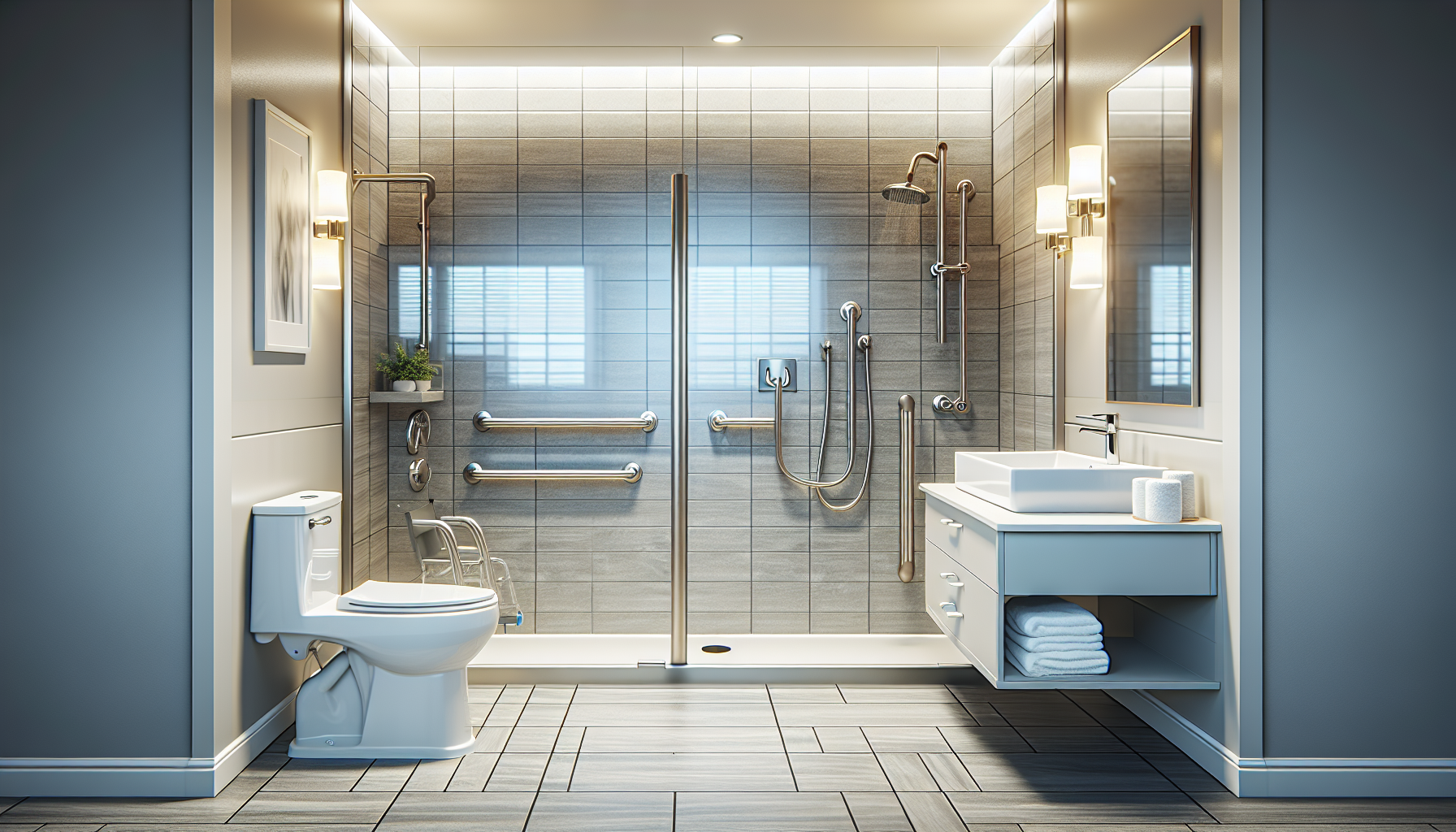
Restrooms are where ADA compliance succeeds or fails most visibly, because so many products must work together in a small footprint. The strongest ADA compliant restroom products in 2025 include wall-mounted grab bars, accessible toilets with compliant seat height, flush controls on the open side, insulated lavatory protection panels, shallow sinks with proper knee and toe clearance, single-lever or sensor faucets, tilted mirrors or correctly mounted standard mirrors, paper towel dispensers and soap dispensers within reach range, and baby changing stations designed for accessible approach. Manufacturers such as Bobrick, Bradley, Sloan, American Standard, Kohler, Zurn, and Elkay dominate many compliant specifications because they publish detailed technical sheets instead of relying on vague marketing claims.
The most reliable buying approach is to read dimensional drawings before ordering. A grab bar may be ADA compliant in diameter and clearance from the wall, yet still fail if its installed length or location does not match the required side-wall or rear-wall layout. Likewise, an accessible toilet is not just any comfort-height model. The centerline from the side wall, seat height, clearance around the fixture, and position of the flush control all matter. I have reviewed many restroom submittals where every product sheet looked correct separately, but the assembled room did not maintain the required clear floor space for wheelchair transfer.
| Product category | What to verify | Common 2025 example | Frequent mistake |
|---|---|---|---|
| Grab bars | Diameter, wall clearance, length, mounting location | Bobrick peened grab bars | Correct bar, wrong height |
| Lavatories | Knee clearance, rim height, insulated piping | Bradley OmniDeck accessible sink | Cabinet blocks knee space |
| Faucets | Operable parts, force, reach, temperature control | Sloan sensor faucet | Sensor range set too short |
| Toilets | Seat height, side transfer clearance, flush side | American Standard commercial ADA bowl | Dispenser intrudes into transfer space |
| Accessories | Mounting height and reach range | Bobrick recessed dispensers | Mounted above usable reach |
Sensor-operated fixtures continue to perform well in 2025, especially in airports, hospitals, and education settings, but they are not automatically superior. A sensor faucet with poor calibration can shut off before a user finishes washing. A hand dryer may create circulation issues if installed in the clear floor area. The best restroom products are the ones that reduce physical effort while preserving dependable operation for people with diverse mobility and sensory needs.
Signage, wayfinding, and communication products
Accessible environments depend on communication as much as physical mobility. Top ADA compliant signage products in 2025 include tactile room identification signs with Grade 2 Braille, high-contrast visual signs, pictograms with proper text fields, directional wayfinding systems, illuminated exit signage integrated with accessible egress planning, and hearing assistance signage for assembly spaces. Brands vary widely, but the most credible manufacturers provide compliance references for character height, stroke width, finish, contrast, mounting height, and tactile requirements. Generic online sign packs often miss the details that inspectors catch immediately, especially Braille translation accuracy and character spacing.
The distinction between permanent room identification signs and directional signs matters. Tactile and Braille requirements typically apply to permanent spaces such as restrooms, exits, stairwells, and room numbers, while overhead directional signs follow visual legibility rules instead. I have corrected projects where contractors ordered tactile signs for every direction marker, which added cost without solving the actual wayfinding problem. Effective systems combine tactile identification at doors with large-format directional signs at decision points, consistent icons, and strong contrast for users with low vision.
Wayfinding has become more sophisticated in 2025 because many facilities now blend physical and digital navigation. Kiosks, mobile maps, and appointment check-in screens need accessible mounting, voice output or screen-reader compatibility, and input methods usable without fine motor precision. In transportation hubs and medical campuses, the best product ecosystems use tactile signage, floor numbering, color zoning, and audible announcements together. No single sign solves confusion. The goal is to create redundant cues so users can navigate with different sensory strengths.
Seating, counters, drinking fountains, and public-use fixtures
Many of the most important ADA compliant products are not specialized medical devices; they are everyday public fixtures selected with the right dimensions and approach clearances. In 2025, that includes accessible service counters, transaction shelves, reception desks with lowered sections, compliant fixed seating locations, companion seating products, dining tables with usable knee clearance, dual-height drinking fountains, bottle fillers placed with proper reach, and self-service kiosks that accommodate seated users. Elkay, Oasis, and Haws continue to lead in drinking fountain specifications because they offer clear data on spout height, front versus side approach, and operable controls.
Reception areas are especially important. A beautiful high counter can still create an access barrier if there is no lowered segment where a wheelchair user can sign forms or speak comfortably with staff. The best counter products are modular systems that let designers integrate a compliant work surface instead of adding an awkward side shelf after the fact. In banks, schools, and municipal buildings, I have seen simple counter retrofits resolve both ADA concerns and customer-service bottlenecks because they help parents with strollers, delivery staff, and older adults as well.
Drinking fountains remain one of the most misapplied product categories. A unit marketed as ADA compliant may satisfy one approach condition but not another, or may require a paired standing-height fountain to serve all users properly. Bottle fillers are useful, but if they project too far into circulation paths or their controls are too high, they create new problems. The strongest installations pair a wheelchair-accessible fountain with a standing-height unit and maintain cane-detectable conditions below protruding edges. That combination serves the broadest audience with the fewest compromises.
Mobility support products for residential, commercial, and transitional spaces
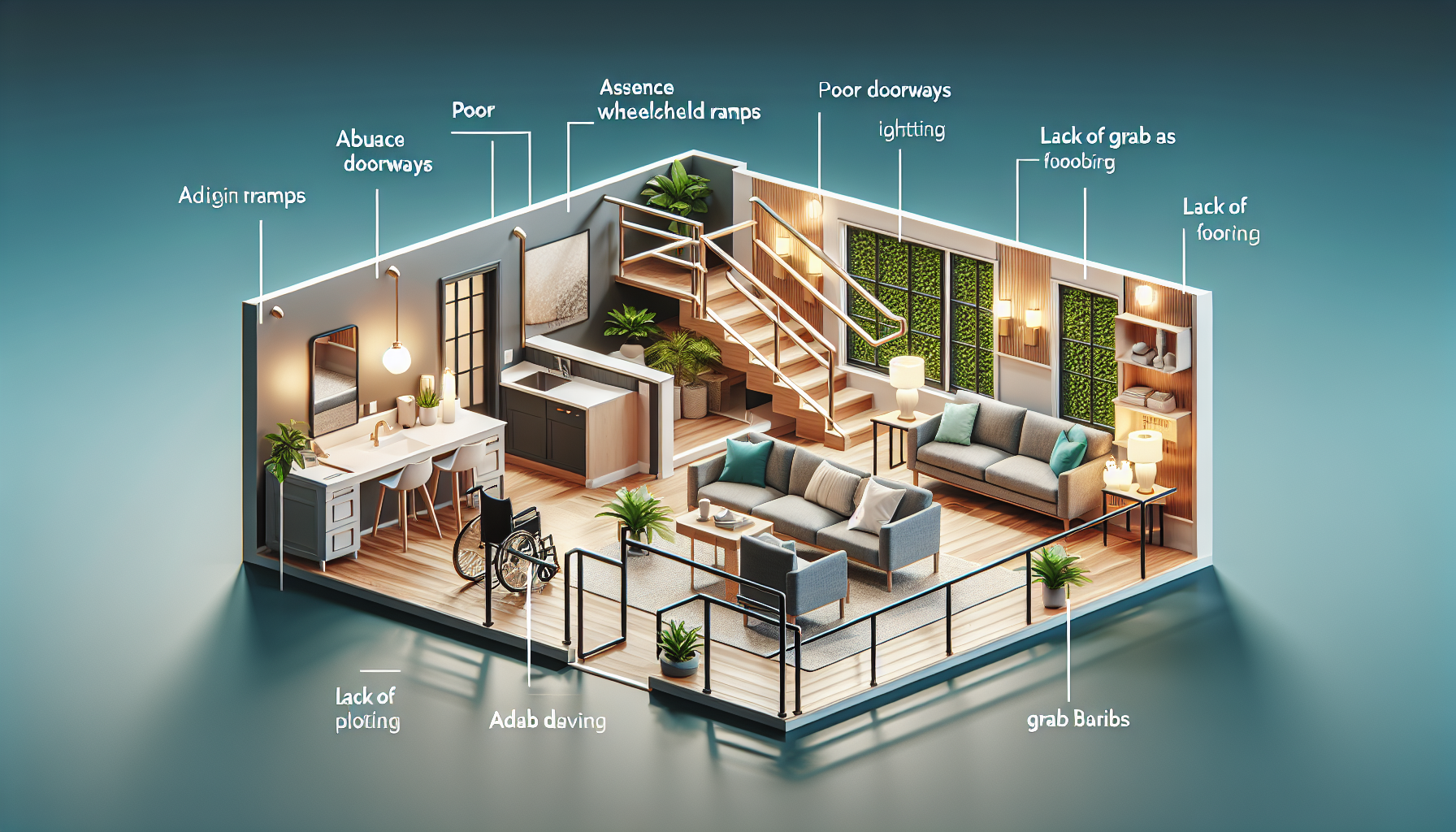
Within Accessibility & Mobility Solutions, mobility support products bridge the gap between minimum code compliance and practical independence. In 2025, top products in this category include modular ramps, platform lifts where code and site conditions permit, stairlifts for private settings not governed the same way as public accessible routes, transfer benches, shower seats, handheld shower systems, anti-slip flooring products, and bed-to-bath support rails used in senior housing and rehabilitation environments. It is critical to say plainly that not every mobility product makes a site ADA compliant. Some are excellent usability tools but do not replace a required accessible route.
Modular aluminum ramp systems from companies such as EZ-ACCESS and National Ramp are widely used because they can be deployed faster than poured concrete and adjusted for site conditions. They work well for churches, temporary offices, schools, and retrofits where grade changes would otherwise block access. The compliance question turns on slope, landing size, handrails, edge protection, cross slope, and connection to an accessible entrance. I have seen facilities install a sturdy ramp that still failed because the bottom landing discharged into loose gravel or because the handrail extensions were omitted.
Platform lifts can be appropriate in limited circumstances, especially for stage access, small elevation changes, or existing buildings where elevators are impractical. Savaria and Bruno remain common names in this area. The tradeoff is maintenance. A lift that is frequently out of service is worse than a permanent route users can rely on. For that reason, buyers should evaluate service support, battery backup, weather protection, and emergency operation just as closely as purchase price. In residential and transitional care spaces, shower seating and handheld sprays dramatically improve usability, but they also need proper reinforcement, mounting height, and transfer clearance to deliver real benefit.
How to choose ADA compliant products in 2025 without costly mistakes
The most effective procurement method is to evaluate products in layers: applicable standard, product specification, installation condition, and user scenario. Start with the governing requirement, usually the 2010 ADA Standards for Accessible Design, then cross-check ICC A117.1 if your jurisdiction references it through the building code. Next, read the manufacturer’s cut sheet for dimensions, reach ranges, and operability. After that, confirm field conditions such as wall depth, door swing, mounting height, clear floor space, and adjacent obstructions. Finally, test the product against real users: someone seated, someone with limited grip strength, someone using a cane, and someone navigating quickly under stress.
Three buying habits prevent most failures. First, demand submittals with dimensioned drawings, not just catalog photos. Second, coordinate across trades so one compliant product does not invalidate another; for example, a waste bin, paper dispenser, or coat hook can intrude into required clearance. Third, document installation heights on site before walls are closed and accessories are mounted. On complex projects, I also recommend mockups. A full-scale restroom or entry mockup exposes conflicts early and usually costs less than change orders after inspection.
The core takeaway is simple: the top ADA compliant products in 2025 are the ones that combine verified specifications with correct installation and real usability. Choose products from manufacturers that publish technical data, train installers on mounting requirements, and review every accessible element as part of a connected path of travel. If you are building or renovating under the Accessibility & Mobility Solutions umbrella, use this hub as your starting point, then audit entrances, restrooms, signage, counters, and mobility supports one category at a time. Better product decisions create safer spaces, reduce compliance risk, and give more people independent access every day.
Frequently Asked Questions
1. What kinds of products are considered ADA compliant in 2025?
In 2025, ADA-compliant products span far more than ramps and grab bars. The term generally refers to products that, when properly selected and installed, help a space meet accessibility requirements under the Americans with Disabilities Act and related design standards. That includes entrance hardware such as automatic door operators, low-force door closers, lever handles, thresholds, and accessible intercom systems; restroom products such as grab bars, compliant toilets, sinks, faucets, mirrors, dispensers, and baby changing stations; signage products such as tactile room signs with Braille, directional signs, and wayfinding systems; and circulation-related products such as handrails, detectable warnings, floor transitions, and compliant seating or service counters.
It also increasingly includes products tied to everyday user interaction, such as touchscreen kiosks, card readers, elevator controls, visual notification devices, hearing assistance systems, and other digital or electronic touchpoints used in public accommodations, commercial buildings, transportation settings, workplaces, and multifamily environments. The key point is that ADA compliance usually depends on both the product itself and how it is installed within the larger environment. A door closer may be marketed as ADA compliant, for example, but if the opening force, maneuvering clearance, mounting height, or hardware placement is wrong, the final installation may still fail accessibility expectations. In practice, the best ADA-focused product choices in 2025 are those designed around reach ranges, operability, visibility, stability, slip resistance, tactile access, and ease of use for people with mobility, visual, hearing, and dexterity-related disabilities.
2. Are there specific product categories property owners and facility managers should prioritize first?
Yes. If a property owner, architect, contractor, or facility manager is trying to improve accessibility efficiently, the smartest place to start is with the products people use most often and the barriers most likely to create access problems. Entrances are usually first on the list. Accessible door hardware, power-assist or automatic operators, compliant thresholds, and properly placed entry controls can dramatically improve access because they affect every visitor before they reach the interior. From there, restrooms are another top priority because they involve multiple product types with clear accessibility implications, including toilets, lavatories, grab bars, mirrors, accessories, turning space, and faucet controls.
Wayfinding and communication products should also rank high. Tactile signage, Braille room identification signs, accessible emergency alarms with both audible and visible signals, and hearing assistance solutions can make a major difference in usability and legal risk reduction. After that, many facilities look at service counters, transaction windows, seating, drinking fountains, and route-related products such as handrails and floor transitions. In 2025, digital access products deserve equal attention. Self-service kiosks, touch panels, visitor management systems, and access control interfaces are increasingly common, and if they are not accessible, they can create the same kind of barrier as a noncompliant doorway. Prioritizing products by frequency of use, life-safety importance, and customer-facing visibility is often the most practical path to meaningful ADA improvements.
3. How do you know whether a product is truly ADA compliant and not just marketed that way?
The most reliable approach is to treat “ADA compliant” as a technical claim that must be verified, not just accepted at face value. In 2025, many manufacturers promote products as ADA friendly, accessible, or code compliant, but those terms are not always used consistently. A credible product should be backed by specifications that align with relevant accessibility criteria such as mounting height, operable force, clear floor space, protrusion limits, contrast, tactile features, reach range, or maneuvering requirements, depending on the product category. Product cut sheets, technical drawings, installation instructions, third-party testing information, and references to applicable standards are all important signs that a manufacturer understands accessibility beyond marketing language.
It is equally important to remember that compliance often depends on context. A sink, dispenser, sign, or door operator can be well designed and still become noncompliant if installed at the wrong height, in the wrong location, or without required clearances. That is why experienced specifiers do not evaluate products in isolation. They review the applicable ADA Standards for Accessible Design, any relevant building code provisions, local amendments, and the specific use case of the building. For high-risk or high-traffic projects, many teams also involve accessibility consultants, code specialists, or qualified architects to confirm product selection and placement. In short, the best way to know a product is truly ADA compliant is to match its technical performance to the exact requirements of the space where it will be used, rather than relying on a label alone.
4. What are some of the top ADA-compliant product trends shaping buildings in 2025?
One of the biggest trends in 2025 is the move toward integrated accessibility, where products are designed to be usable by the widest range of people without looking institutional or added on as an afterthought. That shows up in automatic and low-energy door systems with intuitive activation, sleek lever hardware, better visual contrast in architectural signage, touchless restroom fixtures with accessible operability, and modular handrail or grab bar systems that balance aesthetics with performance. Another major trend is digital accessibility in physical environments. Kiosks, check-in stations, access readers, and smart building controls are increasingly expected to support accessible height placement, readable displays, tactile or nonvisual input options, and clear user feedback for people with sensory or mobility limitations.
There is also growing emphasis on inclusive wayfinding and sensory-friendly design. High-contrast signs, tactile maps, improved lighting coordination, assistive listening systems, and products that reduce confusion in navigation are becoming more common in healthcare, education, hospitality, transportation, and multifamily settings. Facility operators are also paying closer attention to maintenance-friendly accessibility products because compliance is not just about opening day. Door closers drift out of adjustment, signs are replaced incorrectly, dispensers get mounted too high, and floor transitions wear over time. As a result, the top products in 2025 are often the ones that are not only compliant at installation but also durable, easy to maintain, and supported by manufacturers with strong technical documentation. The broader trend is clear: ADA-compliant products are now central to user experience, risk management, and long-term building performance.
5. Why does ADA-compliant product selection matter so much for businesses, multifamily properties, and public-facing facilities?
ADA-compliant product selection matters because accessibility directly affects whether people can enter, navigate, use, and benefit from a space with dignity and independence. For businesses, that means accessible products can influence customer satisfaction, employee usability, brand perception, and exposure to complaints or legal action. For multifamily properties, accessible hardware, bathroom fixtures, route elements, signage, and controls can support residents and visitors with varying needs while also aligning with broader fair housing and usability expectations. In public-facing facilities such as schools, healthcare buildings, municipal properties, retail spaces, hotels, and transportation sites, product choices play a daily role in safety, inclusion, and operational effectiveness.
There is also a practical business case. Products that are easier to operate, easier to read, and easier to reach tend to improve the experience for everyone, including older adults, parents with strollers, people carrying bags, delivery staff, and individuals with temporary injuries. In that sense, ADA-conscious product selection is not only about minimum compliance; it is also about universal usability. In 2025, organizations are increasingly recognizing that accessible product decisions made early in design, renovation, or procurement can reduce retrofits later, streamline inspections, and create spaces that are more welcoming from day one. The strongest strategy is to view ADA-compliant products as part of a larger accessibility system, where entrances, bathrooms, signage, pathways, service points, and digital interfaces work together to remove barriers rather than create them.