
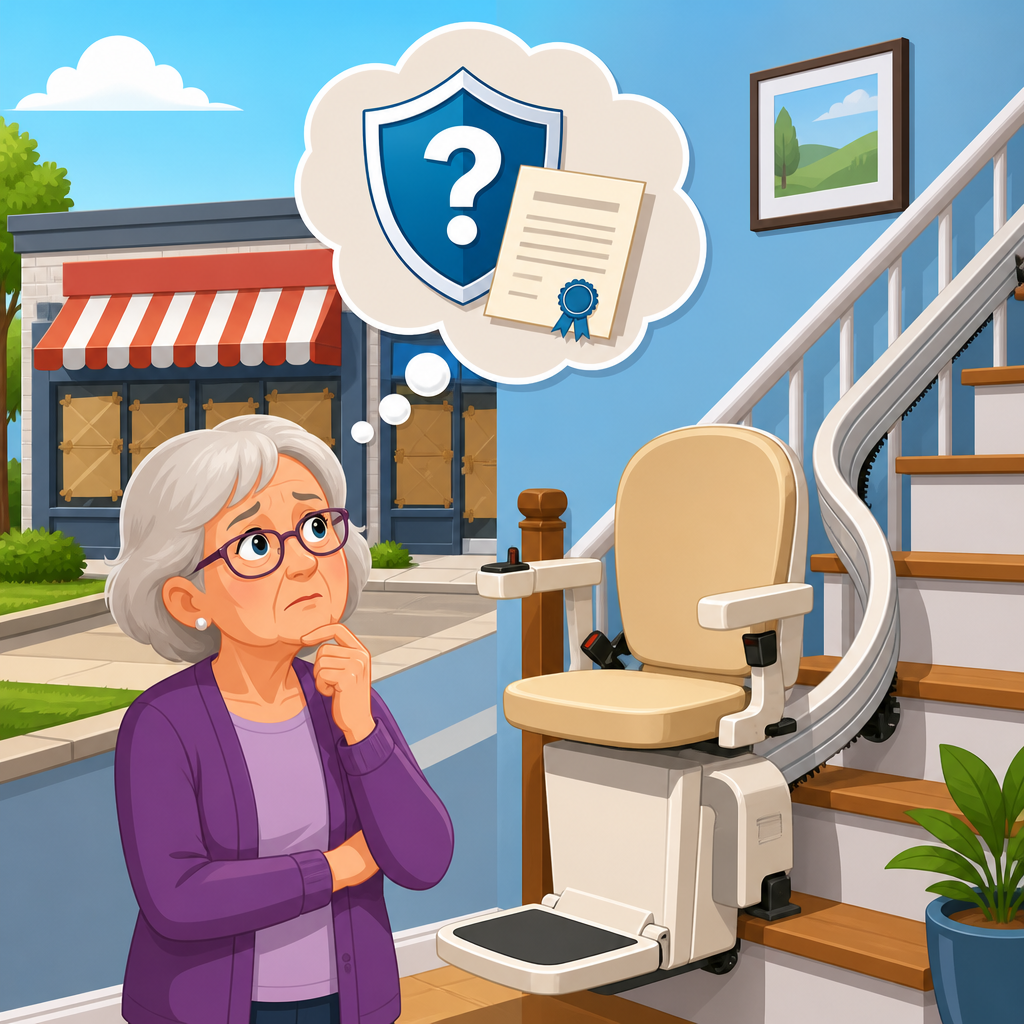
Buying a stair lift is not just a product purchase; it is a long-term service decision tied to mobility, safety, and the practical reality of keeping the unit working for years. One of the most common questions I hear from families comparing brands is simple: what happens to your stair lift warranty if the dealer goes out of business? The short answer is that it depends on who actually backs the warranty, what parts of coverage are written into the agreement, and whether another authorized provider can step in. That uncertainty matters because stair lifts are regulated accessibility devices with mechanical, electrical, and battery components that need ongoing support. In the stair lift industry, “dealer warranty” usually refers to coverage administered by the local company that sold and installed the lift, while “manufacturer warranty” refers to protection provided by the brand that built the equipment. Some contracts also separate labor, parts, batteries, rail components, and service-call fees. Return policies are different again, especially for custom curved lifts, which are usually non-returnable once the rail is fabricated. Understanding these distinctions before you buy can save thousands of dollars, reduce downtime, and prevent a stressful scramble if your original seller closes, retires, loses authorization, or is acquired by another company. This guide explains how stair lift warranties and return policies typically work, what survives when a dealer disappears, what warning signs to look for in a warranty document, and how to protect yourself by choosing the right brand, dealer, and service structure from the start.
Who Actually Backs a Stair Lift Warranty
The first thing to verify is whether your coverage is backed by the manufacturer, the dealer, or both. In real stair lift contracts, those responsibilities are often split. A manufacturer may cover major components such as the motor, gearbox, circuit board, and rail for a stated term, while the dealer covers installation workmanship, diagnostic visits, adjustments, and labor during the first year or two. If the dealer goes out of business, the manufacturer-backed portion may still remain in force, but the dealer-backed portion often does not automatically transfer unless the brand assigns another authorized service partner.
This distinction is critical because many buyers assume the word “warranty” means one unified promise. It rarely does. For example, a contract might advertise a “lifetime warranty on the drivetrain,” but the fine print limits labor to twelve months and excludes batteries as consumables. In practice, that means a replacement part may be free while the homeowner still pays for travel, diagnosis, and installation. If the original dealer closes, the replacement part may still be available through the brand, but obtaining service may require a new local provider willing to do the repair.
Ask for the written warranty before you sign. Look for the warrantor’s legal name, the exact covered components, the start date, transfer terms, exclusions, labor limits, and claims process. If those details are vague, you do not yet know what protection you are buying.
What Usually Happens If the Dealer Goes Out of Business
If a stair lift dealer goes out of business, four outcomes are most common. First, the manufacturer may reassign your account to another authorized dealer in the region. This is the best-case scenario because records, parts compatibility, and warranty validation are easier to confirm. Second, the manufacturer may honor parts coverage but require you to pay a different service company for labor. Third, if the unit is from a lesser-known importer or private-label seller, support may become difficult because no strong manufacturer network exists. Fourth, if the business closure was tied to bankruptcy, disputes over prepaid service plans, deposits, or extended labor contracts may become more complicated.
In my experience, straight stair lifts from established brands are usually easier to support after a dealer closure than curved models from niche suppliers. Straight lifts use standardized rails and more interchangeable inventory. Curved lifts are made to the staircase template, so technical support depends much more heavily on brand-specific drawings, programming knowledge, and access to custom parts.
The practical rule is this: if the warranty is tied to the dealer alone, the closure can effectively end that coverage. If the warranty is tied to a recognized manufacturer with an active dealer network, you usually retain at least some protection. That is why brand strength matters as much as local sales quality.
How Manufacturer Networks Affect Your Protection
Not all stair lift brands structure support the same way. Established manufacturers often operate through authorized dealer networks, maintain serial-number records, and stock parts for many years. Commonly recognized names in North America and Europe include Bruno, Harmar, Stannah, Handicare, Access BDD, Savaria, and Acorn, though actual warranty terms vary by model, country, and seller agreement. A strong network increases the odds that another dealer can inspect your unit, confirm eligibility, and process a claim.
What matters most is whether the manufacturer allows cross-dealer warranty service. Some do this routinely. Others route everything through the original selling dealer unless an exception is approved. Before purchase, ask directly: “If your dealership closes or stops servicing my area, which company handles my warranty, and is that commitment stated in writing?” If the answer is verbal only, keep pressing until it appears on paper.
A serious dealer should also provide the manufacturer’s customer support number, model documentation, and serial number registration process. Registration is not always required for coverage, but documented ownership makes future claims much easier when business relationships change.
Warranty Coverage by Component and Service Type
Stair lift warranties are easier to compare when broken into parts, labor, and service response. The table below shows the categories buyers should review before relying on any promise of support.
| Coverage Area | What It Usually Includes | What Happens if Dealer Closes |
|---|---|---|
| Manufacturer parts warranty | Motor, gearbox, PCB, charger, rail sections, seat assembly | Often remains valid if brand confirms serial number and another authorized servicer is available |
| Dealer labor warranty | Diagnosis, repairs, adjustments, installation workmanship | May end unless assumed by another dealer or covered by separate service agreement |
| Batteries | Rechargeable batteries, commonly limited term because they are wear items | Usually still replaceable, but coverage may be prorated or labor excluded |
| Service-call or travel fees | Technician trip charge, mileage, after-hours visit costs | Frequently not covered by manufacturer, even when parts are covered |
| Extended warranty | Additional years of parts and sometimes labor sold separately | Depends on whether third-party insurer, manufacturer, or dealer underwrites it |
| Workmanship guarantee | Correct installation, rail alignment, charging contact setup | Most vulnerable if original installer is no longer operating |
When I review contracts, the gaps usually appear in labor and travel charges, not in parts. Buyers focus on component length, but field service costs are what make post-closure support expensive.
Return Policies and Why They Matter as Much as Warranty Terms
Warranty coverage deals with defects and failures after installation. Return policies deal with cancellation, removal, and refunds. These are separate rights, and they deserve equal attention. Straight stair lifts are sometimes eligible for partial returns or buyback programs, especially if the rail can be reused and the chair is in resalable condition. Curved stair lifts, however, are almost always custom orders. Once the rail is manufactured to match your staircase dimensions, the dealer may classify the sale as final, subject only to defect correction.
This matters if a dealer goes out of business before installation or shortly after. If you paid a deposit for a custom curved lift and the company fails before delivery, your rights may depend on payment method, contract timing, and state consumer law. Credit card payments generally offer stronger dispute pathways than checks or cash. If the unit was financed, the lender’s documentation may also matter. Keep signed proposals, stair drawings, invoices, and any approval emails.
Ask whether removal is included if the unit proves unsuitable. I have seen buyers surprised to learn that a returned straight lift still carries removal fees, patching costs, and restocking deductions. A clear return clause should state deadlines, condition requirements, refund calculations, and who pays to uninstall the equipment.
Red Flags in Warranty and Return Documents
Several contract phrases should trigger follow-up questions. Be cautious with “lifetime warranty” if the document never defines lifetime. In this industry, it may mean the original purchaser’s ownership period, the usable life of one component, or a limited list such as the motor only. Be equally cautious with “full warranty” if exclusions remove batteries, upholstery, remotes, call stations, weather damage, and labor after year one. Another red flag is a contract that says coverage is provided “at dealer discretion” without a manufacturer obligation behind it.
For return policies, watch for non-refundable deposits that become locked in before a home assessment is complete. The dealer should verify staircase width, landing space, power location, and user fit before demanding irreversible commitment. Also review clauses about annual maintenance. Some brands recommend routine servicing, but a warranty should clearly say whether missed maintenance can void coverage and what qualifies as authorized service.
If paperwork looks generic, missing serial-number fields, or inconsistent with the brand literature, slow down. Good dealers do not object to careful review. In fact, the best ones explain the limits plainly because they expect to support the lift for years.
How to Protect Yourself Before You Buy
The best protection starts before installation. First, choose a manufacturer with a durable service network and readily available parts. Second, confirm that your model is appropriate for your staircase and weight requirements; misuse disputes are less likely when the application is correct from day one. Third, ask the dealer for written answers to four questions: who backs parts, who backs labor, who takes over if the dealer closes, and how long parts remain available after model discontinuation.
Fourth, pay by credit card when possible, especially for deposits on custom equipment. Fifth, keep a digital file containing the signed contract, warranty booklet, serial number, installation date, and photos of the completed unit. Sixth, register the product if the manufacturer offers registration. Seventh, ask whether a local independent accessibility service company can work on the brand if dealer coverage changes.
Finally, read online reviews with a narrow focus. General star ratings matter less than service continuity comments such as response time, parts access, and how the company handled warranty claims after the sale. A polished showroom does not guarantee long-term support. A boring company with a stable technician team often delivers better ownership outcomes.
What to Do If Your Dealer Has Already Closed
If your dealer is already out of business, act methodically. Start by locating the make, model, and serial number on the chair base, rail label, or original invoice. Contact the manufacturer directly and ask whether your stair lift is still under parts warranty, whether ownership is registered, and which authorized servicers cover your ZIP code. Request that answer by email for your records.
Next, gather your contract and note exactly what the dealer promised for labor, annual service, or extended coverage. If you purchased an extended warranty, identify who underwrote it. Some plans are backed by third-party administrators or insurers rather than the dealer itself. If payment was recent and the closure disrupted delivery, contact your card issuer promptly about dispute deadlines.
Then schedule an inspection with the assigned or approved service company. Even when labor is not covered, a baseline inspection can prevent larger failures and clarify what costs you face. If the brand no longer supports the model, ask about parts availability, refurbishment options, and whether replacing the lift is more economical than chasing obsolete components. A direct, documented approach usually gets better results than relying on rumors or social media posts about the closure.
The central lesson is straightforward: your stair lift warranty may survive a dealer closure, but only the portions backed by a solid manufacturer or independent contract are likely to remain dependable. Dealer labor promises, workmanship guarantees, and informal service assurances are the most vulnerable when a company disappears. That is why this page serves as the hub for understanding warranty and return policies within any stair lift buying guide. Before you purchase, separate parts coverage from labor, verify who administers claims, read return terms for straight versus curved models, and insist on written transfer procedures if the seller stops operating. After purchase, keep every document, register the unit, and know the manufacturer contact path before you need emergency service. Those steps turn a confusing warranty question into a manageable ownership plan. If you are comparing stair lifts now, use this article as your checklist and review every quote through the lens of long-term support, not just upfront price.
Frequently Asked Questions
What happens to a stair lift warranty if the dealer that sold it to me goes out of business?
What happens next depends on how the warranty is structured. In many stair lift purchases, there are actually multiple layers of coverage. One may come from the manufacturer and cover major components such as the motor, gearbox, rail, or electronic parts. Another may come from the local dealer and cover labor, service calls, installation issues, or ongoing maintenance. If the dealer goes out of business, the manufacturer-backed portion of the warranty may still remain valid, but the dealer-backed portion may disappear unless another authorized provider agrees to take it over.
This is why the original paperwork matters so much. The key question is not simply whether you have a warranty, but who is legally responsible for honoring each part of it. If your documents say the manufacturer provides parts coverage for a set number of years, that coverage often survives the dealer’s closure. If your agreement says the local dealer includes one year of labor or free service visits, that benefit may end when the business closes unless the manufacturer has a replacement support network in your area.
In practical terms, most families should expect some interruption in service coordination even if the product itself is still under warranty. You may need to contact the manufacturer directly, provide the serial number, submit a copy of your purchase agreement, and ask which authorized dealer now handles service in your region. So the most accurate answer is this: the warranty does not automatically disappear just because the dealer does, but parts of your coverage may depend entirely on whether they were backed by the dealer or by the manufacturer.
How can I tell whether my stair lift warranty is backed by the manufacturer, the dealer, or both?
The fastest way to tell is to read the warranty certificate and sales contract line by line, because stair lift warranties are often split into separate categories. A manufacturer-backed warranty usually names the brand or parent company directly and explains which components are covered, how long that coverage lasts, and what exclusions apply. It may mention replacement parts, factory defects, drivetrain components, batteries, or electronics. A dealer-backed warranty usually appears in the sales agreement or installation paperwork and may refer to labor, annual tune-ups, local service response, installation adjustments, or workmanship guarantees.
Look closely for specific language such as “manufacturer’s limited warranty,” “dealer labor warranty,” “authorized service provider,” or “coverage excludes trip charges and labor after installation.” Those phrases matter because they tell you who pays when something goes wrong. A lifetime warranty on the rail or motor may sound reassuring, but if it covers only the part itself and not diagnosis, travel time, or labor to install the replacement, your out-of-pocket cost can still be significant if the original dealer is no longer around.
If the wording is unclear, contact the manufacturer directly and ask them to verify your coverage using the unit’s model and serial number. Ask very specific questions: Is the parts warranty still active? Is labor covered by the factory or only by the selling dealer? If my dealer is gone, who handles authorized warranty repairs in my area? Getting those answers in writing can save a lot of confusion later and gives you a clearer picture of what protection you truly have.
Will another stair lift company or authorized dealer honor my warranty if my original dealer closes?
Sometimes yes, but not automatically. If the manufacturer has a strong dealer network, they may assign another authorized provider to take over service in your area. In that case, the replacement dealer may honor the manufacturer-backed warranty for eligible parts and approved repairs. However, that does not always mean they will honor every promise made by the original seller. If the original dealer offered free labor, discounted maintenance, or priority service as part of their own business package, a new dealer may not be obligated to continue those extras.
This is an important distinction because many consumers assume that “authorized dealer” means full continuity of all coverage. In reality, another dealer is usually agreeing to service the product according to the manufacturer’s warranty terms, not necessarily to absorb the local dealer’s separate business commitments. The new company may still charge for travel, labor, assessments, or non-covered adjustments even if the replacement part itself is covered by the factory.
The best step is to contact the manufacturer and ask who their current authorized service provider is in your region. Then ask that provider what they will and will not honor. A reputable company should be able to explain whether they can perform warranty work, whether labor is billable, and whether they service your specific model. If no authorized local company is available, your options may include paying independently for service, seeking reimbursement if allowed by the manufacturer, or discussing upgrade and replacement alternatives if the unit is older or support is limited.
What parts of stair lift coverage are most likely to be affected when a dealer goes out of business?
The portions most likely to be affected are labor, routine service, installation-related corrections, and response time commitments. Manufacturer warranties often focus on defects in materials or specific components, which means the physical part may still be covered. What frequently disappears with the dealer is the hands-on support structure around that part. For example, if a charging issue requires a technician visit, the battery or charger may be covered under warranty, but the cost of diagnosis, travel, or installation may not be if those benefits were originally provided by the now-closed dealer.
Service plans are another common weak point. Some dealers bundle annual maintenance, free tune-ups, or expedited emergency calls into their own local agreement. Those promises are usually not transferable unless another company explicitly accepts them. Installation workmanship can also become complicated. If there was a problem related to how the stair lift was fitted to the staircase rather than a defect in the unit itself, that issue may have been the installer’s responsibility rather than the manufacturer’s. When the installer is no longer in business, resolving that kind of problem can be more difficult.
This is why it helps to think of a stair lift as both equipment and ongoing service. The product may still be protected, but the convenience and affordability of keeping it running can change if the original dealer disappears. Families should review not just the length of the warranty, but exactly what is included: parts, batteries, labor, diagnostics, preventive maintenance, emergency calls, and installation corrections. That full picture tells you what risk you may actually face if local support changes.
How can I protect myself before buying a stair lift so I am not left without support if the dealer shuts down?
The smartest approach is to evaluate the support structure before you buy, not after a problem occurs. Start by asking who backs each part of the warranty in writing. Do not settle for general statements like “you’re fully covered.” Ask for specifics: Which items are covered by the manufacturer? Which are covered by the dealer? How long does parts coverage last? Is labor included? Are service calls and travel fees included? If the dealer stops operating, will another authorized company provide warranty service? Clear answers to those questions can reveal whether you are buying dependable long-term support or just a reassuring sales pitch.
It also helps to research the manufacturer’s national presence and service network. Brands with broader support systems are often better positioned to redirect customers if one local dealer closes. Ask how many authorized providers serve your area, how replacement parts are sourced, and whether the model you are considering has long-term parts availability. You should also keep organized records, including the contract, warranty documents, installation report, serial number, and proof of payment. If support ever needs to be transferred, having complete documentation makes the process much easier.
Finally, choose a stair lift provider with an eye toward stability and service reputation, not just price. Read reviews, ask how long they have been in business, and find out whether they have in-house technicians or rely on subcontractors. A stair lift is a mobility and safety device, so reliable after-sale support matters just as much as the equipment itself. The most protected buyers are the ones who confirm in advance that if one company disappears, there is still a clear path to parts, service, and qualified warranty help.





