Accessible chair lifts that work with walkers and crutches solve a very specific mobility problem: how to move safely between floors when balance, strength, or joint stability make stairs risky, but a full residential elevator is unnecessary or out of budget. In practical terms, a chair lift is a motorized seat attached to a rail that carries a user up or down a staircase, while walker compatibility and crutch-friendly design refer to how easily the system supports transfers, parking, folding, reach, and safe stair access for mobility aid users. This matters because the hardest part of stair lift ownership is rarely the ride itself; it is getting on and off without twisting, overreaching, or leaving a mobility aid in the wrong place. After evaluating home mobility equipment for clients with arthritis, stroke recovery, Parkinsonian gait issues, lower-limb amputation, and post-surgical restrictions, I have found that the best chair lifts for disabled users are the models that reduce transfer complexity, not simply the ones with the fastest motors or the lowest advertised price.
For buyers researching the best chair lifts for disabled users, the key questions are straightforward. Will the seat height align with a safe standing transfer? Can the armrests support weight during sit-to-stand movement? Does the rail leave enough stair width for another household member? Can a walker be parked at both landings without creating a trip hazard? Are call-send controls large enough for someone using crutches to operate one-handed? The answers depend on staircase geometry, the user’s diagnosis, and how the home is used daily. A straight staircase with a broad upper landing creates many workable options. A narrow staircase with a door at the top, a 90-degree turn, or limited space to stage a walker requires more careful product selection. Understanding those variables is the foundation of a safe purchase.
There is also an important distinction between accessibility and suitability. Many stair lifts are technically accessible because they provide seated transport, but not all are suitable for people who rely on walkers or crutches. Suitability depends on transfer stability, seating ergonomics, swivel operation, obstruction sensors, parking positions, and whether the user can maintain three points of contact during boarding. Standards such as ASME A18.1 guide platform and stairway chairlift safety, and reputable manufacturers build around features like seat belts, overspeed governors, battery backup, and obstruction detection. Those are baseline protections. What separates good systems from poor ones for disabled users is how those protections interact with real routines: carrying a folded walker, navigating medication-related dizziness, or managing fatigue at the end of the day. A buying guide that ignores those realities is incomplete.
What makes a chair lift work well with walkers and crutches
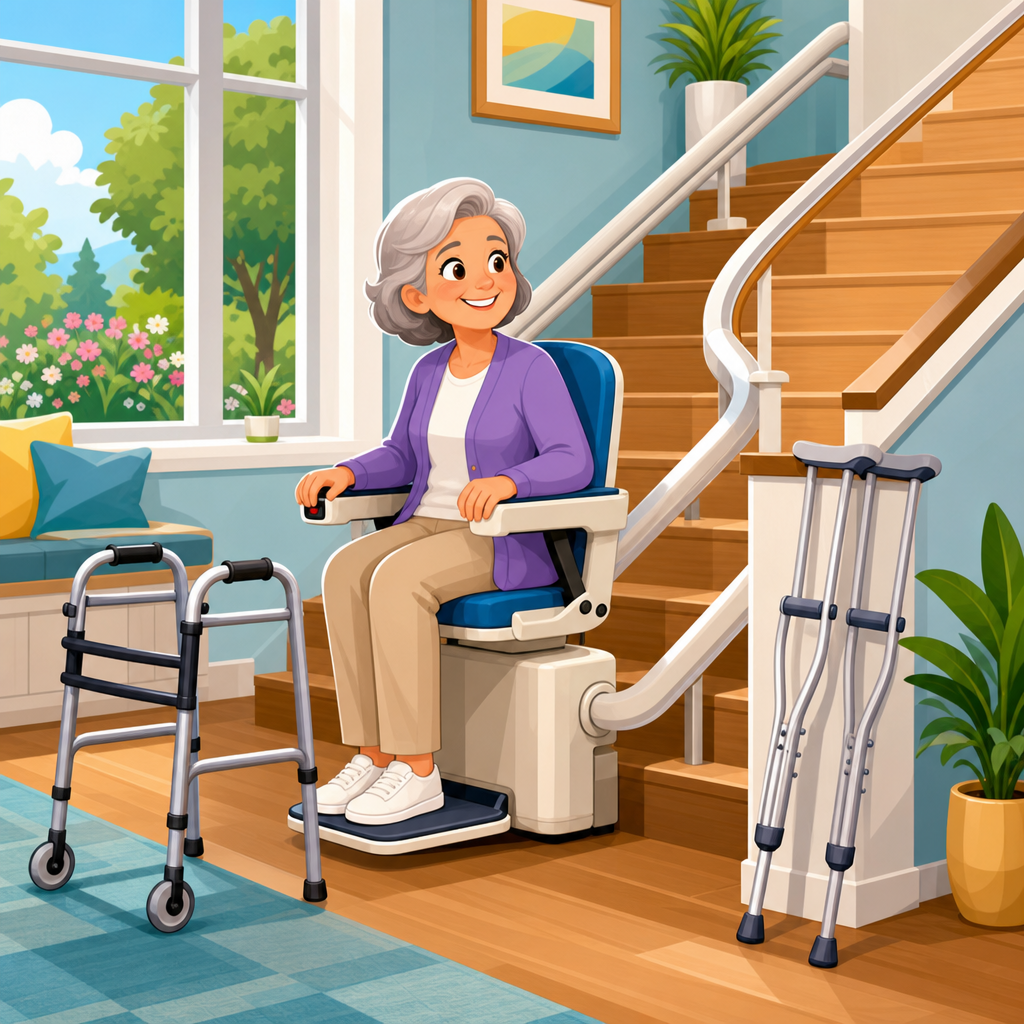
The best chair lifts for disabled users share a few nonnegotiable characteristics. First, the seat must support a stable transfer. In home assessments, I look closely at seat height, armrest rigidity, footrest size, and whether the swivel seat locks securely at the top landing. A locked swivel is critical because it lets the rider stand onto the landing rather than onto the stair edge. For a walker user, that often means they can place the walker on the landing, turn the seat, stand with armrest support, then reach the walker without rotating through the knees. For a crutch user, a secure swivel allows one crutch to be staged nearby while the user pushes up using arm strength and the fixed armrests.
Second, the controls have to match limited dexterity and one-handed use. Toggle controls on the armrest are common and usually easier than small buttons. Larger wall-mounted call-send remotes help when a caregiver needs to return the chair to another floor. Third, the folded profile matters more than brochures suggest. If the seat, footrest, and arms fold tightly, the staircase remains more passable for others, and there is often more room at the bottom to position a walker. Finally, start-stop smoothness is not a luxury feature. Users with painful joints, vestibular sensitivity, or neurological conditions notice abrupt motion immediately, and rough starts can compromise confidence during every ride.
Compatibility with mobility aids also depends on the home setup at both ends of the stairs. A chair lift does not carry a standard walker with the rider, so the home must support a safe mobility aid strategy. Some households keep one walker upstairs and another downstairs. Others use a compact rollator on one level and crutches on the stairs landing. This is why many successful installations are not just product decisions; they are workflow decisions. The best outcome comes when the user can transfer off the lift and immediately access a mobility aid without side-stepping or reaching behind. If that sequence is awkward, falls happen during the transition, not during the ride.
Straight, curved, and heavy-duty models: which type fits the home
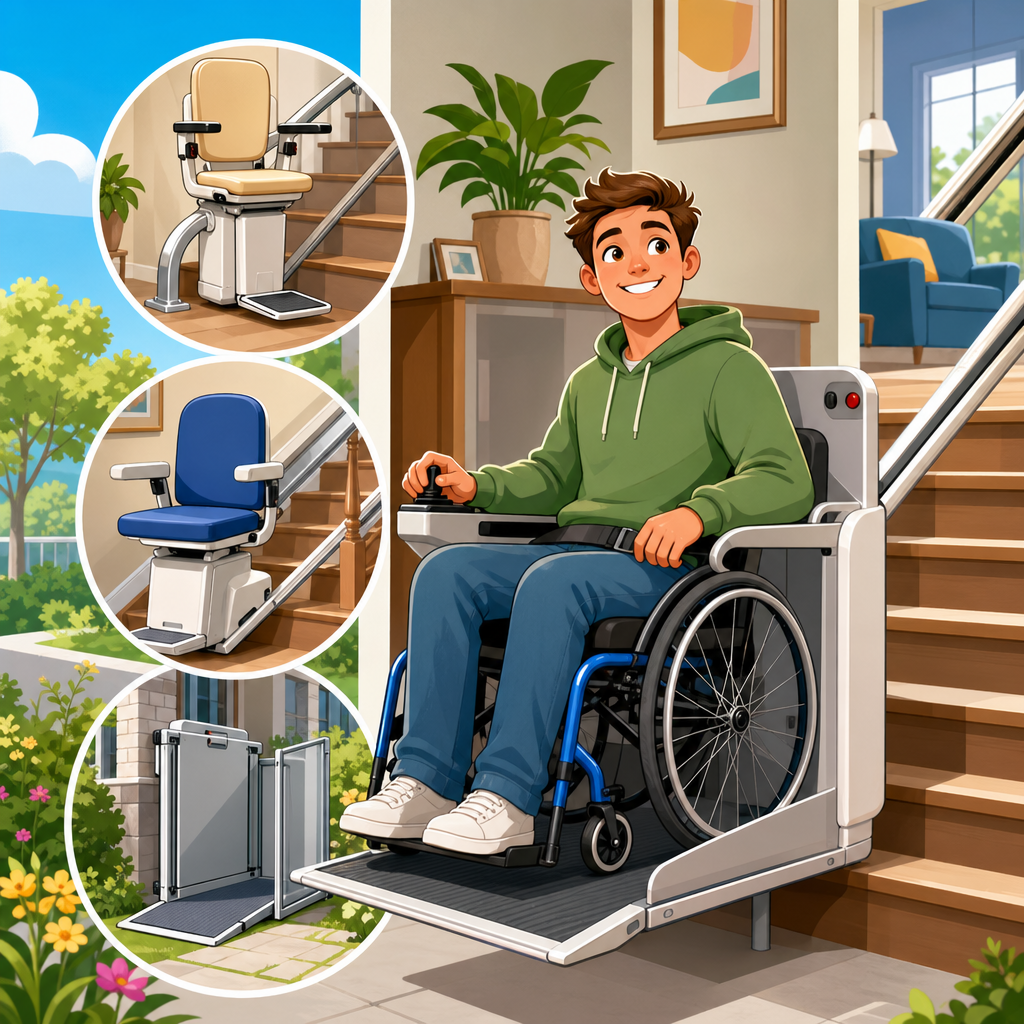
Straight stair lifts are installed on staircases without turns or intermediate landings, and they are usually the most economical, fastest to deliver, and easiest to service. For many buyers seeking the best chair lifts for disabled users, a straight model from Bruno, Harmar, Stannah, or Access BDD is the logical first option because the rail is standardized and installation can often be completed in a few hours. Curved stair lifts are custom-built for stairs with turns, pie-shaped treads, split landings, or multiple levels. They cost more because the rail is fabricated to measured dimensions, but they may be the only safe solution when a straight rail would stop too close to a doorway or fail to reach a usable transfer point.
Heavy-duty models deserve special attention. They are not only for larger users; they also benefit people who need a wider seat, higher seat back, more stable armrests, or extra room to manage a brace or limited hip flexion. Typical standard stair lifts support around 250 to 350 pounds, while heavy-duty versions can reach 400, 500, or even 600 pounds depending on staircase width and manufacturer specifications. The tradeoff is that larger chairs need more clear stair width. In many homes, code-compliant clearance and practical pass-through become the deciding factors. This is why exact measurements, not assumptions, should guide product choice.
| Lift type | Best use case | Main advantage | Main limitation |
|---|---|---|---|
| Straight stair lift | Single run of stairs with no turns | Lower cost and quicker installation | Limited parking flexibility on complex landings |
| Curved stair lift | Stairs with turns or intermediate landings | Custom access to safer transfer points | Higher cost and longer lead time |
| Heavy-duty stair lift | Users needing wider seats or higher capacity | Greater stability and seating room | Requires more staircase width |
In real homes, the right type often becomes obvious after a landing assessment. I have seen buyers focus on lift brand before confirming whether they can stage a walker at the top without blocking a bedroom or bathroom door. That is backwards. The transfer zone dictates the rail layout, and the rail layout dictates the product family. If the top landing is cramped, a hinged rail or parking position farther away may be worth more than premium upholstery, extra color options, or smartphone-connected controls.
Features that matter most for disabled users
When people search for the best chair lifts for disabled users, they often compare headline features and miss the details that directly affect safety. The most important features are a powered swivel seat, powered footrest, obstruction sensors, battery operation, seat belt design, armrest shape, and track overruns. A powered swivel is especially helpful for users with painful shoulders, weak grip, or limited trunk rotation because it removes a twisting task at the point where a fall would be most serious. A powered footrest reduces bending, which matters for people recovering from spinal surgery, living with severe arthritis, or using long-leg braces. Track overruns move the chair beyond the stair edge at the top or bottom landing, creating a safer place to stand up.
Obstruction sensors are standard on quality models, but their placement and responsiveness vary. They should stop the lift if the footrest or carriage meets an object on the stairs. Battery-powered systems are also standard on most leading residential models now, charging continuously when parked. That means the lift can usually run during a power outage, which is more than a convenience for users who cannot manage stairs manually. I advise buyers to ask not only whether a lift has battery backup, but how many trips it typically provides on a full charge and what happens if the seat is left away from a charging point.
Seat design is another underappreciated factor. A deeply padded seat is not always better. Some users transfer more safely from a firmer cushion because it prevents sinking and makes push-off easier. Armrests should feel solid enough to bear meaningful weight, and the seat width should allow winter clothing, orthotics, or a hip abduction brace without forcing the knees outward. For crutch users, a parking spot with a wall-mounted crutch holder can simplify boarding. For walker users, keeping a second walker on the destination floor is usually safer than trying to fold and carry one during transfer. Good dealers talk through these details before quoting a model.
Best brands and buying criteria for this subtopic hub
As a hub article for the best chair lifts for disabled users, this page should help readers understand the main brand categories and what later product reviews should compare. Bruno is widely respected for durable straight and curved stair lifts, dependable dealer support, and models such as the Elan and Elite, which are often shortlisted for smooth ride quality and solid build. Harmar offers broad distribution, a range of straight and curved options, and heavy-duty models that fit buyers needing higher capacity. Stannah is known for refined ride comfort, compact folded profiles on some models, and strong customization on curved installations. Savaria and Handicare are also important names, particularly for custom layouts and broader accessibility product lines.
Brand reputation alone is not enough. Buyers should compare dealer training, warranty coverage, local service response time, parts availability, and whether the quote includes electrical work, rail modifications, or annual maintenance. In practice, the dealer often determines ownership satisfaction more than the logo on the chair. I have seen excellent hardware perform poorly after a rushed install that ignored walker parking or landing clearance. I have also seen midpriced systems work beautifully because the installer adjusted seat height, call station placement, and rail overrun to match the user’s exact transfer pattern. The lesson is simple: product selection and installation quality are inseparable.
For readers moving deeper into this subtopic, the next useful comparisons are clear. Straight versus curved stair lifts, best heavy-duty stair lifts, best narrow stair lifts, best outdoor stair lifts, and the best chair lifts for users with arthritis, stroke deficits, or balance disorders all deserve dedicated review pages. Cost guides should break down equipment, installation, custom rail charges, and service plans. Feature-focused guides should explain powered options, folding rails, and safety sensors. This hub matters because it gives buyers the framework to judge all of those articles correctly: not by marketing claims, but by transfer safety, mobility aid workflow, and home fit.
Installation, safety checks, and common mistakes to avoid
Professional installation is essential because residential stair lifts mount to the stair treads or, less commonly, another support structure, and must be aligned precisely for smooth travel and safe stopping points. A proper survey measures stair width, tread depth, landing length, head clearance, power access, and any door swings that interfere with boarding. Installers should verify whether the user is right- or left-hand dominant, which side offers better transfer mechanics, and where the walker or crutches will be stored at each level. These practical details are often more important than brochure specifications. A lift can be mechanically perfect and still unsafe if the user steps off into a narrow turning area with no place to stabilize.
The most common buying mistakes are choosing solely on price, ignoring transfer space, underestimating staircase width, and assuming all disabled users need the same features. A person with bilateral knee osteoarthritis may prioritize a higher seat and powered footrest. A stroke survivor may need a particular armrest orientation to support a one-sided transfer. A crutch user with good upper-body strength may do well with a manual swivel, while a user with Parkinson’s freezing episodes may need the simplest possible control layout and a very predictable stop position. One-size-fits-all advice is not useful in this category.
After installation, the home should be tested under real conditions. Practice boarding with the actual walker or crutches used each day, wearing typical footwear, and at the times when fatigue is greatest. Check that remotes are reachable, the seat belt is easy to latch, and the footrest clears common stair objects. Review maintenance intervals and battery replacement schedules. Most manufacturers recommend periodic service, especially on heavily used lifts. If the chair begins to stop unevenly, make noise, or display faults, service should be scheduled promptly rather than delayed. Reliable performance is part of accessibility.
How to choose the right accessible chair lift now
The best chair lifts for disabled users are the ones that make every transfer simple, repeatable, and low risk for someone using walkers or crutches. That usually means starting with the staircase and landing layout, then matching lift type, seat features, and parking positions to the user’s exact mobility pattern. Straight lifts suit many homes, curved lifts solve harder layouts, and heavy-duty models add space and stability where needed. The most valuable features are often powered swivel seats, powered footrests, smooth start-stop travel, battery backup, and track overruns that create safer exit points. Brand quality matters, but dealer assessment and installation quality matter just as much.
If you are building a shortlist, focus on transfer mechanics before appearance or minor convenience features. Ask where the walker will be at both floors, whether the user can stand safely from the seat, and how the chair parks when not in use. Request an in-home assessment, insist on exact measurements, and compare quotes line by line. For many households, the right stair lift is the product that preserves independence without forcing risky workarounds. Use this hub as your starting point, then move into detailed reviews and cost guides with a clear standard: choose the model that fits the person, the stairs, and the daily routine.
Frequently Asked Questions
1. Can a chair lift be used safely if I rely on a walker or crutches every day?
Yes, many chair lifts can be used safely by people who depend on walkers or crutches, but the key is choosing a model and installation layout that support safe transfers at both ends of the staircase. The lift itself carries the person while seated, so the walker or crutches are typically used to approach the chair, sit down securely, and stand up again at the destination. For that reason, the most important factors are stable flooring at the top and bottom landings, enough space to maneuver mobility aids, and a seat height and armrest design that make transfers easier rather than awkward.
In most homes, the safest setup includes a swivel seat at the upper landing so the user can turn away from the stairs before standing, a seat belt for secure riding, and controls that are easy to operate even with limited grip strength. If a person uses crutches, they also need a practical plan for where the crutches will rest during the ride and how they will be reached after the lift stops. If a walker is part of the routine, there should be clear parking space on the landing so it does not block the staircase or create a tripping hazard. A chair lift can be an excellent solution, but it should be evaluated as part of the full transfer process, not just the ride up and down the rail.
2. What chair lift features make transfers easier for people with walkers, crutches, or balance limitations?
Several features can make a major difference for users who do not have the strength, balance, or joint stability to manage a basic stair lift comfortably. One of the most valuable is a powered or manual swivel seat, especially at the top of the stairs. This allows the rider to rotate the seat toward the landing, reducing the need to twist the body near an open stair edge. A folding footrest can also help by keeping the path clear when the lift is parked, while a well-positioned armrest gives the user something stable to push from during sit-to-stand transfers.
Seat height, seat width, and armrest spacing matter more than many homeowners expect. A chair that sits too low can be difficult for someone with knee pain, hip weakness, or poor balance. A seat that is too narrow or too wide can also make transfers feel unstable. Easy-to-use controls are another important detail. Users who rely on crutches or have arthritis often do best with simple rocker switches, large buttons, or remote call/send controls that do not require fine motor precision. Safety sensors that stop the lift if something is on the stairs, a reliable seat belt, and smooth start-and-stop motion are also essential because sudden movement can be unsettling for people with compromised balance.
In some homes, a rail overrun at the top or bottom landing is worth considering. This extends the chair slightly beyond the staircase so the user can get on or off farther away from the stair edge. For someone using a walker, that added margin can make transfers feel much safer. The best chair lift is not just the one that fits the staircase; it is the one that matches the user’s transfer ability, mobility aid routine, and day-to-day confidence level.
3. Where do the walker or crutches go while riding the chair lift?
This is one of the most practical and important questions to address before buying a chair lift. In most cases, a walker is not carried on the user’s lap during travel, because that can be cumbersome and unsafe depending on the size of the walker, the width of the staircase, and the design of the lift. Instead, many households keep a walker on each floor so the user always has one available at both the top and bottom. This is often the simplest and safest approach because it eliminates the need to move the walker with every trip.
For crutches, some users are able to hold them securely during the ride if they are lightweight and the chair lift design allows for it without interfering with safety. However, that should never be assumed. The crutches must not block the footrest, catch on the wall or stair rail, or prevent proper seat belt use. In some situations, a second pair of crutches at the opposite level is the best solution, just as with walkers. The goal is always to ensure that a mobility aid is immediately available when the rider stands up, without creating hazards during the trip.
Planning storage on the landing is just as important as planning the lift itself. The walker or crutches need a dedicated spot where they are easy to reach but do not obstruct the hallway, doorway, or stair access for others in the home. During an in-home assessment, a qualified dealer should help map out exactly how the user will approach the lift, where the mobility aid will be placed, and how the user will retrieve it after arrival. That transfer sequence is what determines whether the system feels truly accessible in daily life.
4. Is a chair lift a better option than a home elevator for someone who uses walkers or crutches?
For many households, yes. A chair lift is often the more practical choice when the main problem is navigating stairs safely and the user can still perform a seated transfer with some degree of independence or assistance. Chair lifts are typically less expensive than residential elevators, faster to install, and less invasive structurally. They do not usually require major remodeling, shaft construction, or machine-room planning, which makes them especially appealing for homes where budget, space, or construction disruption are major concerns.
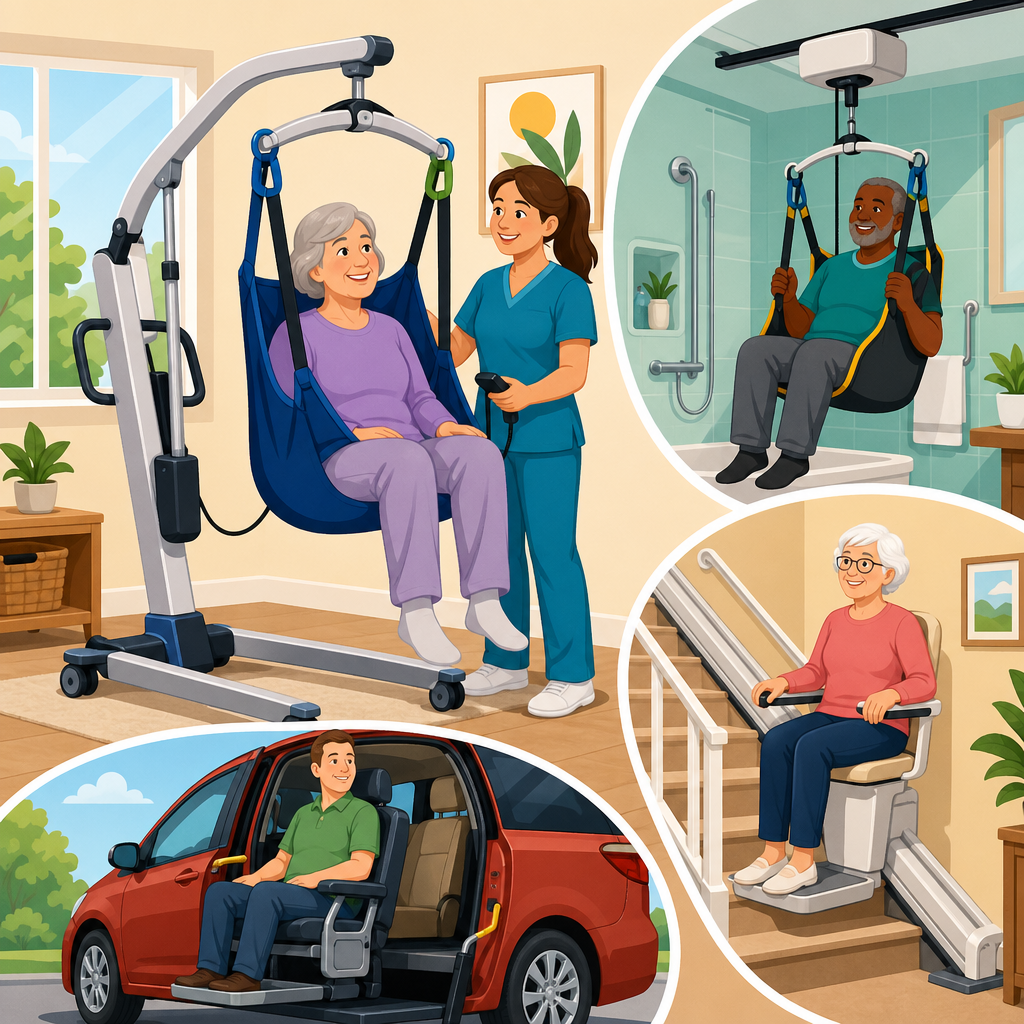
That said, “better” depends on the user’s actual mobility profile. If a person can approach the lift with a walker or crutches, sit down safely, ride securely, and stand up at the other landing, a chair lift can be an efficient and dependable solution. But if transfers are very difficult, if standing is unpredictable, or if the user needs to remain with a walker at all times and cannot manage the transition onto a stair lift seat, then a home elevator or vertical platform lift may be more appropriate. Those options may accommodate mobility devices more directly, though they also come with higher costs and more installation requirements.
The right comparison is not simply chair lift versus elevator in abstract terms. It is a question of whether the user can complete the entire sequence safely every single day: approach, transfer, ride, exit, and resume walking with the aid they use. If the answer is yes, a chair lift can be a very cost-effective accessibility upgrade. If the answer is uncertain, a professional mobility assessment is the smartest next step before making a purchase.
5. How do I know if my staircase and landing areas are suitable for a chair lift that works well with walkers and crutches?
Suitability depends on more than just whether a rail can physically be attached to the stairs. A proper evaluation looks at staircase width, landing depth, turning space, nearby doorways, handrail placement, and how the user moves with their walker or crutches before and after the ride. A straight staircase is usually the easiest and least expensive to fit with a chair lift, while curved staircases require custom rails. But even a staircase that technically fits a lift may not function well if the top or bottom landing is too tight for safe maneuvering with a mobility aid.
One of the biggest concerns is transfer space. The user should be able to approach the chair without twisting awkwardly or standing too close to the stair edge. At the upper landing, there should be enough room to swivel the seat and stand safely onto a stable, level surface. At the lower landing, the user should be able to step away from the lift and reach their walker or crutches without crowding. If hallways are narrow or doors open directly into the stair area, those details can affect whether the setup feels manageable in real life.
A professional installer should take detailed measurements and ask highly specific questions about daily mobility: whether the user bears weight evenly, whether they push off armrests to stand, whether they use a two-wheel or four-wheel walker, and whether crutches are used full-time or only for certain conditions. These details influence seat choice, rail placement, parking positions, and control options. The best installations are customized around the user’s movement pattern, not just the dimensions of the staircase. That is what turns a basic stair lift into a truly accessible solution for someone living with walkers or crutches.