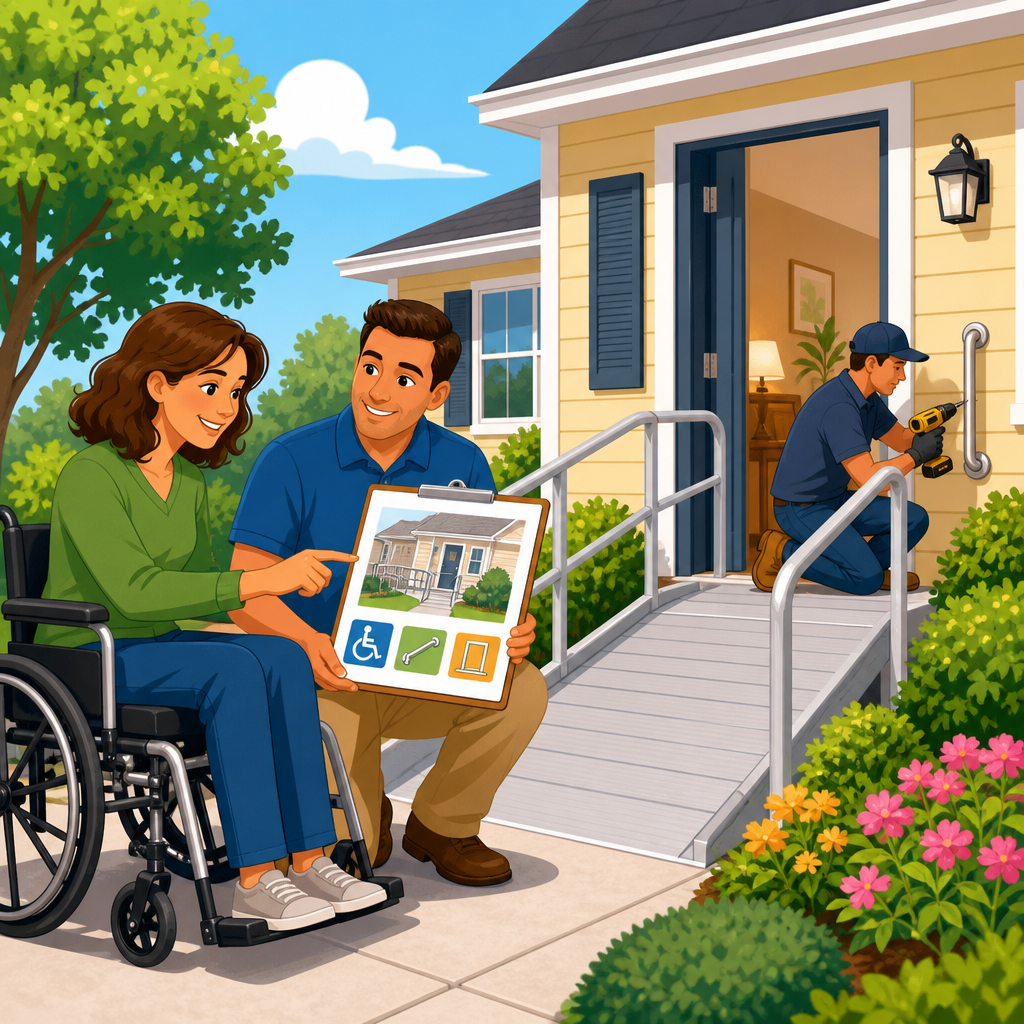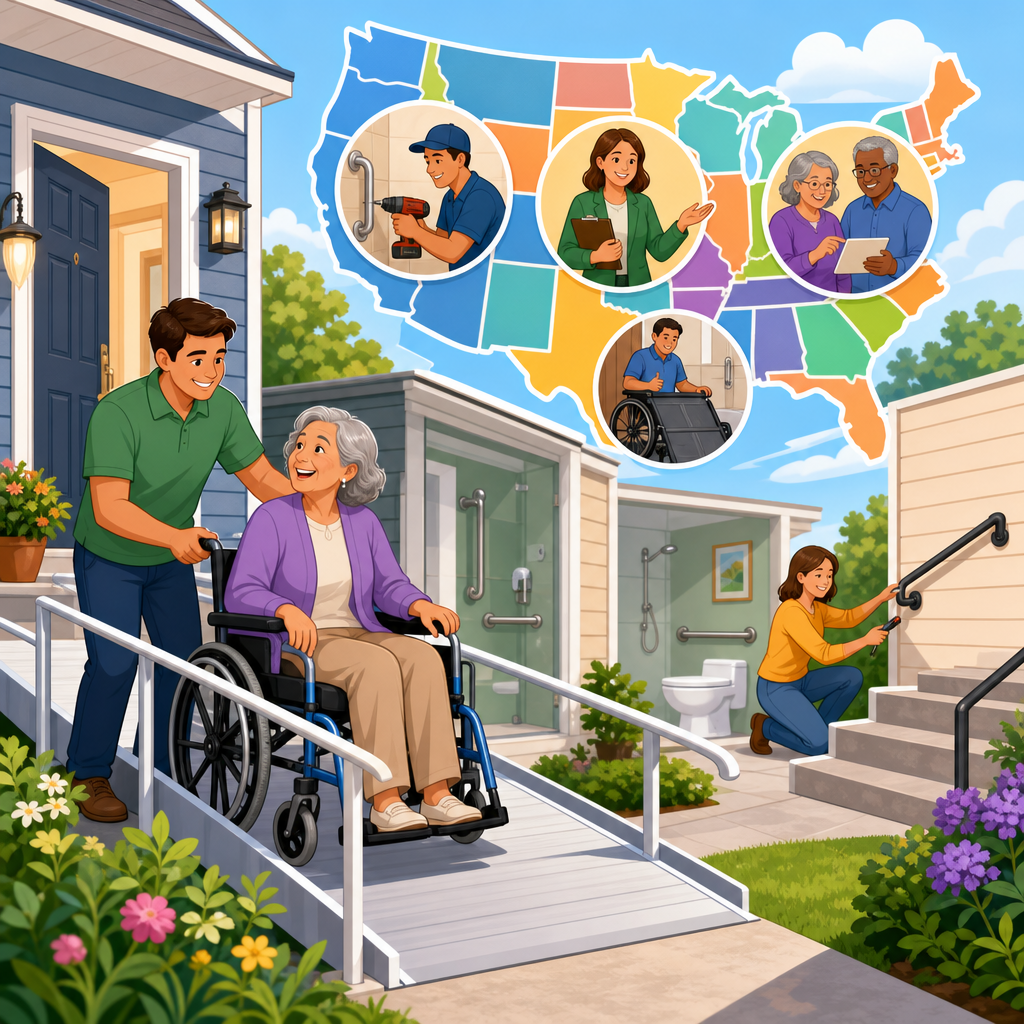
State-based assistance for home accessibility upgrades helps homeowners and renters pay for essential modifications such as ramps, stair lifts, roll-in showers, widened doorways, and safer flooring when disability, aging, or injury changes how a home must function. In this context, state-based assistance means public funding, state-administered federal programs, tax relief, low-interest loans, Medicaid waiver benefits, and nonprofit partnerships coordinated at the state or local level. Home accessibility upgrades are structural or equipment changes that improve entry, movement, bathing, toileting, cooking, and emergency egress. I have worked with families comparing bids, waiver paperwork, and landlord approvals, and the biggest challenge is rarely identifying a needed modification. The hard part is matching that need to the right funding source before paying out of pocket.
This matters because accessibility projects are expensive, timing is urgent, and eligibility rules vary dramatically by state. A simple grab bar installation may cost a few hundred dollars, but a full bathroom conversion can exceed $15,000, and vertical platform lifts often cost much more once electrical work and permits are included. Many households assume Medicare will cover these changes, yet Medicare usually does not pay for permanent home modifications. That gap pushes people toward state housing agencies, Medicaid Home and Community-Based Services waivers, vocational rehabilitation programs, Assistive Technology Act projects, and property tax relief programs. For anyone researching grants and assistance programs, this hub explains where state-based help comes from, who qualifies, how applications work, and how to evaluate options without missing better funding paths linked across the broader cost and financing topic.
What state-based assistance usually includes
State support for home accessibility upgrades generally falls into five categories: grants, forgivable loans, standard low-interest loans, tax benefits, and service-based benefits that pay contractors directly. Grants do not require repayment if used correctly. Forgivable loans are technically loans, but the balance may be reduced over time if the resident remains in the home for a required period. Standard low-interest loans reduce financing costs when grants are unavailable. Tax benefits can include state income tax credits, deductions, or property tax exemptions tied to disability or adaptive improvements. Service-based benefits, especially through Medicaid waivers, may authorize an environmental modification after a functional assessment and care plan approval.
In practice, these programs are rarely branded the same way from one state to another. One state housing finance agency may offer an accessibility rehabilitation loan, while another routes funds through community development offices or local nonprofits using federal Community Development Block Grant dollars. State units on aging may provide smaller repairs, and state developmental disability agencies may fund modifications that support independent living goals. Veterans may also find state veterans departments coordinating supplemental aid alongside federal VA grants. The lesson is simple: the same project can be eligible under multiple systems, and names differ, but the functional purpose is consistent. This hub article connects those systems so readers can identify the best-fit program before moving into state-specific detail articles.
Who qualifies for grants and assistance programs
Eligibility usually depends on a mix of disability status, age, income, housing tenure, medical necessity, and residency. Some programs serve older adults at risk of institutional placement. Others require a documented disability under Social Security, Medicaid, or state disability criteria. Income limits are common, especially in housing grant programs funded through state or local community development money. Programs may use area median income percentages, federal poverty guidelines, or fixed household income caps. Owners often qualify more easily for structural modifications, but renters can qualify when landlords consent in writing. For multifamily properties, additional building rules may apply.
Medical necessity is often the deciding factor. Agencies may ask for a physician letter, occupational therapy assessment, independent living evaluation, or case manager justification explaining why a modification is required for safe access, activities of daily living, or community integration. A ramp requested for convenience may be denied, while a ramp tied to wheelchair access and fall prevention is more likely to be approved. I have seen applications succeed after families replaced vague language like “needs safer bathroom” with specific statements such as “requires zero-threshold shower to perform bathing transfers without hands-on assistance.” Specificity matters because reviewers must tie funding to measurable functional outcomes and compliance standards.
Where the money comes from and how programs are structured
Most state-based assistance is built from layered funding rather than a single dedicated accessibility budget. Medicaid waivers are a major source when modifications help a person remain at home instead of entering a nursing facility or other institution. State housing agencies often administer rehabilitation funds supported by federal block grants, HOME funds, state trust funds, or bond-backed loan products. Assistive Technology Act programs, which exist in every state and territory, may not always pay for full renovations, but they often provide device loans, financing options, reutilized equipment, and referrals that reduce total project cost. State vocational rehabilitation agencies may fund modifications when they directly support employment.
This mixed structure explains why approval timelines differ. A housing rehabilitation grant may run on annual funding rounds and contractor bidding requirements. A Medicaid waiver modification may require prior authorization, care plan inclusion, and environmental review. A state tax credit is claimed after the work is completed and documented. Some states also channel funds through Centers for Independent Living, Area Agencies on Aging, or county human services offices. Because money originates from different statutes, applicants must expect different definitions of disability, different caps on eligible work, and different rules for combining benefits. Understanding the funding architecture prevents common mistakes, such as signing a construction contract before an agency confirms that reimbursement is allowed.
Common programs to check first
If you need a practical starting point, begin with the programs most likely to pay for or reduce the cost of major accessibility work.
| Program type | What it may cover | Typical gatekeeper | Common limitation |
|---|---|---|---|
| Medicaid HCBS waiver | Ramps, bathroom modifications, lifts, doorway widening | Case manager or Medicaid agency | Waitlists, strict medical necessity rules |
| State housing rehabilitation grant or loan | Structural repairs and accessibility renovations | Housing finance agency or local administrator | Income caps, owner-occupancy rules |
| Assistive Technology financing | Portable equipment, loan financing, device reutilization | State AT program | May not cover major construction |
| Vocational rehabilitation | Access changes needed for work or training | VR counselor | Must tie directly to employment goal |
| State tax credit or exemption | Partial cost recovery after installation | State tax authority | Benefit arrives later, not upfront |
These are the first programs I review because they cover the broadest range of situations. They also create useful internal pathways for deeper research. For example, if a waiver will fund bathroom modifications but not flooring, a housing rehab grant might cover the remaining safety work. If a homeowner does not meet income limits for a grant, a state-backed low-interest loan may still make sense. If an applicant is employed or returning to work after injury, vocational rehabilitation can be more flexible than a housing agency because the justification is tied to job retention. Good planning means comparing these categories side by side rather than assuming one denial ends the search.
How to apply and improve your odds of approval
The strongest applications combine functional evidence, compliant contractor documentation, and patience with process. Start by defining the problem in daily living terms: entering the home, transferring into the shower, reaching the toilet safely, or navigating narrow halls with a walker. Then gather documentation that translates that problem into agency language. Useful records include a physician note, occupational therapist recommendations, photos, measurements, proof of income, proof of residency, ownership or lease documents, and at least one detailed contractor estimate. Many programs prefer licensed and insured contractors, and some require bids from approved vendors only.
Next, verify whether the program allows retroactive reimbursement. Many do not. I routinely warn families not to install a ramp or begin demolition before written approval, because even medically necessary work can be denied if procurement rules were skipped. Ask whether permits, inspections, lead-safe renovation requirements, or ADA-related design standards apply. Although private homes are not universally governed by every commercial accessibility standard, agencies often use recognized benchmarks for safety and durability. Finally, keep a communication log. Record application dates, caseworker names, requested documents, and expiration dates for estimates. Administrative follow-up is not glamorous, but it is often what moves a file from pending to approved.
Examples of real-world upgrade scenarios
Consider a homeowner in her seventies with arthritis and two recent falls. She needs grab bars, a comfort-height toilet, a zero-threshold shower, brighter lighting, and a short exterior ramp. Her state’s Medicaid waiver may pay for the bathroom changes if she meets nursing-home level-of-care criteria, but the lighting upgrade might fall outside the waiver scope. A local housing rehabilitation program funded through state and federal dollars could potentially fill that gap if she meets income rules. If funds are limited, the project may be phased: immediate fall-prevention items first, larger structural work second. That sequencing is common and often financially smart.
Now consider a renter with a spinal cord injury who needs a ramp and widened bathroom access in a small apartment. The landlord’s written permission becomes central. State human rights law may support reasonable modifications, but funding still depends on the program. A Center for Independent Living may help coordinate advocacy, while a state Assistive Technology program could identify temporary equipment during the wait. If the resident is working and the modifications directly affect the ability to leave for work, vocational rehabilitation may become relevant. These examples show why this grants and assistance hub belongs within a larger cost and financing structure: affordability, legal rights, funding, and project scope always intersect.
Limits, tradeoffs, and how to avoid costly mistakes
State-based assistance is valuable, but it is not instant, unlimited, or uniformly generous. Waitlists are a real problem, especially in waiver-based programs. Funding caps may cover only part of a bathroom remodel, leaving households to finance plumbing relocation or mold remediation separately. Some agencies will not fund upgrades viewed as general home improvement, even when they are discovered during accessibility work. Cosmetic tile choices, premium fixtures, and unrelated repairs are often excluded. Applicants should also expect recapture provisions in forgivable loan programs if the home is sold too soon. Read those terms carefully before closing on assistance.
The biggest mistakes I see are choosing the wrong entry point, under-documenting functional need, and failing to coordinate overlapping programs. Another mistake is assuming the cheapest bid is best. Poorly installed ramps, incorrect slopes, badly placed grab bars, and undersized shower entries create safety hazards and may fail inspection. Use contractors who understand aging-in-place design, residential code requirements, and durable medical access needs. Ask for exact dimensions, product specifications, and warranty details. When possible, involve an occupational therapist early. Good clinical guidance saves money because it prevents modifications that look accessible but do not actually work for the resident’s transfer pattern, mobility device, or caregiver support needs.
How this hub fits into your broader financing strategy
State-based assistance for home accessibility upgrades is most effective when treated as one part of a larger financing plan, not the only option. Grants and publicly funded programs can reduce out-of-pocket cost dramatically, but they work best when combined with realistic budgeting, contractor comparisons, and an understanding of which expenses must be covered privately. In many cases, households stack resources: a state grant for structural work, nonprofit support for minor safety items, and a low-interest loan for the remaining balance. That blended approach often produces faster results than waiting for one perfect program that covers every line item.
Use this hub as your starting map for grants and assistance programs, then move deeper into the related pages in the cost and financing section for program-specific guidance, application checklists, and comparisons with loans, tax strategies, and nonprofit help. The key takeaway is straightforward: funding exists, but success depends on matching the right project to the right state-administered source, documenting medical and functional need clearly, and following each program’s rules before work begins. If you are planning accessibility upgrades now, make a list of needed modifications, gather clinical documentation, and contact your state housing, Medicaid, aging, and independent living agencies this week.
Frequently Asked Questions
What types of home accessibility upgrades are usually covered by state-based assistance programs?
State-based assistance programs often help pay for modifications that make a home safer and easier to use for someone living with a disability, recovering from an injury, or aging in place. Commonly supported upgrades include wheelchair ramps, porch lifts, stair lifts, grab bars, handrails, roll-in showers, walk-in tubs, raised toilets, widened doorways, lower kitchen counters, non-slip flooring, improved lighting, lever-style door handles, and accessible entrances. In some cases, programs may also cover structural changes such as converting a first-floor room into a bedroom, modifying bathroom layouts for mobility devices, or improving access to laundry areas and other essential living spaces.
Coverage varies widely by state and by program. Some programs only fund medically necessary changes, while others support broader safety and independence improvements. For example, a Medicaid Home and Community-Based Services waiver may approve bathroom and entry modifications if they help prevent institutional care, while a state housing rehabilitation grant might focus on health and safety issues for low-income households. Tax credits, property tax relief, and low-interest loan programs may also help offset costs even when direct grants are not available. Because each program has its own rules, it is important to review whether the upgrade must be tied to a documented disability, whether a landlord must approve the work in a rental unit, and whether the home must meet ownership, income, or occupancy requirements.
Who qualifies for state-based assistance for home accessibility upgrades?
Eligibility usually depends on a combination of factors rather than a single rule. Many programs consider disability status, age, income, household size, medical need, and whether the applicant owns or rents the home. Some are designed for older adults who want to remain safely at home, while others are aimed at people with physical disabilities, veterans, children with developmental disabilities, or individuals transitioning out of hospitals or nursing facilities. State-administered federal programs, including Medicaid waivers and community development funding, often require proof that the requested modification supports daily living, health, or long-term independence.
Financial eligibility is also common. Grants and subsidized loans may be limited to low- or moderate-income households, though some tax incentives or nonprofit programs serve a broader range of applicants. Renters may qualify in many states, but they typically need written permission from the property owner before work begins. Applicants are often asked to provide documentation such as a physician’s letter, occupational therapy assessment, proof of income, lease or deed records, contractor estimates, and identification. Because state and local agencies administer assistance differently, a person who does not qualify for one program may still be eligible for another through an aging agency, disability services office, housing department, or nonprofit partner.
How do I apply for assistance for accessibility modifications in my state?
The application process usually starts by identifying which agencies and organizations administer home modification assistance where you live. Good starting points include your state Medicaid office, Area Agency on Aging, state housing finance agency, department of health and human services, vocational rehabilitation office, and local community action or disability resource centers. Some states centralize information through aging and disability resource portals, while others rely on county offices or nonprofit contractors to manage applications. If you are a renter, it is wise to speak with your landlord early, since many programs require written approval before they will review the request.
Most applications require more than just a basic form. You may need a home assessment, medical documentation showing why the modification is necessary, income verification, proof of residence, and one or more contractor bids. Some programs insist that you use approved contractors or wait for formal authorization before starting any work. That detail matters, because beginning construction too early can disqualify the project from reimbursement. If the need is urgent, ask whether your state offers expedited review for hospital discharge, fall prevention, or risk of institutional placement. It is also smart to apply to multiple sources at once, such as a state grant program, a nonprofit repair fund, and a tax relief program, since layering assistance can reduce out-of-pocket costs and shorten delays.
Can Medicaid or other public programs pay for home accessibility upgrades?
Yes, in many cases Medicaid and other public programs can help pay for accessibility upgrades, but usually under specific conditions. Traditional Medicaid does not automatically cover home renovations as a standard benefit, yet many states use Medicaid waiver programs or Home and Community-Based Services benefits to fund environmental modifications that allow eligible individuals to live safely at home instead of entering institutional care. These modifications may include ramps, widened doorways, bathroom changes, and other adaptations directly related to the person’s functional needs. Approval often depends on showing that the modification is cost-effective, medically or functionally necessary, and part of a care plan.
Beyond Medicaid, states may administer housing rehabilitation grants, community development funds, assistive technology programs, and low-interest accessibility loans. Some residents may also benefit from state tax credits, sales tax exemptions on certain medical equipment, or property tax abatements tied to disability-related improvements. Public vocational rehabilitation agencies sometimes fund modifications when they are necessary for employment access. In addition, nonprofit partnerships coordinated at the state or local level may fill gaps that government programs do not cover, such as labor costs above a program cap or smaller but still important safety improvements. Because rules differ significantly, the best approach is to ask each program whether it covers permanent structural changes, whether there is a spending limit, and whether the funding is a grant, loan, reimbursement, or waiver service.
What should I do if my state assistance application is denied or the funding is not enough?
A denial or partial award does not necessarily mean the project is over. First, review the reason for the decision carefully. Applications are often denied because of missing documentation, incorrect timing, an ineligible contractor, lack of landlord approval, or insufficient proof that the modification is medically necessary. Many programs have an appeal or reconsideration process, and submitting stronger supporting materials can make a difference. A letter from a physician, occupational therapist, or case manager explaining how the upgrade prevents falls, improves access to essential rooms, or reduces the need for institutional care may strengthen the case.
If the approved amount falls short, look for ways to combine funding sources. Homeowners and renters often piece together assistance from state grants, local rehabilitation programs, nonprofit organizations, disease-specific charities, civic groups, Medicaid waiver benefits, and affordable financing options. Ask whether the project can be phased so urgent modifications, such as a ramp or bathroom safety changes, are completed first. You should also check whether your state offers tax deductions, tax credits, or property tax relief related to disability access improvements. In many communities, independent living centers, aging agencies, and disability advocates can help identify overlooked programs and assist with appeals. Persistence matters: home accessibility funding is often fragmented, but with the right documentation and coordination, many households can still secure meaningful support.