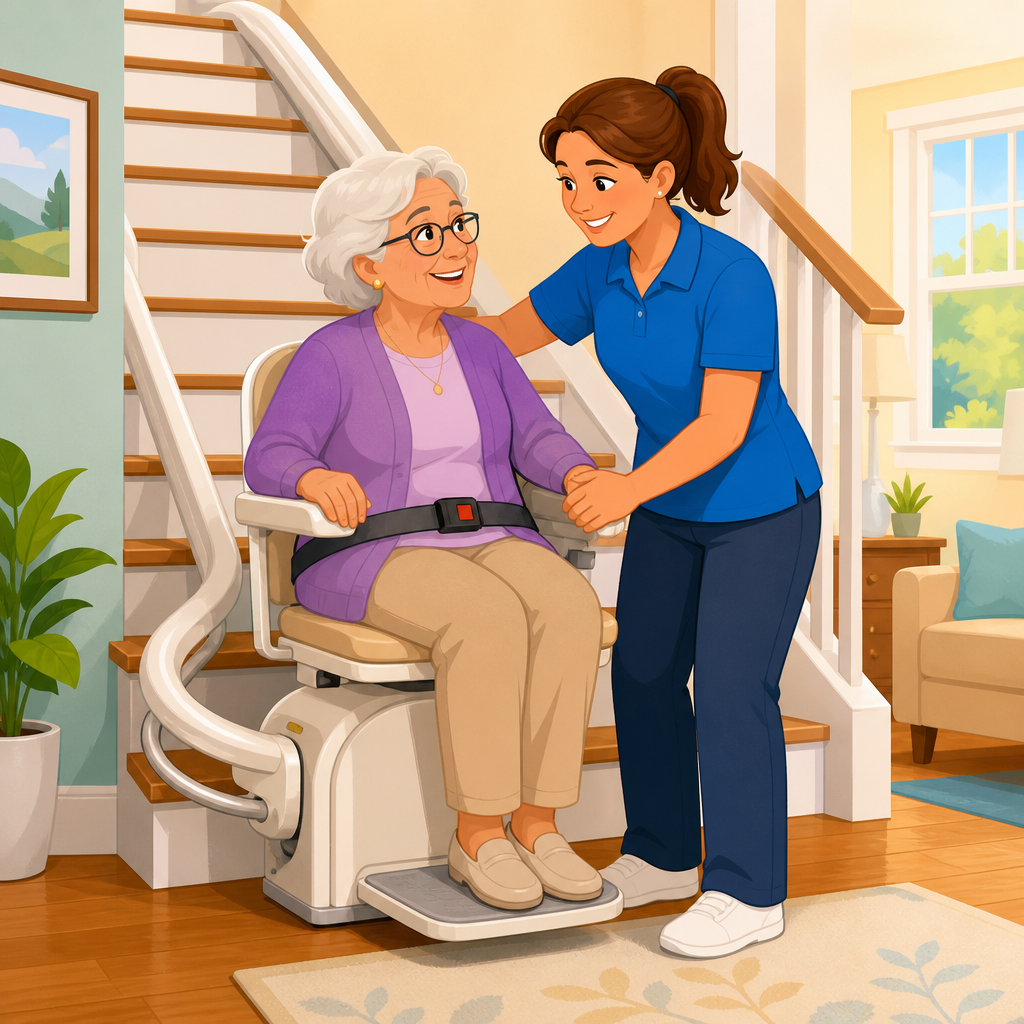
Choosing the best stair lifts for users who need caregiver assistance with transfers requires more than comparing upholstery, speed, or price. In real home assessments, the transfer itself is often the most important safety moment, because the user must move from wheelchair, walker, bed, or standing support onto the stair lift seat while a caregiver manages balance, body mechanics, and timing. A stair lift can reduce fatigue and falls on stairs, but the wrong model can make transfers awkward, slow, or dangerous. That is why this guide to best chair lifts for disabled users focuses on transfer-friendly design, not just basic ride quality.
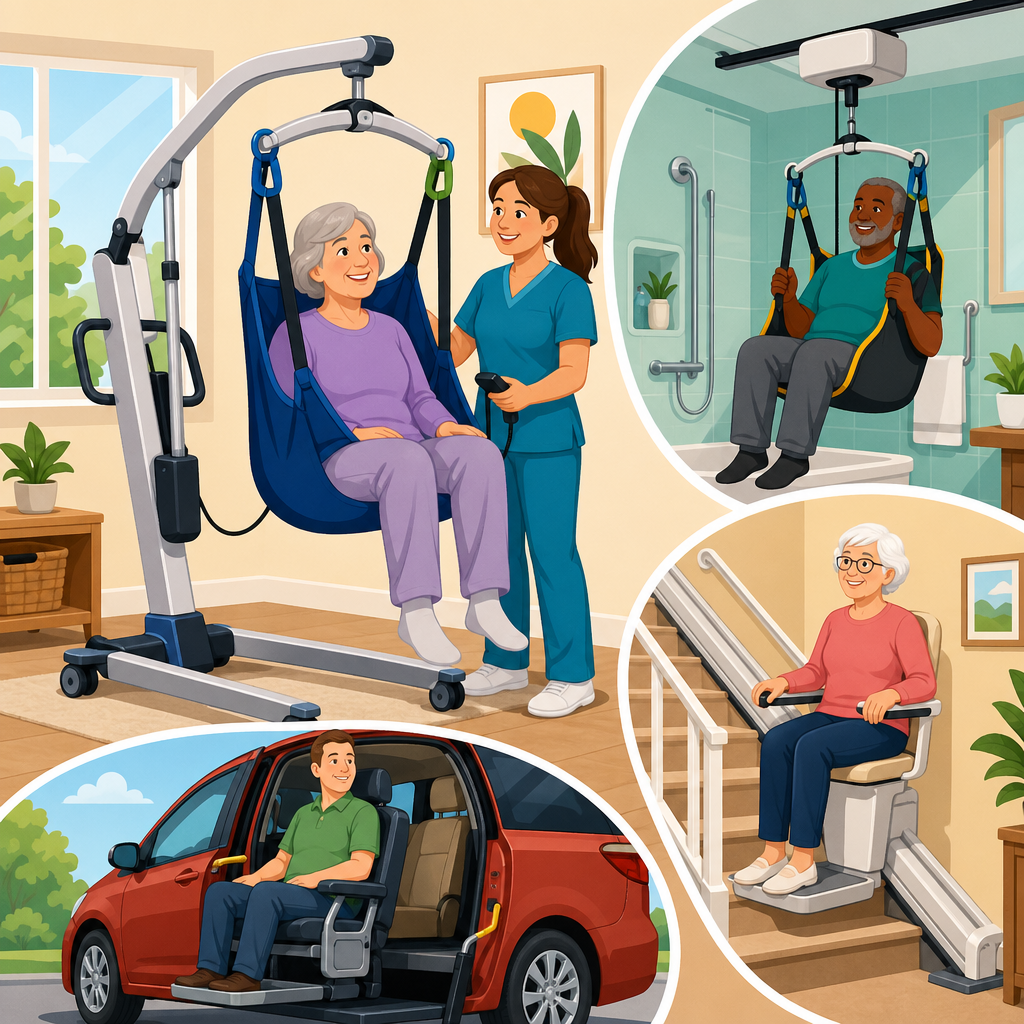
A stair lift, sometimes called a chair lift for stairs, is a motorized seat that travels along a rail fixed to the staircase. The user sits, secures the belt, and rides between floors. For disabled users who cannot safely climb steps, stair lifts can preserve access to bedrooms, bathrooms, and living spaces without a full renovation. However, people who need caregiver assistance have additional requirements: enough seat clearance for side transfers, stable armrests, intuitive swivel controls, predictable start and stop behavior, and parking positions that do not block hallways or wheelchair turning space.
This topic matters because the consequences of a poor fit are serious. According to the Centers for Disease Control and Prevention, falls remain a leading cause of injury among older adults, and many preventable incidents happen during transfers rather than during long-distance mobility. In practice, I have seen homes where a technically functional stair lift still failed because the caregiver had no room to position a gait belt, the user could not tolerate the seat height, or the folding footrest created a trip point during setup. The best solution balances user comfort, caregiver ergonomics, staircase geometry, and service reliability. This hub article explains what to buy, what to measure, and which product types usually work best.
What transfer-friendly stair lifts must include
The best stair lifts for caregiver-assisted transfers share a specific set of features. First, the seat must support safe approach. For many wheelchair users, a level or slightly open transfer angle works better than a deep bucket seat because it reduces twisting. Second, a powered or easy-to-operate swivel seat is essential at the top landing. Manual swivel seats can work, but only if the caregiver can lock the seat confidently while stabilizing the user. Third, the armrests should offer support without blocking a lateral transfer. Some models have armrests that lift independently, which is useful when the caregiver needs one side open.
Seat height and footrest design also matter more than buyers expect. If the seat is too low relative to the wheelchair cushion or standing transfer height, the caregiver must manage an uphill transfer, increasing strain on shoulders and lower back. If the footrest sits too high off the floor when parked, shorter users may struggle to plant their feet before standing. Powered folding footrests can reduce bending for caregivers. Safety sensors on the carriage and footrest are standard on reputable brands and help stop the lift if it meets an obstruction, but sensors do not replace correct installation and transfer technique.
Controls should be simple enough for both user and caregiver. I strongly favor large rocker switches or clearly labeled armrest controls over tiny buttons. Call-send remotes are valuable in shared homes because they let a caregiver bring the lift to the correct floor before setup. Battery backup is nonnegotiable. Most modern stair lifts use DC batteries with a charging point at one or both ends of the rail, allowing several trips during a power outage. For users who rely on upstairs toileting or bedroom access, that continuity is a safety requirement, not a convenience feature.
Best stair lift types for disabled users who need transfer help
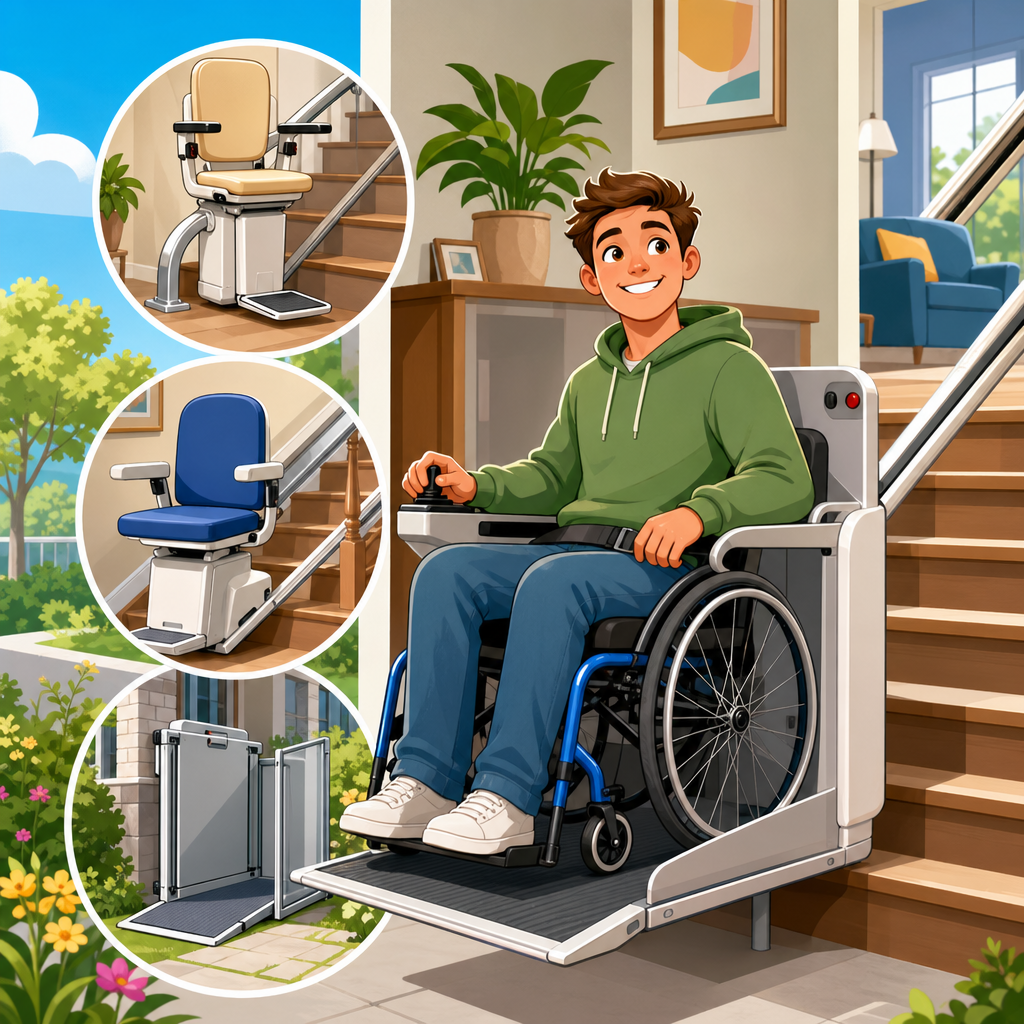
Straight stair lifts are usually the best value and the simplest option when the staircase runs in one line without turns or intermediate landings. They install faster, cost less than curved systems, and are easier to service because the rail is standardized. For transfer-dependent users, straight lifts also offer more predictable seat positions, which helps caregivers repeat the same routine each time. Models from Bruno, Harmar, and Access BDD are common examples in this category. A straight rail can often be paired with a hinged section near a doorway to reduce obstruction at the bottom of the stairs.
Curved stair lifts are custom-built for staircases with turns, pie-shaped steps, or split landings. They are significantly more expensive, but they solve layout problems that no straight model can address safely. For users who need caregiver assistance, a curved lift can place the seat in a better transfer zone at the top or bottom, especially when the landing itself is tight. The key is careful survey work. The rail path, parking location, and final seat angle should be selected around the transfer, not merely around travel on the stairs. In several homes I have assessed, a custom overrun at the top landing created enough space to avoid transferring directly beside the stair edge.
Perch or standing stair lifts are occasionally discussed for disabled users, but they are rarely the best choice when caregiver-assisted transfers are needed. These lifts require strong trunk control, standing tolerance, and precise balance. They can be helpful for users with limited knee flexion who cannot sit fully, yet they provide less stability for a guarded transfer than a seated lift. Heavy-duty stair lifts deserve more attention. Users with higher body weight, wider pelvic width, or bariatric equipment needs often benefit from wider seats, reinforced chassis, and higher load capacities, frequently in the 350- to 600-pound range depending on the model.
Top brands and what they do well
Bruno consistently performs well in homes where transfer quality matters. The Bruno Elan for straight stairs is compact and dependable, while the Bruno Elite offers a larger seat and a more substantial feel that many caregivers prefer. Bruno’s seat design tends to support a controlled sit-to-stand sequence, and the company has a strong dealer network in many US markets. Harmar is another major name, with the Pinnacle series widely used for straight staircases. Harmar units are often selected for their narrow folded profile, which helps preserve stair clearance for other household members.
Handicare and Access BDD are often strong options for complex layouts. Handicare’s curved systems and modular rail approaches can be useful where installation constraints are significant. Access BDD, sold in many regions under established dealer partnerships, offers custom solutions that can be configured around difficult landings. Stannah remains one of the most recognized stair lift manufacturers globally, with a reputation for refined ride quality and solid aftercare in supported markets. Savaria is worth attention when buyers are also comparing platform lifts or other accessibility equipment, because the company operates across several mobility categories.
No single brand is automatically the best chair lift for disabled users. The best choice depends on dealer competence, part availability, staircase dimensions, and the transfer pattern. I have seen premium units underperform because the installer did not account for wheelchair footplate clearance, and I have seen midrange straight lifts work beautifully because the dealer staged a trial transfer using the actual wheelchair. Ask each supplier about service response times, preventive maintenance, battery replacement intervals, and whether they can adjust seat height, armrest width, or rail overruns for transfer needs.
How to evaluate models before buying
The buying process should start with a detailed home assessment. Measure clear stair width, tread depth, riser height, handrail projection, and landing space at both ends. Then map the transfer. Where will the wheelchair or walker sit? Can the caregiver stand in front, beside, or slightly behind the user? Is there enough room for a gait belt, transfer board, or pivot turn? If the user has one stronger side, the seat orientation and approach angle should respect that. A good dealer will ask these questions before discussing finishes or monthly promotions.
Request a live demonstration whenever possible. If a showroom visit is unrealistic, ask the dealer to bring a demo unit, sample seat, or at minimum detailed measurements and photographs of comparable installations. During evaluation, pay attention to start-stop smoothness, seat cushion firmness, armrest stability, belt reach, and swivel lock engagement. Listen for motor noise too; anxious users often tolerate transfers better when the machine feels calm and predictable. If the user has spasticity, pain, or limited hip range of motion, test whether the seat edge and back angle increase discomfort during setup.
| Evaluation factor | Why it matters for transfers | What to ask the dealer |
|---|---|---|
| Seat height | Reduces lifting effort and uneven transfer angles | Can the seat height be adjusted to match wheelchair or standing transfer needs? |
| Swivel function | Improves exit safety at the top landing | Is swivel manual or powered, and does it lock securely at transfer positions? |
| Armrest design | Affects side access and push support | Do both armrests lift, and can one remain raised during transfer? |
| Footrest operation | Limits caregiver bending and setup hazards | Is the footrest powered, and how much floor clearance is available when parked? |
| Rail overrun | Moves the user away from the stair edge | Can the rail extend to a safer transfer zone at the top or bottom? |
| Service coverage | Downtime can trap users on one floor | What are normal repair times and local parts availability? |
Installation, cost, and long-term ownership
Professional installation is mandatory. Stair lifts attach to stair treads, not usually the wall, and the fit must follow manufacturer tolerances precisely. In the US market, straight stair lifts commonly start around $2,500 to $5,500 installed, while curved stair lifts often range from $10,000 to $20,000 or more depending on rail complexity. Heavy-duty models, powered options, and custom overruns increase pricing. Used or reconditioned straight units can offer savings, but buyers should confirm battery age, warranty terms, parts support, and whether the rail is new or reused.
Ongoing ownership costs include annual service, battery replacement every few years, and occasional repairs to seats, remotes, or charging contacts. Maintenance needs are modest compared with home elevators, but reliability depends heavily on dealer quality. Before signing, review the warranty in plain language. Separate the manufacturer warranty from labor coverage, because some low headline prices hide expensive service visits after the first year. Also ask whether the dealer offers emergency support. For a user who cannot manage stairs at all, a broken stair lift is not an inconvenience; it is a temporary loss of access to part of the home.
Funding can be complex. Original Medicare generally does not cover stair lifts because they are usually classified as home modifications rather than durable medical equipment, though some Medicare Advantage plans may offer supplemental benefits. Medicaid waiver programs, state assistive technology programs, veterans’ benefits, nonprofit grants, workers’ compensation, or long-term care insurance may help in some cases. A reputable dealer should not promise coverage they cannot verify, but they should provide detailed quotes and clinical justification language that can support a funding application. Keep all measurements, invoices, and assessment notes for appeals or future equipment reviews.
How this hub connects best chair lift choices across user needs
As a hub for best chair lifts for disabled users, this article sits above several more specific buying paths. Some readers need the best stair lifts for wheelchair users who perform independent lateral transfers. Others need options for seniors with arthritis who can still stand but need a slower seat and gentler controls. Still others are comparing heavy-duty stair lifts, outdoor stair lifts, curved systems for narrow landings, or alternatives such as vertical platform lifts and residential elevators. The right buying guide changes with diagnosis, transfer method, body size, home layout, and caregiver availability.
The central lesson is simple: buy for the transfer first, then the ride. A beautiful rail, premium upholstery, or a famous brand does not compensate for poor seating geometry at the landing. The best stair lifts for users who need caregiver assistance with transfers are the models that create repeatable, low-strain, low-risk movement every single day. Start with an in-home assessment, involve the caregiver in every demo, and compare at least two qualified dealers. If you do that carefully, you can choose a chair lift that improves safety, protects caregiver effort, and keeps the full home usable.
Frequently Asked Questions
What features matter most in a stair lift when a caregiver is helping with transfers?
For users who need caregiver assistance with transfers, the most important features are the ones that make getting on and off the seat safer, smoother, and more predictable. A swivel seat is usually near the top of the list because it allows the rider to turn away from the staircase and face the landing during entry and exit. That simple change can reduce twisting, lower the chance of losing balance, and give the caregiver a more stable angle for support. Seat height also matters more than many people expect. If the seat is too low, the user may have difficulty standing up from it; if it is too high, the transfer from a wheelchair or walker can become awkward. Matching the stair lift seat height to the user’s typical transfer surface can make a major difference.
Armrest design, footrest clearance, and overall seat space are also important. Caregivers often need room to position themselves close enough to guide hips, knees, or the gait belt without being blocked by bulky armrests or a poorly placed footrest. Fold-up components can help create more working space when the user is preparing to transfer. A reliable seat belt, easy-to-use controls, and a smooth start-and-stop ride are also valuable, especially for users with weakness, poor trunk control, or anxiety during movement. In many cases, the “best” stair lift is not the one with the most premium appearance, but the one that supports the user’s transfer pattern, body size, mobility level, and the caregiver’s ability to assist safely every single time.
Is a stair lift safe for someone who transfers from a wheelchair or walker with caregiver help?
A stair lift can be very safe for a person who transfers from a wheelchair or walker, but only if the setup matches the user’s actual needs and the transfer process has been thought through carefully. The stair lift itself addresses movement on the stairs; it does not automatically solve the challenge of getting onto and off the seat. That is why the transfer area at both the top and bottom of the staircase deserves as much attention as the lift rail, motor, or weight capacity. The user needs enough landing space to position a wheelchair, walker, or standing support properly, and the caregiver needs enough room to help without twisting, reaching, or getting pinned against a wall or railing.
Safety also depends on the user’s physical abilities. If the person can bear some weight, follow cues, and sit with reasonable stability, a stair lift may work very well. If the person has severe balance loss, unpredictable movements, significant cognitive impairment, or requires a fully dependent transfer, then a stair lift may be less appropriate unless a qualified professional confirms it can be used safely. In many homes, the best outcome comes from a formal assessment that looks at the user, the caregiver, the staircase, and the transfer routine together. When the lift is correctly selected and the transfer technique is realistic for daily use, a stair lift can reduce stair-related falls and caregiver strain. When those details are ignored, even a high-quality unit may become difficult or risky to use.
How do you know if a standard stair lift will work, or if a more specialized model is needed?
A standard stair lift may be enough if the user can perform a fairly controlled seated transfer with limited hands-on help and the caregiver has clear, safe access at both landings. In those cases, features like a swivel seat, adjustable seat height, folding footrest, and straightforward controls may provide everything needed. However, a more specialized model should be considered when the transfer is complicated by limited hip or knee motion, poor trunk stability, larger body size, difficulty bending, or the need for a specific seating position. Some users benefit from a perch-style seat, a heavy-duty model, or a unit with extra seat width and supportive positioning. Others may need options that allow better approach angles for caregivers or easier operation with reduced hand strength.
The home layout can also push the decision toward a specialized solution. Narrow stairs, tight hallways, short landings, or doorways close to the top or bottom of the staircase can all affect whether a standard configuration is practical. In curved staircases or homes with unusual landing geometry, a custom rail may be necessary not just for travel on the stairs, but for safer boarding and exiting. The right choice often becomes clear when someone watches the full transfer routine rather than just measuring the staircase. If the user and caregiver have to improvise every step of the process, a standard lift may not be the best fit. A model that better matches the user’s body mechanics and the home’s constraints can improve both safety and long-term usability.
What should families look for during a home assessment for caregiver-assisted transfers?
A strong home assessment should go beyond basic stair measurements. Families should expect the assessor to ask how the user transfers now, what type of mobility equipment is used, how much physical help the caregiver provides, and whether there have been falls or near-falls. The assessor should observe, or at least discuss in detail, how the user moves from wheelchair, walker, bed, or standing support to a seated surface. This helps identify whether the user needs space for pivoting, whether the caregiver needs access from one side or both, and whether seat height or landing layout will create problems. A good assessment also considers fatigue, pain, weakness, and the user’s ability to follow instructions consistently.
Families should also pay attention to landing space, door swing, handrail placement, nearby furniture, lighting, and flooring traction. These environmental details affect whether the caregiver can position safely and whether the user can approach the lift in a controlled way. Ask practical questions: Where will the wheelchair wait? Can the caregiver lock the swivel seat easily? Is there enough room to manage the footrest during transfers? What happens if the user becomes tired halfway through the process? The most useful home assessments are realistic and transfer-focused. They identify not just whether the stair lift can be installed, but whether the user and caregiver will actually be able to use it safely day after day.
Can a stair lift reduce caregiver strain, or does it sometimes create new transfer challenges?
A stair lift can absolutely reduce caregiver strain by removing the need to support a person on the stairs themselves, which is one of the most physically demanding and risky parts of home caregiving. Instead of managing body weight while navigating steps, the caregiver can focus on a more controlled transfer at the landing and then supervise the ride. This can lower the risk of falls, back injuries, and fatigue for both people. For many families, that change is significant. A properly chosen stair lift can make daily routines more sustainable and help the user remain in the home longer.
That said, a stair lift can also create new challenges if the transfer environment is poorly planned. If the seat is hard to access, the landing is cramped, the caregiver cannot get proper body position, or the user struggles to pivot onto the chair, then the lift may shift the difficulty rather than solve it. Caregiver strain often increases when transfers require repeated repositioning, awkward reaching, or lifting from a poor angle. That is why transfer safety should drive the selection process from the start. The best results happen when the stair lift supports the caregiver’s workflow as much as the rider’s comfort. A lift that looks ideal on a brochure may not be the right one if it complicates the transfer. In real-world use, the safest and most helpful stair lift is the one that makes the entire movement sequence more controlled, repeatable, and physically manageable.