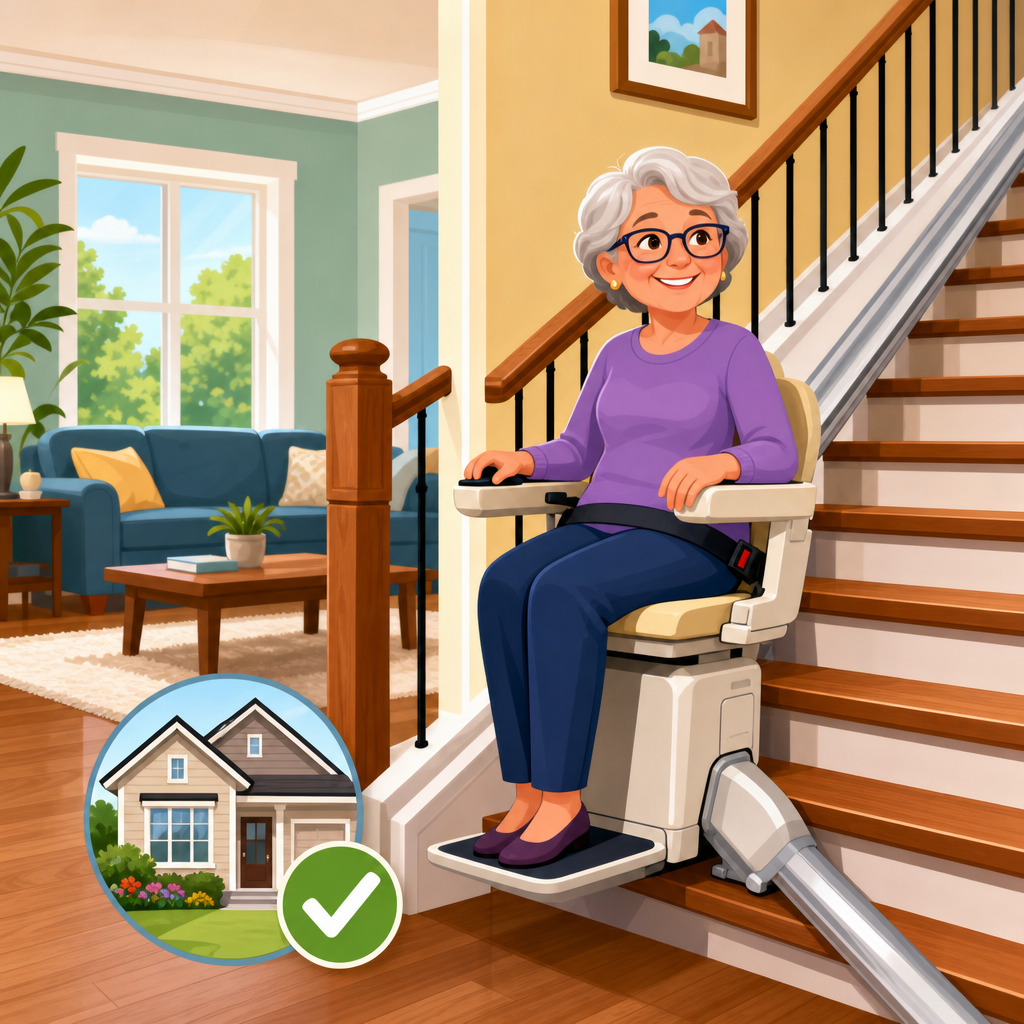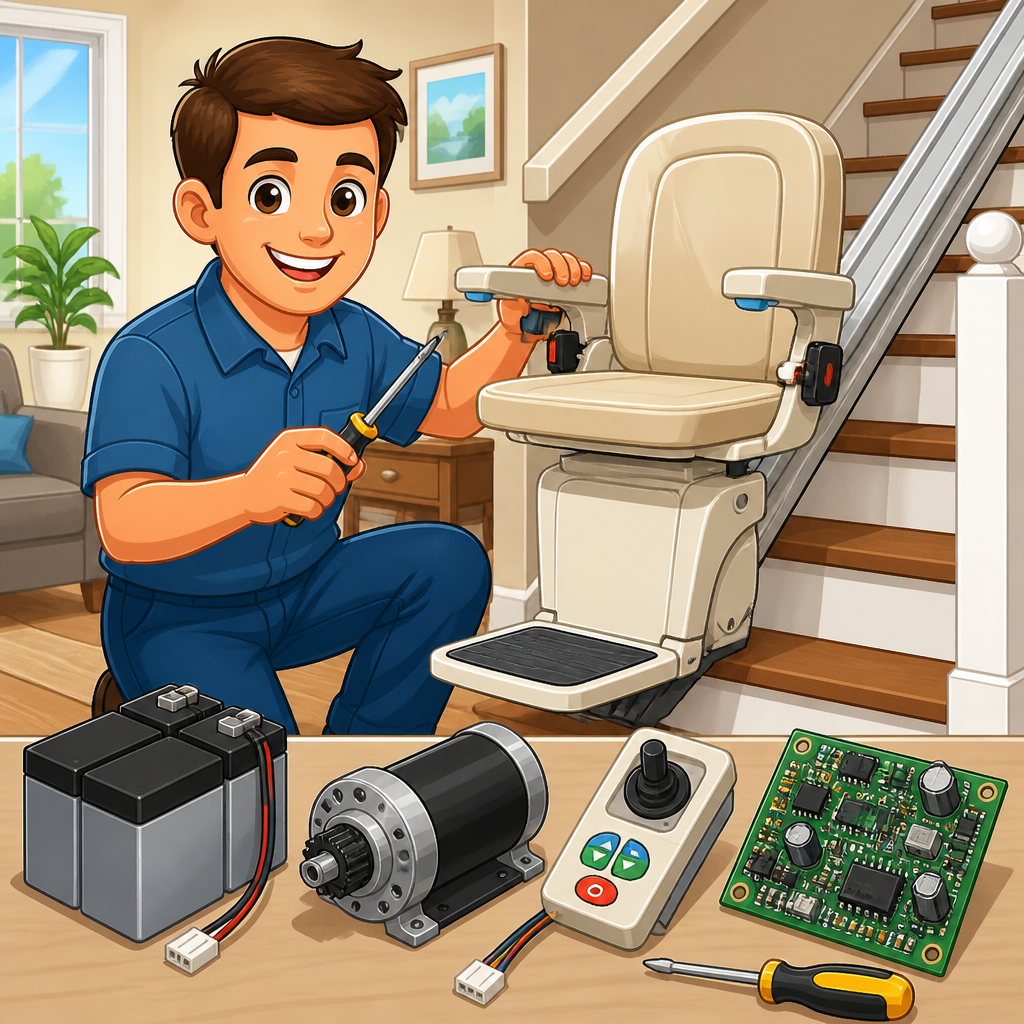
Stair lift repair costs are one of the most important parts of long-term ownership, because the true price of a stair lift is not just the installation quote but the ongoing cost of batteries, motors, controls, circuit boards, service calls, and preventive maintenance over time. In practice, homeowners usually focus first on the purchase price, yet after years of working with accessibility equipment budgets, I have seen that repair planning often determines whether a stair lift remains affordable and reliable. A stair lift is a motorized chair or perch that travels along a rail fixed to the staircase, powered by batteries that charge at stations on the track. Cost of ownership over time means the total amount you can expect to spend after installation, including wear parts, diagnostics, emergency visits, annual service, and major component replacement. This matters because stair lifts are safety devices, not convenience gadgets. When a battery weakens, a footrest switch fails, or a circuit board starts faulting, the equipment can become unusable exactly when mobility support is most needed. Homeowners comparing straight stair lifts, curved stair lifts, indoor models, and outdoor models need a realistic repair cost guide so they can budget responsibly, evaluate service plans, and avoid surprise expenses. This article serves as a central resource for the broader cost and financing conversation by explaining typical repair categories, what drives pricing, which failures are most common, and how smart maintenance can reduce lifetime stair lift repair cost.
What Drives Stair Lift Repair Cost Over Time
Stair lift repair cost depends on five main variables: lift type, component quality, age, usage level, and local labor rates. Straight stair lifts are generally less expensive to repair than curved stair lifts because their rails and carriage systems are more standardized, parts are easier to source, and technicians can diagnose them faster. Curved models often use custom-programmed travel limits and proprietary boards, which increases both parts cost and technician time. Outdoor stair lifts usually cost more to maintain because weather exposure accelerates corrosion, degrades seat plastics, and shortens battery life even when the unit is covered.
Brand support also matters. Manufacturers such as Bruno, Harmar, Stannah, Acorn, Handicare, and Savaria have different parts ecosystems, warranty structures, and service networks. In the field, the most expensive repair is often not the part itself but the combination of trip charge, diagnosis, labor minimums, and sourcing delays. A relatively inexpensive control switch can turn into a costly event if the technician must make two visits or if the board needs factory programming. Age is another major cost driver. Most stair lifts become more repair-prone after several years, especially if annual service has been skipped. Dust buildup in the carriage, misalignment at charge contacts, and worn seat swivel interlocks are classic examples of small maintenance issues that later become larger repair bills.
Usage patterns tell a similar story. A lift used multiple times daily by two users with full travel runs will consume batteries and drive components faster than a lightly used chair in a single-occupant home. Weight capacity also affects wear. Units regularly operated near their rated limit place more strain on gears, motors, and braking systems. Homeowners should therefore think in lifecycle terms rather than one-time repair events. A single year with no service calls does not mean a low lifetime cost if deferred maintenance leads to a major motor or board replacement later.
Battery Replacement Cost and Charging System Problems
Batteries are the most common stair lift replacement item and the easiest way to understand cost of ownership over time. Most modern stair lifts use sealed lead-acid batteries housed inside the carriage, typically in pairs. Depending on brand and model, stair lift battery replacement often costs roughly $150 to $400 for the parts alone and about $300 to $800 total when labor and service charges are included. Premium or proprietary battery packs can exceed that range. Under normal indoor use, batteries often last two to five years. Outdoor conditions, frequent power interruptions, and improper parking away from the charging points can shorten life significantly.
Homeowners often ask how to tell whether the batteries are failing. The most common signs are slow travel, beeping when the lift is parked, failure to complete a full trip, and a unit that works briefly after charging but weakens quickly under load. In my experience, many suspected motor failures are actually battery or charging problems. If the charging contacts are dirty, the power supply has failed, or the outlet feeding the charger has tripped, the lift may appear dead even though the drive system is still sound. That is why good technicians test voltage under load, inspect charge strips, and verify charger output before quoting major parts.
The financial takeaway is simple: battery replacement is normal ownership, not an unusual emergency. Budgeting for a battery event every few years is more realistic than assuming the original set will last the life of the unit. Homeowners can reduce battery-related costs by keeping the lift parked at a charging point, ensuring the dedicated outlet remains active, and scheduling service when low-voltage warnings begin rather than after total failure. A full discharge stresses batteries and may reveal secondary issues in the charging circuit.
Motor, Transmission, and Drive Train Repair Costs
Motor and transmission repairs are less frequent than battery replacements, but they are among the most expensive common stair lift repairs. The drive system usually includes a DC motor, gearbox or transmission, brake assembly, and a pinion or traction mechanism that moves the chair along the rail. When people hear grinding noises, jerky movement, or intermittent stopping under load, they often fear the worst, and sometimes that concern is justified. Depending on the model, a stair lift motor replacement or major drive repair can range from about $500 to $1,500, while some proprietary assemblies on curved lifts can exceed that range once labor and travel are included.
Wear does not always begin in the motor itself. Technicians often find problems in reduction gears, couplings, overspeed governors, or brake release mechanisms. On older lifts, lubrication breakdown and accumulated debris can increase drag and force the motor to work harder, accelerating failure. I have also seen low batteries mimic motor weakness; a chair may stall on the steepest section of the staircase because voltage drops under load, not because the motor is burned out. That distinction matters because replacing a motor unnecessarily is one of the most avoidable high-cost mistakes in stair lift service.
When evaluating motor-related quotes, homeowners should ask whether the technician performed a load test, checked current draw, inspected the gearbox, and ruled out charging issues first. Reputable service providers can explain whether they are replacing a complete drive unit or a specific subcomponent. Complete assemblies cost more up front but can reduce repeat service calls if multiple internal parts are worn. For lifts more than ten years old, the decision may become economic rather than technical. If a major drive repair approaches a meaningful share of the unit’s replacement value, owners should compare repair cost against expected remaining life, warranty coverage on new components, and the possibility of future board or battery expenses.
Control Switches, Seat Sensors, and Call/Send Repairs
Controls are a broad category that includes armrest toggles, joystick switches, call/send remotes, key switches, seat swivel interlocks, footrest safety edges, seat belt sensors on some models, and wiring harness connections between these devices and the main controller. These parts are central to both usability and safety, so even small failures can immobilize the lift. Typical stair lift control repair costs often fall between $100 and $500 depending on the part, though total visit cost can be higher when multiple switches are involved or when troubleshooting is time-intensive.
Some failures are straightforward. A damaged call/send remote may simply need a new battery or re-pairing procedure. A sticky armrest control may need replacement after liquid intrusion or switch wear. Other cases are more subtle. If a seat is not fully locked into travel position, the lift may refuse to move because the safety interlock is open. If the footrest edge switch has been bent by impact, the unit may stop immediately after starting because it thinks it has encountered an obstruction. These are common service scenarios and they illustrate why symptom-based guessing is unreliable.
Control issues also raise an important ownership point: not every breakdown is a catastrophic parts event. Many service calls involve adjustment, cleaning, alignment, or connector reseating rather than major hardware replacement. Still, repetitive nuisance faults can add up in labor charges. Homes with children, pets, narrow stairways, or frequent chair folding and unfolding tend to generate more incidental control damage. Owners should use the seat, arms, and footrest as intended and avoid forcing locks or folding joints. Small handling habits have a measurable effect on long-term repair frequency.
Circuit Board and Diagnostic Repair Costs
Circuit boards are the least understood and often the most intimidating stair lift repair category. The main board controls travel logic, charging status, safety circuits, limit functions, and fault reporting. Some lifts also include separate boards for power management, remote communication, or display systems. When a board fails, symptoms can look random: intermittent shutdowns, false fault codes, nonresponsive controls, charging errors, or a complete no-power condition despite a live outlet and good batteries. Board repairs or replacements commonly range from about $300 to $1,200, and complex curved-lift electronics can cost more.
The challenge is that circuit board diagnosis requires disciplined testing. Experienced technicians do not start by blaming the board. They verify input voltage, battery health, fuses, seat and footrest safety circuits, limit switches, and wiring continuity. In the stair lift industry, a board is often the part of last resort because replacing it without confirming root cause can waste money. For example, a shorted harness or failed charger can damage a new board if installed without correcting the upstream issue. Electrostatic damage, moisture intrusion, and age-related component drift are real concerns, particularly in outdoor installations or homes with unstable power.
Homeowners should ask whether replacement boards are new, refurbished, or pulled from donor units. Refurbished boards can be appropriate when sourced from a reputable specialist, but warranty terms matter. A ninety-day parts warranty tells a different story from a one-year labor-inclusive guarantee. Because board availability can determine whether an older lift is economically repairable, this category is especially relevant to cost of ownership over time. A discontinued model with scarce electronics may become expensive to keep running even if the rail and chair remain mechanically sound.
Typical Repair Ranges and Ownership Budget Planning
The most effective way to budget for stair lift ownership is to separate routine wear from major repairs and to understand what each category usually costs.
| Repair item | Typical total cost | Common timing | Key cost driver |
|---|---|---|---|
| Battery replacement | $300 to $800 | Every 2 to 5 years | Battery type and service call |
| Charger or charge contact repair | $150 to $500 | As needed | Power supply brand and labor |
| Control switch or remote repair | $100 to $500 | As needed | Diagnostic time and part source |
| Motor or gearbox repair | $500 to $1,500+ | Mid to late life | Assembly design and lift type |
| Circuit board replacement | $300 to $1,200+ | Less common, higher impact | Availability and programming |
| Annual preventive service | $100 to $300 | Yearly | Local labor market |
These ranges are not universal quotes, but they are useful planning benchmarks. In many markets, the trip charge alone can be $100 to $200 before parts are installed. Emergency or after-hours service may cost more. If you own a curved stair lift, add a risk premium to your budget because specialized parts and longer diagnostic time are common. A practical rule is to reserve funds annually rather than waiting for failures. For many households, setting aside a modest maintenance budget each year is easier than absorbing a sudden $700 battery job or a four-figure board replacement.
How to Reduce Long-Term Stair Lift Repair Cost
The lowest lifetime stair lift repair cost usually comes from preventive care, not bargain emergency service. Annual maintenance allows a technician to inspect charge contacts, clean the rail, verify battery voltage, check seat and footrest safety edges, test swivel locks, examine wiring, and confirm that the unit parks and charges correctly. Manufacturers and dealers may vary in their service checklists, but the principle is consistent: identify small issues before they disable the lift. This approach mirrors good practice in other mobility equipment, where uptime and user safety matter more than squeezing every last month from a worn component.
Homeowners can do several basic things without technical disassembly. Keep the rail clean and free of pet hair or debris. Park the chair on its charging point when not in use. Listen for changes in sound, especially clicking, grinding, or repeated beeping. Avoid unplugging the charger outlet for vacuums or holiday lighting. If the lift is outdoors, keep the cover in place and inspect for moisture exposure after storms. Most importantly, respond quickly to early warnings. Waiting until the lift stops halfway up the stairs usually increases both inconvenience and cost.
Service contracts can make sense, but only if the terms are clear. Some plans cover labor only, while others include batteries or major components. Read exclusions carefully, especially for wear items and abuse-related damage. If a dealer offers financed service packages as part of a broader cost and financing plan, compare the total paid over time against likely out-of-pocket repairs. The best decision depends on lift age, model complexity, local technician availability, and the user’s dependence on uninterrupted operation.
Stair lift repair cost is best understood as a long-term ownership equation, not a series of isolated breakdowns. Batteries are the most predictable recurring expense, while motors, controls, and circuit boards create the highest variability and the biggest surprise bills. Straight lifts typically cost less to maintain than curved models, outdoor units usually require more attention than indoor ones, and older lifts become more sensitive to parts availability and diagnostic labor. For anyone evaluating cost of ownership over time, the key lesson is that preventive service, realistic budgeting, and informed repair decisions protect both safety and finances. Use this hub as your starting point for planning maintenance reserves, comparing service agreements, and weighing repair versus replacement when major components fail. If you own a stair lift or are shopping for one now, build a repair budget into your decision today so the lift remains dependable when it matters most.
Frequently Asked Questions
What is the average cost to repair a stair lift, and what parts usually cost the most?
The cost to repair a stair lift can range from a relatively small service expense to a major repair bill, depending on the part that failed, the age of the unit, and whether the issue can be corrected during a standard visit or requires replacement components. In many cases, homeowners may spend around $150 to $300 for a basic service call or diagnostic visit, while moderate repairs involving minor electrical parts, switches, or charging issues may fall in the $200 to $600 range. More significant repairs, especially those involving motors, transmission components, or circuit boards, can push total costs into the $500 to $1,500 range or more.
The most common long-term repair costs often involve batteries, controls, charging systems, and electronic boards. Batteries are typically one of the more predictable expenses because they wear out over time and usually need replacement every few years. Motors and gear-related components tend to be more expensive because the part itself costs more and labor can be more involved. Circuit boards can also be surprisingly costly, particularly for older or discontinued stair lift models where replacement electronics are harder to source. In practical budgeting terms, the least expensive stair lift to buy is not always the least expensive to own. A lower upfront purchase price can be offset later by higher service frequency, discontinued parts, or limited local technician support. That is why looking at repair patterns over the expected life of the lift is just as important as comparing installation quotes.
How much does it cost to replace stair lift batteries, and how often do they need to be changed?
Battery replacement is one of the most common and expected maintenance costs for stair lifts. Most stair lifts run on rechargeable batteries, even though the unit is plugged into household power for charging. This design allows the lift to keep operating during a power outage, but it also means battery health becomes a regular ownership issue. In many cases, homeowners can expect battery replacement costs to fall somewhere between $100 and $300 for the batteries themselves, with total installed cost often landing in the $200 to $500 range once labor and service charges are included.
As for timing, stair lift batteries commonly last about two to five years, though actual life varies based on usage, climate, charging habits, and the condition of the charger. A lift used multiple times a day by more than one person will usually wear batteries faster than a unit used occasionally. Batteries may also fail earlier if the chair is not parked correctly on its charging point, if the charger is malfunctioning, or if the lift is stored in an area with temperature extremes. Warning signs include beeping, slower travel, reduced power, intermittent operation, or the chair stopping unexpectedly. Replacing weak batteries early can help prevent larger problems because overworked charging systems and inconsistent voltage can place extra stress on other electrical components. For most homeowners, battery replacement should be treated as a routine ownership cost rather than an unexpected emergency.
Are motor and circuit board repairs worth it, or is it better to replace the stair lift?
Whether a motor or circuit board repair is worth doing depends on the age of the stair lift, the availability of replacement parts, the overall condition of the rail and drive system, and the likely cost of future repairs. If the stair lift is relatively new, well maintained, and made by a manufacturer with strong parts support, replacing a motor or circuit board can be a sensible investment. A single major repair may restore years of safe operation, especially if the rail, seat assembly, and carriage are all still in good condition.
However, on older stair lifts, especially discontinued models, a major electronic or motor repair can become harder to justify. Circuit boards can be expensive not only because of the part cost, but because diagnosis may take time and some boards must be specially ordered, refurbished, or sourced from limited inventory. The same is true for motors or drive assemblies, which may represent a large percentage of the value of an aging unit. A useful rule of thumb is to compare the repair estimate against the replacement cost and the expected remaining life of the lift. If one repair is likely to be followed by several others, replacement may make better financial sense. If the technician mentions worn controls, an aging charger, weak batteries, and a failing board all at once, that is often a sign the unit is entering a more expensive phase of ownership. In contrast, if the lift has otherwise been dependable and the repair is isolated, fixing it can still be the most cost-effective choice.
What is included in a stair lift service call, and why do service charges vary so much?
A stair lift service call usually covers travel to the home, an inspection of the lift, basic diagnostics, and in some cases minor adjustments or small repairs completed during the appointment. The technician may test battery voltage, charging contacts, seat and footrest safety switches, call/send controls, rail connections, fault codes, and travel operation in both directions. If the issue is simple, such as a misaligned seat lock, dirty charging contacts, or a tripped safety sensor, the problem may be resolved during the initial visit. If a replacement part is needed, the first appointment often becomes a diagnostic visit followed by a second trip after the part arrives.
Service charges vary because pricing depends on several factors: local labor rates, distance traveled, brand-specific training, emergency scheduling, and whether the company stocks common parts on the truck. A same-day emergency repair on a weekend will usually cost more than a scheduled weekday appointment. Rural locations may carry higher travel fees, and premium stair lift brands may have different parts pricing or service networks. Some companies charge a flat diagnostic fee, while others bill separately for labor, parts, and mileage. It is also common to see minimum labor blocks, such as one hour billed even for a quick fix. For budgeting purposes, homeowners should ask not only what the service call costs, but also whether that fee includes labor, whether return visits are billed separately, and whether preventive maintenance plans are available to reduce future out-of-pocket costs.
Can preventive maintenance lower long-term stair lift repair costs?
Yes, preventive maintenance can absolutely reduce long-term stair lift repair costs, and in many cases it is one of the most practical ways to keep ownership affordable. A stair lift is a mechanical and electrical device that depends on clean charging contacts, healthy batteries, properly functioning safety sensors, and smooth movement along the rail. Small issues that go unnoticed, such as weak batteries, dust buildup, loose controls, or charging misalignment, can gradually lead to larger and more expensive failures. A maintenance visit can identify these early warning signs before they develop into a no-start condition or a major component replacement.
Preventive care also helps extend the life of high-cost components. For example, replacing batteries before they become severely degraded can protect charging systems from unnecessary strain. Keeping the rail clean and ensuring the lift parks correctly can help maintain consistent charging performance. Testing controls, seat swivels, footrest sensors, and stop functions can also improve reliability and safety. While maintenance plans involve an upfront cost, they may reduce emergency visits, extend equipment life, and help homeowners avoid surprise repair bills. For households that rely on the stair lift every day, that predictability matters. In real-world budgeting, the goal is not only to lower repair spending but also to prevent downtime that disrupts mobility. A stair lift that is regularly inspected and serviced is generally less expensive to own over time than one that is only addressed after something stops working.