Accessibility home improvement tax credits and medical deductions both reduce the cost of making a home safer, but they work in very different ways, and confusing them can lead to missed savings or filing errors. Homeowners and family caregivers often assume any ramp, grab bar, roll-in shower, stair lift, or widened doorway automatically creates a tax break. In practice, the tax treatment depends on why the improvement was made, whether the expense primarily served medical care, how much of the cost increased home value, and whether a true credit even exists under current law. I have helped families organize these projects and their supporting records, and the biggest mistake is relying on broad internet claims instead of the actual IRS rules. This hub explains accessibility home improvement tax credits vs. medical deductions, defines the key terms, and shows how to evaluate expenses under the broader category of tax deductions and medical expenses. The distinction matters because a tax credit generally reduces tax owed dollar for dollar, while a tax deduction only reduces taxable income. For accessibility renovations, many people are really dealing with potential medical expense deductions rather than a specific federal home accessibility credit. Understanding that difference helps households budget accurately, coordinate with contractors and tax professionals, and decide when to bundle projects, document physician recommendations, or explore other financing options such as state programs, veterans benefits, health savings accounts, or local grants.
What is the difference between a tax credit and a medical deduction?
The simplest answer is this: a tax credit directly lowers the amount of tax you owe, while a medical deduction lowers the income on which your tax is calculated. If you qualify for a $2,000 credit, your tax bill is reduced by $2,000. If you claim a $2,000 deduction, the actual tax savings depends on your marginal tax rate. At a 22 percent federal rate, that deduction may reduce tax by about $440, not $2,000. That is why the phrase accessibility home improvement tax credits is often misleading for federal planning. In most cases, accessibility modifications are analyzed under IRS medical expense deduction rules in Publication 502, not under a broad federal credit designed specifically for disability-related home remodeling.
A medical expense deduction is generally available only if you itemize deductions on Schedule A and only for qualified unreimbursed medical expenses that exceed the applicable percentage of adjusted gross income. For many taxpayers, that threshold is the barrier that determines whether any tax benefit appears at all. By contrast, a credit may be available regardless of itemizing, depending on the statute. Homeowners should also separate personal residence rules from business property rules. A landlord, employer, or business owner might encounter different accessibility-related tax provisions under depreciation, Section 179, disabled access incentives for eligible small businesses, or barrier removal rules, but those are not the same as a homeowner claiming a personal medical deduction for a ramp at a primary residence.
Another key difference is substantiation. Credits and deductions both require records, but medical deductions for home improvements usually demand more nuanced proof. You need to show that the modification was undertaken for a diagnosed medical condition or disability and that the cost qualifies as medical care. In real projects, I advise families to collect physician letters before construction begins, maintain line-item invoices, and preserve before-and-after descriptions of mobility barriers. That documentation becomes especially important when only part of a remodeling project is medically necessary while another part is elective or aesthetic.
When do accessibility home improvements qualify as medical expenses?
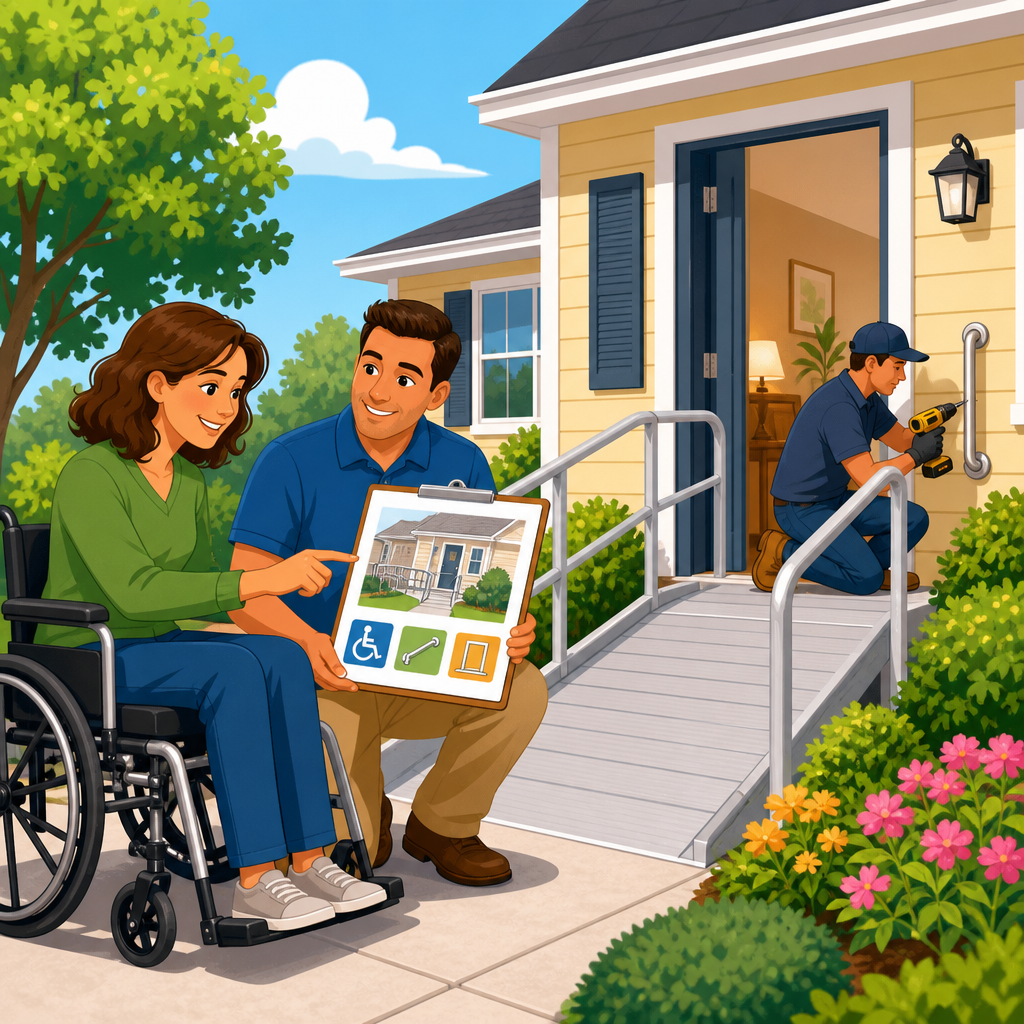
Accessibility improvements may qualify as medical expenses when their primary purpose is medical care for you, your spouse, or a dependent. The IRS has long recognized that certain capital expenses can count if they are made for medical reasons. Common examples include constructing entrance or exit ramps, widening doorways and hallways, modifying bathrooms, lowering cabinets, relocating electrical outlets, adding porch lifts, or installing railings and support bars. Other qualifying work can include grading the ground for access, modifying stairs, changing door hardware, or adapting kitchens for wheelchair use when those changes are medically necessary rather than merely convenient.
Necessity matters. A roll-in shower for a person with significant mobility limitations is easier to justify than a luxury bathroom renovation that happens to include a curb-free design. Likewise, replacing all flooring in a house may not be deductible, but removing thick carpet that impedes wheelchair movement and installing smooth hard-surface flooring in the affected areas may be. The IRS standard is practical: the expense must be primarily for medical care. The more directly the modification addresses functional limitations such as bathing, toileting, transfers, access, or safe movement through the home, the stronger the case.
Some expenses are more likely to qualify in full because they usually do not add meaningful market value. IRS guidance commonly points to items such as entrance ramps, support bars, and modifications to hardware as examples where the full amount may be treated as a medical expense. Other projects, like bathroom remodels, elevators, or room additions, may increase home value. In those cases, only the portion of cost that exceeds the increase in fair market value is generally deductible. That valuation issue is where many returns go wrong.
How the increase in home value affects the deduction
For capital improvements, the deductible medical expense is usually the cost of the improvement minus any increase in the value of your property. If you spend $18,000 on an accessible bathroom remodel and the project increases the home’s fair market value by $7,000, the potential medical expense is generally $11,000, assuming the work otherwise qualifies and was not reimbursed. If the project adds no measurable value because it is highly specialized, the full cost may be deductible. Appraisals are not mandated in every case, but for larger projects they are often the safest support.
This rule produces very different outcomes depending on the type of modification. A basic aluminum ramp installed at a side entrance may add little or no value in a local market and could be fully deductible as a medical expense. A residential elevator in a high-end home may improve general marketability and value, reducing the deductible portion. The same logic applies to widening doorways during a broader renovation. If the work is embedded in an upscale redesign, the IRS may view some of the spending as personal improvement rather than medical care.
| Improvement | Typical tax treatment issue | Common documentation |
|---|---|---|
| Grab bars and railings | Often fully deductible if medically necessary and not value-adding | Doctor letter, invoice, photos |
| Wheelchair ramp | Often fully deductible if primarily for access and minimal value increase | Prescription or recommendation, contractor bill |
| Accessible bathroom remodel | May be partially deductible after subtracting value increase | Detailed scope, appraisal support, medical necessity statement |
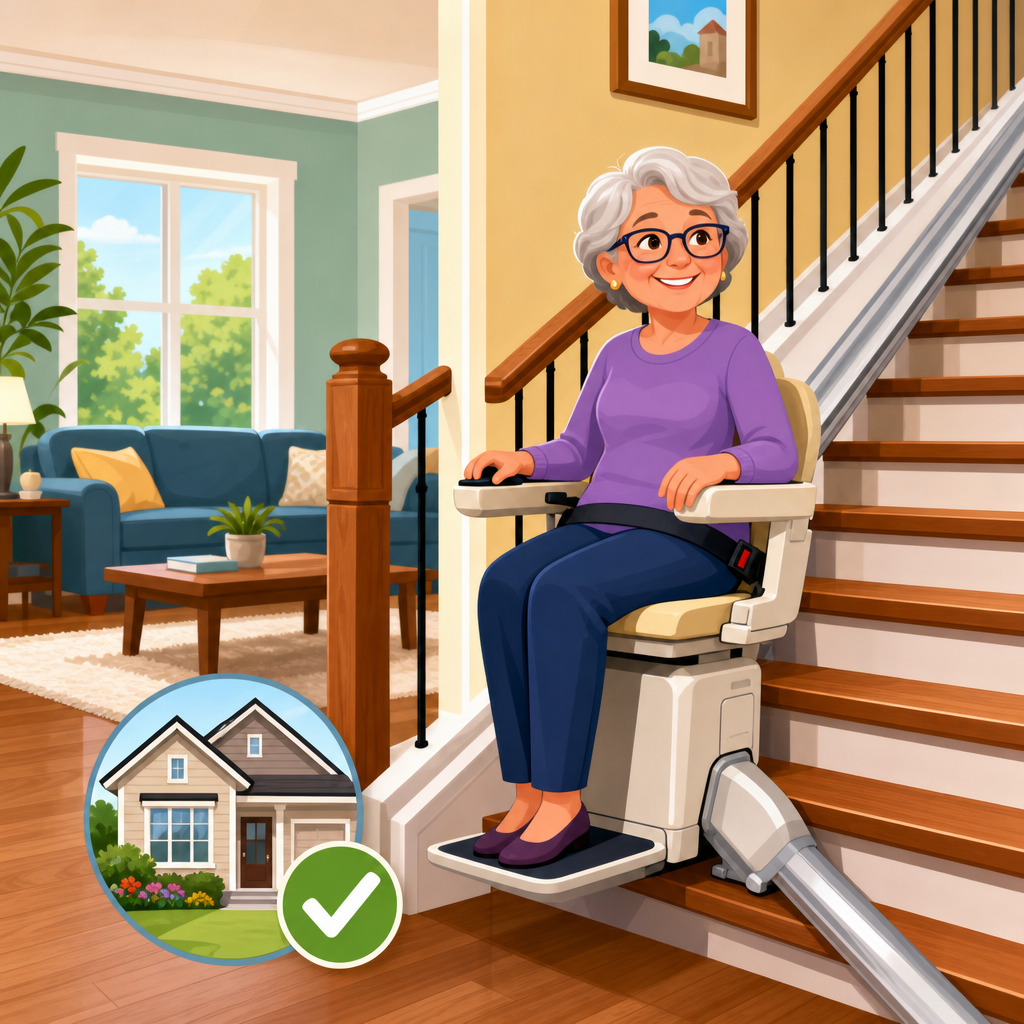
| Stair lift or porch lift | Usually evaluated as medical equipment or accessibility improvement | Product invoice, installation receipt, clinician support |
| Home elevator | Higher chance of increasing home value, reducing deductible amount | Appraisal, medical records, proof of functional need |
When I review these files, I look for clear separation between medically necessary access work and optional upgrades. If a contractor invoice bundles heated floors, designer tile, custom lighting, and a zero-threshold shower into one total, it becomes harder to defend the medical portion. Request itemized bids and change orders from the start. That step alone can preserve thousands of dollars in legitimate deductions.
Which expenses usually do not qualify, and what limitations apply?
Not every accessibility-related cost is deductible, and even qualified costs may produce no tax benefit if you do not itemize or cannot clear the adjusted gross income threshold. General home maintenance, cosmetic improvements, and upgrades that merely make aging in place more comfortable without serving a medical purpose are weak candidates. Repainting a room after widening a doorway may be incidental and defensible as part of the project, but repainting unrelated rooms is not. A whole-house remodel inspired by universal design principles may improve livability, yet only the medically necessary components are likely to qualify.
Reimbursements also matter. If Medicare, Medicaid waiver programs, private insurance, a state assistive technology program, or a nonprofit grant pays part of the bill, you cannot deduct the reimbursed amount. The same principle applies if an employer or another family member ultimately bears the expense. Timing matters too. Medical expenses are generally deducted in the tax year paid, not necessarily when the project started or finished. Large phased renovations should be tracked by payment date and by scope.
There are household-level limitations beyond the IRS medical rules. Some families do not benefit because their total itemized deductions still fall below the standard deduction. Others face state tax rules that differ from federal treatment. And while online articles often speak loosely about disability tax credits for homes, the federal homeowner-focused credit many readers expect usually does not exist in the broad form they imagine. That does not mean help is unavailable; it means the help may come through deductions, state incentives, veterans programs, Medicaid supports, or energy and housing programs rather than a dedicated federal accessibility remodeling credit.
Are there any actual accessibility tax credits homeowners should know about?
For personal residences, most taxpayers should begin with the assumption that accessibility modifications are more likely to be evaluated as medical deductions than as a federal tax credit. However, there are adjacent tax provisions that cause confusion. Small businesses may qualify for the Disabled Access Credit under Internal Revenue Code Section 44 if they incur eligible expenditures to improve access. Businesses may also look at Section 190 barrier removal deductions. Those are business provisions, not personal home renovation benefits, yet they are frequently cited in consumer articles as if they apply to any homeowner.
Homeowners should also distinguish accessibility incentives from unrelated home credits, such as federal clean energy credits for solar panels or heat pumps. An accessible bathroom does not become credit-eligible because it includes efficient fixtures. Likewise, a medically necessary generator or air conditioning system for a health condition may raise separate medical deduction questions, but it is not automatically an accessibility credit. Precision matters because tax software categories can be misleading, and preparers who do not regularly handle disability-related housing expenses may default to the wrong treatment.
That is why this tax deductions and medical expenses hub should connect to narrower topics: how physician letters should be written, how to document fair market value, when stair lifts qualify, how veterans benefits interact with deductions, and how to coordinate a home renovation with an HSA or FSA. Each of those issues affects the final tax outcome more than generic references to credits.
How to document an accessibility project for tax purposes
Good documentation is the difference between a valid deduction and a weak claim. Start with a medical recommendation from a physician, occupational therapist, or other licensed clinician who can describe the functional limitation and the role of the modification. The letter should tie the improvement to activities of daily living, fall prevention, wheelchair access, safe transfers, or another concrete need. Avoid vague wording like “would benefit from” if a stronger statement such as “is required to accommodate mobility impairment” is clinically supportable.
Next, keep signed contracts, itemized invoices, canceled checks, credit card statements, permit records, product specifications, and before-and-after photographs. For major projects that may affect value, consider obtaining a real estate appraisal or broker opinion addressing fair market value before and after the modification. If only part of a renovation is medically necessary, ask the contractor to allocate costs by component. For example, distinguish demolition and plumbing required for a roll-in shower from upgraded finishes selected for appearance.
Finally, coordinate tax records with the rest of your care financing. If you use HSA funds for qualified medical expenses, maintain matching receipts and avoid double counting. If a Medicaid waiver later reimburses a previously paid expense, update your records. These practical steps make annual filing easier and support any future review.
Planning strategies for families managing tax deductions and medical expenses
Smart timing can improve results. If your household already has significant unreimbursed medical expenses in one year, adding a qualified accessibility project in that same year may help you exceed the adjusted gross income threshold and make itemizing worthwhile. Families sometimes bunch surgeries, therapy equipment purchases, and home modifications into one tax year for this reason. The strategy does not change eligibility, but it can improve the usable tax benefit.
It also helps to compare tax savings with non-tax funding. A deduction rarely covers the full cost, so grants, low-interest loans, Area Agency on Aging programs, state housing rehabilitation funds, USDA rural repair loans, VA Specially Adapted Housing benefits, and nonprofit accessibility programs may deliver more value. In practice, the best plan is often layered: obtain grants first, use HSA funds where appropriate, then claim any remaining qualified unreimbursed amount as a medical deduction.
Talk with a CPA or enrolled agent before filing if the project is large, mixed-use, or tied to multiple funding sources. Accessibility work is worth documenting carefully because the numbers can be significant and the rules are highly fact specific.
The core difference between accessibility home improvement tax credits and medical deductions is straightforward: credits directly reduce tax owed, while medical deductions reduce taxable income and usually require itemizing plus proof of medical necessity. For most homeowners modifying a personal residence, the relevant federal tax benefit is often a medical expense deduction, not a broad accessibility credit. Qualifying projects typically include ramps, grab bars, widened doorways, lifts, and accessible bath or kitchen changes made primarily for medical care. The deductible amount may be reduced if the project increases home value, and reimbursed costs cannot be claimed. Clear documentation, itemized invoices, and clinician support are essential. As the hub for tax deductions and medical expenses under cost and financing options, this page should guide your next step: review your planned project, gather medical documentation early, and speak with a qualified tax professional before construction or filing.
Frequently Asked Questions
What is the main difference between an accessibility home improvement tax credit and a medical deduction?
The biggest difference is how the tax benefit is claimed and what rules apply. A tax credit reduces your tax bill dollar for dollar, which generally makes it more valuable than a deduction. A medical deduction, by contrast, reduces your taxable income rather than directly reducing the amount of tax you owe. In the context of accessibility upgrades, this distinction matters because many homeowners assume any qualifying medical-related improvement automatically creates a credit, when in reality many home modifications are more often evaluated under the medical expense deduction rules.
A credit is usually created by a specific tax law that identifies eligible expenses and sets exact qualifications. If a home accessibility expense does not fall under an existing credit provision, you cannot simply treat it like one. A medical deduction works differently. It may apply when the improvement is primarily made for medical care, such as accommodating a disability or diagnosed condition, but only if the expense meets IRS standards and only to the extent it qualifies under the deduction rules. In many cases, the reason for the improvement, the medical necessity behind it, and whether the improvement increased the home’s value all affect the deductible amount.
That is why these two tax concepts should never be used interchangeably. Calling an accessibility project a “credit” when it actually belongs under medical expenses can lead to filing mistakes. On the other hand, assuming no tax benefit exists because there is no obvious credit can cause taxpayers to overlook a legitimate deduction.
Do ramps, grab bars, stair lifts, widened doorways, and roll-in showers automatically qualify for a tax break?
No. These improvements do not automatically qualify just because they improve safety or mobility. The tax treatment depends on several facts, especially why the modification was made and whether it was primarily for medical care. For example, a grab bar installed for general aging-in-place convenience may be treated differently from a grab bar installed on a doctor’s recommendation for someone with a documented mobility limitation. The same is true for stair lifts, ramps, widened hallways, lowered cabinets, and accessible bathrooms.
When an accessibility improvement is evaluated as a medical expense, the IRS generally looks at whether the primary purpose of the expense was medical care for you, your spouse, or a dependent. Medical necessity is central. If the work is mainly personal, cosmetic, or intended to increase comfort rather than address a medical condition, it may not qualify. Documentation matters here. A physician’s diagnosis, recommendation, or prescription can help support the position that the modification was medically necessary rather than optional.
Another key issue is whether the project increased the value of the home. Certain capital improvements may be deductible only to the extent that their cost exceeds any increase in the property’s fair market value. For example, if an accessible bathroom remodel cost a substantial amount but also added measurable market value to the home, only part of the expense may be treated as a medical expense. By contrast, some specialized modifications that do not meaningfully increase value may be more fully deductible if all other requirements are met. So while these projects may produce a tax benefit, there is no automatic rule that every accessibility upgrade qualifies in full.
How does an increase in home value affect the deduction for accessibility improvements?
This is one of the most important and most misunderstood parts of the rules. If a home improvement is considered a capital expense made for medical care, the deductible amount may be reduced by the amount the improvement increases the value of your home. In simple terms, the IRS may allow a deduction only for the portion of the cost that exceeds the increase in fair market value. That means a project can be medically necessary and still not be fully deductible.
For example, imagine a homeowner installs a medically necessary elevator, accessible bathroom, or entry ramp. If the project costs $25,000 and an appraisal shows the home’s value increased by $10,000 because of that improvement, the potentially deductible medical expense may be limited to $15,000, assuming the other medical deduction requirements are met. On the other hand, if the improvement is highly specialized and does not increase market value, more or all of the cost may potentially qualify as a medical expense.
This value-adjustment rule is one reason records are so important. Taxpayers should keep invoices, contracts, proof of payment, and any documentation showing the medical reason for the work. In larger projects, a before-and-after appraisal may also be worth considering to support the tax treatment. Without good evidence, it can be difficult to show how much of the cost was truly a medical expense rather than a property improvement with general resale value.
What documentation should homeowners and family caregivers keep to support a medical deduction for accessibility upgrades?
Good documentation can make the difference between a supportable deduction and a weak one. At a minimum, homeowners should keep detailed receipts, contractor invoices, payment records, and written descriptions of the work performed. It is also wise to retain any plans, permits, and correspondence showing that the project was specifically designed to address a medical or mobility need. If the work involved multiple components, itemized billing is especially helpful because it shows exactly what was installed and what each part cost.
Medical support is just as important as financial support. A letter, recommendation, or prescription from a physician or other qualified medical professional can help establish that the modification was primarily for medical care. This should ideally connect the person’s condition to the need for the home improvement. For example, documentation might explain why a roll-in shower was necessary due to wheelchair use, or why a stair lift was needed because climbing stairs posed a significant health risk. The clearer the medical link, the stronger the tax position tends to be.
If the project could affect the home’s value, homeowners may also want evidence addressing that issue, such as an appraisal or other valuation support. Family caregivers paying for modifications for a qualifying dependent should also keep records showing the dependent relationship and who actually paid the expense. Because medical deductions are often more fact-specific than people expect, thorough recordkeeping is essential both for accurate tax filing and for defending the deduction if questions arise later.
Can you claim both a tax credit and a medical deduction for the same accessibility improvement?
Usually, you cannot receive two separate tax benefits for the exact same dollar of expense unless the law specifically allows that result. In practice, taxpayers need to be careful not to “double dip.” If an expense qualifies under one tax provision, the amount used there generally cannot also be used again in full under another provision. That is why it is so important to identify which rule actually applies to the accessibility project and how the expense should be allocated.
For some homeowners, different parts of a broader project may be treated differently. One portion of the cost might potentially fit within a specific tax credit framework if such a credit is available and the requirements are met, while another portion might be evaluated as a medical expense deduction. But the same exact expense amount should not generally be counted twice. Allocation, substantiation, and careful tax preparation are critical when a project includes mixed purposes or multiple types of improvements.
The safest approach is to review the project item by item and determine the legal basis for each claimed benefit. Accessibility-related tax rules can be nuanced, especially when improvements serve both medical and general home-use purposes. Because mistakes in this area can lead to lost savings or filing problems, many homeowners and caregivers benefit from speaking with a tax professional before claiming a credit, a deduction, or both in connection with a major accessibility renovation.