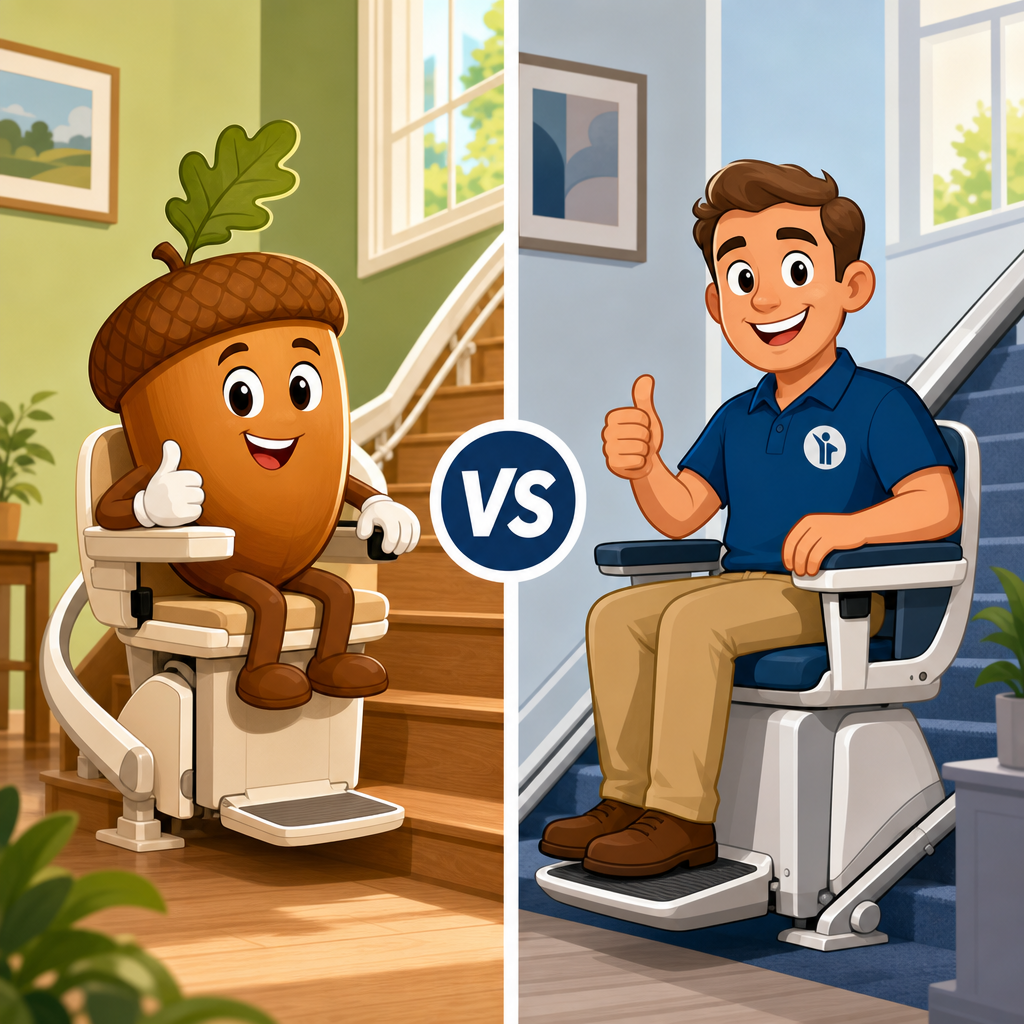
Choosing between Acorn and Handicare is one of the most common decisions shoppers face when comparing top stair lift brands, because both companies are widely available, well known in the mobility market, and positioned as reliable solutions for people who want to stay safe at home. A stair lift is a motorized chair that travels on a rail attached to the stairs, helping users move between floors without climbing steps. In practical buying terms, the brand matters because it affects installation options, lead times, service networks, seat comfort, rail design, and long-term maintenance. I have worked with families evaluating stair lifts for aging parents, and the pattern is consistent: buyers rarely need the “best” brand in the abstract; they need the right fit for the staircase, the user’s body, the home layout, and the local dealer support behind the product. This side-by-side review explains how Acorn and Handicare compare, where each brand tends to stand out, and what shoppers should ask before signing a quote in the broader category of top stair lift brands.
Brand overview and product positioning
Acorn and Handicare both operate in the residential stair lift market, but they reach customers in different ways. Acorn has built strong consumer recognition through direct-response advertising and a simplified product lineup. In many regions, shoppers know Acorn first because the brand markets heavily and emphasizes fast installation, straightforward models, and all-in-one service coordination. Handicare, by contrast, is often encountered through mobility dealers, occupational therapists, and local accessibility specialists. The company has a long history in patient handling and accessibility equipment, and its stair lifts are commonly recommended when a home has tighter turns, specific transfer needs, or more customized seat requirements.
In broad terms, both brands offer straight and curved stair lifts, powered swivel seats on some models, folding footrests in certain configurations, seat belts, battery backup, and call-send controls. Both aim to serve older adults, people recovering from surgery, and users with limited mobility from arthritis, stroke, neurological conditions, or balance issues. The core difference is not that one brand makes “basic” lifts and the other makes “advanced” lifts. The more meaningful difference is how standardized or configurable the system is, how the rail is engineered, and how much flexibility the dealer has when tailoring the install to the home and user.
For readers researching top stair lift brands more broadly, this comparison also works as a hub article because the same evaluation criteria apply to Bruno, Stannah, Harmar, and Savaria: rail fit, seat ergonomics, weight capacity, fold-up dimensions, warranty terms, service response, and dealer quality usually matter more than brand reputation alone. Acorn and Handicare simply represent two of the most frequently cross-shopped options in that larger buying landscape.
How Acorn and Handicare compare on models, fit, and core features
Acorn’s lineup is typically easy to understand. For many buyers, the key options are a straight stair lift and a curved stair lift, with common feature sets centered on safety sensors, a diagnostic display, rechargeable batteries, lockable controls, and fold-away components. This simplicity can be helpful when a family wants a quick answer and does not want to navigate too many seat or rail choices. Acorn systems are often presented as user-friendly, with controls designed to be intuitive for seniors who may not be comfortable with more complicated equipment.
Handicare usually offers more variation across seat styles and installation configurations. Depending on market and dealer availability, shoppers may see straight models such as compact units for narrow staircases and curved solutions built around a modular or custom approach. Handicare has also been known for options such as hinge tracks, slide-track systems, and specialized seating that can reduce transfer difficulty at the top or bottom landing. In homes where a doorway sits close to the stairs, that track flexibility can make the difference between a lift that works and one that creates a traffic problem.
One of the first practical questions buyers ask is, “Which brand is better for narrow stairs?” The honest answer is that it depends on the exact folded width, seat projection, user size, and where the rail starts and ends. Acorn can work well on many standard staircases, especially when the goal is fast deployment on a straightforward run. Handicare often has an edge when installation constraints are more complicated, because dealers may have more tools to solve clearance issues through rail design or seat selection. That does not mean every Handicare install is more compact, but it does mean the brand is often competitive in homes that require a less conventional fit.
| Category | Acorn | Handicare |
|---|---|---|
| Typical buying path | Direct brand-led sales process | Often sold through local mobility dealers |
| Product range | More streamlined lineup | Broader configuration flexibility |
| Straight staircases | Strong fit for standard installations | Strong fit with more customization options |
| Curved staircases | Available, generally custom quoted | Available, often favored for complex layouts |
| Narrow staircase solutions | Case dependent | Often competitive due to seat and track options |
| Service model | Centralized brand structure | Depends heavily on dealer quality |
Another common question is weight capacity. Exact figures vary by model, but the important point is to compare the user’s current weight, expected future needs, and seat width against the published rating for the specific lift being quoted. Buyers should never assume a brand-wide rating applies to every model. If bariatric capacity is a concern, it is worth expanding the comparison to other top stair lift brands that specialize in heavy-duty options, because the best model for a larger user may come from a different manufacturer altogether.
Installation, staircase complexity, and the importance of the survey
The home survey is where this decision is really made. A professional stair lift assessment should include stair width, tread depth, landing clearance, obstructions, electrical charging points, user transfer ability, and any hazards such as radiators, low walls, or doors opening onto the staircase. In my experience, the biggest mistakes happen when buyers focus on brochure features before confirming whether the lift can be parked safely and whether the user can get on and off without twisting or stepping backward.
Acorn installations are often praised for speed. On straight stairs, a standard rail and standardized process can reduce delay, and that matters if the user has just returned home from rehab or is struggling after a fall. Fast availability is a real buying advantage. Handicare installations can also be completed quickly on straight stairs, but the brand’s real strength tends to show on more awkward layouts, where a skilled dealer can adapt the design to the home rather than forcing the home to adapt to a generic rail.
Curved staircases deserve special attention. A curved stair lift must account for every bend, rise, and landing transition. Even small surveying errors can affect ride quality, parking position, and ease of transfer. Handicare’s presence in custom and modular curved solutions often makes it a serious contender for these projects. Acorn also serves curved stair cases, but the buyer should ask very specifically how the rail is manufactured, what the lead time is, how final measurements are verified, and what happens if the fit is not right on installation day.
Ask both companies or dealers whether they use digital photo surveys, manual measurements, or software-assisted templating. Also ask who performs the installation, whether subcontractors are involved, and how post-install adjustments are handled. On any stair lift, poor installation quality can create noise, rough starts, charging issues, or seat alignment problems that are wrongly blamed on the brand.
Ride comfort, usability, and safety in everyday use
A stair lift can look good on paper and still be uncomfortable in daily life. The important comfort factors are seat height, seat depth, back support, armrest spacing, footrest stability, start-and-stop smoothness, and how easy the controls are to operate for someone with arthritis or limited hand strength. Acorn generally prioritizes straightforward operation, and many users adapt to the controls quickly. Handicare often gets attention for seating variations and options that can improve posture, transfer, or parking, especially for users with more complex mobility limitations.
Safety should be evaluated beyond the obvious seat belt. Look for obstruction sensors on the carriage and footrest, overspeed governance, battery operation during power cuts, swivel seat locking at the landing, and a reliable charging system. Most modern lifts from both brands include core protections, but the buyer should test the swivel and footrest action in person if possible. A feature that sounds minor during the sales visit can become crucial when a user transfers slowly or tires easily.
Noise is another quality-of-life issue. Stair lifts are never silent, but they should sound mechanically smooth rather than strained. Excess vibration, clunking at joints, or uneven travel usually indicates a setup or maintenance problem. For homes where multiple people use the stairs, folded size matters just as much as ride comfort. If the seat, arms, and footrest do not fold compactly enough, the lift may become a daily obstruction for everyone else in the house.
Call-send controls also matter more than many buyers expect. In a two-person household, being able to send the chair up or down keeps the lift parked out of sight and lets another user call it when needed. If appearance matters, ask about rail color, seat upholstery choices, and parking positions. Stair lifts are assistive devices, but they are also visible fixtures in the home, and design details can affect long-term satisfaction.
Pricing, warranties, service, and long-term ownership costs
Stair lift pricing is rarely simple because the final number depends on staircase shape, rail length, power options, seat upgrades, and local labor rates. Straight lifts from both Acorn and Handicare typically cost far less than curved lifts, and curved projects can rise significantly because the rail is more complex to manufacture and install. Buyers should expect quote ranges rather than fixed national prices. If one quote comes in dramatically lower, check what is excluded, especially warranty labor, service call fees, and removal terms.
Acorn’s direct-sales structure can appeal to buyers who want one company responsible for survey, sale, installation, and service coordination. That single-point accountability can reduce confusion. Handicare’s dealer-based model can be excellent when the local dealer is experienced, responsive, and well stocked with parts. It can be weaker when the dealer network is thin or inconsistent. For that reason, comparing top stair lift brands always requires comparing the local company behind the badge, not just the manufacturer name on the chair.
Warranty terms deserve careful reading. Ask whether coverage includes parts only or parts and labor, how long the battery is covered, whether the motor or gearbox has separate terms, and whether annual maintenance is required to keep coverage valid. Stair lift batteries are consumable items and will need replacement. Service plans may be worth it for households where the lift is used many times a day, but not every owner needs an expensive maintenance contract. The better question is how quickly a technician can realistically reach the home if the lift stops working.
Used and rental options also deserve mention. Some dealers offer reconditioned straight lifts at lower cost, while curved lifts are less commonly reusable because the rail is staircase-specific. Temporary rentals can make sense after surgery, though availability varies. Buyers comparing Acorn vs. Handicare should ask whether either option is available locally, especially if budget is tight or the need may be short term.
Who should choose Acorn, who should choose Handicare, and what to do next
Acorn is often the better fit for buyers who want a recognizable brand, a relatively simple buying process, and a solid solution for a standard straight staircase or a straightforward curved installation. It is especially attractive when speed matters and the household values a familiar, easy-to-understand product. For many families, that combination is enough. A dependable stair lift installed quickly can prevent falls, reduce caregiver strain, and keep someone sleeping in their own bedroom rather than relocating downstairs.
Handicare is often the better fit for buyers whose homes or mobility needs are more complicated. If the staircase is narrow, the landing is awkward, a doorway interferes with rail placement, or the user needs more specific seating or transfer support, Handicare frequently deserves serious consideration. The brand’s advantage is not simply “more features.” It is more precise adaptability when the install cannot be treated as standard. In those cases, the quality of the dealer survey and recommendation becomes as important as the lift itself.
The most useful takeaway is this: do not buy a stair lift based on brand advertising alone. Compare the exact model, seat, rail plan, folded dimensions, warranty terms, service response, and installer experience for your home. Ask each provider to explain why their configuration is the safest and easiest for the intended user. Then verify that explanation against the staircase layout and daily routine. If you are building out your research on top stair lift brands, use this Acorn vs. Handicare review as your starting point, then compare Bruno, Stannah, Harmar, and other leading options with the same criteria. Request in-home assessments from qualified providers, test the controls if possible, and choose the lift that fits your staircase and support needs best.
Frequently Asked Questions
What are the biggest differences between Acorn and Handicare stair lifts?
The biggest differences usually come down to product design, dealer network, customization, and how the buying process works in your area. Acorn is widely recognized for a direct-to-consumer style approach in many markets, which can make the process feel straightforward for shoppers who want a quick quote, fast installation, and a brand with strong name recognition. Handicare, by contrast, is often sold through a larger network of local dealers, which can give buyers more variation in pricing, service experience, and available options depending on who installs the lift.
From a product standpoint, both brands offer models for straight and curved staircases, along with standard safety features such as seat belts, swivel seats, obstruction sensors, and battery backup. Where comparisons become more meaningful is in the details: seat comfort, rail design, fold-up footprint, control layout, and the flexibility of customization for unusual staircases or user needs. Handicare is often noted for offering a broader mix of seating styles and configuration options through its dealer ecosystem, while Acorn is often associated with a simpler, more standardized product lineup that appeals to buyers who value consistency and ease of purchase.
For most shoppers, neither brand is automatically “better” across the board. The better choice depends on the shape of your staircase, how quickly you need installation, what local service support looks like, and whether you prefer a highly standardized buying experience or a more customized one. That is why side-by-side comparisons should focus less on brand reputation alone and more on how each company’s available model fits your home, your body, and your long-term service expectations.
Is Acorn or Handicare better for curved stairs and complex home layouts?
For curved stairs, split landings, or more complicated staircases, the better option often depends less on the brand name itself and more on the exact model being quoted and the skill of the local measuring and installation team. Curved stair lifts are custom-built to follow the contour of the staircase, so accuracy in design, manufacturing, and installation matters just as much as the hardware. Both Acorn and Handicare have curved stair lift solutions, but homeowners should pay close attention to how each proposal addresses tight turns, narrow stairways, doorway clearances, and top- or bottom-landing space.
Handicare often stands out in discussions about customization because its product ecosystem and dealer-based model can provide a wide range of configurations for unique layouts. That can be an advantage if your staircase has unusual dimensions or if multiple users have different seating or comfort needs. Acorn also offers curved solutions and is a serious contender for many homes, particularly when buyers want a well-known national brand with an established installation process. However, on more technically demanding staircases, the quality of the survey and the installer’s experience can be the deciding factor.
If your home has curved stairs, the smartest move is to request an in-home assessment from each brand or dealer and compare more than just price. Ask how much stairway width will remain when the lift is folded, whether the seat can park away from a doorway, how the rail handles turns, and what happens if future service is needed on a custom unit. Complex layouts leave less room for guesswork, so the best choice is usually the company that provides the clearest engineering plan, the best fit for your staircase, and the strongest local support after installation.
How do Acorn and Handicare compare on installation, maintenance, and service?
Installation, maintenance, and service are some of the most important real-world differences between stair lift brands because a lift is not just a one-time purchase; it is a mobility device you may depend on every day. Acorn is known for a streamlined installation process in many locations, often appealing to homeowners who want a fast turnaround and a brand with a centralized feel. That can be especially valuable when a stair lift is needed urgently after surgery, a fall, or a change in mobility. In many cases, straight stair lifts can be installed relatively quickly once the home is evaluated.
Handicare’s service experience can vary more by market because local dealers often play a major role in sales and support. That is not necessarily a disadvantage. In fact, a strong local Handicare dealer may offer highly responsive service, personalized follow-up, and excellent familiarity with local customers. The key is that the quality of the experience can depend heavily on the specific dealer. That means shoppers should ask detailed questions about response times, service coverage area, technician availability, and whether maintenance is handled in-house or through a third party.
For either brand, buyers should clarify what is included after installation. Ask about warranty terms for the motor, gearbox, electronics, batteries, and rail; whether labor is covered; how long service calls typically take; and what routine maintenance is recommended. Also ask who to call if the lift stops working and whether emergency or after-hours support is available. A stair lift can be a long-term part of your home, so dependable service is often just as important as the initial purchase price. In many cases, the better choice is the company that can clearly explain ongoing support and prove it has the local infrastructure to keep the lift running reliably.
Which brand offers better comfort, safety, and ease of use for daily living?
Both Acorn and Handicare are designed around the same core goal: helping users move safely between floors without climbing stairs. As a result, both brands generally include the safety features most buyers expect, such as seat belts, lockable controls, swivel seats for safer entry and exit, footrest safety edges, and battery backup so the lift can continue to operate during a power outage. In a basic safety sense, both companies compete in the same category of dependable home mobility equipment.
Where the comparison gets more personal is comfort and ease of use. The best stair lift is the one the user feels secure and relaxed using every day. Seat width, back support, armrest shape, footrest height, control sensitivity, and overall ride smoothness can make a noticeable difference, especially for people with arthritis, limited balance, hip pain, or reduced hand strength. Handicare may appeal to shoppers looking for more seating variations or fit options, while Acorn may appeal to those who prefer a simple, familiar design and straightforward controls. The right answer depends on the user’s body type, mobility limitations, and confidence level.
Ease of use also includes how the lift fits into household routines. Consider how easily the seat, arms, and footrest fold up, whether call/send controls are intuitive, and how much space the unit leaves for other people using the stairs. If possible, the user should sit in and operate each model during the sales visit. Small details, like how easy it is to rotate the seat at the landing or whether the footrest feels stable, often matter more than brand marketing. In everyday life, the better stair lift is the one that feels safest, simplest, and most comfortable for the specific person who will rely on it.
How should shoppers decide between Acorn and Handicare when comparing price and value?
When comparing price and value, shoppers should avoid focusing only on the initial quote. A stair lift is a safety investment, and the lowest upfront price is not always the best long-term value. Both Acorn and Handicare can be competitively priced depending on the model, the type of staircase, and your location. Straight stair lifts are generally less expensive than curved models, while custom rails, upgraded seating, and difficult installations can increase total cost significantly. Because Handicare is often sold through dealers, quotes may vary more from one provider to another. Acorn’s pricing process may feel more standardized in some areas, but actual costs still depend on the home and the selected unit.
To judge value accurately, compare what is included in each proposal. Look at the model type, rail design, warranty coverage, installation charges, service terms, and any ongoing maintenance expectations. Ask whether batteries are covered, whether removal is included if the lift is no longer needed, and whether there are rental, reconditioned, or buy-back options. Also consider how quickly the company can install the lift and how strong its reputation is for service after the sale. A slightly higher quote may be worthwhile if it comes with better local support, better fit, or a stronger warranty.
The smartest way to choose is to get detailed in-home estimates from both sides and compare them line by line. Ask each representative why their recommended model is the best fit for your staircase and your mobility needs. If one quote is much lower, find out exactly what is different. Value comes from a combination of safety, comfort, reliability, customization, and support over time. For most households, the winning brand is not simply the cheapest one; it is the one that delivers the best overall fit for the user and the home while offering confidence that help will be available if problems arise later.