Smart home integration can improve daily life for people with cognitive decline, but safety depends on how the system is chosen, configured, monitored, and adapted over time. In this context, cognitive decline includes mild cognitive impairment, Alzheimer’s disease, vascular dementia, Lewy body dementia, frontotemporal dementia, and other conditions that affect memory, judgment, sequencing, attention, orientation, or impulse control. A smart home is a living environment where devices such as lights, locks, thermostats, sensors, medication reminders, cameras, voice assistants, and emergency alerts communicate through a network and automate routine tasks. Families often ask a direct question: are smart homes safe for people with cognitive decline? The accurate answer is yes, in many cases, but only when technology supports the person’s abilities rather than replacing human supervision or creating new confusion.
I have worked with caregivers evaluating these systems, and the biggest mistake is treating smart devices as gadgets instead of risk controls. For a person who forgets to turn off the stove, wanders at night, misses medication, or becomes distressed by complicated interfaces, the right setup can lower danger and reduce caregiver burden. The wrong setup can increase agitation, create privacy concerns, trigger false alarms, or fail during an outage. That is why smart home integration matters within accessibility and mobility solutions: it sits at the intersection of safety, independence, routine, and caregiver visibility. A useful hub page on this topic must cover what smart homes can do, where they fail, which devices matter most, how to assess risks, and how to implement technology in stages that match the person’s changing needs.
What smart home integration means in dementia care
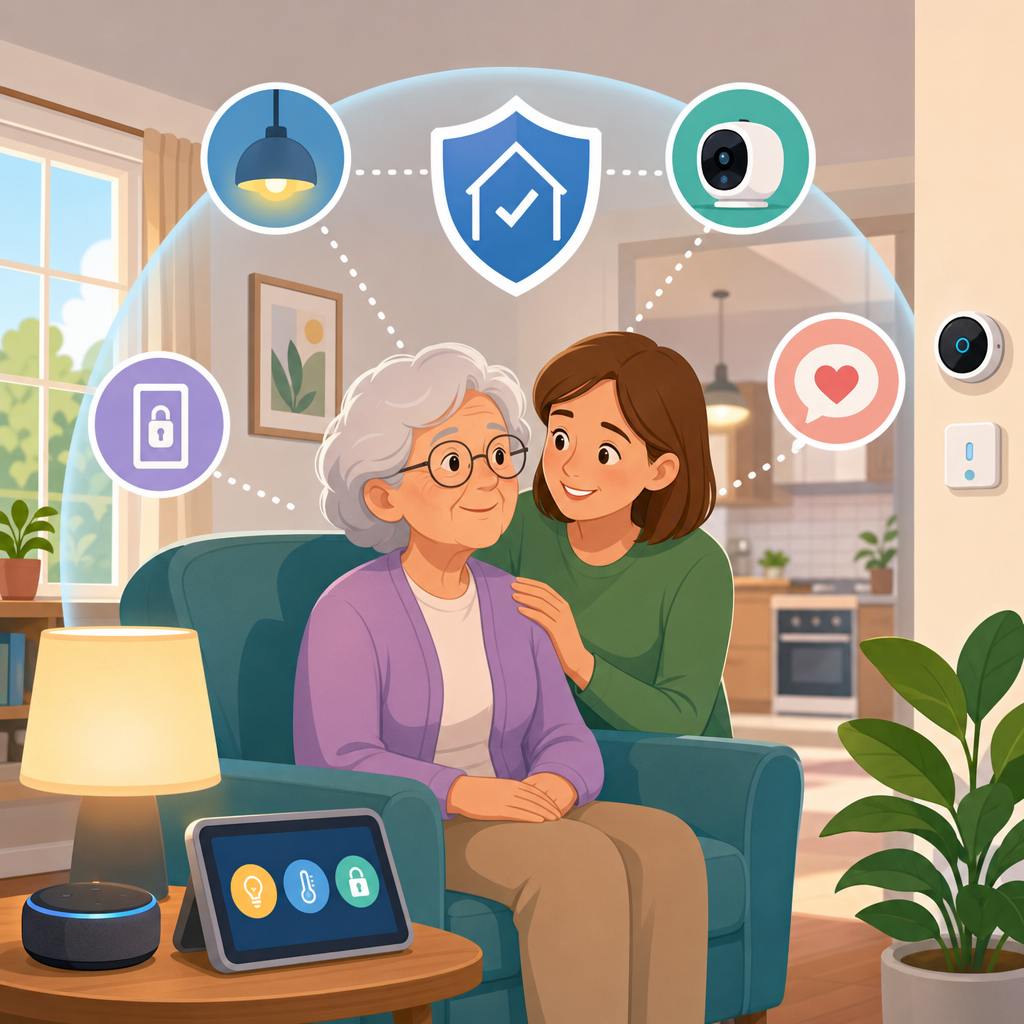
Smart home integration is the coordinated use of connected devices so they work as one system rather than isolated products. For cognitive decline, integration usually links four categories: environmental controls, safety monitoring, daily routine support, and communication tools. Environmental controls include smart lighting, thermostats, automated blinds, and appliance shutoff systems. Safety monitoring includes door sensors, bed sensors, fall alerts, water leak detectors, smoke and carbon monoxide alarms, and geofencing tools. Daily routine support includes medication dispensers, calendar prompts, hydration reminders, and voice-guided tasks. Communication tools include video doorbells, caregiver apps, and voice assistants that can place calls or announce reminders.
The integration piece matters because a single device rarely solves a real household risk. For example, a smart lock alone may secure a door, but if the resident leaves home at 2 a.m., a safer setup combines a door sensor, hallway motion sensor, night lighting, and a caregiver alert. If a person forgets meals, a voice reminder is helpful, but it becomes more effective when tied to a smart display, timed kitchen lighting, and a caregiver notification if the prompt is ignored. Platforms such as Amazon Alexa, Google Home, Apple Home, Samsung SmartThings, and professionally installed systems can coordinate these actions, although compatibility differs and should be tested before purchase.
Which risks smart homes can reduce, and where limits remain
The main safety value of smart homes is risk reduction in predictable problem areas. The first is wandering and unsafe exits. Door and window sensors can trigger alerts, while geofencing on a wearable or phone can notify caregivers if a resident leaves a defined area. The second is missed routines, including medication, hydration, meals, and appointments. Smart dispensers from brands such as MedMinder and Hero can lock doses until the scheduled time and notify caregivers about missed medication. The third is household hazards. Smart plugs, induction cooktop monitors, automatic water shutoff valves, and monitored smoke detectors reduce the chance that a minor mistake becomes a serious incident.
Limits are just as important. Technology does not restore judgment, and it does not guarantee compliance. A person may remove a wearable, ignore a reminder, or become suspicious of a talking device. Some residents are frightened by unfamiliar voices or flashing notifications. Others compulsively press buttons or unplug devices. False reassurance is a real problem; I have seen families install cameras and assume that supervision is covered, even though no one is actively reviewing alerts. Smart homes are safest when paired with care plans, home modifications, medication review, and routine reassessment. They are support systems, not substitutes for caregiving, clinical evaluation, or legal planning around consent and decision-making.
Core smart home devices that usually offer the highest safety value
When budgets are limited, families should start with devices that address the most serious and most frequent risks. In practice, the best returns often come from simple, targeted tools rather than a fully automated house. Motion-activated lighting reduces falls during nighttime bathroom trips. Smart locks with caregiver access logs help monitor entry and exit without relying on memory. Door and window sensors provide immediate awareness of unsafe departures. Stove shutoff devices and smart plugs reduce fire risk. Medication dispensers with locked compartments improve adherence better than ordinary phone alarms because they combine prompting with physical access control. Video doorbells can prevent unsafe interactions with strangers and reduce confusion about who is outside.
| Risk | Smart home tool | Why it helps |
|---|---|---|
| Night wandering | Door sensor plus motion lighting | Alerts caregivers and lights a safe path |
| Missed medication | Locked smart dispenser | Prompts on time and records adherence |
| Kitchen fire risk | Stove monitor or smart shutoff | Cuts power when cooking is unattended |
| Falls | Motion sensors and emergency response | Speeds detection when help is needed |
| Unsafe visitors | Video doorbell | Lets caregivers screen interactions remotely |
For many households, these devices form the foundation of smart home integration. More advanced additions, such as smart thermostats, occupancy analytics, pressure mats, or AI-enabled cameras, may be helpful, but only if the resident tolerates them and caregivers can manage the data. The best system is the one that keeps working every day with minimal friction.
Privacy, consent, and dignity in a monitored home
Safety technology raises legitimate ethical questions. People with cognitive decline still have privacy rights, personal preferences, and emotional responses to being monitored. Cameras in bedrooms or bathrooms may feel invasive, even when installed with good intentions. Audio recording can capture private conversations. GPS tracking can be essential for someone at risk of becoming lost, yet it can also be experienced as surveillance. The safest approach is proportionality: collect only the information needed to reduce a specific risk. If a door sensor answers the question, do not jump to a full camera system. If a medication dispenser resolves missed doses, do not add intrusive adherence monitoring without reason.
Consent should be discussed early, ideally while the person can still participate meaningfully in decisions. Families should explain what each device does, what data it captures, who can see it, and what happens during alerts. Written care preferences are helpful. Where capacity is impaired, local laws on substitute decision-making, guardianship, and health information privacy matter. Device security also matters. Change default passwords, enable multi-factor authentication where available, keep firmware updated, and review vendor privacy policies. A monitored home can be dignified, but only when surveillance is limited, transparent, and tied to real safety goals rather than vague reassurance.
How to choose systems that reduce confusion instead of adding it
The most effective smart home setup for cognitive decline is usually the least cognitively demanding. Interfaces should be consistent, low-clutter, and predictable. Voice assistants can be useful for simple prompts, music, weather, or calling approved contacts, but they should not become the only control layer if the resident has word-finding difficulty, hearing loss, or fluctuating attention. Smart displays with large text and limited options are often easier than smartphone apps. Physical controls still matter. A lamp that can be voice-activated should also have a normal switch. An automatic lock should still allow safe caregiver override. Redundancy is a strength, not a flaw.
Compatibility and reliability are equally important. Matter support is improving cross-brand connectivity, but not every device works equally well within every ecosystem. Wi-Fi dead zones, battery failures, and cloud outages can silently break routines. Before expanding, families should test one room and one workflow at a time. For example, trial a nighttime safety setup for two weeks: bed sensor, hall light automation, and bathroom light activation. If the resident becomes distressed, simplify. If alerts arrive too often, adjust thresholds. Good smart home integration feels almost invisible to the resident. If the system constantly demands attention, troubleshooting, or relearning, it is not safe enough for this population.
Installation, maintenance, and caregiver workflow
Many safety failures happen after purchase, not before. Devices are installed, then batteries die, internet service changes, app permissions expire, routines stop running, or caregiver contacts are never updated. Smart home integration needs ownership. One person should be responsible for device inventory, account credentials, firmware updates, battery schedules, and alert routing. In families, unclear responsibility is common; everyone assumes someone else is monitoring. Professional installation can help, especially for locks, leak detectors, electrical controls, and whole-home sensors, but it does not replace ongoing maintenance.
Caregiver workflow must be realistic. Alerts should go to the right person at the right time with clear escalation. If a door opens overnight, who responds first, and within how many minutes? If a medication dose is missed, is the next step a call, a home visit, or a nurse notification? If a smoke alarm triggers, does the system alert a monitoring center, nearby family, or both? Households should create written response rules for each alert type. This is where smart home integration connects with broader care planning, home safety assessments, fall prevention strategies, and emergency preparedness. A smart device is only as useful as the action it triggers.
Best use cases across stages of cognitive decline
In early-stage cognitive decline, the goal is usually cueing and confidence. Smart calendars, medication reminders, voice assistants, and automated lighting can preserve independence without making the home feel clinical. In the middle stage, risks often shift toward wandering, missed meals, stove safety, and difficulty managing visitors or phone scams. This is when door alerts, appliance monitoring, caregiver notifications, and simplified controls become more important. In later stages, smart home tools are mainly for caregiver awareness and environmental safety: bed sensors, humidity and temperature monitoring, leak detection, emergency response, and entry controls.
These stages are not rigid, and symptoms vary by diagnosis. A person with Lewy body dementia may have fluctuations and visual hallucinations that make certain displays or alerts distressing. Someone with frontotemporal dementia may need stronger controls around exits, spending, or impulsive behavior. Vascular dementia may involve stepwise changes after health events, requiring repeated reassessment. The practical rule is simple: match the technology to the current risk profile, then review it regularly. Families exploring this subtopic should also examine related guides on home modifications, mobility aids, bathroom accessibility, remote caregiving tools, medication management, and emergency communication systems, because smart home integration works best as part of a larger accessibility strategy.
Smart homes can be safe for people with cognitive decline when they are designed around specific risks, not around novelty. The strongest systems prevent common hazards, simplify routines, support caregivers, and respect dignity. The weakest systems add complexity, produce too many alerts, or create a false sense of security. The difference comes from careful assessment, selective device choice, dependable maintenance, and clear response plans.
As a hub within accessibility and mobility solutions, smart home integration should be viewed as a practical toolkit. Start with the hazards that carry the highest consequence: wandering, falls, fire risk, missed medication, and emergency communication. Choose devices that are reliable, easy to tolerate, and compatible with the household’s internet, caregivers, and daily routines. Review privacy settings, document who monitors alerts, and reassess as symptoms change. If you are building a safer home for someone with cognitive decline, begin with one priority problem, implement one well-designed workflow, and expand only after it proves useful in real life.
Frequently Asked Questions
Are smart homes actually safe for people with cognitive decline?
Smart homes can be safe and very helpful for people with cognitive decline, but they are not automatically safe just because they use advanced technology. Safety depends on whether the system matches the person’s current abilities, routines, risks, and stage of decline. For example, someone with mild cognitive impairment may benefit from simple reminders, automated lighting, and voice-controlled devices that support independence. A person with more advanced Alzheimer’s disease or another form of dementia may need stronger safeguards, such as stove shut-off devices, door alerts, fall detection, medication reminders with caregiver oversight, and nighttime lighting to reduce confusion and wandering risks.
The biggest factor is fit. A good smart home setup reduces common hazards such as missed medications, leaving appliances on, getting disoriented in the dark, forgetting appointments, or failing to lock doors. A poor setup can do the opposite by creating confusion, false alarms, frustration, or dependence on tools the person cannot reliably understand. Devices with complex apps, unclear voice prompts, or too many notifications may overwhelm someone with impaired attention, judgment, or sequencing.
Safety also depends on ongoing review. Cognitive decline changes over time, so a system that works well today may become difficult or unsafe later. Families and care teams should reassess whether the person can still use voice assistants appropriately, respond to alerts, understand automated routines, and avoid tampering with devices. In short, smart homes are safest when they are simple, intentional, monitored, and regularly adjusted rather than installed once and forgotten.
Which smart home features are most useful for reducing safety risks at home?
The most useful smart home features are usually the ones that address predictable daily risks without requiring complicated decisions from the person using them. Automated lighting is one of the best examples. Motion-activated lights in hallways, bathrooms, and bedrooms can reduce falls at night and help with orientation. Smart thermostats can keep the home within a safe temperature range, which is important if someone forgets to adjust heating or cooling appropriately. Smart locks, door sensors, and entry alerts can help caregivers monitor exits and reduce the danger of wandering, especially in people who become disoriented or try to leave home unexpectedly.
Kitchen safety tools are also especially important. Smart plugs, appliance monitors, and automatic stove shut-off systems can lower the risk of fires if a burner is left on or a cooking task is forgotten. Medication support systems can help as well, particularly dispensers that give reminders and notify a caregiver if a dose is missed. Voice assistants may be useful for simple reminders, but they work best when the person can still understand the prompts and respond consistently. For some individuals, a visual cue or locked dispenser with caregiver access may be more reliable than a spoken reminder alone.
Other helpful features include video doorbells, emergency call buttons, leak detectors, bed sensors, fall alerts, and geofencing tools that notify caregivers if someone leaves a defined area. The key is to prioritize devices that prevent harm and simplify daily life rather than adding novelty. The strongest setups focus on a few high-value protections, integrate well with each other, and give caregivers meaningful alerts without creating constant noise or unnecessary surveillance.
Can smart home technology ever make things worse for someone with dementia or other cognitive impairment?
Yes, it can if the technology is poorly chosen, badly configured, or introduced without considering how cognitive decline affects memory, judgment, attention, and behavior. One common problem is complexity. If devices require multiple steps, frequent charging, app navigation, or troubleshooting, the person may become confused or anxious. Voice assistants can be frustrating if they mishear commands, give long responses, or trigger unexpectedly. A person with dementia may not understand why lights turn on automatically, why a speaker talks to them, or why a door lock behaves differently than before. That confusion can lead to agitation, fear, or attempts to disable the devices.
Another risk is overreliance. Families may assume that because they installed sensors, cameras, or reminders, the home is now fully safe. In reality, technology does not replace supervision, human judgment, or care planning. Alerts can be missed, devices can lose power, Wi-Fi can fail, and not every emergency is detectable. False reassurance is a real safety issue, especially if a person has impulsivity, hallucinations, wandering behavior, or poor insight into danger.
Privacy and dignity matter too. Some people feel distressed by monitoring, particularly cameras in personal spaces. Others may not be able to consent meaningfully to certain forms of surveillance. That is why the least intrusive effective option is usually best. Smart home technology should support the person, not control them or turn the home into a confusing system they cannot navigate. A successful setup is calm, predictable, and respectful, with clear limits on what is monitored and who receives the information.
How should families choose and set up a smart home for someone with cognitive decline?
Families should start with a risk-based assessment rather than shopping for devices first. The most useful questions are practical: What problems happen now, what dangers are most likely, and what abilities remain strong? If the person forgets lights, appliances, or medications, those are priorities. If wandering, nighttime confusion, falls, or unsafe door use are concerns, the setup should focus there. The goal is not to create a fully automated home. The goal is to remove avoidable hazards and support safe routines in the least disruptive way possible.
Once the main risks are clear, choose devices that are simple, reliable, and easy for caregivers to manage. Prefer systems with backup power, clear alert settings, straightforward controls, and minimal need for the person to learn new steps. It is often better to have three dependable devices than ten poorly integrated ones. Labels, physical switches, consistent routines, and familiar interfaces are still important. In many cases, the best design is partly smart and partly low-tech. For example, automated bathroom lighting may work well alongside large-print signs, simplified remote controls, and medication storage that limits errors.
Testing and adaptation are essential. Families should introduce one or two tools at a time, observe how the person responds, and ask whether the setup reduces stress or increases it. Caregivers should receive alerts they can realistically act on, and they should know what each alert means. It also helps to involve clinicians, occupational therapists, dementia care specialists, or aging-in-place professionals when the risks are significant. The best smart home plans are personalized, easy to maintain, and revisited regularly as the condition changes.
What are the most important limits caregivers should keep in mind when using smart home systems?
The most important limit is that smart home systems are support tools, not substitutes for caregiving, medical care, or home safety basics. They can remind, detect, automate, and notify, but they cannot fully interpret human behavior or guarantee prevention of every accident. Someone with cognitive decline may still make unsafe choices, ignore prompts, remove wearables, open doors, misuse appliances, or become distressed by a device’s behavior. Caregivers should assume that technology will sometimes fail or be misunderstood and plan backup measures accordingly.
Another key limit is progression. Cognitive decline often changes gradually, and systems that rely on learning, memory, or cooperation may become less effective over time. A person who once used a voice assistant successfully may later stop understanding how to ask for help. Someone who previously tolerated entry alerts may start trying to unplug them. This is why routine review is so important. Caregivers should reassess whether the tools still fit the person’s abilities, whether alerts are still meaningful, and whether new risks have emerged.
Finally, caregivers should remember that safety includes emotional safety, dignity, and quality of life. A home that is heavily monitored but highly distressing is not truly a successful environment. The right balance usually combines smart technology with environmental design, human check-ins, medical guidance, and realistic expectations. When used thoughtfully, smart home systems can extend independence and reduce specific risks. When used without planning or follow-up, they can create new problems. The safest approach is careful selection, respectful monitoring, and ongoing adjustment as needs evolve.