
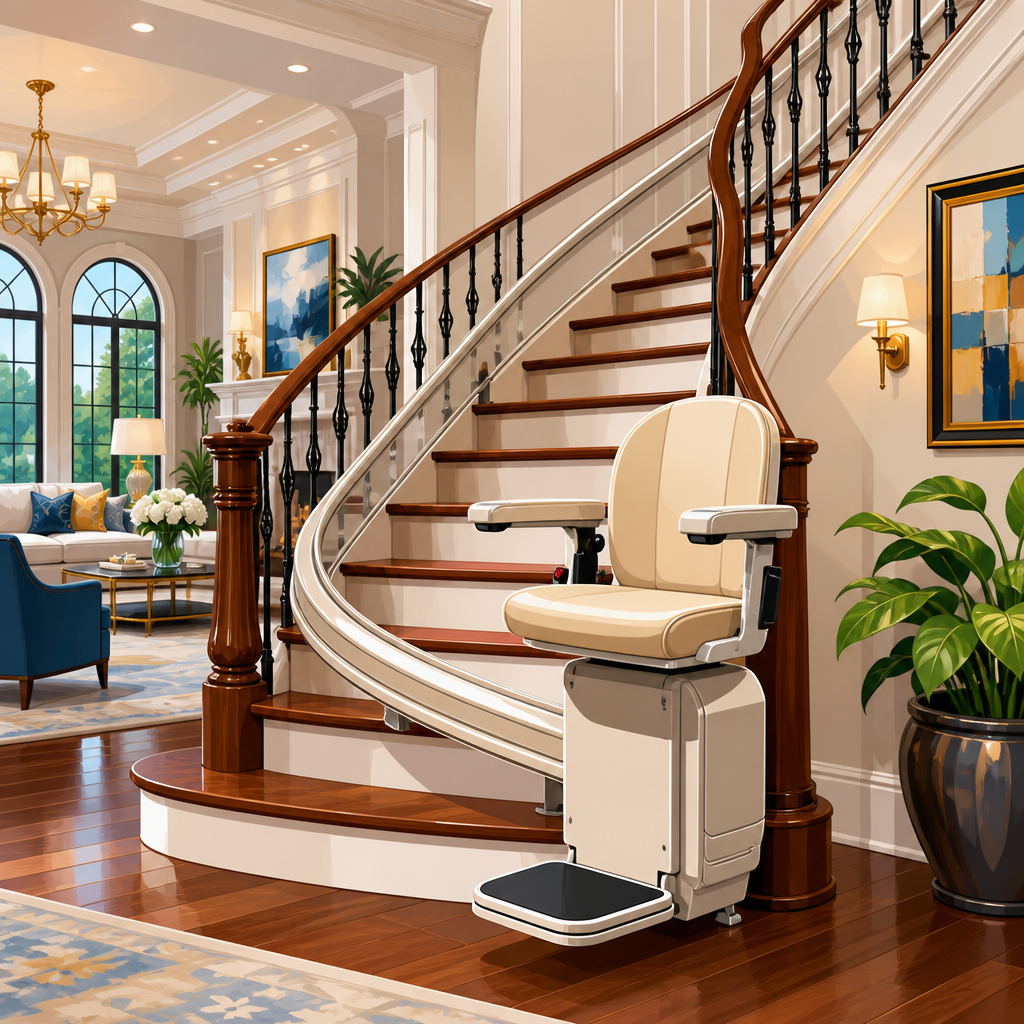
Best premium stair lifts for high-end home renovations combine accessibility engineering with interior design, making it possible to add safe vertical travel without compromising the look, flow, or value of an upscale home. In renovation planning, a premium stair lift is not simply a mobility device bolted onto stairs. It is a custom transport system built around architecture, user needs, finish quality, ride comfort, and long-term serviceability. Homeowners typically use the term premium to mean more than a higher price. In practice, it refers to tighter rail fabrication, quieter drive systems, powered swivel and footrest functions, higher weight capacities, tailored upholstery, advanced safety sensors, cleaner installation methods, and support from established manufacturers with reliable dealer networks.
This matters because luxury renovations are judged on details. A poorly chosen lift can interrupt sightlines, crowd a foyer, clash with millwork, or create maintenance headaches after the remodel is complete. I have worked on projects where the stair lift decision was left until late in construction, and the result was avoidable compromises in outlet placement, trim returns, and landing clearance. On the best projects, the lift is specified early, alongside flooring, lighting, and railing decisions. That approach allows the design team to protect aesthetics while ensuring the user gets dependable daily access between levels. For aging-in-place renovations, multigenerational homes, and recovery from injury or surgery, a premium stair lift often preserves independence without forcing a move or the cost and disruption of an elevator retrofit.
High-end buyers also expect clear answers to practical questions. Which brands are known for luxury stair lifts? What features justify the cost? Are curved rails worth it? Can a stair lift be installed on narrow or decorative stairs? How much maintenance is required? The short answer is that the best premium stair lifts come from established names such as Stannah, Bruno, Handicare, Savaria, and Access BDD through specialized dealers, with the ideal choice depending on staircase geometry, user weight, transfer ability, and design priorities. Straight lifts are simpler and less expensive, while curved lifts are custom built for turns, intermediate landings, and complex architectural layouts.
What defines a premium stair lift in a luxury renovation
A premium stair lift distinguishes itself through customization, engineering refinement, and integration with the home. Customization begins with the rail. Straight rail systems are manufactured to standard lengths and cut to fit, but high-end curved systems are surveyed digitally and fabricated specifically for each staircase. That precision matters on sweeping staircases, split-level runs, and homes with tight lower landings where parking the chair away from the main view is a priority. The ride quality is also noticeably better on top-tier units. Better transmission design, smoother start-stop programming, and stable carriage construction reduce jerkiness and vibration, which is especially important for users with back pain, balance limitations, or post-surgical sensitivity.
Materials and finish options are another marker of a luxury stair lift. Premium models often provide slimmer rail profiles, upholstery choices beyond basic vinyl, and seat designs that feel more like high-end furniture than medical equipment. Some manufacturers offer color choices for rails and seats so the unit can blend with wall paint, wood species, metal balusters, or stone flooring. In formal interiors, those choices can prevent the stair lift from becoming the first thing people notice. Powered features matter too. A powered swivel seat at the upper landing reduces twisting during transfer. A powered footrest helps users who cannot bend easily. Remote call-send controls allow discreet parking at the top or bottom, which is valuable in entry halls and open staircases.
Safety and code-related planning are equally important. While stair lifts are typically installed on the stair treads rather than the wall, they still need adequate folded clearance, charging points, and unobstructed landings. Most reputable products include seat belts, overspeed governors, obstruction sensors, and battery backup so the lift continues operating during a power outage. In many projects, the premium choice is not the model with the most visible features, but the one with the fewest compromises in fit, comfort, and after-sales support. A stair lift that looks elegant but lacks local service coverage is not a premium solution in real life.
Leading premium stair lift brands and where each excels
Several brands consistently appear in luxury stair lift discussions because they have broad dealer networks, proven product lines, and strong custom capabilities. Stannah is widely respected for ride quality, upholstery options, and refined curved installations. Its Siena, Starla, and Sadler seating styles serve different user preferences, from traditional seated travel to perch-style support for limited knee flexion. Bruno, a long-established American manufacturer, is known for durability and some of the best reputations for reliability in the field. The Bruno Elite line often appeals to homeowners who want a sturdy, quiet lift with strong weight capacity and straightforward controls.
Handicare offers both straight and curved options and is frequently selected for more difficult staircase geometries. Its custom curved systems can be effective where parking solutions and space management are critical. Savaria, known more broadly for accessibility products including home elevators and vertical platform lifts, is often considered when a project team is evaluating several mobility solutions at once and wants design continuity across products. In some markets, Access BDD and rebranded dealer-exclusive curved systems are strong contenders for bespoke layouts, particularly when the staircase includes multiple bends or a need for a heavily tailored overrun.
The right brand depends on the user profile and the staircase, not just badge recognition. I have seen Bruno outperform more ornate competitors in homes where the primary concern was daily reliability for a heavier user. I have also seen Stannah win in designer-led renovations because its seating and finish combinations fit a formal interior better. Dealer quality matters as much as manufacturer quality. The best stair lift brands rely on local survey accuracy, installation skill, and service response times. Before choosing any premium model, confirm who handles maintenance, what parts availability looks like, and how warranty labor is administered in your area.
Best premium stair lifts by renovation scenario
Different luxury renovations call for different premium stair lift strategies. For a straight staircase in a primary residence, the best choice is usually a top-tier straight model with a slim folded profile, powered seat functions, and a rail finish that disappears into the stair design. For a grand curved staircase, a custom curved lift is almost always the answer because segmented or improvised rail solutions look clumsy and reduce ride quality. In beach houses, mountain homes, or second residences, durability and service support may outweigh decorative upgrades because downtime can be harder to manage from afar.
For users with limited hip or knee flexion, a perch or high-seat model can be the premium solution even if it looks less conventional. In tight staircases, the right premium feature is often a compact chassis and narrow folded dimensions rather than extra upholstery upgrades. For multigenerational homes, easy controls and remote call-send functions matter because more than one person may move the chair during the day. In historic renovations, preserving original railing details and minimizing visual intrusion are usually the top priorities, so custom parking positions and color-matched rails become more valuable than broad feature lists.
| Renovation scenario | Best premium fit | Why it works |
|---|---|---|
| Straight formal staircase | High-end straight lift with powered swivel | Clean profile, easier transfer, lower cost than curved custom rail |
| Curved or multi-landing stair | Custom curved lift | Exact rail fabrication, smoother travel, better parking flexibility |
| Narrow stair width | Compact seat and slim rail model | Preserves walking space when folded |
| User with painful knee flexion | Perch-style or higher-seat design | Reduces sit-to-stand strain |
| Historic or designer interior | Model with finish and upholstery choices | Blends with architecture and furnishings |
These scenario-based choices are more useful than generic best-of lists because premium stair lifts are highly dependent on context. A model that is perfect for a straight painted stair in a modern townhouse may be the wrong answer for a carved oak staircase in a Tudor renovation. The best premium stair lift is the one that solves mobility needs while preserving circulation, appearance, and resale appeal.
Features worth paying for and features that are often overrated
In high-end home renovations, some premium stair lift upgrades genuinely improve daily life, while others mainly increase the quote. Features worth paying for include a powered swivel seat, powered footrest, quality seat padding, intuitive armrest controls, battery backup, and two remote controls. On curved lifts, custom parking and overrun options are especially valuable because they can move the chair away from a visible landing or make transfers safer. Smooth ride programming is another high-value feature that buyers underestimate until they compare units in person. The difference between a harsh stop and a controlled deceleration is obvious to anyone with joint pain.
Weight capacity should also be treated as a premium feature when needed, not an afterthought. Many standard lifts support roughly 250 to 350 pounds, while heavy-duty configurations can go higher. A margin above the current user weight improves confidence and may allow the same unit to serve changing needs over time. Seat geometry matters more than many brochures suggest. A beautiful chair that is too deep, too low, or too narrow will not feel luxurious after a week of use. This is why test rides and careful measurement are essential.
Features that are sometimes overrated include decorative trim packages that do little to improve integration, app-based extras with limited practical use, and cosmetic upgrades that come at the expense of serviceability. The premium buyer should focus on transfer safety, folded footprint, ride quality, and support. Quiet operation matters, but every manufacturer markets itself as quiet, so insist on demonstrations and references. If a dealer cannot clearly explain service intervals, battery replacement expectations, and how they handle emergency calls, the product is not truly premium regardless of appearance.
Cost, installation, and design planning for luxury homes
Premium stair lift pricing varies widely based on staircase complexity. Straight premium models often start in the low thousands and climb with powered options and upholstery upgrades. Custom curved lifts are significantly more expensive because the rail is built to a digital survey and the installation is more involved. In many markets, a curved premium stair lift can cost several times as much as a straight model. That price difference is justified when the home has turns, intermediate landings, or architectural conditions that demand a precise fit. Trying to save money by forcing the wrong lift type usually creates a result that looks inferior and functions poorly.
Installation is usually faster and less invasive than homeowners expect. Because most stair lifts mount to stair treads, major wall demolition is uncommon. Still, luxury renovations benefit from early coordination. I recommend finalizing the stair lift plan before finish carpentry is complete so outlet placement, trim details, and parking positions can be designed intentionally. On projects with new flooring, verify tread structure and finish tolerances in advance. On stone or custom hardwood stairs, installers may need specific anchoring and protection procedures. For homes with alarm systems or smart-home integration, discuss whether the chair location or charging points will affect adjacent devices or traffic patterns.
Maintenance planning should be part of the purchase decision. Batteries are consumable components and will eventually need replacement. Tracks must stay clean, and annual service is wise even if the manufacturer does not require it. Ask about warranty duration for parts, drivetrain, and labor. Also ask whether the dealer stocks common components locally. In luxury homes, the inconvenience of a nonworking lift is often more important than the repair invoice. Responsive local service is part of the product.
How to choose the best premium stair lift for your home
Start with the user, not the staircase. Measure mobility limitations, transfer ability, seat height needs, and whether one or multiple people may use the lift. Then evaluate the staircase: width, number of bends, landing sizes, headroom, and where the chair can park without dominating the room. Shortlist only dealers who perform detailed site surveys and can show completed installations similar to your home. Request in-person demonstrations whenever possible, because ride feel and control layout are impossible to judge from brochures alone.
Next, compare proposals line by line. A premium stair lift quote should specify rail type, seat style, powered options, weight capacity, warranty terms, service response expectations, and estimated install timeline. Ask what happens if the survey changes after finish work. Ask how obstruction sensors behave with pets, rugs near the landings, or irregular trim. For curved systems, confirm whether the rail design includes parking beyond the main staircase sightline. If aesthetics are important, ask for finish samples in the actual lighting conditions of the home.
The best outcome comes from treating the stair lift as a permanent architectural element, not an appliance added at the end. When selected carefully, premium stair lifts support aging in place, protect independence, and preserve the design intent of a luxury renovation. Compare brands, test the ride, verify service support, and choose the model that fits both the user and the architecture. That is how to buy a premium stair lift that feels worthy of a high-end home.
Frequently Asked Questions
What makes a stair lift “premium” in a high-end home renovation?
A premium stair lift goes far beyond basic point-to-point transportation. In an upscale renovation, it is typically defined by its level of customization, finish quality, engineering refinement, ride comfort, and how well it integrates with the home’s architecture. Instead of appearing as an afterthought, a premium model is selected to complement the stair geometry, surrounding millwork, flooring, wall treatments, and overall interior design. That often means custom upholstery, slim rail profiles, upgraded seat materials, color-matched components, powered folding features, and cleaner installation methods that preserve the visual flow of the staircase.
Premium also refers to performance and user experience. High-end stair lifts usually offer smoother starts and stops, quieter motors, more precise rail fabrication for curved staircases, enhanced safety systems, and better ergonomics for transfers on and off the seat. Many include powered swivel seats, folding rails, intuitive controls, remote call stations, and battery backup for dependable operation during power outages. In luxury renovations, homeowners are not just paying for mobility assistance; they are investing in a custom accessibility solution that respects the home’s design language while delivering long-term reliability, comfort, and service support.
Can a premium stair lift be installed without hurting the look or value of a luxury home?
Yes, when chosen and planned correctly, a premium stair lift can be installed in a way that protects and in some cases even enhances the practical value of a luxury home. The key is early integration during the renovation process. When architects, interior designers, contractors, and accessibility specialists collaborate from the beginning, the stair lift can be treated as part of the design rather than as an add-on. This allows for better decisions about rail placement, parking locations, charging points, seat style, folding features, and finish coordination, all of which reduce visual intrusion.
In many high-end homes, the concern is not just whether the unit works, but whether it disrupts sightlines, traffic flow, or architectural details. Premium models address this with narrower rail systems, compact seat profiles, custom curves that follow the staircase closely, and park positions that move the chair away from prominent living areas. Materials and colors can often be selected to blend into the stair environment, helping the installation feel discreet and intentional. For homeowners thinking about resale, accessibility improvements can broaden the appeal of the property, particularly for multigenerational living or aging-in-place buyers. A well-designed premium stair lift demonstrates that the home was renovated with foresight, safety, and livability in mind, rather than compromising elegance for function.
Are curved stair lifts the best choice for custom or architecturally complex staircases?
For many luxury homes, the answer is yes. Curved stair lifts are usually the preferred solution for staircases with landings, turns, spirals, split levels, or unique architectural layouts because they are built to match the exact dimensions and path of the staircase. Unlike straight stair lifts, which work best on a single uninterrupted run, curved systems use custom-manufactured rails designed from detailed measurements or digital scans. This makes them ideal for homes where the staircase is a design centerpiece and where precision is essential.
In premium renovations, curved stair lifts are valuable not only because they fit complicated staircases, but because they can be engineered for a more tailored visual result. The rail can often be routed to minimize intrusion, preserve walking space, and park the chair in a less visible location. This is especially important in foyers, formal stair halls, and open-plan interiors where appearance matters as much as performance. Curved models do cost more than straight units because of their customization and fabrication requirements, but they often provide the best combination of safety, elegance, and usability for high-end homes. The most successful installations come from manufacturers and dealers with strong experience in complex residential projects, because precise rail design and expert installation make a major difference in both comfort and appearance.
What features should homeowners prioritize when comparing premium stair lift brands?
Homeowners should start with the essentials: safety, ride quality, fit, and service support. Safety features should include seat belts, obstruction sensors, secure swivel and lock mechanisms, battery backup, and dependable braking systems. Ride quality matters enormously in a premium product, so it is worth comparing how smoothly each model starts, travels, and stops, as well as how much motor noise and vibration it produces. The best premium stair lifts feel stable, comfortable, and refined rather than mechanical or abrupt.
From there, focus on customization and convenience. Important features may include powered swivel seats, powered footrests, folding arms and seats, hinged or folding rails for doorways and walkways, remote controls, slim seat designs, and upholstery or finish options that coordinate with the home’s interior. If the renovation is design-driven, ask how closely the rail can follow the staircase and whether the chair can be parked away from the main living view. It is also wise to evaluate weight capacity, seat dimensions, transfer comfort, and whether the model suits the specific mobility needs of the user now and in the future.
Just as important as the product itself is the company behind it. Premium buyers should look for brands and local dealers with strong reputations for measurement accuracy, installation quality, warranty coverage, maintenance access, and long-term parts availability. A stair lift is a service-dependent system, so ongoing support is part of what makes it truly premium. In practice, the best choice is rarely the one with the longest feature list alone; it is the one that best balances aesthetics, engineering, comfort, and dependable after-installation care.
How much should homeowners expect to invest in a premium stair lift for a luxury renovation?
Costs vary widely, but premium stair lifts represent a significant custom investment, especially in luxury homes with curved or complex staircases. Straight premium stair lifts generally cost less than curved systems, but in high-end renovation settings, many homeowners are selecting custom curved models because they better suit the architecture and provide a more polished result. Pricing can be influenced by staircase shape, rail complexity, number of landings, parking requirements, powered options, upholstery and finish upgrades, structural considerations, and whether electrical or finish carpentry work is needed as part of the renovation.
Homeowners should think in terms of total project value rather than base equipment price alone. The real investment includes design coordination, professional measurement, custom rail manufacturing, skilled installation, warranty protection, and future maintenance. Premium features such as power folding components, advanced seat ergonomics, discreet rail routing, and custom aesthetic options can add cost, but they often make the difference between an installation that feels integrated and one that feels visually intrusive. In a luxury renovation, the goal is not merely to add access at the lowest price, but to create a durable, elegant, and highly usable solution that supports independent living without undermining the home’s character.
The best approach is to obtain an in-home assessment and a detailed proposal that breaks down equipment, customization, installation scope, and service terms. That allows homeowners to compare options accurately and understand what they are paying for. In many cases, spending more upfront on a well-supported premium system leads to a better ownership experience, fewer design compromises, and stronger long-term satisfaction.





