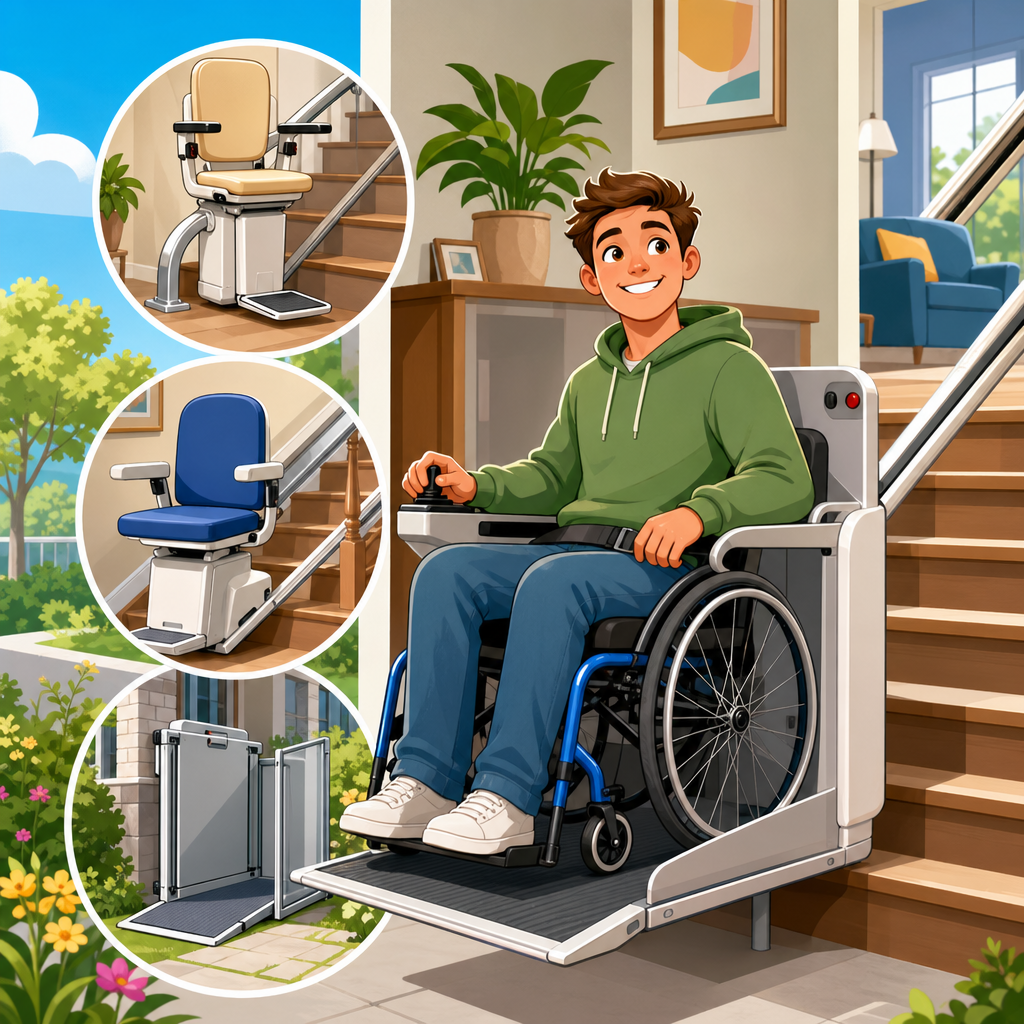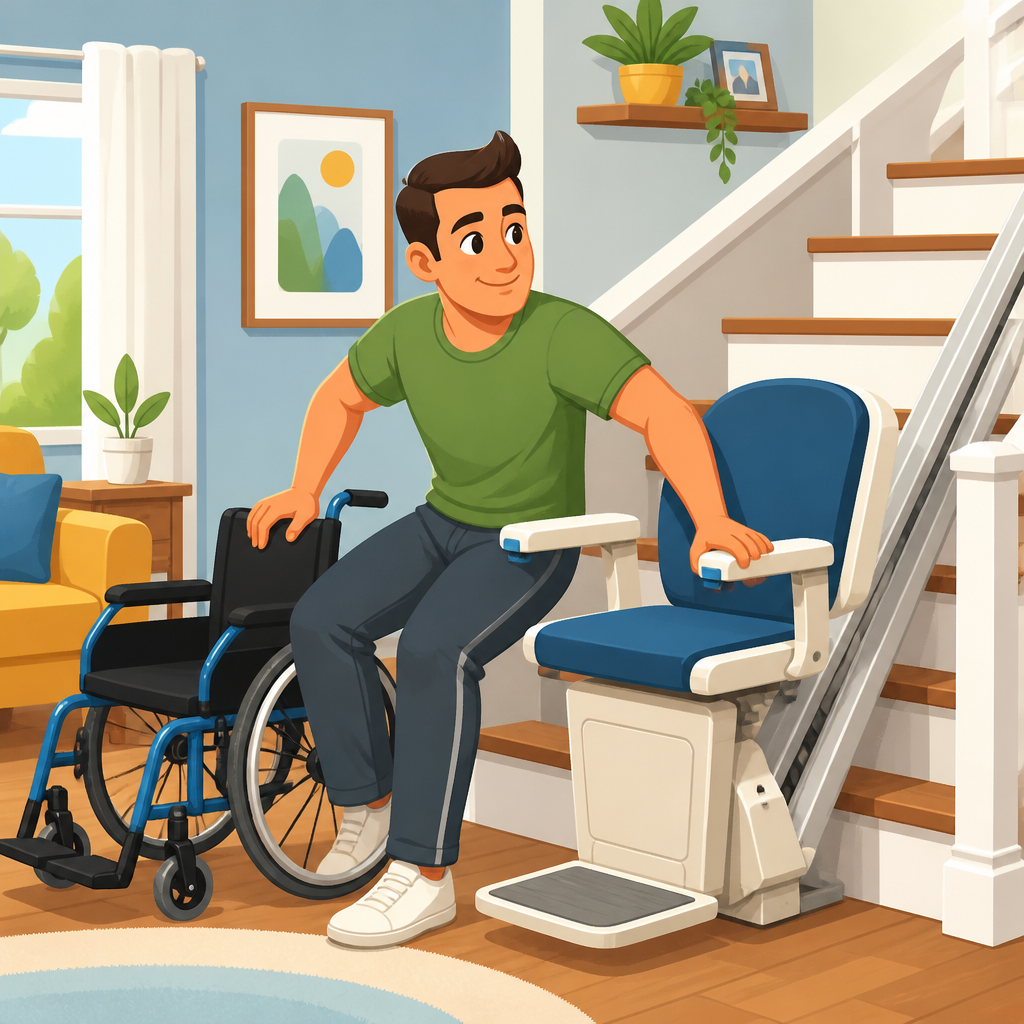
Choosing the best stair lifts for people with spinal cord injuries who can transfer starts with a practical question: which chair lift will move a rider safely, comfortably, and consistently without creating new strain during the transfer itself? In this guide, chair lift refers to a stair lift with a rail mounted to the staircase and a motorized seat that carries one user between floors. For people with spinal cord injuries, transfer means moving from a wheelchair or other mobility device onto the lift seat with or without a transfer board, caregiver assistance, or grab support. That distinction matters because a stair lift is not a wheelchair platform lift. It is designed for seated transfers, and the features that make one model excellent for an ambulatory senior may be wrong for a paraplegic user managing trunk balance, pressure relief, spasticity, or reduced hand function.
I have evaluated stair lifts in homes where a few inches of seat height, swivel resistance, or armrest placement changed whether a transfer felt secure or risky. The best models for this group share predictable controls, stable seats, reliable safety sensors, and install options that match the staircase rather than forcing the user to adapt. This article is the hub for best chair lifts for disabled users, so it explains who these products suit, which features matter most, how leading brands compare, and when a stair lift is the wrong answer. If you are buying for yourself, a family member, or a rehab discharge plan, the goal is simple: reduce fall risk, preserve energy, and maintain access to the full home.
Who should use a stair lift after a spinal cord injury?
A stair lift is a strong option for someone with a spinal cord injury who can perform a seated transfer onto a standard chair seat and maintain a safe position during travel. That usually includes many people with paraplegia, some people with incomplete injuries, and some users with quadriplegia who have enough upper-body control, adaptive technique, or caregiver support to transfer reliably. It is often appropriate when the user can approach the seat at the top or bottom landing, lock a wheelchair, position feet or leg supports safely, transfer laterally or pivot onto the seat, and operate simple controls. It can also work for households planning to age in place, especially when one user has an SCI and another family member has more typical mobility limitations.
A stair lift is usually not the best choice when independent transfers are inconsistent, when severe spasticity causes unsafe leg positioning, when orthostatic hypotension makes upright seating difficult, or when the person must remain in a wheelchair during movement between floors. In those cases, a vertical platform lift or home elevator may be more appropriate. The key clinical concept is transfer capacity, not diagnosis alone. Two people with the same neurological level can have very different trunk control, skin tolerance, and hand function. That is why a proper buying process should include a home assessment, staircase measurements, and a frank discussion about how the transfer happens on good days and bad days.
Features that matter most for safe transfers
The single most important feature is seat geometry. Seat height, depth, width, and cushion firmness affect whether the wheelchair-to-seat transfer is level, uphill, or downhill. A near-level lateral transfer generally feels safest. If the seat is too low, the user has to lower down and push back up later, increasing shoulder load. If it is too high, the transfer can feel perched and unstable. In home evaluations, I pay special attention to how the seat aligns with the user’s wheelchair cushion height, because even a two-inch mismatch can change the entire transfer strategy.
Swivel and lock performance comes next. Most modern stair lifts offer manual or powered swivel at the top landing so the seat can turn away from the staircase before standing or transferring off. For SCI users, the lock must engage positively and predictably. A seat that swivels too freely can drift during transfer. A seat that requires strong grip strength can be equally problematic. Footrest folding matters too. Powered footrests reduce bending and help users who cannot safely reach downward. Armrests should be sturdy enough to bear some weight during repositioning, though they should not be treated as grab bars unless the manufacturer permits it.
Other essential features include seat belts, obstruction sensors, battery backup, call/send controls, and smooth starts and stops. Battery-powered DC lifts dominate the market because they continue operating during many power outages and generally provide gentler motion than older AC designs. For users with pressure injury risk, travel time and surface materials matter more than many buyers expect. A short trip on a vinyl seat is usually fine, but prolonged waiting on a narrow perch may not be. The best chair lift for a disabled user is the one that fits the body, the staircase, and the transfer method all at once.
Best stair lift brands and where each fits
Among mainstream residential brands, Bruno, Handicare, Harmar, and Stannah are the names I most often see considered for people with spinal cord injuries who can transfer. Bruno has built a strong reputation for sturdy construction, intuitive controls, and excellent outdoor options. Its Elite line is frequently a good fit for users who want a heavier-duty feel and a dependable ride on straight or curved stairs. Handicare stands out for modular curved rails and a broad dealer network. In tighter or more complex staircases, Handicare installations can solve layout problems that eliminate other brands.
Harmar is widely available in North America and often competes well on value. Some of its straight stair lifts are attractive when budget is important but safety basics cannot be compromised. Stannah has a long history in the market and remains a strong choice for custom curved projects, particularly where ride quality and seat finish are priorities. Access BDD and Savaria may also enter the conversation through local dealers, especially for specialized residential access projects. The best brand is not the one with the flashiest brochure; it is the one with the right rail configuration, service support in your ZIP code, and a seat that works with your transfer pattern.
| Brand | Best fit | Key advantage | Potential limitation |
|---|---|---|---|
| Bruno | Users wanting durable straight or curved lifts | Solid build, smooth ride, strong dealer reputation | Price can be higher than entry-level competitors |
| Handicare | Complex staircases and tight layouts | Flexible rail options and modular curved designs | Feature sets vary by local dealer package |
| Harmar | Budget-conscious buyers needing core safety features | Good availability and competitive pricing | Some models feel less premium in seat design |
| Stannah | Custom curved installations and refined ride quality | Strong engineering and polished fit and finish | Higher cost and fewer dealers in some regions |
Straight stair lifts versus curved stair lifts
Straight stair lifts are installed on staircases without turns, intermediate landings, or directional changes. They are usually the least expensive, fastest to install, and easiest to service because the rail can often be cut to length from standard stock. For many users with spinal cord injuries, a straight stair lift offers the best value if the home layout supports safe transfers at both landings. Typical installed pricing in the United States often falls around $3,000 to $6,000, depending on seat options, power features, and local labor rates.
Curved stair lifts are custom-built for stairs with bends, pie-shaped steps, or multiple landings. They cost significantly more because the rail is made to the staircase template. Installed prices commonly start near $10,000 and can exceed $20,000 for complex routes. That higher price can still be justified if the curved rail places the seat in a much safer transfer position at the top or bottom. In several homes I have assessed, a straight lift was technically possible, but the transfer zone would have opened directly toward a narrow hall or door swing. A custom curved rail created proper wheelchair approach space and made the difference between a marginal solution and a usable one.
When comparing straight and curved stair lifts, think beyond the rail shape. Ask where the seat stops, how much clear floor space exists for wheelchair positioning, whether a hinged rail is needed to prevent blocking a doorway, and whether parking the lift out of the way will affect other household members. Good accessibility design always starts with the landing, not the staircase photo in the brochure.
Transfer-friendly design details buyers often miss
Many buyers focus on weight capacity and price, then overlook the smaller design details that define daily usability. Seat-to-wheelchair gap is one of them. Wide armrests, bulky side covers, or a rail post placed near the transfer side can increase the horizontal gap and force a harder reach. Flip-up arms can help, but only if they move far enough out of the way. Seat edge shape matters as well. A firm, flatter seat often supports lateral transfers better than a deeply contoured cushion that traps the pelvis in the center.
Control design is another overlooked issue. Standard rocker switches are simple, but users with limited pinch strength may do better with larger toggles or remote controls positioned consistently. If the user relies on a caregiver, call/send stations should be installed at practical heights. Seat belt type matters too. A basic lap belt is common, yet some users with poor trunk control may need a belt that is easier to grasp or a seating setup reviewed by a therapist. Manufacturers do not usually offer medical positioning systems on residential stair lifts, so it is important not to assume these devices can substitute for customized wheelchair seating.
Finally, ask about ride interruptions. Safety sensors stop the lift when the footrest or carriage meets an obstruction. That is essential, but nuisance stops can become frustrating if the staircase is narrow and objects are commonly left on steps. A model with a clean rail profile and a dealer who calibrates the installation carefully can reduce callback issues. Service quality is not a bonus feature; it is part of product quality.
How to evaluate a home before buying
A proper stair lift assessment should cover the staircase, the landings, the user, and the household routine. The staircase review includes width, total run, step dimensions, wall-side obstacles, handrails, door swings, and the electrical setup for the charger. While many residential lifts fit on stairs around 30 inches wide, more width generally improves safety, especially for transfer users who need elbow room. The top and bottom landings deserve equal attention. You need enough clear space to position a wheelchair, lock brakes, place feet, and complete the transfer without twisting into a wall or over the stairs.
User assessment should include transfer method, seated balance, upper-extremity strength, skin protection needs, and hand function. If the person pushes up from the wheelchair armrest and reaches across to the stair lift arm, can that be done without shoulder pain? If a transfer board is used, is there enough parallel alignment? If a caregiver assists, where does that person stand? These are not minor details. They determine whether the device gets used every day or becomes an expensive compromise.
Household routine matters because stair lifts are shared equipment in many homes. Ask who else uses the stairs, whether children or pets are present, and whether the rail will obstruct circulation. A folding footrest, folding seat, and parking position can make a lift less intrusive. If the staircase serves as the primary exit route, local code considerations and emergency planning should be discussed with the installer. Stair lifts improve access, but they do not remove the need for a safe evacuation plan.
Costs, warranties, and the service question
Price matters, but the cheapest quote is rarely the best value for a disabled user who depends on the lift daily. Total cost includes the unit, rail, installation, electrical setup if needed, optional powered features, warranty coverage, and future service. Straight lifts commonly cost less than curved lifts, and used or rental units may reduce upfront expense for short-term needs. However, availability of used equipment for a specific staircase is limited, particularly for curved rails because they are custom built.
Warranty terms vary. Many manufacturers separate coverage for major components, electronics, and labor. Batteries are wear items and usually have shorter coverage. Ask whether service is handled directly by the brand or by a local dealer, what response times are typical, and whether loaner solutions exist if a part is delayed. In practice, local dealer quality often predicts satisfaction more accurately than brochure claims. A well-supported brand with a strong technician network is safer than a theoretically better model with weak regional service.
Funding is inconsistent. Medicare generally does not cover stair lifts as standard durable medical equipment, though some Medicare Advantage plans may offer supplemental benefits. Medicaid waiver programs, veterans’ benefits, workers’ compensation, state assistive technology programs, and nonprofit grants can sometimes help. For spinal cord injury users, hospital case managers, independent living centers, and vocational rehabilitation counselors may know regional funding paths that general retailers never mention.
When a stair lift is the best chair lift for a disabled user
As the hub for best chair lifts for disabled users, this page should make one point clear: disability alone does not determine the right product. A stair lift is best when the user can transfer safely, the staircase allows good wheelchair positioning, and the seat supports the body well enough for short travel. It is especially useful for people with paraplegia who have strong arm function, for incomplete SCI users whose walking endurance is limited, and for households needing a lower-cost alternative to an elevator. It can also be an effective bridge solution after rehabilitation if the home is otherwise inaccessible and a larger renovation will take time.
It is not best for every disabled user. Someone who cannot transfer reliably may be better served by a platform lift. Someone with advanced shoulder overuse pain may find repeated transfers harder over time even if the device initially works. The right decision comes from matching the equipment to real life, not idealized marketing. Schedule an in-home assessment, compare at least two reputable dealers, and insist on a recommendation based on your transfer method, landing space, and long-term needs.
Frequently Asked Questions
What features matter most in a stair lift for someone with a spinal cord injury who can transfer?
The most important features are the ones that make every transfer predictable, stable, and low-effort. For a person with a spinal cord injury who can transfer, the best stair lift is not simply the fastest or most heavily advertised model. It is the one that supports safe movement onto and off the seat without adding awkward twisting, extra reaching, or unstable positioning. A seat that locks firmly in place at the landing, a swivel function that turns the user away from the stairs, and sturdy armrests that can be used for balance during the transfer are usually high-value features. Seat height also matters because it should work well with the user’s wheelchair height and transfer technique.
Beyond the transfer itself, look closely at the controls and ride quality. A stair lift with simple, responsive controls is easier to use when hand strength, dexterity, or trunk control is limited. A smooth start-and-stop motor can reduce jarring, which is especially important for riders who need stable posture support. A folding footrest, seat belt, obstruction sensors, and battery backup are also key features because they improve safety and reliability in daily use. In practical terms, the best stair lift is the one that fits the person’s body, transfer method, staircase layout, and day-to-day routine rather than a model chosen only by price or brand name.
Is a stair lift safe for people with spinal cord injuries who are able to transfer independently or with limited help?
Yes, a stair lift can be very safe for people with spinal cord injuries who can transfer, but safety depends on the right match between the user, the lift, and the home setup. The stair lift itself is designed to carry a seated rider along a rail mounted to the staircase, but the most safety-critical part for this group is often the transfer on and off the seat. If the rider can perform a stable lateral, pivot, or assisted transfer and the seat can be positioned in a way that reduces twisting and exposure to the stair edge, the lift can be an effective and safe mobility solution.
Proper assessment is what makes that safety real. Important considerations include upper-body strength, balance, spasticity, pressure management needs, sensation changes, and whether fatigue affects transfer quality later in the day. The staircase and landings also need to be evaluated to make sure there is enough room to approach the seat, lock a wheelchair in place if needed, and exit safely at the top floor. Many lifts include swivel seats, seat belts, footrests, and safety sensors, but these features only help when they are used correctly and consistently. A professional stair lift evaluation, often informed by an occupational therapist, can determine whether a stair lift is appropriate or whether another accessibility solution would be safer.
How can someone with a spinal cord injury reduce strain during transfers onto a stair lift seat?
Reducing strain starts with setup. The ideal stair lift transfer should minimize distance, height mismatch, and trunk rotation. If possible, the wheelchair or mobility device should be positioned so the user can transfer onto the seat in a controlled, familiar way rather than reaching or dropping onto it. A seat height that is reasonably compatible with the user’s wheelchair can make a major difference. Swivel seats are especially helpful because they allow the person to transfer from a safer angle at the landing rather than facing directly toward the staircase. Stable armrests and a seat that does not shift under load are also important because they provide reliable support during weight shifts.
Technique and environment matter just as much as the equipment. Users often benefit from practicing with a clinician or trained installer present to identify better hand placement, wheelchair positioning, and sequencing. For some people, a transfer board may help; for others, it may create more complexity and should be avoided. Clothing, cushion height, braking the wheelchair, and managing foot placement all influence the effort required. If strain is showing up in the shoulders, wrists, or low back, that is a sign the setup should be reassessed. The goal is not simply to complete the transfer, but to complete it repeatedly without creating overuse injuries or increasing the risk of a fall.
Are straight or curved stair lifts better for people with spinal cord injuries who can transfer?
Neither type is automatically better for spinal cord injuries; the right choice depends on the staircase and on where the safest transfer can happen. A straight stair lift is used for a staircase that runs in one continuous line without turns or intermediate landings. These lifts are often less expensive, quicker to install, and mechanically straightforward. If the top and bottom landings provide enough room for wheelchair approach and a secure transfer, a straight lift can work very well. In many homes, a straight lift also allows easier planning around seat position and rail placement.
A curved stair lift is designed for staircases with turns, landings, or complex shapes, and it may actually be the better option when transfer safety is the top priority. That is because a curved system can sometimes be configured to stop at a location that gives the user a better approach angle, more space, or less exposure to the stair edge. For someone with a spinal cord injury, that can be more important than the rail shape itself. While curved lifts usually cost more and require custom fabrication, they may provide a much safer and more comfortable daily experience if they improve landing access and transfer mechanics. The best decision usually comes after measuring both the staircase and the transfer space, not just the stairs alone.
Should a person with a spinal cord injury consult a therapist or accessibility specialist before buying a stair lift?
Yes, and in many cases that step can prevent an expensive mistake. A stair lift may seem straightforward, but for a person with a spinal cord injury who transfers from a wheelchair or other mobility device, the details matter enormously. An occupational therapist, rehabilitation professional, or experienced accessibility specialist can look at the user’s strength, balance, trunk control, skin protection needs, and transfer technique. They can also evaluate whether the person is likely to use the lift safely every day, not just during a short demonstration. This kind of assessment is especially useful if the user has changing function, fatigue, shoulder pain, or a history of falls during transfers.
A qualified professional can also help compare stair lift models based on practical needs rather than sales claims. They may identify the need for a powered swivel seat, a specific seat height, additional transfer space, or a different accessibility solution altogether. They can also coordinate with the installer to make sure the rail placement, landing clearance, and final seat position support the user’s real-world routine. For households planning around long-term accessibility, that guidance can improve safety, comfort, and value. In short, expert input helps ensure the stair lift is not just technically installable, but genuinely usable and sustainable for the person who will rely on it.