Choosing the best stair lifts for stroke survivors with one-sided weakness starts with understanding how hemiparesis changes the way a person transfers, sits, balances, and uses controls on the stairs. A stair lift, sometimes called a chair lift for disabled users, is a motorized seat that travels along a rail mounted to the staircase, allowing the rider to move between floors without climbing steps. For stroke survivors, that simple definition misses the real buying challenge: the safest model is not just the one that fits the staircase, but the one that matches one-handed operation, reduced trunk stability, slower reaction time, and changing rehabilitation goals. I have helped families compare straight and curved lifts, arrange home assessments, and troubleshoot poor installations, and the difference between a good choice and a bad one is immediate. The right lift restores access to bedrooms, bathrooms, and daily routines. The wrong lift creates fear, awkward transfers, and unnecessary risk. This guide explains what to look for, which features matter most, and how to compare leading stair lift options for disabled users when one side of the body is weaker than the other.
What stroke survivors with one-sided weakness need from a stair lift
One-sided weakness, often called hemiparesis, affects more than leg strength. Many stroke survivors also have reduced grip, shoulder instability, neglect on one side, visual field cuts, fatigue, or difficulty pivoting toward the weaker side. Those factors change the ideal stair lift setup. In practice, I look first at transfer mechanics. Can the user back up to the seat safely? Which hand can hold the armrest? Does the stronger leg lead during standing? Is a perch seat realistic, or is a full seat with strong side support required? A stair lift for a stroke survivor should reduce the number of movements required and make every movement predictable.
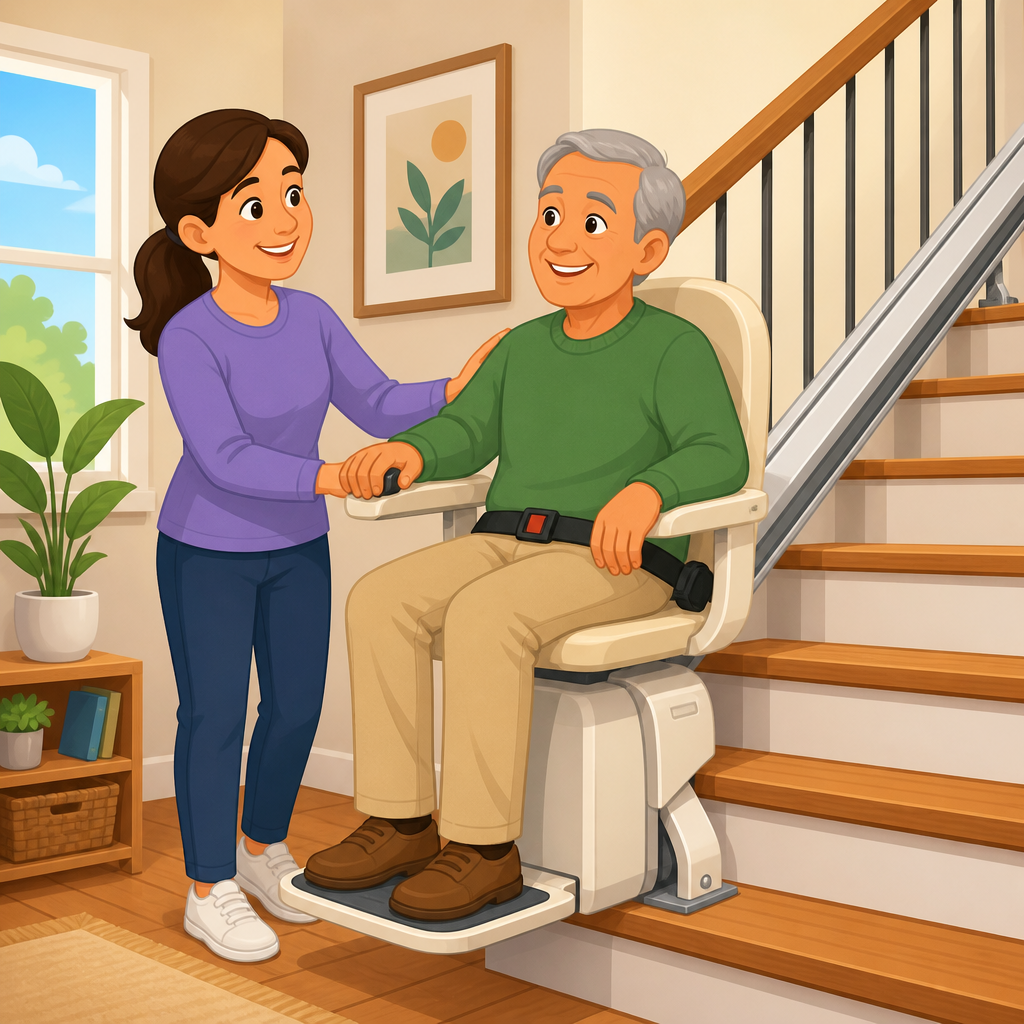
Seat height, swivel function, armrest shape, and control placement matter more than shoppers expect. A user with right-sided weakness may do best with controls on the left armrest and a call-send remote positioned where the stronger hand can reach it. A powered swivel is often worth the added cost because it reduces twisting at the landing, where falls commonly happen. Seat belts should be easy to latch one-handed. Footrests should fold without requiring bending if balance is limited. If the survivor has spasticity or wears an ankle-foot orthosis, extra seat-to-footrest space can improve comfort and positioning.
Another often overlooked issue is cognitive load. After a stroke, some people can physically ride a lift but become anxious if the controls are confusing or if the ride starts abruptly. The best chair lifts for disabled users in this situation use constant-pressure controls with gentle starts and stops, clear armrest toggles, and visible status lights. The goal is not just access to the second floor. The goal is independent, repeatable, low-stress use every day.
Core features that make a stair lift safer and easier to use
For stroke survivors, the most valuable features are the ones that simplify transfers and compensate for limited use of one arm or leg. A powered swivel seat tops the list because it turns the user away from the staircase at the landing, reducing twisting and letting the stronger leg step onto flat flooring first. Powered footrests are also helpful, especially when bending is difficult or when the user relies on a cane in the stronger hand. Manual folding parts save money, but they can become daily obstacles if one-handed operation is poor.
Seat design is equally important. Look for firm cushioning, a supportive back, and armrests that feel stable when pushing up to stand. Slim seats may save staircase width, but they can feel insecure for someone with trunk weakness. In many home assessments, I have seen users do better in a slightly larger seat with better lateral support, even if it requires more careful folded clearance planning. A retractable seat belt, similar to a car belt, is usually easier than a fixed lap strap. Some premium models also offer diagnostic displays that make service problems easier to identify.
Battery backup is essential, not optional. Most modern stair lifts charge from household power but run on batteries, which means they still work during an outage. That matters for any user, but especially for someone who cannot safely manage the stairs without the lift. Obstruction sensors on the footrest and carriage should stop the unit if something is on the steps. Overspeed governors, locking swivel seats, and pressure-sensitive controls are standard safety elements on reputable models and should never be treated as premium extras.
Straight versus curved stair lifts: which type fits the home best
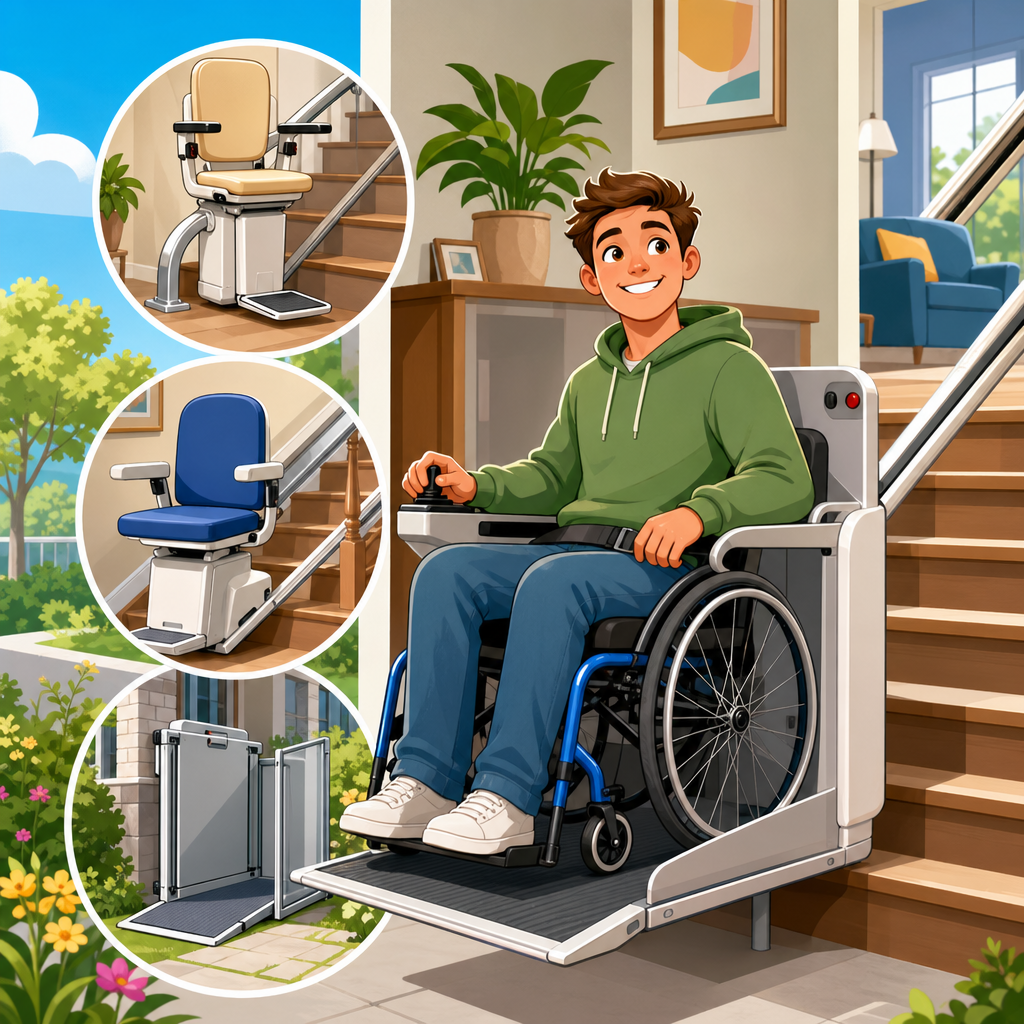
Straight stair lifts are designed for staircases that run in one line without turns or intermediate landings. They are the fastest to install, usually the most affordable, and often available as rental units. For a stroke survivor recovering at home after discharge from inpatient rehabilitation, a straight lift can be an efficient solution if the staircase layout is simple. Brands such as Bruno, Harmar, and Stannah all offer strong straight-rail options with battery operation, folding seats, and call-send controls.
Curved stair lifts are custom built for staircases with turns, pie-shaped steps, or multiple landings. They cost more because the rail is fabricated to the home’s exact dimensions, and installation generally takes longer. However, for many multilevel homes, a curved lift is the only practical answer. It can also improve safety because it keeps the user seated continuously rather than requiring a transfer at a landing. For survivors with one-sided weakness, avoiding extra transfers often justifies the higher price.
Selection should be driven by the staircase and the transfer pattern, not just budget. I have seen families try to force a straight-lift plan in homes that clearly needed a curved rail, only to realize the user still had to manage several steps at a turn. That defeats the purpose. An in-home assessment should measure staircase width, overrun space, headroom, landing clearance, and whether a hinge or parking rail is needed to prevent the track from blocking a doorway. Those details affect both comfort and code-compliant installation.
Best stair lift brands and models for one-handed use
Several manufacturers consistently stand out for stroke survivors with one-sided weakness. Bruno’s Elan for straight stairs and Elite for heavier-duty needs are well regarded for smooth ride quality, solid build, and dependable dealer support in the United States. Harmar’s Pinnacle series is known for a narrow rail profile and efficient operation, while its Helix curved model offers custom solutions for more complex homes. Stannah remains a strong premium option, especially for seat comfort, safety engineering, and curved configurations. Handicare also deserves consideration for model variety and specialized options, including some installations where doorway or hallway space is tight.
The best model depends on functional needs. If the rider has fair sitting balance but poor use of one hand, prioritize a chair with easy toggle controls, a straightforward seat belt, and optional powered functions. If the rider has a larger body size, braces, or significant weakness when standing, check seat width, armrest spacing, weight capacity, and whether the seat height supports a safe sit-to-stand transfer. Typical capacities range from about 250 to 400 pounds, while heavy-duty models may go higher. Published specifications matter because an undersized lift is uncomfortable and unsafe.
| Brand/Model Type | Best For | Key Strength | Watch-Out |
|---|---|---|---|
| Bruno Elan | Straight stairs, standard users | Smooth ride and strong dealer reputation | Fewer seat-size variations than some premium lines |
| Bruno Elite | Users needing higher capacity | Heavier-duty build and comfortable seat | Takes more stair width when folded |
| Harmar Pinnacle | Tight staircases | Compact rail and efficient battery use | Seat feel may be less substantial for some users |
| Stannah curved models | Complex stairs and premium comfort | Strong customization and safety design | Higher price and custom lead time |
| Handicare curved or straight options | Homes with layout constraints | Flexible configuration choices | Feature availability varies by dealer region |
No brand is universally best. Dealer quality, service response, and installation experience matter as much as the manufacturer badge. A well-installed midrange unit from an excellent local dealer is usually a better purchase than a premium model sold by a weak service network.
How to assess transfer safety before you buy
The single most important buying step is a transfer assessment. If possible, involve an occupational therapist or physical therapist who knows the survivor’s current mobility. In the homes I have evaluated, the biggest failures happened when families chose a lift based on staircase measurements alone. A chair lift for disabled users must fit the person’s movement pattern. Can the user approach with a cane or walker? Will the knees clear the armrests during sitting? Can the stronger hand fasten the belt? Can the user stand safely after the seat swivels?
Landing space deserves careful attention. Many falls occur not during the ride, but while getting on or off. At the top landing, there should be enough room for the user to step away from the chair without backing toward the staircase. Rail overruns can move the seat away from the edge, and powered swivel seats can position the rider toward the hallway or bedroom. At the bottom landing, make sure the footrest does not create a trip hazard and that any mobility aid can be staged within easy reach of the stronger side.
Ask the dealer to demonstrate the exact control sequence and let the user practice. If the survivor hesitates, misses steps, or becomes anxious, that information is valuable. Better to adjust the specification before purchase than after installation. Good dealers welcome these practical tests because they reduce returns, complaints, and unsafe use.
Costs, warranties, and whether new, used, or rental makes sense
Price varies widely by staircase type and feature set. In the current market, many straight stair lifts fall roughly in the $3,000 to $6,000 installed range, while curved stair lifts commonly start much higher and can reach $10,000 to $15,000 or more depending on complexity. Powered swivel seats, folding footrests, hinged rails, and upgraded upholstery add cost, but some of those features are highly justified for stroke survivors with one-sided weakness. Saving money on manual functions can create daily strain that undermines independence.
Used stair lifts can work in certain situations, especially for straight stairs where rails are not custom bent, but the savings are not always dramatic after reconditioning, rail replacement, and installation are included. Curved lifts are rarely practical to buy used unless the rail happens to match the home, which is uncommon. Rentals are often available for straight stair lifts and can be ideal for temporary recovery periods, such as the first months after a stroke when mobility may improve significantly with therapy.
Warranties differ by component. Many manufacturers split coverage among motor, gearbox, rail, electronics, and labor. Read the service terms closely and ask who provides repairs. Fast local service matters more than a long warranty on paper if the dealer is hard to reach. Also ask about battery replacement intervals; many units need new batteries every few years, and neglecting them is a common cause of service calls.
Installation, maintenance, and common buying mistakes
Professional installation should include a detailed staircase survey, discussion of transfer direction, and testing after the rail is mounted. The rail normally attaches to stair treads, not the wall, which surprises many buyers. Installers should verify charging points, swivel locks, seat belt function, and obstruction sensors. After installation, the user should receive hands-on training, not just a quick demonstration for family members. I always recommend practicing several full trips with and without a caregiver nearby.
Maintenance is straightforward but important. Keep the rail clean, charge the unit consistently, and schedule service if the lift makes unusual noises or stops unpredictably. Most manufacturers recommend periodic inspection, especially in homes where the lift is used multiple times daily. Dealers should explain manual lowering procedures and what happens during a power failure. Because most modern units are battery powered, they usually continue to operate for several trips, but batteries weaken over time.
The most common mistakes are choosing by price alone, underestimating transfer difficulty, ignoring local service quality, and buying a model too narrow or too low for the user’s build. Another mistake is failing to plan for change. Some stroke survivors recover meaningful strength; others develop greater fatigue or need more assistance over time. Buy for current safety with reasonable room for progression.
The best stair lifts for stroke survivors with one-sided weakness combine safe transfers, intuitive one-handed controls, dependable battery operation, and strong local service. Start with the user, not the staircase alone. Assess how the survivor approaches the seat, which side is stronger, whether a powered swivel or footrest will reduce strain, and how much landing space is available. Then compare straight versus curved rails, review reputable brands such as Bruno, Harmar, Stannah, and Handicare, and verify warranty and maintenance support before signing a contract. When those details are matched carefully, a stair lift does more than move someone upstairs. It restores access to the whole home with less fear and less dependence on others. If you are building out your research on the best chair lifts for disabled users, schedule an in-home assessment and use this hub as the starting point for every model comparison that follows.
Frequently Asked Questions
What features matter most in a stair lift for a stroke survivor with one-sided weakness?
The most important features are the ones that make transfers safer and reduce the need for balanced, two-sided movement. For a stroke survivor with hemiparesis, a stair lift should be easy to approach, easy to sit in, and easy to operate with one strong hand. A powered swivel seat is often one of the most valuable upgrades because it turns the chair at the top landing without requiring the user to twist their trunk or pivot forcefully on a weak leg. A folding footrest can also be helpful, especially if bending is difficult or if lifting the affected leg onto the footrest is a challenge.
Seat height, armrest shape, and control placement also matter more than many families expect. A seat that is too low can make standing up much harder for someone with reduced leg strength on one side. Controls should be usable from the stronger side and simple enough to operate without fine finger coordination. Many stroke survivors do best with a large, easy-to-press toggle or rocker control rather than small buttons. A secure seat belt, obstruction sensors, and a smooth start-and-stop ride are also essential because sudden movement can throw off balance and confidence.
Beyond the chair itself, the staircase layout plays a major role. The safest model is not necessarily the most expensive one, but the one that matches the user’s transfer pattern, stronger side, and home setup. A professional assessment should look at whether the person approaches from the left or right, whether they can stand and pivot safely, and whether they need extra rail overrun at the top or bottom to get on and off away from the stairs. For many stroke survivors, those transfer details are more important than brand name alone.
How do I know whether a stroke survivor can safely use a stair lift independently?
Safe independent use depends less on diagnosis alone and more on specific functional abilities. A stroke survivor does not need perfect strength to use a stair lift, but they do need enough sitting balance, transfer ability, judgment, and one-handed control to get on, ride, and get off safely. The key questions are practical: Can the person approach the seat without losing balance? Can they lower themselves onto the chair in a controlled way? Can they keep the weaker arm and leg positioned safely during the ride? Can they stand up at the destination without needing physical assistance?
Cognition and attention are also important. Some stroke survivors have neglect, reduced safety awareness, slowed processing, or visual-perceptual deficits that make stair lift use riskier, even if their strength looks adequate. Others may have enough physical function but still need supervision until they build a safe routine. If there is any history of sliding during transfers, impulsive standing, poor trunk control, or difficulty following multi-step tasks, it is wise to involve a physical therapist or occupational therapist before deciding on independent use.
A professional home assessment is the best way to answer this question. Installers can evaluate the staircase and equipment options, but a rehab clinician can evaluate the person’s body mechanics and safety during real-world transfers. In many cases, the answer is not simply yes or no. A stroke survivor may be able to use a stair lift independently after training, with a powered swivel seat, a better seat height, or a revised transfer technique. The goal is not just to make stair travel possible, but to make it repeatable and safe every day.
Is a standard stair lift enough, or should families look for special seating or powered options?
For some stroke survivors, a standard stair lift is enough. For many others, powered and ergonomic upgrades make a major difference in safety, comfort, and long-term usability. One-sided weakness changes how a person turns, sits, reaches, and pushes up to stand. That means features some buyers think of as optional can actually become essential. A powered swivel seat, for example, can dramatically reduce the need for twisting and awkward pivoting at the top landing, where falls are most concerning. A powered footrest may also help if the user cannot reliably lift the weaker leg into position.
Special seating may be appropriate when posture and trunk control are limited. A perch seat can sometimes help users who have trouble bending at the hips or getting up from a deep seated position, although it is not right for everyone and requires careful evaluation. Some users benefit from a higher seat base, firmer cushioning, or more supportive armrests that help with one-sided push-off during transfers. If the user has limited use of one hand, families should also ask whether the control can be mounted or configured for the stronger side.
The right question is not whether extra features are luxurious, but whether they reduce risk and effort. Stroke recovery can change over time, so choosing a stair lift with thoughtful customization can prevent the equipment from becoming difficult to use after only a short period. Families should discuss mobility changes, tone, fatigue, pain, and transfer technique with both the installer and the person’s therapy team. A slightly more advanced setup often provides much better day-to-day function for someone living with hemiparesis.
What is the difference between a straight stair lift and a curved stair lift, and which is better for stroke survivors?
The difference is based on the staircase, not the medical condition. A straight stair lift is designed for stairs that go in one uninterrupted line with no turns, landings, or curves. A curved stair lift is custom-built for staircases with bends, intermediate landings, spiral sections, or direction changes. Neither type is automatically better for a stroke survivor, but the safest choice is always the one that fits the staircase properly and allows safer boarding and exiting at each landing.
For a stroke survivor with one-sided weakness, the boarding position at the top and bottom of the stairs can be just as important as the travel path. A curved system often allows more customized parking positions and rail overruns, which can create safer transfer space away from the stair edge. That may be especially valuable if the user needs to approach the chair from a specific side or needs more room to turn with a cane, walker, or caregiver nearby. On the other hand, if the staircase is straight, a straight stair lift is usually more affordable, faster to install, and fully adequate when set up with the right seat and transfer features.
What matters most is the landing geometry and how the person moves in that space. A stroke survivor may need the chair to stop at a very specific point so the stronger leg is positioned for standing, or so the transfer happens toward a wall-mounted grab point rather than open stairs. An experienced stair lift provider should assess not just the staircase dimensions, but also the user’s side of weakness, preferred hand use, walking aid, and transfer habits. That level of planning matters far more than choosing between straight and curved based on diagnosis alone.
Can a stair lift reduce fall risk for stroke survivors, and are there situations where it may not be the best solution?
Yes, a stair lift can significantly reduce fall risk when the main danger is climbing stairs with weakness, poor endurance, or impaired balance. For many stroke survivors, the lift removes the repeated challenge of stepping up and down while managing asymmetrical strength and coordination. It can also reduce fatigue, which is important because fatigue often makes gait, attention, and transfer quality worse later in the day. When properly fitted and used correctly, a stair lift can turn a hazardous staircase into a manageable part of the home.
However, a stair lift is not automatically the right solution for every stroke survivor. If the person cannot transfer safely onto the seat, cannot remain upright while seated, or has significant impulsivity or severe neglect, the lift may not solve the underlying safety problem. In those cases, the biggest risk may shift from stair climbing to getting on and off the chair. Some homes also have tight landings that make transfers unsafe, even if the staircase itself can technically accept a rail. A very narrow staircase, cluttered approach, or lack of space for a walker at the top or bottom can all limit how useful the lift will be.
That is why the best decision comes from a full-function assessment, not just a product quote. Families should consider the stroke survivor’s balance, trunk control, transfer technique, cognition, vision, stronger side, and likely future needs. In some cases, the best answer may include a stair lift plus therapy, grab bars, transfer training, or changes to how the home is used. In other situations, moving essential activities to one floor may be safer. The right solution is the one that reduces total daily risk, not simply the one that gets someone up and down the stairs.