Choosing the best stair lift features for seniors planning to age in place starts with a simple goal: make every level of the home safe, reachable, and comfortable without forcing a disruptive move. A stair lift, often called a chair lift for stairs, is a motorized seat that travels along a rail mounted to the staircase, carrying a user up and down while reducing fall risk and preserving independence. In my work evaluating home accessibility products, I have seen one detail repeatedly shape outcomes: the best chair lifts for seniors are not defined by brand alone, but by how well the features match the user, the staircase, and the daily routine. A model that is excellent for one home can be wrong for another if the seat height, rail design, weight capacity, or controls are poorly matched.
This matters because stair-related falls remain a major source of injury for older adults, and many people want practical ways to stay in the homes and neighborhoods they know. Aging in place means remaining safely in one’s own home as needs change over time. For many households, a stair lift is one of the most effective modifications because it solves a specific barrier with relatively little construction compared with a residential elevator or a full first-floor renovation. It can also support caregivers by reducing transfer strain and making day-to-day movement more predictable.
The challenge is that buyers often focus on price first and overlook the features that determine long-term satisfaction. Battery backup, swivel seats, obstruction sensors, call-send controls, folding footrests, and custom rails are not minor extras; they influence safety, usability, and whether the lift still works well two years later. This guide explains the best stair lift features for seniors planning to age in place, while also serving as a central resource on best chair lifts for seniors. If you are comparing straight stair lifts, curved stair lifts, indoor models, or outdoor units, the sections below will help you identify what actually matters before you request quotes or schedule an in-home assessment.
Start With Staircase Type, User Needs, and Daily Mobility Patterns
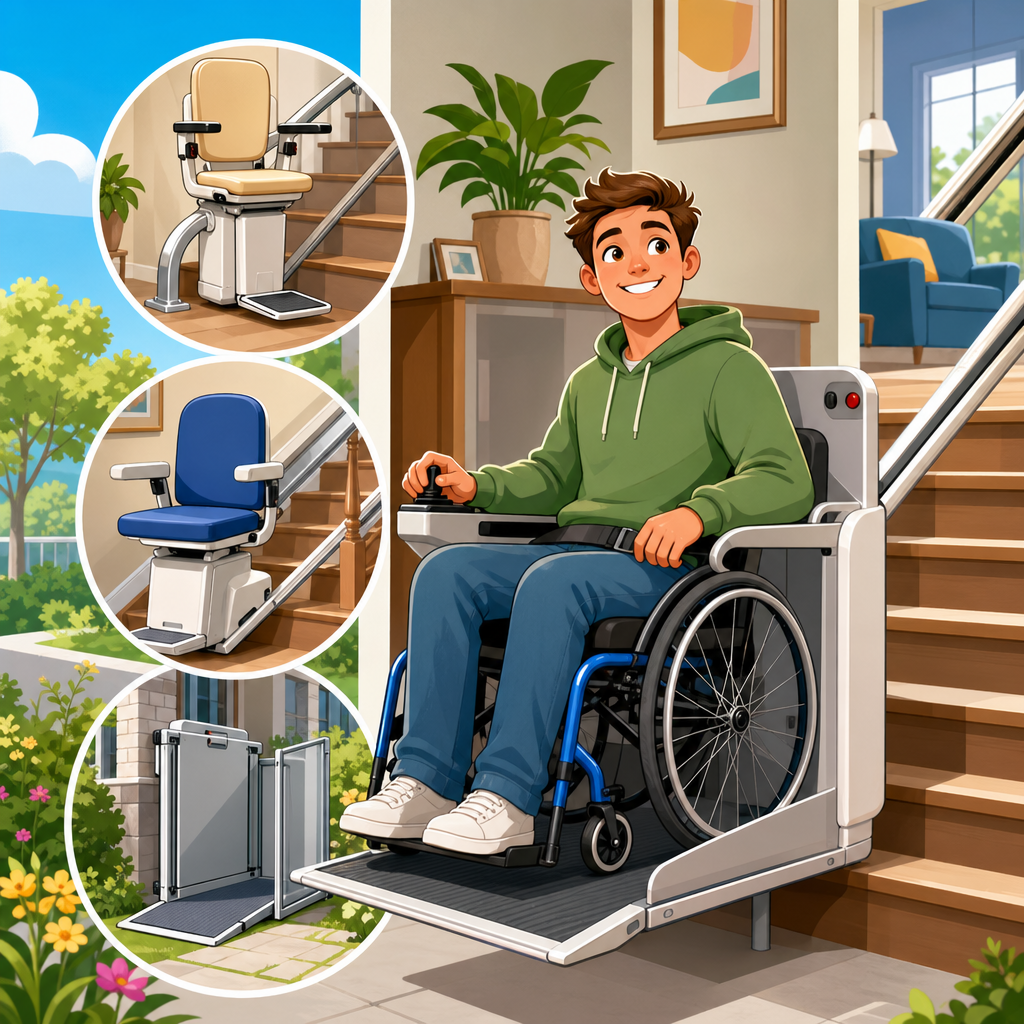
The first buying decision is structural: identify whether the home has a straight staircase, a staircase with turns or landings, or an exterior set of steps. Straight stair lifts use a standard rail and are usually installed faster and at lower cost. Curved stair lifts require a custom rail fabricated to follow bends, intermediate landings, or spiral-like geometry. Outdoor stair lifts use weather-resistant materials, sealed components, and covers to handle moisture and temperature swings. I always advise families to begin with the staircase rather than the catalog, because the rail configuration limits which products are realistic before style or upholstery enter the conversation.
User profile is equally important. A senior with mild knee pain may prioritize comfort and gentle starts and stops, while someone with limited trunk stability may need a more supportive seat, armrests, and a powered swivel at the top landing. If the user relies on a walker, transfer space at both ends of the rail becomes critical. If hearing or vision has changed, large controls, clear seat-belt feedback, and easy-to-see park positions matter more than premium trim. The best chair lifts for seniors are therefore feature-matched solutions, not one-size-fits-all appliances.
Daily mobility patterns reveal practical issues many buyers miss. Ask who uses the stairs, how often, at what times, and with what level of assistance. In a two-person household, call-send remotes may be essential so the lift can be parked out of the main living area yet brought back when needed. In a narrow stairwell, folding arms, seat, and footrest can preserve walking clearance for other family members. In homes where the user tires easily, a perch-style seat may be more suitable than a deep chair if standing up from a low seat is difficult. A proper assessment turns these patterns into feature requirements instead of after-purchase regrets.
Core Safety Features That Should Never Be Optional
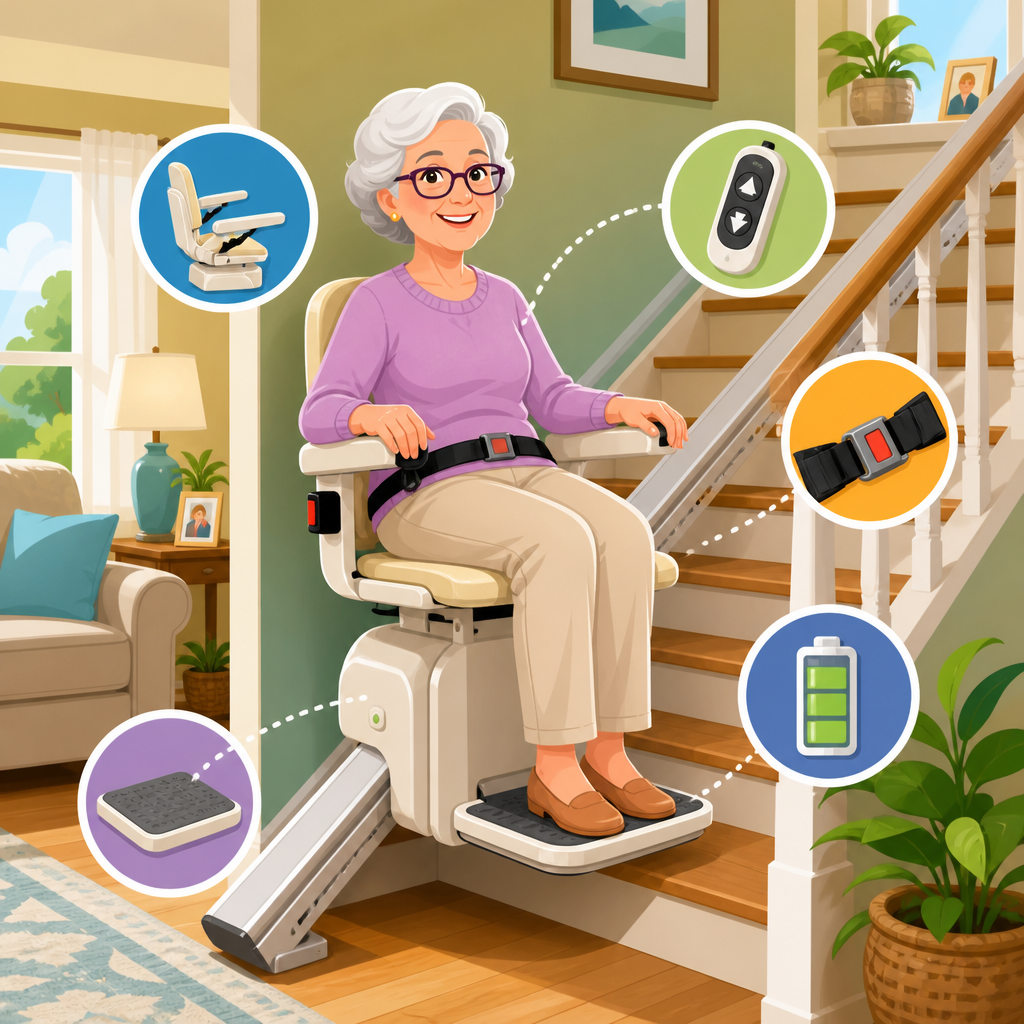
Safety features separate a basic mobility device from a reliable aging-in-place solution. The first nonnegotiable item is a seat belt, ideally easy to latch with limited hand strength. The second is a swivel seat that locks securely at the upper landing, allowing the rider to get off facing away from the stairs. This reduces twisting and lowers the chance of a misstep near the edge. Manual swivel seats are common, but a powered swivel can be worth the extra cost for users with arthritis, shoulder pain, or poor balance.
Obstruction sensors are another essential feature. These sensors stop the lift if the footrest or carriage contacts an object on the stairs, such as a dropped shoe, pet toy, or vacuum cord. Reputable manufacturers integrate sensors on the footrest and carriage edges because hazards can appear at multiple points along the travel path. Soft start and soft stop technology also matters more than many people realize. Without controlled acceleration and braking, a rider can feel a jolt that is unsettling or destabilizing, especially after surgery or with vestibular sensitivity.
Battery backup should be considered mandatory, not premium. Most modern stair lifts charge continuously or at designated charge points while running on batteries, which means they still operate during a power outage. This is especially important in storms, rural areas, and homes where bedrooms and bathrooms are on different floors. Lockable controls, keyed switches, or armrest control disable functions may also be useful when grandchildren visit or when the lift is installed in a shared setting. A safe unit is not just compliant on paper; it anticipates ordinary household disruptions and still protects the rider.
Comfort, Fit, and Ease of Transfer Determine Everyday Satisfaction
A stair lift can meet safety standards and still feel wrong every single day if the fit is poor. Seat width, seat height, backrest shape, padding density, armrest position, and footrest depth all affect comfort and transfers. In real homes, I have seen buyers focus heavily on upholstery color and overlook whether the seat allows the knees and hips to align comfortably. If the chair is too low, standing up can become a struggle. If it is too deep, the user may slide backward and have trouble reaching the armrests for leverage.
Transfer design deserves special attention. The top landing is the most important transfer point because that is where balance is tested at the edge of the staircase. A rail overruns feature can move the chair slightly beyond the top stair, placing the user on a safer, flatter surface for exit. This often improves confidence dramatically. On the lower landing, enough approach space is needed for canes, walkers, or caregiver assistance. Some users benefit from a powered footrest so they do not have to bend down before or after the ride, a small feature that becomes significant for people with back pain or limited hip motion.
Noise level and ride quality also shape acceptance. Seniors who are anxious about equipment tend to adapt faster when the lift feels steady, quiet, and predictable. Look for a smooth rack-and-pinion or comparable drive system, a stable carriage, and clear control response. Upholstery should be durable and easy to clean, but it should not create excessive heat or sliding. The best chair lifts for seniors feel intuitive after the first few rides. When a lift is comfortable and easy to transfer on and off, it becomes part of the home routine rather than a reminder of limitation.
Best Stair Lift Features by Buying Priority
Once the staircase and user profile are clear, compare options by priority rather than by brochure language. The table below summarizes the features that most often influence long-term satisfaction, where they matter most, and why they are worth discussing during a home assessment and quote review.
| Feature | Best For | Why It Matters |
|---|---|---|
| Battery backup | Homes in outage-prone areas | Keeps the lift operational when household power fails |
| Powered swivel seat | Users with arthritis or poor balance | Improves safer exits at the top landing with less twisting |
| Rail overrun | Homes with tight top landings | Moves transfer away from the stair edge |
| Fold-up seat, arms, footrest | Narrow staircases | Preserves walking space for other household members |
| Higher weight capacity | Users needing bariatric support | Improves safety, comfort, and equipment durability |
| Call-send remote controls | Multi-user households | Lets the chair be summoned or parked remotely |
| Powered footrest | Users who should avoid bending | Reduces strain on the back and hips |
| Outdoor-rated components | Porches and exterior steps | Protects the system from moisture, corrosion, and UV exposure |
Weight capacity deserves emphasis because it affects more than accommodation. Standard capacities commonly start around 300 pounds, while heavy-duty models may support 400 pounds or more, often with wider seats and reinforced components. However, larger chairs may require more staircase clearance. The same tradeoff appears with powered options: they improve ease of use, but each added feature increases cost and introduces another component that must be maintained. A good dealer will explain these tradeoffs plainly rather than pushing every upgrade.
Controls should be simple and consistent. Armrest toggles or rocker switches are often easier for seniors than small, multi-button layouts. Call-send remotes should have clear labeling and reliable range. Charging method matters too. Some units charge anywhere along the rail, while others need to be parked at a charge point. If the user forgets where the lift should be parked, battery depletion can become an avoidable service issue. The best stair lift features solve daily frictions quietly and repeatedly.
Installation Quality, Service Support, and Long-Term Ownership Costs
Even the best chair lift for seniors will disappoint if installation is sloppy or service is hard to access. Stair lifts are typically mounted to the stair treads, not the wall, and a precise fit matters for stability, smooth travel, and safe clearances. During an in-home evaluation, a trained representative should measure staircase width, rise, run, landing space, power access, and any door-swing conflicts. For curved systems, many companies use photo measurement or digital mapping to fabricate a custom rail. If the assessment feels rushed, that is a warning sign.
Service network strength is one of the most overlooked buying criteria. Before purchasing, ask who performs installation, who handles warranty work, typical response times, and whether the dealer stocks common replacement parts locally. National brands may offer broad coverage, but dealer quality can vary by region. Names frequently seen in this category include Bruno, Stannah, Harmar, Handicare, and Acorn, each with different model strengths, customization options, and service footprints. What matters most is not marketing volume but whether a reliable local or regional team can maintain the unit over time.
Ownership cost includes more than the initial quote. Straight stair lifts are usually less expensive than curved units because they use standard rails, while custom curved lifts can cost significantly more due to fabrication and complex installation. Ask whether the quote includes the seat style, powered options, extended rail, permit needs if any, and removal or reinstallation charges. Also ask about warranty terms for motor, gearbox, electronics, and batteries. Batteries are wearable components and may need replacement after several years depending on use patterns. Clear expectations reduce unpleasant surprises and make budget comparisons more meaningful.
How This Hub Fits the Best Chair Lifts for Seniors Research Process
As a hub article under buying guides and product reviews, this page should help you narrow the field before diving into product-specific comparisons. The best next step is to use this guide to build a shortlist based on staircase type, transfer needs, capacity, safety features, and service availability. From there, compare straight stair lift reviews, curved stair lift options, heavy-duty models, outdoor chair lifts, and rental or used stair lift choices if your situation is temporary. Those deeper comparisons become much easier once you know which features are truly essential.
Keep the decision grounded in lived use. A stair lift is successful when it fits the home, supports the user’s changing mobility, and works reliably with minimal effort. Prioritize battery backup, secure transfer design, obstruction sensing, ride smoothness, and strong local service. Confirm the staircase measurements, ask direct questions about warranty and maintenance, and request a hands-on demonstration if possible. The best stair lift features for seniors planning to age in place are the ones that make daily movement safer without making the home feel clinical. Use this hub as your starting point, then compare models and quotes with those practical standards in mind before you buy.
Frequently Asked Questions
What stair lift features matter most for seniors who want to age in place?
The most important stair lift features are the ones that improve safety, comfort, and day-to-day usability over the long term. For most seniors planning to age in place, the top priorities include a secure seat belt, swivel seat, folding footrest, obstruction sensors, battery backup, easy-to-use controls, and a properly fitted rail for the staircase. A swivel seat is especially valuable because it allows the user to get on and off the chair from the landing rather than twisting toward the stairs, which reduces the risk of losing balance. Obstruction sensors help stop the lift if something is in the way, while battery backup ensures the unit can still operate during a power outage.
Comfort also plays a bigger role than many people expect. A padded seat, supportive backrest, and armrests can make the difference between a lift that gets used confidently and one that feels awkward or tiring. Adjustable seat height and footrest position are helpful for users with limited knee or hip mobility. If more than one person may use the lift, intuitive controls and smooth start-and-stop motion become even more important. In practice, the best stair lift for aging in place is not just the one with the longest feature list, but the one that matches the user’s mobility needs, home layout, and comfort level now while still supporting likely future needs.
Is a battery-powered stair lift better than a non-battery model?
For most homes, a battery-powered stair lift is the better choice. Modern stair lifts typically charge continuously when parked at a charging point, so even though they connect to household electricity, the actual ride is powered by onboard batteries. This design provides a major safety advantage: if the power goes out, the user can usually still travel up and down the stairs several times. For seniors aging in place, that reliability matters because being stranded on one level of the home can quickly become both frustrating and unsafe.
Battery-powered systems also tend to offer smoother, quieter operation than older direct-power designs. In everyday use, that means less jerking at startup and less noise throughout the ride. Another benefit is peace of mind for family members and caregivers, who know the lift remains functional during outages or brief electrical disruptions. Batteries do eventually need replacement, but in a quality unit, they generally last for years and are a routine part of maintenance. When comparing models, it is smart to ask how many trips the lift can make during an outage, how the charging system works, and what battery replacement costs should be expected over time.
How do I know whether a stair lift will fit my staircase and my mobility needs?
The right fit depends on both the staircase itself and the person using the lift. Straight staircases usually accommodate standard straight-rail stair lifts, which are typically faster to install and less expensive than custom curved models. If the staircase has turns, intermediate landings, or unusual angles, a curved rail is often required. A professional assessment should include staircase width, length, landing clearance, and any doorways or obstacles nearby. Even if space looks tight, many stair lifts have folding seats, armrests, and footrests that help keep the stairs usable for others when the lift is not in use.
Just as important is matching the lift to the user’s physical abilities. Seat width, weight capacity, transfer height, and control style all affect whether the lift will feel safe and manageable. For someone with arthritis, limited grip strength, or reduced trunk stability, a larger seat, easier controls, and a secure swivel mechanism may be essential. For taller users or those with joint stiffness, extra legroom and a higher seat position can improve comfort and make transfers easier. This is why the best evaluations look beyond the staircase and focus on the whole living situation, including balance, endurance, caregiver involvement, and whether the lift should accommodate changing mobility over the next several years.
Are safety features like seat belts and sensors really necessary if the user is still fairly independent?
Yes, absolutely. Independence does not eliminate risk, especially on stairs. A stair lift is designed to reduce fall risk, but that protection depends on using key safety features consistently. A seat belt helps keep the rider secure if they shift unexpectedly or experience a moment of dizziness. Swivel locks ensure the seat stays stable during boarding and exiting. Footrest and carriage sensors can stop the lift if it contacts an object on the stairs, which is especially important in households where pets, grandchildren, or misplaced items may be present.
One of the most common mistakes people make is assuming that because a senior can still walk short distances or manage transfers, safety features are optional. In reality, even mild balance issues, slower reaction time, pain, or fatigue can increase the chance of a mishap. The goal of aging in place is not just to get by today, but to create a safer environment that continues working as needs change. Features that may seem cautious at first often become essential over time. Choosing a stair lift with strong built-in safety systems from the beginning is usually more practical than trying to upgrade later after a close call or a fall.
Which convenience features are worth paying extra for on a stair lift?
The convenience features most worth the investment are the ones that make daily use easier, more comfortable, and more natural. Call/send controls are one of the best examples. They let a user bring the chair to their level or send it away when not in use, which is useful in two-person households or when the chair would otherwise block a hallway or landing. A powered swivel seat can be worthwhile for users with limited strength or painful joints, since it reduces the effort needed to rotate into a safe exit position. Power-folding footrests are also valuable for anyone who has difficulty bending down.
Other worthwhile upgrades depend on the home and the user. A track overrun can move the chair farther away from the staircase edge, creating a safer place to get on and off. Higher weight-capacity models may offer larger seats and sturdier frames that improve comfort as well as support. Some premium units also provide softer start-and-stop motion, slimmer rail designs, and more ergonomic controls, all of which can improve confidence and ease of use. The best way to think about add-on features is not whether they sound impressive, but whether they remove a real barrier to safe, consistent use. If a feature makes transfers easier, reduces strain, or encourages the senior to use the lift confidently every day, it is often money well spent.