Choosing the best stair lifts for seniors who use a walker upstairs and downstairs starts with one practical truth: a lift must solve the mobility problem without creating a new safety problem at the landing. Families often search for chair lifts, stair lifts, and mobility lifts interchangeably, but the distinction matters when a walker is part of daily movement. A stair lift is a motorized chair that travels on a rail mounted to the staircase, while the user’s walker typically stays parked at one level or is managed separately. That detail changes which models, rail layouts, seat designs, and transfer features are worth buying.
I have helped families compare in-home accessibility equipment for multilevel houses, and the same concerns surface every time. Can the senior sit down and stand up safely? Where will the walker be placed at the top and bottom? Will the rail block the stairs for other people? Is a straight stair lift enough, or is a custom curved stair lift required? These are not small buying questions. Falls on stairs remain a leading cause of injury for older adults, and a poorly matched lift can increase transfer risk even if the ride itself is smooth.
This guide is the hub for the broader topic of best chair lifts for seniors. It covers the core buying factors, major stair lift categories, the features that matter most for seniors who use a walker, and the leading brands commonly considered in the United States. It also explains when a stair lift is the wrong solution and when a wheelchair lift, home elevator, or first-floor living redesign makes more sense. If you need one page that frames the market clearly before you dive into brand reviews or model comparisons, this is that page.
For seniors who rely on a walker upstairs and downstairs, the best stair lift is usually the one that supports safe seated transfer, provides a stable perch seat and armrests, includes a swivel seat and seat belt, and works with a practical plan for walker access at both landings. Comfort matters, but transfer mechanics matter more. A premium upholstery package means little if the user struggles to pivot from walker to seat. That is why this guide focuses on fit, safety, installation constraints, and long-term usability rather than marketing claims.
What makes a stair lift suitable for a senior who uses a walker
A stair lift suitable for walker users must reduce transfer difficulty at both ends of the staircase. The ideal setup allows the user to approach the lift with the walker, lock balance with arm support, sit without twisting awkwardly, ride securely, and stand into another stable walking aid positioned on the destination level. In practice, that means the most important features are a high seat height if needed for easier standing, sturdy flip-up armrests, a powered swivel or easy manual swivel seat, and a rail design that places the chair in the safest possible parking spot.
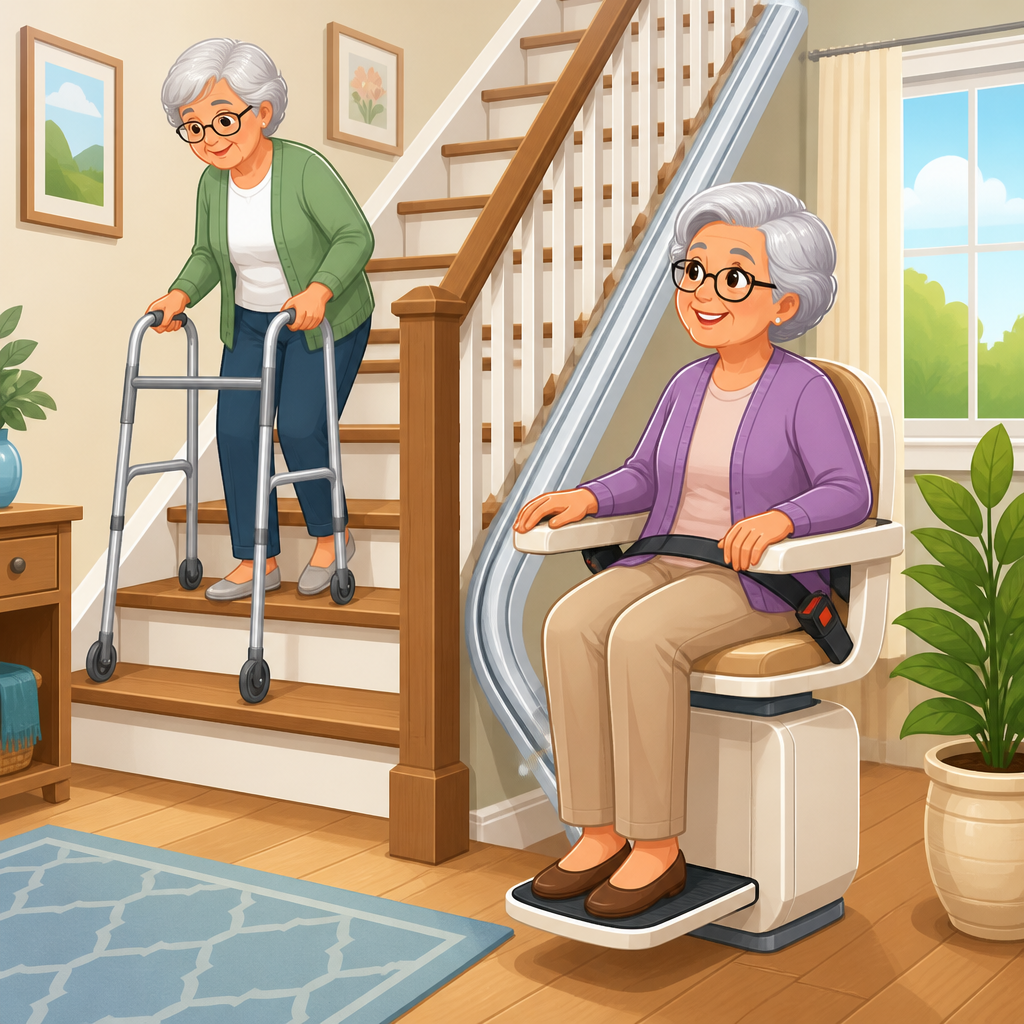
Many families overlook the landing plan. A walker usually cannot be safely carried while seated on a standard stair lift. Some households solve this by keeping one walker upstairs and another downstairs. Others use a rollator on one floor and a standard walker on another. In tighter homes, caregivers may move the walker separately, but that only works if assistance is consistently available. The best stair lift purchase often includes a simple mobility workflow: where the walker sits, where the chair parks, and how the user turns after standing.
Weight capacity is another deciding factor. Standard units often support around 250 to 350 pounds, while heavy-duty models can go higher, sometimes above 400 pounds. Capacity alone is not enough; seat width, arm spacing, and footrest size must also match the user. A compact lift may fit a narrow staircase beautifully, yet still be a poor choice if the user cannot rise from a low seat or position both feet securely.
Controls should be intuitive and forgiving. Large rocker switches on the armrest are easier for arthritic hands than tiny buttons, and wireless call-send remotes help households where more than one person uses the stairs. Obstruction sensors on the carriage and footrest are standard on quality models and should never be treated as optional. Battery backup is equally important because most residential stair lifts run on batteries that charge at points on the rail, allowing operation during a power outage.
Types of stair lifts and which homes they fit best
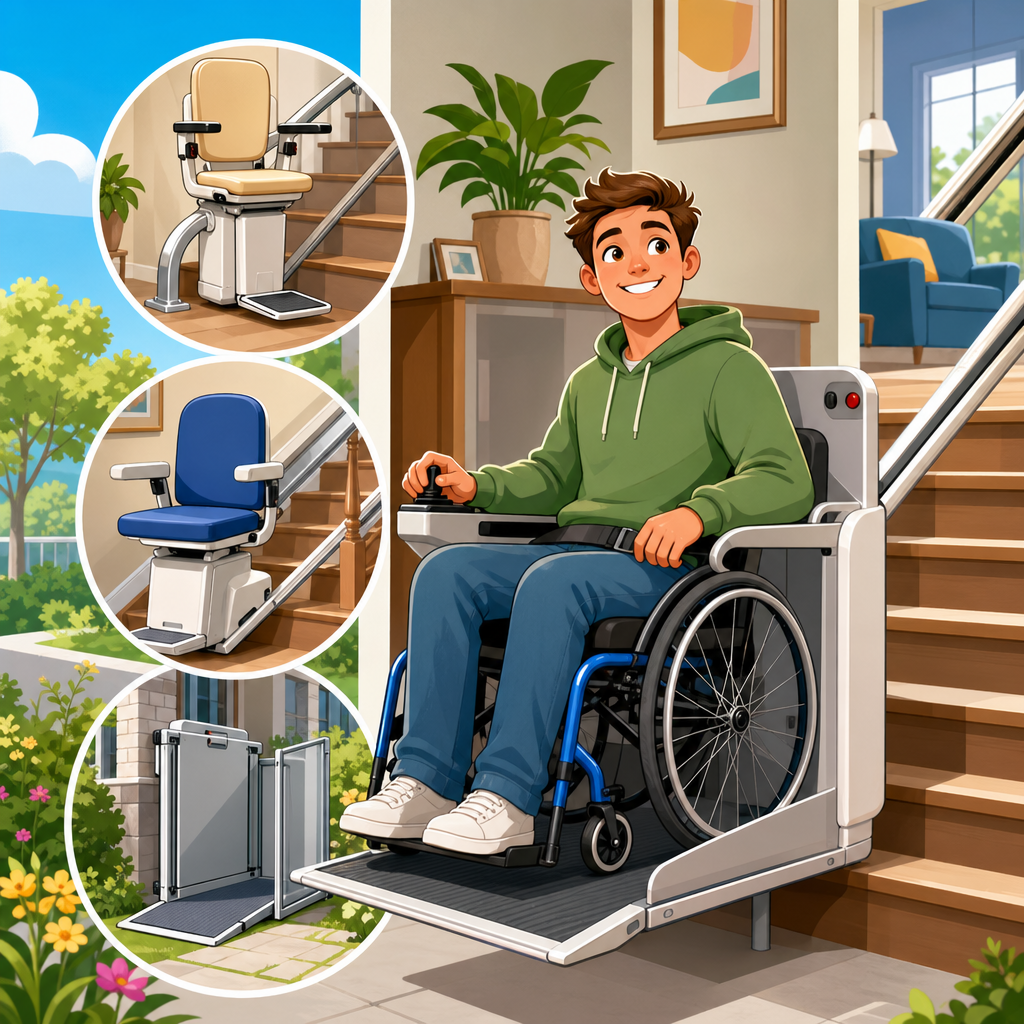
The residential market has three main categories: straight stair lifts, curved stair lifts, and outdoor stair lifts. Straight lifts are the most common and most affordable because they mount on a standard rail for stairs that run in one uninterrupted line. Installation is usually faster, often completed in a few hours, and some dealers carry straight models in local inventory. For a senior with a walker, a straight lift works well when both landings have enough space for a controlled transfer and walker parking.
Curved stair lifts are custom built for stairs with turns, intermediate landings, or spiral sections. They cost significantly more because the rail is measured precisely and fabricated for the home. However, they can solve transfer challenges that a straight lift cannot. A curved rail may bring the seat farther away from the stair edge at the top landing, reducing the chance of an unstable stand. In homes with awkward geometry, that custom stop position can be the difference between a usable system and one that feels risky every day.
Outdoor stair lifts are designed for porch steps, deck access, or garage entries, using weather-resistant materials and covers. They are relevant when a senior still needs walker support to navigate exterior stairs before entering the house. Outdoor models should have sealed controls, marine-grade or weather-tolerant components, and rails designed to resist corrosion. Not every brand’s indoor engineering translates well outdoors, so model-specific review matters.
| Type | Best use case | Main advantage | Main limitation |
|---|---|---|---|
| Straight stair lift | Single uninterrupted staircase | Lower cost and quicker installation | Limited flexibility at landings |
| Curved stair lift | Turns, landings, or complex stairs | Custom parking and transfer positions | Higher price and longer lead time |
| Outdoor stair lift | Exterior residential stairs | Weather-resistant access | More maintenance exposure |
There are also perch stair lifts, sometimes called standing or semi-seated lifts. These can help users who struggle to bend their knees fully or who have extremely narrow stairs. For some walker users, a perch seat reduces the sit-to-stand distance. For others, it feels less secure than a full seated ride. This is why an in-home assessment matters. The right category depends on the staircase, the user’s balance, hip and knee range of motion, upper-body strength, and whether independent transfer is realistic.
Best stair lift features for safety, comfort, and walker transfers
If you are comparing the best chair lifts for seniors, focus first on transfer safety features. A swivel seat is essential because it lets the rider rotate away from the staircase and stand onto the landing rather than toward open steps. Powered swivel seats can be especially helpful for seniors with limited trunk strength or painful arthritis. A folding footrest, ideally power operated, reduces bending. Seat belts are basic but critical, and they should be easy to latch with reduced hand dexterity.
Track overruns deserve more attention than they usually get in sales brochures. An overrun extends the rail beyond the top or bottom stair so the chair can stop on a flat landing away from the staircase. For walker users, this is often one of the best upgrades because it creates more room to plant both feet, grab the walker, and regain balance. A hinged rail can also be valuable when the lower rail would otherwise obstruct a doorway or walkway.
Ride quality matters for confidence. A stair lift should start and stop gently without abrupt jerks. Better units feel controlled, with smooth transmission and reliable charging contacts. I advise families to listen during a demonstration. Excessive vibration, grinding, or seat wobble suggests a cheaper build or poor installation. Even if the unit technically works, a nervous rider may stop using it.
Materials and maintenance support are part of long-term ownership. Look for powder-coated rails, durable upholstery, and dealer networks that can provide service quickly. Stair lifts are not complicated compared with elevators, but they are still mechanical devices used daily. Annual service checks, battery replacement schedules, and access to parts should factor into the buying decision. A lower purchase price loses value fast if the local dealer cannot respond when the lift stops midway through a week of heavy use.
Leading stair lift brands families compare most often
In the United States, the brands most often compared include Bruno, Stannah, Harmar, Access BDD under various dealer labels, and Savaria in certain configurations. Bruno is widely respected for dependable straight and curved lifts, solid dealer support, and models such as the Elan and Elite lines. The Elite is often considered when a higher weight capacity or premium ride is needed. Stannah is known for custom curved engineering and a refined ride, with strong options for homes where landing geometry is the main challenge.
Harmar is a major player in both residential and vehicle-access mobility equipment. Its stair lifts are common through local dealers, and families often consider them for practical pricing and broad availability. Access BDD manufactures lifts that are sold through multiple brands and dealer networks, so the exact label may differ even when the underlying platform is familiar. Savaria participates more broadly in accessibility solutions, including elevators and wheelchair lifts, which can be useful when a household is comparing several mobility pathways rather than only stair chairs.
No single brand is universally best. The best stair lift for seniors who use a walker depends on the staircase, transfer ability, service coverage, and budget. In my experience, dealer quality matters nearly as much as manufacturer quality. A well-installed midrange lift supported by a responsive local dealer is often a better ownership experience than a premium model sold by a weak service network. Ask who handles installation, who performs repairs, average response time, and whether technicians keep common parts locally.
When reading reviews, separate product complaints from dealer complaints. Many one-star comments reflect delayed callbacks, scheduling issues, or mismeasured rails rather than flawed core engineering. That distinction helps you judge real risk. For this subtopic, the smartest next step after reading this hub is to compare brand-specific guides and local dealer reputation side by side.
Cost, installation, and when a stair lift is not the right answer
Straight stair lifts typically cost less than curved models, often by several thousand dollars, because straight rails are standardized and easier to install. Curved stair lifts are custom projects, and pricing rises with every turn, intermediate landing, and parking requirement. Outdoor units can also cost more than indoor straight lifts because of weatherproofing. Beyond equipment cost, ask about installation, electrical requirements, warranty terms, and future removal if the home is sold.
Used and rental stair lifts can make sense in limited situations. A used straight stair lift may offer real savings if refurbished by a reputable dealer with a warranty. Used curved lifts are rarely straightforward because the rail is custom to the original home. Rentals are more common for short-term recovery after surgery, though availability varies by market. For a senior with a walker and a progressive mobility condition, buying the right long-term solution is often more economical than cycling through temporary fixes.
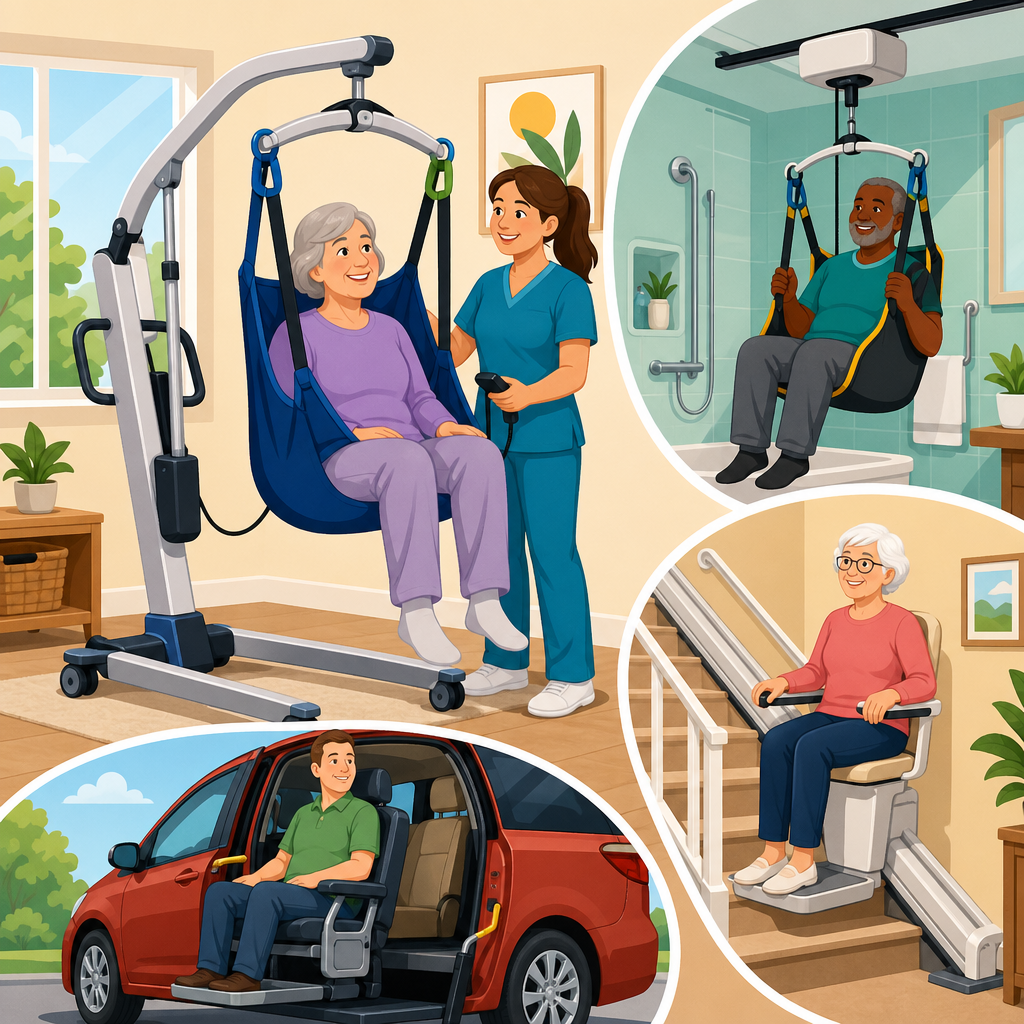
Sometimes a stair lift is the wrong product. If the user cannot safely transfer from walker to seat even with supervision, or if they need to remain in a wheelchair, a platform lift or home elevator may be more appropriate. If cognition is impaired to the point that operating controls or securing a seat belt becomes inconsistent, risk rises. Narrow landings can also make transfers unsafe despite a technically compatible staircase. In those cases, an occupational therapist or certified aging-in-place specialist can provide invaluable guidance.
The central takeaway is simple. The best stair lifts for seniors who use a walker upstairs and downstairs are the models that make transfers predictable, safe, and repeatable every day. Start with the landing plan, then match the staircase type, seat design, rail configuration, and dealer support to the user’s actual mobility pattern. From there, move into detailed reviews of straight stair lifts, curved stair lifts, heavy-duty chair lifts, and top brands. Use this hub as your buying foundation, then compare models with a clear checklist and schedule an in-home assessment before you commit.
Frequently Asked Questions
Can a senior safely use a stair lift if they rely on a walker upstairs and downstairs?
Yes, many seniors who use a walker can safely use a stair lift, but the setup has to be planned around the walker instead of treating it like an afterthought. A stair lift carries the person on a seat attached to a rail, not the walker itself, so the most important issue is what happens at both landings. The user must be able to sit down safely, ride the lift, stand up securely, and then access a walker that is already waiting on that level. In practical terms, that often means keeping one walker upstairs and another downstairs, or using a carefully designed transfer routine that does not require carrying a walker while riding.
Safety depends on several factors: balance during sit-to-stand transfers, upper body strength, seat height, swivel seat function, armrest support, and the amount of clear floor space at the top and bottom of the stairs. A senior who can walk short distances with a walker may do very well with a stair lift if they can pivot safely onto the seat and step off onto a stable surface with a walker close by. Features like a powered swivel seat, folding footrest, seat belt, obstruction sensors, and call/send controls can make everyday use easier and safer. The best approach is to evaluate the user’s exact transfer ability and the landing layout, because a stair lift can be a very effective solution when it is matched to how the person actually moves at home.
Where should the walker go when using a stair lift?
In most homes, the walker should not travel on the stair lift with the user. Standard stair lifts are designed to carry one seated rider, and trying to hold, balance, or wedge a walker during the ride can create a serious hazard. The safer and more practical arrangement is to have a walker available on each floor. That way, the senior rides the lift seated and secure, then steps off and immediately reaches for a walker already positioned at the landing.
This is one of the most overlooked parts of choosing a stair lift for a walker user. Families often focus on the rail, motor, or seat style, but the real question is whether the senior has safe support the moment they get on and off the lift. If there is only one walker in the home, the person may be tempted to “make do” without support on one level, which increases fall risk. A second walker is often a simple, highly effective safety upgrade. In some cases, a rollator may be appropriate on one level and a standard walker on another, depending on flooring, space, and mobility needs. The key principle is consistency: the user should never have to step away from the stair lift into an unsupported transfer area.
What features should families look for in the best stair lifts for seniors who use a walker?
The best stair lifts for walker users are the ones that make transfers stable, predictable, and easy at both ends of the staircase. A swivel seat is one of the most important features because it lets the user rotate away from the stairs before standing up, reducing the chance of twisting awkwardly or stepping toward the stair edge. A powered swivel seat can be especially helpful for seniors with arthritis, weakness, or limited trunk mobility. Seat height and armrest design also matter, because they affect how easily the person can lower into the chair and push up to stand.
Other important features include a folding rail or overruns when needed for safer dismount areas, a seat belt for ride security, obstruction sensors that stop the lift if something is in the way, easy-to-use controls, and call/send remotes so the chair can be moved between levels without strain. For some seniors, a larger seat or higher weight capacity may be necessary. Battery backup is also valuable because it allows the lift to operate during a power outage. If the home has a narrow staircase, the folded width of the lift becomes important so other household members can still use the stairs. The best model is not just the one with the most features; it is the one that supports the user’s transfer pattern, body mechanics, and home layout with the fewest risks.
Is a straight stair lift or a curved stair lift better for someone who uses a walker?
Neither is automatically “better” in general; the right choice depends on the shape of the staircase and the safety of the landing areas. A straight stair lift is used on a staircase with no turns, curves, or intermediate landings, and it is usually less expensive and faster to install. A curved stair lift is custom-built for staircases with bends, corners, or multiple levels. For a senior who uses a walker, the most important consideration is not just the stair shape but whether the lift stops in a place that allows a safe exit onto level flooring with enough room to reach the walker.
Sometimes a curved stair lift is actually the safer option because it can be designed to park the seat at a more usable location away from the stair edge. In other homes, a straight lift with a rail overrun may create a better dismount point at the top or bottom. This is why professional assessment matters so much. The installer should look beyond the staircase itself and study where the walker will be parked, how the user will turn and stand, whether doors open into the landing, and how much clearance is available. For walker users, the safest lift is the one that ends in the right place for a controlled transfer, not simply the least expensive model.
How do you know whether a stair lift is the right choice versus a home elevator or another mobility solution?
A stair lift is often the right choice when the senior can still transfer on and off a seat with limited assistance, can tolerate sitting upright during the ride, and only needs help getting between floors rather than full wheelchair transport. For many walker users, this makes a stair lift a practical and cost-effective solution. It addresses the danger of climbing stairs while preserving independence on each level of the home. However, it is not the best fit for everyone. If the person cannot safely pivot, sit, stand, or reach a walker after dismounting, then a stair lift may not adequately solve the safety problem.
In those situations, families may need to consider other options such as a home elevator, vertical platform lift, main-floor living conversion, or increased caregiver support. A home elevator may be better if the user needs to travel with a walker, wheelchair, or caregiver, or if multiple medical needs make seated transfers too difficult. The decision should be based on current function, not just today’s budget. It is wise to think about progression of mobility needs, frequency of use, available space, and long-term safety. An occupational therapist, physical therapist, or experienced accessibility professional can help assess whether the user’s transfers, balance, and home environment make a stair lift realistic. The best mobility solution is the one that improves access without introducing new fall risks at the top or bottom of the stairs.