Choosing the best stair lifts for seniors with vision loss starts with a simple truth: the safest lift is not just strong and comfortable, but easy to locate, understand, and operate without relying on clear sight. In this buying guide, stair lift and chair lift refer to the same basic product: a motorized seat that travels along a rail fixed to a staircase, helping a person move between floors while seated. For older adults with macular degeneration, glaucoma, diabetic retinopathy, cataracts, or reduced contrast sensitivity, the usual checklist of weight capacity and price is not enough. Controls must be tactile, call stations must be easy to find, edges must be distinguishable by touch or color contrast, and safety systems must stop the unit before feet, knees, or the carriage contact an obstacle. I have worked with families comparing models in real homes, and the biggest mistakes usually happen before purchase: they choose a lift that looks sleek in a showroom but has flat membrane buttons, weak labeling, or a seat swivel release that is hard to identify by feel. This article serves as the hub for the broader best chair lifts for seniors topic, with a specific focus on vision-friendly controls and safety features that matter in daily use, especially when confidence on the stairs is already reduced.
Vision loss increases fall risk because stairs demand depth perception, edge detection, and quick orientation. A stair lift reduces that demand, but only if the rider can consistently complete five actions: find the seat, sit squarely, fasten the belt, start travel, and dismount at the landing without confusion. That is why the best stair lifts for seniors with vision loss combine intuitive hardware with reliable protective engineering. Important terms include powered swivel, which turns the seat away from the staircase at the top landing; footrest obstruction sensors, which stop travel if the footplate meets an object; overspeed governor, a mechanical safety device that prevents uncontrolled descent; and call/send controls, which move the lift to another floor when no one is seated. Understanding these features matters because product differences are meaningful. A model with a retractable seat belt and illuminated rocker switch may be far safer for one user than a premium unit with smartphone-style touch controls. The goal is not buying the most expensive stair lift. The goal is selecting the chair lift that matches the user’s visual ability, hand strength, hearing, cognition, stair layout, and transfer habits, while leaving room for future changes in health.
What makes a stair lift easier to use with vision loss
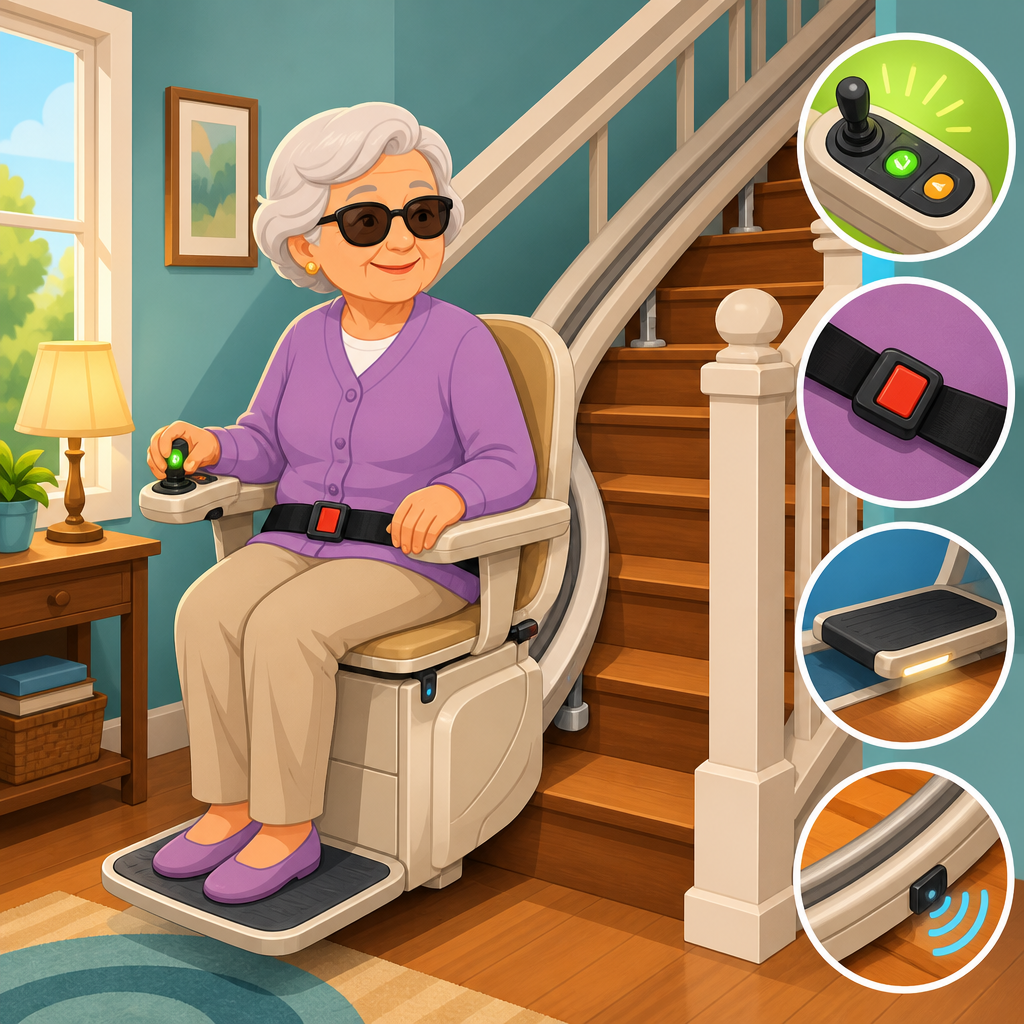
The best controls for seniors with vision loss are tactile first and visual second. In practice, that means large rocker switches, joystick-style toggles, or armrest paddles that give physical feedback when pressed. Tiny flush buttons are harder to locate and confirm. I generally recommend avoiding any control surface that feels identical across every button unless the user has excellent training and strong fingertip sensitivity. Good stair lift design lets a rider identify the direction control by shape, position, or movement. Some riders do best with a hold-to-run paddle on the armrest because they can keep one hand anchored and do not need to search for separate up and down keys. Others prefer a clearly centered toggle that clicks into motion. Remote call/send stations should also be easy to find, mounted at a consistent height, and distinct in feel from nearby light switches.
Contrast and lighting still matter, even when the user has limited sight. A cream seat on a pale wall can disappear visually, while a darker seat with a lighter armrest edge can improve recognition. Controls with backlighting help in dim hallways, but lighting alone is not enough because glare can reduce visibility for people with cataracts or low contrast sensitivity. Better solutions combine moderate illumination, matte surfaces, and high-contrast labels. Audible indicators can be useful, but they should not replace tactile certainty. A beep that confirms movement is helpful; a complex menu spoken through a tiny speaker is not. For many households, the most practical upgrade is environmental rather than mechanical: brighter stairwell bulbs, two-way light switching, anti-glare paint, and a clear landing free of baskets, shoes, and décor that create visual clutter around the lift.
Core safety features every vision-friendly chair lift should include
Every stair lift sold by established manufacturers includes baseline safety equipment, but not all systems are equally easy to use or equally protective in real homes. At minimum, look for a seat belt, obstruction sensors on the footrest and carriage, battery backup, a manual or powered swivel seat, and a lockable on/off switch. Battery operation is especially important because most modern lifts charge from household power but run on batteries. If electricity fails, the rider can usually complete multiple trips safely. For seniors with vision loss, this reduces panic and prevents being stranded on the wrong level. An overspeed governor is another essential component. It is a mechanical brake system designed to stop the lift if the unit exceeds safe travel speed, a core safeguard on quality models installed by reputable dealers.
The top landing deserves special attention because dismounting is where many near-falls happen. A powered swivel seat can be worth the added cost when vision loss is paired with arthritis, limited balance, or weak grip. Instead of twisting toward an open staircase, the user rotates the seat toward the landing and stands onto a flat surface. Some lifts also offer a rail overrun, carrying the seat slightly away from the stairs at the top or bottom so the rider mounts and dismounts clear of the edge. In homes where visual judgment is poor, that extra few inches can materially improve safety. Folding rails are useful when a doorway sits close to the first step, but they introduce another moving part, so the user should test whether the folded and unfolded positions are obvious and whether the rail’s motion alarms are audible enough for the household.
| Feature | Why it matters for vision loss | What to look for |
|---|---|---|
| Tactile direction control | Reduces searching and mistaken inputs | Large rocker, paddle, or joystick with distinct feel |
| Powered swivel seat | Makes top-landing exit more predictable | Simple activation and secure lock in travel position |
| Obstruction sensors | Stops the lift before striking objects on the stairs | Sensors on footrest and carriage, not just one location |
| Battery backup | Allows operation during power outages | Automatic charging at parked positions |
| High-contrast surfaces | Improves seat and control visibility | Clear contrast between seat, arms, and surroundings |
| Call/send remotes | Lets caregiver or rider position the lift easily | Wall-mounted controls with consistent placement |
Best stair lift brands and models to compare
When shoppers ask for the best stair lifts for seniors, the conversation usually narrows quickly to a few established names: Bruno, Stannah, Harmar, Handicare, and Savaria. Exact model availability varies by dealer and region, and model lines change, so the smarter approach is to compare feature categories within these brands rather than chase one supposedly perfect unit. Bruno stair lifts are widely respected in the United States for sturdy build quality, straightforward controls, and strong dealer support. Many families like Bruno because the seats feel stable, armrest controls are simple, and folding components move with reassuring resistance rather than feeling flimsy. Stannah stair lifts have a long history and are often praised for smooth ride quality and refined engineering, especially on curved stairs. Harmar stair lifts are common through national dealer networks and can offer practical feature combinations at competitive price points. Handicare and Savaria are also important players, particularly for custom layouts and specialized seat options.
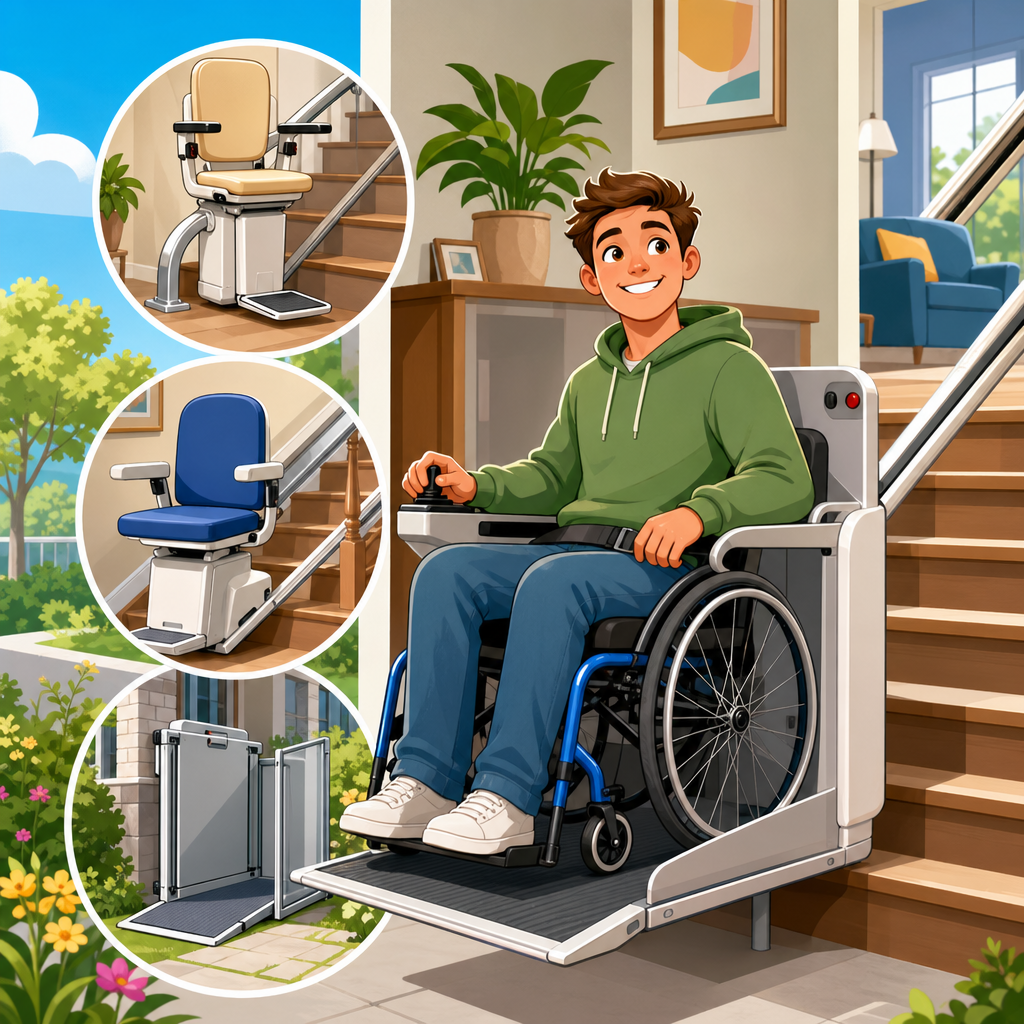
For vision loss specifically, the best model is usually the one that combines tactile controls, obvious seat positioning, a dependable swivel mechanism, and clear onboarding from the installer. A premium curved rail means little if the rider cannot confidently find the send button or identify whether the footrest is fully folded. Straight stair lifts are generally less expensive and faster to install because they use a standard rail on a staircase without turns or intermediate landings. Curved stair lifts are custom-built for staircases with bends, pie-shaped steps, or multiple landings, and they cost more because the rail is made to template. Outdoor stair lifts add weather-resistant materials and covers, but outdoor use introduces glare, rain, and temperature factors that can make controls harder to manage for someone with limited sight. In those cases, textured controls, protected charging points, and stable transfer space become even more important.
How to evaluate controls, seating, and transfers during a home assessment
The in-home assessment is where a buying guide becomes real. A reputable stair lift dealer should measure the stairs, identify power and parking options, and watch the intended user simulate the transfer. This is the moment to test whether the rider can locate the seat edge, distinguish the armrest control, fasten the belt, and release the swivel without coaching. I advise families to ask the salesperson to stop talking for a minute and let the senior perform the sequence by feel. If confusion appears in the demo, it will be worse when the person is tired, in low light, or stressed. Try the lift while wearing the user’s normal footwear, and if the senior uses bifocals, a cane, or hearing aids, keep them on during testing. Small details, such as whether the armrests provide enough leverage for sitting down slowly, often determine long-term success more than brochure specifications.
Transfer safety also depends on seat height, seat width, and how much room exists at both landings. A seat that is too low can make standing difficult, while one that is too high can leave the user feeling perched. Heavy winter clothing, oxygen tubing, or a walker parked near the landing can change what seemed adequate during a quick demo. Ask whether the footrest can fold easily, whether there is a powered footrest option, and whether the seat locks positively in the travel position. For some seniors with combined vision and mild cognitive impairment, consistency matters more than customization. A simpler chair lift with fewer secondary controls may be safer than a feature-rich model. If a caregiver will regularly operate the unit, include that person in the assessment and determine who will handle parking the lift, charging habits, and routine cleaning of the rail and sensors.
Cost, installation, and ownership factors families should understand
Stair lift cost depends mainly on stair shape, rail length, and optional features. Straight stair lifts often start in the low thousands, while curved stair lifts can be several times more expensive because they require custom manufacturing. Added features such as powered swivel, powered footrest, folding rail sections, upgraded upholstery, or outdoor packages increase price. Installation is usually completed in hours for a straight lift and longer for custom jobs, and the rail typically attaches to stair treads rather than the wall. That surprises many homeowners but is standard practice. Medicare generally does not cover stair lifts as routine home modifications, although some Medicare Advantage plans, Medicaid waiver programs, Veterans benefits, state assistive technology programs, or local aging agencies may offer partial support. Families should verify funding locally rather than assume coverage.
Ownership costs include maintenance, battery replacement, and service response time. Batteries are consumable parts and commonly need replacement after several years, depending on usage and charging patterns. Ask who performs service, how quickly emergency calls are handled, whether annual maintenance is recommended, and what the warranty covers for parts, labor, and the motor or gearbox. Used stair lifts can reduce cost, especially for straight stairs, but only if the dealer inspects the carriage, replaces worn components, and verifies that the rail and seat fit the user safely. I am cautious about private-party purchases because missing remotes, aging batteries, or unavailable parts can erase the savings. The best chair lift for seniors is not simply the cheapest quote. It is the one installed correctly, supported locally, and usable with confidence every single day.
How this hub fits the broader best chair lifts for seniors topic
As a hub within buying guides and product reviews, this page covers the foundation families need before comparing narrower topics such as straight versus curved stair lifts, outdoor stair lifts, heavy-duty models, rental options, and top brands. The central lesson is that vision loss changes what “best” means. It shifts the decision from appearance and headline price toward tactile usability, transfer safety, dependable braking, and clear service support. If you are building your shortlist, start with three questions: Can the rider operate the controls by feel, can the rider exit safely at the top landing, and can a local dealer support the unit long term? If the answer to any of those is uncertain, keep shopping.
The right stair lift restores practical independence and reduces the daily risk of stair-related falls, but only when the details fit the person using it. Prioritize tactile controls, obstruction sensing, battery backup, a secure swivel seat, and a clean landing setup. Compare trusted brands through live demonstrations, not brochures alone, and insist on a home assessment with the actual rider present. From there, use this hub as your starting point for deeper model comparisons, brand reviews, and specialized guides across the best chair lifts for seniors category. Make a shortlist, schedule in-home evaluations, and choose the lift that feels unmistakably safe the first time your family member rides it.
Frequently Asked Questions
What control features make a stair lift easier and safer for seniors with vision loss?
The best stair lifts for seniors with vision loss are designed so the user does not have to depend on small labels, subtle screen prompts, or visually complex controls. Look first for large, high-contrast buttons on the armrest control, since bold color contrast and generous spacing make it easier to identify the correct button by both sight and touch. Simple rocker switches, toggle-style controls, or clearly raised directional buttons are often easier to use than tiny multifunction keypads. Tactile markers are especially valuable because they let the rider distinguish “up,” “down,” and “stop” positions with their fingertips rather than guessing.
Wireless call/send remotes can also improve day-to-day safety. These allow the user or a caregiver to bring the stair lift to the correct floor without struggling to locate the chair visually on the staircase. Some models also include controls with illuminated surfaces or backlit buttons, which can help people with reduced contrast sensitivity in dim hallways. However, lighting should support the controls, not replace good tactile design. The most user-friendly systems keep operation simple: press and hold in the direction of travel, release to stop. For many seniors with vision loss, fewer steps and fewer decisions mean fewer operating errors.
Another important detail is consistency. Controls should work the same way every time, and the chair should provide clear feedback when the rider is seated properly and the unit is ready to move. If possible, choose a model that includes audible alerts or spoken status cues along with visible indicators. In short, the safest controls are large, predictable, easy to feel, and easy to understand without needing sharp vision.
Are swivel seats, seat belts, and footrest sensors really important for users with low vision?
Yes, these are some of the most important safety features to prioritize. A swivel seat helps the rider get on and off the stair lift facing the landing rather than the staircase. That matters a great deal for a senior with low vision because it reduces the chance of stepping sideways or backward near an open stair edge. At the top landing especially, a locking swivel seat can create a much safer transfer by positioning the user toward a flat, stable surface. The best systems lock securely in place so the chair does not drift while the rider stands up or sits down.
Seat belts are equally important, even for users who feel stable while seated. A stair lift moves along an incline, and a belt helps keep the rider properly positioned throughout the trip. For someone with vision loss, maintaining orientation can be harder, especially if lighting changes from one floor to another or if depth perception is limited. A simple, easy-to-find belt with a bright buckle and straightforward latch is preferable to one that is difficult to thread or align.
Footrest sensors are another feature that should not be considered optional. These sensors stop the lift if the footrest meets an object on the stairs, such as a dropped item, pet toy, or another obstruction that the rider may not see. Many high-quality stair lifts also include obstruction sensors on the carriage and other contact points for added protection. Together, swivel seats, seat belts, and footrest sensors create a much more forgiving system, which is exactly what a senior with vision loss needs: a lift that helps prevent a mistake from becoming a fall.
How important is call/send functionality for a senior who cannot easily see the stair lift?
Call/send controls are extremely useful for people with limited vision because they solve a common practical problem: the chair is not always parked on the same floor. If a senior reaches the staircase and the stair lift is upstairs, visually locating it may be difficult, especially on a curved staircase, in a dim entryway, or when contrast is poor. A call/send remote allows the user to bring the chair to their current floor with a simple button press, without navigating the stairs or relying on another person to reposition the unit.
This feature also helps households where more than one person uses the staircase. The chair can be sent away after use to keep the landing clearer, then called back when needed. For caregivers, call/send controls can make transfers easier because they allow better control over where the chair is positioned before the rider approaches. In homes with seniors who have both vision loss and mobility limitations, reducing unnecessary standing, reaching, and searching can make daily use much safer and less tiring.
When evaluating this feature, pay attention to the design of the remote itself. The best remotes for low-vision users have large buttons, good tactile separation, and minimal clutter. Wall-mounted controls should be installed at a consistent height and location that is easy to remember and reach. If the remote is small or easily misplaced, it may create frustration rather than convenience. In many cases, a stair lift with well-designed call/send functionality becomes easier to live with and more likely to be used correctly every day.
What should families look for during a stair lift demonstration or in-home assessment for someone with vision loss?
A stair lift demonstration is one of the best opportunities to judge whether a model is truly usable for a senior with vision loss. Families should ask the dealer to demonstrate every step of operation exactly as the older adult would experience it: calling the chair, unfolding the seat and footrest, sitting down, fastening the belt, using the control, swiveling at the landing, and standing up safely. It is not enough for the salesperson to say the controls are “simple.” The rider should physically test whether the buttons are easy to locate by touch, whether the direction of travel is obvious, and whether the chair provides a sense of security while moving.
Pay close attention to the transfer points at both the top and bottom of the stairs. These are often the highest-risk moments for a person with low vision. Families should ask whether a powered swivel seat, a power footrest, or a rail overrun is available to improve boarding and exiting. A rail overrun can move the chair away from the staircase edge at the top or bottom landing, which may reduce fall risk. The assessor should also evaluate lighting, wall color contrast, nearby handholds, and potential trip hazards around the landings, since the safest stair lift installation is part of a broader home safety plan.
It is also wise to ask about battery backup, manual lowering procedures, maintenance support, and what happens if the lift stops unexpectedly. Seniors with vision loss may be especially unsettled by equipment that behaves inconsistently, so reliability matters. A strong in-home assessment should feel individualized, not generic. The right provider will ask about the user’s eye condition, hand strength, balance, memory, hearing, and whether a caregiver will also operate the unit. Those details help determine whether a stair lift is merely functional or genuinely safe and confidence-building.
Can a stair lift still be a good option if a senior has vision loss plus other age-related challenges?
In many cases, yes. A stair lift can be an excellent option for a senior who has vision loss along with arthritis, balance issues, weakness, reduced endurance, or mild coordination problems, as long as the lift is matched carefully to the person’s needs. In fact, many older adults considering stair lifts are not dealing with vision loss alone. They may also have slower reaction time, hearing changes, limited grip strength, or difficulty stepping up and turning safely at landings. That is why the best buying decision looks beyond weight capacity and upholstery and focuses on how the full system supports safe, repeatable use.
For example, a senior with low vision and arthritis may benefit from larger, softer-touch controls, a power footrest to avoid bending, and a seat that swivels easily with minimal force. Someone with poor balance may need a model with a secure locking swivel seat, a stable armrest design, and a transfer setup that places them well away from the stair edge before standing. If there are memory concerns, the stair lift should be especially intuitive, with very few operating steps and clear feedback about when it is safe to ride. In these situations, simplicity is often a major safety feature.
That said, a stair lift is not automatically the right answer for everyone. If a person cannot transfer on and off the seat safely even with assistance, cannot remain seated securely during travel, or is likely to misuse the controls because of significant cognitive impairment, other accessibility solutions may need to be considered. The best approach is an honest assessment involving the user, family, and a reputable stair lift provider. When chosen thoughtfully, a stair lift can restore access between floors while reducing fear, conserving energy, and making everyday life much more manageable for seniors living with vision loss and other mobility challenges.