Recovering from hip surgery changes how a home feels, especially when the bedroom, bathroom, or laundry area sits at the top or bottom of a staircase. During rehabilitation, stairs can become the biggest barrier to safe movement, and that is why the best stair lifts for seniors recovering from hip surgery deserve careful attention. A stair lift, often called a chair lift for stairs, is a motorized seat that travels along a rail fixed to the staircase, letting a user ride up or down without climbing each step. For older adults healing from a hip replacement, fracture repair, or revision procedure, that simple ride can reduce pain, lower fall risk, and preserve independence during a period when every transfer matters.
I have worked with families comparing chair lifts for seniors after hospital discharge, and the same questions come up every time: when is a lift necessary, which features actually matter for hip recovery, and how do you avoid paying for the wrong model? The answers depend on more than price. A post-surgical user may have limited hip flexion, weakness on one side, swelling, balance loss, or strict movement precautions from the orthopedic surgeon and physical therapist. Those realities affect seat height, swivel function, seat belt design, remote controls, footrest clearance, and whether a straight or curved rail is required. In many homes, the ideal solution is temporary; in others, it becomes a long-term accessibility investment.
This guide serves as a practical hub for anyone researching the best chair lifts for seniors, with special focus on hip surgery recovery. It explains the main lift types, the safety features that matter most, leading brands and where they fit, realistic cost ranges, rental versus purchase decisions, and installation considerations that families often overlook. It also helps you connect this topic to related buying decisions such as transfer aids, walkers, bathroom safety equipment, and home layout changes. If you need a clear starting point before requesting quotes, this article will help you evaluate stair lifts with the same criteria mobility professionals use in the field.
Why Stair Lifts Matter After Hip Surgery
After hip surgery, the greatest immediate danger at home is usually not the surgical site itself but a fall during transfers or stair negotiation. According to the Centers for Disease Control and Prevention, falls remain a leading cause of injury among older adults, and stairs are a common setting for serious incidents. During the first weeks after surgery, seniors may be using a walker or cane, taking pain medication, and relearning weight shifting. That combination makes climbing stairs slow and unpredictable. A stair lift removes the need to repeatedly test strength, range of motion, and balance on every trip between floors.
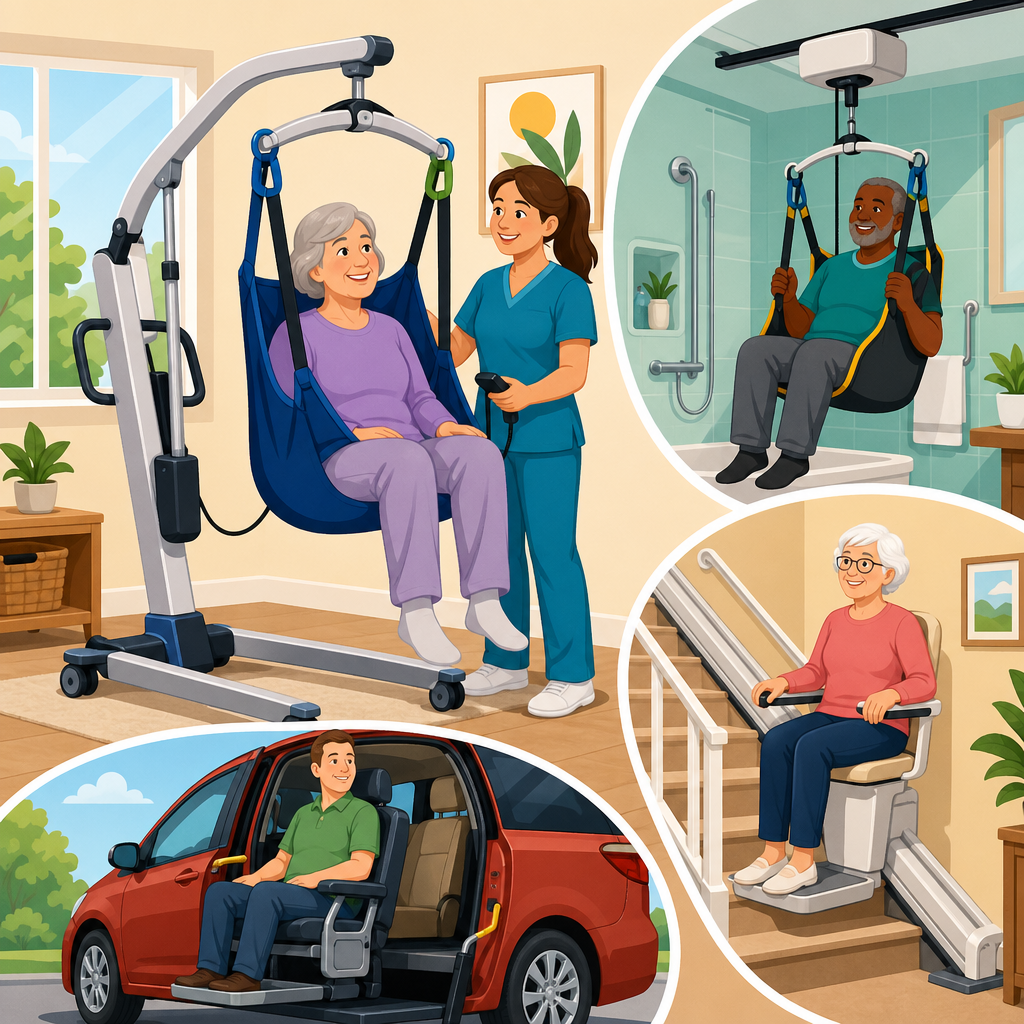
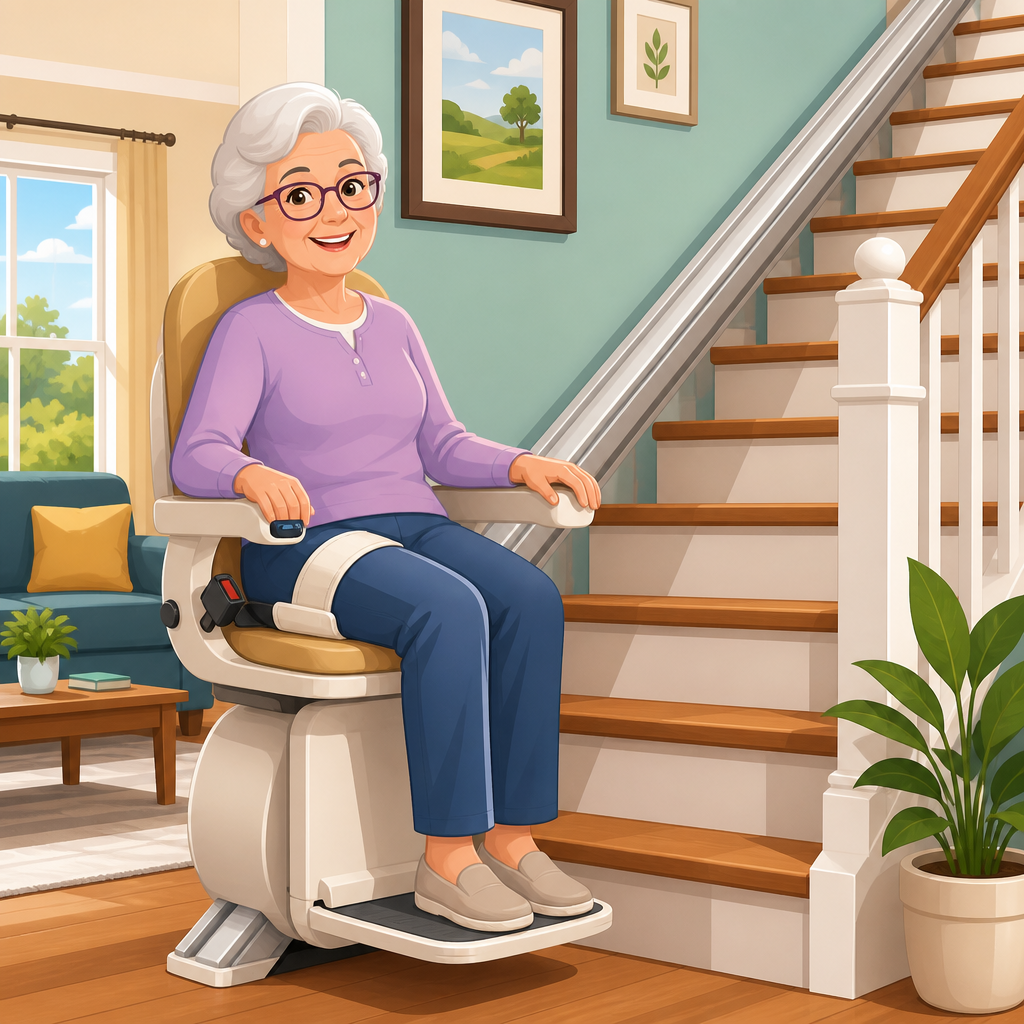
For hip replacement patients, therapists often emphasize safe sit-to-stand mechanics, controlled pivoting, and avoidance of certain angles depending on the surgical approach and surgeon instructions. A well-chosen stair lift supports those goals by offering a stable seat, armrests for leverage, a swivel seat that turns away from the stair edge at the landing, and a folding footrest that keeps the knees and ankles aligned during travel. In practical terms, this means the user can move from walker to lift, ride while seated securely, then stand at the destination with less strain than a full stair climb would require.
Stair lifts also help caregivers. Many spouses try to “spot” a recovering senior on the stairs, but informal assistance on a narrow staircase can create a second fall victim. A lift reduces the need for hands-on support and lowers the physical burden of supervising multiple daily trips. In homes where the only full bathroom is upstairs or the laundry is in the basement, the lift may make the difference between aging in place and needing a temporary relocation. That functional value is why stair lifts belong near the top of any home recovery planning checklist.
Types of Chair Lifts for Seniors and Who They Fit Best
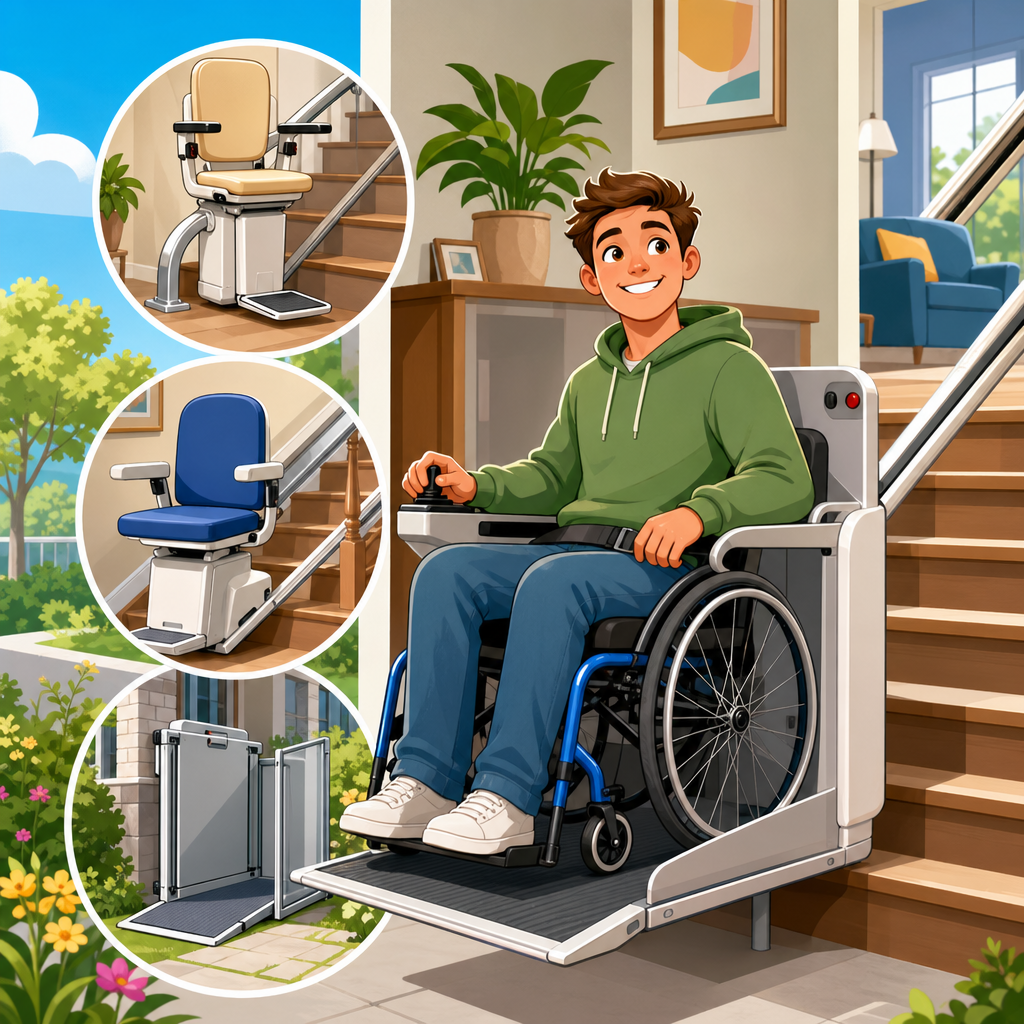
The first buying decision is structural: straight stair lift, curved stair lift, standing or perch lift, or a heavier-duty model. Straight stair lifts are the most common and most affordable. They fit staircases that run in a single line without turns, intermediate landings, or directional changes. Because the rail is standardized, straight models install faster and can sometimes be rented, making them ideal for seniors expected to recover within a few months. Brands such as Bruno, Harmar, Stannah, and Access BDD all offer strong straight-lift options.
Curved stair lifts are custom built for stairs with turns, pie-shaped steps, split-level transitions, or multiple landings. A technician measures the staircase precisely, then the manufacturer fabricates a rail to match those dimensions. Curved lifts typically cost much more and take longer to install, but they are the right solution when no straight run exists. For seniors in multilevel homes who plan to remain there long term, the added cost can still make sense because the lift is tailored to the house and often integrates more smoothly with the layout.
Perch or standing stair lifts are less common but useful when a user has trouble bending the hip enough to sit comfortably. Instead of a full seated posture, the rider leans against a supported platform or small seat. These models can also help on very narrow staircases because they occupy less space. However, they are not suitable for everyone recovering from hip surgery. A user must have enough standing tolerance, trunk stability, and confidence to remain supported during travel. In my experience, most post-surgical seniors do better with a standard seated lift unless a therapist specifically recommends a perch design.
Heavy-duty stair lifts are designed for higher weight capacities, broader seats, and larger users who need more room or stronger support. Standard lifts often carry 250 to 350 pounds, while heavy-duty models can reach 400 pounds or more. Seat width, arm spacing, and rail design matter just as much as the headline capacity. A lift that technically supports the user’s weight but feels cramped can still lead to unsafe transfers. For that reason, measurements of body width, hip comfort, and transfer technique should be part of the selection process.
Features That Matter Most for Hip Surgery Recovery
Not every stair lift feature is equally important. For seniors recovering from hip surgery, four features consistently matter the most: seat height, swivel function, start-and-stop smoothness, and transfer support. Seat height should allow the user to sit without dropping too low and stand without forcing deep hip flexion. Some premium stair lifts offer adjustable seat heights or different seat sizes, which can make a major difference during the first six to twelve weeks of recovery.
A powered or manual swivel seat is another critical feature. At the top landing, the seat should rotate away from the staircase so the user can stand onto the hallway floor rather than twisting over the stair edge. This reduces rotational stress and lowers fall risk. I strongly prefer models with a positive lock in the swivel position, because a partial turn can create a dangerous transfer angle. Smooth acceleration and deceleration are also essential. Jerky starts may seem minor in a showroom but can feel unstable to someone with pain, muscle weakness, or fear of falling.
Safety sensors, seat belts, and call-send controls are standard on good modern lifts and should not be treated as optional upgrades. Obstruction sensors stop the lift if an object is on the stairs or rail. Call-send remotes let a caregiver bring the chair to one end of the staircase without climbing after it. A folding footrest and folding arms help preserve stair clearance for others in the home. Battery backup matters too. Most current lifts run on batteries that charge while parked, which means they continue working through a power outage—an important protection if the bedroom is upstairs.
| Feature | Why It Matters After Hip Surgery | What to Look For |
|---|---|---|
| Swivel seat | Allows safer exit onto landing without twisting over stairs | Locked swivel at top landing; powered swivel for weaker users |
| Seat height | Reduces painful low sitting and difficult standing transfers | Higher seat position or adjustable height options |
| Smooth ride | Prevents jolts that can increase pain or insecurity | Soft start and stop motor control |
| Battery backup | Keeps lift operational during outages | Battery-powered carriage with charging points |
| Footrest and sensors | Protects feet and stops lift if blocked | Obstruction sensors and easy-fold footrest |
Best Stair Lift Brands and Models to Consider
Several manufacturers dominate the North American stair lift market, and each has strengths. Bruno is widely respected for build quality, dealer support, and straightforward controls. The Bruno Elan is a strong choice for straight staircases when reliability and simplicity matter most. It has a compact profile, smooth ride, and comfortable seat height for many seniors. The Bruno Elite line offers a heavier-duty option with broader seating and higher capacity, making it better for larger users or those wanting a sturdier feel during recovery.
Harmar is another major brand, known for models such as the Pinnacle series for straight stairs and custom options for more complex layouts. Harmar lifts are often praised for narrow rail designs that preserve stair space. For a senior using a walker at the landing, that extra clearance can matter. Stannah, a long-established global manufacturer, is often recommended for custom curved systems and polished design details. Their seats and controls tend to feel refined, and the company has a strong reputation for handling unusual stair geometries.
Handicare and Access BDD also deserve attention, especially when a home has challenging dimensions or a user needs a more specialized seat style. Some dealers carry reconditioned straight lifts from these brands, which can reduce cost for short-term recovery situations. Acorn is heavily advertised and available in many markets, with fast installation on some standard stairs. It can be a convenient option, but buyers should compare dealer service quality closely because after-sale support matters more than branding alone.
There is no universal “best” chair lift for seniors. The best model is the one that matches the user’s transfer ability, staircase design, and expected recovery timeline. A short-term hip replacement recovery on a straight stair may justify a rented Bruno Elan or Harmar Pinnacle. A senior with ongoing mobility decline, a curved staircase, and plans to age in place may be better served by a custom Stannah or Bruno curved system installed with long-term service in mind.
Cost, Rental, Installation, and Insurance Realities
Price is where many families are surprised. A new straight stair lift commonly costs about $2,500 to $6,000 installed, depending on rail length, seat upgrades, power options, and local labor. Curved stair lifts usually start around $10,000 and can rise well above $15,000 because the rail is custom manufactured. Used or reconditioned straight lifts may reduce the purchase price, though availability varies by dealer and warranty terms are often shorter. In my experience, the biggest savings come not from chasing the cheapest brand but from matching the product to the actual recovery need.
Renting can be smart when the recovery window is limited. Many dealers offer straight stair lift rentals with an upfront installation fee plus monthly charges. This approach often works well for seniors expected to regain stair function after rehabilitation. Curved lift rentals are less common because custom rails are expensive to fabricate, though some dealers can repurpose previously installed curved systems in rare cases. When comparing rental and purchase quotes, ask about removal fees, service calls, battery replacement, and what happens if recovery takes longer than expected.
Installation is usually faster than families expect. A straight stair lift can often be installed in a few hours because the rail mounts to the stair treads, not the wall. That means most homes do not require major remodeling. Curved installations take longer because of measurement, rail fabrication, and fit testing. Reputable dealers perform a home assessment, verify electrical charging points, measure clearances at both landings, and confirm that doors, radiators, or trim will not interfere with seat swivel or footrest movement. This site’s related buying guides on home safety upgrades, walker-friendly layouts, and bathroom accessibility can help families coordinate those decisions.
Insurance coverage is limited. Original Medicare typically does not cover stair lifts because they are considered home modifications rather than durable medical equipment. Some Medicare Advantage plans, Medicaid waiver programs, Veterans Affairs benefits, workers’ compensation claims, or state assistive technology programs may provide partial support depending on eligibility. Flexible spending accounts and health savings accounts sometimes allow reimbursement with documentation, but policies vary. Always request written confirmation before assuming any funding source will pay.
How to Choose the Right Lift and Avoid Common Buying Mistakes
The best buying process starts with the user, not the staircase. Ask four direct questions: Can the senior sit and stand safely from a chair of standard height? How much hip bending is comfortable? Is one side significantly weaker? Is this need temporary, long term, or likely to progress? Those answers determine whether a standard seat works, whether a powered swivel is worth the cost, and whether a rental is practical. If possible, involve the physical therapist or occupational therapist because they can identify transfer risks that family members miss.
Next, evaluate the staircase carefully. Measure width, note any turns or landings, and consider traffic flow for other household members. Very narrow stairs may require a compact rail or a perch model. Also check the top and bottom landing space. A stair lift is only safe if the rider can step on and off onto stable, uncluttered flooring while using a walker or cane if needed. Good dealers will point this out immediately; weak dealers focus only on closing the sale.
The most common buying mistakes are choosing based on price alone, overlooking service support, and assuming every lift feels the same. Test rides matter. A smooth, supportive seat with intuitive controls can dramatically improve confidence for a senior who is nervous after surgery. Ask about warranty length, parts coverage, response time for repairs, and whether the company uses in-house technicians or subcontractors. Then compare written quotes line by line. The right stair lift should make recovery safer today and home access easier tomorrow. Contact two or three qualified dealers, request an in-home assessment, and use this guide as your checklist before you buy.
Frequently Asked Questions
1. Are stair lifts safe for seniors recovering from hip surgery?
Yes, stair lifts are generally a very safe mobility solution for seniors recovering from hip surgery, especially when compared with trying to manage stairs while dealing with pain, weakness, reduced range of motion, and post-surgical precautions. After hip surgery, many people are told to avoid twisting, bending too far, or putting too much strain on the healing joint. A stair lift helps reduce those risks by allowing the user to remain seated while traveling between floors rather than climbing step by step.
Most modern stair lifts include several built-in safety features that are especially helpful during recovery. These often include a seat belt, swivel seat for safer entry and exit, armrests, footrest sensors that stop the lift if something blocks the staircase, and smooth start-and-stop controls to reduce jolting. Some models also have lockable controls, folding seats and footrests, and battery backup systems so the lift can still operate during a power outage.
That said, safety depends not only on the product itself but also on proper fit, professional installation, and correct daily use. For a senior recovering from hip surgery, the seat height should make it easy to sit down and stand up without excessive strain. The swivel function is also important because it allows the user to exit onto the landing rather than stepping sideways on the stairs. In many cases, families should look for a model with simple controls, stable arm support, and a comfortable seat that does not force awkward hip positioning. A medical provider or physical therapist can also help confirm whether a stair lift is appropriate based on the person’s recovery plan and weight-bearing restrictions.
2. What features should families look for in the best stair lift after hip replacement or other hip surgery?
When choosing a stair lift for someone recovering from hip surgery, comfort and safety should come first. One of the most important features is a supportive seat with enough width and padding to make sitting and standing easier. A swivel seat is especially valuable because it rotates at the top landing, helping the user get off the chair facing away from the staircase. This reduces the risk of awkward turning motions that may be uncomfortable or restricted during rehabilitation.
Another key feature is ease of operation. Seniors recovering from surgery often benefit from simple, intuitive controls such as a toggle switch or large-button armrest control. Remote call/send controls can also be helpful in households where more than one person uses the stairs, or when the chair needs to be moved to another level before use. Smooth ride quality matters as well. A lift that starts and stops gently can feel much more secure for someone dealing with soreness or reduced confidence after surgery.
Families should also consider the staircase itself. Straight stair lifts are usually less expensive and quicker to install, while curved stair lifts are custom-built for staircases with turns, landings, or unusual layouts. Weight capacity is another practical factor, as standard and heavy-duty models are available. Some users may also benefit from powered seat swivel, powered footrests, or hinged rails that help prevent the track from blocking a doorway or hallway at the bottom of the stairs.
Finally, do not overlook service and reliability. A good warranty, local dealer support, maintenance availability, and professional installation are all important. During hip surgery recovery, the stair lift may become an essential part of daily life, not a convenience item. That makes dependable operation and responsive service just as important as the physical features of the chair itself.
3. Is it better to rent or buy a stair lift during hip surgery recovery?
The answer depends on how long the stair lift will be needed, the shape of the staircase, and the senior’s long-term mobility outlook. Renting can make sense when the need is temporary, such as during a defined recovery period after hip replacement, hip fracture repair, or another surgical procedure. If the staircase is straight, rental options are often more widely available and can be more affordable upfront. Families may pay an installation fee plus a monthly rental charge, which can be a practical choice if the lift is only needed for a few months.
Buying may be the better investment if the senior is expected to need ongoing help with stairs beyond the immediate rehabilitation period. This is especially true if there are other mobility concerns, such as balance issues, arthritis, muscle weakness, or a history of falls. Purchasing can also be the only realistic option for curved staircases, since curved stair lifts are usually custom manufactured and not commonly offered as rentals.
Another factor is peace of mind. Some families prefer owning the equipment so they can choose the exact model and features they want, while others value the flexibility of renting during the uncertain early stages of recovery. When comparing costs, it is important to look beyond the monthly price alone. Ask about installation, removal, maintenance, warranty coverage, battery replacement, and whether any fees apply if the lift is needed longer than expected.
For many seniors recovering from hip surgery, the best approach is to start by discussing expected recovery length with the surgeon or physical therapist, then comparing local stair lift providers. If the need truly appears short term and the staircase is straight, renting may be ideal. If mobility limitations are likely to continue or the home has a complex staircase, buying may offer better value and convenience.
4. How quickly can a stair lift be installed, and will installation damage the staircase?
In many cases, a straight stair lift can be installed fairly quickly, sometimes within a few hours once the equipment is available. This can be especially helpful when a senior is returning home from the hospital or rehabilitation center and needs immediate access to an upstairs bedroom or bathroom. Curved stair lifts usually take longer because they must be custom measured and manufactured to fit the exact staircase layout, including turns, intermediate landings, or narrow sections.
One common concern is whether installation will harm the home. In most situations, stair lifts are attached to the stair treads, not the wall. That means the rail is secured directly to the staircase itself, and extensive structural changes are usually not required. Professional installers measure carefully to ensure the rail fits properly while preserving safe walking space on the stairs. If the lift is removed later, there may be small holes where the brackets were mounted, but major damage is uncommon.
Families should still ask detailed questions before installation. It is important to confirm how much clearance will remain for other household members, whether the chair, footrest, and armrests fold up when not in use, and whether the rail extends beyond the stairs at the top or bottom. In some homes, a hinged rail may be recommended if the lower end of the track could block a doorway or create a tripping hazard.
The best way to avoid surprises is to work with an experienced stair lift company that offers an in-home assessment. The installer can evaluate the width, angle, and condition of the stairs, explain the installation timeline, and recommend a model that supports safe transfers for someone recovering from hip surgery. A proper assessment helps ensure the lift works well not just for the staircase, but also for the user’s medical and mobility needs.
5. Can a stair lift replace physical therapy or help speed up recovery after hip surgery?
A stair lift should not be viewed as a replacement for physical therapy, rehabilitation exercises, or the recovery plan prescribed by a surgeon. Its main purpose is to improve safety and accessibility inside the home while the hip heals. After surgery, physical therapy is still essential for rebuilding strength, improving range of motion, restoring balance, and helping the senior return to as much independence as possible. A stair lift supports that process by reducing the chance of a fall and allowing the person to conserve energy for therapy and daily tasks.
In fact, one of the biggest benefits of a stair lift during recovery is that it can make the home more manageable without forcing unnecessary strain. Many seniors feel anxious about stairs after hip surgery, and that fear can lead to reduced movement, skipped routines, or avoiding important parts of the home altogether. By making upper and lower floors accessible, a stair lift can help maintain normal routines, reduce caregiver strain, and make it easier to attend to bathing, sleeping, and laundry needs in a familiar environment.
However, whether a senior should continue practicing stairs as part of therapy is a medical question that should be answered by a physical therapist or physician. Some people are specifically instructed to practice stair navigation safely with assistive devices, while others may need to avoid repeated stair climbing during early recovery. The stair lift does not replace those clinical decisions. Instead, it acts as a practical home safety tool that can reduce risk while rehabilitation progresses.
Used appropriately, a stair lift can absolutely contribute to a smoother recovery experience. It may not directly speed tissue healing, but it can reduce overexertion, lower fall risk, and make day-to-day life more comfortable during a vulnerable period. For many seniors and families, that support is invaluable while recovering from hip surgery.