Finding the best stair lifts for older adults with limited hand strength starts with understanding a simple problem: many stair lifts are marketed for mobility, but not all are easy to operate when gripping, pinching, or twisting is painful. In my experience reviewing home accessibility equipment, the difference between a lift that looks good on paper and one that works daily often comes down to controls, seat design, and how much force the user must apply. For seniors with arthritis, neuropathy, stroke-related weakness, or general age-related loss of dexterity, those details are not minor features. They determine whether the lift restores independence or becomes another frustrating device.
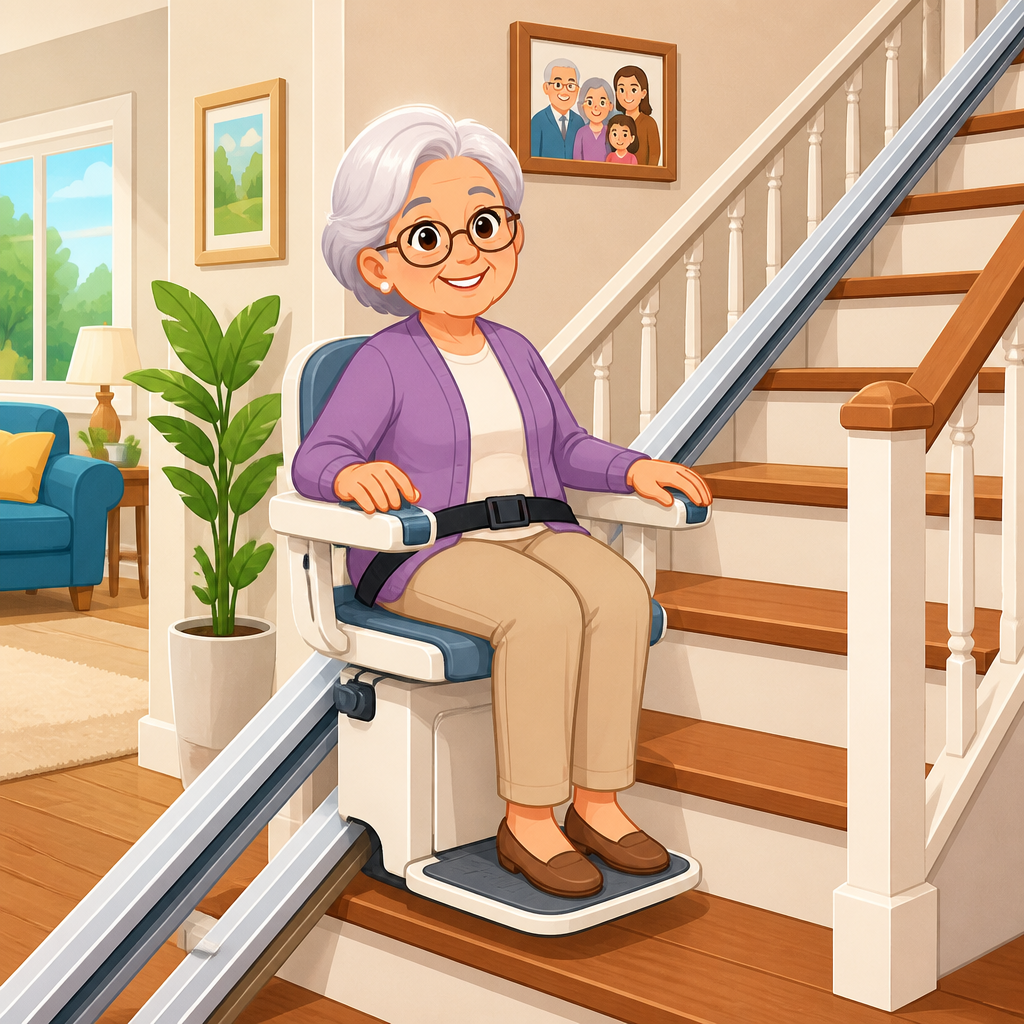
A stair lift, sometimes called a chair lift for seniors, is a motorized seat that travels along a rail mounted to a staircase. The user sits, secures the belt, presses a control, and rides between floors. For people with limited hand strength, the best models reduce the need for tight gripping, repeated thumb pressure, and awkward reaching. They also include padded armrests, swivel seats, larger toggles, reliable remote controls, and safety sensors that prevent collisions. This buying guide serves as the hub for selecting the best chair lifts for seniors, with a focus on practical operation, comfort, installation realities, and long-term ownership.
This topic matters because stair-related falls remain one of the most serious hazards for older adults. According to the CDC, falls are a leading cause of injury among adults aged sixty-five and older, and stairs add complexity because they demand balance, leg strength, and confidence. A properly selected stair lift can allow someone to stay in a multilevel home longer, avoid risky stair climbing, and reduce caregiver strain. But the wrong unit can create new problems, especially if the user struggles to press small buttons, lock manual swivels, or fold heavy components. Choosing well means looking past broad claims and focusing on hand-friendly design that supports daily use.
When shoppers search for the best chair lifts for seniors, they usually want direct answers to a few questions. Which brands are easiest to control with weak hands? Are straight stair lifts better than curved models for value? What features matter most for arthritis? How much does installation cost, and what should buyers ask during an in-home assessment? The sections below answer those questions clearly and set up the broader subtopic, so readers can compare products, understand tradeoffs, and make a safer, better-informed purchase.
What Makes a Stair Lift Easy for Seniors With Limited Hand Strength
The best stair lifts for older adults with limited hand strength share a handful of design traits. First, the controls must require minimal force. I strongly prefer large paddle switches, light-touch rocker controls, or joystick-style operation over small membrane buttons. A user with osteoarthritis can usually push a broad control with the side of the hand or palm, while tiny buttons demand precision and finger pressure. Second, the seat should swivel with low effort, ideally with a powered swivel option at the top landing. Manual swivel levers can be difficult for users with wrist pain or weak grip, especially when they must stabilize themselves at the same time.
Third, folding and parking should be simple. Many stair lifts have folding arms, seat, and footrest to keep the staircase clear, but some require more force than others. Powered footrests are especially useful because bending down and lifting a panel by hand is difficult for many seniors who also have limited dexterity. Fourth, the remote call/send controls should be straightforward. If more than one person uses the stairs, or if the chair must be sent away after use, the remote should have large, clearly marked buttons and dependable response. Finally, upholstery, armrest width, and transfer space matter. A chair that is technically safe but hard to get in and out of will not feel usable.
Battery backup is another essential feature. Most modern stair lifts run on rechargeable batteries and plug into household power to keep those batteries charged. During a power outage, the lift can continue operating for multiple trips, which is critical for anyone who cannot safely use the stairs manually. Safety sensors on the carriage and footrest are equally important because they stop the lift if it encounters an object on the stairs. Seat belts, overspeed governors, and lockable keys are standard on quality units and should not be treated as optional upgrades.
Best Chair Lift Types for Seniors: Straight, Curved, and Outdoor Models
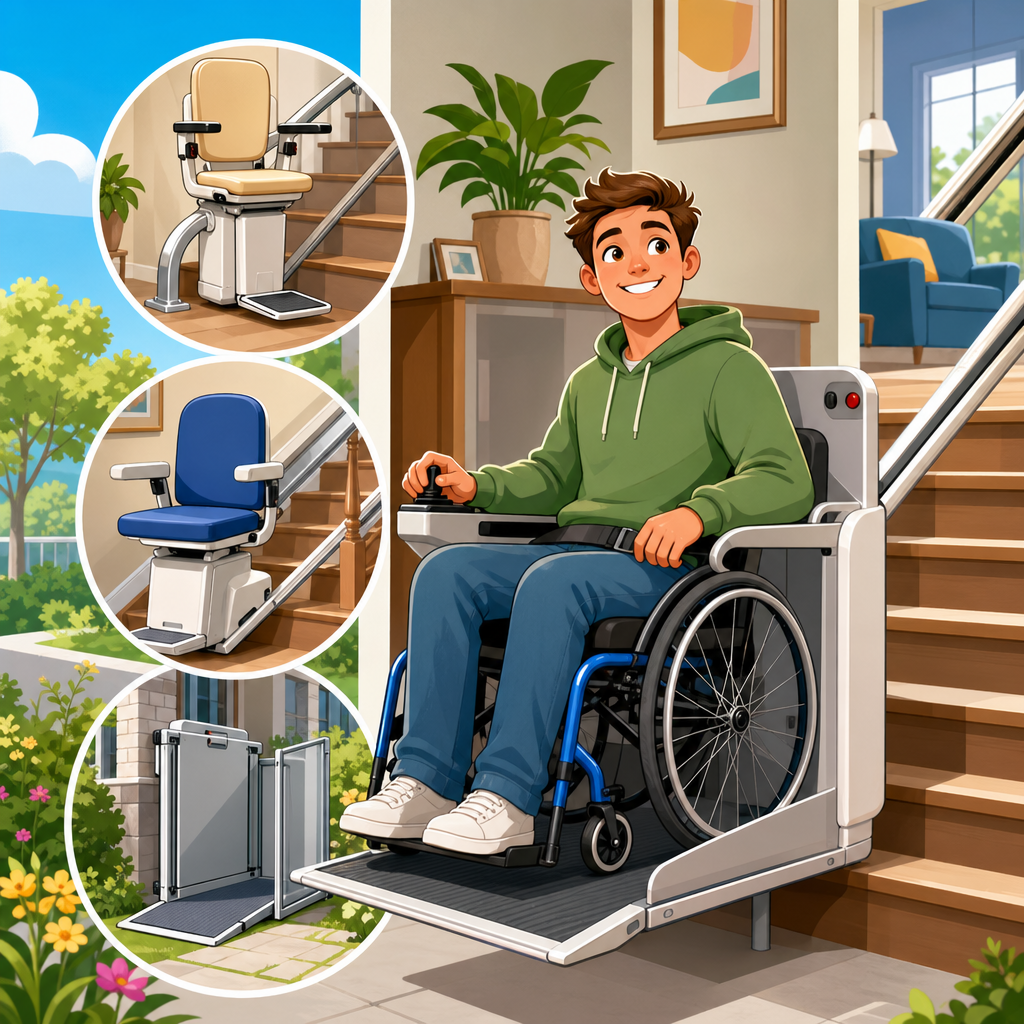
There is no single best chair lift for seniors because the staircase determines the category first. Straight stair lifts fit staircases with no turns, landings, or directional changes. They are the most common, easiest to install, and usually the most affordable. In many homes, a straight model can be installed in a few hours because the rail is cut to length and attached to stair treads, not the wall. For seniors with limited hand strength, straight lifts also offer the widest range of seat and control options because more manufacturers compete in this segment.
Curved stair lifts are custom-built for staircases with bends, intermediate landings, or spiral sections. They cost more because the rail is made to precise measurements, often using photographic surveys or digital mapping. That custom fit can be excellent for comfort and safety, but curved systems may involve longer lead times and fewer immediate replacement options if a component fails. When hand strength is a concern, curved buyers should pay extra attention to powered swivel seats and parking positions, since transfers at angled landings can be more complex.
Outdoor stair lifts are designed for exterior steps and use weather-resistant materials, sealed components, and protective covers. They are valuable when the main challenge is reaching a porch, driveway, or garden level entrance. However, outdoor exposure increases maintenance needs. Batteries, seat materials, and rails age faster in extreme heat, cold, or moisture. For that reason, I recommend outdoor lifts only when there is no safer ramp or entrance alternative. If an outdoor model is necessary, choose a brand with local service coverage and a clear parts warranty.
| Type | Best use | Main advantage | Main limitation |
|---|---|---|---|
| Straight stair lift | Single uninterrupted staircase | Lower cost, faster installation, more model choices | Will not fit turns or landings |
| Curved stair lift | Stairs with bends or intermediate landings | Custom fit and smoother routing | Higher price and longer lead time |
| Outdoor stair lift | Exterior steps to porch or entry | Weather-resistant construction | More exposure, maintenance, and wear |
Top Brands and Models to Consider
Among established manufacturers, Bruno, Stannah, Harmar, and Access BDD through its dealers consistently come up in serious stair lift comparisons. Bruno is especially strong for build quality, seat comfort, and dealer support in the United States. The Bruno Elan is a respected straight stair lift that offers smooth operation, a compact folded profile, and controls that are generally easy for seniors to use. For a premium straight option, the Bruno Elite adds a larger seat and higher weight capacity, which helps users who need more stability during transfers. In my experience, Bruno’s fit and finish are among the best in the category.
Stannah is another top-tier name and often stands out for ergonomic seating and polished ride quality. Its straight and curved models are well regarded, and the brand has invested in easy-to-use controls and powered upgrade options that matter for limited hand strength. Harmar remains popular because it serves a broad price range and has a large installer network. Models such as the Pinnacle series are common in U.S. homes, though shoppers should compare seat comfort and control feel carefully, since feature sets vary by dealer package. Access BDD, often sold under dealer brands, is known for dependable engineering and flexible options, particularly in tight staircases.
There is no universally best model, but there are best fits. A senior with hand arthritis and a straight staircase may do best with a premium straight lift that includes a powered footrest and powered swivel. A lighter user on a tighter budget may prioritize a simpler straight model with large paddle controls and good local service. For a curved staircase, dealer expertise is just as important as the brand because measurement accuracy and installation quality affect every ride. The safest approach is to test the controls in person and ask the dealer to demonstrate every action the user will perform alone.
Features That Matter Most for Weak Grip, Arthritis, and Reduced Dexterity
If limited hand strength is the main buying factor, focus on six features before comparing upholstery colors or promotional discounts. First, choose low-force operating controls. Second, prioritize a powered swivel seat if the landing is narrow or the user has painful wrists. Third, add a powered footrest whenever bending is difficult. Fourth, verify that the seat belt is easy to latch with one hand; some buckle designs are much friendlier than others. Fifth, look for armrests that provide solid leverage during sitting and standing without being too far apart. Sixth, ask whether the user can place a full palm on the control rather than pinching with fingers.
Seat height and perch options also deserve attention. A chair that sits too low increases the force needed to stand. Many premium models offer adjustable seat height or different seat pads, which can substantially improve transfers. For users with hip or knee stiffness, the ideal setup allows the feet to stay planted and the knees to remain slightly open during the move to standing. Perch seats are designed for users who cannot fully bend their knees, but they are not ideal for everyone; they demand balance and should only be selected after a careful assessment.
Do not overlook ride quality. A jerky start or abrupt stop can make a user grip the armrests harder, which defeats the purpose of hand-friendly design. Better lifts use soft-start and soft-stop programming to reduce that sudden pull. Noise matters too. A quieter unit often feels more controlled and less intimidating, especially for a user who is anxious about equipment. In real homes, confidence drives usage. If the first ride feels stable, quiet, and easy, adoption is much higher.
Cost, Installation, Warranties, and How to Buy Wisely
For budgeting, straight stair lifts typically start around three thousand to five thousand dollars installed, while curved stair lifts commonly range from ten thousand dollars upward, depending on rail complexity and options. Outdoor lifts often fall between those categories but can rise with weatherproofing and rail length. Prices vary by market, dealer, labor, and upgrades such as powered swivel seats, folding rails, and heavy-duty capacities. Refurbished straight stair lifts can reduce cost, but they should be purchased only from reputable dealers who replace batteries, inspect drive systems, and provide a real labor warranty.
Installation quality matters as much as the equipment. A proper assessment includes stair width, landing clearance, seat-to-wall spacing, power supply location, trip hazards, and who else uses the stairs. Ask the dealer whether the rail leaves enough walking space when folded and whether a retractable rail is needed to avoid blocking a doorway at the bottom. Verify service response times, battery replacement intervals, and who performs repairs locally. A low quote loses its appeal quickly if the nearest technician is hours away.
Warranties differ more than many buyers expect. Some brands offer strong coverage on major components but shorter labor terms. Others promote lifetime coverage on parts tied to the drivetrain while excluding wear items, upholstery, or service visits. Read the exclusions carefully. Also ask about return policies, because custom curved rails are often nonreturnable once manufactured. The smartest purchase process is simple: get at least two quotes, insist on an in-home demonstration, have the actual user operate the controls repeatedly, and choose the model that feels easiest to use every day, not just the one with the longest feature list.
How This Hub Helps You Choose the Best Stair Lift
This guide works as the starting point for the wider best chair lifts for seniors topic because most buyers need more than a shortlist of brands. They need a framework for matching the staircase, the user’s hand strength, and the service network behind the product. From here, the next step is to explore detailed comparisons by brand, straight versus curved buying guides, heavy-duty models, rental options, and stair lift cost breakdowns. Those deeper articles help narrow the field, but the core lesson stays the same: for older adults with limited hand strength, ease of operation is not a convenience feature. It is the feature that determines safety, independence, and whether the lift gets used consistently.
The best stair lifts combine light-touch controls, stable seating, powered assistance where needed, and dependable local support. Straight models usually offer the best value, curved systems solve more complex homes, and outdoor lifts fill a specific access need. Across every category, the safest buying decision comes from testing controls, reviewing transfer mechanics, and confirming service after installation. If you are comparing the best chair lifts for seniors now, start with the user’s hands, not the brochure. Schedule an in-home assessment, ask for hands-on demonstrations, and choose the lift that makes daily movement feel simple again.
Frequently Asked Questions
What features make a stair lift easier to use for older adults with limited hand strength?
The most important features are the ones that reduce the need to grip, pinch, twist, or push with force. For many older adults with arthritis, neuropathy, tremors, or general hand weakness, the ideal stair lift uses large, easy-touch controls rather than small buttons or tight levers. A rocker-style switch, light-pressure armrest control, or oversized remote can make daily use much more manageable than a control that requires finger precision. Seat design matters too. A well-padded seat with supportive armrests, a swivel function that locks securely, and simple operation when getting on and off can greatly reduce strain.
It also helps to look for powered features. A powered swivel seat and powered footrest can be especially valuable because they reduce the need to bend, pull, or reposition parts manually. Some lifts require users to fold or adjust components with their hands, which may be difficult if joint pain is severe. Safety belts are another overlooked detail. A belt that is easy to grasp and fasten with limited dexterity is often far more practical than one with a stiff buckle. In real-world use, comfort and ease are just as important as technical specifications, because the best stair lift is the one the person can operate confidently every single day without pain or frustration.
Are joystick or rocker controls better than traditional buttons for seniors with arthritis or weak grip?
In many cases, yes. Joystick, paddle, or rocker-style controls are often better for older adults with limited hand strength because they generally require less precision and less finger pressure than small push buttons. Traditional buttons may seem simple at first, but if they are recessed, stiff, or closely spaced, they can become frustrating for someone with swollen joints, numb fingertips, or reduced pinch strength. A rocker control allows the user to press with the side of the hand, palm, or thumb, which can feel much more natural and less painful.
That said, the best control type depends on the person’s specific limitations. Someone with arthritis may do well with a broad paddle switch, while someone with tremors may need a control that is highly stable and difficult to activate accidentally. The responsiveness of the control also matters. If too much pressure is needed to keep the lift moving, the user may experience fatigue or discomfort. If possible, it is wise to test a lift in person before buying. On paper, two stair lifts may look similar, but the feel of the controls can be very different. For this reason, one of the most valuable steps in choosing a stair lift is evaluating not just whether the control works, but how comfortably it works for the person who will rely on it every day.
Do powered swivel seats and powered footrests really matter for people with limited hand strength?
For many households, they matter a great deal. Powered swivel seats and powered footrests are not just premium add-ons; they can be practical accessibility features for older adults who struggle with hand pain, reduced dexterity, or overall weakness. A manual swivel seat may require pulling a lever or repositioning the body while turning, which can be awkward and tiring. A powered swivel function can make transfers at the top of the stairs smoother and safer by reducing the amount of effort needed to rotate the seat into a secure exit position.
The same logic applies to the footrest. A manual footrest often needs to be folded up or lowered by hand, and that can be difficult for someone with painful joints or limited reach. Powered footrests remove that extra step and help preserve independence. They can also improve safety by ensuring the footrest is positioned correctly without the user having to bend or tug at it. While these features may increase cost, they can make the difference between a stair lift that is technically usable and one that is truly comfortable and sustainable over time. If limited hand strength is a daily issue rather than an occasional inconvenience, powered features are often worth serious consideration.
How can families tell whether a stair lift will be comfortable and safe for someone with neuropathy or poor hand coordination?
Comfort and safety should be judged by hands-on usability, not by brochures alone. For someone with neuropathy or poor hand coordination, the key question is whether the lift can be operated reliably without pain, confusion, or excessive effort. Start by examining the controls. Are they large enough to find and use easily? Can they be pressed without strong grip strength? Is the direction of movement obvious? A good stair lift should feel intuitive, with controls that do not require fine finger movements. The seat should also provide stable support, with armrests that help the user position themselves without feeling like they must brace hard or pull with force.
Families should also look closely at the transfer process at the top and bottom of the stairs. A lift may ride smoothly but still be difficult to enter or exit if the swivel action is stiff, the seat height is awkward, or the safety belt is hard to latch. If the user has reduced sensation in the hands, small frustrating tasks can become major barriers. Testing the remote controls, folding features, belt buckle, and seat rotation is just as important as testing the ride itself. It is also helpful to ask the dealer specific questions about operating force, optional powered components, and whether the model has been a good fit for customers with arthritis or dexterity limitations. A safe stair lift should support confidence, not create a new set of physical challenges.
Is professional installation and in-home assessment important when choosing a stair lift for limited hand strength?
Absolutely. Professional installation is essential for safety, but the in-home assessment is just as important because it helps match the stair lift to the user’s actual physical needs. For older adults with limited hand strength, small design details can have a major impact on daily usability. During an in-home assessment, a knowledgeable provider should evaluate more than stair dimensions. They should also consider how the user sits, stands, reaches, turns, and operates controls. This is where issues like painful gripping, difficulty fastening a belt, or trouble using a manual footrest become clear.
A strong installer or dealer will recommend features based not only on the staircase, but also on the user’s hand function, balance, coordination, and comfort level. They may suggest larger controls, easier seat positioning, or powered options that reduce the need for manual handling. Proper installation also ensures that the seat height, rail placement, and stopping positions work well for safer transfers. When stair lifts are chosen without a personalized assessment, families can end up with a model that fits the stairs but does not fit the person. For older adults with limited hand strength, that difference is critical. A stair lift should not simply move someone up and down the stairs; it should do so in a way that feels easy, secure, and realistic for everyday use.