Chair lift costs vary widely because the price reflects far more than the motor and seat: it includes the rail design, the staircase layout, the home’s electrical setup, safety features, installation labor, service coverage, and the buyer’s long-term mobility needs. When families ask, “How much do chair lifts cost?” they usually want one number, but in practice the useful answer is a range tied to lift type, home conditions, and ownership goals. In my experience helping people compare accessibility equipment, the biggest source of confusion is that advertised base prices often exclude custom rails, power-swivel seats, folding hinges, permit work, or extended warranties. A clear breakdown matters because a chair lift is not an impulse purchase. It is a safety device, a home accessibility investment, and often the difference between aging in place and moving. Understanding the true cost of different chair lift types helps buyers budget realistically, compare quotes intelligently, and avoid paying for features they do not need while still prioritizing reliability and safe use.
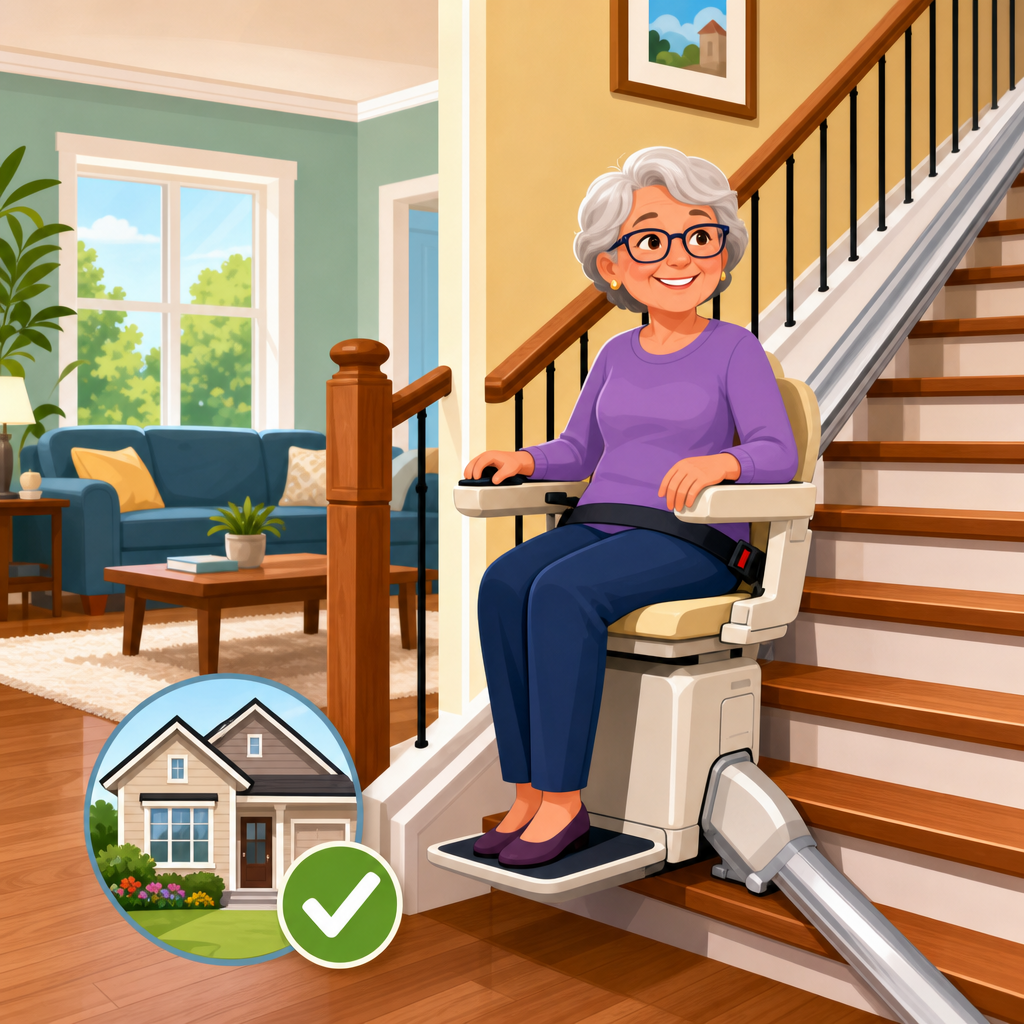
A chair lift, sometimes called a stair lift, is a motorized seat that travels along a rail mounted to stair treads rather than the wall. Most residential units run on rechargeable batteries powered by a standard outlet, so they continue to work during many power outages. Key pricing terms include straight rail, curved rail, outdoor-rated system, weight capacity, call-send controls, and transfer features such as a swivel seat. Straight lifts fit stairs without turns or intermediate landings. Curved lifts are custom-built for stairs with bends, spirals, or split landings. Outdoor models use weather-resistant materials and sealed components. Heavy-duty lifts support higher weight limits and usually require more stair width. Reconditioned lifts can reduce costs, but they are generally available only for straight staircases because custom curved rails are made to exact dimensions. These distinctions shape the total installed price far more than brand marketing does, and they also affect lead times, maintenance requirements, and resale value.
This hub article explains the full cost picture, from base pricing by lift type to installation variables, ongoing expenses, financing paths, and the practical tradeoffs between buying new, buying used, or renting. It also connects the broader “Cost & Financing Options” topic by giving you the decision framework that supports more detailed articles on Medicare myths, veterans’ benefits, home equity funding, rentals, and tax questions. If you need a fast benchmark, most new straight chair lifts land in the low-thousands installed, while curved models often cost several times more because the rail is measured and fabricated specifically for one staircase. Outdoor and heavy-duty units usually cost more than standard indoor straight systems, and optional features can add meaningfully to the final quote. The sections below break down what drives those numbers, what a fair proposal looks like, and how to judge value rather than chasing the lowest sticker price.
Average Chair Lift Costs by Type
The most important pricing rule is simple: the straighter and more standardized the staircase, the lower the chair lift cost. A new straight stair lift commonly costs about $2,500 to $5,500 installed, depending on rail length, seat style, weight capacity, and local labor rates. Entry-level models from established manufacturers such as Bruno, Harmar, Stannah, and Access BDD often sit toward the lower half of that range when the staircase is short and uncomplicated. Premium straight lifts with powered footrests, automatic folding rails, upgraded upholstery, or higher capacities move toward the top. If a home has a standard staircase from one floor to the next with no turns, this category usually delivers the best value and the fastest installation, sometimes within days.
Curved chair lifts cost substantially more because every rail is built from a precise template of the staircase. Typical installed pricing often starts around $10,000 and can reach $17,000 or more for complex layouts with multiple landings, tight turns, or long travel distances. Homeowners are often surprised that two visually similar staircases can produce very different quotes. That is because the fabrication process accounts for angle changes, parking positions, and transition points where the user gets on and off safely. Curved systems also tend to include more advanced engineering, carriage programming, and custom support placement. In practical terms, the rail is the cost driver, not the seat. This is why used curved lifts are less common and less economical than buyers expect.
Outdoor chair lifts generally cost more than comparable indoor lifts because they need weather-resistant finishes, sealed electronics, UV-stable plastics, and protective covers. A straight outdoor unit often falls between $4,000 and $7,500 installed. Outdoor curved systems can run much higher, similar to or above indoor curved pricing. Heavy-duty chair lifts, designed for higher weight capacities such as 350 to 600 pounds depending on model, usually start above standard straight units and may range from about $4,500 to $9,000 installed. These lifts often need wider stairs, larger seats, reinforced components, and more powerful drivetrains. Buyers should also expect a price premium for specialty features such as standing perch seats for users with limited knee flexion or ultra-compact seats for narrow staircases.
| Chair lift type | Typical installed cost | Main cost driver | Best fit |
|---|---|---|---|
| Straight indoor | $2,500–$5,500 | Rail length and features | Single flight with no turns |
| Curved indoor | $10,000–$17,000+ | Custom rail fabrication | Turns, landings, spiral or split stairs |
| Outdoor straight | $4,000–$7,500 | Weatherproof materials | Porch, deck, garage, exterior steps |
| Heavy-duty | $4,500–$9,000 | Higher capacity and larger chassis | Users needing wider seat or higher weight limit |
| Rental straight | $300–$600 setup plus $100–$250 monthly | Term length and stair length | Short-term recovery or temporary need |
What Factors Change the Final Price?
Beyond lift type, several technical details determine whether a quote lands near the low end or thousands higher. Staircase length is the first factor. Longer rails require more material and more installation time. Stair width is the second. Many manufacturers recommend at least roughly 30 to 36 inches of clear width for common models, while heavy-duty systems may need more. Narrow stairs can force a more compact model or rule out certain seats. The top and bottom landing configuration also matters because safe transfer space is essential. A folding rail, hinged track, or overrun section may be required to reduce trip hazards or position the seat away from the stairs, and each option adds cost.
Electrical conditions also play a role, even though most modern residential lifts use battery power. The charger still needs a nearby standard outlet, and if one is not conveniently placed, an electrician may be needed. In older homes, I have seen small electrical changes add a few hundred dollars to a project that buyers thought was turnkey. Another major factor is seat and control configuration. Manual swivel seats and folding footrests cost less than powered versions, but they require more user strength and dexterity. For a person with arthritis, weakness, or balance issues, paying extra for powered functions can materially improve safety and everyday usability. This is one of the few upgrades that often earns its price.
Brand support, dealer coverage, and warranty terms also influence cost. A lower quote is not automatically the better value if local service is weak or parts are hard to source. Reliable chair lift ownership depends on dealer responsiveness because repairs are not like replacing a household appliance. Established dealers typically perform an in-home assessment, verify measurements, review transfer safety, and explain obstruction sensors, seatbelts, battery backup, and charging points. They may charge more than a lightly staffed reseller, but they usually reduce the risk of ordering the wrong system or waiting too long for service. Buyers should ask whether the quote includes site evaluation, installation, basic user training, and haul-away of packaging.
Installation, Maintenance, and Hidden Costs
Installation is often included in a packaged quote, but it should still be separated on paper so you can compare bids accurately. A straightforward straight-lift install may take only a few hours. A curved lift requires a longer process because the staircase must first be measured precisely, usually with photographic documentation or digital tools, then the rail is manufactured and later installed. Because the rail mounts to the stair treads, not the wall, cosmetic wall repairs are usually unnecessary. However, if carpeting is loose, the treads are damaged, or the landing area is obstructed, prep work can add time and money. In some municipalities or housing situations, you may also face permit or approval requirements, particularly in condos or managed properties.
Maintenance costs are usually modest compared with the purchase price, but they should not be ignored. Most battery-powered lifts use sealed batteries that commonly need replacement every few years, depending on usage, charging habits, and temperature conditions. Battery replacement can cost a few hundred dollars when parts and service are combined. Annual service plans vary, but some dealers offer preventive maintenance visits that include safety checks, lubrication where applicable, and adjustment of moving parts. While chair lifts are generally dependable, especially from major brands, wear items such as seat switches, remote controls, or footrest sensors can fail over time. Outdoor lifts may need more frequent attention because moisture, pollen, heat, and cold are hard on mechanical systems.
Hidden costs usually come from assumptions. One common example is the bottom line that excludes a hinged rail needed to keep a doorway clear. Another is a quote that lists a warranty but does not clarify whether labor is included after the first year. I advise buyers to ask five direct questions: What exactly is included in the installed price? Which options are required rather than optional? How long are parts covered, and how long is labor covered? What is the expected battery replacement interval? How quickly can service be scheduled if the lift stops working? These questions expose meaningful differences between two proposals that look similar at first glance. The cheapest quote can become the most expensive if it omits critical features or post-installation support.
New, Used, and Rental Chair Lifts
Choosing between new, used, and rental equipment is often the biggest financial decision after selecting lift type. New chair lifts cost more upfront, but they offer the best fit with current safety features, full manufacturer support, and warranty protection. For someone planning to stay in the home for years, buying new is usually the most predictable option. It is especially sensible for curved staircases, where the rail must be made for one home and one layout. New systems also give buyers access to features that improve independence, such as powered swivels, automatic folding footrests, upgraded arm controls, and diagnostic displays that help technicians troubleshoot quickly.
Used or reconditioned chair lifts can reduce cost, but the savings depend on the staircase. Straight lifts are the best candidates because rails can often be cut or adapted within limits, and dealers may have refurbished inventory available. A reconditioned straight unit may cost meaningfully less than a new one, but buyers should still confirm the age of the carriage, battery condition, warranty length, and who will service it locally. Used curved lifts rarely offer the same value because the expensive part—the rail—cannot usually be reused without major redesign. In those cases, “used” may only mean the seat and carriage are reused while the rail is still newly fabricated, which reduces savings.
Rental chair lifts are a practical option when the mobility need is temporary, such as recovery after surgery, a short hospice period, or a family member staying for rehabilitation. Rental programs usually apply only to straight stair lifts. Costs often include an installation or setup fee plus monthly rental charges, and removal may be included or billed separately. Rentals can make financial sense when the expected need is measured in months rather than years. However, if the rental continues for a long period, the cumulative cost may exceed the price of purchasing a basic new or reconditioned lift. Buyers should ask for a break-even calculation before committing.
Paying for a Chair Lift and Getting Better Value
Most chair lifts are paid for out of pocket, but several financing and assistance routes may help. Original Medicare generally does not cover chair lifts because they are viewed as home modifications rather than durable medical equipment in the usual benefit structure, although policy details can change and related equipment may be treated differently. Some Medicare Advantage plans, Medicaid home- and community-based services programs, veterans’ benefits, state assistive technology programs, nonprofit grants, or long-term care insurance policies may offer partial help. Funding is highly location- and plan-specific, so verification matters more than assumptions. For homeowners, personal loans, home equity products, or dealer financing are common payment paths, but interest costs can materially change the real total.
To get better value, collect at least three detailed quotes and compare them line by line. A strong proposal identifies lift model, capacity, rail type, required options, warranty on parts, warranty on labor, estimated install timeline, and service response expectations. Ask the dealer to explain why each add-on is necessary. Some upgrades are convenience items, while others are genuine safety features tied to the user’s physical limitations or the staircase layout. If possible, have the primary user present during the evaluation so the dealer can assess transfer ability, arm strength, hip mobility, and whether a powered swivel or perch seat is appropriate. This is where experienced dealers outperform generic sales scripts.
The core takeaway is that chair lift cost is best understood as a function of staircase complexity, user needs, and support quality, not just product category. Straight lifts are usually the most affordable and easiest to source, curved lifts are expensive because of custom rail fabrication, and outdoor or heavy-duty models carry predictable premiums. Installation details, maintenance, batteries, service coverage, and financing terms all affect what you truly pay. If you are comparing options under the broader Cost & Financing Options topic, start by identifying the lift type your staircase requires, then request itemized quotes and verify funding possibilities before choosing. That approach protects your budget and increases the odds that the lift will remain safe, dependable, and worthwhile for years. Take the next step by scheduling an in-home assessment and using it to build a realistic total-cost plan.
Frequently Asked Questions
1. What factors have the biggest impact on chair lift cost?
The biggest cost drivers are usually the type of chair lift, the shape and length of the staircase, and whether the system can use a standard rail or needs a custom-built one. A straight stair lift installed on a simple staircase is typically the most affordable option because the rail is standardized and the installation is more predictable. Costs rise when the staircase has curves, intermediate landings, turns, or unusual dimensions, since curved chair lifts require custom engineering and fabrication to match the exact layout of the home.
Beyond the staircase itself, pricing also reflects the home’s electrical setup, the features selected, and the amount of labor required for installation. For example, most modern lifts use battery-powered operation with a charging station, but some homes may still need minor electrical work to support the equipment properly. Optional features such as power swivel seats, folding footrests, upgraded upholstery, hinged rails, outdoor-rated materials, and advanced safety sensors can also increase the total investment. In addition, service coverage, warranty terms, and the reputation of the manufacturer or dealer often influence price. In other words, the chair lift cost is not just the seat and motor—it is the full package of engineering, safety, installation, and long-term usability.
2. How much do straight, curved, and outdoor chair lifts usually cost?
In general, straight chair lifts are the most budget-friendly, curved models are the most expensive, and outdoor units fall somewhere in between depending on the staircase and weatherproofing requirements. A straight chair lift commonly costs less because it uses a simpler rail and can usually be installed more quickly. This makes it a popular choice for homes with one uninterrupted flight of stairs and no turns or landings. While exact pricing varies by brand, region, and features, buyers should expect a range rather than a single fixed number.
Curved chair lifts cost more because each rail is custom-made to fit the staircase exactly. That custom process typically includes a detailed measurement or digital scan of the stairs, precision manufacturing, and more specialized installation work. Outdoor chair lifts may also carry higher pricing than basic indoor straight lifts because they are built to withstand rain, temperature swings, sunlight, and corrosion. Their seats, covers, rails, and electronics are designed for exterior conditions, which adds material and engineering costs. When comparing types, it is helpful to focus not only on the initial quote but also on what is included, such as installation, warranty, service visits, and future maintenance support.
3. Why are curved chair lifts so much more expensive than straight models?
Curved chair lifts are more expensive because they are custom products rather than standard equipment. A straight chair lift can often use a pre-manufactured rail that is cut to length and mounted on a staircase with a relatively straightforward installation process. A curved model, by contrast, must be designed around every bend, landing, and angle of the staircase. That means the rail is built specifically for one home, which increases design time, production complexity, and overall material cost.
Installation is also more specialized. With a curved lift, precision matters at every point along the rail to ensure a smooth ride, proper stopping positions, and safe clearance from walls, banisters, and walkways. The chair may need to navigate tighter turns or park in a location that minimizes obstruction, and options such as powered folding rails or custom parking positions may be added to improve usability. Because of this, curved lifts involve more planning, more engineering, and more labor. For homeowners, the higher cost often reflects the fact that a curved unit solves an access problem that a standard straight lift simply cannot address safely or effectively.
4. Are installation, maintenance, and warranty coverage included in chair lift pricing?
Sometimes they are, but not always, which is why buyers should look closely at what a quote actually includes. Many chair lift estimates include standard installation, the lift itself, and a manufacturer’s warranty, but there can be important differences from one provider to another. One company may bundle in delivery, installation, and a service call window, while another may quote a lower base price and add charges later for site preparation, electrical adjustments, rail modifications, or optional features. Asking for a detailed written estimate is one of the best ways to avoid surprises.
Maintenance and warranty terms can vary significantly as well. Some providers include a labor warranty for a limited period, while others cover only parts. Battery replacement, annual service, and post-warranty repairs may or may not be included. This matters because the lowest upfront price is not always the lowest long-term cost. A chair lift is a mobility and safety device, so dependable service support can be just as important as the initial purchase price. Families comparing options should ask how service requests are handled, how quickly technicians can respond, and whether there are maintenance plans available after the original warranty ends.
5. How can families choose the most cost-effective chair lift without sacrificing safety or future needs?
The most cost-effective approach is to match the lift to both the home and the user’s expected mobility needs, rather than choosing solely on the lowest sticker price. A basic straight chair lift may be an excellent value for someone with a simple staircase and stable mobility needs, but a buyer who expects declining strength, balance, or flexibility may benefit from features such as a power swivel seat, easier-to-use controls, or a higher-capacity model. Spending a bit more upfront on the right fit can prevent frustration, improve safety, and reduce the chance of needing to replace the system later.
It also helps to think in terms of total ownership value. Families should compare not just the purchase amount, but also installation quality, warranty coverage, availability of local service, the durability of the equipment, and how well the lift will work day to day. If the staircase layout is complex, a professionally fitted curved lift may be more expensive but ultimately more practical and safer than trying to force a less suitable option. In many cases, the best value comes from getting multiple quotes, confirming exactly what is included, and choosing a reputable provider who can support the lift over time. A chair lift is not simply a product purchase—it is an investment in accessibility, independence, and peace of mind.