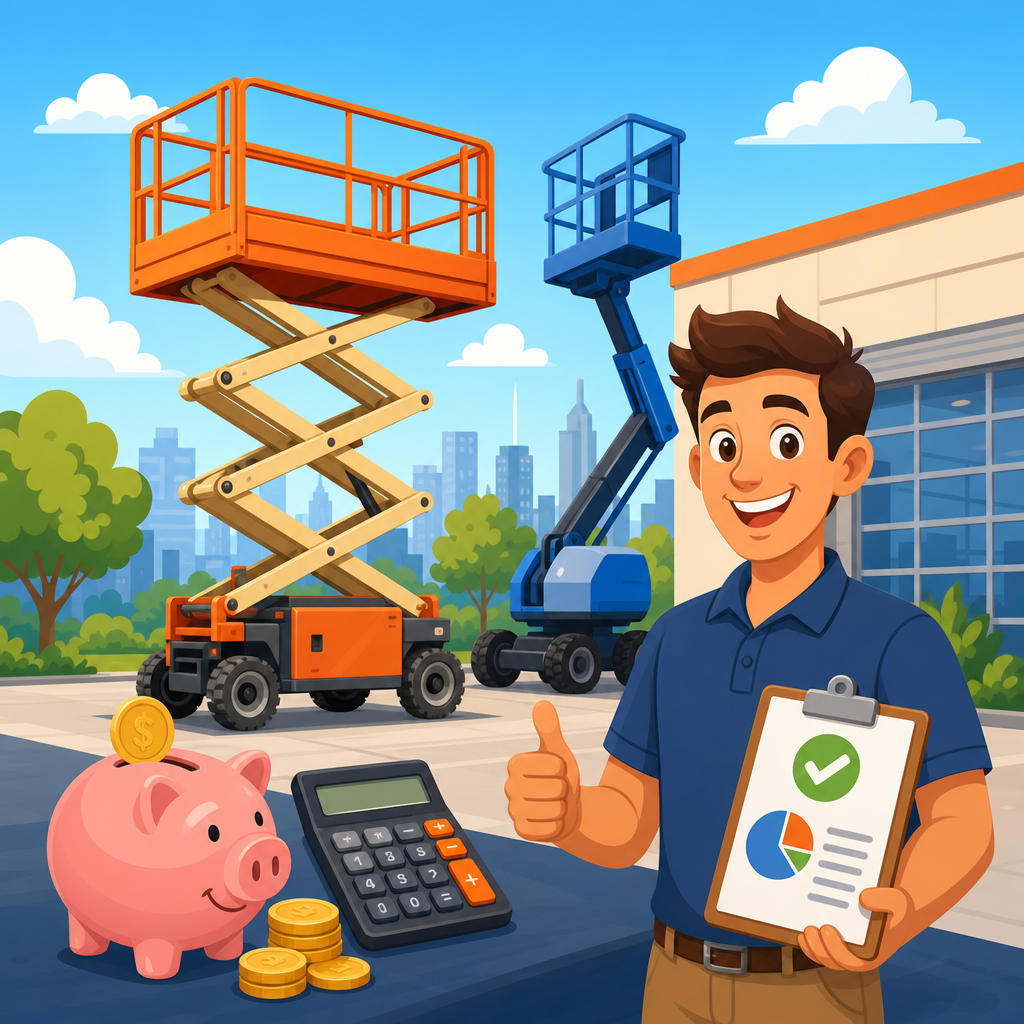
Budget lifts with financing options available give homeowners, contractors, and facility managers a practical way to access elevated work platforms without straining cash flow. In this guide, “budget lifts” refers to lower-cost equipment choices such as entry-level scissor lifts, compact boom lifts, mast lifts, personnel lifts, and used or refurbished machines that meet common jobsite needs at a manageable purchase price. “Financing options” includes installment loans, equipment leases, rent-to-own agreements, dealer promotional financing, and manufacturer-backed programs that spread costs over time. I have helped buyers compare lift categories, review spec sheets, and model payment scenarios, and the same pattern repeats: the cheapest sticker price is rarely the full story. Buyers need to weigh platform height, duty cycle, power source, maintenance exposure, and resale value against monthly affordability. That is why this topic matters. A well-chosen budget lift can improve productivity, reduce ladder-related risk, and keep small businesses competitive, but a poorly structured purchase can lock owners into equipment that is underpowered, unreliable, or expensive to service. This hub article explains how to evaluate affordable lifts, where financing fits, what tradeoffs to expect, and how to decide whether buying, leasing, or renting makes the most financial sense.
What counts as a budget-friendly lift
A budget-friendly lift is not simply the lowest-priced unit in a catalog. It is the lift that safely handles required tasks at the lowest total cost of ownership for the expected usage pattern. For indoor maintenance, retail fit-outs, warehouse work, and light electrical installation, compact electric scissor lifts and vertical mast lifts often represent the strongest value because they have simpler drivetrains, lower fuel costs, and fewer emissions restrictions. Common examples include 19-foot electric slab scissor lifts from established brands like Genie, JLG, Skyjack, and Snorkel. In the used market, these units are frequently available at substantially lower prices than articulating or telescopic booms because they are easier to refurbish and their use cases are broad.
Budget also depends on whether the machine is new, used, or reconditioned. New lifts offer warranty protection, current safety features, and predictable service intervals, but they require more upfront capital or higher financed balances. Used lifts can reduce acquisition cost dramatically, especially when purchased through reputable dealers that document hours, battery condition, hydraulic performance, and annual inspection status. Reconditioned units sit between the two: they usually receive cosmetic work, worn components, new decals, and functional testing. In my experience, buyers focused on affordability get the best outcomes when they define the job first, then choose the simplest lift that meets height, capacity, and access requirements without overbuying features they will rarely use.
Another key distinction is between slab and rough-terrain models. Slab scissor lifts for smooth indoor floors are almost always more budget-friendly than rough-terrain units with outriggers, four-wheel drive, oscillating axles, and heavier frames. The same applies to boom lifts: an articulating electric boom for indoor or mixed light-duty work can sometimes pencil out better than a diesel rough-terrain machine if the work envelope does not require extreme outreach or uneven ground capability. When buyers ask what the best affordable lift is, the honest answer is that the right category matters more than the lowest advertised price. Cost control begins with matching the machine to the environment, frequency of use, and operator skill level.
Best lift types for buyers seeking lower monthly costs
The most affordable monthly payments usually come from equipment that is lower in purchase price, highly liquid in the resale market, and inexpensive to maintain. That is why electric scissor lifts dominate the budget segment. They are widely used, easy to transport on many jobs, and familiar to technicians. Vertical mast lifts also deserve attention because they can fit through standard doorways, work well in schools, offices, and hospitals, and often cost less than larger self-propelled alternatives. Personnel lifts can be the cheapest option for occasional indoor overhead work, though they trade mobility and platform capacity for price.
Used towable boom lifts are another strong value for exterior sign work, tree-adjacent access, and property maintenance. Because they can be towed behind a suitable vehicle, they may eliminate the need for dedicated transport in some cases. However, buyers should account for setup time, outrigger requirements, and the need for level ground. Entry-level articulating booms also appeal to businesses needing up-and-over access around shelving, machinery, or architectural obstacles, but monthly payments rise faster because acquisition prices are higher and maintenance is more complex.
| Lift type | Typical value case | Main cost advantage | Main limitation |
|---|---|---|---|
| Electric slab scissor lift | Indoor maintenance, warehouses, retail | Low operating cost and broad used-market availability | Limited outdoor and uneven-ground capability |
| Vertical mast lift | Tight aisles, schools, healthcare facilities | Compact size and lower purchase price | Lower platform capacity and reach |
| Personnel lift | Occasional overhead access indoors | Very low entry cost | Manual positioning and less productivity |
| Used towable boom lift | Exterior maintenance, signage, property work | Affordable boom access without full-size chassis cost | Setup time and towing requirements |
| Reconditioned articulating boom lift | Obstacle-heavy jobsites | Lower price than new with versatile reach | Higher service complexity than scissors |
For many small businesses, lower monthly cost is achieved by stepping down one size class. A 19-foot scissor lift may handle most ceiling, lighting, and inventory tasks that buyers initially assume require a 26-foot model. The smaller machine often costs less to buy, less to transport, and less to maintain. That kind of right-sizing is where real savings happen.
How financing options work for affordable lift purchases
Financing spreads the cost of a lift over time, but the structure matters as much as the rate. Standard equipment loans work like term loans: the buyer owns the machine while making fixed monthly payments over a set period, often 24 to 72 months. This is attractive when the lift will be used heavily and retained for years. Leasing typically lowers monthly payments because the lessor retains residual value assumptions, and it can be useful when a business wants newer equipment, easier fleet rotation, or possible tax advantages through lease treatment under current accounting and tax guidance. Buyers should confirm details with their accountant because tax treatment depends on jurisdiction and business structure.
Rent-to-own programs can be practical for companies with inconsistent credit or uncertain demand. A portion of rental payments may be applied toward purchase, letting the business test the machine in real operating conditions before committing. Dealer promotional financing sometimes offers reduced introductory rates on new models, especially when manufacturers want to move inventory before a model-year change. These offers can be compelling, but they may require stronger credit profiles or larger down payments, and they can be offset by higher base pricing compared with cash discounts.
I advise buyers to review five figures before signing: purchase price, down payment, annual percentage rate or money factor, term length, and total repayment amount. Looking only at monthly payment is a classic mistake. A low monthly number can hide a long term that leaves the owner upside down if they need to sell early. Buyers should also ask whether the financing includes soft costs such as freight, setup, battery replacement, extended warranty, or planned maintenance. Packaging these items into the deal can preserve cash, but it also increases interest paid over time.
Approval criteria usually include time in business, credit score, debt-service coverage, and collateral value. Established contractors and facilities firms often qualify more easily than startups, but startups can still secure financing with stronger down payments, personal guarantees, or cross-collateralized equipment. The healthiest financing decision is one where the machine generates or preserves enough revenue each month to exceed the payment and support maintenance reserves.
Comparing new, used, leased, and rented lifts
New lifts make sense when uptime is critical, operators need the latest safety systems, and the company plans long-term ownership. Warranty coverage lowers early repair risk, and parts availability is usually straightforward. The downside is obvious: higher price and larger financed balance. Used lifts are often the sweet spot for budget-conscious buyers, especially in categories with stable demand and abundant parts support. A five- to eight-year-old electric scissor lift with verified service history, healthy batteries, and current ANSI-compliant decals can deliver excellent value for light to moderate use.
Leasing is ideal when preserving working capital matters more than building equity. I have seen growing service firms choose leases because they prefer predictable monthly expense and replacement flexibility over ownership. That approach is sensible when utilization is high enough to justify dedicated equipment but not so specialized that the business wants to keep aging machines long after warranty expiration. Renting, by contrast, remains the best option for infrequent use, unusual height requirements, or temporary spikes in workload. If a lift will sit idle most weeks, even a cheap financed unit can be more expensive than periodic rental after considering storage, inspection, charging, and insurance.
The break-even point depends on utilization. A contractor who needs a 19-foot slab scissor lift three days a week for most of the year will generally benefit from ownership or long-term lease. A property manager who needs elevated access only for quarterly lighting work likely will not. Used equipment becomes less attractive if the buyer lacks local service support or internal maintenance capability. Rental becomes less attractive when frequent delivery fees, scheduling delays, and availability issues interrupt work. The right decision is operational, not emotional.
How to evaluate total cost beyond the sale price
Serious buyers evaluate total cost of ownership, not just acquisition cost. The major cost categories are financing, maintenance, wear items, batteries or tires, inspections, transport, insurance, operator training, and downtime. Electric lifts usually win on operating cost because electricity is cheaper than diesel and electric drivetrains have fewer engine-related service items. However, battery condition is crucial. Replacing industrial battery packs can materially change the economics of a used lift, so a battery load test and charger inspection should be standard pre-purchase steps.
Maintenance records tell a clearer story than cosmetics. Fresh paint can hide abuse, but documented service intervals reveal whether the machine was cared for. Ask for hour-meter readings, fault code history if available, hydraulic cylinder condition, tire wear, pothole protection function, emergency lowering operation, and platform control responsiveness. On booms, inspect pins, bushings, turntable rotation, jib function, and any signs of structural repair. Independent inspection by a qualified technician is money well spent, especially when buying from auctions or non-specialist resellers.
Transport costs also surprise first-time buyers. A compact mast lift may move easily on smaller trailers, while a larger scissor or boom may require heavier trucks, permits in some cases, or third-party hauling. Storage matters too. Indoor storage extends battery life and protects electronics. Insurance carriers may require documentation, secure storage practices, and operator training records. These details are not glamorous, but they separate genuinely affordable lift ownership from purchases that become cost drains after the first season.
Safety, standards, and inspection checks that protect your budget
Safety compliance protects workers and protects the budget because accidents, failed inspections, and unplanned downtime are expensive. In the United States, buyers should understand current ANSI A92 standards for mobile elevating work platforms and ensure the machine’s manuals, decals, and safety functions align with applicable requirements. Training is essential. Even a simple slab scissor lift requires familiarization on the specific model, understanding of load limits, surface conditions, guardrail use, emergency descent, and pre-start inspection routines.
A smart pre-purchase checklist includes structural inspection, function test, leak check, battery or engine assessment, tilt alarm verification, emergency stop operation, brakes, steering, pothole protection, and platform gate integrity. If the machine has telematics or onboard diagnostics, review any stored fault information. Many major brands now support better diagnostic workflows, which helps technicians identify recurring issues quickly. Documentation should include serial number verification, service logs, operator manual availability, and proof that any recalls or service bulletins were addressed.
Budget buyers sometimes try to save money by skipping professional inspection, but that shortcut often backfires. One hydraulic problem, charger failure, or control box issue can erase the apparent savings on a cheap machine. Reliable, safe equipment is cheaper than risky equipment. That principle should guide every financing decision as well: never stretch into a machine you cannot afford to maintain properly.
How to choose the right budget lift and financing plan
Start with the job profile. List required working height, platform capacity, indoor or outdoor use, floor loading limits, door and aisle clearances, and how often the machine will be used each month. Then compare those needs against realistic ownership costs and financing terms. If the lift will produce daily revenue, ownership or lease usually makes sense. If usage is occasional, rental or rent-to-own may be safer. If cash is tight, prioritize proven models with strong parts networks and straightforward maintenance rather than feature-heavy machines with uncertain support.
Next, compare offers from dealers, independent finance companies, and manufacturers. Request the same term length and down payment assumptions from each source so comparisons are fair. Ask about prepayment penalties, seasonal payment structures, warranty options, and whether maintenance packages are available. In many cases, the best deal is not the lowest rate but the contract with the best combination of reliable equipment, support access, and manageable monthly obligation. A budget-friendly lift should reduce operational friction, not create it.
This hub should also guide your next steps across the broader buying journey. From here, review detailed model comparisons, used equipment inspection guides, scissor lift sizing articles, and financing breakdowns for specific lift categories. The main takeaway is simple: affordable access equipment is available, and financing can make it practical, but value comes from matching the machine and the payment structure to real work. Define the job, inspect carefully, compare total cost, and talk with reputable dealers before signing. That process leads to a budget lift that works as hard as you do.
Frequently Asked Questions
What qualifies as a budget lift, and who are these machines best suited for?
A budget lift is generally any lower-cost aerial work platform that handles common elevation tasks without the higher upfront price of premium, large-capacity, or highly specialized equipment. In most cases, this includes entry-level scissor lifts, compact boom lifts, mast lifts, personnel lifts, and used or refurbished machines that still meet safety and performance standards. The exact definition depends on the work environment, required lift height, platform capacity, indoor or outdoor use, and how often the equipment will be used. A budget-friendly machine is not necessarily “cheap” in quality. Instead, it is equipment selected to match the application closely, so buyers avoid paying for extra reach, terrain capability, or advanced features they do not actually need.
These lifts are especially well suited for homeowners managing renovation projects, small contractors looking to control overhead, maintenance teams handling regular facility work, and property managers who need dependable access equipment without committing to a large capital expense. For example, an indoor scissor lift may be ideal for electrical, painting, lighting, and ceiling work in warehouses, schools, and retail spaces. A compact boom lift can make sense when users need more horizontal reach around obstacles. Mast lifts and personnel lifts are often practical for tighter indoor spaces where maneuverability matters more than heavy lifting power. In short, budget lifts are best for buyers and operators who want safe, functional access equipment sized appropriately for routine tasks while preserving cash flow for labor, materials, and other project costs.
What financing options are typically available when buying a budget lift?
Financing options for budget lifts are designed to make equipment ownership more manageable by spreading costs over time instead of requiring one large upfront payment. Common choices include installment loans, equipment leases, and rent-to-own agreements. With an installment loan, the buyer purchases the lift and repays the borrowed amount in fixed monthly payments over a set term. This option is often appealing for businesses that want to build equity in the machine from day one and keep it long term. Equipment leasing works differently. Rather than owning the lift immediately, the customer makes scheduled payments to use it for a defined period, sometimes with the option to buy the machine at the end of the lease. Leasing can be attractive for companies that want lower monthly costs, newer equipment cycles, or more flexibility.
Rent-to-own programs are another popular option, especially for businesses that are not ready for a full purchase commitment but expect to use the lift regularly. A portion of rental payments may be credited toward ownership, allowing the customer to test the equipment in real working conditions before completing the purchase. Depending on the seller or finance provider, buyers may also find seasonal payment structures, deferred payment programs, or tailored terms for startups and smaller contractors. The right financing choice depends on monthly budget, expected usage, tax considerations, desired ownership timeline, and how long the equipment is likely to remain useful for the operation. A reputable dealer or lender should be able to explain the total cost of financing, the term length, interest or factor rates, fees, and any end-of-term obligations clearly before paperwork is signed.
Is it better to finance a new lift, a used lift, or a refurbished lift?
The best option depends on your budget, workload, risk tolerance, and how long you plan to keep the machine. Financing a new lift usually provides the advantage of the latest features, full manufacturer support, warranty protection, and a clearer maintenance history because the equipment has not been used by previous owners. New machines are often easier to finance through manufacturer-backed programs or dealer partnerships, and they may offer stronger long-term reliability for businesses that expect heavy or frequent use. The tradeoff is a higher purchase price, which can lead to larger monthly payments unless the financing term is extended.
Used and refurbished lifts can be excellent choices for cost-conscious buyers, especially when the equipment has been properly inspected, serviced, and documented. A used lift typically offers the lowest purchase price, which can significantly reduce financing costs and improve affordability. A refurbished lift may cost more than a basic used unit, but it often delivers better condition, updated components, and greater confidence in performance. This can make refurbished equipment a strong middle ground between the cost of used and the dependability of new. However, buyers should pay close attention to service records, hours of use, structural condition, battery or engine health, tire condition, safety systems, and whether replacement parts remain readily available. Financing approval and terms can also vary based on the age and condition of the equipment. In many cases, the smartest move is not automatically new or used, but the machine that best fits the application while offering the lowest total cost of ownership over the expected life of the lift.
How can buyers make sure a financed budget lift is still safe and reliable?
Safety and reliability should never be sacrificed in the name of affordability. Before financing any budget lift, buyers should verify that the machine meets applicable safety standards, has a clear maintenance history, and is appropriate for the actual tasks it will perform. Start by working with a reputable dealer, rental company, or equipment seller that can provide inspection reports, service records, and details about prior use. If the lift is used or refurbished, ask whether major components such as hydraulics, controls, batteries, chargers, tires, guardrails, and emergency lowering systems have been tested or replaced. It is also important to confirm the machine’s rated working height, platform capacity, duty cycle, and intended environment, such as indoor slab surfaces or outdoor rough terrain. Choosing the wrong type of lift can create safety issues even if the unit itself is mechanically sound.
Buyers should also factor in operator training, scheduled maintenance, and parts availability as part of the financing decision. A lift with a low monthly payment but poor service support can become expensive quickly if downtime disrupts the job. If possible, arrange for a pre-purchase inspection by a qualified technician, especially for older equipment. Review the manufacturer’s recommendations for routine service intervals and make sure those requirements are realistic for your team. It is wise to ask about warranty coverage, return policies, and local repair support before closing the deal. A truly reliable budget lift is one that balances cost savings with documented condition, proper safety features, and a support plan that keeps the machine compliant and productive over time.
What should buyers compare before choosing financing for a budget lift?
Buyers should compare far more than just the monthly payment. A low payment can look attractive at first but end up costing more over the life of the agreement if the term is too long, the interest rate is high, or hidden fees are involved. Start by reviewing the full purchase price of the lift, the amount required as a down payment, the length of the financing term, the annual percentage rate or lease factor, and the total amount paid over time. If the agreement is a lease, find out whether it includes a buyout option, what the end-of-term value is, and whether there are mileage, usage-hour, wear-and-tear, or return-condition requirements. If it is a rent-to-own structure, ask exactly how much of each payment is applied toward ownership and what happens if the agreement ends early.
It is also important to compare practical ownership costs alongside the financing terms. Look at maintenance needs, battery replacement costs for electric units, fuel or charging requirements, insurance, transportation, inspection schedules, and likely resale value. Buyers should consider whether the equipment will generate enough use or labor savings to justify the payment. For example, if a contractor uses a lift weekly, financing may make more financial sense than repeated rentals. If usage is occasional or seasonal, a lease or rent-to-own arrangement may be more flexible. Finally, work with lenders or dealers who are transparent and experienced in equipment financing. Clear terms, responsive support, and realistic guidance often matter just as much as the rate itself. The best financing option is the one that aligns with your cash flow, workload, and long-term equipment strategy without creating avoidable financial strain.