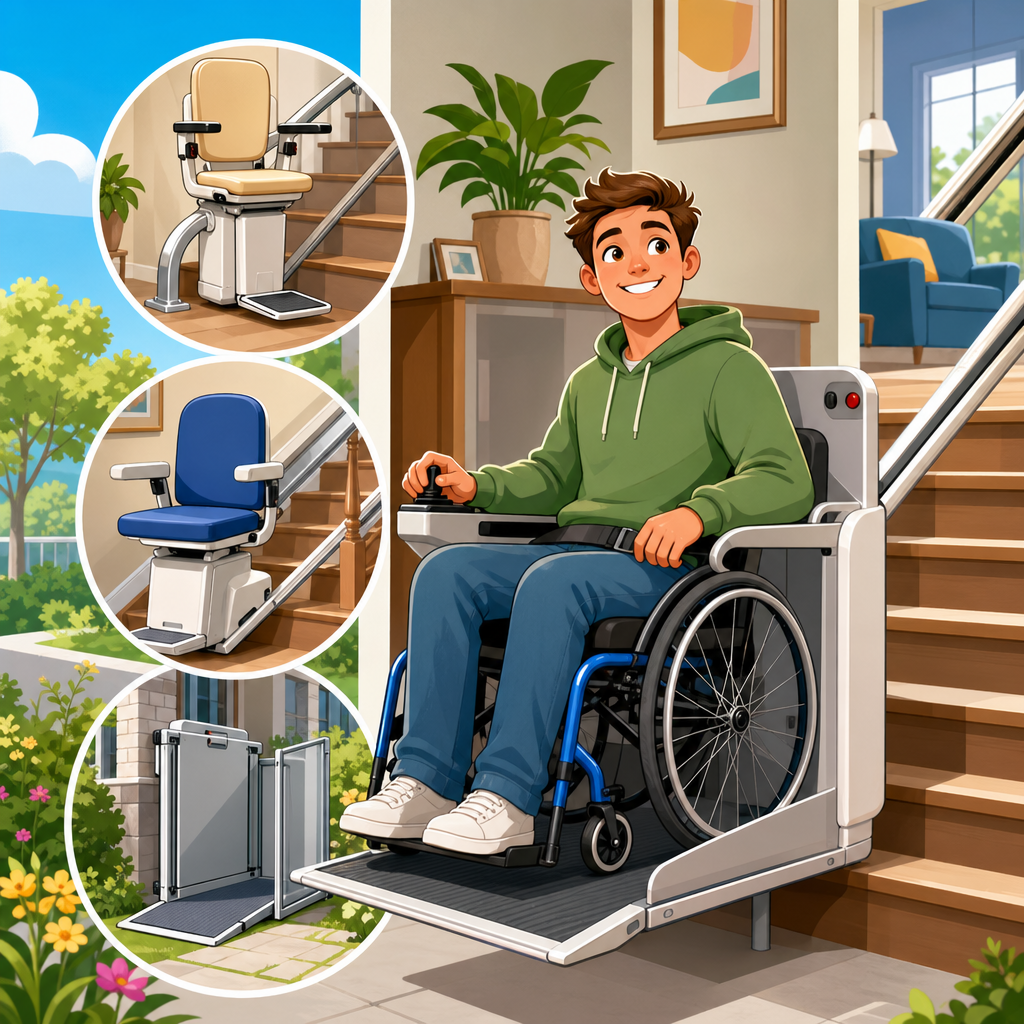
Finding deals on floor models and open-box chair lifts can cut the cost of a mobility upgrade without sacrificing safety, comfort, or long-term value. In the stair lift industry, “floor model” usually means a unit displayed in a showroom for demonstrations, while “open-box” refers to a lift that was delivered, returned, or unpacked but not kept in service long enough to be considered a conventional used product. Buyers often confuse these categories with fully reconditioned lifts, yet the differences matter because warranty terms, rail customization, and installation requirements can vary significantly. I have helped families compare all three, and the best outcomes came when we matched the buyer’s staircase, weight capacity needs, and service coverage before looking at price alone. This topic matters because a new straight stair lift can be affordable for some households, but many buyers are navigating a sudden mobility change after surgery, a fall, or an aging-in-place decision. In those moments, every saved dollar helps, provided the equipment remains code-conscious, properly fitted, and backed by qualified installers.
Budget-friendly options exist because dealers want to move showroom inventory, manufacturers authorize returns under specific conditions, and some rails or seat packages can be reused on standard staircases. The savings can be meaningful, often several hundred to a few thousand dollars depending on the brand, seat style, rail length, and whether the staircase is straight or curved. Straight stair lifts are where shoppers usually find the strongest bargains because the rail is modular and easier to size, whereas curved stair lifts rely on custom-built rails made to exact measurements. That single distinction explains why discounted curved units are rarer and more complicated to evaluate. For this buying guide hub, the goal is simple: show how to identify legitimate chair lift deals, compare floor model and open-box options realistically, and avoid false savings that lead to poor fit, weak support, or expensive repairs later.
What Floor Models and Open-Box Chair Lifts Really Include
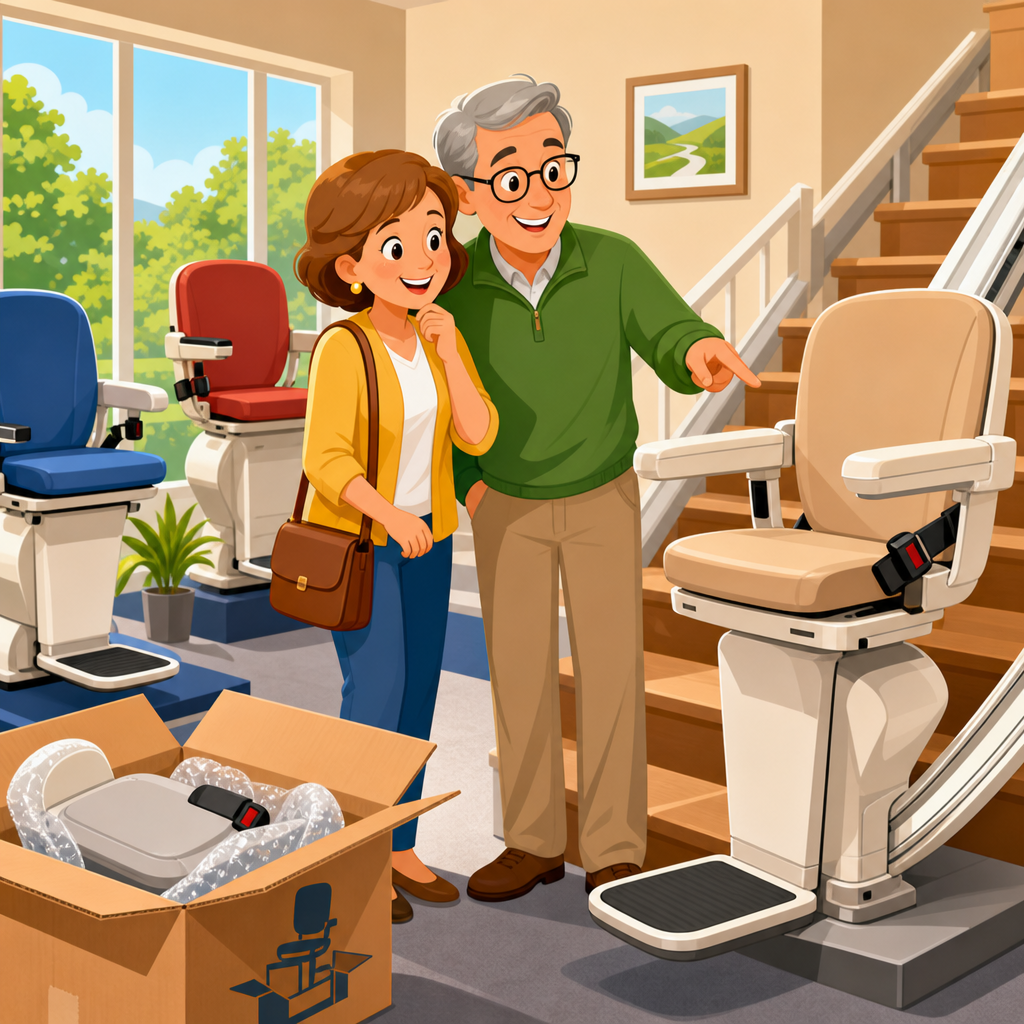
A floor model chair lift is typically installed on a short demonstration track in a dealer showroom or trade display. It may have been ridden many times during sales appointments, but usually in a controlled setting with limited run length and no weather exposure. An open-box chair lift can cover a wider range of situations: a canceled order, a customer return during a trial period, a shipment opened during inspection, or a unit installed briefly and then removed because the buyer moved, entered rehab, or chose a different configuration. Because these labels are used loosely in sales conversations, the first practical question to ask is not “How much is it off?” but “What is the actual history of this unit?” A reputable dealer should be able to tell you the manufacture date, install date if any, number of powered cycles if tracked, replaced parts, included accessories, and exact warranty coverage.
In my experience, the best floor model deals involve current-generation straight stair lifts from established brands such as Bruno, Harmar, Access BDD, Handicare, or Stannah, sold by dealers who also provide installation and service. Those units often include a powered swivel seat, folding footrest, seat belt, obstruction sensors, call-send controls, and a battery-powered drive system that charges at the rail. Most modern residential lifts use DC batteries so they continue to run during a power outage for several trips, though battery age still matters on discounted inventory. An attractive price means little if the batteries, charger contacts, or seat switch assemblies are already near replacement. Open-box units can be excellent values when they were never truly placed into regular use, but they demand more documentation. Ask whether the carriage, gearbox, armrest controls, and rail joints were inspected to manufacturer specifications before resale.
Where the Best Budget-Friendly Options Usually Appear
The strongest deals rarely come from random classified listings. They usually come from local accessibility dealers, manufacturer-authorized resellers, estate liquidations handled by mobility specialists, and occasionally medical equipment showrooms rotating display inventory. Dealer inventory matters because chair lifts are not plug-and-play consumer goods. A discounted unit still needs site measurement, anchoring to stair treads or structure according to the model’s design, charging setup, final testing, and user instruction. When families buy through unsupported online channels, they often discover that independent installers will not touch an unknown lift, especially if they cannot verify parts availability or liability coverage. That is why “cheap” and “budget-friendly” are not the same thing in this category.
Seasonality also affects pricing. I have seen better floor model discounts near the end of a model year, after regional home shows, and when dealers refresh showroom layouts. Some manufacturers introduce updated seat upholstery, armrest designs, diagnostic interfaces, or folding rail options, which prompts dealers to move prior display units quickly. Open-box opportunities arise unpredictably, but dealers with larger installation volume tend to have them more often because returns and canceled orders are part of normal business flow. If you are shopping under time pressure, call several authorized dealers and ask directly whether they have showroom, open-box, or certified pre-owned straight lifts available now. Be specific about staircase length, side of installation, user weight, and whether you need a manual or powered hinge at the bottom to clear a doorway or hallway.
| Option | Typical Savings | Best Fit | Main Risk | Smart Buyer Check |
|---|---|---|---|---|
| Floor model straight lift | 10% to 30% | Standard straight stairs, fast installation needs | Cosmetic wear or older batteries | Confirm full inspection and updated batteries if needed |
| Open-box straight lift | 15% to 40% | Buyers wanting stronger discounts with dealer support | Unclear return history | Request written service record and warranty terms |
| Certified pre-owned straight lift | 20% to 50% | Budget-focused households comfortable with prior use | Shorter warranty, older components | Verify parts availability and installer certification |
| Discounted curved lift components | Usually limited | Rare cases with reusable seat/carriage only | Custom rail cost remains high | Price rail separately before assuming savings |
How to Judge Value Beyond the Sticker Price
The headline discount matters less than the total installed cost over the next five years. Start with fit. Straight lifts are built for staircases with no turns, landings, or intermediate curves in the rail path. If your stairs are even slightly irregular, a dealer must verify that a straight rail will work safely and leave enough clearance for walking traffic. Measure staircase width, tread depth, top landing space, and any door swing conflicts, but treat your measurements as preliminary only. Final sizing should come from the installer. I have seen buyers lose money by putting deposits on discounted inventory that could not clear a baseboard heater, handrail projection, or tight top landing transfer area.
Next, compare what is included. One floor model may look cheaper until you add installation, a rail overrun, powered folding footrest, or a heavy-duty seat option. Another may include all of that plus a meaningful labor warranty. Ask for an itemized quote showing rail length, seat type, upholstery grade, weight capacity, battery age, charger status, remote controls, diagnostic testing, and removal of existing equipment if relevant. Brands differ in standard capacity, with many residential straight lifts supporting around 300 to 350 pounds and heavy-duty models reaching 400 pounds or more. If the primary user is near the limit, do not compromise for the sake of a bargain. Operating near maximum capacity every day accelerates wear and can reduce comfort during starts, stops, and swiveling transfers.
Finally, examine service economics. Stair lifts are durable, but they are still electromechanical devices with batteries, limit switches, rollers, seat interlocks, and charging contacts that need attention over time. Ask who services the lift after the sale, what the response window is, and whether the dealer stocks common parts locally. A lower purchase price can become expensive if the nearest qualified technician is two counties away or if an off-brand controller board has a long lead time. Reliable local support is part of value.
Questions Every Buyer Should Ask Before Saying Yes
Clear questions protect your budget and your safety. Ask whether the unit is new old stock, a showroom demonstrator, a customer return, or a refurbished lift with replaced parts. Request the serial number and manufacturing date. Ask if the rail is new, cut to fit, or reused, and whether any mounting hardware is model-specific. Confirm whether the batteries are original or replaced; sealed lead-acid batteries are common on many lifts, and age affects performance even if the unit has seen minimal use. Ask how many trips were logged if the model tracks cycles. Not every lift records this data, but many dealers can still estimate use from service history and display time.
Then move to warranty language. A “one-year warranty” may cover parts only, while labor, travel, or batteries may be excluded. Some discounted units keep the manufacturer’s warranty if sold through authorized channels; others carry a dealer warranty only. Get that in writing. Also ask whether the installation team is factory-trained and insured, whether the dealer follows the manufacturer’s current installation manual, and whether a post-installation test ride and user orientation are included. Good dealers explain seat locking, swivel operation, call-send controls, parking positions, battery charging, and emergency lowering procedures in plain language. If they rush these basics during the quote stage, expect similar shortcuts after the sale.
Red Flags That Turn a Deal Into a Costly Mistake
The biggest red flag is a seller who cannot document the unit’s origin. The second is any promise that “all stair lifts fit most stairs.” They do not. Stair geometry, user transfer needs, body size, and household traffic patterns all matter. Another warning sign is a quote that avoids discussing stair width and obstruction clearance. In many homes, especially older ones, preserving enough walk space for other residents is as important as fitting the chair itself. A reputable installer will talk openly about folded width, seat height, armrest position, and any bottom overrun that extends into a hallway.
Be cautious with unusually old inventory. Even if it was never sold, obsolete electronics or discontinued seat assemblies can make future repairs difficult. I generally advise families to favor current or recently discontinued models with active parts support over deeper discounts on aging stock. Also watch for cosmetic damage that suggests rough handling during removal or storage. Bent footrests, cracked shrouds, frayed seat belts, or inconsistent rail finish may indicate more than surface wear. Lastly, avoid cash-only deals with no written scope of work. Professional mobility equipment sales should include a contract, warranty terms, and installation details.
How This Hub Helps You Build a Smarter Buying Plan
As the central guide to budget-friendly options, this page should help you narrow the right path before diving into model-specific reviews, brand comparisons, financing articles, and installation checklists. Start by deciding whether your staircase is straight or curved, because that determines where meaningful savings are realistic. Then identify your nonnegotiables: weight capacity, seat comfort, folding needs, transfer space, service support, and delivery timeline. With that list in hand, floor model and open-box chair lifts become easier to compare objectively.
The practical takeaway is that the best deals are not the lowest advertised prices. They are the offers that combine verified equipment history, correct staircase fit, professional installation, current parts support, and written warranty coverage. For many households, that means a discounted straight stair lift from an authorized local dealer rather than an anonymous resale listing. For others, it may mean waiting two weeks for a showroom unit that includes a better rail setup and labor coverage. Either way, disciplined shopping protects both mobility and money. Use this hub as your starting point, then compare detailed guides on brands, warranties, installation costs, and service plans so you can choose a chair lift deal that truly works in daily life.
Frequently Asked Questions
What is the difference between a floor model, an open-box chair lift, and a reconditioned used lift?
A floor model chair lift is typically a unit that has been installed in a showroom or demo space so customers can see how it operates, test the seat, and understand its controls and ride quality. Because these lifts are mainly used for demonstrations rather than daily household transportation, they often have very limited wear compared with a traditional used stair lift. An open-box chair lift usually refers to a unit that was unpacked, delivered, or briefly installed and then returned before it saw meaningful long-term use. In some cases, it may have been ordered for a customer whose needs changed, whose staircase measurements were incorrect, or whose project was canceled. A reconditioned used lift, by contrast, is generally a previously owned unit that has been removed from a home, inspected, repaired as needed, cleaned, and prepared for resale.
That distinction matters because it affects expected condition, pricing, parts compatibility, and warranty coverage. Floor models and open-box units are often attractive because they can deliver a “nearly new” experience at a lower price, while avoiding some of the uncertainty that can come with older reconditioned equipment. However, buyers should not assume that every discounted unit is equivalent. A reputable dealer should be able to explain exactly where the lift came from, how much actual use it has seen, whether any components were replaced, and whether the rail is included or must be custom-made. Asking those questions helps ensure you understand whether you are buying a lightly handled product or a unit with a more substantial service history.
Are floor model and open-box chair lifts safe to buy?
Yes, they can be very safe to buy, provided the lift is sold by a qualified dealer or manufacturer-authorized provider that inspects, tests, and installs the equipment properly. Safety depends far less on whether a unit is discounted and far more on the condition of the lift, the quality of the installation, and whether the model is appropriate for the user and staircase. A showroom floor model may have minimal wear, but it still needs to be evaluated for battery condition, seat operation, swivel function, sensors, footrest safety edges, call/send controls, and track performance. An open-box unit should also be checked to confirm that no damage occurred during shipping, unpacking, return handling, or brief installation.
One of the smartest steps a buyer can take is to ask for a full explanation of the dealer’s inspection and testing process. Find out whether the lift is certified for resale, whether it receives new batteries or other replacement parts before installation, and whether the technician will verify all safety features once it is mounted on your staircase. You should also ask whether the stair lift meets the user’s weight capacity and mobility needs and whether the staircase layout requires any special rail configuration, overrun, or parking position. A good deal is only a good deal if the lift fits the home and the rider safely. When sold, installed, and supported correctly, floor models and open-box lifts can be a practical and dependable option.
How much can you really save by buying a floor model or open-box chair lift?
Savings vary widely depending on the brand, staircase design, rail length, model features, and local dealer inventory, but many buyers can expect a meaningful discount compared with the cost of a brand-new unit. Straight stair lifts usually offer the clearest opportunities for savings because they are more standardized and easier to match with another installation. In contrast, curved stair lifts often require a custom rail built specifically for a staircase, which can limit how much of the total project cost can be reduced. Even if the seat and drive unit are discounted, the rail for a curved staircase may still need to be newly manufactured.
It is also important to look beyond the sticker price. A lower upfront cost can still be a poor value if the unit comes with a short warranty, limited service support, or missing features that matter for daily use. Ask for a complete quote that includes installation, rail, service call policies, warranty terms, and any replacement parts needed to bring the lift up to selling condition. In some cases, a discounted floor model with strong manufacturer backing and professional installation can offer far better long-term value than a cheaper used unit with little support. The best approach is to compare total ownership cost, not just the initial discount, so you know exactly what you are getting for the money.
What should I ask a dealer before buying a discounted chair lift?
Start by asking the dealer to define exactly what “floor model” or “open-box” means for that specific lift. Request details about where the unit came from, whether it was ever installed in a home, how long it was in service if at all, and what inspection or refurbishment steps have been completed. You should also ask whether the batteries are new, whether any cosmetic blemishes are present, and whether all original safety features and accessories are included. If the lift is being sold at a reduced price because it was returned, ask why it was returned. The answer may be completely harmless, such as a canceled project, but it is still worth knowing.
In addition, ask about compatibility with your staircase and what parts of the system are custom versus reusable. Confirm whether the quoted price includes the rail, mounting hardware, installation, user instruction, and follow-up service. Warranty coverage is especially important, so ask whether you will receive the same labor and parts warranty as a new-buyer customer or a limited version. It is also wise to ask who will perform future maintenance, how quickly service is available in your area, and whether replacement parts for that model are readily available. A trustworthy dealer should be comfortable answering these questions clearly and in writing. Transparency is often the best indicator that the deal is legitimate and the equipment is worth considering.
When is buying a floor model or open-box chair lift a smart choice, and when should you buy new instead?
Buying a floor model or open-box chair lift is often a smart choice when you want to reduce costs without stepping down to an older, heavily used product. It can be especially appealing for straight staircases, for buyers who need a lift quickly, or for households that want dependable equipment from a current model line at a lower price. These options are also attractive when the dealer offers a strong warranty, professional installation, and clear documentation of the lift’s condition. If the unit has minimal prior use, full safety testing, and manufacturer-supported service, it can represent an excellent balance of price and peace of mind.
On the other hand, buying new may be the better decision if you need a highly customized curved lift, want the longest possible warranty, or prefer access to the latest features, finishes, and seat configurations without compromise. A new unit may also make more sense if the price difference is relatively small once installation and custom rail requirements are included. For some families, the confidence that comes with being the first owner and having full manufacturer backing is worth the added cost. The right decision depends on your staircase, timeline, budget, and comfort level with the unit’s history. The key is not simply choosing the cheapest option, but choosing the lift that offers the safest fit, the best support, and the strongest value over time.