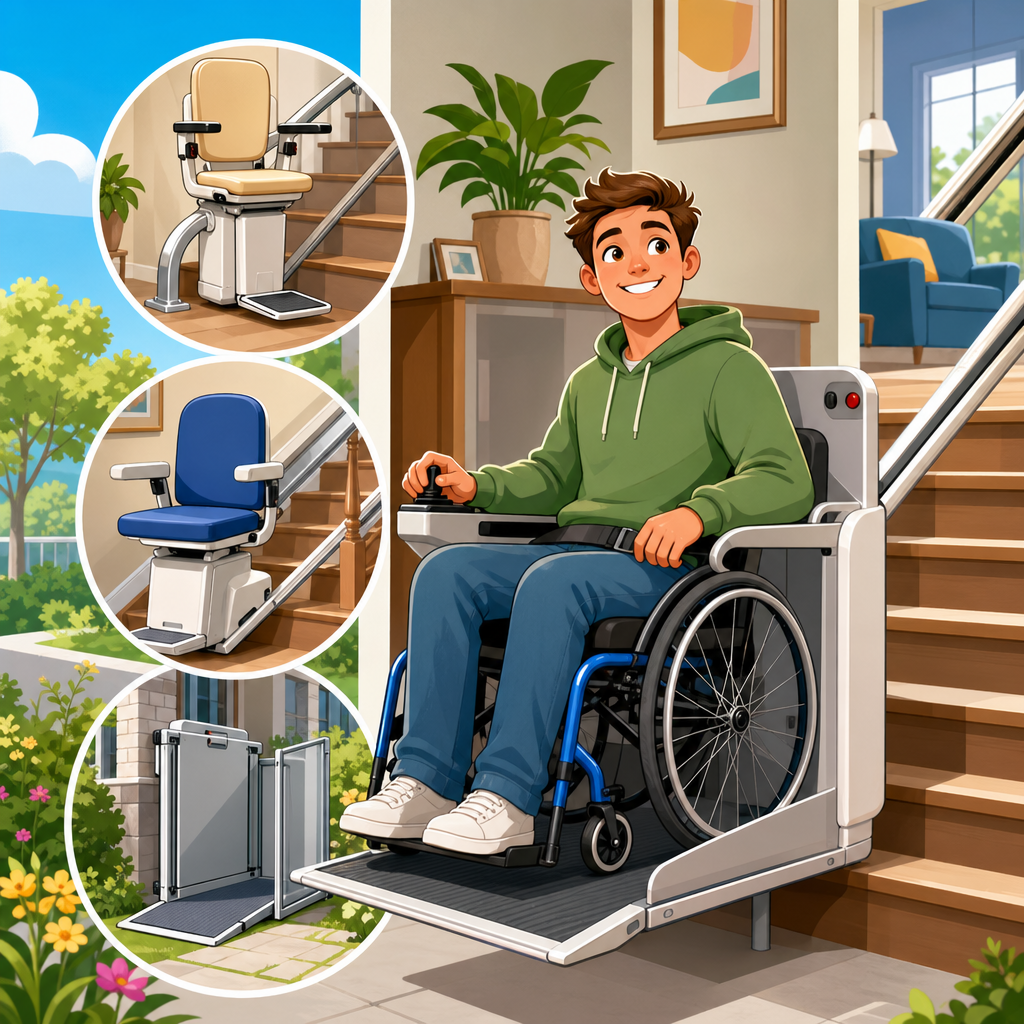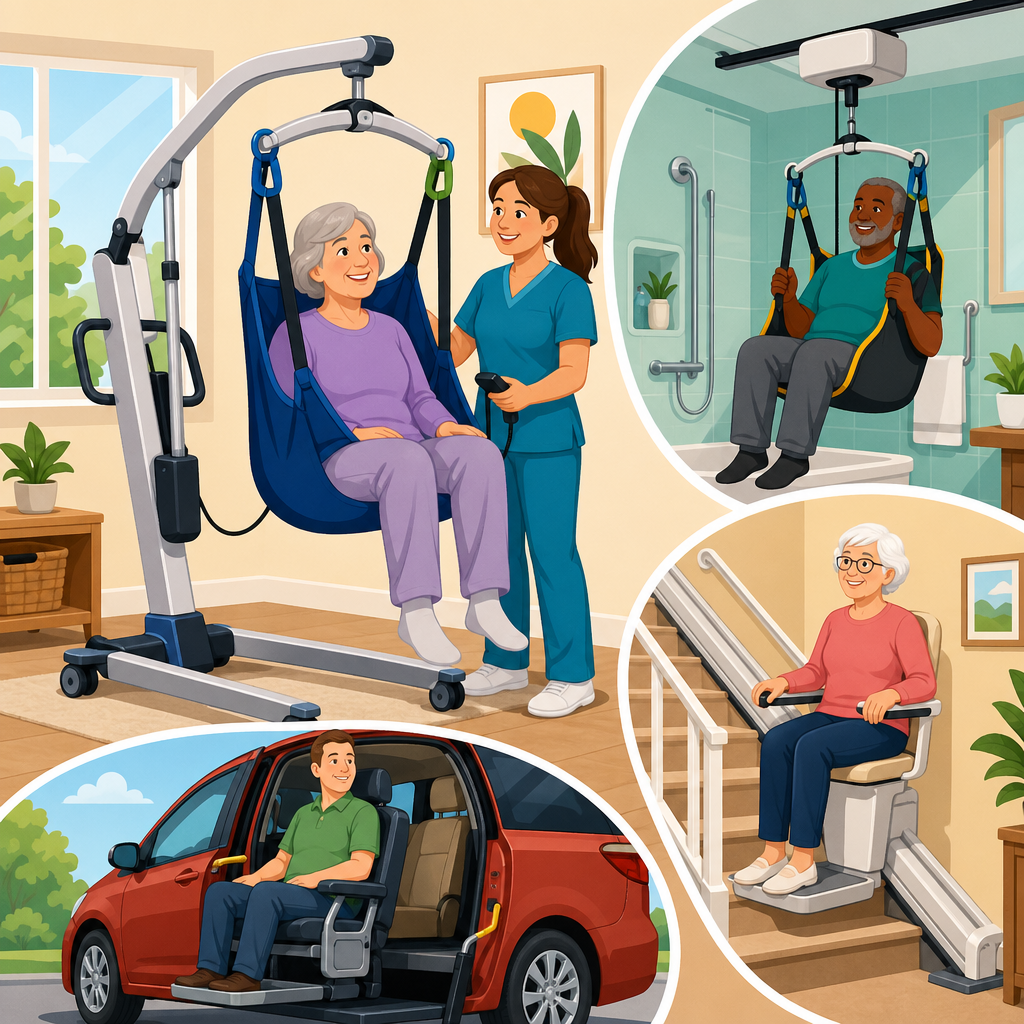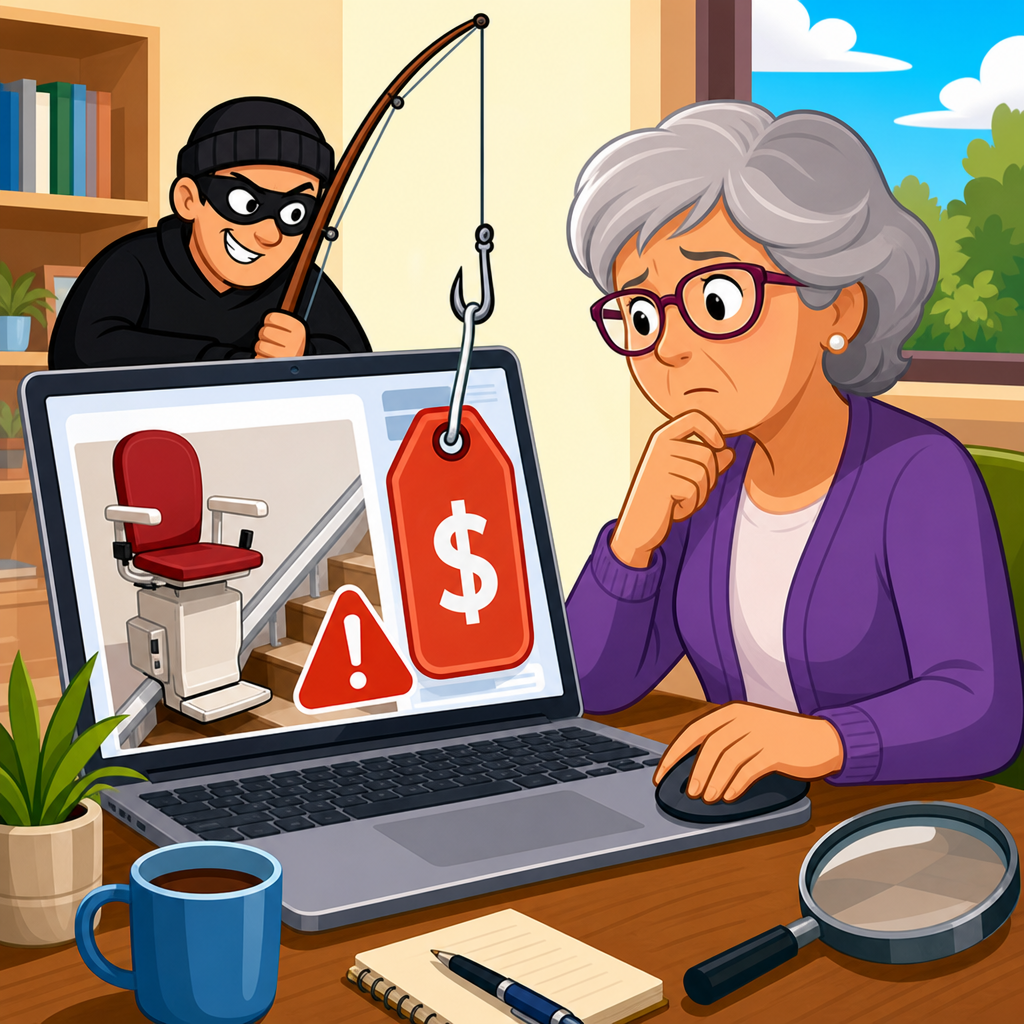
Shopping for a chair lift online can save money and expand your options, but it also exposes buyers to scams that target urgency, limited mobility, and unfamiliarity with medical equipment. A chair lift, sometimes called a stair lift or mobility lift depending on the product type, is a motorized seat system designed to help people move safely between levels of a home or access elevated areas with less strain. In practice, shoppers researching budget-friendly options are often comparing stair lifts, porch lifts, and basic lift chairs, yet scam patterns overlap across all three categories. I have reviewed mobility product listings, audited retailer sites, and helped families compare quotes, and the same warning signs appear repeatedly: vague specifications, copied images, fake discounts, and pressure to pay outside normal checkout systems. Because these devices affect safety, installation, and long-term service, a bad purchase is more than an inconvenience. It can lead to unusable equipment, denied refunds, and dangerous operation. Learning how to spot a chair lift scam when shopping online helps you protect your budget while still finding legitimate lower-cost solutions.
Why Chair Lift Scams Work on Budget-Conscious Buyers
Chair lift scams succeed because mobility equipment is expensive, emotionally urgent, and technically confusing. A new stair lift from a recognized brand such as Bruno, Harmar, Handicare, or Stannah can cost several thousand dollars before installation, rail customization, permits, or maintenance are added. Porch lifts and vertical platform lifts cost even more. When a website suddenly advertises a “universal chair lift” for a few hundred dollars with free shipping, buyers understandably pay attention. Scammers know that caregivers and seniors are searching for fast affordability, often after a fall, surgery, or hospital discharge. That urgency lowers skepticism.
Another factor is product complexity. Legitimate sellers usually ask for staircase measurements, photos, power requirements, weight capacity needs, handedness of the rail, and installation details. Scam sites skip those questions because they are not actually matching a device to a home. Instead, they use generic sales language such as “fits all stairs,” “medical grade premium system,” or “no installation expertise required.” In real buying situations, there is almost never a one-size-fits-all answer. Straight stair lifts differ from curved systems, indoor units differ from weather-resistant outdoor units, and certified installation matters because battery charging points, track overruns, seat swivel clearance, and obstruction sensors affect safe operation.
Budget-friendly options do exist, but they look different from scam offers. They usually involve refurbished straight stair lifts, dealer floor models, seasonal promotions from authorized dealers, financing, local nonprofit assistance, Medicaid waiver support where available, or short-term rental programs. Those are practical cost-saving paths because the seller can explain model numbers, parts availability, warranty terms, and installation limits. The key distinction is simple: a real low-cost offer still includes real specifications, real service terms, and a verifiable business behind it.
Red Flags on Product Pages and Storefronts
The fastest way to identify a possible chair lift scam is to scrutinize the product page. Start with the basics. If the site does not list a physical business address, working phone number, return policy, warranty process, and installation terms, stop there. A legitimate mobility retailer wants buyers to ask questions because fit and safety matter. Scam sites hide behind contact forms, disposable email addresses, or chat widgets that repeat scripted answers.
Then examine the product details. Reliable listings include model names, rail type, weight capacity, folded width, seat height, battery backup information, charging method, speed, safety sensors, and compliance references where relevant. Many trusted dealers also specify whether the quoted price includes installation, site survey, or warranty labor. Scam pages often substitute adjectives for facts. If every sentence says “best,” “premium,” “FDA approved,” or “hospital quality” without technical support, treat it as deceptive. For most home chair lifts, casual use of regulatory labels is a warning sign, not reassurance.
Images tell an important story. I routinely reverse-search product photos because scam shops copy them from manufacturer brochures and dealer websites. If the same image appears under different fake brand names across multiple unrelated stores, the listing is untrustworthy. Watch for mismatched details too. A page may show a curved stair lift photo while describing a straight rail unit, or display a recliner lift chair while claiming it climbs stairs. Those inconsistencies reveal that the seller does not understand the equipment.
Pricing language is another giveaway. Deep countdown timers, “today only” claims, and crossed-out retail prices with no source are common manipulation tactics. Chair lift pricing is variable because homes differ. Serious sellers may advertise starting prices, but they explain what changes the final quote. If a site guarantees a fixed low price before seeing the staircase, that alone is enough reason to leave.
How to Verify a Seller Before You Pay
Verification is where smart shoppers separate legitimate budget-friendly options from scams. First, check whether the seller is an authorized dealer for named manufacturers. Go directly to the manufacturer website and use its dealer locator rather than trusting a badge on the retailer’s page. Authorized status matters because it affects training, parts access, software support, and warranty validity. If the seller claims to carry Bruno, Harmar, Savaria, Stannah, or Handicare, you should be able to confirm that relationship independently.
Next, evaluate the business footprint. Search the company name alongside terms like “complaint,” “BBB,” “refund,” and “installation review.” Better Business Bureau listings are not perfect, but they can reveal patterns involving non-delivery, surprise charges, or service failures. Also review Google Business Profiles and third-party platforms with caution. A scam operation may post dozens of five-star reviews within days. Authentic reviews usually mention specifics such as a survey visit, installer names, stair measurements, service response time, or model installed.
Domain history offers another clue. If a site selling expensive accessibility equipment was registered very recently, has hidden ownership, and contains awkward copy across dozens of unrelated product categories, be skeptical. I also check whether the website uses secure checkout, publishes clear terms, and offers payment methods with buyer protection. Wire transfers, cryptocurrency, Zelle requests, or invoices sent outside the website are major red flags for first-time purchases.
| Checkpoint | Legitimate Seller | Scam Signal |
|---|---|---|
| Brand verification | Authorized dealer confirmed on manufacturer site | Claims major brands with no proof |
| Pricing | Starting price plus survey-based quote | Flat bargain price for every home |
| Specifications | Model number, capacity, dimensions, warranty | Generic claims and copied text |
| Payment | Credit card or financing through known processors | Wire transfer, app payment, crypto |
| Support | Phone, address, service area, installation details | Contact form only or evasive replies |
Finally, call the business. Ask who installs the lift, whether the quote includes a site assessment, how service calls are handled, and what happens if the staircase requires a custom rail. Genuine companies answer directly. Scammers stall, deflect, or push you to “buy now before inventory ends.” In this category, a careful phone conversation is part of due diligence, not an inconvenience.
Budget-Friendly Options That Are Real, Not Risky
If your goal is affordability, there are safer ways to reduce cost than chasing unrealistic online deals. The best budget-friendly option for many households is a refurbished straight stair lift from a local dealer. Straight rails can often be reused or adapted more easily than curved systems, which makes reconditioned inventory practical. A proper refurbished package should include inspection, replacement of wear components, battery testing, installation by trained technicians, and a written warranty. Ask exactly which parts are new, which are reused, and whether future service is available in your ZIP code.
Rental programs are another strong option when the need is temporary, such as post-surgery recovery or hospice care. Renting avoids a large upfront payment and usually includes installation and eventual removal. This is especially useful for straight staircases because curved rentals are less common and often not economical. For buyers who want ownership, dealer floor models and discontinued but supported models can also reduce price without compromising safety. The phrase to look for is not “cheap chair lift” but “supported lower-cost model with local service.”
Financial assistance can lower real costs too. Depending on location and eligibility, buyers may find help through Medicaid Home and Community-Based Services waivers, Veterans Affairs programs, Area Agencies on Aging, state assistive technology programs, or local nonprofit organizations. Some homeowners also use health savings accounts or flexible spending accounts for related eligible expenses, though coverage rules vary and should be confirmed with a tax professional or plan administrator. Reputable dealers often know these funding channels and can provide itemized quotes for applications. Scam sellers rarely discuss assistance because they want fast direct payment, not scrutiny.
Used marketplace purchases from individuals are the riskiest “budget” route. A secondhand lift may be missing critical parts, have unknown battery health, lack keys or remotes, and require a rail length that does not match your staircase. Unless a qualified dealer will inspect and reinstall it, the low sticker price can become an expensive mistake.
Questions Every Online Shopper Should Ask
Before buying any chair lift online, ask direct questions and expect direct answers. What exact model is this? Is it for a straight stairway, curved stairway, porch, or reclining assistance only? What is the maximum user weight, and does capacity change with track angle or seat style? Does the quoted price include installation, delivery, and a home assessment? Who performs service in my area, and what is the average response time if the unit stops working?
Also ask about the warranty in plain language. Many scam listings promise a “five-year warranty” without specifying whether that covers parts, motor, batteries, electronics, or labor. Batteries are consumables and frequently excluded or prorated. Upholstery and cosmetic wear may also be treated differently. Reputable sellers will explain what is covered, for how long, and under what maintenance conditions. If there is a return policy, ask whether customized rails are refundable. In many legitimate transactions, custom work is nonreturnable, which is normal when clearly disclosed before purchase.
Technical compatibility questions matter just as much as price. Ask about folded width, seat-to-footrest dimensions, power supply requirements, charging locations, start and stop smoothness, swivel seat locking, and safety edges or obstruction sensors. If the seller cannot explain these basics, they should not be selling mobility equipment. When I review retailers, the strongest indicator of legitimacy is not polished design; it is whether staff can discuss real installation constraints in practical terms. Knowledge is hard to fake over a detailed conversation.
What to Do if You Suspect a Chair Lift Scam
If something feels wrong, pause the transaction immediately. Take screenshots of the product page, pricing, checkout terms, chat messages, and emails. Save receipts and payment confirmations. If you paid by credit card, contact the card issuer quickly to dispute the charge. Card networks generally offer stronger consumer protection than bank transfers or payment apps. If the purchase involved PayPal Goods and Services, open a dispute through the platform rather than negotiating only by email.
Report the seller through the marketplace if the listing appeared on Amazon, eBay, Walmart Marketplace, or another platform. File complaints with the Federal Trade Commission, your state attorney general, and the Internet Crime Complaint Center if fraud is clear. If a fake seller misused the name of a real manufacturer, notify that manufacturer as well. Legitimate brands track impersonation and can sometimes confirm quickly that the seller is unauthorized.
For future purchases, create a shortlist of local or regional dealers with verified service coverage, then compare detailed quotes instead of headline prices. That process may take an extra few days, but it dramatically reduces the chance of fraud and usually leads to a better installation outcome.
The safest way to save money on mobility equipment is not to hunt for the absolute lowest online price; it is to buy from a seller that can prove what it is offering, how it will be installed, and who will service it later. Chair lift scams thrive on missing details, copied branding, unrealistic pricing, and payment methods that remove buyer protection. Legitimate budget-friendly options look different: refurbished straight stair lifts, short-term rentals, dealer floor models, supported discontinued units, and funding assistance programs backed by clear documentation. When you verify the brand relationship, inspect technical specifications, confirm installation terms, and use protected payment methods, you sharply reduce your risk.
For shoppers exploring budget-friendly options under buying guides and product reviews, this page should be your starting point because affordability only matters when the equipment is safe, supportable, and honestly represented. Use the checks in this guide before you click buy, compare quotes from authorized or well-established dealers, and ask detailed questions until the answers are specific. A trustworthy chair lift purchase should leave you with clarity, not pressure. Start your search by shortlisting verified sellers and requesting a written quote that includes model, installation, warranty, and service coverage.
Frequently Asked Questions
What are the most common warning signs of a chair lift scam online?
Some of the biggest red flags appear before you even get to checkout. A scam chair lift website often relies on unusually low prices, vague product descriptions, copied images, and pressure-filled language such as “buy now before supplies run out” or “today only” without offering meaningful technical details. Because a chair lift is a major mobility and safety purchase, legitimate sellers usually provide clear information about rail type, weight capacity, power source, installation requirements, warranty terms, safety features, and whether the model is intended for straight stairs, curved stairs, or another use. If a site avoids specifics and focuses only on a dramatic discount, that is a serious warning sign.
Another common issue is the absence of real business transparency. Trustworthy companies typically list a physical address, working customer service phone number, installation support information, and return or cancellation policies that are easy to find and understand. Scam sites often hide behind generic contact forms, use free email accounts, or provide phone numbers that go unanswered. Reviews can also reveal problems, especially if every review sounds overly polished, appears on the same date, or uses identical wording. In short, if a seller seems evasive about product details, company identity, service obligations, or total costs, it is smart to pause and verify everything before moving forward.
How can I verify that an online chair lift seller is legitimate before I buy?
Start by confirming that the seller is a real business with a verifiable history. Look for a complete company name, physical address, customer support phone number, and consistent branding across its website, social media profiles, and outside listings. Search the business name along with terms like “complaints,” “reviews,” and “scam” to see what turns up. It also helps to check how long the website has been active, whether it uses secure checkout, and whether its policies are written clearly rather than copied or full of errors. A legitimate chair lift seller should make it easy to understand what you are buying, what installation involves, and what support is available after the sale.
You should also verify product and service claims independently. If the site says it sells new, refurbished, or used stair lifts, ask for the manufacturer name, model number, serial number if applicable, and documentation about warranty coverage. If installation is included, confirm who performs it and whether local service is actually available in your area. Many reputable sellers will offer a consultation, stair measurement guidance, or a direct discussion about your home layout because chair lifts are not one-size-fits-all purchases. If a seller refuses basic verification, avoids direct answers, or pushes for payment before giving specifics, that is a strong sign to keep looking.
Why are extremely low chair lift prices often a red flag?
Chair lifts are specialized mobility devices, and their pricing usually reflects the cost of the equipment, customization, shipping, installation, safety testing, and after-sales support. While online shopping can absolutely help you compare options and find savings, prices that seem far below market value should be treated with caution. Scammers know that buyers looking for budget-friendly mobility solutions may be under financial pressure, so they use unrealistically low pricing to trigger a quick decision. In many cases, the advertised product either does not exist, is not what was promised, or comes with hidden fees that erase the apparent bargain.
It is also important to remember that chair lifts vary widely in cost depending on whether the stairway is straight or curved, whether the unit is new or refurbished, and what installation or service is included. A listing that promises a complete chair lift package for a fraction of the normal price without asking about your staircase or access needs is usually not credible. Legitimate discounts tend to come with explanations, such as discontinued inventory, refurbished models, or limited service areas. If the price is dramatically lower than competing offers and the seller cannot clearly explain why, it is safer to assume something is wrong.
What payment methods are safest when buying a chair lift online?
The safest approach is to use a payment method that includes buyer protection, such as a major credit card. Credit cards generally offer the strongest ability to dispute fraudulent charges or transactions involving goods that were never delivered or were significantly misrepresented. Some secure third-party payment platforms may also offer protections, but you should read their terms carefully before relying on them. When buying a high-cost item like a chair lift, it is wise to avoid direct bank transfers, wire payments, cryptocurrency, gift cards, or peer-to-peer payment apps if the seller is unknown, because those methods are much harder to reverse once the money is sent.
You should also be cautious if a seller changes payment instructions at the last minute or says a lower price is available only if you pay outside the website. That is a classic scam tactic. A reputable chair lift company should provide a formal invoice, clearly state what is included, and process payment through a secure system. Before paying, confirm whether the amount covers shipping, installation, warranty support, and any required home assessment. The goal is not just to pay safely, but to make sure you are paying for a clearly defined product and service package with documentation you can use if a dispute arises.
What should I do if I think I have already been targeted by a chair lift scam?
If you suspect fraud, act quickly. First, stop communicating through any suspicious links or payment requests and save everything related to the transaction, including emails, receipts, screenshots, invoices, product listings, and chat messages. If you paid by credit card or another protected method, contact your card issuer or payment provider immediately to report the issue and ask about dispute options. The faster you act, the better your chances of limiting losses. If you shared personal or financial information, monitor your accounts closely and consider changing passwords associated with the purchase.
It is also a good idea to report the scam to relevant consumer protection agencies, your state attorney general if applicable, and the online platform or domain host involved. If the scam involved a fake medical or mobility equipment seller, reporting it may help protect other shoppers who are in a vulnerable situation. Going forward, use the experience to tighten your buying process: compare multiple vendors, insist on written specifications, verify installation details, and never let urgency override caution. A chair lift is a safety device, not an impulse purchase, and any legitimate seller should respect your need to research the decision carefully.