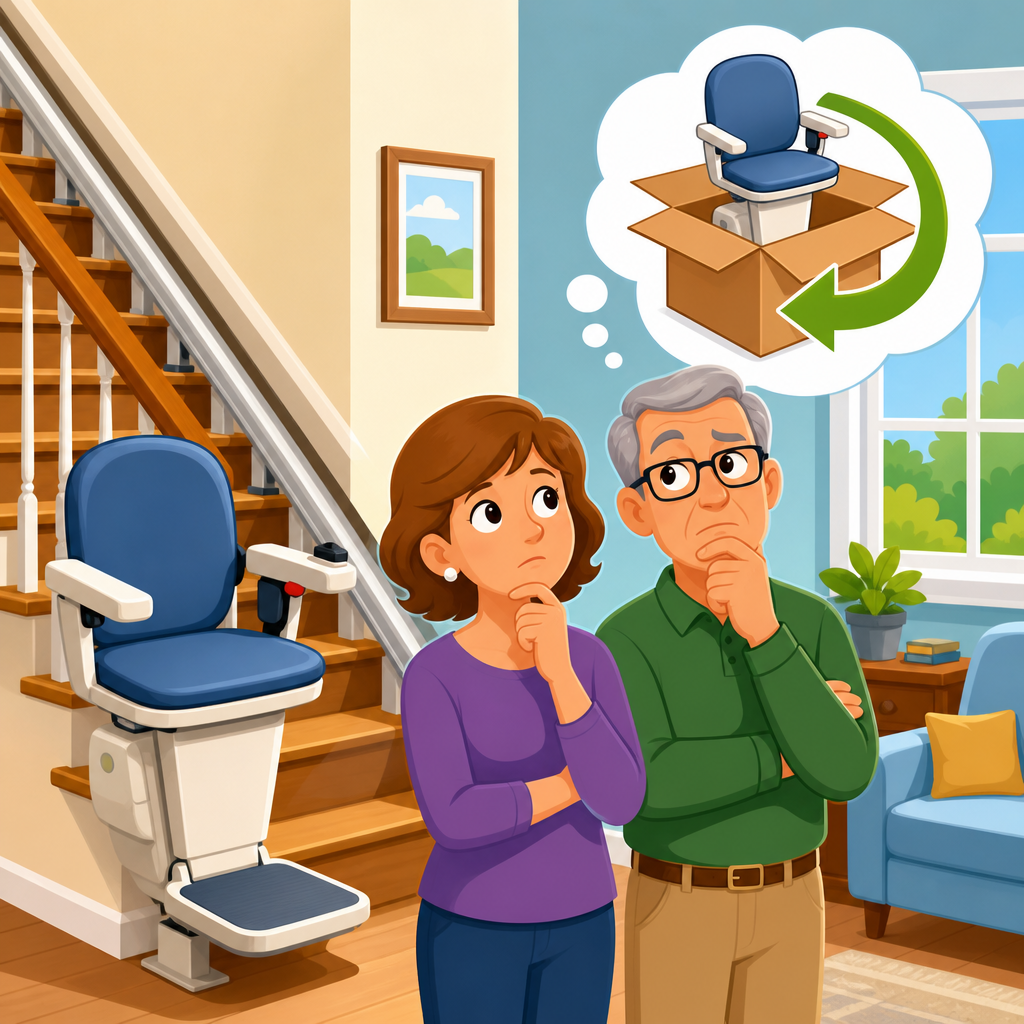
Can you return a chair lift after installation? In most cases, a full return is difficult once a stair lift has been custom fitted, anchored to the staircase, and commissioned for safe operation, but the real answer depends on the manufacturer’s warranty, the dealer’s return policy, the financing contract, and whether the unit is straight-rail, curved-rail, new, used, or rented. Buyers often assume mobility equipment works like furniture or appliances, yet stair lifts are closer to medical-access products: they are measured to a home, assembled to order, installed by trained technicians, and subject to safety, sanitation, and resale limitations. That makes warranty and return policies one of the most important parts of the buying process.
In my experience reviewing stair lift quotes and policy documents, most disputes happen because shoppers focus on price and monthly payment while overlooking cancellation windows, restocking fees, rail customization, and labor coverage. A chair lift, also called a stair lift or stair chair, includes the seat, carriage, motor, battery system, call/send controls, rail, and safety sensors. “Return policy” refers to whether you can cancel before delivery, refuse delivery, or ask for removal after installation. “Warranty” covers defects in parts or workmanship for a stated period. These are not the same. A strong warranty does not mean you have the right to return the product simply because circumstances changed. If you are buying for a parent, recovering from surgery, or planning for aging in place, understanding that distinction can save thousands of dollars and prevent a stressful conflict after installation day.
Why post-installation returns are usually limited
Most stair lift companies restrict returns after installation because the product is no longer a standard retail item. The rail may be cut to the exact staircase length, brackets are fitted to specific tread spacing, power and charging points are tested in place, and the installer documents safety performance on that staircase. Once that work is done, the company has already incurred survey, shipping, installation, and administrative costs. For straight stair lifts, a dealer may be able to remove, refurbish, and resell some components, but even then the labor and logistics are significant. For curved stair lifts, the rail is almost always made to order using staircase measurements or digital scans, which makes resale far harder.
There is also a regulatory and liability dimension. Mobility products must function reliably because a failure can cause serious injury. Dealers are cautious about taking back installed units if they cannot verify service history, storage conditions, battery condition, or whether parts were altered after handover. Some states may also impose consumer protections for in-home sales, but those laws typically create a short cancellation period before installation rather than a broad right to return months later. That is why many contracts clearly state “all sales final after installation,” especially for custom rails. The practical takeaway is simple: the best chance to change your mind is before the unit is manufactured, shipped, or installed.
Return policy vs warranty: what each one actually covers
A return policy answers one question: can the buyer reverse the transaction? A warranty answers a different question: if something fails, who pays to fix it? Confusing these terms leads to expensive misunderstandings. If your mother no longer needs the lift because she moved to assisted living, that is usually a return-policy issue, not a warranty claim. If the seat swivel lock fails during normal use, that is a warranty matter. If the rail was measured incorrectly and the chair does not park safely, that may fall under workmanship, installation guarantee, or dealer obligation to cure a defective installation.
Most reputable brands separate coverage into parts, motor/gearbox, batteries, and labor. Batteries are often covered for a shorter period because they are wear items. Labor may be covered for one year, while major components run longer. Extended warranties may add labor or annual service visits but still do not create a no-questions-asked return option. When I assess policy quality, I look for plain language on four points: cancellation rights before installation, removal charges after installation, whether custom rails are nonrefundable, and how defects are handled within the first 30 days. That last window matters because early failures are usually dealer-resolvable and should not leave the buyer arguing over whether they deserve a refund or a repair.
How straight, curved, used, and rental stair lifts differ
Not all chair lifts have the same policy profile. Straight stair lifts installed on a single uninterrupted run are the most flexible category because rails are simpler, common lengths may be stocked, and the used market is more active. Curved stair lifts for turns, intermediate landings, or spiral layouts are the least returnable because the rail is built specifically for one staircase. Reconditioned units can be value-driven, but they may come with shorter warranties and tighter return terms. Rental stair lifts often provide the best short-term flexibility, especially for recovery after surgery, because removal is built into the business model.
| Type of chair lift | Typical return flexibility after installation | Warranty pattern | Best fit |
|---|---|---|---|
| Straight, new | Limited; sometimes partial refund minus labor and restocking | Moderate to strong parts coverage, shorter battery/labor terms | Long-term use on simple stairs |
| Curved, new | Very limited; custom rail often nonrefundable | Good component coverage, but custom fabrication rarely returnable | Complex staircases and permanent access needs |
| Used or reconditioned | Varies by dealer; usually stricter | Shorter and narrower coverage | Budget-conscious buyers |
| Rental | High; removal usually defined in agreement | Service-based support rather than long ownership warranty | Temporary mobility needs |
This distinction affects real budgets. A family comparing a straight lift and a curved lift may see both as “chair lifts,” but from a warranty and return perspective they are entirely different purchases. A straight model may offer a narrow path to removal and resale credit. A curved system usually does not. If you expect the need to last only a few months, a rental should be part of the conversation immediately.
What to read in the contract before you sign
The contract is where policy promises become enforceable terms. Ask for the exact sales agreement, warranty booklet, and any installation acceptance form before placing a deposit. The clauses that matter most are often buried in the middle pages: custom-order language, cancellation deadline, deposit refundability, installation scheduling, removal fees, service call charges, dispute resolution, and what happens if the home measurement changes the final price. If the salesperson says, “Don’t worry, we take care of customers,” that is not enough. If it is not written, do not rely on it.
Look specifically for these phrases: “special order,” “non-cancelable,” “non-returnable once installed,” “restocking fee,” “labor not included,” and “transferability.” Transferability matters because some warranties apply only to the original purchaser at the original address, which reduces resale value. Also check whether annual maintenance is required to keep coverage valid. Some premium plans include service visits; others require separate payment for every callout after the labor warranty ends. If financing is involved, review the lender agreement separately. Returning equipment, if allowed at all, does not automatically erase a loan balance unless the seller and financing terms say so. That mistake surprises many buyers.
Common scenarios that change the outcome
Several situations can affect whether a buyer has leverage after installation. If the lift was misrepresented, installed improperly, repeatedly fails, or does not match the written specifications, the dealer usually must repair, replace, or otherwise resolve the issue. If the product is simply no longer needed, the outcome depends almost entirely on the contract. A buyer’s remorse argument is weaker than a defective-installation argument. Documentation makes the difference. Keep the quote, brochure, final invoice, warranty sheet, technician notes, and photos of any issue.
For example, if a stair lift stops three times in its first week because safety edges were misaligned, that is not a routine return request; it is a quality and installation problem. If the seat height makes safe transfers impossible despite the salesperson promising suitability for the user’s stature, that may support a stronger remedy. On the other hand, if the user enters rehab and no longer needs the device after a successful recovery, most companies will offer removal for a fee rather than a refund. In practice, the strongest post-installation claims arise from nonconformity, not changing family circumstances. That is why assessment accuracy before purchase matters so much.
Questions to ask every dealer about warranty and return policies
Shoppers should ask direct, closed-ended questions and get written answers. Start with: Can I cancel after signing but before installation, and what fee applies? Can I return the chair lift after installation for any reason? What portion of the price is custom and nonrefundable? Is labor included in the warranty, and for how long? Are batteries covered? Who handles service locally? What is the average response time for a breakdown? Will you remove the lift later, and what does removal cost? If I move, can the unit be transferred or repurchased? These questions force specificity and expose vague sales language quickly.
I also recommend asking how the dealer handles used equipment buyback. Some local providers will remove a straight stair lift and offer a modest credit if components are reusable, while others do not repurchase anything. Ask whether the rail, carriage, and seat are serialized and whether software configuration affects reuse. Named brands such as Bruno, Stannah, Acorn, Handicare, Harmar, and Savaria each work through different dealer networks, so local policy can matter as much as the brand itself. The right comparison is not only product versus product; it is dealer support model versus dealer support model. For this warranty and return-policy hub, that is the central lesson buyers should carry into every detailed product review.
How to protect yourself before and after installation
The best protection starts before the survey. Request an in-home assessment that considers user weight, transfer ability, seat-to-landing clearance, footrest size, folded width, power supply location, and any obstructions such as radiators, doors, or handrails. If the lift is for a temporary recovery, ask for a rental quote before discussing ownership. If the staircase is curved, confirm whether the rail enters fabrication immediately after deposit and whether that deposit becomes nonrefundable at a defined milestone. Paying by credit card rather than cash can add dispute options, although that should not replace careful contracting.
After installation, test everything while the technician is present. Ride the lift both directions, check swivel and lock positions at the top landing, verify seat belt operation, fold and unfold the seat and footrest, and make sure call/send controls work. Ask the installer to show manual lowering or emergency procedures if applicable. Record any noise, hesitation, or clearance concern on the acceptance form before signing. Then keep a maintenance log. Good records help if you later need a warranty repair, service escalation, or negotiated removal. They also help when comparing related guides on extended coverage, service contracts, rental options, and used stair lift value. If you are shopping now, use this hub as your checklist: compare the written warranty, the exact return terms, and the dealer’s removal policy before you buy.
Frequently Asked Questions
Can you return a chair lift after it has been installed?
Usually, a full return becomes much harder once a chair lift has been installed. That is because most stair lifts are not treated like standard retail products. By the time installation is complete, the rail has often been cut or built to fit the exact staircase, mounting brackets have been secured, the unit has been tested, and the lift has been commissioned for safe use. At that point, the dealer may consider it a custom-installed mobility system rather than a resellable item. In many cases, straight-rail models may offer more flexibility than curved systems because straight units can sometimes be reused or reconditioned more easily, but even then, return rights depend entirely on the written contract.
The most accurate answer is found in the purchase agreement, manufacturer warranty, and dealer return policy. Some companies allow cancellation before installation, some may permit a limited return window with substantial restocking and removal fees, and others make all installed sales final. If financing is involved, the financing agreement may also affect what happens if you want to reverse the purchase. Before assuming a return is possible, review every signed document and ask the dealer to explain what happens after installation, who pays for removal, and whether any part of the purchase price is refundable.
Why are installed chair lifts often non-returnable?
Installed chair lifts are often non-returnable because they are customized, safety-sensitive systems. Even when the chair, motor, or carriage looks standard, the final setup usually involves staircase measurements, rail fitting, mounting hardware, electrical setup, and safety calibration. A curved-rail chair lift is the clearest example, since the rail is typically manufactured specifically for one staircase layout and is rarely suitable for another home without major changes. Once produced and installed, that system may have little or no resale value to the dealer in its current form.
There are also liability and regulatory concerns. Mobility equipment is intended to transport people with limited mobility, so sellers must be careful about reusing installed components that have already been drilled, mounted, tested, and operated in a prior home. Dealers may need to inspect, refurbish, or replace parts before offering any reused equipment again, which increases cost and risk. In addition, labor charges for home assessments, installation, setup, and training are usually considered completed services, not refundable merchandise. That is why many return policies separate the product cost from labor, custom fabrication, removal charges, and other nonrefundable fees.
Does the type of chair lift affect whether you can return it?
Yes, the type of chair lift makes a major difference. Straight-rail chair lifts are generally the most likely to have some return or resale potential because they use more standardized rails and components. Even so, once a straight lift has been installed, you may still face removal fees, restocking charges, and limits on refunds. Curved-rail chair lifts are much less likely to be returnable because they are usually made to match the exact turns, landings, and dimensions of one staircase. In many cases, curved units are considered custom orders and become non-cancelable and non-returnable once manufacturing begins, not just after installation.
Condition and purchase type matter too. A new chair lift may come with a clearer manufacturer warranty, but that warranty usually covers defects and repairs, not buyer’s remorse. A used or reconditioned lift may have a shorter warranty and a stricter final-sale policy. Rental stair lifts are different again: instead of returning a purchased unit for a refund, you are typically ending a rental agreement and arranging removal under the rental terms. Because each category carries different expectations, buyers should ask specifically whether the unit is straight or curved, new or reconditioned, purchased or rented, and how those details change cancellation, return, and removal options.
What if the chair lift is defective or does not work properly after installation?
If the chair lift is defective, unsafe, or not functioning as promised, the issue may fall under the manufacturer’s warranty, installer workmanship guarantee, or consumer protection rules rather than a standard return policy. In that situation, the first step is usually to notify the dealer and manufacturer immediately in writing and request service. Most reputable stair lift companies will first try to diagnose the problem, repair the unit, replace defective parts, or correct installation errors. A true refund may still be uncommon, but if the dealer cannot make the lift operate safely and as represented, stronger remedies may become available depending on the contract and local law.
It is important to document everything. Keep copies of the invoice, warranty, installation checklist, financing papers, emails, service records, and photos or videos showing the problem. If the lift was represented as suitable for a user’s weight, staircase type, or mobility needs but clearly is not, that may be relevant as well. Do not try to remove or modify the equipment yourself, especially if safety is involved. Ask the seller to explain whether the problem is covered by parts, labor, or both, how quickly service will be performed, and what happens if repairs fail. If the response is unsatisfactory, you may want to speak with your financing company, your state consumer protection office, or an attorney familiar with assistive or medical-access equipment contracts.
What should you check before buying a chair lift if you are worried about needing to return it later?
Before buying, ask direct questions and get the answers in writing. You should know whether the chair lift is straight-rail or curved-rail, whether it is new, used, reconditioned, or rented, and whether the quoted price includes measurement, fabrication, installation, service calls, removal, and warranty coverage. Most importantly, ask for the exact cancellation and return policy before signing. Find out when a sale becomes final, whether custom production starts immediately, whether installed units are non-returnable, and what fees apply if you cancel before or after installation. If financing is part of the transaction, review that agreement separately, since financing obligations do not always disappear just because you are unhappy with the equipment.
It is also smart to ask about alternatives that reduce risk. Some buyers choose rentals, temporary installations, or reconditioned straight lifts when the need may be short term. Others request an in-home assessment that confirms the user’s mobility needs, seat size, swivel requirements, weight capacity, and staircase compatibility before ordering. A careful pre-purchase review can prevent expensive surprises later. In practical terms, the best protection is to treat a chair lift purchase as a custom mobility and accessibility project, not a simple retail purchase. When you understand the policy in advance, you are far less likely to be caught off guard if your plans change after installation.