Can you upgrade an older chair lift model? In many cases, yes, but the right upgrade depends on the rail type, drive system, safety circuits, and whether replacement parts are still supported by the manufacturer. I have evaluated aging stair lifts in homes, condominiums, and senior communities, and the same pattern appears repeatedly: some older units can be modernized cost-effectively, while others become expensive to patch and safer to replace. For buyers researching used and refurbished chair lifts, this question matters because an upgradeable unit can deliver better value, lower downtime, and a more comfortable ride without the cost of a full new installation.
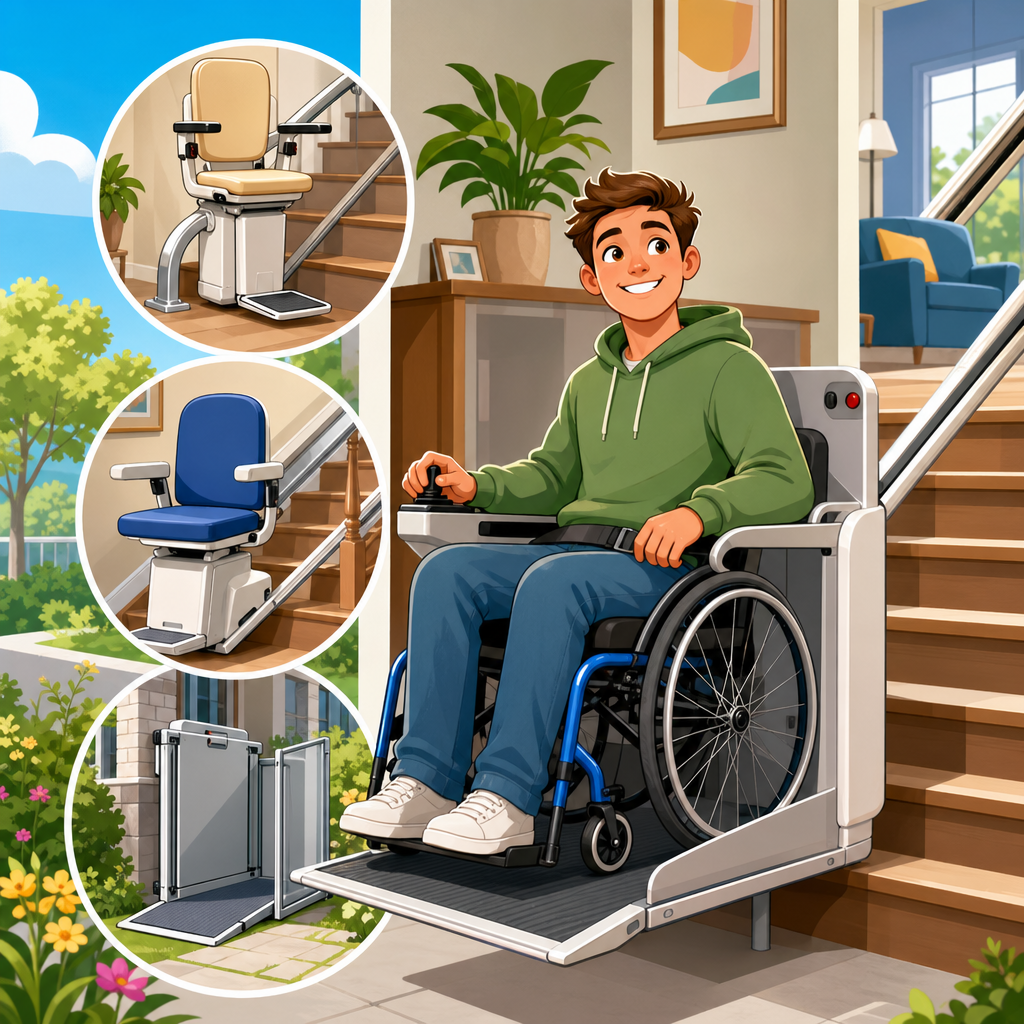
A chair lift, often called a stair lift, is a motorized seat that travels along a rail mounted to the stairs. Older chair lift models usually fall into two categories: straight stair lifts, which fit a single uninterrupted staircase, and curved stair lifts, which are custom-built for stairs with turns, landings, or intermediate bends. Used chair lifts are previously owned units removed from another property. Refurbished chair lifts have typically been inspected, cleaned, fitted with replacement wear parts, tested, and resold with some level of dealer warranty. Those distinctions matter because upgrade potential is usually much higher on straight lifts than on curved systems.
Most shoppers want direct answers to three practical questions. First, can an older stair lift be made safer and more reliable? Second, is upgrading cheaper than buying a new or certified refurbished unit? Third, which components can actually be replaced? The answers are nuanced. Batteries, seat belts, call stations, swivel seats, and some charging contacts are commonly replaceable. Control boards, gear racks, carriage assemblies, and rail sections may be harder to source, especially for discontinued models from brands that have merged, exited a market, or changed platform designs.
This guide serves as a hub for the broader topic of used and refurbished chair lifts. It explains what can be upgraded, what usually cannot, how dealers evaluate an old lift, and when replacement is the smarter path. If you are comparing used chair lifts for sale, inheriting a lift with a home purchase, or deciding whether to refurbish an existing system for a family member, the goal is simple: help you make a safe, financially sound decision based on the actual condition and support status of the unit.
What Parts of an Older Chair Lift Can Usually Be Upgraded?
The most upgradeable parts on an older chair lift are the high-wear, serviceable components. In my experience, batteries are the first place to look. Most modern stair lifts use sealed lead-acid batteries housed in the carriage, and those batteries typically need replacement every two to five years depending on charging consistency, household power interruptions, ambient temperature, and usage frequency. Replacing weak batteries can restore speed, improve stopping performance, and reduce nuisance fault codes. If a used chair lift hesitates, stalls under load, or beeps frequently at the charging point, battery condition is one of the first diagnostic checks.
Seat assemblies are also often upgrade candidates. Depending on the model, a dealer may be able to replace worn upholstery, arm pads, footrest sensors, seat swivel hardware, or the seat belt. Manual swivel seats on older lifts can sometimes be upgraded to powered swivel or linked footrest systems, although availability varies widely by platform. Call-send controls are another common improvement. Older wired wall controls may be replaced with wireless remotes on supported models, making daily use easier for multi-user households where one rider sends the chair to another floor after each trip.
Safety-related contact points can sometimes be modernized as well. Many lifts have obstruction sensors on the footrest and carriage. If those switches are worn or intermittent, replacement can improve both safety and usability. Charging strips, charging contacts, and park position hardware are frequent service items because oxidation, misalignment, and physical wear interrupt charging. I have seen seemingly serious stair lift failures resolved by replacing contacts and recalibrating the charge points. For straight stair lifts from established brands such as Bruno, Harmar, Stannah, Acorn, and Handicare, these practical upgrades are often the difference between an unreliable old unit and a dependable refurbished chair lift.
What is usually not upgradeable in a simple, economical way? The rail itself, the core drive architecture, and proprietary electronic systems on discontinued units. If the gearbox is failing, the carriage frame is cracked, the rail is damaged, or the main board is obsolete with no verified replacement stock, the repair can quickly move beyond sensible refurbishment.
When Upgrading an Older Stair Lift Makes Financial Sense
The best time to upgrade an older stair lift is when the base unit is structurally sound, the model is still parts-supported, and the staircase configuration makes replacement relatively expensive. Straight stair lifts provide the clearest example. Because straight rails are modular and easier to install, a dealer can often refurbish an existing lift or pair a reconditioned carriage with a cut-to-length rail at a price meaningfully below a new custom system. For homeowners planning to age in place for several years, replacing batteries, fitting a new seat belt, installing fresh remotes, and performing a full tune-up can extend useful life at a reasonable cost.
Curved stair lifts are different. Their rails are custom manufactured to a staircase survey, so moving a used curved lift from one home to another is rarely straightforward. Some manufacturers allow reuse of the carriage while requiring a newly fabricated rail. Others do not support interchange at all. In practice, that means upgrading an older curved chair lift can make sense only when the carriage is in good condition, the maker still supports the platform, and the cost of a new custom rail plus refurbishment still undercuts a fully new system. That scenario exists, but it is not the default.
Age alone should not decide the issue. I have seen ten-year-old stair lifts perform well after a proper refurbishment, and five-year-old units become money pits because they were poorly maintained, exposed to moisture in a garage installation, or damaged by repeated battery neglect. The better test is total cost of ownership. If you spend a modest amount now for predictable service life, the upgrade may be justified. If each repair depends on salvaged parts, special-order electronics, or repeated technician visits, replacement usually wins.
| Scenario | Upgrade Often Makes Sense | Replacement Usually Better |
|---|---|---|
| Straight stair lift with weak batteries and worn seat belt | Yes; common parts, low labor, strong resale support | No, unless multiple major faults are present |
| Discontinued model with failed main control board | Only if verified OEM or tested aftermarket board exists | Yes; obsolete electronics create reliability risk |
| Older curved lift needing rail changes after remodeling | Sometimes; carriage reuse may be possible | Often; custom rail cost can approach a new system |
| Outdoor lift with corrosion on rail and carriage | Rarely; hidden damage is common | Usually; weather exposure shortens dependable life |
How Dealers Evaluate Used and Refurbished Chair Lifts
A reputable dealer does not judge an older chair lift by appearance alone. The evaluation starts with model identification and support status. Technicians check the serial number, production year, rail type, firmware or control generation, and whether the manufacturer still supplies batteries, boards, charge contacts, seat parts, and diagnostic documentation. This first step matters because cosmetic refurbishment is easy, but long-term serviceability is what protects the buyer. If a lift cannot be supported six months from now, it is a poor candidate no matter how clean it looks.
Next comes a mechanical and electrical inspection. On straight stair lifts, the technician examines the rail joints, rack or cable condition, carriage rollers, gearbox noise, overspeed governor behavior where applicable, final limit switches, seat lock operation, footrest safety edges, and charging performance at both ends of travel. Battery voltage under load is more meaningful than resting voltage. A battery can show acceptable static voltage and still collapse when the motor draws current. Good refurbishers run repeated loaded cycles to reveal slipping drives, overheating motors, and intermittent cutouts.
Used stair lifts should also be assessed for fit and accessibility, not just function. I routinely ask whether the rider can transfer safely onto the seat, whether the seat height suits hip and knee mobility, whether the armrests provide enough support, and whether the parking position blocks the hallway or doorway. An older unit that technically works may still be a poor choice for a user with changing balance, limited hand strength, or a need for a powered folding rail at the lower landing. This is where many bargain purchases fail: the product is operational but not appropriate.
For refurbished chair lifts, ask the dealer exactly what was replaced, what was tested, and what warranty is included. “Refurbished” is not a regulated technical standard in this market. One seller may mean deep inspection, replacement batteries, sanitized upholstery, load testing, and a labor warranty. Another may mean only basic cleaning and confirmation that the chair moves. Clear documentation separates a reliable used chair lift from a risky secondhand purchase.
Safety, Code, and Compatibility Issues Buyers Should Not Ignore
The biggest mistake buyers make with older chair lift models is assuming that movement equals safety. A chair lift can travel up and down while still having critical deficiencies. Safety starts with correct installation and continues with functioning seat locks, seat belt use, obstruction sensors, final limits, charging reliability, and stable rail mounting. In the United States, stair lifts are commonly evaluated against ASME A18.1 requirements for platform lifts and stairway chairlifts, and serious dealers understand those principles even when local enforcement varies. Compliance details may differ by jurisdiction and setting, especially in multifamily or commercial environments, but the core point is universal: safety systems must work as designed.
Compatibility is another practical constraint. Not every older carriage can run on a newer rail, and not every rail section can be reused after removal. Some manufacturers changed gear profiles, charging arrangements, board connectors, or seat post designs across product generations. I have seen homeowners buy a used chair lift online believing only the rail length mattered, then learn that the carriage generation was incompatible with available replacement parts in their region. A bargain becomes expensive very quickly when technicians must fabricate workarounds or decline the installation entirely.
There are also hygiene and liability considerations with used mobility equipment. Refurbished lifts should be thoroughly cleaned and reconditioned, especially seat surfaces, armrests, and switches. More important, installers should verify that all removed and reinstalled fasteners meet torque expectations and that the rail attachment points remain secure after transport. A loose bracket or poorly aligned charge point may not fail on day one, but it creates avoidable risk over time. Buying from a qualified dealer rather than a peer-to-peer marketplace usually costs more upfront, yet it often reduces safety and service problems later.
How to Decide Between Upgrading, Buying Refurbished, or Replacing
If you already own an older chair lift, start with a professional service inspection before shopping. Ask for a written estimate that separates essential safety repairs from convenience upgrades. This lets you compare three real options: upgrade your existing lift, purchase a refurbished replacement, or install a new one. For straight staircases, refurbished chair lifts often deliver the best value when a known brand is still actively supported. For curved stairs, the economics are tighter, and new systems can be more competitive than buyers expect once custom rail costs are included.
Use a simple decision framework. Upgrade when the unit has strong parts availability, no rail damage, no major electronic obsolescence, and the rider’s needs have not changed significantly. Buy refurbished when your current unit is unsupported but your staircase is suitable for a reconditioned straight lift from a reputable dealer. Replace with new when the rider needs added features such as a powered hinge, power swivel, heavier weight capacity, narrower folded profile, or stronger warranty coverage. Households planning for progressive mobility changes should think ahead rather than buying only for today’s minimum requirement.
Price should be considered alongside service access. A cheaper used chair lift is not a better value if no local company will maintain it. Before committing, ask who provides installation, emergency service, annual maintenance, battery replacement, and warranty labor. Ask how long parts are expected to remain available. Ask whether the dealer keeps common items in stock. In actual home use, service responsiveness matters almost as much as initial purchase price because a stair lift is often mission-critical equipment, not a convenience appliance.
The key takeaway is straightforward: yes, you can upgrade many older chair lift models, but only when the platform remains supportable, the safety systems are intact, and the cost stays below the value of dependable operation. For shoppers exploring used and refurbished chair lifts, the smartest path is to focus less on age and more on parts support, inspection quality, installer credibility, and fit for the rider. Use this hub as your starting point for deeper research on secondhand stair lift pricing, refurbishment standards, warranties, and brand-by-brand differences. Then schedule a qualified evaluation and make the decision based on evidence, not hope.
Frequently Asked Questions
Can an older chair lift actually be upgraded, or does it usually need to be replaced?
Many older chair lift models can be upgraded, but the answer depends on the specific equipment and how well the core system has aged. The first things to evaluate are the rail, carriage, motor or drive assembly, control board, charging setup, safety circuits, and overall manufacturer support. If the rail is still structurally sound and the manufacturer or a qualified dealer can still source compatible parts, it may be possible to update major components such as the seat, controls, batteries, call stations, swivel mechanisms, or safety sensors without replacing the entire system.
That said, not every older stair lift is a good candidate for modernization. In real-world evaluations, the deciding issue is often not whether one part can be replaced, but whether the entire system remains serviceable and safe after the repair. Some aging units become expensive because each fix leads to another problem: worn gears, outdated electronics, unavailable diagnostic tools, or discontinued boards that cannot reliably communicate with newer parts. When that happens, replacement often becomes the more practical long-term choice. For homeowners, condo boards, and senior communities, the most cost-effective path is usually determined by total repair exposure over the next several years, not just the price of the first upgrade.
What parts of an older chair lift can usually be upgraded?
Common upgrades often include batteries, seat cushions, armrests, seat belts, footrests, call/send controls, charging contacts, and in some cases the seat assembly itself. Safety-related features may also be improved if the model supports them, such as obstruction sensors, overspeed protection components, swivel seat locks, and updated control switches. Some older units can accept refreshed wiring harnesses, replacement circuit boards, or revised charging systems, especially if the manufacturer continued producing compatible parts across multiple generations of the same product line.
However, the rail and drive system are usually the biggest limiting factors. If the lift uses a proprietary rail profile or a discontinued carriage design, upgrade options become narrower. A newer seat or control package may not fit an old carriage, and a replacement board may not integrate with an outdated motor, gearbox, or limit switch arrangement. This is why a proper assessment matters so much. A technician should confirm not only that a part physically fits, but also that the entire system remains code-compliant, safe, and reliable in daily use. For anyone considering a used or refurbished chair lift, asking exactly which components are new, which are reused, and whether the rail and carriage are still supported is especially important.
How do I know whether replacement parts are still available for my older stair lift?
The most reliable way is to identify the exact manufacturer, model, serial number, and approximate installation date, then verify support status through an authorized dealer or service company familiar with that brand. Many homeowners assume that because a chair lift still runs, parts must still be available, but that is not always the case. A lift can remain operational for years even after key components have been discontinued. Batteries and some generic switches may still be easy to find, while proprietary boards, motor assemblies, carriage rollers, diagnostic tools, or rail-specific components may no longer be available through approved channels.
When parts support starts to disappear, repair costs can rise quickly. A technician may need to search secondary markets, salvage components from retired units, or attempt workarounds that are less ideal than direct manufacturer-supported repairs. That can create delays, inconsistent reliability, and difficulty guaranteeing the outcome. If you are evaluating whether to upgrade an older chair lift, ask very direct questions: Is the model still actively supported? Which parts are readily available? Which parts are obsolete? Can the company still service the rail and carriage? Are software tools or setup procedures still accessible? Clear answers to those questions often determine whether an upgrade is a smart investment or whether replacement is the safer and more predictable option.
Is upgrading an older chair lift more affordable than buying a new one?
Sometimes yes, especially when the existing rail can be reused and only a limited number of components need to be refreshed. If the motor is healthy, the gearbox is quiet, the safety circuits are intact, and the manufacturer still supports the model, a targeted upgrade can extend service life at a lower cost than a full replacement. This can be particularly attractive in homes where the rail layout is already well suited to the staircase and there is no need to redesign mounting points or start from scratch.
But affordability should be measured over time, not just by the initial invoice. An older lift that needs a battery today, a control board in six months, and a drive repair next year may end up costing more than expected. That pattern is common with aging systems that have become difficult to service. Newer units often bring better diagnostics, stronger parts support, quieter operation, updated safety features, and more predictable maintenance. For buyers considering used and refurbished chair lifts, this is where careful comparison matters: a low upfront price only makes sense if the unit can be serviced consistently and safely. In many cases, the best value is the option that minimizes downtime, repeat repairs, and parts uncertainty over the next several years.
What should I ask a dealer or technician before upgrading or buying a used older chair lift?
Start with the technical basics: What is the exact model? Is it still manufacturer-supported? Are replacement parts readily available? Which components are original, which have been refurbished, and which are brand new? Ask whether the rail is compatible with the proposed upgrade and whether the drive system, charging system, and safety circuits have been fully tested. You should also ask if the lift meets current safety expectations for obstruction detection, seat locking, battery backup, and call/send controls. If the unit is being sold as used or refurbished, request details on inspection procedures, wear-item replacement, and whether the carriage was rebuilt or simply cleaned and reinstalled.
It is also wise to ask practical ownership questions. What warranty is included, and does it cover both parts and labor? Who will service the lift in the future? How quickly can replacement parts be obtained? If a major board or motor fails, is there a defined repair path, or would the system effectively become unserviceable? Experienced dealers should be able to answer these questions clearly and without hesitation. A trustworthy evaluation does more than quote a price; it explains the remaining life of the unit, the risks of keeping older components in service, and the point at which replacement becomes more sensible than continued upgrades. That level of transparency is especially important for families, property managers, and senior living settings where reliability and user safety are non-negotiable.