Choosing the right chair lift for paralysis or partial mobility starts with matching the user’s physical needs, home layout, transfer ability, and long-term care goals to the correct type of lift. In this guide, “chair lift” refers broadly to powered seating or transport solutions that help a disabled user move from one level to another, stand from a seated position, or transfer safely with support. For some households, that means a stair lift with a motorized seat riding on a rail. For others, it means a lift chair recliner that assists with sit-to-stand movement. In complex cases involving paralysis, a ceiling lift or platform lift may be more appropriate than a conventional chair-based product. I have worked with families comparing all of these options, and the biggest mistake is buying based on a product label instead of the person’s actual functional limitations.
This matters because paralysis and partial mobility are broad categories, not single conditions. A user with incomplete spinal cord injury may have trunk control and limited weight-bearing ability, while a person with advanced multiple sclerosis, stroke-related hemiplegia, cerebral palsy, or muscular dystrophy may need very different positioning, transfer, and safety features. The best chair lifts for disabled users reduce fall risk, preserve energy, support caregivers, and make daily routines faster and safer. The wrong product can create transfer hazards, pressure discomfort, poor posture, and expensive installation changes. A strong buying decision considers seat height, arm width, swivel function, battery backup, rail design, weight capacity, pressure management, and the user’s ability to operate controls independently. This hub article explains how to evaluate those factors clearly, so you can compare options with confidence and then move into more specialized buying guides as needed.
Start with the User’s Mobility Profile, Not the Product Category
The first question is simple: what exact movement problem needs to be solved? In assessments, I break this into four tasks: standing up, sitting down, transferring between surfaces, and traveling between levels of the home. A lift chair recliner helps with standing and sitting. A stair lift helps with stairs if the person can transfer onto a seat safely. A vertical platform lift helps a wheelchair user remain in the wheelchair while changing levels. A patient lift or ceiling lift helps with transfers when standing is unsafe or impossible. Many buyers search for the best chair lift for disabled users and assume one device should solve every problem. Usually, one device serves one primary function well, and trying to force a mismatch creates risk.
Paralysis also changes the buying criteria. If a user lacks lower-limb strength but has excellent upper-body control, a stair lift with a swivel seat and folding arms may work well. If the user has poor trunk control, spasticity, or contractures, seat shape, lateral support, harness compatibility, and transfer space become much more important. If the user fatigues easily, powered recline and pressure-relief positioning can matter as much as transport. Occupational therapists and physical therapists often evaluate these issues formally, but even before a clinical consult, families can observe whether the user can sit unsupported, pivot with assistance, reach a control, tolerate a standard seat angle, and maintain alignment during movement. Those observations narrow the field quickly and prevent expensive trial-and-error purchases.
Understand the Main Types of Chair Lifts and When Each Works Best
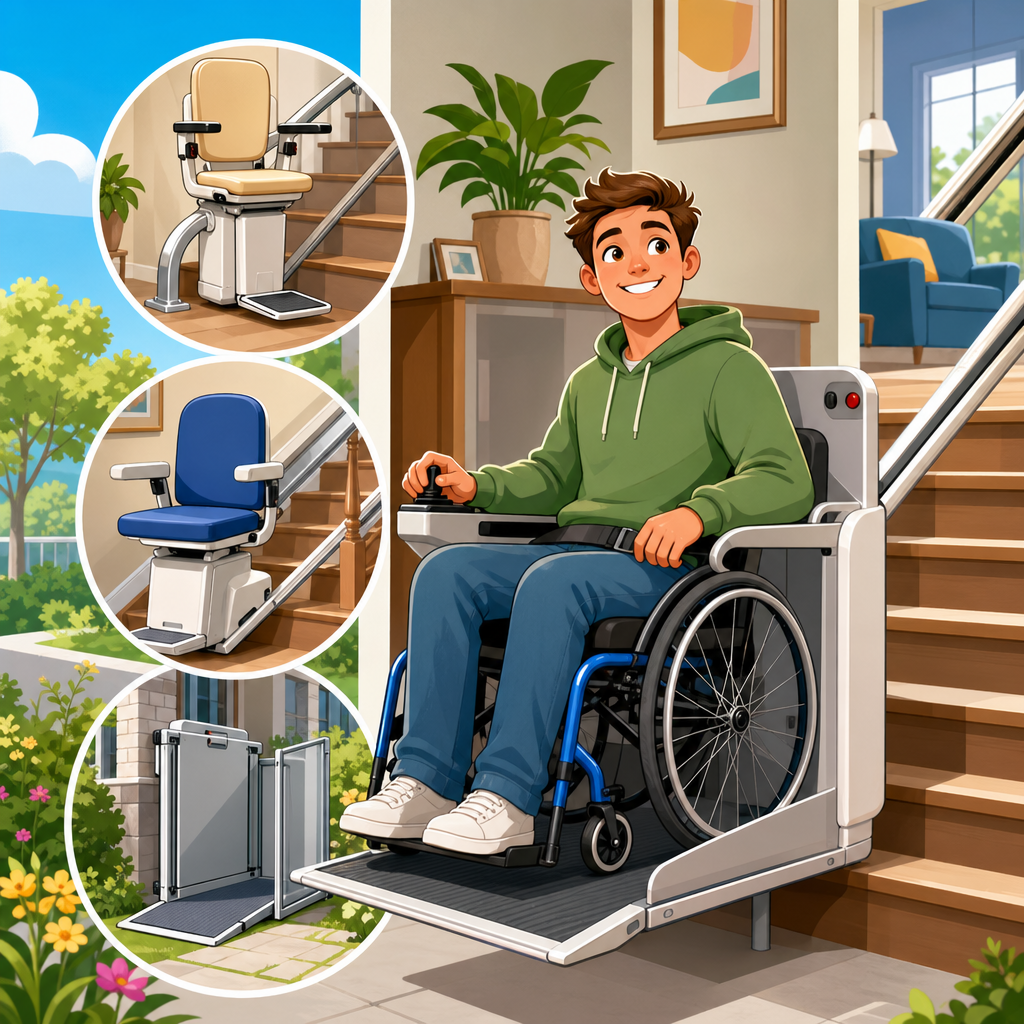
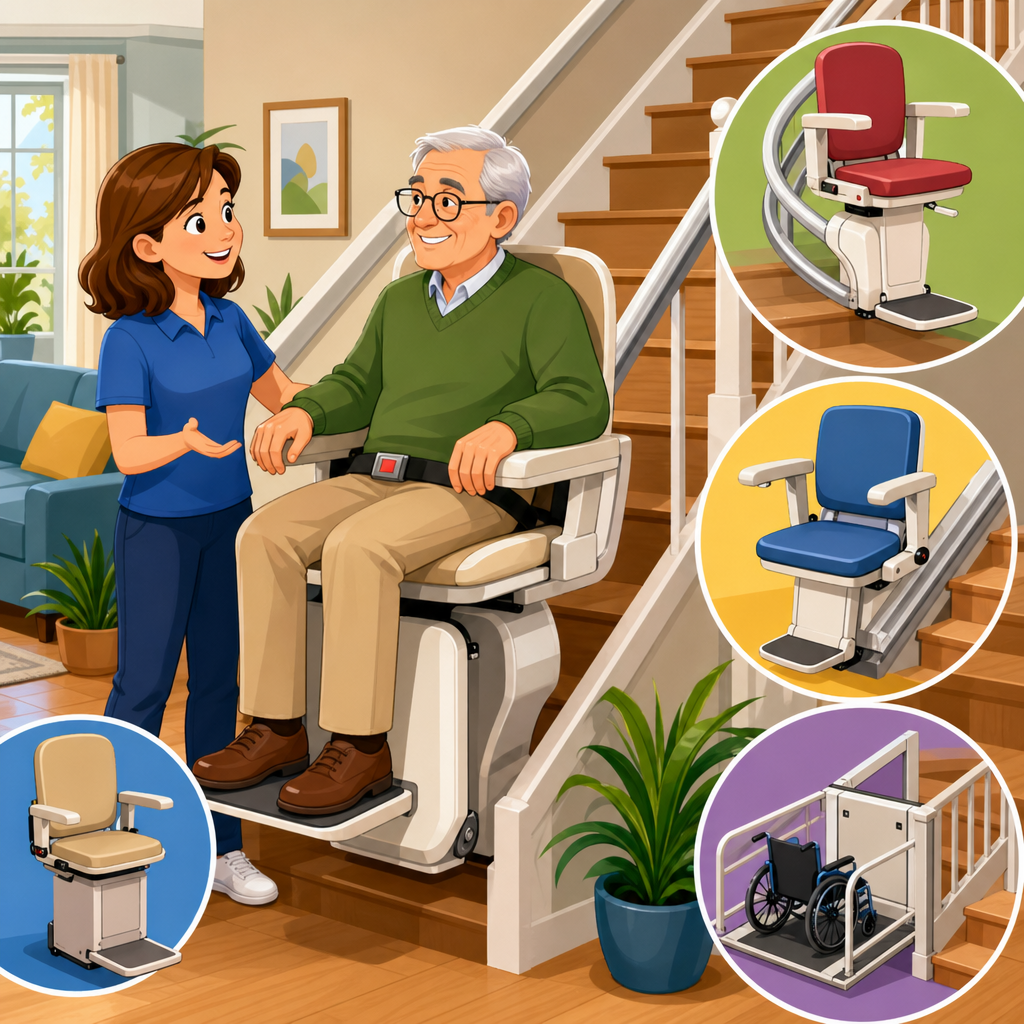
The most common categories in this subtopic are stair lifts, lift chair recliners, wheelchair platform lifts, and transfer lifts. Stair lifts are appropriate when a user can move onto a seat and ride along a staircase rail. They are widely used after stroke, with incomplete paralysis, and with progressive neuromuscular conditions in homes where a wheelchair-accessible elevator is unrealistic. Lift chair recliners are best for users who can still bear some weight but struggle to stand from a seated position because of weakness, pain, or impaired balance. They are not substitutes for full transfer equipment when paralysis is significant.
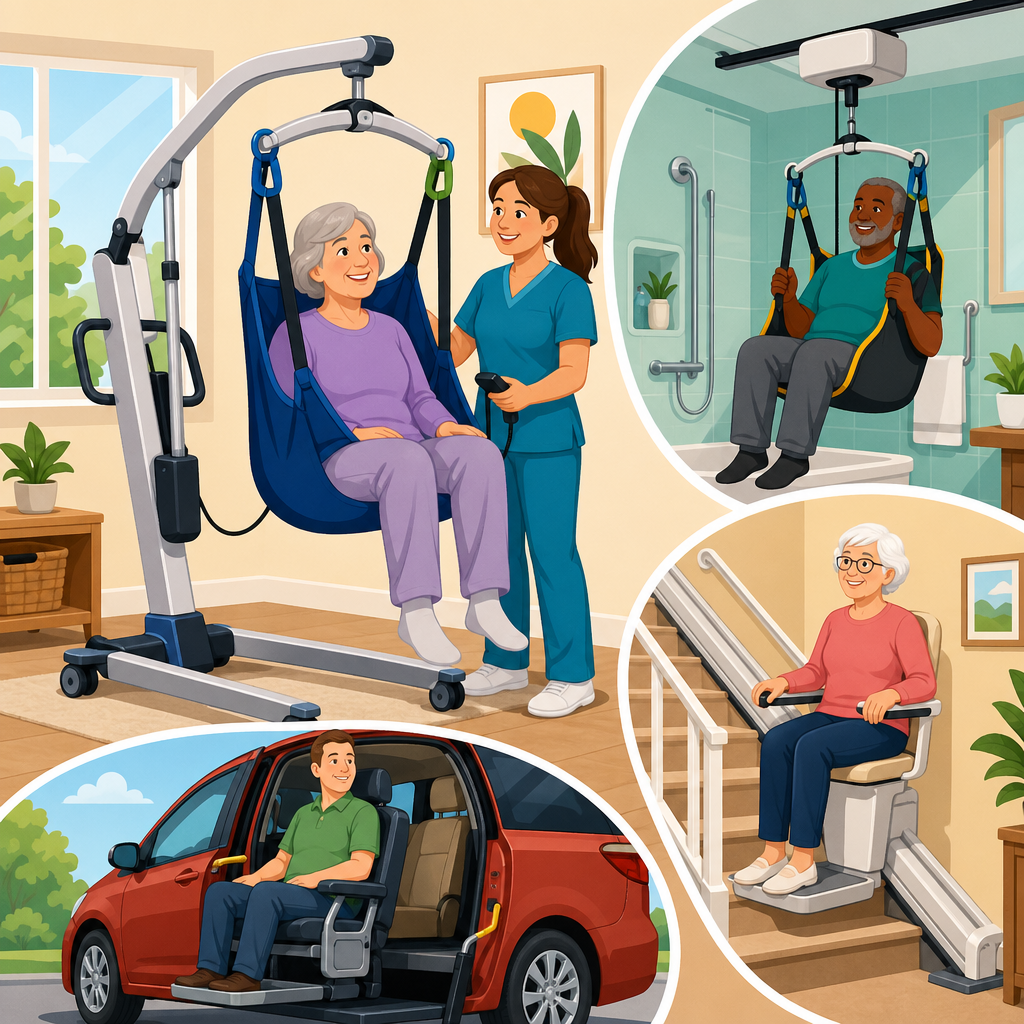
Platform lifts, sometimes called porch lifts or vertical platform lifts, are often the better answer for wheelchair users with paralysis because they remove the transfer step entirely. Instead of moving into a chair, the user rides on a platform while remaining in the wheelchair. Ceiling lifts and mobile patient lifts address bed-to-chair, toilet, or bathing transfers and are often indispensable when caregivers are manually lifting too much. In practice, many households need a combination: a lift chair in the living room, a ceiling lift in the bedroom, and a platform lift at an entryway. That layered approach often delivers more independence than one premium device trying to cover every use case.
| Lift type | Best for | Main advantage | Main limitation |
|---|---|---|---|
| Stair lift | User can transfer to a seat | Efficient access on stairs | Requires safe seated transfer |
| Lift chair recliner | Partial mobility and sit-to-stand difficulty | Supports standing and pressure relief | Does not move between floors |
| Platform lift | Wheelchair users with paralysis | No transfer out of wheelchair | Higher cost and larger footprint |
| Ceiling or patient lift | Dependent transfers | Reduces caregiver strain and fall risk | Not a stair travel solution |
Brands differ, but the clinical logic stays consistent. Bruno, Stannah, Handicare, Harmar, Golden Technologies, and Pride Mobility all serve different segments of this market. Compare them based on function and fit, not only reputation. A respected brand is still the wrong choice if its seat width, track design, joystick placement, or recline geometry does not fit the user.
Key Features That Matter Most for Paralysis or Partial Mobility
Seat stability is the first nonnegotiable feature. For stair lifts, look for a firm seat base, a secure footrest, armrests that support controlled transfers, and a swivel-and-lock mechanism at the landing. For users with unilateral weakness, the direction of transfer matters; the safer side of the body should have the clearer, more stable access path. Weight capacity must exceed the user’s current weight with an appropriate margin, especially if heavy winter clothing, positioning cushions, or body changes are likely. Standard units may support around 250 to 350 pounds, while heavy-duty models often reach 400 pounds or more.
Control access is equally important. Some users can manage a simple rocker switch but struggle with small buttons or tight grip requirements. Others need oversized hand controls, wireless call stations, or attendant controls. Battery backup is essential on stair lifts and power recliners because users cannot be stranded during an outage. In my experience, families often overlook this until the first storm or tripped breaker. Safety sensors that stop movement when the unit meets an obstruction are now standard on many quality models and should not be treated as optional.
For lift chair recliners, pay attention to the motor configuration. Two-position and three-position chairs are basic options, but three-motor or “infinite position” designs provide finer control for users who need independent backrest, leg rest, and lift adjustments. Zero-gravity positioning can improve comfort and edema management for some users, though it is not a cure-all. If a user spends long periods in the chair, pressure redistribution cushions, breathable upholstery, and proper seat depth become critical. A chair that is too deep forces posterior pelvic tilt and poor lumbar support; a chair that is too wide may reduce stability and make lateral leaning worse.
Home Layout, Installation, and Real-World Constraints
Even the best chair lift for disabled users fails if the home cannot support safe installation and use. Stair lifts need accurate stair measurements, adequate landing clearance, nearby power charging points, and enough room for transfer at the top and bottom. Straight stair lifts are less expensive and faster to install because they use a simple rail. Curved stair lifts are custom-built for turns, landings, and intermediate levels, but lead times and cost increase significantly. Narrow staircases can still sometimes accommodate a lift if the rail and folded seat leave required walking clearance, but this must be verified by a professional installer.
Platform lifts need more planning. They require sufficient vertical travel space, landing gates, code-compliant installation, and weather considerations if placed outdoors. Local building codes, permitting, and fire egress rules can affect what is allowed. For lift chair recliners, the practical issues are different: wall clearance, proximity to outlets, safe pathway width for walkers or wheelchairs, and flooring friction during transfers. I always advise families to test the transfer route from bed to bathroom to living area, not just the spot where the product will sit. If a user cannot approach the device safely with current furniture placement, the product itself is not the real problem.
Maintenance should also influence the decision. Stair lifts need periodic servicing, battery checks, rail cleaning, and inspection of seat and footrest sensors. Lift chairs may need motor or hand-control replacement after years of heavy use. Ask every dealer about service response time, parts availability, and labor warranty, because downtime is not an inconvenience for a disabled user; it can interrupt toileting, sleeping, and leaving the home. That service relationship often matters more than a minor difference in sticker price.
Costs, Funding Options, and How to Judge Value
Price varies widely by lift type and complexity. Straight stair lifts are usually the entry point, while curved stair lifts and platform lifts cost substantially more because of custom fabrication and installation. Lift chair recliners can range from basic medically styled models to advanced therapeutic seating with multiple motors and upgraded fabrics. Ceiling lifts add track design and installation labor. The cheapest option is rarely the best value if it creates caregiver strain or must be replaced within a year because the user’s condition progressed.
To judge value, calculate total cost of ownership. Include installation, electrical work, permits, upholstery upgrades, service plans, replacement batteries, and accessories such as transfer handles, pressure cushions, chest supports, or powered footrests. Then compare that total against the benefit: fewer falls, less caregiver lifting, improved ability to remain at home, and reduced need for emergency moves to first-floor sleeping arrangements. In many families I have advised, a properly chosen lift paid for itself indirectly by preventing one hospitalization from a transfer fall or delaying the need for more expensive home renovations.
Funding is nuanced. Medicare generally does not cover stair lifts because they are considered home modifications, but portions of lift chair mechanisms may qualify under durable medical equipment rules when prescribed and documented appropriately; the fabric and furniture components usually do not. Medicaid waiver programs, Veterans Affairs benefits, state assistive technology programs, workers’ compensation, nonprofit grants, and disease-specific organizations may help depending on diagnosis and eligibility. Always ask suppliers for an itemized quote that separates the medical mechanism from noncovered furniture features and request documentation standards before purchase.
How to Choose the Best Option and What to Read Next
The strongest buying process follows a clear order. First, identify the exact task that is unsafe or exhausting: stairs, standing, bed transfer, or entry access. Second, document the user’s current abilities, including trunk control, transfer method, weight-bearing capacity, sitting tolerance, and hand function. Third, measure the environment carefully and note obstacles. Fourth, compare products by safety, fit, service support, and adaptability to likely disease progression. Finally, arrange an in-home assessment or live product demonstration whenever possible. A five-minute showroom test often reveals issues that spec sheets hide, such as an armrest being too high for a lateral transfer or a footplate angle causing extensor tone.
As a hub page under buying guides and product reviews, this article should help you branch into narrower decisions. From here, review detailed comparisons of straight versus curved stair lifts, lift chair recliners for stroke recovery, heavy-duty chair lifts, wheelchair platform lifts for home entry, and transfer lifts for bedroom and bathroom use. Those more focused guides can answer model-specific questions, but the core rule remains the same: choose for the user’s real functional needs, not the marketing category. The best chair lift for disabled users is the one that improves safety every day, fits the home without compromise, and still works as the user’s condition changes. Make a shortlist, get measurements, involve a clinician if transfers are complex, and ask suppliers hard questions before you buy.
When you approach the decision this way, the benefits are immediate and practical. The right lift reduces falls, protects caregivers, lowers fatigue, and restores routine activities that many families have been improvising unsafely for months. It also protects dignity. A user who can operate a stair lift independently, rise from a properly fitted recliner, or transfer with a ceiling lift that avoids painful manual handling usually gains more than convenience; they regain control over daily life. That is the real standard for a successful purchase. Use this guide as your starting point, then move to the specific reviews and comparison articles in this subtopic to match features, brands, and budgets with confidence.
Frequently Asked Questions
What type of chair lift is best for someone with paralysis or partial mobility?
The best chair lift depends on the person’s strength, balance, trunk control, transfer ability, and the part of the home where help is needed. In many homes, a stair lift is the right choice when the user can safely transfer onto and off of a motorized seat and needs support moving between floors. For someone who has difficulty rising from a seated position but does not need floor-to-floor travel, a power lift recliner or sit-to-stand chair may be more appropriate. In other cases, a transfer lift, standing aid, or ceiling-mounted patient lift may be the safer solution if the individual cannot independently pivot, bear weight, or maintain stable seated posture during a transfer.
For users with paralysis, the decision often comes down to whether they can perform a safe transfer with or without caregiver assistance. A stair lift can work very well for some users with paraplegia, especially when upper-body strength is good and transfer boards or caregiver support are part of the routine. However, for people with significant weakness, spasticity, poor trunk stability, or higher levels of paralysis, a traditional stair lift seat may not provide enough support. In those situations, a wheelchair platform lift, vertical platform lift, or patient transfer system may better match daily needs and reduce risk. The right choice is not simply the most popular product; it is the one that aligns with the user’s body mechanics, safety requirements, and long-term mobility plan.
How do I know if a stair lift is safe for a person with paralysis?
A stair lift is considered safe only if the user can get onto the seat, remain properly positioned during travel, and get off again without excessive risk of falling, sliding, or losing balance. That means evaluating several factors: whether the user can transfer independently or with help, whether they have enough trunk and head control to remain upright, whether spasms or involuntary movements could interfere with positioning, and whether the staircase itself allows safe boarding and dismounting at both ends. Seat belts, swivel seats, footrests, armrests, and call/send controls improve safety, but they do not replace the need for an appropriate physical match between the user and the lift.
In practical terms, families should think beyond the ride itself. The most common safety issues happen during transfers, not while the lift is moving. If the user must perform a difficult pivot at the top of the stairs, maneuver around a narrow hallway, or transfer from a wheelchair in a cramped landing area, the setup may be unsafe even if the lift has strong safety features. A professional assessment can identify whether a standard stair lift is workable, whether a perch-style seat or heavy-duty model is needed, or whether a platform lift would provide a safer path. For anyone with paralysis, especially when mobility may change over time, safety should be judged by total transfer routine, not just the equipment specifications.
Should I choose a stair lift, a lift chair recliner, or a transfer lift?
These products solve very different mobility problems, so choosing correctly starts with identifying the exact task the user needs help with. A stair lift is designed to carry a seated user up and down a staircase. A lift chair recliner helps a person move from sitting to standing and often provides pressure-relieving positioning for comfort and circulation. A transfer lift, such as a sit-to-stand lift or full-body patient lift, is used to move a person safely between surfaces, such as from bed to wheelchair, wheelchair to toilet, or chair to shower seat. While people often use the phrase “chair lift” broadly, the right equipment depends on whether the challenge is navigating stairs, standing up, or transferring between positions.
For someone with partial mobility, a lift chair recliner may be enough if the main issue is weakness when rising from a seated position. For someone with paralysis who can still make supported lateral transfers, a stair lift may be useful for floor-to-floor access but may need to be paired with transfer aids. If the person cannot bear weight, has limited upper-body control, or relies on a caregiver for most transfers, a patient lift may be the safest and most practical investment. In many households, the best answer is not one device but a combination of solutions. Matching the equipment to real daily routines, caregiver ability, and the user’s long-term condition usually leads to better safety, comfort, and independence than trying to force one device to do every job.
What home factors matter most when choosing the right chair lift?
Home layout is one of the most important parts of choosing a chair lift because the equipment must fit both the staircase and the way the user moves through the home. For stair lifts, important details include staircase width, whether the stairs are straight or curved, the amount of open space at the top and bottom landings, nearby doorways, and whether the user can approach the seat easily in a wheelchair or walker. For lift recliners and transfer lifts, room size, flooring, doorway width, bed height, bathroom access, and turning space all affect whether the equipment can be used safely and comfortably. Even a high-quality lift can become impractical if the environment makes transfers awkward or forces caregivers into unsafe positions.
It is also important to think about the full route, not just the spot where the lift will be installed. A person may need enough room to park a wheelchair at the top landing, space for a caregiver to assist, and a clear path from the stairs to the bedroom or bathroom. Charging locations, power supply, folded seat dimensions, and obstruction sensors also matter in everyday use. If the user’s mobility is likely to decline, homeowners should think ahead about whether the current solution will still work six months or two years from now. Planning around present and future needs helps avoid costly replacements and creates a home setup that supports safety, dignity, and consistency over time.
Is it better to plan for future mobility changes when buying a chair lift?
Yes, in most cases it is wise to choose with future needs in mind, especially when paralysis, neurological conditions, progressive weakness, or age-related decline may change how the user transfers and moves through the home. A chair lift that works well today may become limiting if the user loses strength, develops shoulder pain, gains or loses weight, or starts needing more caregiver help. Planning ahead does not always mean buying the most complex system immediately, but it does mean choosing equipment and home modifications that can adapt to changing needs without creating new safety risks. This is particularly important for conditions where function can fluctuate or decline over time.
Future-focused planning may involve selecting a lift with a higher weight capacity, better postural support, easier controls, or a staircase solution that can later be replaced by a platform lift if needed. It may also mean ensuring there is adequate space for wheelchair access, caregiver assistance, and additional equipment such as transfer boards, slings, or powered mobility devices. Families should also consider maintenance, battery backup, service availability, and how the lift fits into larger care goals such as aging in place or reducing caregiver strain. The most effective choice is usually the one that meets current needs well while leaving room for safe adaptation later, rather than a short-term fix that quickly becomes inadequate.