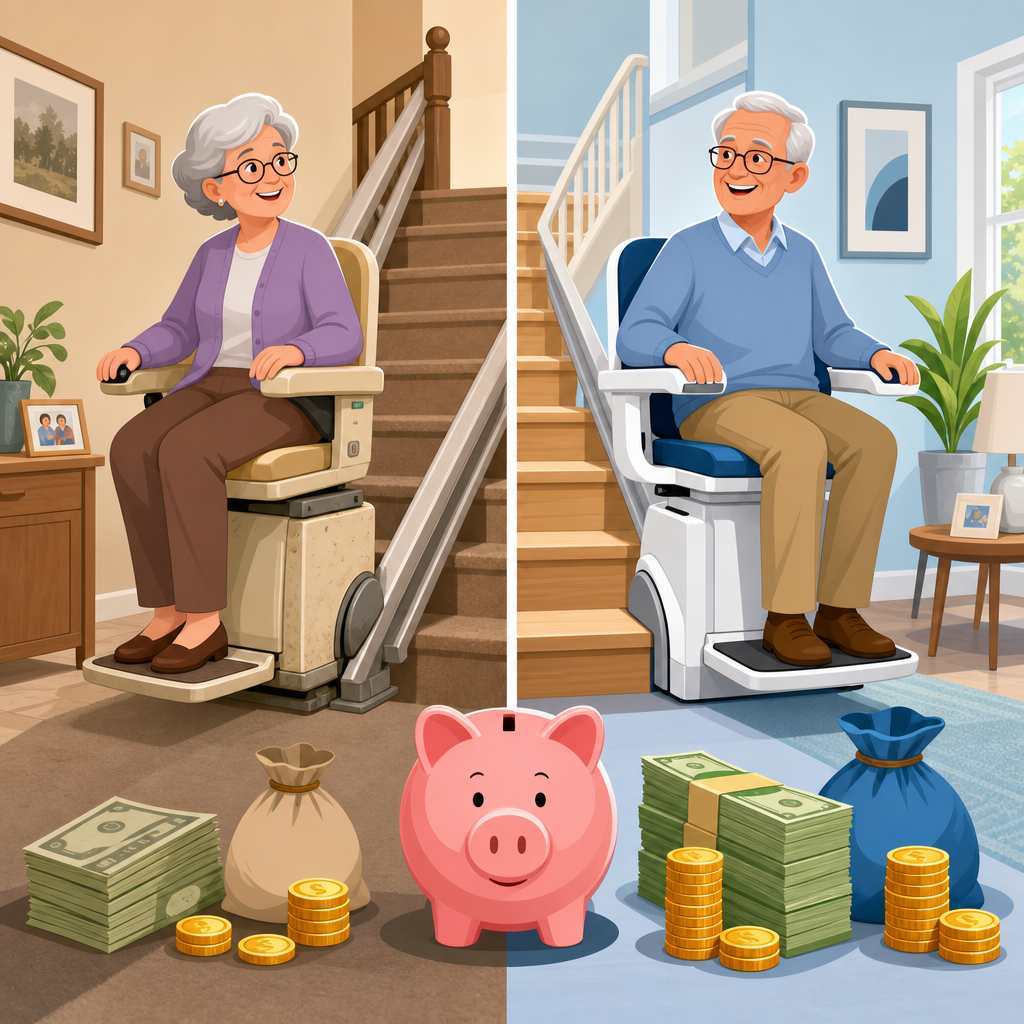
Choosing between a used stair lift and a new stair lift is rarely just about the sticker price. It is a decision about long-term accessibility, installation requirements, warranty protection, maintenance costs, safety standards, and how well the equipment matches the staircase and the user’s mobility needs. In practice, I have seen buyers focus on the upfront quote, then get surprised by rail replacement fees, service call charges, or the limits of older models. A true cost breakdown has to include the full ownership picture.
Stair lifts, also called chair lifts for stairs, are motorized seats that travel on a rail mounted to the staircase. They are designed to help people move safely between floors when climbing stairs becomes difficult because of age, injury, arthritis, balance problems, heart conditions, or recovery after surgery. The key terms matter here. A used stair lift is typically sold as-is or lightly serviced after prior ownership. A refurbished stair lift has usually been inspected, cleaned, repaired with replacement parts where needed, and tested before resale. A new stair lift is factory-new, built to current specifications, and sold with full manufacturer support.
This topic matters because stair lifts can cost anywhere from a few thousand dollars to well over ten thousand, depending on whether the staircase is straight or curved, whether the unit is new or refurbished, and how much customization is required. Most homeowners are paying out of pocket because Medicare generally does not cover stair lifts, although Medicaid waivers, veterans’ benefits, state assistive technology programs, and nonprofit grants may help in some cases. If you are comparing used vs. new stair lifts, the smartest approach is to evaluate total cost, expected lifespan, resale value, parts availability, and service reliability together, not separately.
What You Actually Pay For With a Stair Lift
The advertised stair lift price usually bundles several different cost categories. First is the chair and drive system itself, including the seat, motor, gearbox, battery, charger, call-send controls, and safety sensors. Second is the rail, which is often the biggest variable. Straight stair lifts use standardized rails that can often be reused or cut to fit. Curved stair lifts require a custom rail built to the exact dimensions of the staircase, landing, turns, and overrun requirements. That custom manufacturing is why curved lifts cost dramatically more and why used curved units are often less practical than shoppers expect.
Third is installation. A qualified installer mounts the rail to stair treads, configures charging points, tests obstruction sensors, confirms seat swivel and footrest operation, and checks that the rider can safely mount and dismount. Fourth is warranty coverage, which may include the motor, gearbox, PCB, batteries, and labor for a limited period. Fifth is after-sales service. This includes annual maintenance, battery replacement every few years, and repair calls if the lift stops charging, shows a fault code, or develops rail alignment issues. Buyers who understand these line items can compare quotes more accurately and avoid choosing a low initial price that carries high service risk later.
Typical Price Ranges for Used, Refurbished, and New Models
For a straight staircase, a new stair lift typically costs about $2,500 to $5,500 installed, depending on brand, weight capacity, seat style, powered options, and local labor rates. Common brands in the U.S. market include Bruno, Harmar, Stannah, Access BDD, and Savaria. A refurbished straight stair lift often lands between $1,800 and $3,500 installed. A used straight stair lift sold privately may look cheaper, sometimes under $1,500, but private-sale units often exclude professional installation, warranty, and any guarantee that the rail fits your stairs or that replacement parts remain available.
For curved stair lifts, new systems commonly range from $9,000 to $18,000 or more installed because the rail is made specifically for the home. Refurbished curved systems are less common and usually involve reusing only the chair carriage while ordering a new custom rail, which can still keep the total in the $7,000 to $14,000 range. When I review quotes, that rail is usually the decisive factor. People assume a “used curved stair lift” should be deeply discounted, but the reusable portion is limited. In many homes, the largest savings available on a curved model come from refurbishing the carriage, not reusing the rail.
| Type | Straight Staircase Installed Cost | Curved Staircase Installed Cost | Common Warranty Range |
|---|---|---|---|
| New | $2,500–$5,500 | $9,000–$18,000+ | 1–5 years, sometimes longer on drivetrain |
| Refurbished | $1,800–$3,500 | $7,000–$14,000 | 30 days to 1 year |
| Used private sale | $500–$1,500 before install | Rarely practical | Usually none |
These ranges are representative, not universal. Prices shift with geography, urgency, staircase complexity, and whether upgrades such as a powered swivel seat, powered footrest, folding rail, or heavy-duty seat are necessary. If the user exceeds a standard weight limit, which is often around 300 to 350 pounds, a heavy-duty model may cost more and may also require a wider staircase to maintain clearance.
Why Used Straight Stair Lifts Can Offer Real Savings
Used and refurbished straight stair lifts can make financial sense because straight rails are modular and easier to adapt. In many cases, the dealer can trim or replace a standard rail section, test the carriage, install new batteries, and certify basic operation at a much lower cost than supplying a new unit. This is where the used market has its best value. If the staircase is simple, the user’s needs are standard, and the dealer stocks parts for that model, a refurbished straight stair lift can deliver substantial savings without a major sacrifice in functionality.
The strongest candidates for used straight stair lifts are short-term recovery situations, budget-constrained households, rental properties occupied by aging parents, and homes where the buyer expects a limited period of use. For example, a family helping a parent return home after hip surgery may prioritize fast installation and affordability over premium features. In that scenario, a dealer-serviced refurbished unit with a six-month warranty can be a practical middle ground. The key is dealer support. I would not treat a private marketplace listing and a dealer-refurbished unit as interchangeable products. They are not. The difference in testing, installation quality, and parts access often determines whether the purchase saves money or creates repeated repair bills.
Why Used Curved Stair Lifts Often Save Less Than Expected
Curved stair lifts are where many buyers misunderstand the economics. The chair may be reusable, but the rail usually is not. Every curved staircase has its own geometry: number of turns, inside or outside bend, landing dimensions, parking position, and need for lower or upper overruns. Manufacturers use precise measurements or digital photo surveying to create a rail that matches that staircase. Even small discrepancies can affect ride quality and safety. That means a used curved lift from another home generally cannot be installed directly in your home unless your staircase is nearly identical, which is uncommon.
Because of this, the practical refurbished curved stair lift model is often “new rail, reused carriage.” That can reduce cost, but not nearly as much as shoppers expect when they first hear the word used. There is also a service consideration. Older curved lift carriages may have discontinued boards, legacy remotes, or obsolete diagnostic systems. If a dealer cannot source those parts quickly, the lower purchase price may be offset by longer downtime later. For users who rely on the stair lift daily and have no bedroom or bathroom access on the main floor, downtime is not a minor inconvenience; it is a serious accessibility failure.
Hidden Costs That Change the Real Difference
The biggest pricing mistakes happen when buyers compare only the base quote. Batteries are one example. Most modern stair lifts use rechargeable batteries in the carriage, charged from a household outlet through charging points on the rail. Those batteries commonly need replacement every two to five years depending on usage, charging habits, environment, and brand. A battery replacement can add a few hundred dollars once labor is included. On older used units, battery age may be uncertain from day one.
Service calls are another overlooked expense. If a new stair lift includes one year of labor and a multi-year drivetrain warranty, early repair costs may be minimal. If a used unit includes only a short warranty, one fault after the coverage period can erase the initial savings. I have also seen removal and disposal fees omitted from conversations. When a stair lift is no longer needed, a dealer may charge to remove it, especially if the rail is long or the home layout complicates access. Some dealers offer buyback or trade-in value on newer branded units, but older or unsupported lifts may have little resale value.
Electrical readiness, stair width compliance, and seat configuration can also affect cost. Most stair lifts plug into a standard outlet, but some homes need a new nearby receptacle. Narrow staircases may require a folding rail, offset seat, or slimline model to preserve walking clearance. Users with limited knee flexion, severe arthritis, or one-sided weakness may need a powered swivel seat or powered footrest, raising the price but improving safety significantly. These are not luxury add-ons when they solve a transfer problem; they are functional requirements.
Safety, Reliability, and Warranty Tradeoffs
New stair lifts usually provide the strongest protection in three areas: safety assurance, manufacturer support, and parts continuity. Reputable models are designed to meet recognized safety expectations and typically include seat belts, overspeed governors, obstruction sensors, swivel-seat interlocks, and battery backup so the lift can operate during a power outage for a limited number of trips. With a new unit, buyers also get current manuals, predictable maintenance schedules, and better access to authorized service networks.
Refurbished lifts can still be reliable, but only when the refurbishment is meaningful. A proper refurbishment should include inspection of the transmission, charging system, seat structure, wiring harnesses, limit switches, rollers, and safety edges, not just cosmetic cleaning and new batteries. Ask whether worn components were replaced with OEM parts or compatible aftermarket parts. Ask whether the unit was bench-tested before installation and whether the installer performs a loaded test on-site. These are practical questions, and they reveal whether a lower price reflects efficiency or corners being cut.
Warranty length matters, but warranty scope matters more. Some used stair lift warranties cover parts only. Others cover major components but exclude batteries, remote controls, call stations, and labor. A one-year comprehensive warranty from a local dealer with in-house technicians is often worth more than a longer but limited warranty tied to a distant supplier. Reliability is not just engineering. It is also the speed and competence of the company that answers when the lift stops halfway up the stairs.
How to Decide Which Option Fits Your Home and Budget
The best choice depends on staircase type, expected usage period, user needs, and tolerance for repair risk. If you have a straight staircase, a refurbished lift from a reputable local dealer is often the strongest value option. It can lower upfront cost while still providing professional installation and some warranty protection. If the user needs the lift for many years, uses it multiple times daily, or has no safe alternative route in the home, the case for buying new gets stronger because uptime, warranty support, and future parts availability matter more over time.
If you have a curved staircase, start with the assumption that new will usually be the more straightforward and dependable route, even if a refurbished carriage is part of the proposal. Ask for a detailed quote that separates carriage cost, rail cost, installation, warranty, and future service rates. For both straight and curved lifts, request a home assessment. A good assessor will measure stair width, check landing clearances, confirm user height and weight needs, review transfer ability, and identify whether a perch seat, hinged rail, or powered options are necessary. That assessment often prevents expensive mistakes.
Before signing, compare at least three quotes, verify that the dealer services the brands it sells, and ask about average repair response time. Read the warranty in plain language. Confirm whether batteries are new, whether the lift has been recertified, and whether parts are still actively stocked. If this article is your starting point for used and refurbished chair lifts, the next step is simple: narrow the choice by staircase type first, then compare total ownership cost instead of just purchase price. That approach leads to safer, more durable, and more economical buying decisions.
Frequently Asked Questions
Is a used stair lift always cheaper than buying a new one?
Not necessarily. A used stair lift often has a lower initial purchase price, but the true cost depends on several other factors that can quickly narrow the savings. In many cases, the chair unit may be reused, but the rail often needs to be replaced or custom-fitted to match the current staircase, especially if the home has curves, landings, or unusual dimensions. That means a buyer may save on the seat and motor assembly but still pay a significant amount for a new track, installation labor, and setup. Once you add delivery, removal of the old system if needed, electrical checks, and testing, the final total may be much closer to the cost of a new model than expected.
It is also important to look at what is included in the quote. New stair lifts are more likely to come bundled with manufacturer warranty coverage, current safety features, batteries, and professional installation. A used unit may be sold with limited coverage or a short dealer warranty only, which shifts more financial risk to the buyer if something goes wrong. In real-world cost comparisons, the lower sticker price of a used lift can be offset by maintenance needs, parts availability, service charges, and the possibility that an older model may not suit the user as well over time. So while used can be cheaper, it is not automatically the better value.
What hidden costs should buyers watch for when comparing used and new stair lifts?
The biggest hidden costs usually involve installation requirements, rail compatibility, future repairs, and service support. Many buyers assume a used stair lift can simply be moved from one home to another, but that is rarely a straightforward swap. Straight stair lifts are sometimes easier to recondition and reinstall, but curved stair lifts are usually built for a specific staircase layout. If a curved system cannot use the existing rail, a custom replacement rail can dramatically increase the total cost. Even with straight lifts, there may be expenses for mounting hardware, power supply adjustments, call/send stations, seat modifications, or removal of carpet trim or obstructions.
Another common surprise is the cost of ongoing service. A new unit may include parts and labor coverage for a set period, while a used unit may not. That means the owner could be responsible for service call fees, replacement batteries, swivel seat repairs, footrest sensor issues, or charger problems soon after installation. Older lifts can also be harder to repair if parts are discontinued or if the model is no longer supported by the manufacturer. Buyers should ask for a full written quote that separates equipment cost, rail cost, installation, warranty, maintenance terms, and any future call-out charges. That level of detail is the only reliable way to understand the real cost difference between used and new.
How do warranty and maintenance costs affect the long-term value of a stair lift?
Warranty and maintenance can make a major difference in long-term ownership costs. A new stair lift typically comes with manufacturer-backed protection that may cover major components, parts replacement, and sometimes labor for a defined period. That warranty has real value because it reduces the financial impact of early issues and gives the buyer a clearer expectation of support. In addition, newer models are generally easier to service because parts are readily available, technicians are familiar with the equipment, and the system is still within the manufacturer’s active support cycle.
Used stair lifts can still be a practical option, but buyers should evaluate the maintenance risk much more carefully. If the unit is older, has already seen years of use, or is only covered by a short reseller warranty, repair costs can appear sooner and more unpredictably. Batteries wear out, seat mechanisms loosen, sensors can become more temperamental, and the drive system may not perform as smoothly as a newer unit. Even if each repair is manageable on its own, multiple service visits over time can erase the upfront savings. For anyone comparing value rather than just purchase price, a longer warranty, easier parts access, and lower expected maintenance often make a new stair lift the more financially stable choice over several years.
Are used stair lifts as safe and reliable as new models?
They can be, but the answer depends on the age of the unit, how well it was refurbished, and whether it meets current safety expectations. A professionally reconditioned stair lift from a reputable dealer may still offer reliable operation for the right user and staircase, especially in a straightforward installation. However, buyers should not assume all used lifts are equal. Older models may lack some of the newer safety and convenience features that come standard on current systems, such as improved obstruction sensors, smoother start-and-stop technology, better seat ergonomics, updated seatbelt designs, folding rails, or easier controls for users with limited dexterity.
Reliability is tied directly to condition, installation quality, and ongoing support. A used stair lift that has been thoroughly inspected, tested, and installed by an experienced technician can perform well, but one with unclear service history or limited parts support carries more risk. Safety also depends on fit. If the seat height, weight capacity, rail placement, or transfer position does not match the user’s needs, the lift may technically work but still be a poor and potentially unsafe choice. A new stair lift usually offers the strongest combination of current safety standards, full support, and customization options. A used lift can still be worthwhile, but only if its condition, features, and setup are appropriate for both the staircase and the person using it every day.
When does it make more sense to buy a new stair lift instead of a used one?
Buying new often makes more sense when the staircase is complex, the user has changing mobility needs, or long-term dependability is the top priority. If the home has a curved staircase, multiple landings, narrow dimensions, or other unusual design challenges, a new system is often the most practical route because it can be built specifically for that layout. New stair lifts are also usually the better fit when the user needs features such as a higher weight capacity, powered swivel seat, powered footrest, upgraded safety options, or controls that are easier to operate with limited hand strength. In those situations, a new model is not just a premium choice; it may be the most suitable and cost-effective one over time.
A new stair lift is also the stronger option for buyers who want predictable ownership costs. If avoiding surprise repairs, service delays, and compatibility issues matters more than minimizing the upfront invoice, the added warranty protection and manufacturer support can justify the higher initial price. This is especially true in households where the lift will be used multiple times a day and cannot afford downtime. Used stair lifts tend to make the most sense in simpler installations with a tight budget and a trustworthy dealer offering quality refurbishment and service backing. But when the goal is the best mix of safety, customization, support, and long-term value, buying new is often the smarter investment.