Donation and resale programs for gently used lifts help families recover value, extend equipment life, and connect mobility devices with people who need affordable access. In this guide, gently used lifts refers to pre-owned stair lifts, vertical platform lifts, patient lifts, pool lifts, and related mobility systems that remain safe, serviceable, and worth evaluating for a second owner. Used and refurbished chair lifts sit at the center of this topic because they are among the most commonly resold mobility products, yet they also involve the most confusion around safety, warranties, parts compatibility, and installation. I have worked with buyers comparing trade-in offers, families trying to donate equipment after a parent moves to assisted living, and dealers sorting which units can realistically be refurbished. The pattern is consistent: the best outcomes happen when owners understand what can be reused, what must be replaced, and which programs genuinely serve recipients rather than simply clearing inventory. This hub explains how donation and resale programs work, when a used lift is a smart choice, which risks matter most, and how to evaluate sellers, nonprofits, and refurbishers with confidence.
What donation and resale programs actually include
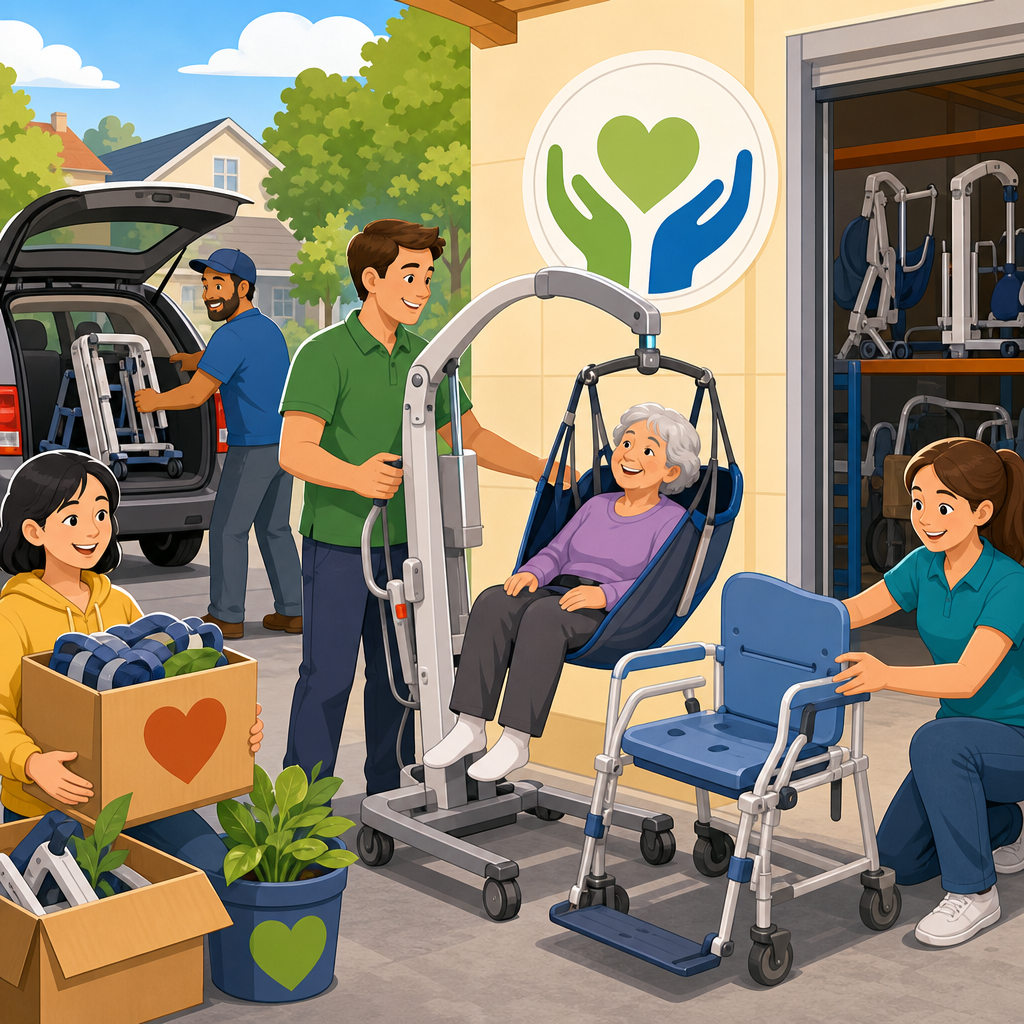
Donation and resale programs for mobility equipment vary widely, and that difference matters. Some are nonprofit exchanges that accept working equipment, inspect it, and match it with low-income users. Others are dealer-run buyback or trade-in programs that refurbish selected models for resale. A third category consists of informal peer-to-peer listings on local marketplaces, where the seller may know little about service history or missing parts. In practice, used and refurbished chair lifts are easiest to place through structured programs because dealers can verify rail length, weight capacity, battery age, and control operation before reinstalling the unit. By contrast, custom curved stair lifts rarely fit another home without expensive rail remanufacturing, so donation opportunities are limited even when the chair itself still works.
A reputable program usually includes intake screening, brand and model identification, condition assessment, and a clear statement about what happens next. If the lift is eligible, the organization may remove it, store it, refurbish it, and either resell it at a lower price or donate it to a recipient. If it is not eligible, the owner should be told why. Common disqualifiers include obsolete electronics, missing safety components, unsupported brands, water damage, visible corrosion, or lack of replacement parts. The strongest programs also explain labor boundaries: they may accept the equipment itself but not cover removal, shipping, site modifications, permits, or new rail sections.
For shoppers, this distinction answers a basic question: what is the difference between used and refurbished chair lifts? Used means sold largely as-is, perhaps cleaned and tested. Refurbished means the lift has undergone a defined process that typically includes inspection, replacement of wear items, battery testing or replacement, safety verification, and reinstallation by a qualified technician. Refurbishment is not a marketing adjective; it should describe documented work. Ask for that documentation every time.
Which gently used lifts are best suited for second-life programs
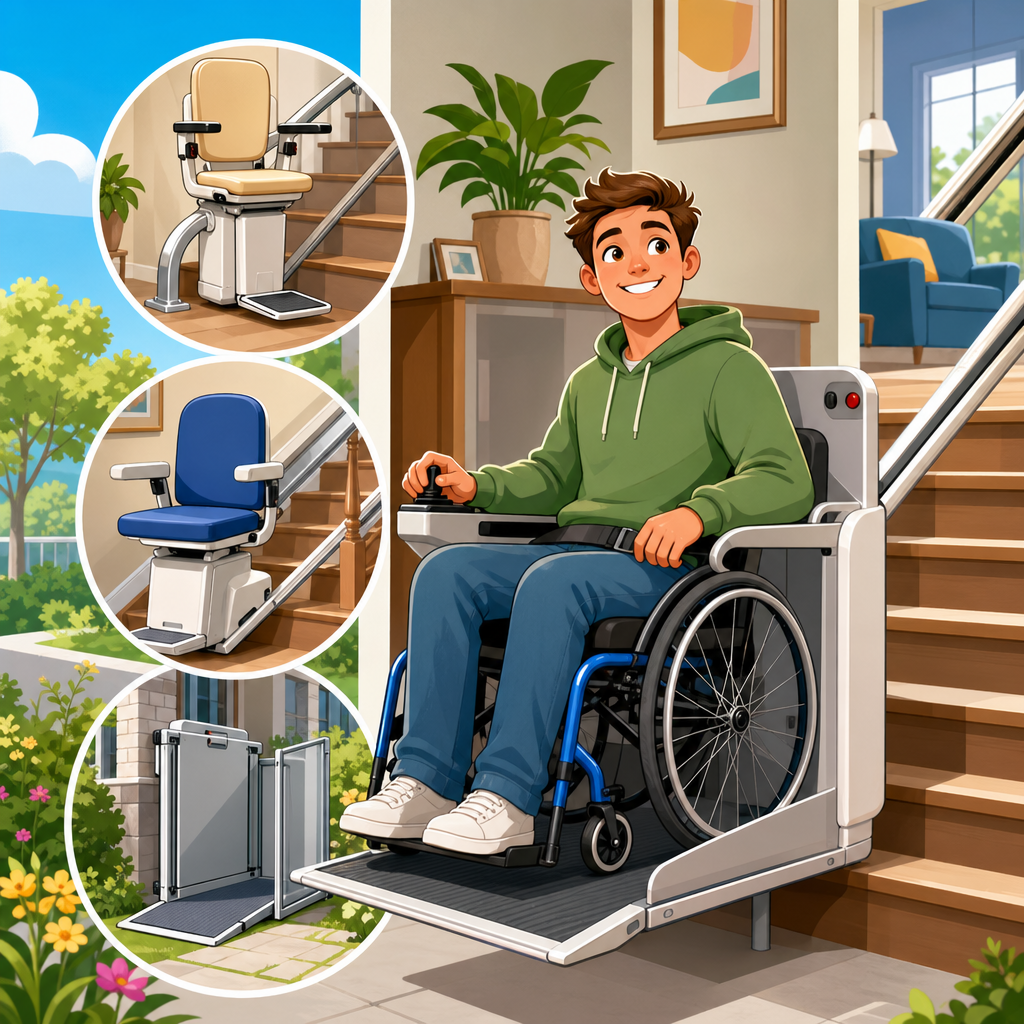
Not every mobility product has the same second-life potential. Straight stair lifts are the most practical candidates for resale because their rail systems can often be cut or extended to fit another staircase, and major manufacturers such as Bruno, Harmar, and Access BDD support parts availability more consistently than smaller brands. A dealer can inspect the carriage, footrest safety edges, charger, call/send controls, and batteries, then adapt the rail to a new site with fewer unknowns. That makes straight used stair lifts the cornerstone of most refurbished inventory.
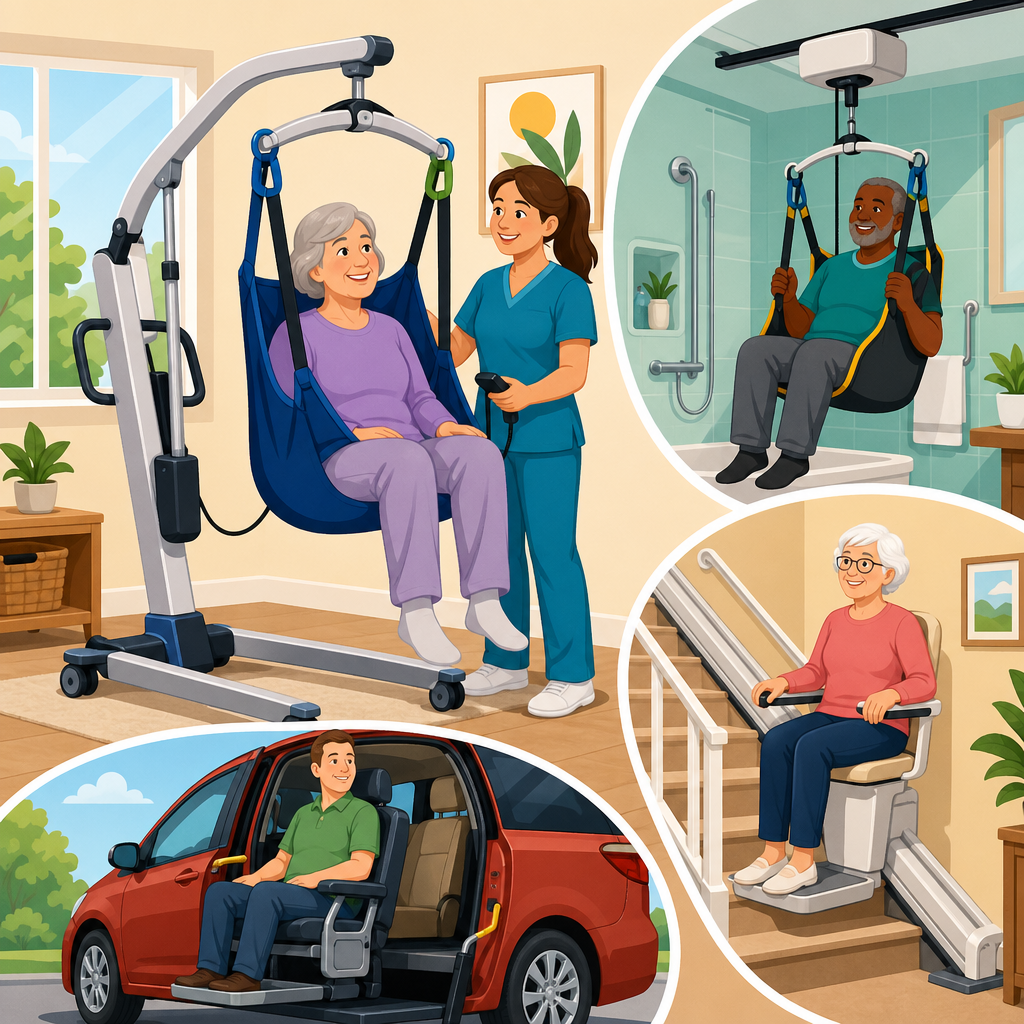
Patient lifts also perform well in donation channels, especially mobile floor lifts with common sling systems. Many hospitals, hospices, and community reuse organizations accept these units if the actuator, mast, base spreader, casters, and emergency lowering function pass inspection. Vertical platform lifts may be reusable in some situations, but relocation costs, code requirements, and anchoring conditions often make them more complex than families expect. Pool lifts occupy a middle ground: some portable ADA-compliant pool lifts can be redeployed successfully, but battery systems, corrosion exposure, and commercial compliance requirements demand careful review.
Curved stair lifts deserve special attention because they create the biggest mismatch between seller expectations and resale reality. The seat assembly and drive components may still hold value, but the rail is usually custom-built to a precise staircase geometry. In many cases, the unit cannot simply be removed and installed elsewhere. Some manufacturers can recertify or remake sections, but the economics often fail compared with buying new. When I assess a curved unit for clients, I tell them to separate sentimental assumptions from market value. A functioning lift may still have limited resale demand if the rail cannot be reused and the model is no longer actively supported.
How refurbishment works and what should be replaced
A proper refurbishment process is systematic, not cosmetic. The technician begins by verifying make, model, serial number, age, and service bulletins. Next comes a mechanical inspection covering gearbox noise, rack or rail wear, seat swivel locks, footrest sensors, armrest controls, final limit switches, overspeed mechanisms where applicable, and charging contacts. Electrical testing follows: batteries under load, charger output, wiring integrity, and board diagnostics. Units with intermittent faults should not be resold until the root cause is identified. Repainting a rail or shampooing upholstery does nothing to address a failing charge circuit.
In used and refurbished chair lifts, the components most often replaced are batteries, call/send remotes, seat pads, wiring harnesses with wear, and safety edges that no longer trigger reliably. Installation hardware should be new unless a manufacturer specifically permits reuse. Fasteners, brackets, and wall anchors are inexpensive compared with the liability of a compromised mount. Any seat belt that shows fraying or latch weakness should be replaced. If a model has a folding rail hinge, that assembly needs close inspection because alignment errors can create nuisance faults or unsafe operation. Good refurbishers bench-test removed parts and discard marginal components instead of gambling on one more installation cycle.
Documentation is part of refurbishment quality. Ask for a checklist showing what was inspected, what was replaced, who performed the work, and whether the unit was tested in a live installation. If a seller cannot explain the process in plain language, assume the refurbishment was superficial. A short labor warranty, even 30 to 90 days, is more meaningful when paired with a named service department and accessible parts source. Without local service support, a low price can become expensive very quickly.
How to evaluate donation, trade-in, and resale options
Owners usually have three paths: donate, trade in, or sell directly. The right choice depends on equipment type, urgency, condition, and local demand. Donation works best when the goal is social impact and tax documentation matters more than maximizing cash return. Trade-in programs are efficient for buyers replacing an existing lift with a new model from the same dealer. Direct resale may produce the highest return, but it requires more effort and carries the greatest risk of mismatched expectations between buyer and seller.
| Option | Best For | Main Advantage | Main Limitation |
|---|---|---|---|
| Donation program | Working equipment, estate transitions, community reuse | Helps recipients and may support tax records | Acceptance standards are strict and pickup is not always included |
| Dealer trade-in | Replacing a lift through a local installer | Fast process with professional removal | Lower cash value than private sale |
| Direct resale | Common straight lifts in supported brands | Potentially higher selling price | Buyer screening, removal, and condition disputes |
| Refurbisher consignment | Owners wanting expert resale handling | Technical screening and broader buyer reach | Fees and no guarantee of acceptance |
When comparing offers, ask the same questions every time. Is removal included? Who owns the lift after removal? What models do you accept? Do you provide a donation receipt, bill of sale, or trade-in credit statement? Will the equipment be refurbished for reuse, broken down for parts, or recycled? Those answers reveal whether the program is a real second-life channel or just a disposal service with better branding.
What buyers should check before purchasing a used or refurbished chair lift
Buyers should focus on five fundamentals: brand support, fit, condition, installation quality, and after-sale service. Start with brand support because no used lift is a bargain if parts are unavailable. Verify that the manufacturer or a major aftermarket supplier still supports batteries, boards, remotes, carriage components, and rail hardware. Then confirm fit. For straight stair lifts, measure staircase length, landing clearance, seat height needs, folded width, and any hinge or overrun requirements. For heavier users, check rated capacity and seat dimensions instead of assuming a standard chair will work.
Condition is more than whether the lift powers on. Ask for age, total time in service if known, reason for removal, and any recorded faults. Inspect the rail for damage, charging points for wear, upholstery for cracking, and the seat swivel for secure latching. If the unit was removed from a coastal property or pool environment, look closely for corrosion. Installation quality matters just as much as equipment quality. A professionally reinstalled refurbished lift can outperform a poorly installed newer one. Request confirmation that the installer followed manufacturer guidelines, tested all safety circuits, and demonstrated operation to the end user.
Finally, check the service model. Who will repair the lift if it stops charging in six months? Is there a local technician network? What is the response time for common faults? In my experience, the strongest used lift purchases come from dealers who service what they sell and can explain exactly which components were renewed. A marketplace seller offering a dramatic discount rarely offers that safety net.
Costs, savings, regulations, and common mistakes
Price is the reason most shoppers explore used and refurbished chair lifts, and the savings can be meaningful. A refurbished straight stair lift often costs substantially less than a new one, sometimes by 25 to 50 percent depending on brand, rail work, and warranty. Yet savings disappear when buyers underestimate installation, electrical needs, permit requirements, or replacement parts. A low list price that excludes a new rail section, power hinge, or service call is not truly low. Ask for a fully installed quote and compare total ownership cost, not just equipment price.
Regulations also matter. Stair lifts installed in private homes are not regulated the same way as medical devices in clinical settings, but they still involve manufacturer instructions, local electrical rules, and basic duty-of-care liability. Platform lifts and pool lifts may trigger additional code, accessibility, or commercial compliance issues depending on location and use. For donated equipment, nonprofits should document condition and avoid implying suitability without inspection. For resale, dealers should be transparent about limitations, especially with discontinued models. Clear disclosure prevents unsafe assumptions.
The most common mistakes are easy to avoid. Sellers overestimate curved lift value, fail to keep model information, or remove equipment before a buyer has confirmed compatibility. Buyers skip measurements, ignore service coverage, or assume every lift can be moved from one home to another. Families donating equipment sometimes expect immediate pickup, but many programs run with limited storage and volunteer labor. The best approach is practical: gather serial numbers, photos, staircase measurements, and service records before contacting anyone. Good information shortens the path to a safe match.
Donation and resale programs for gently used lifts create real value when they are handled with technical discipline instead of wishful thinking. For owners, they offer a way to pass on a mobility solution, reduce waste, and sometimes recover part of the original investment. For buyers, used and refurbished chair lifts can deliver dependable access at a lower cost, especially when the product is a supported straight stair lift refurbished by an established dealer. The key is understanding that not every lift is equally reusable, not every seller is equally qualified, and not every low price represents a good purchase.
The strongest outcomes come from asking precise questions and insisting on documentation. Owners should verify whether a program accepts their exact brand and model, whether removal is included, and whether the equipment will be reused, parted out, or recycled. Buyers should confirm parts availability, installation standards, warranty terms, and local service response before committing. If a provider cannot explain the refurbishment process, identify replaced components, or discuss fit and safety in detail, move on. Mobility equipment is not the place for guesswork.
As the hub for used and refurbished chair lifts, this guide should help you evaluate every related decision with a sharper eye, from donation and trade-in options to inspection checklists and total cost comparisons. Start by gathering your lift’s model information, photos, measurements, and service history, then contact a qualified local dealer, refurbisher, or reuse program for a fact-based assessment. A well-matched second-life lift can save money, help another household, and provide safe access for years.
Frequently Asked Questions
1. What types of lifts can usually be donated or resold through gently used equipment programs?
Donation and resale programs often accept a range of mobility and accessibility equipment, but eligibility depends on the type of lift, its age, condition, and whether it can be safely reinstalled. In many cases, the most commonly discussed items are used and refurbished stair lifts, including straight-rail chair lifts, because they are widely owned and frequently replaced after a temporary need. Vertical platform lifts, patient lifts, pool lifts, and other related mobility systems may also be considered if they remain structurally sound, serviceable, and compliant with applicable safety expectations.
That said, not every lift is a strong candidate for donation or resale. Curved stair lifts, for example, are often custom-built to match a specific staircase, which can make reuse much more difficult unless a buyer needs the exact rail configuration or only certain components can be salvaged. Patient lifts may be easier to transfer if replacement parts and slings are still available. Pool lifts may be accepted when they are in good mechanical condition and still meet current accessibility and operational requirements. Vertical platform lifts are often evaluated more closely because they involve installation conditions, code considerations, and load-bearing requirements that go beyond simple portability.
Most reputable programs look for equipment that is gently used rather than obsolete. They may ask for the manufacturer, model number, installation history, service records, photographs, and confirmation that the lift is functioning properly. A lift that has been regularly maintained, has no major structural damage, and still has parts support from the manufacturer will usually attract more interest than one with missing components, visible corrosion, repeated electrical issues, or uncertain service history. In short, many lifts can qualify, but the real test is whether the equipment can be safely evaluated, transported, refurbished if necessary, and put back into service for a second owner.
2. How do donation and resale programs determine whether a used lift is safe and worth accepting?
Safety is the first filter, and value comes second. A trustworthy donation or resale program does not simply take any pre-owned lift and pass it along. Instead, it typically begins with an initial screening process that includes the lift type, age, brand, model, and general condition. The program may ask whether the unit is currently operational, whether it has had recent repairs, whether original installation paperwork is available, and whether the owner has maintenance records. These details help determine whether the lift is even a candidate for further review.
From there, many programs rely on a technician, installer, refurbisher, or mobility equipment specialist to assess the equipment in more detail. They may inspect the motor, battery system, charging components, seat assembly, armrests, footrests, sensors, controls, rail or track condition, mounting hardware, and emergency stop or lowering features where applicable. For patient lifts, they may also check the lift actuator, base spread, casters, and sling compatibility. For vertical platform lifts and pool lifts, the review may include structural integrity, corrosion, drive systems, safety gates, platform controls, and anchoring requirements. If critical parts are worn out, unsupported, or unavailable, the lift may be declined even if it still technically runs.
Programs also consider reinstallability and liability. A piece of equipment may function, but still not be suitable for transfer if it cannot be installed to current standards or if the manufacturer no longer supports parts and service. This is especially important with stair lifts and platform lifts, where an improper installation can create serious risk. In practice, the lifts most likely to be accepted are those with a clear service history, visible good care, active parts availability, and enough remaining useful life to justify refurbishment, transport, and installation costs. The best programs are careful because their goal is not just to move used equipment, but to place safe, dependable mobility solutions with people who truly need affordable access.
3. Is it better to donate a used lift or try to sell it through a resale program?
The better option depends on your priorities, the condition of the equipment, and the local demand for that type of lift. If your main goal is to help another family quickly and responsibly, donation may be the strongest path. Donation programs can simplify the process, especially when they already serve people seeking lower-cost mobility solutions. They may handle screening, removal, repair coordination, and redistribution, which can save you time and reduce the uncertainty of finding a private buyer. For many families, that convenience and the knowledge that the equipment may directly benefit someone in need are meaningful advantages.
Resale programs, on the other hand, may allow you to recover part of the original investment. This can be especially appealing for gently used stair lifts, patient lifts, or other equipment that still has market demand and serviceable life remaining. A resale route may involve direct purchase by a dealer, consignment through a mobility equipment company, or listing through a specialized marketplace. In general, equipment that is newer, from a recognized manufacturer, and supported by available parts tends to command more value. Straight stair lifts are often easier to resell than highly customized systems because they are simpler to remove, adapt, refurbish, and reinstall.
There are tradeoffs with both choices. Donation may yield less or no direct financial return, but it can be easier and faster. Resale may offer better value recovery, but it can require inspections, negotiations, transportation logistics, and patience. Some families also weigh possible tax considerations with donation, though any tax-related decision should be verified with a qualified tax professional. Ultimately, the best choice comes down to whether you prioritize convenience, charitable impact, speed, or financial recovery. If the lift is in strong condition and there is a healthy local market, resale may make sense. If the equipment is older but still useful, or if you want a simpler and more mission-driven process, donation may be the better fit.
4. What should families do before offering a stair lift, patient lift, or other mobility system for donation or resale?
Preparation makes a major difference in whether a program accepts the equipment and how smoothly the process goes. Start by gathering the basic facts: manufacturer name, model number, approximate age, purchase date if known, installation date, and any service or maintenance records you still have. Take clear photos from multiple angles, including the seat, controls, rail or base, labels, and any visible wear. If the lift powers on, note whether it is fully functional, whether the battery holds a charge, and whether there are any recurring issues. The more complete and transparent your information is, the easier it is for a donation or resale program to evaluate the lift accurately.
It is also wise to avoid removing the equipment yourself unless a qualified professional specifically instructs you to do so. Many lifts are permanently or semi-permanently installed, and improper removal can damage the unit, the property, or both. In some cases, a potential buyer or donation partner may want their own technician to inspect the lift while it is still installed. This is especially important for stair lifts, vertical platform lifts, and pool lifts, where installation details matter. If the equipment includes accessories such as remotes, chargers, manuals, slings, keys, safety belts, or extra parts, keep them together. Small missing components can reduce value or delay reconditioning.
Families should also be realistic about condition and pricing expectations. A gently used lift is not automatically equivalent to a nearly new one, especially if the model has been discontinued or the manufacturer no longer supports it. Ask whether the program provides removal, whether there are fees involved, whether refurbishment is included, and how liability is handled. If you are pursuing resale, compare more than one offer and ask how the buyer calculates value. If you are pursuing donation, ask how the equipment will be inspected, repaired if necessary, and matched to a future user. A little preparation upfront helps protect everyone involved and greatly improves the chances that the equipment can continue serving someone safely.
5. Why are used and refurbished chair lifts such a central part of donation and resale programs?
Used and refurbished chair lifts, particularly stair lifts, are central to these programs because they represent one of the most common and practical forms of home mobility equipment in the secondary market. Many stair lifts are installed for a temporary or transitional need, such as recovery after surgery, aging in place during a difficult period, or support for a family member whose mobility changes over time. Once the need ends, families often want to remove the system, recover some value, and make the equipment available to someone else. That recurring cycle creates a steady supply of pre-owned stair lifts compared with some other categories of lift equipment.
They are also central because there is strong ongoing demand. For many households, a brand-new stair lift can be a significant expense, especially when installation costs are included. A professionally evaluated used or refurbished chair lift can provide a more affordable option while still meeting practical accessibility needs. Straight stair lifts are especially important in this space because their rails are generally more standardized and easier to adapt than custom curved systems. That makes them better candidates for inspection, reconditioning, resale, and donation. When a lift comes from a known manufacturer and replacement parts are available, the refurbishment process becomes much more viable.
Another reason chair lifts dominate this conversation is that they sit at the intersection of accessibility, affordability, and reusability. They often have enough value left after first ownership to justify professional removal and refurbishment, yet they can still make a meaningful difference for