A chair lift warranty defines what the manufacturer, dealer, and installer will repair, replace, or service if parts fail or workmanship problems appear after purchase. In the stair lift industry, warranty terms vary more than many buyers expect, and those differences directly affect long-term cost, downtime, and confidence in the product. I have reviewed warranty packets from major brands, sat with dealers while they explained exclusions to families, and seen how a vague promise on a brochure can turn into a very specific limitation once a motor, battery, or rail component actually needs attention.
For buyers comparing models, understanding what is covered in a chair lift warranty matters as much as rail design, weight capacity, or seat comfort. A stair lift is both a mobility device and a mechanical system installed inside the home. It includes electronics, batteries, gears, controls, safety sensors, upholstery, and a rail customized to a staircase. Because of that mix, warranty coverage usually breaks into separate categories rather than one blanket promise. Some plans offer lifetime coverage on the drivetrain or rail, one to three years on major parts, and only thirty to ninety days on labor or cosmetic items. Return policies can be even tighter, especially for custom curved lifts.
In practical terms, a strong warranty and return policy help answer the questions buyers ask most: What happens if the lift stops working? Who pays for labor? Are batteries included? Can the unit be returned if it does not fit the user well? Is a reconditioned model covered differently from a new one? This guide serves as the central overview for warranty and return policies in chair lifts, so you can compare brands, ask smarter questions, and avoid expensive surprises before signing a sales agreement.
What a Chair Lift Warranty Usually Covers
Most chair lift warranties cover defects in materials and workmanship under normal residential use. That phrase has a precise meaning. Materials refers to physical components such as the rail, carriage, seat frame, gearbox, armrests, call-send stations, footrest sensors, and charging contacts. Workmanship refers to how those parts were manufactured or installed. If a circuit board fails because of a factory defect or a gear assembly wears prematurely within the stated warranty period, that is typically covered. If a technician mounted the rail incorrectly and the dealer’s installation warranty applies, that may also be covered.
Coverage is usually divided into parts, labor, and service call fees. Parts coverage pays for the replacement component. Labor coverage pays the technician to diagnose and install that component. Service call coverage pays the trip charge for the visit. Buyers often assume these are bundled together, but they are frequently separate. I have seen a “lifetime warranty” that sounded generous until the customer learned it applied only to the motor and gearbox, not to labor, batteries, board failures, or the cost of getting a technician to the house.
Residential stair lift warranties often distinguish between core mechanical components and consumable or wear items. Batteries are the most common example. Nearly all modern lifts use battery power, even when plugged into household current, because the unit charges continuously and can still run during a power outage for a limited number of trips. Since rechargeable batteries degrade over time, many manufacturers treat them like consumables and provide shorter coverage, often one year. Upholstery, remote controls, hinges, and finish defects may also have shorter terms.
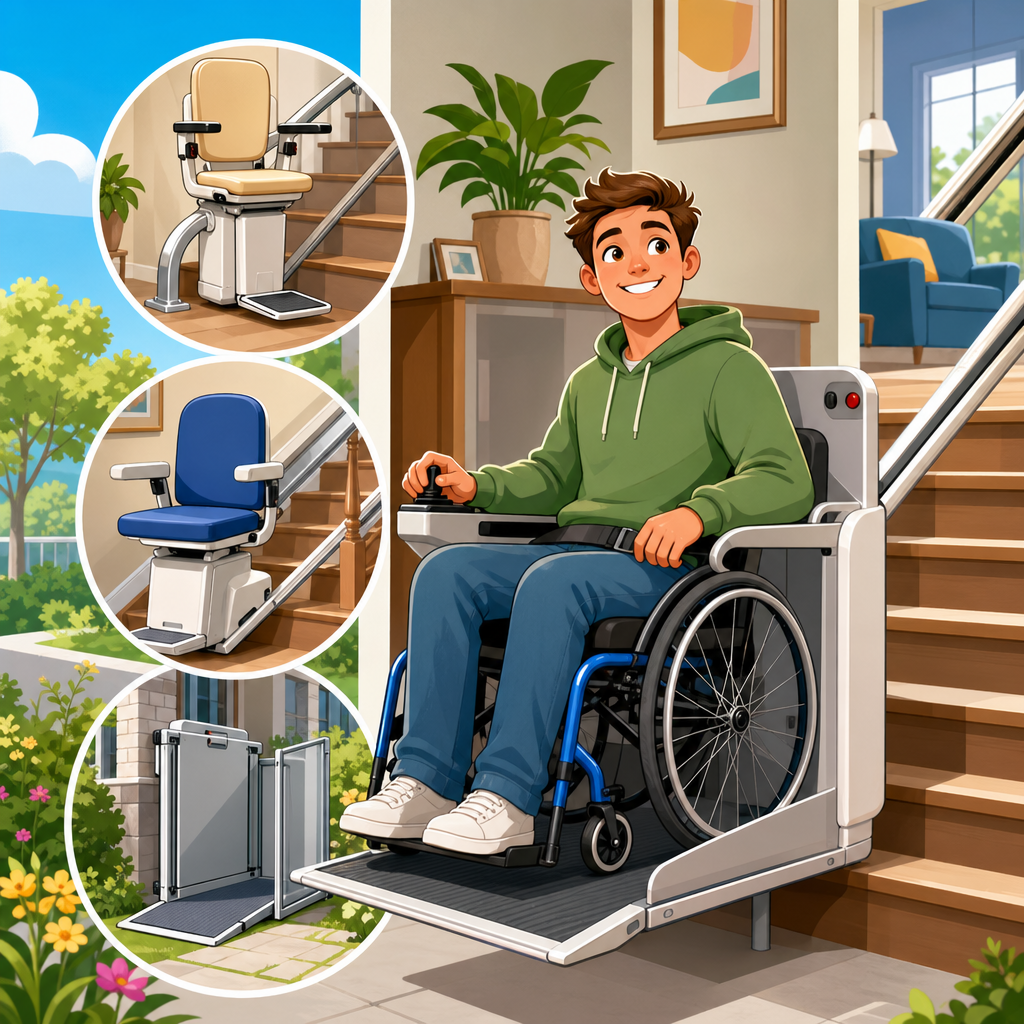
Another important detail is whether coverage applies to straight lifts, curved lifts, outdoor lifts, and used or reconditioned units in the same way. Straight stair lifts are more standardized, so replacement parts and warranty administration are usually simpler. Curved lifts involve custom rails and model-specific geometry, which can affect return rights and lead times for replacement components. Outdoor lifts face moisture, temperature swings, and corrosion exposure, so warranties often include more exclusions tied to environmental conditions and required use of weather covers.
Key Warranty Categories Buyers Should Compare
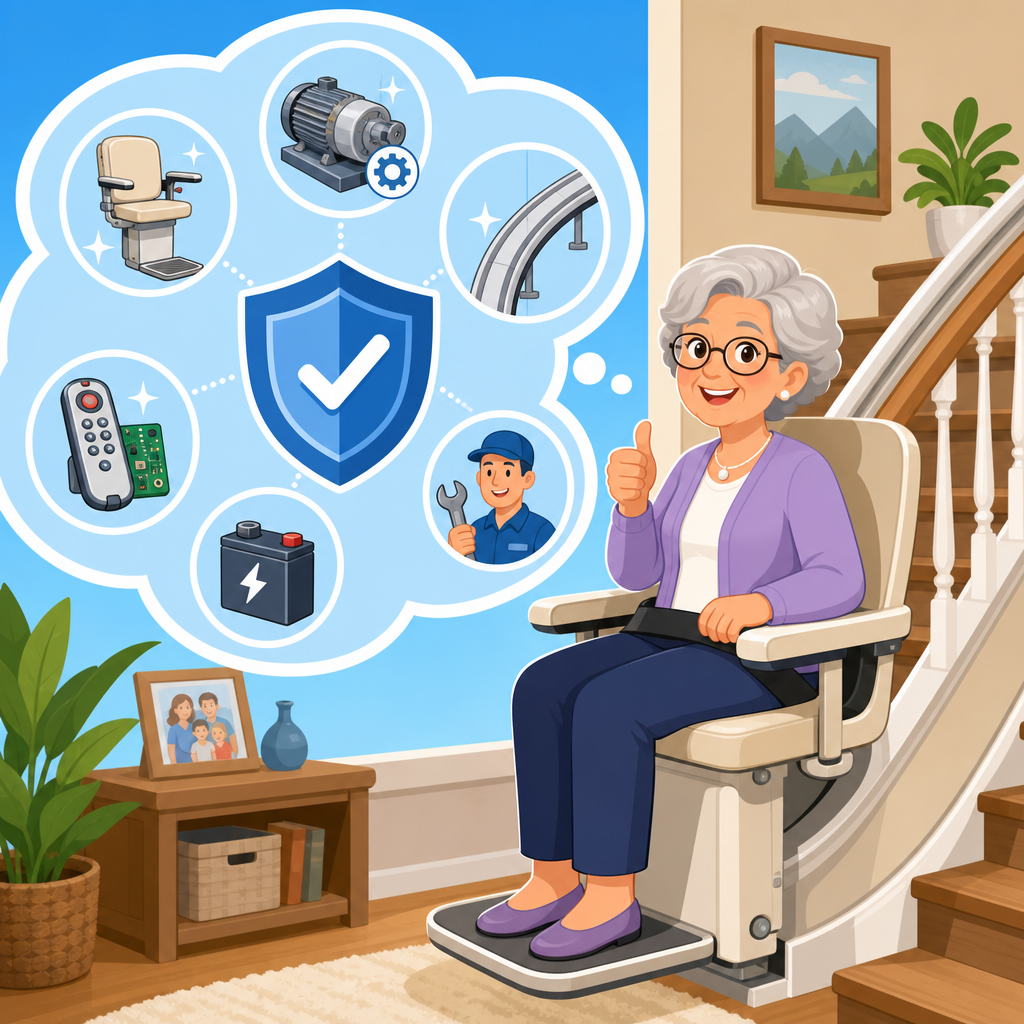
When I compare chair lift warranties for clients, I separate the policy into categories because that is where meaningful differences appear. The first category is structural coverage, which can include the rail, chassis, and seat frame. The second is drivetrain coverage, meaning the motor, transmission, gearbox, and drive system. The third is electrical coverage, including circuit boards, wiring, charging stations, and controls. The fourth is batteries. The fifth is labor and service response. The sixth is installation workmanship. The seventh is transferability if the home is sold or the lift is moved.
| Warranty Category | What It Usually Includes | Common Term Range | Why It Matters |
|---|---|---|---|
| Rail or structural components | Track, carriage frame, seat frame | 3 years to lifetime | These parts are expensive and difficult to replace |
| Motor and drivetrain | Motor, gearbox, transmission | 2 years to lifetime | Core propulsion failures can disable the lift completely |
| Electrical systems | Boards, wiring, chargers, call stations | 1 to 3 years | Electronic faults are common service issues |
| Batteries | Rechargeable battery packs | 30 days to 1 year | Batteries wear out and are often excluded early |
| Labor and service calls | Technician time and trip charges | 30 days to 1 year | Out-of-pocket service costs add up quickly |
| Installation workmanship | Mounting, alignment, setup issues | 90 days to 1 year | Dealer quality affects safety and ride performance |
This breakdown helps buyers ask direct questions instead of relying on broad marketing language. If a dealer says the product has a lifetime warranty, ask “lifetime on which parts, and who pays labor after year one?” If the answer is unclear, request the written warranty before placing a deposit. Reputable dealers can provide manufacturer documents and explain their own service policies in writing.
What Is Commonly Excluded From Coverage
Exclusions are where many warranty disputes begin. A chair lift warranty usually does not cover misuse, accidental damage, water intrusion, neglect, unauthorized repairs, or operation outside the published weight limit. If a user repeatedly strikes the footrest into obstacles, stores items on the rail, allows pets to chew wiring, or uses an indoor lift in a damp, unconditioned stairwell, the manufacturer may reject the claim. These exclusions are standard and reasonable, but they need to be understood before purchase.
Normal wear and tear is another broad exclusion. Swivels, seat padding, armrest covers, hinges, and batteries naturally degrade. Some brands cover them briefly; others exclude them almost entirely. Power surges can also be excluded unless surge protection is recommended and installed. In older homes, I often advise buyers to ask whether charger damage from unstable electrical supply is covered. Many warranty documents specifically exclude cosmetic issues discovered after installation acceptance, such as scratches to trim pieces or minor upholstery marks not reported promptly.
Home alterations create another gray area. If carpeting is replaced, the rail is moved, or the staircase is remodeled after installation, resulting issues may not be covered. The same is true if the lift is relocated to a new home. Straight lifts can sometimes be reinstalled elsewhere using a new rail, but coverage may reset, shorten, or terminate depending on the manufacturer and whether an authorized dealer performs the move. Curved lifts are usually tied to the original staircase design, so relocation is more complicated and return options are limited.
Commercial or high-use environments are often excluded from residential warranties. A lift installed in a church, office, multi-tenant building, or assisted living setting may need a commercial-use policy. Residential documents generally assume lower daily trip counts. If usage patterns exceed that assumption, components may wear faster, and the manufacturer may limit coverage. Buyers using a lift for a heavier-duty setting should confirm the classification before purchase.
How Return Policies Differ From Warranties
A warranty and a return policy are not the same. The warranty applies after ownership begins and addresses defects or failures during a stated period. The return policy governs whether the buyer can cancel, return, or exchange the lift after ordering or installation. In chair lifts, return policies are often far narrower than consumers expect because the product is installed in the home and may be custom fit to the staircase.
Straight stair lifts sometimes have a short cancellation window before installation and, in some cases, a limited satisfaction period, but this depends on the dealer, state law, and whether the model is stocked or made to order. Curved stair lifts are rarely returnable after manufacturing begins because the rail is built to measured dimensions unique to one staircase. That is why home assessment accuracy matters so much. A professional survey, detailed measurements, and confirmation of user needs reduce the risk of ordering the wrong configuration.
Restocking fees are common when returns are allowed. Buyers should ask whether the fee applies to the unit, the rail, labor, removal, or all four. I have seen agreements where the base product was returnable but installation charges, custom rail charges, and removal labor were all nonrefundable, leaving very little actual recovery for the buyer. For remote purchases, check whether state home solicitation or cooling-off rules apply, but do not assume they override custom-order terms. Always review the signed sales contract.
For used and reconditioned lifts, return policies are sometimes more flexible, but warranties are shorter. Dealers may offer a thirty- to ninety-day parts warranty with no long-term labor coverage. That can still be a sensible value if the dealer has strong local service capacity and the buyer understands the tradeoff. The key is matching policy terms to the user’s budget, urgency, and tolerance for future repair costs.
Brand, Dealer, and Installer Responsibilities
One of the most overlooked aspects of chair lift coverage is who is responsible for what. The manufacturer usually controls the product warranty for parts. The dealer often controls labor, service responsiveness, and any store-specific guarantees. The installer may be the dealer’s employee or subcontractor, and installation workmanship may be backed by the dealer rather than the factory. If a dispute arises, buyers need to know which party to call first and which document governs the issue.
In practice, local dealer quality often matters more than the headline warranty term. A three-year policy with fast local service can be more valuable than a lifetime parts promise backed by slow response and high trip charges. Ask how service is handled after the sale: Are technicians factory trained? Is there after-hours support? Are common parts stocked locally? What is the average response time for a non-working lift? For users who rely on the device daily, downtime is not a minor inconvenience; it is a mobility interruption that can affect health, caregiving, and home safety.
Installation workmanship should be documented separately. Problems such as rail misalignment, charging-point setup errors, loose hardware, or seat height issues may not be manufacturing defects at all. They are installation issues, and the dealer should correct them. I recommend buyers request the final commissioning checklist and keep all service records. Good documentation makes future claims easier and helps establish whether a recurring problem comes from the unit itself or from the install environment.
How to Evaluate a Warranty Before You Buy
The best time to evaluate a chair lift warranty is before the deposit is paid. Start by requesting the full written warranty and reading the exclusions, not just the summary page. Verify exact terms for parts, labor, batteries, electronics, rail, motor, and service calls. Ask whether preventive maintenance is required to keep coverage valid. Some dealers strongly recommend annual service plans; others require documented maintenance for certain extended coverage offers.
Next, compare the warranty against the expected lifespan and use pattern of the lift. A well-maintained stair lift can often last ten years or longer, but batteries may need replacement every few years depending on use, charging habits, and temperature conditions. If labor coverage ends after one year, ask for current service rates and battery replacement costs now, while you still have negotiating leverage. A lower upfront purchase price can become less attractive if routine service is expensive in your area.
Also confirm whether the warranty is transferable and whether it remains valid if the home is sold. That matters for resale value and for families installing a lift during recovery from surgery or for aging in place planning. Finally, keep copies of the quote, contract, warranty certificate, maintenance instructions, and serial number. If you are comparing buying guides and product reviews across models, use the same checklist for each option. Consistent comparison reveals which policies are actually strong and which simply sound reassuring in marketing copy.
Conclusion
A chair lift warranty should be read as a practical service agreement, not a slogan. The right question is not whether coverage exists, but exactly what is covered, for how long, by whom, and under what conditions. The strongest policies clearly separate parts, labor, batteries, electronics, structural components, and installation workmanship. They also explain exclusions plainly and give buyers a realistic picture of service response and long-term ownership costs.
Return policies deserve the same attention, especially for curved stair lifts and custom orders. Once a rail is manufactured for a specific staircase, cancellation and refund options usually narrow sharply. Buyers who understand that early can focus on accurate measurement, honest mobility assessment, and written confirmation of every promise. From my experience, most post-sale frustration comes from assumptions that were never verified on paper.
If you are researching chair lift warranty and return policies as part of a broader buying decision, use this page as your hub: compare documents side by side, ask dealers category-by-category questions, and insist on written answers before installation is scheduled. That approach leads to a better purchase, fewer surprises, and more dependable mobility at home.
Frequently Asked Questions
What does a chair lift warranty usually cover?
A chair lift warranty typically covers defects in materials and workmanship that show up after purchase under normal residential use. In practical terms, that often means the manufacturer agrees to repair or replace faulty major components such as the motor, gearbox, rail sections, circuit boards, switches, seat assembly, footrest mechanisms, or charging system if they fail because of a manufacturing issue. Many warranties also include some level of labor coverage for a limited period, which can be just as important as parts coverage because service calls and installation-related adjustments can add up quickly.
That said, “covered” does not always mean every part and every service visit is included for the same length of time. A common structure is a longer warranty on major drive components and a shorter warranty on electronics, batteries, and labor. Some dealers also provide a separate workmanship warranty covering installation quality, such as rail mounting, alignment, or issues tied to how the lift was fitted to the staircase. This is why buyers should look past brochure phrases like “comprehensive coverage” and read the actual terms. The real value of the warranty depends on exactly which parts are included, how long each category is protected, who performs the repairs, and whether travel time, diagnostic charges, and after-hours service are covered or billed separately.
Are batteries, remote controls, and other wear items included in a stair lift warranty?
Sometimes, but not always for long. Batteries are one of the most misunderstood parts of a chair lift warranty. Because most modern stair lifts run on battery power and charge at stations along the rail, the batteries are critical to daily operation. However, they are also considered consumable or wear-related components by many manufacturers, which means their coverage period is often shorter than the warranty for the rest of the lift. A lifetime or multi-year warranty on the drive system does not automatically mean the batteries are protected for that same period.
The same caution applies to remotes, armrest controls, seat swivels, footrest hinges, upholstery, and cosmetic trim. These items may be covered if they fail because of a defect, but not if they wear out through regular use, accidental damage, moisture exposure, power surges, pet damage, or misuse. Upholstery tears, scratches, fading, or cracked plastic pieces may be excluded entirely as cosmetic issues. Remote controls may be covered for manufacturing defects but not for lost units, dead replaceable batteries, or impact damage. If you want a clear picture of likely out-of-pocket costs later, ask the dealer to identify which items are classified as wear parts, how long they are covered, and what replacement costs typically look like after the initial warranty period ends.
Does a chair lift warranty include labor, service calls, and installation problems?
This is where warranties often differ the most, and it is one of the most important questions to ask before buying. Many buyers assume that if the lift is under warranty, all repairs will be fully covered. In reality, parts coverage and labor coverage are often separate. A manufacturer may supply a replacement part at no charge, while the homeowner still pays for the technician’s time, travel, diagnostic visit, or emergency service fee. Some dealers include labor for the first year, some for a shorter period, and some offer extended service plans that begin after the standard labor warranty expires.
Installation-related issues can also fall under a different category than manufacturer defects. If the rail was mounted incorrectly, the charging contacts were not aligned properly, or the lift needs adjustment because of workmanship during installation, that may be covered by the dealer or installer rather than the manufacturer. That distinction matters because your experience depends not just on the product but on who is responsible when something goes wrong. A strong warranty package clearly explains who handles service, how quickly they respond, whether the installer backs their workmanship in writing, and whether there are any exclusions for stair modifications, electrical issues in the home, or service calls that turn out not to involve a covered defect. A detailed written answer is far better than a verbal promise.
What is usually not covered by a chair lift warranty?
Most chair lift warranties exclude damage caused by misuse, neglect, improper maintenance, unauthorized repairs, accidents, environmental exposure, or use outside the intended setting. For example, if a residential stair lift is installed indoors and later exposed to moisture, extreme temperatures, construction dust, or corrosive conditions, the manufacturer may deny coverage. Damage from power surges, flooding, fire, pet interference, impact to the rail, or using the lift beyond rated capacity is also commonly excluded. If someone other than an authorized technician alters the unit, installs non-approved parts, or attempts a repair, that can void some or all of the remaining warranty.
Another frequent exclusion is normal wear and tear. Items that naturally degrade over time, such as batteries, rollers, seat coverings, or charge contacts, may be covered only for a limited time or not at all unless the failure is clearly due to a defect. Cosmetic issues that do not affect operation are also often excluded. In addition, warranties may not cover conditions caused by the home itself, such as loose stair treads, inadequate power supply, tripped breakers, or structural movement affecting the rail. This is why the exclusions section matters just as much as the coverage section. A warranty that sounds generous on the front page can be much narrower once the exclusions and service limitations are spelled out.
How can I compare chair lift warranties before choosing a brand or dealer?
The best way to compare chair lift warranties is to break them into specific categories instead of looking at a single headline term like “lifetime warranty.” Start by asking for the written warranty document and checking the coverage length for major components, electronics, batteries, upholstery, and labor. Then verify who is actually responsible for each part of the promise: the manufacturer, the local dealer, or the installer. A warranty is only as useful as the company that will answer the phone, diagnose the issue, and get the lift running again when you need it.
You should also compare service logistics, not just legal wording. Ask how warranty claims are initiated, what the typical response time is, whether in-home diagnostics are included, and whether travel charges apply if you live outside a standard service area. Find out if loaner equipment, expedited parts shipping, or after-hours service is available and whether those items cost extra. It is also smart to ask what happens after the standard warranty ends: are extended warranties available, what do they include, and are they backed by the manufacturer or only by the dealer? When you compare warranties this way, you get a much clearer sense of long-term ownership cost. The strongest warranty is not necessarily the one with the biggest marketing phrase; it is the one that clearly defines coverage, has fair exclusions, includes practical labor support, and is backed by a responsive local service team.