A fall-proof bedroom environment starts with a simple goal: make every movement from bed to door, chair, closet, and bathroom safer without making the room feel clinical. In accessibility planning, “fall-proof” does not mean zero risk under every circumstance; it means reducing the known causes of bedroom falls through design, layout, lighting, flooring, furniture selection, and daily routines. Bedroom safety matters because many serious injuries happen during ordinary tasks such as getting out of bed at night, reaching for clothing, transferring to a wheelchair, or walking to the bathroom while half awake. I have assessed bedroom and bathroom setups for older adults, people recovering from surgery, and households managing Parkinson’s disease, stroke, arthritis, neuropathy, low vision, and balance disorders. The same pattern appears again and again: falls usually come from small friction points, not one dramatic hazard. A loose rug, a dim lamp, a low mattress, or cluttered route to the bathroom can create the exact conditions that lead to fractures, head injuries, and loss of independence.
Creating a fall-proof bedroom environment also means understanding how the bedroom connects to the bathroom. These spaces function as a single safety zone, especially at night. If the bed height is correct but the threshold into the bathroom catches a walker, the overall setup still fails. If grab bars are installed near the toilet but the person must navigate glare, cords, and slippery socks to get there, the risk remains high. That is why bathroom and bedroom accessibility should be planned together. The best bedroom accessibility design combines safe transfers, predictable pathways, adequate support surfaces, and products selected for the user’s body size, strength, cognition, and mobility aid. Done well, these changes lower fall risk, support confidence, and reduce caregiver strain while preserving comfort, privacy, and normal daily habits.
What Causes Bedroom Falls and Who Is Most at Risk
Most bedroom falls are linked to a short list of causes: poor lighting, rushed nighttime toileting, unsafe transfers, tripping hazards, medication side effects, weakness after illness, and footwear that slides or catches. Orthostatic hypotension is another major factor. A person may sit up quickly, stand before blood pressure stabilizes, and become dizzy within seconds. Sedatives, sleep medications, alcohol, opioid pain medicines, and some antihypertensives can increase this problem. Vision changes also matter. Reduced contrast sensitivity makes it harder to distinguish flooring edges, bed frames, and bathroom thresholds under low light. For people with neuropathy, the issue is often reduced feedback from the feet, which weakens balance even when leg strength seems acceptable.
Risk rises sharply for adults over sixty-five, but age alone is not the full story. Bedroom fall risk is especially high for people using walkers or canes, anyone with a recent hospitalization, those with urinary urgency, and people with conditions that affect movement planning or reaction time. Parkinson’s disease can cause freezing near tight turns or thresholds. Stroke survivors may have one-sided weakness that makes bed transfers unpredictable. Arthritis can reduce grip strength, making unstable furniture more tempting to use as support. Dementia adds another layer because unfamiliar layouts, shadows, and complex controls can cause disorientation. A truly accessible bedroom anticipates these patterns and removes the need for quick judgments in the dark.
Bedroom Layout, Clearances, and Safe Routes to the Bathroom
The foundation of bedroom accessibility is layout. Start by mapping the exact path used at night from bed to bathroom and during the day from bed to chair, dresser, and exit. That route should be direct, wide enough for the person’s mobility device, and free of decorative furniture, baskets, pet beds, charging cables, and unstable accent pieces. In practical terms, at least thirty-six inches of clear walking space is a useful baseline for many users, while wheelchair users often need more turning space near the bed and doorway. If a walker is used, test the route with the actual device, not just by visual inspection. I often find that a path that looks open still requires awkward pivots around a bench or low nightstand.
Doorways and thresholds deserve close attention because they create transition points where gait changes. Offset hinges can increase clear opening width when a frame is tight. Lever door handles are easier than knobs for people with limited dexterity. If the bedroom opens directly into an en suite bathroom, keep the route continuous in flooring texture and height whenever possible. Sudden transitions from thick carpet to slick tile can interrupt balance. The best layouts place essential items within easy reach from both the bed and a seated position, reducing unnecessary walking. That includes water, glasses, phone, medication approved for bedside storage, a lamp switch, and mobility aids parked in the same place every night.
Bed Height, Transfers, and Support Surfaces
Bed transfer safety is one of the most overlooked parts of fall prevention. The right bed height allows the user to sit with feet flat on the floor and knees roughly level with hips. If the mattress is too high, the person may slide forward and lose control during standing. If it is too low, standing requires more force from the quadriceps and hips, increasing the chance of a failed first attempt. Mattress compression matters too. A soft pillow-top can lower the body several inches, making the effective transfer height worse than the frame measurement suggests. I usually evaluate both static bed height and what happens when the person rolls, sits, and pushes to stand.
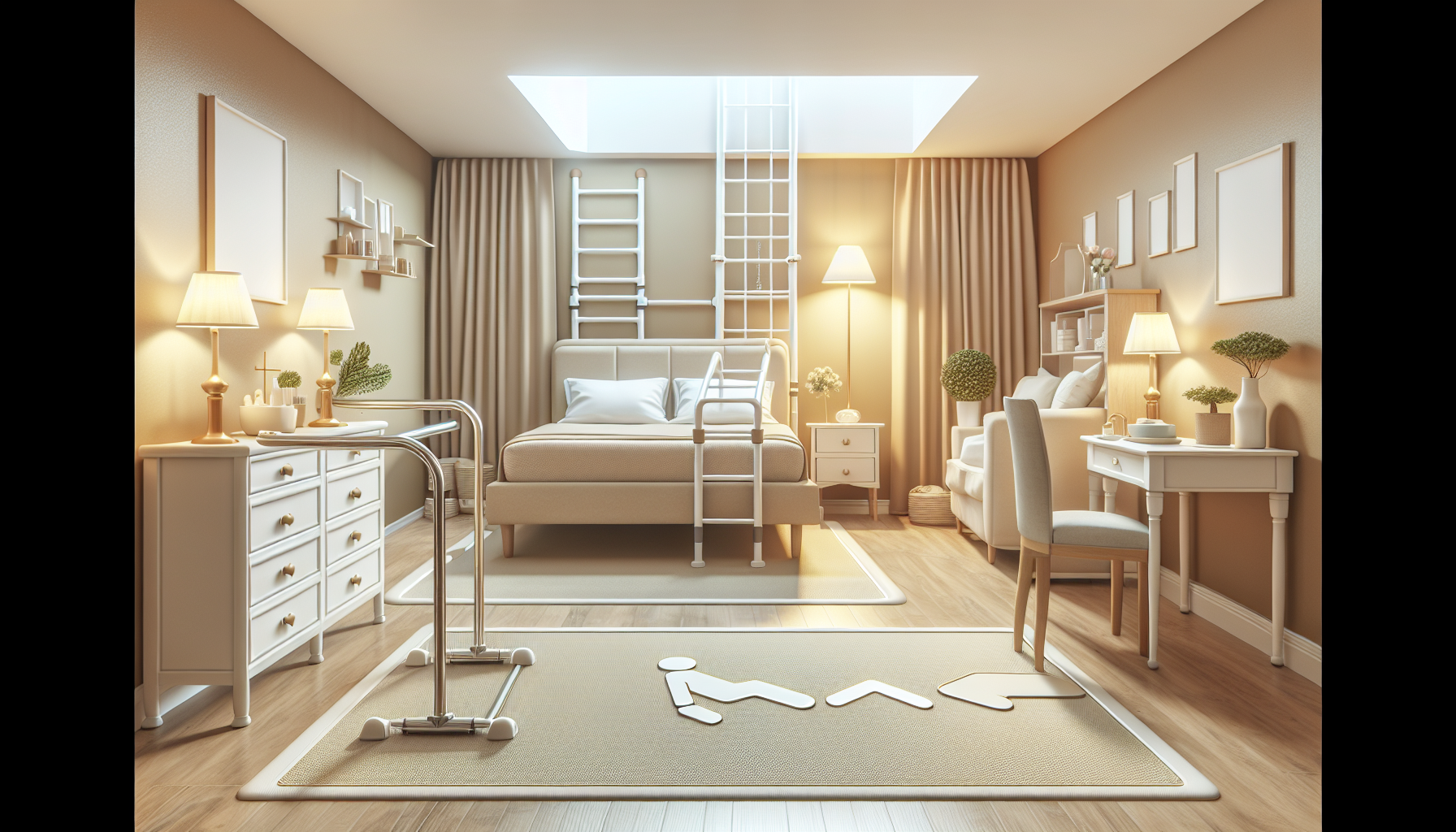
Bed rails require nuance. Full rails can create entrapment risks and are not appropriate for every user, especially those with cognitive impairment. Safer alternatives often include transfer poles, assist handles designed for sit-to-stand support, or hospital-style adjustable beds when medically justified. Any support product should be installed according to manufacturer specifications and tested under load. Nightstands should be stable enough to hold items but should never serve as primary weight-bearing supports unless specifically designed for that purpose. Seating in the bedroom should have firm cushions, arms, and a seat height that supports controlled standing. Ottomans, rolling chairs, and low upholstered benches may look appealing but frequently contribute to falls because they shift or compress at the wrong moment.
Lighting, Flooring, and Environmental Controls
Lighting is one of the highest-value bedroom safety upgrades because it improves orientation immediately. A layered system works best: overhead ambient light, a bedside task light, and low-level pathway lighting from bed to bathroom. Motion-activated plug-in lights can help, but placement matters. If the sensor activates too late or points toward the floor only, users may still step into shadow. Warm, even illumination usually works better than harsh directional beams that create glare. Light switches should be reachable from the bed and at the doorway. Smart bulbs and voice assistants can help some households, but they should not be the only method of control; internet outages, speech changes, or confusion can limit reliability.
Flooring should be stable, matte, and predictable. Wall-to-wall low-pile carpet can offer traction for some users, but thick carpet and soft pads interfere with walkers and wheelchairs. Hard flooring can work very well if it has slip-resistant texture and no loose mats. Small area rugs are among the most common bedroom hazards I remove during assessments. If a rug is essential, it needs a low profile, beveled edge, and high-quality nonslip backing, though removal is usually safer. Footwear is part of the flooring system. Non-slip, closed-heel shoes or grippy socks can reduce sliding, but socks alone may increase risk on smooth surfaces if they are worn out or poorly fitted. Temperature control also matters because rushing due to discomfort can lead to unsafe movements.
| Bedroom element | Safer choice | Common mistake | Why it matters |
|---|---|---|---|
| Bed height | Feet flat, controlled sit-to-stand | Mattress too high or too soft | Reduces failed transfers and sliding |
| Night lighting | Motion or easy-reach pathway lighting | Single bright overhead light only | Improves orientation without glare |
| Flooring | Low-pile or slip-resistant surface | Loose rugs and thick transitions | Prevents trips and walker interference |
| Furniture | Stable pieces with clear edges | Rolling, low, or decorative obstacles | Keeps routes open and support reliable |
| Bathroom route | Straight, uncluttered, well lit | Cords, baskets, narrow turns | Reduces nighttime fall exposure |
Bedroom-to-Bathroom Accessibility as One Safety System
Bathroom and bedroom accessibility should be treated as a single workflow, not two separate projects. Most nighttime falls happen during toileting trips, so the route, the bathroom entry, and the bathroom fixtures must be considered together. A bedside commode may be appropriate for some people after surgery or during acute illness, but if long-term use is expected, the room must still be arranged to preserve transfer space and privacy. In many homes, the best strategy is to improve the bathroom path first: add night lighting, remove thresholds where possible, widen clearance, and install grab bars at the toilet and shower based on actual transfer direction rather than generic placement.
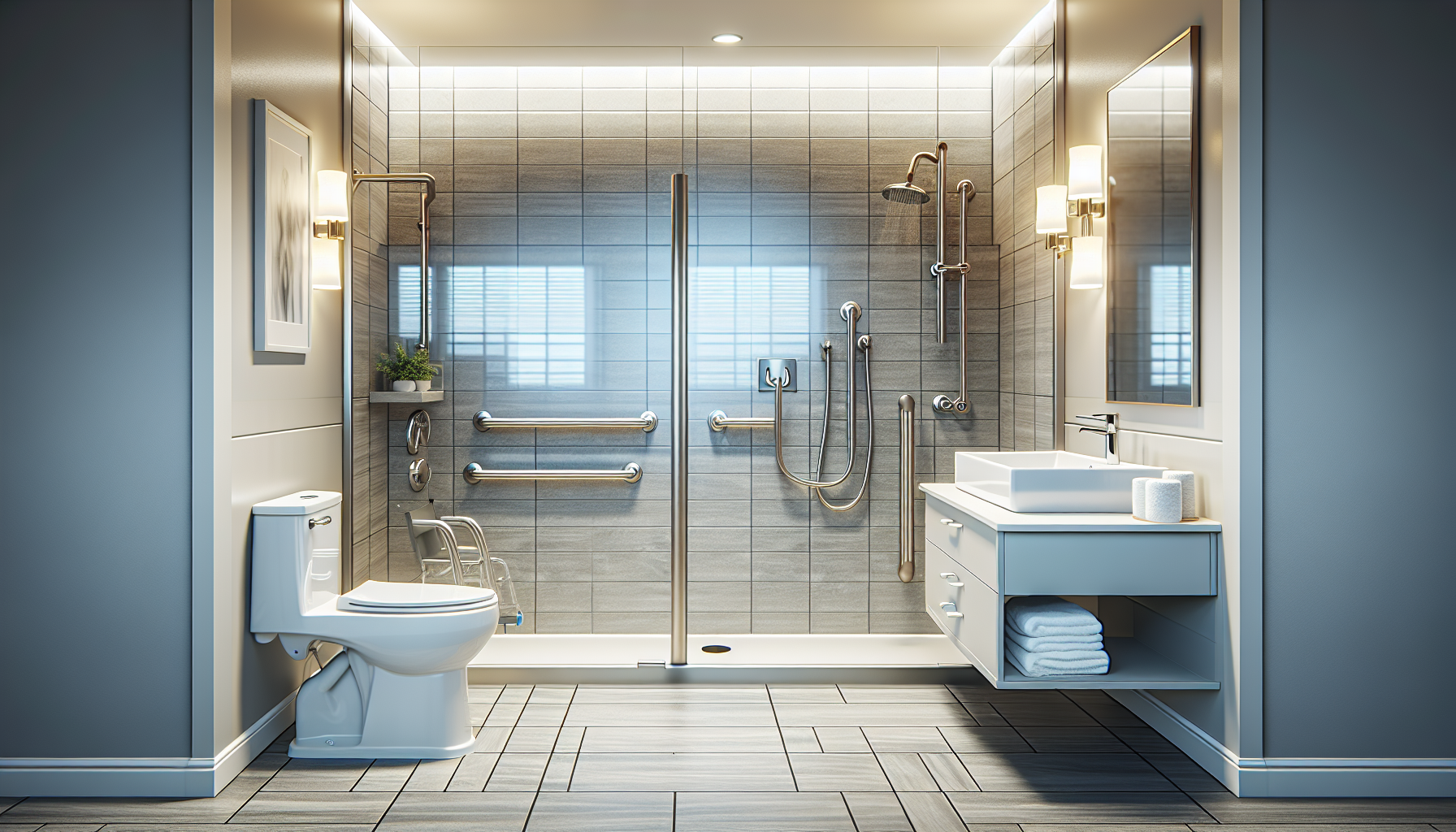
The bathroom itself should continue the same safety logic established in the bedroom. Use slip-resistant flooring, secure mats only if truly necessary, and maintain strong contrast between toilet, walls, and floor for low-vision users. Curbless or low-threshold showers are easier to access than tubs, and shower seating can reduce fatigue-related falls. Handheld showerheads and thermostatic controls improve safety by limiting twisting and sudden temperature changes. If the user employs a walker, cane, or wheelchair in the bedroom, verify that the device can be parked and maneuvered safely in the bathroom without blocking the door swing. In successful home modifications, every movement from lying in bed to washing up follows a predictable sequence with reachable supports and minimal decision points.
Technology, Monitoring, and Product Selection
Technology can strengthen a fall-proof bedroom environment, but it should solve a clearly defined problem. Adjustable beds can help users elevate the head for breathing, reduce effort during repositioning, and improve sit-up mechanics. Bed exit alarms may benefit some people with cognitive impairment, though they are only useful when caregivers can respond consistently. Pressure-sensitive mats, wearable fall detectors, and voice-activated emergency systems add another layer, especially for people who live alone. However, no device compensates for poor layout or bad transfer setup. I have seen expensive monitoring systems installed in rooms where a simple furniture rearrangement would have lowered risk more effectively.
When choosing products, prioritize compatibility with the user, not marketing claims. For example, “zero gravity” power beds may be comfortable, but what matters clinically is transfer height range, edge stability, hand control simplicity, and whether the frame leaves enough room for lifts or wheelchairs. The same principle applies to bedside rails, overbed tables, lift chairs, and mobility aids. Reputable manufacturers provide weight limits, dimensional drawings, and installation guidance. Standards from organizations such as the CDC’s STEADI initiative, the American Occupational Therapy Association, and accessibility guidance aligned with ADA design principles provide useful direction, even in private homes that are not legally bound by public-building rules. Good product decisions are measured by safer movement, not by how medical the room looks.
Assessment, Maintenance, and Habit Changes That Keep the Room Safe
The safest bedroom is not created by a one-time shopping list. It requires assessment, maintenance, and behavior change. Start with a room-by-room review using the person’s normal routine: getting into bed, rising at night, dressing, reaching storage, and moving to the bathroom. If possible, have an occupational therapist or physical therapist evaluate transfers, gait, and device fit. They can identify issues that are easy to miss, such as a walker set too low, a cane used on the wrong side, or a bed too far from the bathroom for someone with urgency. Medication review is equally important. A pharmacist or prescribing clinician can help identify drugs that increase dizziness, sedation, or nighttime confusion.
Maintenance tasks should be scheduled, not assumed. Check light bulbs, sensor batteries, grab bar fasteners, bed frame stability, flooring edges, and mobility aid tips. Replace worn shoes and socks with reliable traction. Keep pets out of the nighttime route if they create unpredictable obstacles. Encourage a pause before standing: sit up, place feet on the floor, orient to the room, then rise with support. Hydration, strength training, and balance exercises prescribed by clinicians can also reduce risk over time. The core lesson is straightforward: a fall-proof bedroom environment is built from small, consistent choices that support safe movement from sleep to standing and from bedroom to bathroom. Review your bedroom and bathroom as one connected safety zone, make the highest-impact changes first, and create a setup that protects independence every day.
Frequently Asked Questions
What does a “fall-proof bedroom environment” really mean?
A fall-proof bedroom environment is not a promise that falls can never happen. Instead, it is a practical approach to lowering risk by removing common hazards and making everyday movements safer, more stable, and easier to manage. In a bedroom, that means looking closely at the activities people perform several times a day, such as getting into and out of bed, walking to the door, reaching the closet, transferring to a chair, and heading to the bathroom at night. Each of those routines can involve balance changes, poor lighting, slippery surfaces, awkward furniture placement, or rushed movement.
The goal is to reduce the known causes of falls through smart design and consistent habits. This often includes clearing walking paths, improving lighting, choosing flooring that provides traction, securing rugs, keeping important items within easy reach, and selecting furniture with stable support and the right height. It can also include bed height adjustments, grab bars in connected bathroom areas, and motion-activated night lighting to reduce risk during overnight trips. A well-planned bedroom should feel calm, comfortable, and normal, not institutional. The best fall-prevention strategies are often the ones that blend into the room while quietly supporting safer movement every day.
What are the most common bedroom fall hazards to look for first?
The most common bedroom fall hazards are often ordinary items and layouts that people stop noticing over time. Clutter is one of the biggest issues, especially along the path between the bed and the door or bathroom. Shoes, cords, laundry baskets, pet items, small tables, and decorative pieces can become dangerous obstacles, particularly in low light. Loose area rugs, carpet edges, and slippery floors are also frequent causes of slips and trips. Even a beautiful bedroom can become unsafe if the floor surface does not provide reliable traction.
Lighting is another major factor. Many falls happen when someone gets out of bed during the night and tries to move through a dim room without enough visibility. If the light switch is hard to reach, or if there is a strong contrast between a dark bedroom and a brighter hallway or bathroom, the eyes may not adjust quickly enough. Furniture placement matters too. Narrow walking routes, unstable bedside tables, low benches, rolling chairs, and beds that are too high or too low can all increase risk. Reaching for support from furniture that shifts or tips is especially dangerous.
Less obvious hazards include bedding that drapes onto the floor, clothing that is difficult to put on while standing, and storage systems that require frequent bending, twisting, or climbing. If a person must reach high shelves, crouch for daily items, or balance on one foot to dress, the setup is working against safety. A good first step is to evaluate the bedroom at the times and in the conditions when falls are most likely, especially early morning, late at night, and during trips to the bathroom. That practical review often reveals the highest-priority changes very quickly.
How should a bedroom be arranged to make movement from the bed to the bathroom safer?
The safest bedroom layout creates a clear, direct, and obstacle-free path from the bed to the exit and, if possible, toward the bathroom. Start by identifying the exact route used most often at night. That route should be wide enough to walk through comfortably without turning sideways, stepping around furniture, or navigating decorative items. Bedside tables should not stick out into the walking path, and chairs, storage benches, baskets, and electrical cords should be moved away from travel areas. Every step from the bed should feel predictable and open.
Bed placement also plays an important role. Ideally, the bed should be positioned so that getting up does not require awkward twisting or squeezing through tight gaps. There should be a stable surface nearby, such as a sturdy nightstand or properly installed bed assist device, but not furniture that can slide or tip when used for support. The bed height should allow the person to sit with both feet flat on the floor before standing. If the bed is too tall, it can be hard to get stable footing. If it is too low, standing up may require extra effort and increase loss of balance.
Lighting along the bed-to-bathroom route should be layered and easy to activate. Motion-sensor floor lights, under-bed lighting, or plug-in night lights can help guide movement without requiring a person to search for a switch. If possible, use soft, consistent lighting rather than harsh glare. Flooring should remain consistent and slip-resistant throughout the route, with no sudden thresholds, curled rug edges, or slick transitions. In many homes, the safest arrangement is the one that removes unnecessary decisions and effort, allowing someone to wake, sit, stand, and walk with minimal physical and visual strain.
What bedroom features and products are most helpful for preventing falls without making the room look clinical?
Many fall-prevention features can be added discreetly, so the bedroom remains warm and inviting rather than medical in appearance. One of the most helpful upgrades is better lighting. Stylish bedside lamps with easy-touch controls, motion-activated night lights, and low-profile under-bed lighting can significantly improve nighttime visibility while blending naturally with the room. Window coverings that reduce glare during the day can also make visual navigation easier, especially for people with changing vision.
Furniture selection is equally important. A stable bed frame at the right height, a supportive chair with arms, and sturdy nightstands can all improve balance and transfers. Look for furniture that does not wobble and has rounded edges to reduce injury risk if someone does bump into it. If extra support is needed, some bed rails and bed assist handles are designed with a more residential appearance than older institutional models. Flooring choices matter as well. Low-pile carpet, slip-resistant surfaces, and firmly secured rugs tend to be safer than thick, plush materials or loose decorative runners.
Storage solutions can also improve safety while keeping the room attractive. Use drawers, shelves, and closet organizers that place frequently used items between about knee and shoulder height, reducing the need for bending or reaching overhead. Consider a bench or seating area that is stable and useful for dressing, but make sure it does not obstruct pathways. Even small adjustments, such as replacing hard-to-grip lamp switches, adding contrasting colors at furniture edges, or choosing easy-on footwear storage near the bed, can make a noticeable difference. The best products are the ones that support everyday movement so naturally that they become part of the room rather than standing out as equipment.
What daily habits help maintain a fall-safe bedroom over time?
A safer bedroom is not only about design; it also depends on routine. One of the most effective habits is keeping the room consistently tidy, especially the walking path from bed to door and bathroom. Items should be put away instead of left on the floor, and anything used at night, such as eyeglasses, a phone, medications, a flashlight, or mobility aids, should have a designated place within easy reach. This reduces hurried searching, awkward bending, and unnecessary movement in low light.
It also helps to slow down during transitions. Many falls happen not because the room is poorly arranged, but because a person stands too quickly, turns abruptly, or starts walking before feeling steady. Sitting at the edge of the bed for a moment before standing can help reduce dizziness and improve balance. Wearing supportive, non-slip footwear instead of socks on smooth flooring can also lower risk, especially during nighttime bathroom trips. Bedding should be kept clear of the floor so it does not catch underfoot.
Regular bedroom safety checks are another smart habit. Test lights, replace burnt-out bulbs, inspect rugs and flooring, confirm that furniture remains stable, and make sure cords have not drifted into walking areas. If physical ability, vision, or medication use has changed, the bedroom setup should be reviewed again, because the safest layout for one stage of life may not be ideal later on. In many cases, the most successful fall-prevention strategy is a combination of thoughtful room design and repeatable daily habits that make safe movement automatic.