Disability housing grants can make the difference between living in a home that creates daily barriers and living in one that supports safety, independence, and long-term stability. In practical terms, these grants are funds from federal agencies, state programs, local governments, nonprofit organizations, or specialized veterans’ programs that help pay for accessibility modifications, home repairs, rent support, down payment assistance, or in some cases the purchase or construction of accessible housing. I have worked with families comparing these programs, and the first challenge is always the same: people assume there is one universal disability housing grant, when the reality is a patchwork of programs with different rules, funding limits, and application processes. Understanding how disability housing grants work, who qualifies, and where each program fits is essential because housing costs remain high, accessible units remain limited, and modifications such as ramps, roll-in showers, widened doorways, stair lifts, and lowered counters are expensive. For many households, especially those relying on Supplemental Security Income, Social Security Disability Insurance, veterans’ benefits, or fixed retirement income, grants and assistance programs are not optional extras. They are often the only path to safe, usable housing.
This hub article explains the main categories of grants and assistance programs, how eligibility is typically determined, what documents applicants usually need, and where programs overlap. It also clarifies a common point of confusion: some “housing grants” are true grants that do not need repayment, while others are forgivable loans, deferred-payment loans, vouchers, or paired funding programs that combine grants with low-interest financing. Knowing that distinction matters before you apply, because repayment terms, occupancy rules, and income limits vary widely. If you are researching disability housing grants for yourself, a family member, or a client, this page gives you a complete starting point for the grants and assistance landscape under cost and financing options.
What disability housing grants usually cover
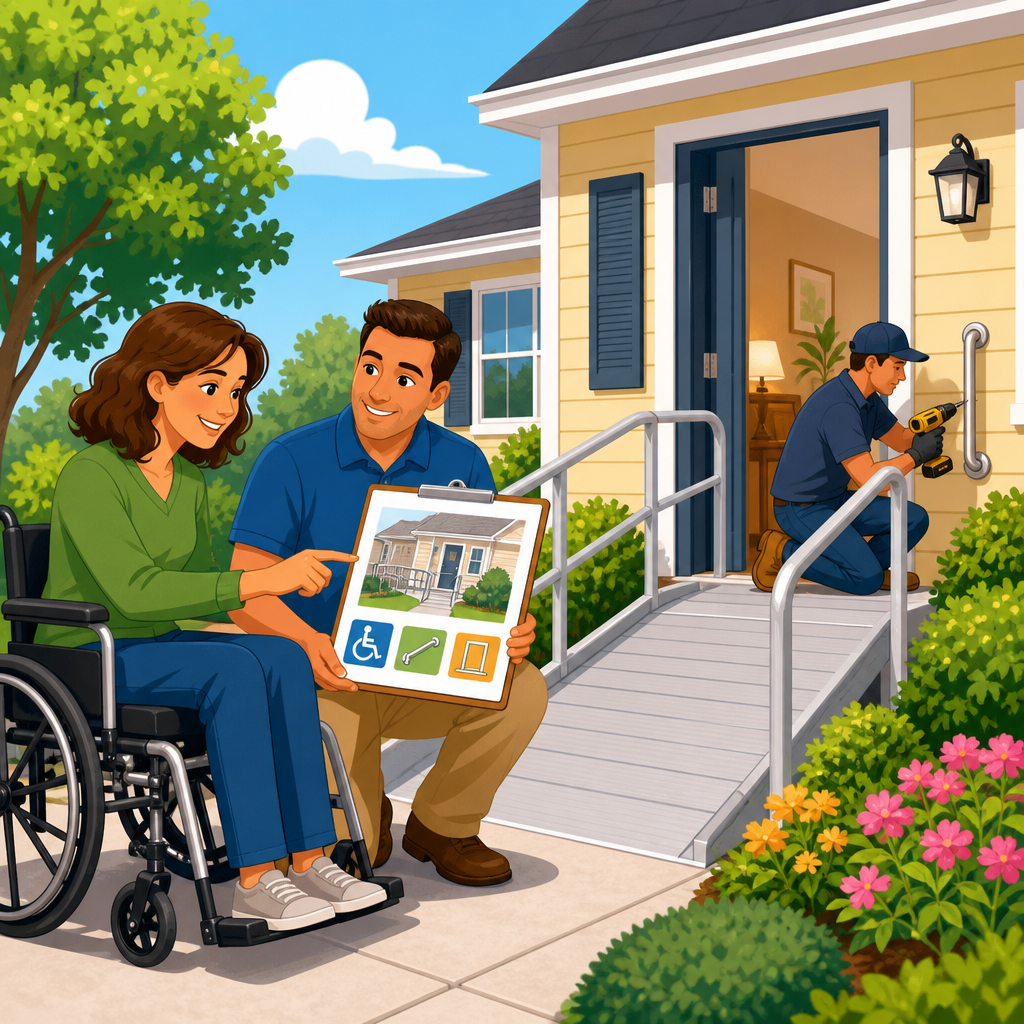
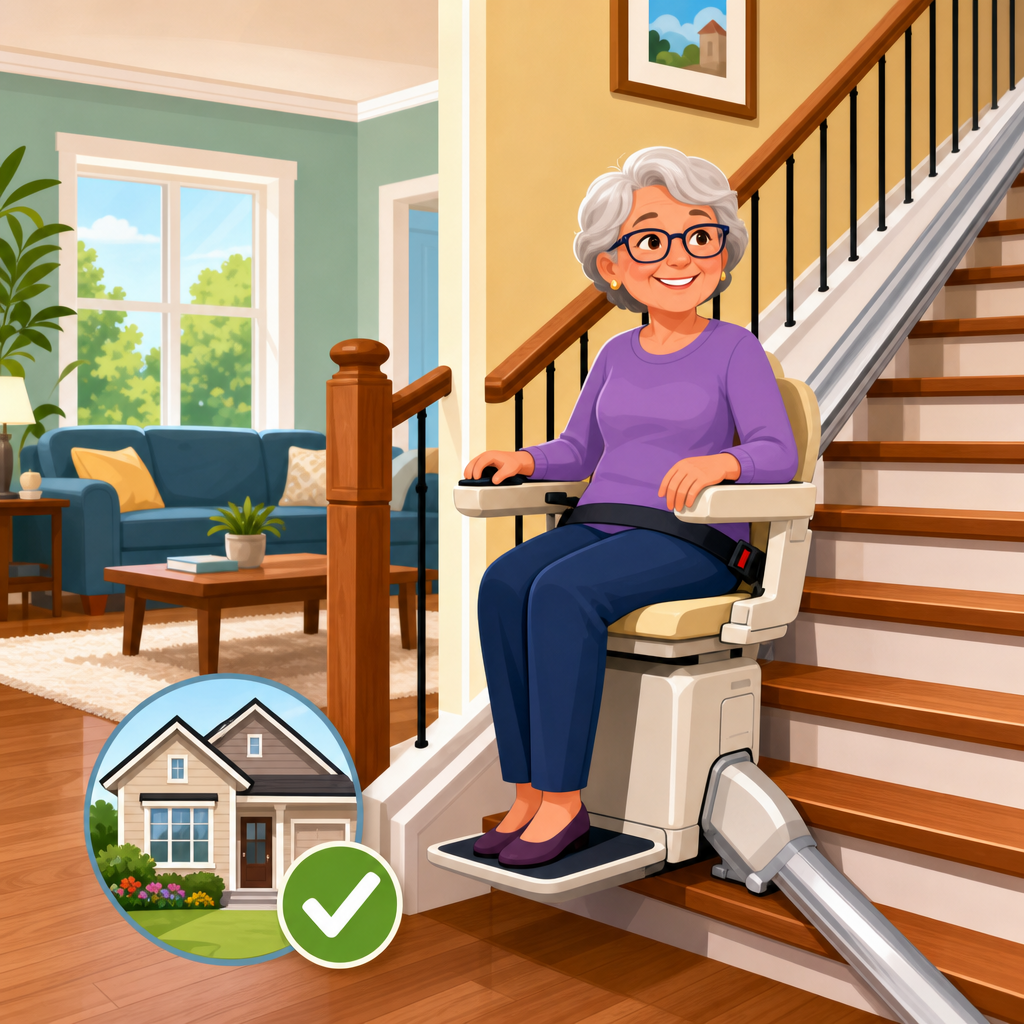
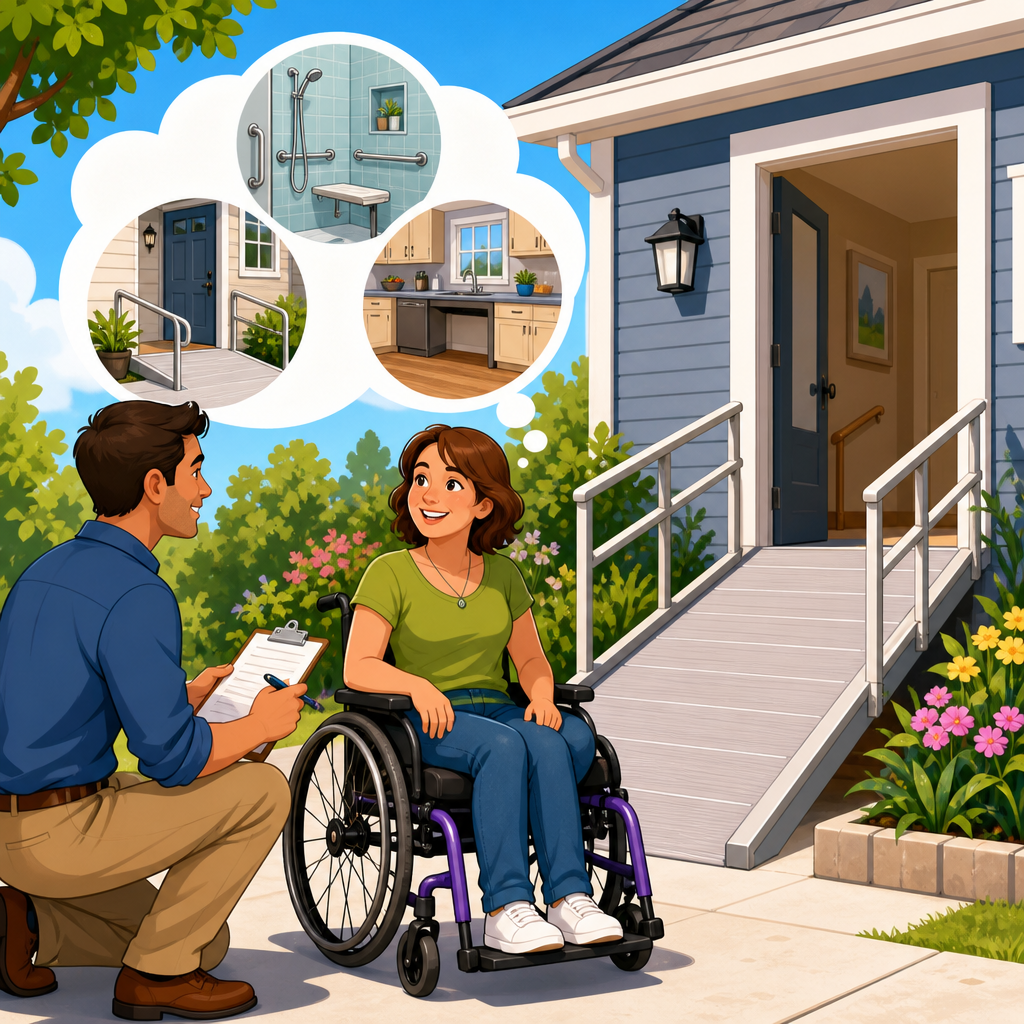
Disability housing grants generally fall into four practical use cases. First, there are home accessibility modification grants that fund changes such as wheelchair ramps, doorway widening, accessible bathrooms, grab bars, stair lifts, non-slip flooring, and kitchen adjustments. Second, there are home repair grants for health and safety issues that may not be disability-specific at first glance but directly affect accessibility, including roof repair, plumbing replacement, electrical updates, and heating or cooling improvements. Third, there are rental assistance programs that reduce monthly housing costs or help tenants obtain an accessible unit. Fourth, there are homeownership assistance programs that support down payments, closing costs, or the purchase, construction, or adaptation of an accessible home.
In practice, the category determines the funding source. For example, a veteran with a service-connected disability may use a dedicated federal grant for structural adaptations, while a low-income homeowner with mobility limitations may rely on a city rehabilitation program funded through the U.S. Department of Housing and Urban Development. A renter with a disability may not receive a grant for modifications directly, but may qualify for a voucher, a reasonable accommodation, or nonprofit support for move-in costs. The central question is not only “Do I have a disability?” but also “What housing outcome am I trying to fund?” That framing leads to better program matching and faster applications.
Major grant and assistance programs to know
The federal landscape starts with HUD, the U.S. Department of Agriculture, and the Department of Veterans Affairs. HUD does not offer one single disability grant for all households, but many local programs use HUD funding streams such as Community Development Block Grants and HOME Investment Partnerships funds to support accessibility modifications, rehabilitation, and affordable housing development. Public housing agencies also administer Housing Choice Vouchers, including project-based options and, in some areas, Mainstream Vouchers for non-elderly people with disabilities. These are not home modification grants, but they are a major part of disability housing affordability.
USDA Rural Development is important for homeowners in eligible rural areas. Section 504 Home Repair grants can help very low-income older homeowners remove health and safety hazards, and loans may be paired with grants for broader repairs. While this program is age-limited for grants, many disabled applicants find that a household member qualifies or that the loan portion still helps close a funding gap. The VA’s Specially Adapted Housing and Special Housing Adaptation grants are among the most clearly defined disability housing grants in the country. They support eligible veterans and service members with specific service-connected disabilities by funding home adaptations or assisting in the purchase or construction of a suitable home.
States, counties, and cities often provide the programs that people actually use. Housing rehabilitation departments, disability resource agencies, Medicaid waiver programs, state assistive technology programs, and nonprofit organizations frequently administer grants or small-dollar modification funds. Rebuilding Together, Habitat for Humanity affiliates, Centers for Independent Living, and disease-specific charities may help with labor, materials, case management, or gap funding. Because local delivery matters so much, the same applicant can be denied in one city due to exhausted funds and approved in another because a new grant cycle opened.
| Program type | What it can pay for | Typical qualifiers | Example |
|---|---|---|---|
| Accessibility modification grant | Ramps, roll-in showers, lifts, widened doors | Documented disability, ownership or landlord approval | VA housing adaptation grant |
| Home repair assistance | Roof, electrical, plumbing, HVAC, hazard removal | Low income, owner occupancy, safety need | Local HUD-funded rehab program |
| Rental assistance | Ongoing rent subsidy or accessible unit support | Income limits, disability status, waitlist placement | Housing Choice Voucher |
| Homeownership assistance | Down payment, closing costs, accessible purchase support | Income limits, first-time buyer rules, occupancy requirement | State housing finance agency program |
Who qualifies for disability housing grants
Eligibility usually depends on five factors: disability status, income, housing status, property location, and intended use of funds. Disability status may be established through Social Security award letters, physician documentation, VA disability ratings, Medicaid eligibility records, or other formal proof. Some programs require that the disability be permanent or long term; others only require that a medical condition creates a functional limitation affecting daily living. In my experience, programs focused on modifications care less about diagnosis labels than about documented functional need. A letter explaining why a ramp, zero-step entry, or accessible bathroom is medically necessary can be more persuasive than a stack of unrelated medical records.
Income is the next filter. Many grant programs serve low-income or very low-income households, often using area median income limits published annually by HUD. For example, a city program may cap eligibility at 80 percent of area median income, while a deeper subsidy may be reserved for households at 50 percent or below. Housing status matters because owners, renters, and prospective buyers do not qualify for the same programs. Renters often need written landlord approval before modifications can be funded. Buyers may need mortgage preapproval to access assistance tied to purchase transactions. Location matters because federal funds are distributed locally, rural programs use geographic eligibility maps, and some nonprofit grants are restricted by county or state.
The intended use of funds is equally important. A grant may cover a bathroom remodel if it is accessibility-driven, but not a cosmetic renovation. It may pay for a permanent ramp but not a temporary portable solution. It may support structural changes to a primary residence but not a vacation property. The most successful applicants match the requested improvement closely to the program’s stated purpose and provide clear evidence that the work addresses health, safety, mobility, or independent living needs.
How to apply and improve your approval chances
The application process is usually document-heavy, and delays often come from incomplete files rather than formal denials. Most programs ask for proof of identity, proof of disability, proof of income, recent tax returns or benefit letters, mortgage or lease documents, homeowner’s insurance information, contractor estimates, photographs of the problem area, and a written explanation of need. If the property is owned, applicants may need to show current taxes, clear title, or lender consent. If the property is rented, a landlord agreement is often mandatory. For adaptation grants, detailed scope-of-work documents make a real difference because agencies want to confirm that funds will be used on eligible improvements.
There are three practical ways to improve approval odds. First, get an occupational therapist, physician, or rehabilitation professional to document functional limitations and recommended modifications in plain language. Second, obtain multiple contractor bids that specifically describe accessible features, measurements, materials, and code compliance. Third, apply to layered sources at the same time. Many households fund a project through a combination of a local grant, nonprofit labor, state assistive technology support, and a small loan or personal contribution. Layering is common, not a red flag. In fact, administrators often expect it because single-source awards rarely cover a full accessibility remodel.
Timing also matters. Some programs operate on fixed annual cycles, while others are first-come, first-served until funds run out. Waiting lists for vouchers and local rehabilitation programs can be long, so early application is essential. If a household is facing hospital discharge, fall risk, or immediate accessibility barriers, ask whether the program has an expedited track for health and safety cases. Not every agency does, but some prioritize urgent need when documentation is strong.
Common barriers, tradeoffs, and mistakes to avoid
The biggest barrier is limited supply of funding. Demand for disability housing grants far exceeds available money in many markets, especially for owner-occupied rehabilitation and accessible rental units. Even strong applicants may wait months. Another barrier is misunderstanding what counts as a grant. Deferred loans, forgivable loans, and lien-based assistance can still be useful, but applicants should read the terms carefully. A forgivable loan may require the homeowner to remain in the property for five to ten years. Selling early can trigger repayment. That is not inherently bad, but it must be planned for.
A second common mistake is starting construction before written approval. Many programs will not reimburse completed work, even when the modification is clearly necessary. Another is hiring a contractor who does not understand accessibility standards. A beautiful bathroom can still fail functionally if turning radius, threshold height, grab bar backing, shower controls, and clear floor space are wrong. When possible, use contractors who have completed aging-in-place or accessibility projects and who understand Fair Housing Act design principles, Americans with Disabilities Act technical concepts where relevant, and local building codes.
Applicants also sometimes focus only on federal options and miss local resources. In actual casework, smaller city grants, church-based repair ministries, civic disability funds, and hospital community benefit programs often bridge the last few thousand dollars that make a project possible. Finally, do not assume denial is final. Some denials are procedural, such as missing documents, expired income verifications, or applications submitted after funds closed. Reapplying in the next cycle with a stronger file is often worthwhile.
How this hub fits your broader financing strategy
Grants and assistance programs work best when viewed as one part of a full disability housing financing plan. A household may combine a grant with Medicaid waiver services, a state housing finance agency mortgage, Section 8 rental support, VA benefits, nonprofit case management, or tax-related savings tied to medical expenses where applicable. The right mix depends on whether the goal is to stay in place, move to an accessible rental, buy a home, or adapt an existing property. This is why grants and assistance deserve a hub page under cost and financing options: they connect directly to home modification financing, accessible mortgage products, rental affordability programs, veteran housing benefits, and local rehabilitation resources.
If you are building a research checklist, start by identifying your housing goal, confirm whether you are renting or owning, gather proof of disability and income, and contact your local housing department, public housing agency, Center for Independent Living, and state housing finance agency. Then ask a focused question: what programs in this area help pay for accessibility modifications, affordable rent, or accessible home purchase costs for a person with a disability? That wording gets better answers than simply asking for “housing help.” Disability housing grants are real, but qualification depends on matching the right program to the right need, documenting that need clearly, and applying early. Use this hub as your starting point, then move into the specific program categories most relevant to your situation and begin the application process.
Frequently Asked Questions
What are disability housing grants, and what can they be used for?
Disability housing grants are financial assistance programs designed to help people with disabilities obtain safer, more accessible, and more stable housing. Unlike loans, grants typically do not need to be repaid as long as the recipient follows the program rules. These funds may come from federal agencies, state housing departments, county or city programs, nonprofit organizations, and veterans’ assistance programs. The exact purpose of each grant varies, but many are intended to remove barriers that make daily living more difficult or unsafe.
In practice, disability housing grants may be used for a wide range of housing-related needs. Some programs pay for home accessibility modifications such as wheelchair ramps, stair lifts, widened doorways, roll-in showers, grab bars, lowered countertops, accessible flooring, and improved entrances and exits. Others focus on critical home repairs, including plumbing, roofing, electrical work, weatherization, or fixing health and safety hazards that affect a person’s ability to remain in the home. There are also grants and assistance programs that help with rent, security deposits, utility costs, down payment assistance, or even the purchase or construction of an accessible home in certain cases.
Because each grant has its own rules, it is important to review the program details carefully. Some are limited to homeowners, while others help renters, prospective homebuyers, or veterans with service-connected disabilities. The most effective way to think about disability housing grants is as targeted support: they are meant to solve specific housing challenges that directly affect accessibility, independence, and long-term quality of life.
Who typically qualifies for disability housing grants?
Eligibility for disability housing grants depends on the specific program, but most grants look at a combination of disability status, income, housing situation, and the type of assistance being requested. In many cases, applicants must provide documentation showing that they have a qualifying disability or a medical condition that creates a need for accessible housing features or supportive housing assistance. This may come from a physician, licensed medical provider, Social Security disability records, Veterans Affairs documentation, or another official source, depending on the grant.
Income is also a major factor. Many housing grants are intended for low-income or very low-income households, which means the program will compare your income to area median income limits or other local standards. Some grants prioritize households facing the greatest financial hardship, while others serve a broader range of applicants. Your status as a homeowner, renter, veteran, senior, or first-time homebuyer can also affect eligibility. For example, a home modification grant may require that you own and occupy the property, while rental assistance may be reserved for tenants or people at risk of homelessness.
Some programs also consider practical need. In other words, it may not be enough simply to have a disability; you may need to show that the requested improvement or housing support is necessary for mobility, safety, daily functioning, or independent living. A program may ask for contractor estimates, inspection reports, photographs of the accessibility issue, or a written explanation of how the modification will improve access. Since eligibility standards vary widely, applicants should expect to gather paperwork and confirm requirements directly with the agency or organization administering the grant.
How do I apply for a disability housing grant?
Applying for a disability housing grant usually starts with identifying programs that match your specific housing need. That means determining whether you need help with accessibility modifications, emergency home repairs, rent support, down payment assistance, or specialized veterans’ housing resources. Once you know the type of help you need, you can search through federal housing resources, state housing finance agencies, local government community development offices, public housing agencies, nonprofit disability organizations, and veterans’ programs. Many applicants find that the best results come from contacting multiple sources rather than relying on a single program.
The application process often requires detailed documentation. Common items include proof of identity, proof of disability, income verification, tax returns or benefit statements, proof of homeownership or a lease agreement, bank statements, estimates from licensed contractors, medical letters explaining the need for modifications, and photos or inspection reports showing the current condition of the home. Some programs require an in-home assessment before approval, especially when the grant is being used for structural accessibility changes. Others may require you to use approved contractors or wait for formal approval before beginning any work.
It is also important to pay attention to deadlines, funding cycles, and waiting lists. Some grants are available year-round, but others open only during limited application windows and may close quickly once funding is exhausted. If you are denied, do not assume that assistance is no longer possible. You may qualify for a different program, be able to appeal the decision, or strengthen a future application by providing more complete documentation. Staying organized, asking questions early, and keeping copies of everything you submit can make the process much smoother.
What documents or proof will I usually need to qualify?
Most disability housing grant programs require applicants to verify both personal eligibility and housing-related need. While requirements differ, you should generally expect to provide government-issued identification, proof of residency, and documentation showing your disability status. This can include Social Security Disability Insurance or Supplemental Security Income award letters, medical records, a doctor’s statement, or disability documentation from the Department of Veterans Affairs if you are a veteran. The goal is to show not only that you have a qualifying condition, but also that the condition creates a legitimate housing accessibility or stability need.
Financial documentation is almost always required. Programs commonly ask for recent pay stubs, benefit statements, tax returns, bank statements, and records of other household income. If the grant has income limits, the agency will use these documents to determine whether your household falls within the allowed range. For housing-specific grants, you may also need to provide proof of homeownership, mortgage statements, property tax records, homeowners insurance information, or a copy of your lease if you rent. Some programs for modifications may require landlord approval if the property is not owner-occupied.
When the grant is intended for repairs or accessibility improvements, applicants are often asked to submit contractor bids, repair estimates, architectural plans, or an occupational therapist’s recommendation. Photos of the area needing modification and inspection reports can strengthen the application by clearly showing why the work is necessary. If the funding is for rent or purchase assistance, you may instead need documents related to the unit, seller, or lender. Gathering these materials in advance can save time and reduce delays, especially because many programs will not review incomplete applications.
Can I receive more than one type of housing assistance if I have a disability?
Yes, in many situations a person with a disability may be able to receive more than one form of housing assistance, but it depends on the rules of each program. Some forms of aid can be combined, while others cannot overlap or “duplicate benefits.” For example, someone might receive a local grant for accessibility modifications and also qualify for a separate state or federal program that helps with utility costs, supportive services, or rental assistance. Veterans may also qualify for specialized housing grants through the VA while still exploring additional community-based resources for repairs or accessibility-related needs.
The key issue is whether the funding sources are paying for different needs or the same expense. Programs generally do not allow applicants to be reimbursed twice for the same home repair, modification, or housing cost. However, a household may still be eligible for layered support if each source serves a distinct purpose. One program might cover a wheelchair ramp and bathroom modifications, while another helps with a security deposit or down payment. In some cases, combining assistance is exactly what makes a housing solution affordable and realistic.
Because coordination matters, it is wise to tell each agency about any other benefits or grants you are receiving or applying for. That transparency helps avoid delays, compliance issues, or future repayment problems. A housing counselor, case manager, disability advocate, or local nonprofit can often help you understand which programs work well together and which ones have restrictions. If your needs are significant, do not assume one grant is your only option. Many successful applicants build a package of resources that together support accessibility, affordability, and long-term housing stability.