Long-term care insurance can help pay for some services that make aging at home safer, but whether it covers stair lifts or other home modifications depends on the policy, the benefit trigger, and how the insurer defines eligible expenses. For families asking, “Does insurance cover chair lifts?” the most accurate answer is: sometimes, but not usually in the straightforward way people expect. In my experience reviewing policies with clients and coordinating claims with care managers, confusion starts because people group several products together. Medicare, private health insurance, long-term care insurance, disability riders, veterans benefits, and state waiver programs all follow different rules, and a stair lift may be treated as durable medical equipment, a home accessibility modification, or a convenience item depending on the program.
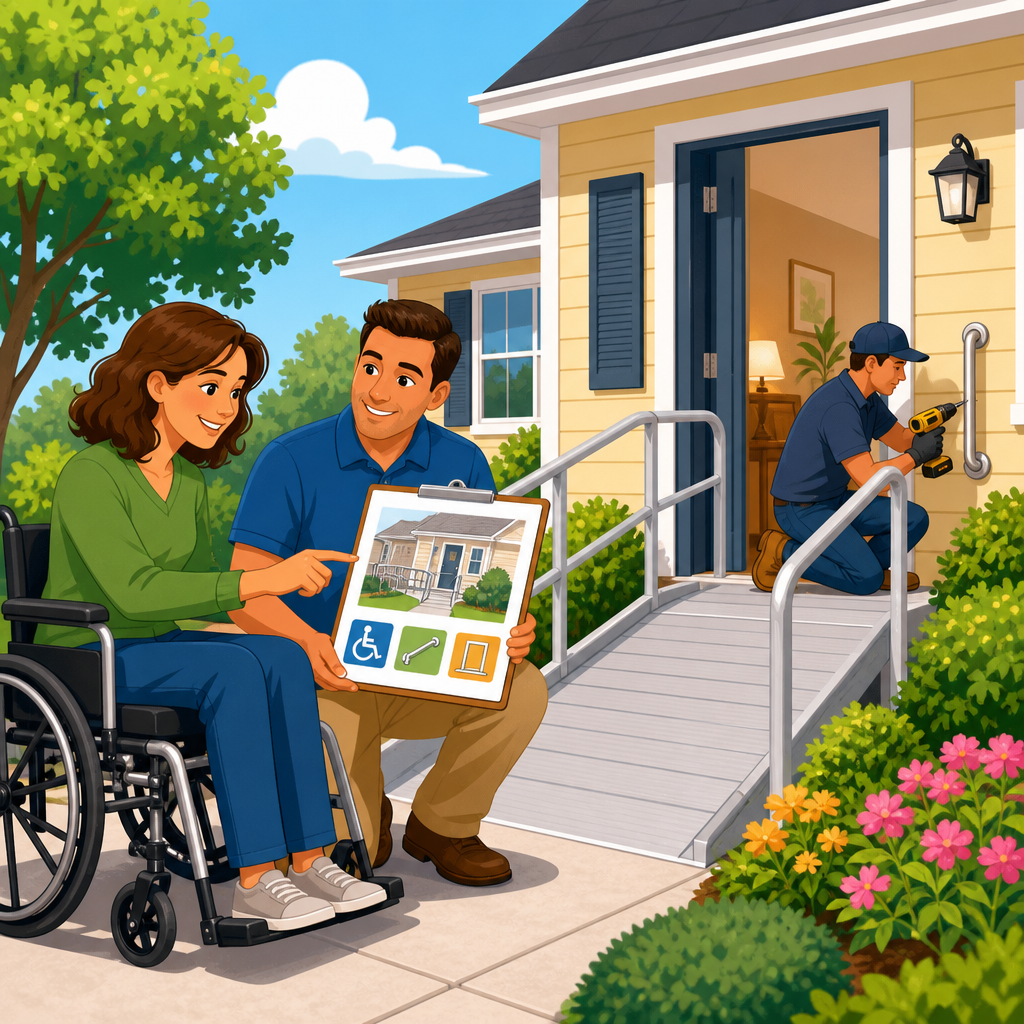
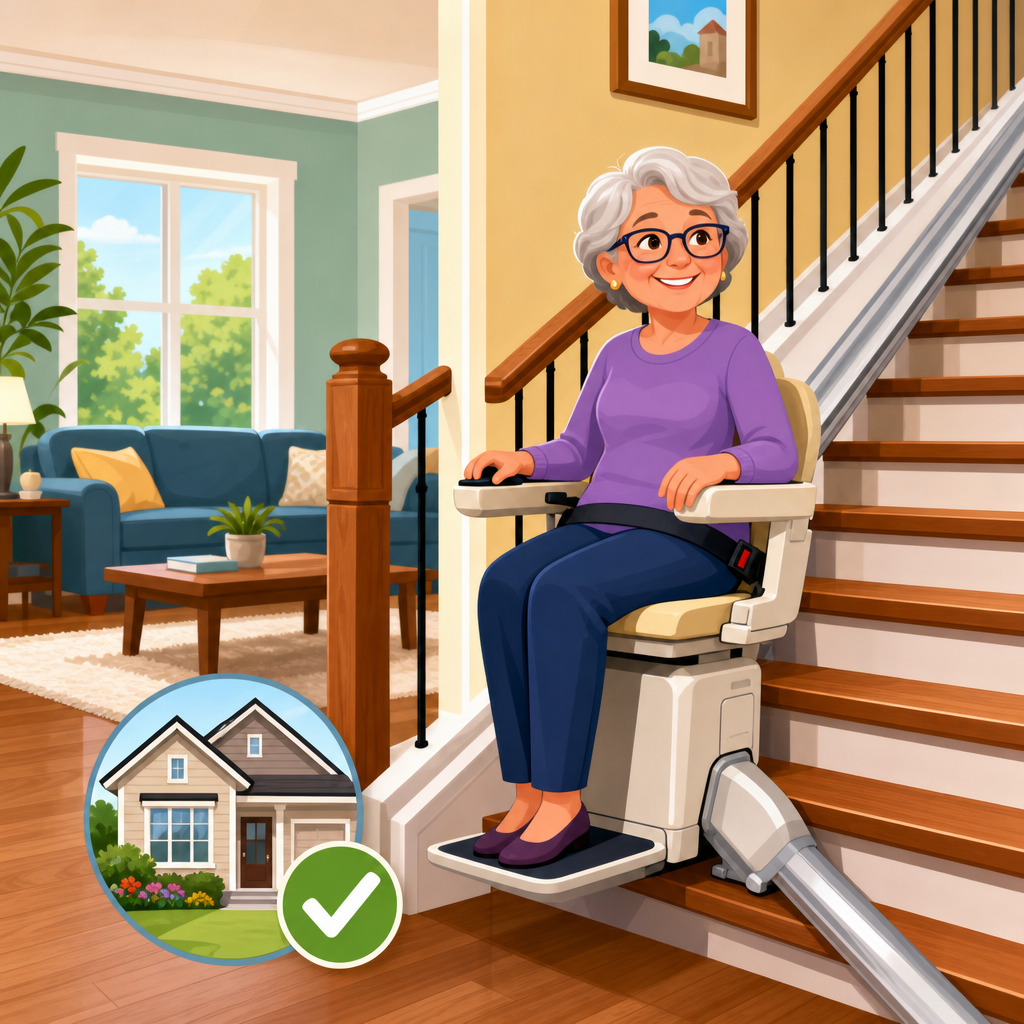
A stair lift, often called a chair lift for stairs, is a motorized seat attached to a rail that carries a person up and down a staircase. Home modifications include changes such as grab bars, ramps, widened doorways, walk-in showers, transfer benches, non-slip flooring, and improved lighting. Long-term care insurance is designed primarily to pay for custodial care when a person needs help with activities of daily living such as bathing, dressing, transferring, toileting, continence, or eating, or when they have severe cognitive impairment. Because these policies were built around care needs rather than construction costs, coverage for home equipment varies widely.
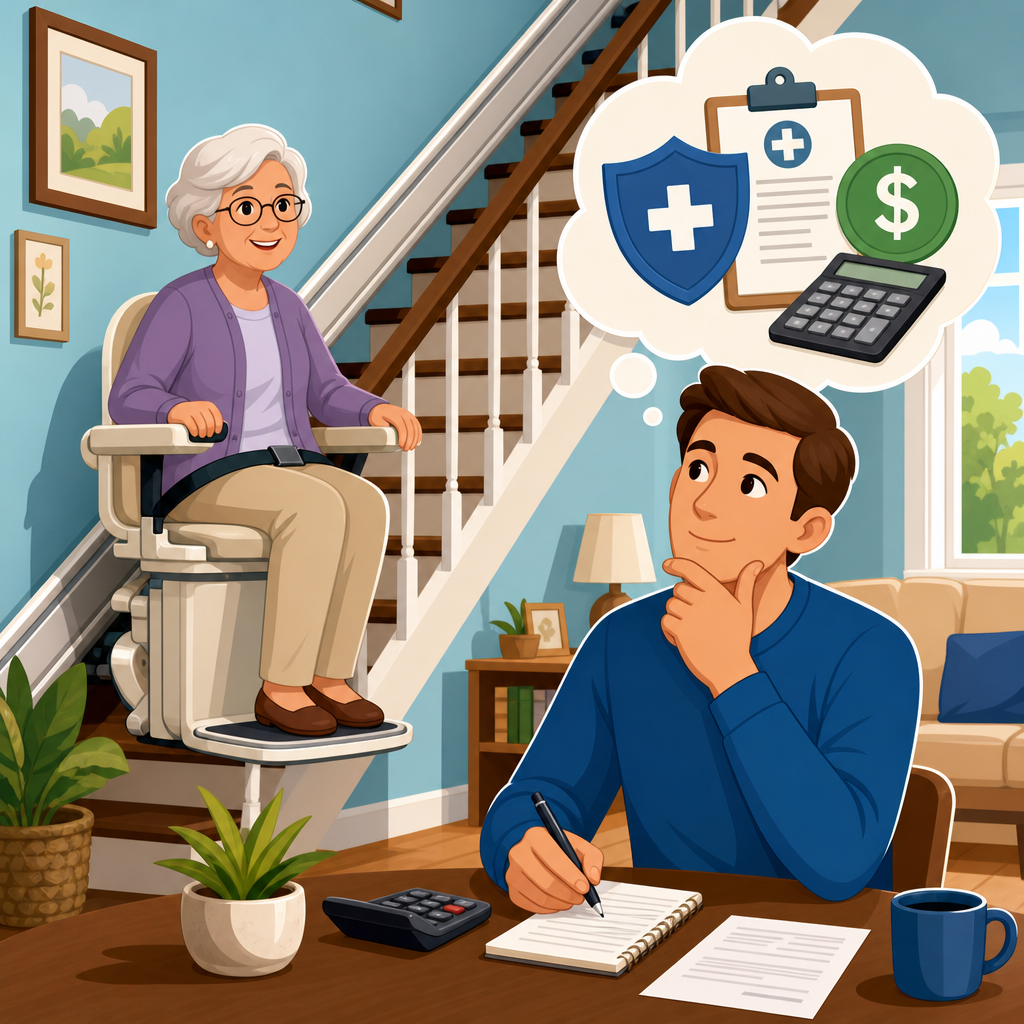
This matters because stair lifts are expensive enough to delay needed safety improvements. A straight stair lift commonly costs about $2,000 to $6,000 installed, while a curved model often ranges from $10,000 to $20,000 or more because it must be custom built. Broader home modifications can cost even more. When a family is trying to keep someone out of assisted living or prevent a fall after hospitalization, the question is not academic. Knowing which insurance source may contribute, what documentation is required, and where policy limitations usually appear can save weeks of back-and-forth and thousands of dollars in avoidable spending.
As a hub article under cost and financing options, this guide explains what long-term care insurance may cover, why standard health insurance often does not, how benefit triggers affect claims, and what alternatives to check when a policy excludes stair lifts. It also addresses related questions searchers usually have: Are chair lifts covered by Medicare? Can a doctor prescribe a stair lift? What home modifications are reimbursable? And what should you ask the insurer before buying equipment? Clear answers up front make the next step easier: matching the right funding source to the right type of modification.
How long-term care insurance approaches stair lifts and home modifications
Most long-term care insurance policies do not automatically list stair lifts as a standard covered item. Instead, they pay a daily or monthly benefit once the insured meets the policy’s benefit trigger and receives covered long-term care services under a plan of care. That structure matters. If the policy reimburses only licensed home care, adult day care, assisted living, nursing home care, or hospice-related custodial services, the stair lift itself may not be payable even if it clearly helps the person remain at home. If the policy includes a home care rider, caregiver training benefit, care coordination benefit, or home modification benefit, then a portion of the cost may qualify.
Older indemnity-style policies are sometimes more flexible because they pay a fixed cash benefit after eligibility is established, regardless of the exact item purchased, so long as claim conditions are met. Reimbursement policies are stricter. They usually require itemized invoices and proof that the expense falls within a covered category. Hybrid life insurance policies with long-term care riders can also differ sharply. Some allow broad use of monthly benefits after qualification, while others mirror traditional reimbursement standards. The only safe rule is to read the schedule of benefits, exclusions, elimination period language, and definitions section.
In practical terms, insurers tend to approve stair lift-related expenses when they can connect the modification to a covered care objective: reducing transfer risk, enabling access to a bathroom or bedroom, supporting a home care plan, or delaying institutional placement. Even then, approval is not guaranteed. Policies often exclude items considered home improvements, environmental alterations, or equipment not provided by a licensed caregiver. I have seen carriers deny the hardware but approve additional in-home care hours, essentially saying the policy will pay for a caregiver to assist on the stairs rather than the lift that might reduce dependence. That tradeoff frustrates families, but it reflects how many contracts were drafted.
What “Does insurance cover chair lifts?” really means across insurance types
Many people use the phrase “insurance” broadly, but coverage decisions differ by program. Medicare generally does not cover stair lifts because they are usually not classified as durable medical equipment under Part B. A doctor’s prescription alone does not create Medicare coverage. Some Medicare Advantage plans may offer limited supplemental home support benefits, but stair lifts are still uncommon and plan-specific. Medicaid is more promising in certain states through Home and Community-Based Services waivers, Money Follows the Person programs, or managed long-term services and supports plans that may authorize environmental accessibility adaptations.
Private health insurance typically follows logic similar to Medicare and often excludes stair lifts as non-covered home modifications. Workers’ compensation or liability settlements may fund a lift if an injury created the mobility limitation. Veterans may have stronger options through programs such as the Home Improvements and Structural Alterations grant, the Specially Adapted Housing grant, or support coordinated through the Department of Veterans Affairs, depending on service-connected disability status. Long-term care insurance sits in the middle: more relevant than standard health insurance for aging-in-place needs, but far from universal in how it handles equipment and construction.
| Funding source | Typical stance on stair lifts | What improves approval odds |
|---|---|---|
| Medicare | Usually not covered | Very limited exceptions through supplemental plan features, not standard Part B |
| Private health insurance | Commonly excluded | Strong medical necessity documentation rarely overcomes contract exclusions |
| Long-term care insurance | Sometimes covered indirectly or by rider | Benefit eligibility met, care plan supports aging in place, policy allows home modification expenses |
| Medicaid waiver programs | Often possible in eligible states | Functional need assessment, prior authorization, approved contractor rules |
| VA housing and adaptation benefits | Can be covered for qualified veterans | Service connection, clinical justification, correct grant pathway |
The takeaway is simple: if your core question is “Does insurance cover chair lifts?” you need to identify the insurance type before you can predict the answer. Families lose time by calling a stair lift dealer first, then assuming every denial means no help exists. A better sequence is to verify all funding channels at once: long-term care policy, state Medicaid waiver eligibility, veterans benefits, local Area Agency on Aging resources, and tax treatment of medically necessary home modifications. That broader view often produces partial funding even when one source says no.
Policy triggers, documentation, and the claims process
Long-term care insurance claims begin with eligibility, not equipment. Most tax-qualified policies use the federal standard under HIPAA: the insured must be unable to perform at least two activities of daily living for at least 90 days, or require substantial supervision due to severe cognitive impairment. The insurer will usually request a licensed practitioner’s certification, care notes, and sometimes an assessment by its own nurse or claims professional. If the claimant has not met the trigger, the stair lift question often ends there because no benefits are payable yet.
Once eligible, documentation becomes decisive. The strongest claim package includes a physician or occupational therapist statement linking the stair lift to a functional limitation, a home safety assessment, a plan of care showing why upstairs access is necessary, contractor estimates, and product specifications. Occupational therapists are especially useful because they frame the issue in terms insurers understand: fall risk, transfer safety, access to toileting and bathing, caregiver burden, and avoidance of unsafe manual assistance on stairs. A generic note saying “patient would benefit from stair lift” is much weaker than a detailed functional assessment.
Families should also ask the insurer five direct questions before installation: Is home modification an eligible expense under this policy? Is prior authorization required? Does the elimination period apply, and can the stair lift expense satisfy it? Must the vendor be licensed or preapproved? If the lift is denied, can related labor, care coordination, or alternative equipment be considered? I recommend getting answers in writing. Verbal statements from customer service can be helpful, but the formal claims review will be based on policy language and submitted records.
Another nuance is reimbursement timing. Some carriers require the claimant to pay first and submit receipts later. Others will issue benefits only after covered care services start, meaning the family may need upfront cash. That cash-flow issue matters because stair lifts are often installed quickly after a hospitalization, stroke, or progressive neurological decline. If immediate safety is the priority, explore financing, short-term rentals for straight staircases, and community grants while the insurance determination is pending.
When stair lifts are denied: common reasons and practical alternatives
The most common denial reason is that the policy does not cover environmental modifications. The second is that the claimant has not yet met benefit eligibility. Other frequent reasons include lack of prior authorization, insufficient medical justification, or a determination that the modification is for general convenience rather than necessary care. Curved stair lifts face another obstacle: their higher price can make insurers scrutinize whether a first-floor bedroom conversion or bathroom adaptation would be more cost-effective.
Denial does not always mean the conversation is over. First, appeal the decision using the exact exclusion or definition cited by the insurer. If the denial says the item is not medically necessary, respond with an occupational therapy assessment and fall history. If it says the policy covers care but not equipment, ask whether a cash indemnity benefit is available after eligibility. If the elimination period is the issue, clarify whether home care invoices, adult day care, or assisted living days can satisfy it while you arrange the modification.
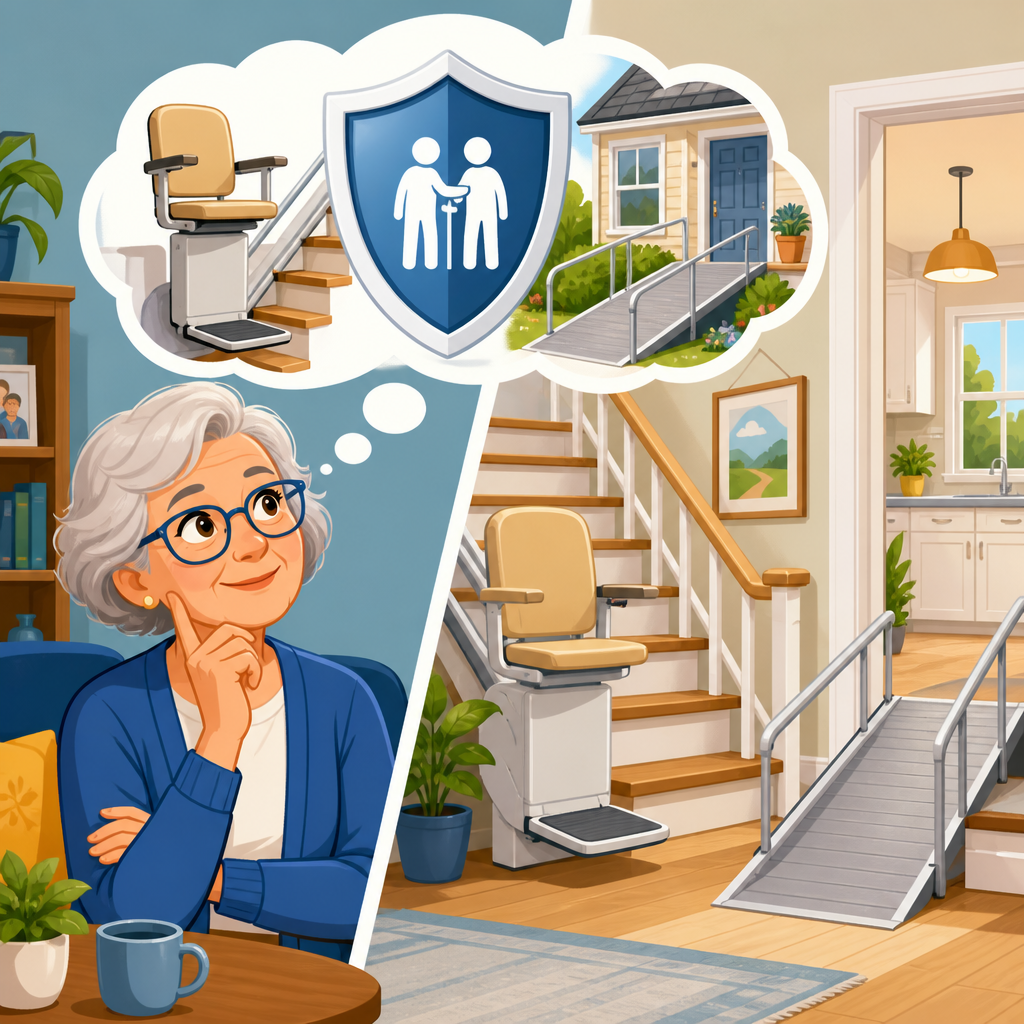
Second, compare the stair lift with alternative aging-in-place modifications. Sometimes a ramp, vertical platform lift, first-floor bedroom setup, toilet riser, or bathroom remodel creates a safer outcome at lower total cost. Third, review non-insurance support. Medicaid waivers, state assistive technology loan programs, nonprofit reuse networks, disease-specific charities, and local accessibility grants may fill funding gaps. Certain medically necessary home modifications may also qualify as deductible medical expenses if total eligible medical expenses exceed the applicable IRS threshold and the improvement does not increase home value beyond the medical need. A tax professional should confirm the specifics.
How this hub fits your financing research and next steps
For most households, the answer to “Does insurance cover chair lifts?” is not a simple yes or no. Long-term care insurance may help, especially when the policyholder has already met benefit triggers and the contract allows flexible home care spending or specific home modification benefits. Standard health insurance and Medicare usually do not pay for stair lifts, while Medicaid waivers and veterans programs may offer stronger paths in the right circumstances. The difference comes down to contract language, clinical documentation, and whether the modification is tied directly to a covered plan of care.
The most effective approach is to treat funding as a layered strategy. Start by reading the long-term care policy’s benefits, exclusions, riders, and elimination period rules. Then gather a physician note, occupational therapy assessment, and written estimates before purchasing equipment. At the same time, check state Medicaid waiver options, VA benefits if relevant, and local aging or disability resource programs. This hub is designed to help you compare those paths and decide where to focus first based on speed, approval odds, and out-of-pocket cost.
If you are planning a stair lift or broader home accessibility project, use this article as your starting point and build a claim file before installation. The better your documentation and policy review, the better your chance of securing reimbursement or finding an alternative funding source quickly.
Frequently Asked Questions
Does long-term care insurance cover stair lifts or chair lifts?
Sometimes, but not usually in the simple, automatic way many families expect. Most long-term care insurance policies are designed to pay for qualified long-term care services after the insured person meets a benefit trigger, such as needing substantial assistance with a certain number of activities of daily living or having a qualifying cognitive impairment. Because of that structure, a stair lift is often not covered as a standalone purchase just because it would make life easier or safer.
Where coverage may become possible is when the policy includes benefits for care planning, home care, alternative plans of care, caregiver support, or medically necessary items that help keep the person safely at home. In those cases, the insurer may consider a stair lift as part of a broader care strategy if it helps reduce risk, supports aging in place, or delays a move to assisted living or a nursing home. Even then, approval usually depends on the exact policy language, whether the insured has qualified for benefits, and whether the carrier agrees that the expense fits within an eligible category.
This is why the question “Does insurance cover chair lifts?” rarely has a universal yes or no answer. Some claims are approved under flexible policy provisions, while others are denied because the insurer classifies the stair lift as a home improvement, convenience item, or capital expense rather than a covered long-term care service. The safest approach is to review the policy’s definitions, ask the insurer for a written determination, and involve the claims department before buying equipment.
What policy terms should I look for to see whether home modifications might be covered?
Start by looking beyond the declarations page and monthly benefit amount. The most important section is the policy’s definitions of covered services and exclusions. Terms such as “home health care,” “alternative plan of care,” “care coordination,” “durable medical equipment,” “assistive devices,” or “caregiver training and support” can all affect whether a home modification has any chance of reimbursement. If the policy contains an alternative plan of care provision, that is often one of the most promising areas, because it may allow the insurer to approve nonstandard expenses when they serve the policyholder’s care needs and potentially reduce more expensive institutional care.
You should also check how the policy defines “eligible expenses.” Some long-term care policies reimburse only for personal care services provided by licensed or approved caregivers, while others have broader language that gives the insurer more discretion. Exclusions matter just as much. If the policy specifically excludes home construction, structural changes, environmental modifications, or items that increase property value, approval for a stair lift or wheelchair ramp becomes less likely.
It is also important to confirm the benefit trigger and elimination period requirements. Even if a stair lift could theoretically qualify, the insured may need to first satisfy the policy’s conditions for receiving benefits. In practice, families often focus on the equipment need and overlook the claims framework. A carrier may say no not because the item is inherently ineligible, but because the insured has not yet qualified for benefits or because the request was not submitted through the required care plan process.
Will a doctor’s prescription guarantee coverage for a stair lift or other home modification?
No. A doctor’s prescription can help support the request, but it does not guarantee that the long-term care insurer will pay. Many families understandably assume that if a physician states a stair lift is medically necessary, the claim should be approved. With long-term care insurance, however, medical necessity alone is often not the deciding factor. The insurer still looks at the policy’s contract language, whether the insured meets the benefit trigger, whether the item falls within covered services, and whether all claims procedures have been followed.
That said, strong documentation can make a meaningful difference. A detailed physician statement explaining why stair climbing is unsafe, how the modification will reduce fall risk, and how it supports the person’s ability to remain at home is more useful than a brief note. Supporting records from a care manager, occupational therapist, home safety assessment, or discharge planner can strengthen the case even further. Insurers are more likely to seriously consider the request when it is presented as part of a documented care plan rather than as an isolated purchase request.
In real-world claims, the most persuasive submissions explain not just what is being requested, but why it is cost-effective and directly tied to long-term care needs. For example, showing that a stair lift would allow safe access to essential living areas and reduce the need for more intensive paid care may be more compelling than simply stating that the person has mobility issues. Even then, final approval depends on the contract, not just the prescription.
If long-term care insurance will not directly pay for a stair lift, are there other ways the policy may still help?
Yes. Even when a policy does not reimburse the cost of the stair lift itself, it may still help indirectly by covering the caregiving services that make staying at home possible. For example, the policy may pay for home health aides, personal care attendants, supervision, or care coordination after the insured qualifies for benefits. That can free up other household funds that can then be used toward home modifications. In some cases, this indirect financial relief is the most realistic way families end up affording a stair lift.
Some policies also allow creative solutions through alternative benefit structures. If the insurer approves an alternative plan of care, there may be room to negotiate coverage for a nontraditional expense that supports the same overall goal as covered care services. This is not guaranteed, and it often requires persistence, documentation, and insurer cooperation, but it is worth exploring. Carriers may be more receptive when the requested modification is clearly less expensive than round-the-clock care or facility placement.
Families should also ask whether there are benefits for respite care, adult day care, home care assessments, or case management, because those services can reduce immediate out-of-pocket pressure and make it easier to budget for accessibility upgrades. In short, even if the answer to “Will my policy buy the stair lift?” is no, the policy may still play an important role in the larger aging-in-place plan.
What is the best way to file a claim or request approval for home modifications under a long-term care policy?
The best approach is to ask for review before making the purchase whenever possible. Contact the insurer’s claims department and request a written explanation of what documentation is needed for a stair lift or home modification request. Do not rely solely on a verbal statement from customer service. Claims involving home modifications are often nuanced, and a written response can clarify whether the carrier will consider the item under home care benefits, an alternative plan of care, or not at all.
Next, gather a complete documentation package. That usually includes the policyholder’s claim form, proof that the benefit trigger has been met if applicable, a physician’s statement, a care plan, and supporting evaluations such as an occupational therapy assessment or home safety review. It also helps to provide contractor estimates, product specifications, and a short written explanation of how the modification will improve safety, preserve independence, and potentially reduce future claim costs. The more clearly you tie the request to the policyholder’s functional limitations and care needs, the better.
If the insurer denies the request, do not assume the matter is over. Ask for the denial in writing, review the exact reason given, and compare it with the policy language. Some denials happen because of missing paperwork or because the request was framed too broadly as a home improvement rather than a care-related accommodation. If appropriate, submit an appeal with stronger supporting evidence and a more detailed explanation. A care manager, elder law attorney, insurance professional familiar with long-term care claims, or patient advocate can often help organize a more effective appeal. Persistence and precise documentation matter a great deal in these cases.