The Americans with Disabilities Act, or ADA, is one of the most cited and most misunderstood accessibility laws in the United States. Homeowners, landlords, builders, and families planning renovations often ask the same question: does the ADA apply to private homes? The short answer is usually no, but the full answer matters because housing law, local building codes, and accessibility standards overlap in ways that affect real projects, real budgets, and real legal risk.
In practice, I have seen people assume that every ramp, grab bar, doorway width, and bathroom layout in a house must meet ADA rules. That assumption leads to unnecessary expense in some cases and dangerous shortcuts in others. ADA standards were written primarily for public accommodations, commercial facilities, government programs, and certain housing-related spaces open to the public. A privately owned single-family home used strictly as a residence is generally not regulated by the ADA. However, parts of residential property can fall under accessibility rules depending on how the property is used, whether it receives public funding, and whether areas are open to the public.
Understanding this distinction matters because accessibility is not governed by one law alone. The ADA works alongside the Fair Housing Act, Section 504 of the Rehabilitation Act, state accessibility statutes, local building codes, and voluntary design frameworks such as universal design and aging-in-place standards. If you are planning a home addition, operating a rental property, building a new multifamily development, or making a house safer for a wheelchair user, you need to know which rules are mandatory, which are advisory, and which are simply best practice. This hub explains ADA compliance and guidelines in plain terms so you can make informed decisions and know when to seek project-specific legal or design advice.
To define the key terms clearly, ADA compliance means meeting applicable federal accessibility requirements under the Americans with Disabilities Act and its technical standards, commonly the 2010 ADA Standards for Accessible Design. Private homes usually means owner-occupied single-family residences not used as public businesses. Accessibility guidelines refers more broadly to design standards, code requirements, and usability practices that make spaces safer and easier for people with mobility, sensory, or cognitive disabilities. The truth is that private homes sit at the intersection of legal compliance and practical accessibility, and confusing those two categories is where most mistakes begin.
When the ADA does and does not apply to private homes
The clearest rule is this: the ADA typically does not apply to a purely private residence. If you own a detached house, live in it, and do not invite the public there for business purposes, ADA design requirements generally do not govern the interior or exterior of that home. You are not federally required under the ADA to widen hallway clearances, install an accessible shower, lower kitchen counters, or add a platform lift simply because the structure is a home.
That changes when a residential property includes spaces treated as public accommodations or commercial areas. A common example is a home used as a daycare, medical practice, salon, law office, or bed-and-breakfast where clients or guests come to receive services. In those situations, the business portion of the property may be subject to ADA requirements. If a psychologist sees patients in a converted first-floor office of a house, the route to that office, entry door, restroom serving patients, and service counters may trigger accessibility obligations even though the upstairs living quarters remain private.
Another important distinction involves common areas in multifamily housing. Individual dwelling units in apartments and condominiums are not usually covered by the ADA unless another law or funding source applies, but leasing offices, public parking serving a rental office, community rooms open to the public, and similar areas may be covered. In my experience, property owners often miss this split treatment: they focus on unit interiors and overlook the fact that the rental office entrance or pool gate may create the more immediate compliance issue.
Short-term rentals add nuance. A single home listed occasionally for rent may not fit neatly into traditional hotel rules, but if a property operates like a lodging business, accessibility obligations become more likely. The exact answer depends on use, ownership pattern, number of rooms, platform structure, and applicable state rules. That is why anyone turning a home into a guest accommodation should review ADA guidance and lodging classifications early, not after publishing listings and taking reservations.
The laws and standards people confuse with the ADA
Most housing accessibility questions are actually governed by laws other than the ADA. The Fair Housing Act is the best-known example. It prohibits discrimination in covered multifamily housing and requires certain accessible design features in eligible buildings first occupied after March 13, 1991. Those features include accessible building entrances on accessible routes, usable public and common areas, wider interior doors, accessible routes into and through covered units, reachable environmental controls, reinforced bathroom walls for future grab bars, and usable kitchens and bathrooms. That is not the same as full ADA compliance, but it is a binding accessibility framework for many residential developments.
Section 504 of the Rehabilitation Act applies when federal financial assistance is involved. If a housing provider receives certain federal funds, accessibility obligations can be broader and more prescriptive than many owners expect. HUD programs often trigger technical requirements tied to mobility-accessible and communication-accessible units. Local governments may also impose accessibility rules through adopted building codes, often using ICC A117.1 Accessible and Usable Buildings and Facilities alongside the International Building Code.
Because people hear “accessible” and assume “ADA,” projects get mis-scoped. I have reviewed renovations where a contractor priced every bathroom fixture to ADA mounting heights in a private residence when the actual goal was simply safe aging in place. I have also seen the reverse: a multifamily owner believed no law applied because the property was “just housing,” ignoring Fair Housing Act design obligations. The lesson is straightforward. Identify the occupancy type, funding source, use of the space, and local code before choosing standards.
| Situation | Likely Rule Set | What Usually Matters |
|---|---|---|
| Owner-occupied single-family home | Local residential code, voluntary design standards | Safety, usability, renovation feasibility |
| Apartment or condo common area open to public | ADA plus local code | Accessible route, parking, service counters, restrooms |
| Covered multifamily housing | Fair Housing Act, local code, sometimes Section 504 | Accessible entrances, common areas, usable unit features |
| Home-based business serving clients | ADA for business area, local code | Entry, route, restroom access, service access |
| Federally assisted housing | Section 504, Fair Housing Act, local code | Required accessible units, program access, technical compliance |
What accessibility guidelines mean for homeowners and remodelers
Even when the ADA does not apply, accessibility guidelines remain extremely useful. Homeowners often want to know what dimensions and features create a safer, more usable home after injury, illness, or age-related mobility changes. In those cases, the ADA can serve as a reference point, but it should not be copied blindly. Residential use patterns differ from public buildings. A family kitchen, for example, may function better with custom counter heights tailored to one wheelchair user rather than a one-size-fits-all commercial-style layout.
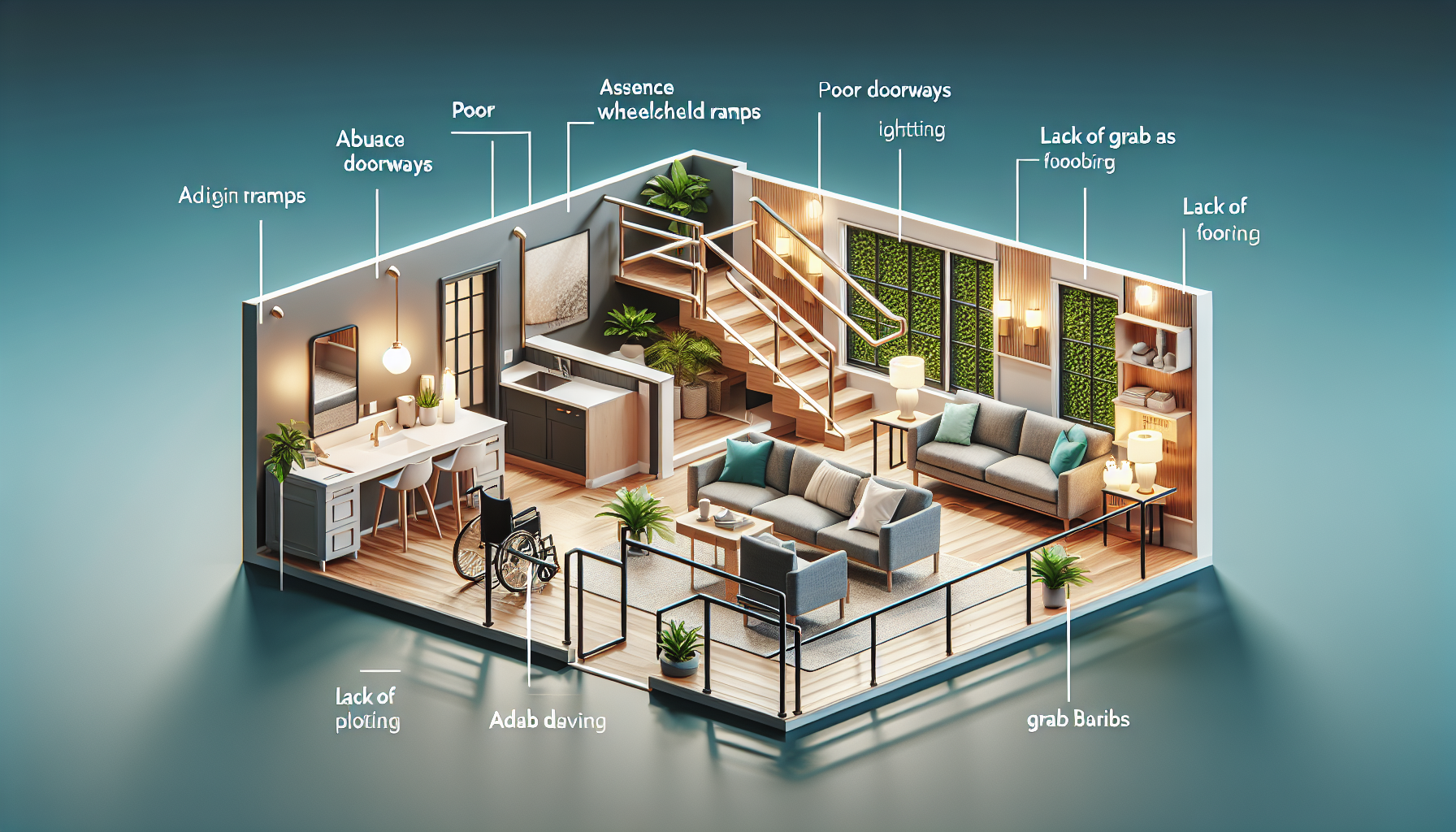
Universal design provides a more practical approach for many private homes. The concept focuses on spaces usable by the widest range of people without specialized adaptation. That can mean a no-step entry, 36-inch doorways, lever handles, blocking in shower walls for future grab bars, rocker light switches, non-slip flooring, and a first-floor bathroom with enough turning space for mobility devices. The National Association of Home Builders has also promoted aging-in-place practices that align well with real residential needs.
From a project standpoint, the most cost-effective accessibility work is usually done during planned renovation, not after a crisis. Adding wall reinforcement before tile is installed costs little. Moving plumbing to create a curbless shower after construction is expensive. Widening a doorway during a remodel is simple compared with changing structural framing later. When I walk a home with an occupational therapist and a residential contractor together, the resulting plan is almost always better than relying on measurements alone, because daily routines matter as much as technical clearances.
Homeowners should also understand that some products are marketed as “ADA compliant” even when that label has limited relevance in a private home. Faucets, toilets, sinks, and grab bars may be designed to meet ADA-related specifications in public facilities, but suitability in a house depends on user height, transfer style, caregiver assistance, and bathroom size. Good accessibility planning starts with the resident, not the catalog description.
Common residential scenarios that create confusion
Several scenarios repeatedly cause uncertainty. First, homeowners’ associations and condominium boards may ask whether they must follow the ADA when approving ramps or entry modifications. The answer depends on whether the area is public-facing and what other housing laws govern reasonable modifications and accommodations. Even where ADA standards do not directly control, denying necessary disability-related changes can create legal exposure under fair housing laws.
Second, landlords frequently ask if they must renovate a rental house to ADA standards for a disabled tenant. Usually, a private single-family rental is not brought under the ADA simply because it is rented, but the Fair Housing Act may require the landlord to allow reasonable modifications at the tenant’s expense, and reasonable accommodations in rules or policies may also be required. State law can go further. This is why rental housing accessibility questions should never be answered with a blanket “ADA does not apply” and left there.
Third, families caring for an older adult often ask whether Medicare or insurance requires ADA-compliant home modifications. Generally, no such automatic ADA mandate exists. Coverage, when available, depends on insurer terms, medical necessity, waiver programs, veterans benefits, Medicaid home- and community-based services, or state assistive technology resources. The design target should be functional independence and fall prevention, not checking a federal box that may not exist for the property.
Finally, accessory dwelling units, multigenerational homes, and homes with separate rental suites blur lines between residence and business use. A basement apartment with a private entrance may be subject to local code and fair housing obligations, while the owner’s main house remains a private residence. Mixed-use conditions demand a case-by-case review.
How to evaluate compliance and plan the right accessibility upgrades
If you need to assess whether a private home or housing-related property must meet accessibility rules, start with five questions. What is the property type? How is each space used? Is any portion open to the public? Does federal funding apply? What do state and local codes require? Those answers usually identify the governing framework faster than arguing abstractly about whether a home is “covered by the ADA.”
Next, separate legal compliance from design performance. Legal compliance asks what standards are mandatory. Design performance asks whether the space actually works for the resident or visitor. A compliant parking space does not help much if the path to the front door is steep, poorly lit, and icy. A code-compliant bathroom may still fail a person who needs side transfer space at the toilet or a handheld shower within easy reach. Good accessibility planning combines regulatory review, field measurements, user interviews, and product selection.
For complex projects, assemble the right team. That may include an architect familiar with ICC A117.1 and Fair Housing Act design, a contractor experienced in barrier-free remodeling, a Certified Aging-in-Place Specialist, an occupational therapist, and counsel for legal interpretation where needed. Document decisions, keep product specifications, and verify dimensions before walls close. The cheapest time to catch an accessibility mistake is on paper; the most expensive is after tile, cabinets, and inspections are complete.
The truth about whether the ADA applies to private homes is simple once the legal categories are clear. A purely private single-family residence is generally outside ADA coverage, but that does not mean accessibility rules never touch housing, and it does not mean accessible design is optional in practice. Public-facing areas, multifamily common spaces, federally assisted housing, and home-based businesses can all trigger specific obligations. Separate laws such as the Fair Housing Act and Section 504 often matter more than the ADA in residential settings, while local codes and voluntary design standards shape what should be built.
The main benefit of understanding these distinctions is better decision-making. You avoid overbuilding where no mandate exists, underbuilding where legal duties do apply, and missing practical upgrades that make everyday life safer and easier. Whether you are a homeowner planning a no-step entry, a landlord reviewing a modification request, or a developer working through accessibility guidelines, start by identifying the property use and the governing rules. Then design for real people, not assumptions. If you are evaluating a project now, use this article as your hub and map the next step with a qualified accessibility professional, designer, or housing attorney.
Frequently Asked Questions
Does the ADA apply to private single-family homes?
In most cases, no. The Americans with Disabilities Act generally does not regulate privately owned single-family homes that are used strictly as private residences. That is why the short answer is usually “no” when homeowners ask whether their own house must comply with ADA rules. The ADA mainly applies to public accommodations, commercial facilities, state and local government programs, and certain employment settings. A private home that is not open to the public typically does not fall into those categories.
That said, this is where many people get tripped up: even when the ADA does not apply directly, other laws and standards may still matter. Local building codes may require certain features. State accessibility laws can be broader than federal law. If the property includes a rental component, multifamily units, a home-based business with public access, or receives public funding, the legal analysis can change quickly. On top of that, many homeowners voluntarily use ADA-style measurements as a design guide because they are familiar, practical, and helpful for mobility planning. So while a purely private single-family residence is usually outside ADA coverage, it is a mistake to assume that means “no accessibility rules of any kind” apply.
When can a private home become subject to the ADA?
A private home can become subject to the ADA when part of the property is used in a way that is open to the public or functions like a business or service location. For example, if a homeowner operates a medical office, retail shop, daycare, tutoring center, salon, or similar business from the home and clients or customers come onto the property, that public-facing area may trigger ADA obligations. In those situations, the issue is not that the building is a house; it is that part of the house is being used as a place of public accommodation or commercial facility.
There are also edge cases that require careful review. Short-term rentals, event venues, owner-occupied inns, and properties used for retreats or classes can raise accessibility questions depending on how they operate. If a home is used by a nonprofit or religious organization, different rules may apply. If the property is altered using government funds or tied to a public program, that can introduce additional compliance requirements beyond the ADA itself. The practical lesson is simple: once a private residence starts serving the public in any meaningful way, owners should stop thinking of it as “just a home” for legal purposes and get project-specific advice before renovating, advertising, or opening the doors to visitors.
If the ADA usually does not apply to private homes, what laws do apply to housing?
The most important answer is the Fair Housing Act, not the ADA. The Fair Housing Act plays a major role in housing accessibility, especially for multifamily residential properties. It prohibits discrimination in housing and, for covered multifamily dwellings built for first occupancy after certain dates, it requires specific accessible design features. Those can include accessible building entrances on accessible routes, usable common areas, wider doors, and reinforcement in bathroom walls for grab bars. That is why apartments, condominiums, and other multifamily projects are often governed by accessibility rules even when a detached private house is not.
Beyond the Fair Housing Act, state and local building codes can impose accessibility or visitability requirements. Some jurisdictions adopt standards based on the International Residential Code, local amendments, or state civil rights laws that go further than federal minimums. Publicly funded housing may also be subject to Section 504 of the Rehabilitation Act, which has its own accessibility requirements. In other words, “ADA does not apply” is not the end of the conversation. Owners, landlords, developers, and contractors need to identify the correct legal framework for the type of property involved: single-family home, duplex, apartment building, condominium, assisted housing, or mixed-use property. That distinction is what determines the real compliance obligations.
Can homeowners use ADA standards as a guide for remodeling even if they are not legally required?
Absolutely, and many do. ADA standards are often used as a practical design reference for creating a safer, more usable, and more future-ready home, even when there is no legal obligation to follow them. Features such as no-step entries, wider doorways, accessible bathroom layouts, reachable switches, lever handles, improved turning space, and better shower access can make daily life easier for older adults, wheelchair users, people recovering from injuries, and families planning to age in place. In real-world remodeling, these design choices often add comfort and flexibility without requiring a full “ADA-compliant” label.
However, it is important not to assume that copying a few ADA dimensions automatically makes a home fully accessible or legally compliant for every purpose. The ADA Standards were written for specific covered facilities and uses, not as a universal residential design code. A measurement that works well in a public restroom may not translate perfectly to a small home bathroom. That is why the best approach is usually to treat ADA guidelines as one useful reference point alongside universal design principles, local code requirements, and the actual needs of the people who will live in the home. Good accessibility planning is less about chasing a buzzword and more about making informed design decisions that fit the property, budget, and user needs.
What should homeowners, landlords, and builders do before assuming a home project is exempt from accessibility rules?
They should pause and evaluate the project from every angle before making that assumption. Start by identifying exactly what the property is and how it will be used. Is it a private owner-occupied single-family residence, a rental property, a multifamily building, a home office with customer visits, a short-term rental, or a mixed-use structure? Next, review whether any public funds, tax credit programs, or government approvals are involved. Then check applicable federal, state, and local rules, including the Fair Housing Act, Section 504 where relevant, state accessibility statutes, and municipal building codes. This kind of upfront review can prevent expensive redesigns, permit delays, and legal disputes later.
It is also smart to involve the right professionals early. Builders and architects may understand local code, but legal counsel or an accessibility consultant may be necessary when the project sits in a gray area. For landlords and developers, the cost of getting the answer wrong can be significant, especially if tenants, guests, or advocacy groups raise complaints after construction is finished. For homeowners, early planning can still save money by integrating accessibility features during design rather than adding them later under pressure. The truth is that many accessibility problems do not come from bad intentions; they come from oversimplified assumptions. The safest path is to verify which rules apply before the project starts, not after someone points out a problem.