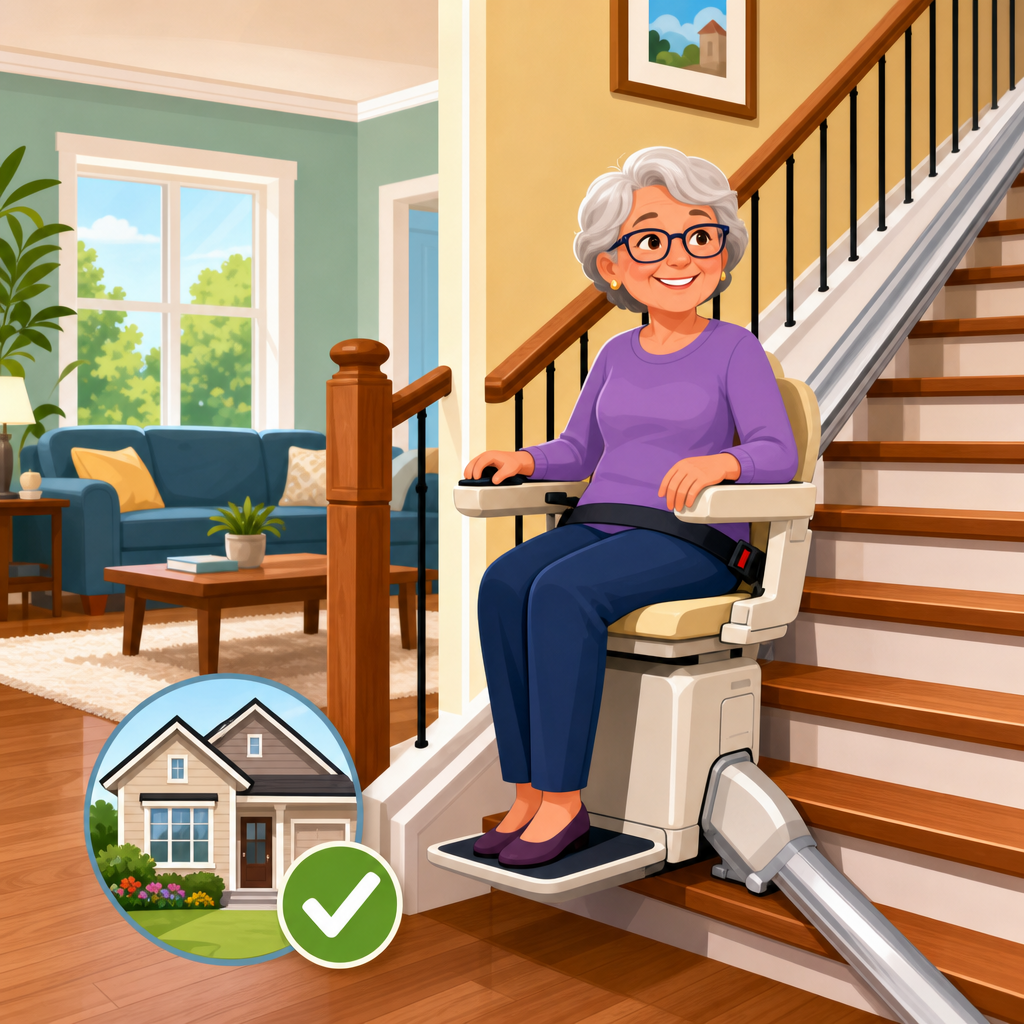
Energy costs of operating a chair lift daily are a small but important part of long-term ownership, and they deserve a clear, practical explanation before anyone compares models, requests quotes, or plans a household budget. In this context, a chair lift is a motorized seat that travels along a rail mounted to a staircase, helping a user move safely between floors. Daily energy cost means the electricity required to charge or power the unit during normal household use, usually measured in kilowatt-hours and translated into local utility rates. Cost of ownership over time is broader: it includes purchase price, installation, maintenance, battery replacement, repairs, and the effect of usage patterns over the life of the lift. I have helped families evaluate these systems, and one of the most common misconceptions is that electricity will be a major monthly burden. In most homes, it is not the largest operating expense, but it still matters because buyers should understand every recurring cost, not just the upfront invoice.
This matters especially for a sub-pillar view of cost and financing options because energy use connects directly to affordability over years, not days. A homeowner comparing a straight stair lift to a custom curved model may focus on installation cost first, yet the better budgeting question is total ownership over five, ten, or even fifteen years. That bigger picture affects whether someone chooses to purchase outright, finance, rent temporarily, or buy a reconditioned unit. It also influences which features are worth paying for, such as powered swivel seats, folding rails, heavier weight capacities, or outdoor weather protection. Energy costs can also vary with battery design, charger efficiency, frequency of travel, user weight, standby draw, and local electricity prices. Understanding those drivers makes the rest of the ownership conversation more grounded. This article explains what daily chair lift electricity use usually looks like, what factors raise or lower it, how it compares with other ownership costs, and how to estimate a realistic annual budget for dependable use.
How a chair lift uses electricity each day
Most modern residential chair lifts are battery-powered units that plug into a standard household outlet to keep onboard batteries charged. That design is important because the motor often runs from battery power during travel, while the charger draws electricity whenever the lift is parked at a charge point. In practical terms, the household electric bill reflects charging losses, standby consumption, and the energy needed to replenish the batteries after trips up and down the stairs. Direct-powered systems exist, but battery-backed models dominate the market because they keep working during short power outages and provide smoother operation. In homes I have assessed, buyers often assume the lift consumes electricity continuously like a major appliance. The reality is closer to a small charger and intermittent motor load than a refrigerator, clothes dryer, or electric oven.
Daily consumption depends on the rail length, number of trips, user weight, and feature set. A straight lift on a typical residential staircase may travel 10 to 16 feet per run, while a curved lift can cover longer distances and negotiate turns or intermediate landings. Heavier loads require more motor effort, though the system is geared and engineered for rated capacity, so the increase is usually measurable but not dramatic in household billing terms. Features such as powered footrests, automatic hinges, or motorized swivel seats add small increments of use. Standby charging can account for a meaningful share of total annual electricity because many households use the lift only several times per day. That means the charger’s efficiency and whether the lift remains properly parked on a charging contact influence real-world cost almost as much as movement itself.
Typical daily, monthly, and annual energy cost ranges
A useful baseline is that many residential chair lifts cost only a few dollars to a few tens of dollars per year in electricity under normal use. Exact figures vary by model and utility rate, but a common range is roughly 0.5 to 2.0 kilowatt-hours per week for light to moderate residential usage. At an electricity price of $0.15 per kilowatt-hour, that equals about $0.08 to $0.30 per week, or roughly $4 to $16 annually. In areas where residential electricity costs exceed $0.25 per kilowatt-hour, annual cost can move higher, but it still generally remains modest. When I build ownership projections, I usually test multiple scenarios rather than promise one universal number, because actual household patterns differ sharply. A single user making four one-way trips per day on a straight lift will not consume the same energy as two users relying on a curved unit dozens of times daily.
The best way to think about daily energy cost is in pennies, not dollars. Even if a lift consumed 1 kilowatt-hour every five days, the daily cost at $0.18 per kilowatt-hour would be under four cents. Over a month, that would still be close to one dollar. Those numbers are why electricity is rarely the deciding factor between models. However, annual estimates should not ignore battery replacement cycles or preventive service, because those expenses dwarf electricity use and determine the true cost of ownership over time. A chair lift with low power draw but poor parts availability can be more expensive to own than a slightly less efficient unit from a manufacturer with strong dealer support. For hub-level planning, energy cost should be treated as one line item within a broader operating budget, not as a standalone decision metric.
What affects chair lift electricity consumption most
Several variables determine how much electricity a chair lift uses. First is usage frequency: more trips mean more battery discharge and more charging afterward. Second is staircase configuration. Straight lifts are mechanically simpler and typically more efficient than curved lifts, which use custom rails and may require more complex drive control. Third is user weight, because lifting greater mass increases work performed by the motor, especially on longer inclines. Fourth is charger behavior. Some systems use smart chargers that taper current efficiently when batteries are full, while older or lower-end designs may waste more energy as heat. Fifth is ambient temperature. Outdoor lifts and lifts installed in unconditioned spaces can see battery efficiency drop in cold weather, increasing charging demand and shortening battery life.
Maintenance condition also matters. A well-aligned rail, clean charge contacts, healthy batteries, and properly adjusted drive components help the system operate efficiently. Worn batteries are a hidden cost factor because they hold less charge, may need more frequent topping off, and can reduce performance long before complete failure. I have seen owners misread slow travel or charging alerts as a high-electricity problem when the real issue was battery age or dirty contacts. Another factor is user behavior. Parking the chair away from the charge point can gradually drain batteries, leading to deeper recharge cycles and potential service calls. This is why dealer training at installation matters. Households that understand correct parking, folding, and charging routines usually experience both lower service risk and more predictable operating costs over time.
| Cost factor | Effect on daily energy use | Effect on long-term ownership cost | Practical example |
|---|---|---|---|
| Trips per day | Higher trip counts increase charging demand | Can accelerate battery wear modestly | Two users making 12 trips daily use more energy than one user making 4 trips |
| Straight vs. curved rail | Curved systems may use slightly more energy | Curved models cost much more to buy and repair | A custom curved lift usually has higher total ownership cost even if electricity remains low |
| User weight | Heavier loads increase motor work | Can influence wear if near rated capacity often | A 350-pound-capacity lift carrying 300 pounds daily works harder than one carrying 150 pounds |
| Battery condition | Weak batteries charge less efficiently | Replacement is a scheduled ownership expense | Batteries often need replacement every few years depending on use and environment |
| Local electric rate | Directly raises or lowers billed cost | Minor compared with service expenses | The same lift costs more to run in California than in a low-rate utility region |
Energy cost compared with maintenance, batteries, and repairs
When owners ask what a chair lift costs over time, electricity is usually the smallest recurring expense. Scheduled maintenance, service visits, and battery replacement are more financially significant. Many manufacturers and dealers recommend annual service, especially for lifts used daily. Depending on region and service plan, preventive maintenance may cost far more per year than the electricity itself. Battery replacement is also predictable. Sealed batteries in residential lifts often last about two to five years, though actual life depends on charging habits, cycle count, temperature, and model design. Replacing them is not usually exorbitant, but it is a real operating cost that must be built into long-range budgeting. For this reason, ownership comparisons should separate low recurring utility cost from moderate recurring service cost.
Repairs create the biggest variability. A reputable brand with local parts support, trained technicians, and clear warranty terms usually costs less to own over the long run than a bargain unit with uncertain service coverage. I have seen households save on initial purchase only to face expensive downtime when a specialized component failed outside warranty. Common repair drivers include call-send controls, seat switches, charging contacts, batteries, hinges, and board-level electronics. Outdoor lifts carry additional weather-related risk and may require covers, corrosion checks, and more frequent inspection. In a full cost-of-ownership model, I usually classify expenses into four buckets: acquisition, installation, routine service, and lifecycle replacements. Electricity belongs in routine operating cost, but it rarely changes the recommendation by itself. Serviceability, reliability, and correct fit to the staircase matter much more financially.
Estimating total ownership over five to ten years
To estimate long-term chair lift ownership, start with purchase and installation. Straight lifts commonly cost much less than curved lifts because the rail is standardized, easier to install, and simpler to remove or reuse. Curved lifts require custom fabrication and site-specific measurement, so their upfront price is substantially higher. Next, add annual service, expected battery replacements, and a modest allowance for out-of-warranty repairs after the initial coverage period ends. Then include electricity as a minor but real line item. A practical five-year budget for a straight indoor lift might include one or two battery replacements, annual maintenance, and only a small total for power consumption. A ten-year budget should assume a higher probability of repairs, especially if the unit is used heavily or installed in a challenging environment.
Financing decisions should reflect that timeline. If a household needs the lift permanently, ownership may make more sense than a short-term rental, even though rental can reduce upfront strain. If the need is temporary after surgery or injury, rental may be more cost-effective despite recurring monthly fees. Reconditioned lifts can lower acquisition cost for straight staircases, but buyers should inspect warranty length, battery age, parts availability, and installer credentials carefully. Energy cost remains low in all three scenarios, which is helpful because it means day-to-day use does not usually create bill shock. The larger budgeting question is whether the household can support maintenance and replacement needs without interruption. A realistic plan should always prioritize reliability and safe access over shaving a few dollars from annual electricity use.
How to keep operating costs low without sacrificing reliability
The smartest way to reduce chair lift ownership cost is to protect the system from avoidable wear, not to obsess over pennies of electricity. Choose the right lift capacity for the user, use a qualified dealer, and follow the manufacturer’s charging instructions. Keep the chair parked on its designated charge point, schedule preventive maintenance, and replace aging batteries before they fail completely. If the staircase allows it, a straight lift generally offers the lowest total cost of ownership because the product is less complex, installation is faster, and future parts support is easier. For households comparing features, prioritize safety sensors, seat stability, and service network quality ahead of cosmetic upgrades. Features that improve daily usability are worth considering, but every powered accessory adds another component that may eventually need adjustment or replacement.
Ask specific questions before purchase: What is the typical battery life for this model? Does the charger remain energy efficient in standby? How much is annual service locally? Are parts stocked by the dealer or ordered from the manufacturer? What labor is covered after the first year? These answers matter more than a generic promise of low running cost. Owners should also review local utility rates if they want a precise electricity estimate, then multiply expected kilowatt-hours by the tariff on the electric bill. That produces a grounded number instead of a sales-floor guess. Over time, the main benefit of understanding daily energy cost is confidence. It shows that using the lift regularly for safety and independence will not meaningfully inflate household power bills. Budgeting becomes clearer, financing choices become easier, and ownership decisions become better aligned with long-term mobility needs.
Daily chair lift energy costs are real, but they are usually one of the smallest parts of owning the equipment over time. Most residential units use modest electricity because they charge from a standard outlet, rely on efficient battery systems, and operate only intermittently throughout the day. For most households, the bigger financial factors are the original purchase, staircase type, professional installation, annual maintenance, battery replacement, and the likelihood of repairs as the lift ages. That is why any serious discussion of cost and financing options should treat electricity as a supporting detail within a complete ownership model. When you understand how the system uses power, what affects consumption, and how small utility cost is compared with service and parts, you can evaluate quotes with far more accuracy.
The key takeaway is simple: focus on total cost of ownership, not just sticker price and not just the electric bill. A dependable lift from a strong manufacturer with local support is often the better value even if its upfront cost is higher. Straight lifts usually offer the lowest long-term cost, while curved and outdoor lifts require wider budget margins because of customization and exposure. If you are planning a purchase, rental, or financing path, build a five- to ten-year estimate that includes maintenance, batteries, and expected repairs alongside energy use. Then compare those numbers against the mobility, safety, and independence the lift provides every day. Use this hub as your starting point for deeper cost-of-ownership research, and request itemized quotes that break down installation, service, warranty, and operating expenses clearly.
Frequently Asked Questions
How much electricity does a chair lift typically use each day?
In most homes, a chair lift uses a relatively small amount of electricity per day, especially when compared with major household appliances such as air conditioners, dryers, or electric water heaters. The exact daily energy cost depends on the lift’s motor size, how often it is used, the user’s weight, the length and angle of the staircase, and whether the unit runs on batteries that recharge at a docking point or draws more power directly while operating. Most modern residential chair lifts are designed to be energy efficient, and many battery-powered models use electricity primarily to keep the batteries charged rather than to power the lift continuously from the wall.
For practical budgeting, daily usage is often measured in kilowatt-hours, or kWh. A chair lift may consume only a fraction of a kWh per day in many average-use households. That means the cost to operate it daily is usually modest, often amounting to just pennies per day depending on local electricity rates. If a household pays a standard utility rate, the monthly operating cost may still remain quite low even with regular use. While the number varies by model, the most accurate way to understand the daily impact is to look at both the manufacturer’s power specifications and the expected number of trips per day. For most buyers, the important takeaway is that energy costs are real but generally not a major driver of total ownership cost.
What factors have the biggest impact on the daily energy cost of a chair lift?
Several factors can influence how much electricity a chair lift uses from day to day. One of the most important is usage frequency. A lift used only a few times each day will naturally consume less electricity than one used many times by multiple household members. Stair length also matters because a longer rail usually means the motor must work longer during each trip. Likewise, the incline and configuration of the staircase, including curves or landings in custom models, can affect the amount of energy required per ride.
User load is another practical factor. Heavier loads generally require more effort from the motor, though modern lifts are engineered to stay within efficient operating ranges when used according to their rated capacity. Battery condition can also influence charging demand. If the batteries are older or not holding a charge well, the system may need to recharge more often or less efficiently. In addition, standby power should not be overlooked. Many chair lifts remain plugged in so the batteries stay topped off, and that low-level charging can account for part of the daily electricity use even when the lift is not actively moving. Finally, maintenance plays a role. A well-maintained lift with a clean rail, properly functioning motor, and healthy battery system will usually operate more efficiently than one with neglected components.
Are battery-powered chair lifts more energy efficient than non-battery models?
In many residential settings, battery-powered chair lifts are considered the standard and are often a very efficient choice. These lifts typically plug into a household outlet and use electricity to keep onboard batteries charged. During operation, the lift usually runs on battery power, which offers smooth performance and can allow the unit to continue working during a power outage for a limited number of trips. Because the charger maintains the batteries rather than drawing a large amount of electricity continuously, day-to-day power usage often remains low and predictable.
Non-battery or direct-power models may operate differently, and their electricity use can depend more directly on active runtime. However, the difference in operating cost between systems is often less dramatic than people expect, especially in normal home use. The larger consideration is usually reliability, convenience, and installation suitability rather than utility savings alone. Battery-powered models also tend to be favored because they support emergency operation during outages, which can be especially important for users with limited mobility. If energy efficiency is a concern, it is best to compare the charger specifications, motor rating, and expected standby consumption for each model rather than assuming one category is always cheaper to run in every situation.
How can I estimate the monthly or yearly electricity cost of operating a chair lift?
A simple estimate starts with the chair lift’s power consumption information from the manufacturer, usually expressed in watts for the charger or motor, and your local electricity rate, usually expressed as cost per kWh. If you know approximately how many trips the lift makes each day, you can build a more realistic picture of total use. In many cases, the charger’s standby and recharge demand is a major part of the equation, so it helps to consider both active travel and the lift’s time spent parked and charging. Once daily energy use is estimated in kWh, multiply that number by your utility rate to find the daily cost, then multiply again for monthly or yearly totals.
For example, if a chair lift uses a small fraction of a kWh per day and your local electricity rate is average, the monthly cost may be quite modest. Even over a full year, electricity often remains a small share of total ownership compared with the purchase price, installation, maintenance, battery replacement, and any service visits. That said, doing the math is still worthwhile because it helps homeowners set realistic expectations and compare models more accurately. If a dealer can provide estimated charging requirements or average energy use under normal conditions, that information can make budgeting much more precise. Utility bills can also be reviewed before and after installation to observe the real-world impact over time.
Can I reduce the energy cost of using a chair lift every day?
Yes, although the savings are usually incremental because chair lifts already tend to be fairly efficient. One of the best ways to control electricity use is to keep the lift properly maintained. Clean rails, correctly adjusted components, and healthy batteries help the system run smoothly and avoid unnecessary strain. Following the manufacturer’s service schedule is important not only for safety and reliability but also for consistent energy performance. Replacing aging batteries when recommended can also prevent inefficient charging cycles and reduced operating performance.
It also helps to use the lift in a way that matches the manufacturer’s guidance. Avoid exceeding weight limits, make sure the seat and footrest are properly positioned, and keep the charging contacts unobstructed so the unit charges correctly when parked. If the model has designated charging points, parking it in the correct position after each trip is essential. Homeowners comparing models may also ask about standby consumption, charger efficiency, and battery type before purchase. While energy cost should not be the only factor in the decision, choosing an efficient, well-supported model can make long-term ownership more predictable. In most cases, the goal is not drastic cost reduction but making sure the chair lift remains dependable, safe, and economical to operate every day.