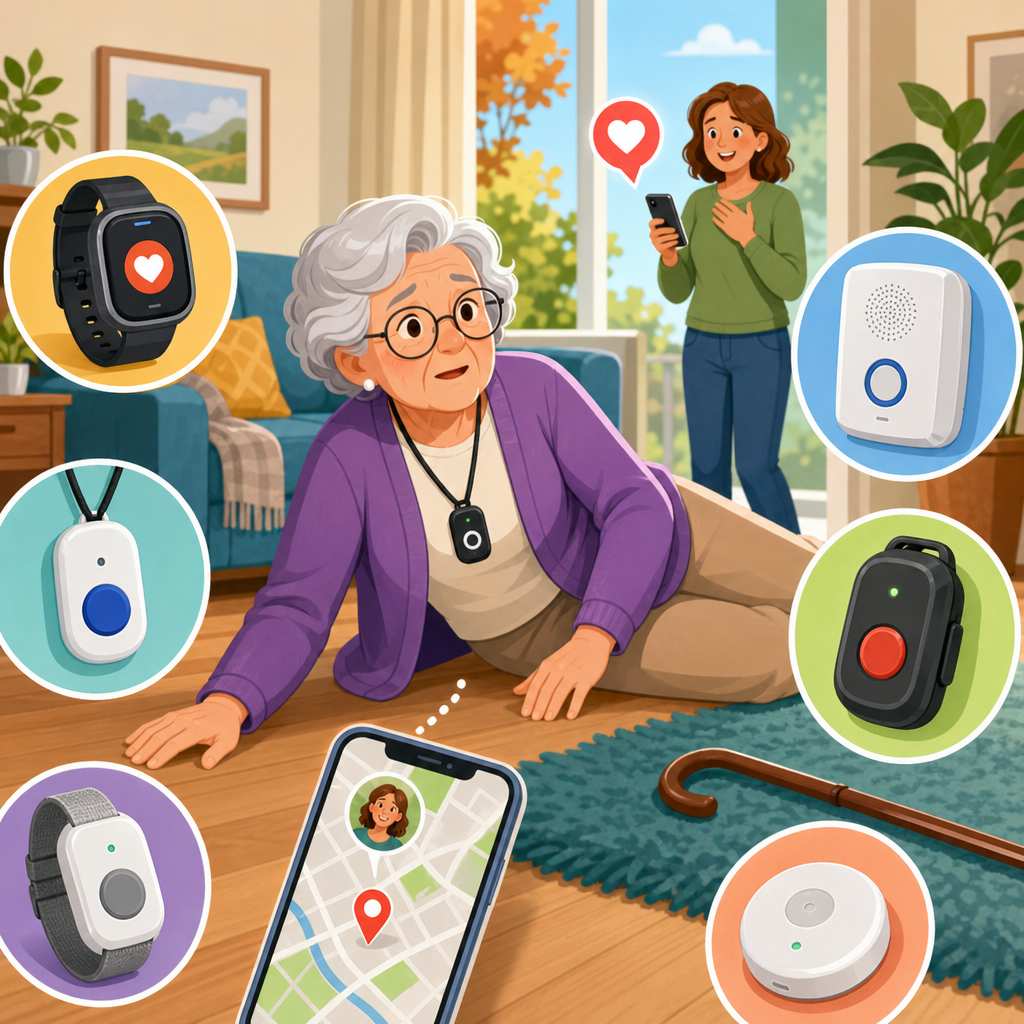
Fall detection devices are now a core part of modern accessibility and mobility planning because they can automatically identify a sudden drop, alert caregivers, and shorten the time between an accident and assistance. In practical terms, a fall detection device uses sensors such as accelerometers, gyroscopes, barometers, and sometimes radar or computer vision to detect impact, orientation change, and prolonged inactivity. For older adults, people recovering from surgery, wheelchair users transferring independently, and anyone living with balance impairments, that speed matters. The CDC continues to identify falls as a leading cause of injury among adults over sixty-five, and in home assessments I have seen the same pattern repeatedly: the biggest risk is not always the fall itself, but the delay before someone knows it happened. In 2025, the market includes medical alert pendants, smartwatches, radar-based room sensors, and full smart home systems that connect detection with locks, lights, cameras, and voice assistants.
This category matters more than ever because people want safety without sacrificing independence. Families are also managing care across distance, often from another city, so device reliability, connectivity, and automation have become just as important as the sensor itself. Smart home integration is the defining difference between a basic fall alert and a truly responsive safety system. Integration means the fall detection device can trigger actions across connected products: a smart speaker can announce an emergency, a hub can turn on hallway lighting, a smart lock can open temporary access for paramedics, and caregivers can receive app notifications with location, audio, or camera context. As a hub page within Accessibility & Mobility Solutions, this guide covers the best fall detection device options in 2025 and explains how to evaluate them specifically through the lens of smart home compatibility, real-world performance, and long-term usability.
What makes a fall detection device effective in 2025
The best fall detection devices in 2025 do three things well: they detect genuine falls with high sensitivity, limit false alarms, and communicate quickly through dependable networks. That sounds simple, but it requires a careful blend of hardware, software, and service design. Wearables usually depend on motion sensors and algorithms trained to separate a hard fall from normal daily movement such as sitting heavily, dropping the device on a table, or lying down quickly. More advanced systems add barometric pressure readings to estimate height change, while room-based sensors use mmWave radar to track movement and detect collapse without requiring the user to wear anything. In my testing, the most dependable products also include a manual help button because no algorithm catches every event, especially slow slides from bed or controlled descents from a chair.
Battery management, cancellation windows, two-way audio, and certification standards also matter. Medical alert devices tied to monitoring centers often provide the clearest escalation path, while consumer wearables are convenient and familiar but may depend more heavily on smartphone pairing and user setup quality. Water resistance is essential because bathrooms remain a high-risk location. Cellular backup is valuable when home internet fails. For smart home integration, open ecosystems and well-documented automation triggers are better than closed systems. A device that can detect a fall but cannot notify the right people or activate useful home responses is only solving part of the problem.
Best fall detection device categories for different living situations
There is no universal best device because the right option depends on mobility level, cognition, home layout, and comfort with technology. Medical alert wearables remain the strongest choice for people who want monitored response and simple operation. Brands such as Medical Guardian, Bay Alarm Medical, and MobileHelp continue to lead because they pair pendants or watches with professional call centers, GPS on mobile units, and configurable emergency contacts. These are especially useful for people who live alone, spend time outside the home, or are not likely to manage a smartphone consistently. The tradeoff is ongoing subscription cost and more limited smart home flexibility compared with mainstream consumer platforms.
Consumer smartwatches are another major category. Apple Watch, Samsung Galaxy Watch, and Google Pixel Watch all offer fall detection in some form, usually alongside crash detection, irregular heart rhythm alerts, and emergency SOS. These are excellent for active users already comfortable with charging and wearing a watch daily. Apple’s ecosystem remains particularly strong because the watch can share data through Health, emergency contacts, location services, and HomeKit-linked automations, though some advanced actions still require shortcuts or third-party workflows. Samsung works well in Android households, especially where SmartThings is already controlling locks, sensors, and lights.
Room-based fall detection has improved dramatically in 2025. Solutions using radar, depth sensing, or privacy-preserving vision analysis can monitor bedrooms, hallways, and bathrooms without requiring a pendant. These systems are ideal for users with dementia, poor adherence to wearables, or nighttime fall risk. They work best when carefully placed and when households accept the privacy and installation implications. In larger homes, I often recommend a layered approach: a wearable for outside mobility and bathroom use, plus room sensors in the highest-risk indoor zones.
Top device options in 2025 and how they compare
The current market divides into four practical tiers: monitored medical alerts, smartwatch-based detection, in-home radar systems, and hybrid platforms that combine several methods. Medical Guardian’s MGMove and Mini Guardian remain strong contenders because they balance GPS, caregiver apps, and professional monitoring. Bay Alarm Medical offers reliable SOS response and straightforward setup, making it a frequent recommendation for families who value support over customization. Apple Watch Series 10 and Apple Watch Ultra 2 continue to stand out for users who want premium health tracking and broad app support, while the Samsung Galaxy Watch line is compelling for Android-first households using SmartThings. Radar-first options from care technology specialists are increasingly attractive in assisted living and multigenerational homes because they reduce dependence on user behavior.
| Category | Best fit | Key strengths | Main limitation |
|---|---|---|---|
| Medical alert wearable | Older adults living alone | Professional monitoring, simple SOS, cellular models | Monthly subscription |
| Smartwatch | Tech-comfortable active users | Health features, location sharing, app ecosystem | Frequent charging and setup complexity |
| Room sensor | Users who forget wearables | No need to wear device, strong nighttime coverage | Installation and room-by-room limits |
| Hybrid system | High-risk households | Layered detection indoors and outdoors | Higher total cost |
When comparing these options, accuracy claims should be treated carefully. Manufacturers rarely publish directly comparable sensitivity and specificity data under independent household conditions. A better buying method is to ask practical questions: Does it work in the shower? Does it place a call if Wi-Fi drops? Can caregivers verify the event through audio, app check-in, or room context? Can emergency access be granted without hiding a physical key? Those operational details determine whether a device performs well when it matters most.
Smart home integration: the feature that turns detection into response
Smart home integration is no longer an optional add-on; it is the feature that transforms fall detection from a passive alert into an active safety workflow. In a well-designed setup, a detected fall can trigger a sequence within seconds. Lights in the bedroom, hallway, and bathroom switch on at full brightness. A smart speaker announces that help is being contacted. A caregiver receives a push notification and a live camera view of a nearby common area, if privacy settings allow it. A smart lock generates temporary access or unlocks for verified responders. A thermostat can hold temperature steady if the person remains on the floor. These actions reduce confusion, speed access, and improve outcomes.
In most homes, the major integration ecosystems are Apple Home, Amazon Alexa, Google Home, and Samsung SmartThings. Matter has improved cross-brand interoperability for many accessories, but fall detection itself is still often handled in proprietary apps. That means buyers should look beyond the phrase “works with smart home” and verify the exact trigger pathways. Can the device expose an automation event through the native app, IFTTT, Shortcuts, SmartThings routines, or a professional care platform? Can alerts be routed to multiple family members with escalation timing? Does the system support redundancy through both cellular and internet paths? These are the questions I use during home safety planning because they reveal the difference between a marketing integration and a practical one.
The most effective smart home routines are simple and dependable. For example, one client used an Apple Watch for personal fall detection, HomePod speakers for spoken alerts, Lutron Caseta lighting for immediate illumination, and a Yale smart lock with temporary caregiver codes. Another household used a monitored medical alert pendant as the primary system, then linked supplemental door sensors, motion sensors, and Alexa announcements to create reassurance without replacing the monitored response. In both cases, the devices were not chosen just for individual features; they were selected because they worked together under stress.
How to choose the right system for a home hub strategy
If this page is the hub for your smart home fall detection planning, start with six decision points: who is at risk, where falls are most likely, whether the person will wear a device consistently, how emergency contacts should be notified, what smart home platform already exists, and how much ongoing support the household can manage. A person who gardens daily and drives should prioritize GPS-enabled wearable protection. Someone with frequent nighttime bathroom trips may benefit more from room sensors, illuminated pathways, and bed-exit detection. A couple aging in place may need separate wearables plus shared automations that notify adult children.
Installation should be treated like accessibility design, not gadget setup. Test bathroom coverage, stair landings, and exterior pathways. Confirm that smart locks fail securely and still permit responder entry. Review voice assistant phrasing so announcements are clear and not easily ignored. Audit battery schedules monthly. If cameras are involved, place them in common areas only and document consent. Many families also benefit from linking this hub topic to related subtopics such as medication reminders, accessible lighting, voice control, and mobility-friendly entry systems because safety works best as a connected environment rather than a single device purchase.
Common mistakes, privacy concerns, and realistic expectations
The biggest mistake is assuming any device guarantees perfect fall detection. It does not. Slow collapses, partial slides, or falls cushioned by furniture may not trigger wearable algorithms. Room sensors can miss events outside their coverage zone. Smartwatches may be left charging overnight, which is exactly when many indoor falls occur. Another common mistake is over-automating the system. If a routine depends on five cloud services and two third-party bridges, reliability drops. For critical safety actions, choose direct integrations whenever possible and keep the emergency path simple.
Privacy deserves equal attention. Audio and video context can help caregivers assess a situation, but they also create obvious boundaries, especially in bedrooms and bathrooms. Radar-based sensors are often a better compromise because they can detect motion patterns without recording identifiable images. Data handling also varies widely by brand. Before buying, review where data is stored, whether alerts are encrypted in transit, who can access event history, and how account sharing works for family caregivers. Realistic expectations lead to better outcomes: use fall detection to reduce response time, not as a substitute for home modifications, medication review, balance training, grab bars, and hazard removal.
The best fall detection devices in 2025 combine accurate sensing, dependable communication, and useful smart home integration. Medical alert wearables remain the most straightforward option for monitored protection. Smartwatches offer broader health features and fit naturally into connected households. Room-based sensors solve the compliance problem for users who do not reliably wear devices. The strongest overall strategy is often hybrid: match the person’s habits and risks, then connect the device to lighting, locks, speakers, and caregiver notifications so the home responds immediately.
For anyone building an Accessibility & Mobility Solutions plan, smart home integration should be the organizing principle for this subtopic hub. It ties together fall detection, emergency access, voice assistance, lighting control, and daily independence. Start by identifying the highest-risk rooms, choose a primary detection method, and test one or two automations that would genuinely help in an emergency. Then expand carefully. A well-integrated system does more than send an alert; it turns the home into an active safety partner. Review your current setup, close the biggest gaps first, and build from there.
Frequently Asked Questions
What is a fall detection device, and how does it actually know when someone has fallen?
A fall detection device is a wearable or room-based safety system designed to recognize the physical pattern of a fall and trigger an alert when the user may need help. In most modern devices, that decision is made by combining multiple sensors rather than relying on a single impact reading. Common components include accelerometers to measure sudden movement, gyroscopes to track changes in body position, and barometers to detect elevation shifts. Some advanced systems also use radar or computer vision to monitor motion in a room without requiring constant physical contact with the body.
What makes these devices effective in 2025 is the way they interpret a sequence of events instead of just one sharp motion. A typical fall pattern may include a sudden acceleration, an abrupt stop, a change from upright to horizontal orientation, and then a period of little or no movement. When that pattern is detected, the device can automatically contact a monitoring center, caregiver, family member, or emergency service, depending on the product and subscription setup. This shorter response time is one of the biggest reasons fall detection has become such an important part of accessibility and mobility planning.
That said, no system is perfect. The best fall detection devices reduce false alarms by using smarter algorithms and better sensor fusion, but they still need proper setup, testing, and realistic expectations. A high-quality device should be viewed as a safety layer that improves the chances of rapid assistance, not as a guarantee that every fall will be detected under every condition.
Which types of fall detection devices are considered the best options in 2025?
The best options in 2025 generally fall into three categories: wearable medical alert devices, smartwatches with fall detection features, and in-home monitoring systems. Wearable medical alert devices remain the most purpose-built choice for many older adults and people with ongoing mobility concerns. These are often pendants, wristbands, or clipped devices designed specifically for emergency use, with strong battery life, two-way communication, waterproof construction, and direct connection to a monitoring service.
Smartwatches are also a major contender because they combine fall detection with broader health and communication features such as heart rate tracking, location sharing, calling, texting, and medication reminders. For users who are comfortable with technology, a smartwatch can be an excellent all-in-one option. However, it is important to compare battery life, ease of charging, button size, speaker clarity, and whether the watch can place alerts independently or requires a nearby phone.
In-home systems, including wall-mounted sensors, radar-based monitors, and camera-assisted platforms, are especially useful for people who may forget to wear a device or who spend most of their time in a predictable indoor environment. These systems can be helpful in bedrooms, bathrooms, hallways, and living areas where falls are more likely to happen. The best choice depends on the user’s mobility level, daily routines, comfort with wearable technology, and whether protection is needed only at home or both at home and on the go.
In practical buying terms, the strongest devices in 2025 are the ones that balance reliable detection, fast alerting, simple usability, and real-world comfort. A technically impressive device is not truly the best if it is too confusing to use, too heavy to wear, or too difficult to keep charged consistently.
Are fall detection devices accurate, and can they work for older adults, people recovering from surgery, or wheelchair users?
Accuracy has improved significantly, but it still varies by device type, body placement, and the user’s movement patterns. High-quality devices are much better than earlier generations at distinguishing a true fall from everyday activities like sitting down quickly, dropping onto a couch, or bending over. This improvement comes from better software models, improved motion sensors, and more contextual analysis of orientation and inactivity after impact. Even so, users should expect that some devices will occasionally miss an event or trigger an alert for a non-emergency movement.
For older adults, fall detection can be especially valuable because a delayed response after a fall can lead to more serious complications, including dehydration, pressure injuries, and worsened recovery outcomes. For people recovering from surgery, these devices add reassurance during a time when balance, strength, and confidence may be reduced. They can also help caregivers feel more comfortable giving the person some independence while still maintaining a safety net.
For wheelchair users, the question is more nuanced. Traditional fall detection algorithms were often designed around standing-to-ground falls, so not every device is equally suited for wheelchair transfers, sliding from a chair, or tipping scenarios. In 2025, more systems are being designed with broader mobility needs in mind, but buyers should still confirm whether the device has been tested for seated users or for transfer-related incidents. If the user’s main risk involves bed exits, bathroom transfers, or chair-related instability, a combination of wearable and environmental monitoring may provide the best coverage.
The most reliable approach is to match the device to the person’s actual risk profile rather than buying based only on marketing language. If possible, review manufacturer guidance, ask whether the system is recommended for specific mobility conditions, and test it in the user’s normal environment before relying on it as a primary emergency solution.
What features should you look for when comparing fall detection devices in 2025?
The most important feature is reliable automatic fall detection, but it should not be the only one you evaluate. Alert speed matters just as much. A strong device should make it easy to connect the user to help immediately, whether that means a professional monitoring center, designated emergency contacts, or local emergency services. Two-way voice communication is especially valuable because it allows the user to speak directly through the device after an incident, even if they cannot reach a phone.
Battery life is another major factor. Some dedicated medical alert devices can last days or weeks between charges, while many smartwatches require daily charging. That difference can be critical for users who may forget charging routines or who need round-the-clock protection. Water resistance is also essential, since bathrooms are one of the highest-risk areas for falls. If the user cannot wear the device in the shower, an important layer of protection may be lost.
Other key features include GPS or location tracking for active users, cellular connectivity that does not depend on Wi-Fi, caregiver apps, geofencing, and customizable emergency escalation. Comfort and wearability should not be underestimated either. If a device is bulky, unattractive, or irritating on the skin, the user may leave it on a table instead of wearing it when it matters most.
Finally, consider accessibility and ease of use. Large buttons, simple charging docks, clear audio, vibration feedback, and straightforward app setup all make a meaningful difference. The best fall detection devices in 2025 are not just smart; they are designed to be practical for real people with changing vision, hearing, dexterity, and memory needs.
Do fall detection devices require a subscription, and are they worth the cost?
Many fall detection devices do require a monthly subscription, especially those connected to 24/7 professional monitoring centers. That subscription usually covers cellular service, emergency response coordination, app access, and ongoing support. Some smartwatches and app-based systems may offer fall detection without a dedicated monitoring fee, but they often depend on the user having a compatible phone, an existing cellular plan, or family members available to respond to alerts. Room-based systems may involve equipment costs, installation fees, cloud services, or optional monitoring plans.
Whether the cost is worth it depends on the user’s level of risk, living arrangement, and the consequences of delayed assistance. For someone living alone, recovering from surgery, managing a neurological condition, or dealing with balance issues, the value can be very high. A fast response after a fall can reduce complications, shorten the time spent on the floor, and provide peace of mind to both the user and their caregivers. In that sense, the real comparison is not just device cost versus no device, but device cost versus the potential medical, emotional, and logistical impact of an unattended fall.
It is also worth looking beyond the monthly price and evaluating the total value of the service. A less expensive option may have weaker coverage, slower response times, shorter battery life, or limited support. A more expensive device may justify its price with stronger reliability, better customer service, and features that fit the user’s daily life more effectively. In 2025, the best buying decision is usually the one that balances budget with dependable protection, rather than simply choosing the cheapest product on the list.