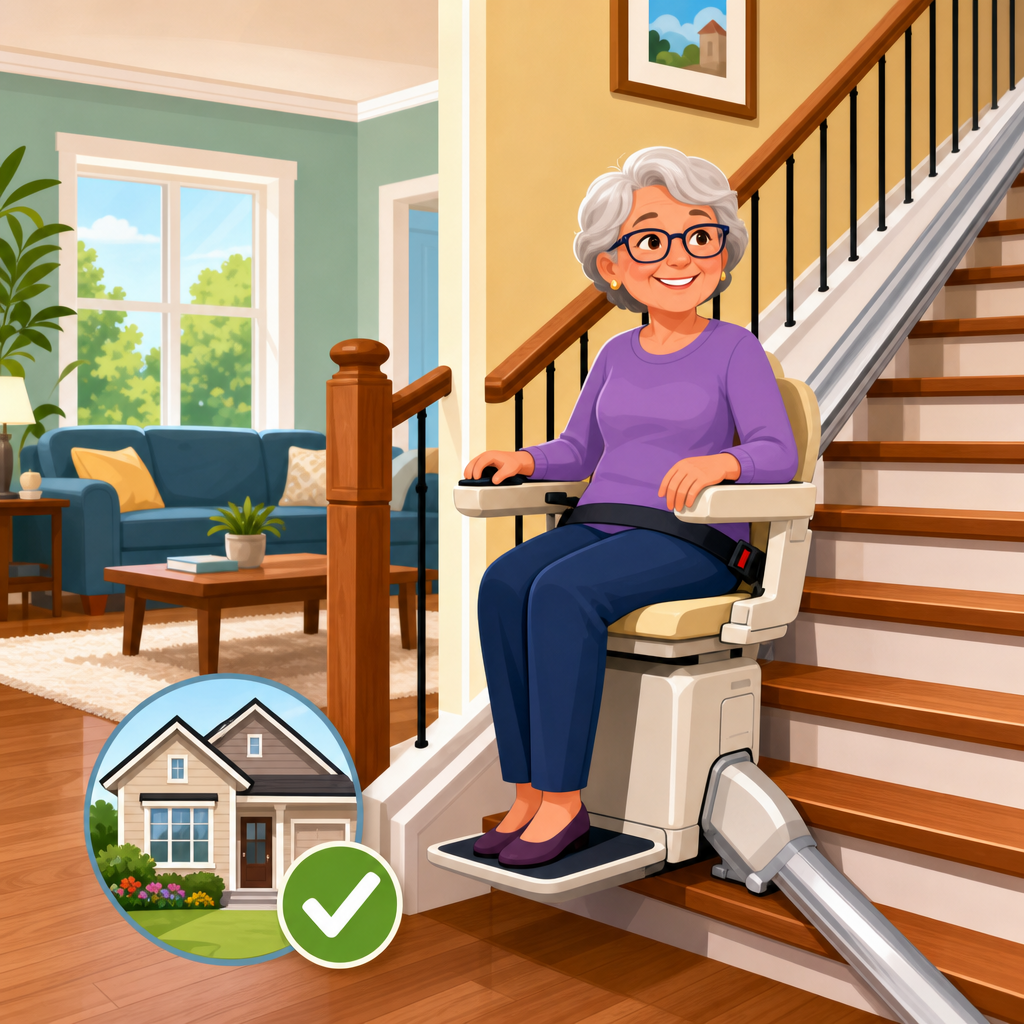
Filing chair lift expenses as home improvements can reduce the after-tax cost of making a house safer, but the rules depend on why the lift was installed, how much medical need can be documented, and whether the improvement increased the home’s value. For homeowners and family caregivers, this topic sits at the intersection of mobility access, tax deductions, and long-term care planning. A chair lift, sometimes called a stair lift, is a motorized seat that travels along a rail mounted to a staircase, allowing a person with limited mobility to move between floors without climbing stairs. When the expense is tied to a diagnosed medical condition, part or all of the cost may qualify as a medical expense under federal tax rules. When it is treated as a home improvement, however, the deduction calculation changes. That distinction matters because many people assume every accessibility upgrade is automatically deductible, and that is not correct.
In practice, I have seen families lose legitimate tax savings because they kept only the installer invoice and skipped the physician letter, or because they never measured the home’s value before and after the work. The Internal Revenue Service generally allows medically necessary home modifications to be claimed as medical expenses if they are primarily for medical care. The core concept is simple: if the chair lift is installed to treat, mitigate, or accommodate a disease or disability, the expense may count. If it is mainly for convenience, aging in place without documented medical necessity, or general resale appeal, the deduction case weakens. Homeowners also need to remember that medical expenses are usually deductible only to the extent they exceed the applicable percentage of adjusted gross income when itemizing deductions. That threshold means recordkeeping and timing are not side issues; they determine whether a tax benefit is actually realized.
This hub article explains how tax deductions and medical expenses apply to chair lifts, which costs can be included, what documentation strengthens a claim, how value-added rules work, and where financing intersects with tax strategy. It also serves as the central guide for this subtopic within cost and financing options, so the goal is to help readers ask the right questions before installation, before filing, and before assuming a reimbursement or deduction exists.
When a Chair Lift Qualifies as a Medical Expense
A chair lift can qualify as a medical expense when it is installed for a specific medical reason, not merely for comfort or future planning. Federal tax guidance treats medical care broadly enough to include equipment and home modifications that are necessary for a person with a physical limitation or chronic condition. Common qualifying situations include severe arthritis, multiple sclerosis, Parkinson’s disease, stroke recovery, balance disorders, spinal cord injuries, and cardiopulmonary conditions that make stair climbing unsafe. In each case, the strongest file starts with a physician’s written recommendation stating that the chair lift is necessary to accommodate the condition and reduce risk.
The medical necessity standard is more practical than many people expect. You do not need to prove that the chair lift is the only possible solution; you need to show that it is a reasonable and medically related one. For example, if an older adult has knee osteoarthritis and repeated falls on the stairs, a stair lift recommendation from an orthopedic specialist or primary care physician is highly relevant. If a homeowner has congestive heart failure and cannot safely climb a full flight without severe exertion, the medical connection is also clear. By contrast, installing a lift in anticipation of possible mobility issues years in the future is harder to defend as a current medical expense.
Direct costs typically include the rail, chair, power system, call stations, and installation labor. Necessary electrical work may also be included when it is part of making the device operational. Service contracts, extended warranties, and purely cosmetic carpentry usually require closer analysis and may not be deductible in the same way. If the purchase includes removal of carpeting, wall patching, or painting unrelated to function, those amounts should be broken out on invoices rather than bundled together.
How the Home Improvement Rule Changes the Deduction
The tax treatment becomes more nuanced because a chair lift is installed in a residence and can be viewed as a capital improvement. The key rule is that a capital expense made for medical care may be deductible only to the extent the cost exceeds the increase in the home’s fair market value. In plain terms, if the lift costs $12,000 and it increases the home’s value by $2,000, then $10,000 may be treated as a medical expense, subject to overall deduction limits. If the improvement does not increase the value of the home, the full cost may potentially qualify.
That value-added test is often misunderstood. Many accessibility modifications add little or no market value because they are specialized to one user or even reduce appeal to some buyers. A straight stair lift attached to a narrow staircase, for example, may not raise value at all in a typical resale market. A custom curved lift on a prominent staircase can be even more specialized. Still, homeowners should not guess. A real estate appraiser, broker price opinion, or documented market analysis can help establish whether any value increase occurred. The better the contemporaneous documentation, the more credible the deduction position.
Some homeowners ask whether a chair lift should instead be added to the property basis for future capital gains calculations. In some cases, yes, especially for the non-deductible portion tied to home value or personal improvement. This is where coordination with a tax professional matters. A deduction today and basis adjustment later are not interchangeable, and errors can compound over time. The safest approach is to separate the medically deductible portion from any capitalized portion at the time of filing.
Records You Need Before You File
Good documentation is what turns a plausible deduction into a defensible one. At minimum, keep the sales contract, paid invoice, proof of payment, product specifications, and installation date. Add a physician letter that identifies the diagnosed condition, describes the mobility limitation, and recommends the chair lift as medically necessary. If the person using the lift is a dependent, keep records showing dependency status as well, because medical expenses paid for qualifying dependents can often be included.
For home improvement analysis, maintain evidence about property value. Ideally, obtain a before-and-after valuation statement from a qualified appraiser or a written opinion from a local real estate professional explaining whether the chair lift changed market value. In my experience, many tax preparers are willing to work with a thoughtful file even if a formal appraisal is not available, but they are far less comfortable when the taxpayer has no valuation support at all. The more specialized and removable the lift, the easier it usually is to argue that market value did not materially increase.
Timing also matters. Medical expenses are generally deducted in the year they are paid, not simply when the contract is signed. If financing is used, the timing of out-of-pocket payments can affect the year of deduction. Reimbursed costs cannot be deducted, so if a state waiver, veterans benefit, workers’ compensation program, or insurer pays part of the bill, only the unreimbursed amount is relevant.
| Document | Why it matters | Best source |
|---|---|---|
| Physician letter | Shows medical necessity for the chair lift | Treating doctor or specialist |
| Itemized invoice | Separates equipment, labor, and nonmedical extras | Chair lift dealer or installer |
| Proof of payment | Establishes the year the expense was paid | Bank records, credit card statements, receipts |
| Value analysis | Supports the home improvement adjustment rule | Appraiser or real estate professional |
| Reimbursement records | Prevents double claiming of paid amounts | Insurer, agency, benefit administrator |
What Costs Can Be Included and What Usually Cannot
Eligible chair lift expenses often extend beyond the seat itself. The rail system, charging components, seat modifications, folding footrests required for safe use, and installation labor are commonly part of the primary expense. If the staircase requires limited structural reinforcement or electrical work to support safe installation, those related costs may also be medically connected. In a two-story home where the lift replaces unsafe stair use for a mobility-impaired resident, these are not optional accessories; they are part of the functioning medical accommodation.
However, not every related expense is equally strong. Routine maintenance after installation may qualify in some cases if it is necessary to keep the medically required equipment operational, but luxury upgrades do not become deductible simply because they are attached to a qualifying project. Upgraded upholstery, decorative trim packages, repainting the stairwell, or replacing flooring throughout the home are weak claims unless there is a direct medical necessity. The same caution applies to bundled remodeling projects. If a contractor invoice combines a chair lift with broader renovation work, the taxpayer should request a detailed breakout.
Used and rental chair lifts add another layer. A used lift can still qualify if it is medically necessary and properly installed. A rental may also qualify when short-term recovery requires temporary access, such as after orthopedic surgery. In both situations, the same documentation standards apply. The tax law focuses less on whether the equipment is new and more on whether the expense was necessary, paid, and unreimbursed.
How Deductions Interact With Financing, HSAs, and Other Benefits
Because this page anchors the tax deductions and medical expenses subtopic under cost and financing options, it is important to connect tax treatment with the ways people actually pay for chair lifts. Many households use credit cards, installment loans, dealer financing, home equity lines, health savings accounts, flexible spending arrangements, or support from local disability programs. These payment methods do not all produce the same tax outcome. The central question is not how the lift was financed, but who ultimately paid and whether the amount was reimbursed.
If you pay for a chair lift with a credit card in December, the expense is generally considered paid in that tax year, even if the card balance is paid off later. That timing can be valuable when bunching medical expenses into one year to exceed the adjusted gross income threshold. A home equity loan may provide cash flow, but interest is not automatically a medical expense. An HSA can be especially useful because qualified medical expenses paid from HSA funds are generally tax-free, but you cannot also claim an itemized medical deduction for the same HSA-funded amount. The same no-double-dipping principle applies to FSAs and reimbursements.
Veterans benefits, Medicaid waiver programs, state assistive technology funds, and nonprofit grants can significantly lower out-of-pocket costs. These programs are often overlooked. If a state program pays 40 percent of the installation cost and the family pays the remaining 60 percent, only the family’s share may be considered for tax purposes. This is one reason a cost-and-financing review should happen before purchase, not after filing season begins.
Common Mistakes and Practical Filing Tips
The most common mistake is assuming the entire chair lift cost is deductible without considering home value impact, itemizing status, or reimbursement offsets. Another frequent error is filing without a medical necessity letter, then scrambling to obtain one after the fact. Retrospective letters are better than nothing, but they are less persuasive than contemporaneous documentation created before or near installation. I also regularly see taxpayers overlook dependent rules, especially when an adult child pays for a parent’s lift. Whether that expense is deductible can depend on who paid, who owns the home, and whether the parent qualifies as a dependent under tax rules.
Another pitfall is failing to separate medical access equipment from general remodeling. Suppose a family widens a staircase landing, repaints the foyer, replaces banisters, and installs a curved stair lift in one contract. Without itemization, the entire invoice becomes harder to analyze. Contractors and dealers can usually provide revised documentation if asked early. Keep digital and paper copies, since amended returns or audits may arise years later.
Practical filing starts with Schedule A planning and a realistic threshold calculation. Add up all unreimbursed medical expenses for the year, including doctor visits, prescriptions, insurance premiums where allowed, dental work, hearing aids, and the chair lift. If total expenses do not exceed the applicable percentage of adjusted gross income, the federal deduction may be limited even when the expense clearly qualifies medically. State income tax rules may differ, so homeowners should also review state treatment rather than assuming the federal result controls.
Building a Smarter Tax Strategy Around Accessibility
Chair lift tax planning works best when it is part of a broader accessibility strategy rather than a last-minute receipt hunt. Households comparing stair lifts, vertical platform lifts, ramps, and first-floor bedroom conversions should evaluate not only price and safety, but also tax documentation, reimbursement potential, and resale implications. A stair lift is often the fastest and least disruptive option for a multi-story home, which can make the medical necessity case straightforward when stairs are the main barrier. In other homes, a more extensive project may better suit long-term mobility needs, but larger projects usually demand tighter valuation analysis and more detailed tax records.
This hub should help readers navigate the full tax deductions and medical expenses landscape: what makes an expense medically necessary, how capital improvement rules affect deductibility, which costs belong in the calculation, how financing changes timing, and where outside benefits reduce claimable amounts. The main benefit of understanding these rules is clarity. You can make a mobility upgrade for the right health reasons, pay for it in the most efficient way available, and file with evidence instead of assumptions. Before installing or claiming a chair lift expense, gather a physician letter, request itemized invoices, document property value impact, and review your situation with a qualified tax professional. That simple preparation can protect both safety at home and money at tax time.
Frequently Asked Questions
Can chair lift expenses be claimed as a home improvement on my taxes?
Possibly, but the tax treatment usually depends on why the chair lift was installed and whether it qualifies as a medically necessary capital improvement rather than a standard home upgrade. In many cases, a chair lift installed to accommodate a diagnosed medical condition, mobility limitation, or disability may be treated as a medical expense instead of a general home improvement deduction. That distinction matters because home improvements are not typically deductible just because they make a property more comfortable or convenient. The strongest cases involve a physician-documented need, such as impaired mobility, fall risk, recovery from surgery, or a chronic condition that makes stairs unsafe or impractical.
Even when a chair lift qualifies as a medical-related improvement, the deductible amount may be limited if the installation increases the fair market value of the home. Generally, if the lift adds value to the property, only the portion of the cost that exceeds that value increase may be considered a medical expense. If it does not materially increase the home’s value, more of the cost may be eligible. This is why homeowners should think of the issue less as “Can I deduct a home improvement?” and more as “Can I document this as a medically necessary accessibility modification?” Good records, a doctor’s recommendation, invoices, and any appraisal or valuation support can all help substantiate the claim.
What documentation do I need to support a chair lift expense for tax purposes?
Documentation is one of the most important parts of successfully supporting a chair lift expense. At a minimum, you should keep the purchase contract, installation invoice, proof of payment, product description, and any warranty or service paperwork showing exactly what was installed and when. You should also retain a written recommendation or prescription from a licensed medical professional explaining the medical necessity of the chair lift. Ideally, that note should connect the equipment directly to a diagnosed condition or mobility limitation, rather than simply stating that the lift is helpful or convenient.
It is also wise to maintain records showing how the chair lift relates to safety and accessibility in the home. For example, notes about fall risk, inability to use stairs safely, or the need to reach a bedroom or bathroom on another floor can help establish purpose. If there is any chance the installation increased the home’s value, consider obtaining before-and-after valuation evidence or consulting a real estate professional who can provide a written opinion. Tax authorities often focus on whether an expense was medically necessary and how much of the cost may have added property value, so supporting both points can be valuable. Keeping all of these materials together with your annual tax file can make filing easier and can also protect you if questions arise later.
How does an increase in home value affect the amount I may be able to deduct?
When a chair lift is treated as a medically necessary home modification, the effect on home value can directly affect the deductible amount. The general principle is that if the improvement increases the value of the home, the increase must usually be subtracted from the total cost to determine the amount that may count as a medical expense. For example, if a chair lift and installation cost $8,000 and the home’s value increases by $1,500 because of the addition, the potentially eligible medical expense may be reduced to $6,500. On the other hand, if the installation adds little or no market value, a larger portion of the full cost may qualify.
In practice, this issue is not always straightforward because accessibility modifications do not necessarily raise resale value in a meaningful way, especially if they are highly specialized or tailored to one user’s needs. A stair lift may be viewed by some buyers as neutral or even something they would remove, which can affect valuation. That said, assumptions are risky. If you plan to claim a substantial deduction, it can be worthwhile to gather objective support for your position, such as an appraisal, a comparative market opinion, or written input from a knowledgeable real estate professional. The key is being able to show, if needed, how much of the expense was for medical accommodation rather than value-enhancing renovation.
Can a family caregiver or adult child claim the cost of a chair lift installed for a parent or relative?
In some situations, yes, but the answer depends on who paid for the chair lift, who lives in the home, and whether the person using the lift qualifies as a dependent for tax purposes. If you paid for a chair lift for a parent or another relative and that person meets the rules to be claimed as your dependent, the expense may potentially be treated as a medical expense paid on behalf of that dependent. However, simply helping a family member financially does not automatically make the cost deductible. Dependency status, support tests, residency rules in some cases, and other tax requirements may all come into play.
It is also important to consider ownership and use of the property. If the chair lift is installed in your parent’s home, your records should clearly show that the expense was paid for that individual’s medically necessary care. If the lift is installed in your own home so that an aging parent can live with you safely, the analysis may still support medical-expense treatment, but the documentation should connect the modification to that person’s condition and need for care. Family caregivers should be especially careful with paperwork because multi-person households can make tax treatment more complex. A tax professional can help determine whether the relative qualifies as a dependent and whether the expense should be allocated or reported in a specific way.
Are maintenance, repairs, and removal costs for a chair lift also eligible for tax benefits?
They may be, particularly when the original chair lift qualifies as a medically necessary accessibility device. Ongoing costs such as repairs, servicing, replacement parts, and possibly electricity attributable to operation can sometimes be treated as related medical expenses, especially if they are necessary to keep the equipment functioning for the patient’s use. The logic is that once a medically necessary device is installed, the reasonable costs of maintaining it may also be part of the expense of care. As with the original installation, strong recordkeeping matters. Save service invoices, technician reports, receipts for parts, and any notes showing that the work was needed to preserve safe operation.
Removal costs can be more nuanced. If the chair lift is later removed because it is no longer medically needed, because the user moved, or because the home is being sold, the tax treatment may not mirror the original installation. In some cases, removal may be viewed as part of maintaining or restoring the property rather than as a medical expense. Still, facts matter, and there can be situations where costs tied directly to medically necessary equipment deserve closer review. Because maintenance and follow-up expenses often receive less attention than the initial purchase, homeowners should not assume they are irrelevant. Instead, they should track them carefully and review them with a qualified tax advisor to determine what is supportable under current tax rules.