Grab bar placement in bathrooms is one of the most important decisions in home accessibility because the right bar in the right location can prevent falls, support independent transfers, and make daily routines safer without making the room feel institutional. In accessibility work, grab bars are fixed support rails anchored into framing or approved backing, while bathroom and bedroom accessibility refers to the larger set of design choices that help people move, transfer, bathe, dress, and sleep with less risk and more confidence. I have walked through many homes with occupational therapists, contractors, and families after a fall or hospital discharge, and the same pattern appears repeatedly: safety problems usually come from poor placement, weak mounting, or assuming one bar works for every body and every task. This matters because bathrooms are among the highest-risk rooms in any home due to wet floors, tight clearances, and frequent transitions from sitting to standing, while bedrooms create risks around bed transfers, nighttime toileting, and reaching storage. Good placement supports aging in place, recovery after surgery, disability access, and caregiver assistance.
Experts do not treat grab bar placement as a cosmetic afterthought. They look at the user’s diagnosis, height, grip strength, balance, dominant hand, transfer style, and whether a wheelchair, walker, cane, or shower chair is part of the routine. They also consider recognized standards such as the ADA Standards for Accessible Design, local building code, manufacturer load ratings, and best practices from occupational therapy and universal design. A bathroom hub article must therefore cover more than a single wall measurement. It needs to explain how toilet bars, shower bars, tub bars, thresholds, flooring, lighting, door swing, vanity clearance, and nearby bedroom pathways work together. When homeowners understand that broader system, they make better decisions, avoid expensive rework, and create a space that remains usable as needs change.
What experts mean by proper grab bar placement
Proper grab bar placement means installing bars exactly where a person needs leverage during a specific movement, not merely where there is empty wall space. In practical terms, the movement may be lowering onto a toilet, standing from a shower seat, stepping over a tub wall, or pivoting from wheelchair to bed. A well-placed bar aligns with the user’s hand path so the wrist stays neutral, the shoulder does not have to overreach, and body weight can be transferred directly into a securely anchored support. A badly placed bar may still look compliant but fail in actual use because it is too high, too far forward, behind the user, or mounted into drywall without proper blocking.
In my projects, the most reliable planning method is task-based assessment. Start by identifying every risky transition in the bathroom and bedroom. Then observe or simulate how the person moves, including where they naturally reach for support. This approach often reveals that people need more than one bar in a zone. For example, a transfer into a curbless shower may require one vertical bar at the entrance for step-in stability and one horizontal bar on the control wall or side wall for standing balance during bathing. In a bedroom, a person may need a bed rail, a wall-mounted bar near the route to the ensuite bath, and a stable surface by the closet. Placement follows the movement, and movement differs from one person to another.
Recommended grab bar placement for toilets, showers, and tubs
For toilets, experts commonly use a side-wall horizontal grab bar and a rear-wall bar when wall conditions allow. In many accessible layouts, the side bar is the primary support because it helps with controlled lowering and push-off during standing. The rear bar can assist balance and repositioning, but it is usually secondary because reaching behind the body is biomechanically weaker. In residential work, fold-down bars are useful when there is no adjacent wall or when one-sided weakness requires support on a specific side. Placement should account for toilet paper holder location, tank depth, bidet controls, and whether a caregiver needs lateral access. The safest installation is always into framing or structural backing designed for the load.
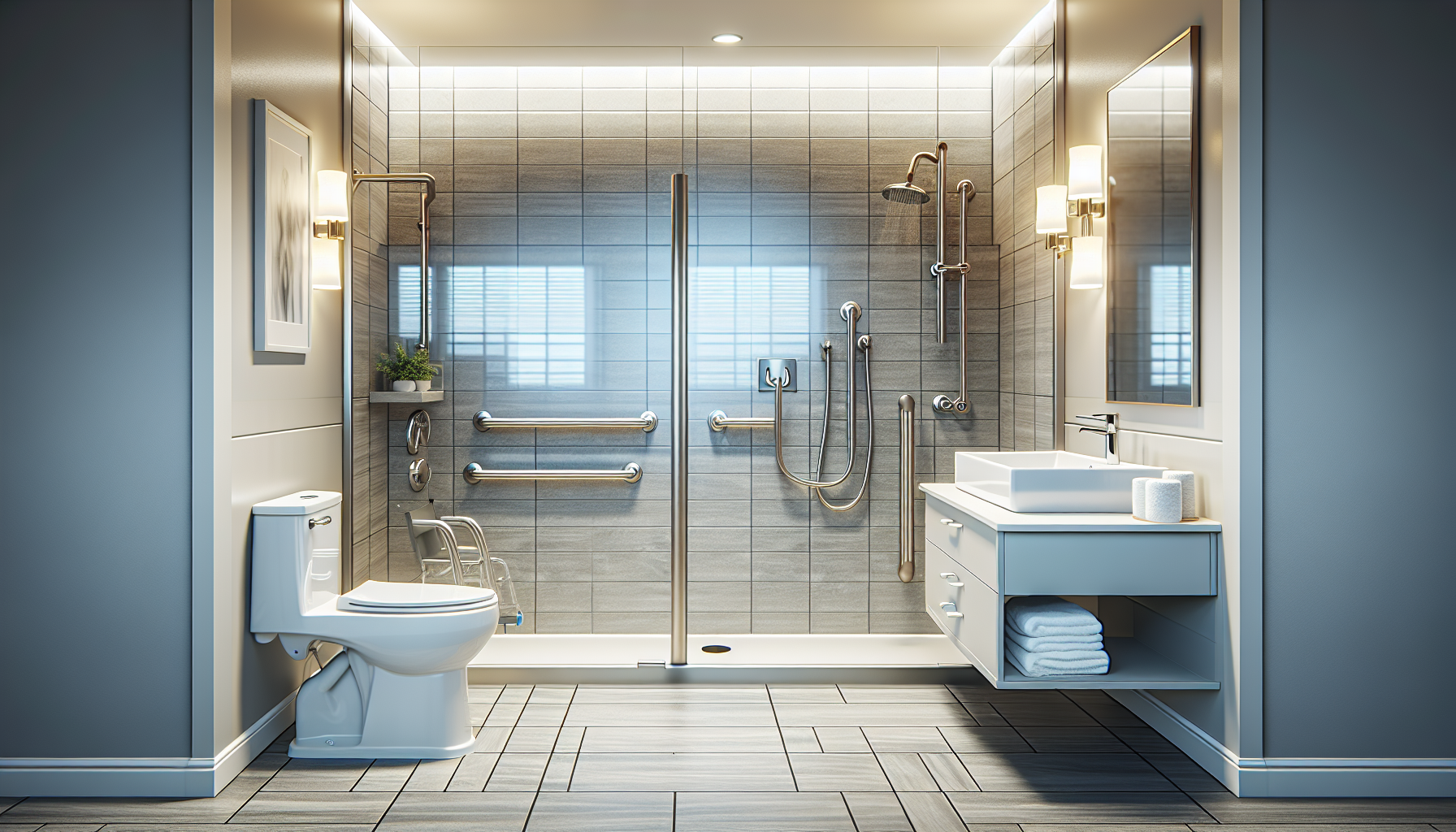
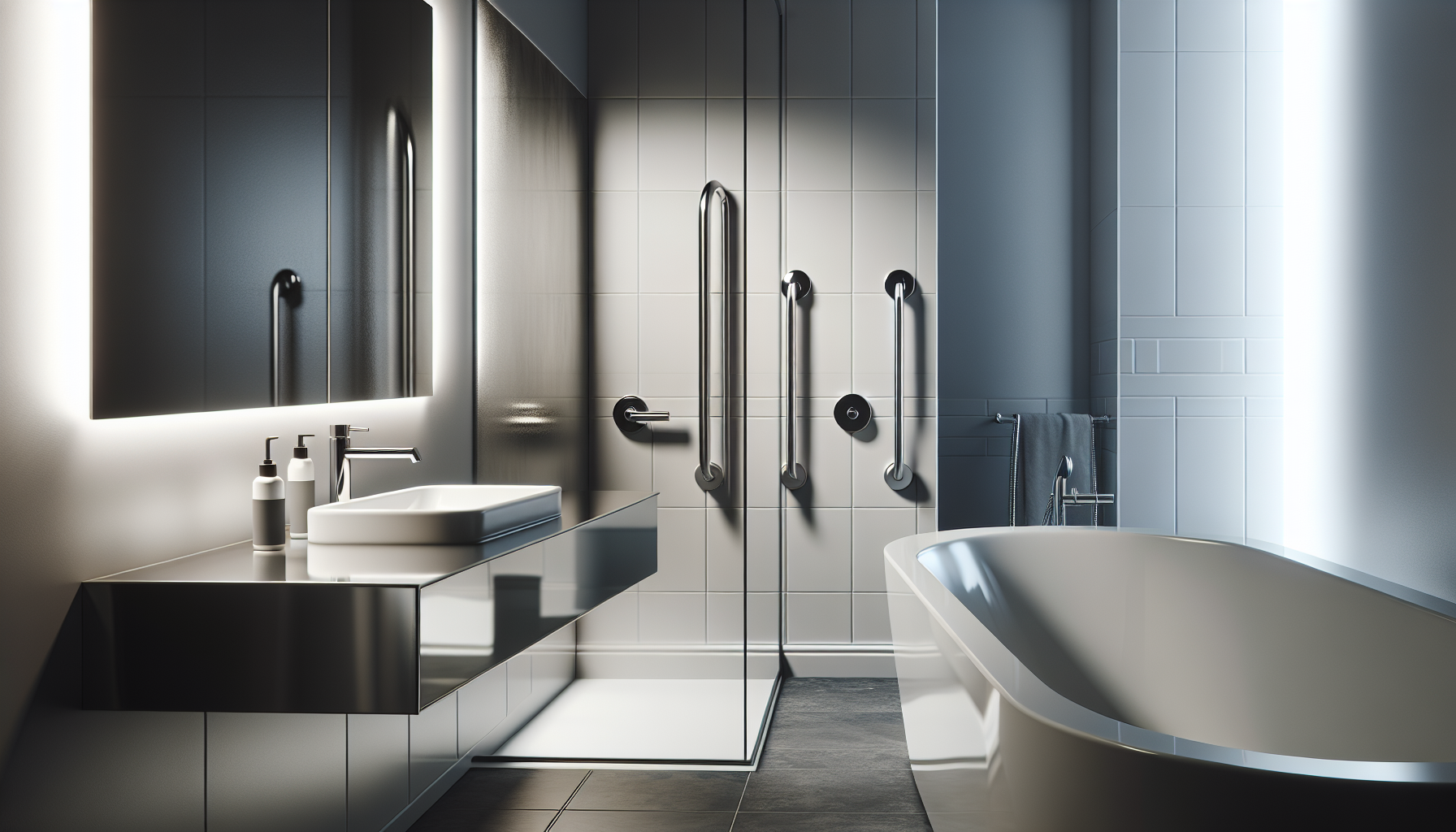
In showers, the side wall is often the most valuable location because it supports standing, turning, and seated bathing. A horizontal bar around standing elbow height can help with balance, but experts also recommend a vertical entry bar because it gives a natural handhold during the first and last step, when slips are most common. If a built-in bench or shower chair is used, bar placement must support both seated stability and the sit-to-stand action. On the control wall, bars should be positioned so the bather can stabilize while reaching the valve without standing directly under hot water. Textured finishes improve grip, and diameters should match the user’s hand size.
Tubs present a different challenge because the highest-risk moment is crossing the tub wall. A vertical bar at the entry point is often more effective than relying on a diagonal decorative bar. Once inside, a horizontal bar on the back wall can aid lowering and rising if the user sits on a transfer bench or bath seat. Suction-cup accessories are not a substitute for a mounted grab bar; they may be acceptable only as temporary balance aids if rated and used according to manufacturer instructions, but they should never be the primary support for weight-bearing transfers.
| Bathroom zone | Recommended bar type | Primary purpose | Key placement notes |
|---|---|---|---|
| Toilet side wall | Horizontal | Lowering and push-off | Place where the forearm can press downward without shoulder overreach |
| Toilet with no side wall | Fold-down support | Transfer support | Useful for wheelchair users and for one-sided weakness |
| Shower entry | Vertical | Step-in stability | Best at the point of transition across threshold or curb |
| Shower side wall | Horizontal | Standing or seated balance | Coordinate with bench, handheld shower, and valve reach |
| Tub entry | Vertical | Crossing tub wall | Mount where the hand naturally lands before stepping in |
| Tub back wall | Horizontal | Support while seated | Useful with bath seats or transfer benches |
Mounting height, spacing, and structural requirements
Height matters, but there is no single perfect number for every person. Many professionals begin with common accessibility ranges, then adjust after observing the user. For a toilet side bar, the goal is a height that allows downward force with the elbow slightly bent rather than a high reach that stresses the shoulder. In showers, the right height depends on whether the user stands, sits on a bench, or does both. Vertical bars work best when long enough to offer gripping options across different phases of movement. Spacing from corners, controls, glass, and accessories is equally important because a bar is only useful if a full hand can grasp it without knuckles striking nearby surfaces.
Structural anchoring is nonnegotiable. A true grab bar should be mounted to wood blocking, studs, steel backing plates, or an engineered anchoring system approved for the substrate and load. Most quality products are tested for substantial force, but the assembly is only as strong as the wall behind it. Tile installers and remodelers should coordinate early so backing is installed before finishes close the wall. In retrofits, stud finders, inspection openings, and manufacturer-specific fastener systems may be needed. I advise clients to ask for documentation on anchoring method, substrate condition, and product rating. A beautiful brushed-nickel bar that tears out under load is worse than no bar because it creates false confidence.
How grab bars fit into whole-room bathroom accessibility
Grab bars work best when the rest of the bathroom supports safe movement. Flooring should be slip resistant, especially when wet. Curbless or low-threshold showers reduce trip hazards and make roll-in access possible. Adequate turning radius matters for walkers and wheelchairs, and outward-swinging or pocket doors can preserve interior maneuvering space. Vanities may need knee clearance for seated users, while lever faucets and handheld showerheads reduce grip demands. Lighting should be bright and even, with night lighting for overnight bathroom trips. Contrasting colors on walls, floors, and fixtures can improve visibility for people with low vision or cognitive impairment.
Storage placement is often overlooked. If towels, toiletries, and incontinence supplies are stored too high or too low, users are forced into unsafe reaching and bending. A well-designed accessible bathroom keeps frequently used items between knee and shoulder height. Mirrors should serve both seated and standing users. Shower controls should be reachable from outside the spray path and from a seated position. Comfort-height toilets may help some adults stand more easily, but they are not universally better; shorter users may need stable foot support or a different seat configuration. The point is to design the room around functional tasks, not around one product category.
Bathroom and bedroom accessibility planning as one connected system
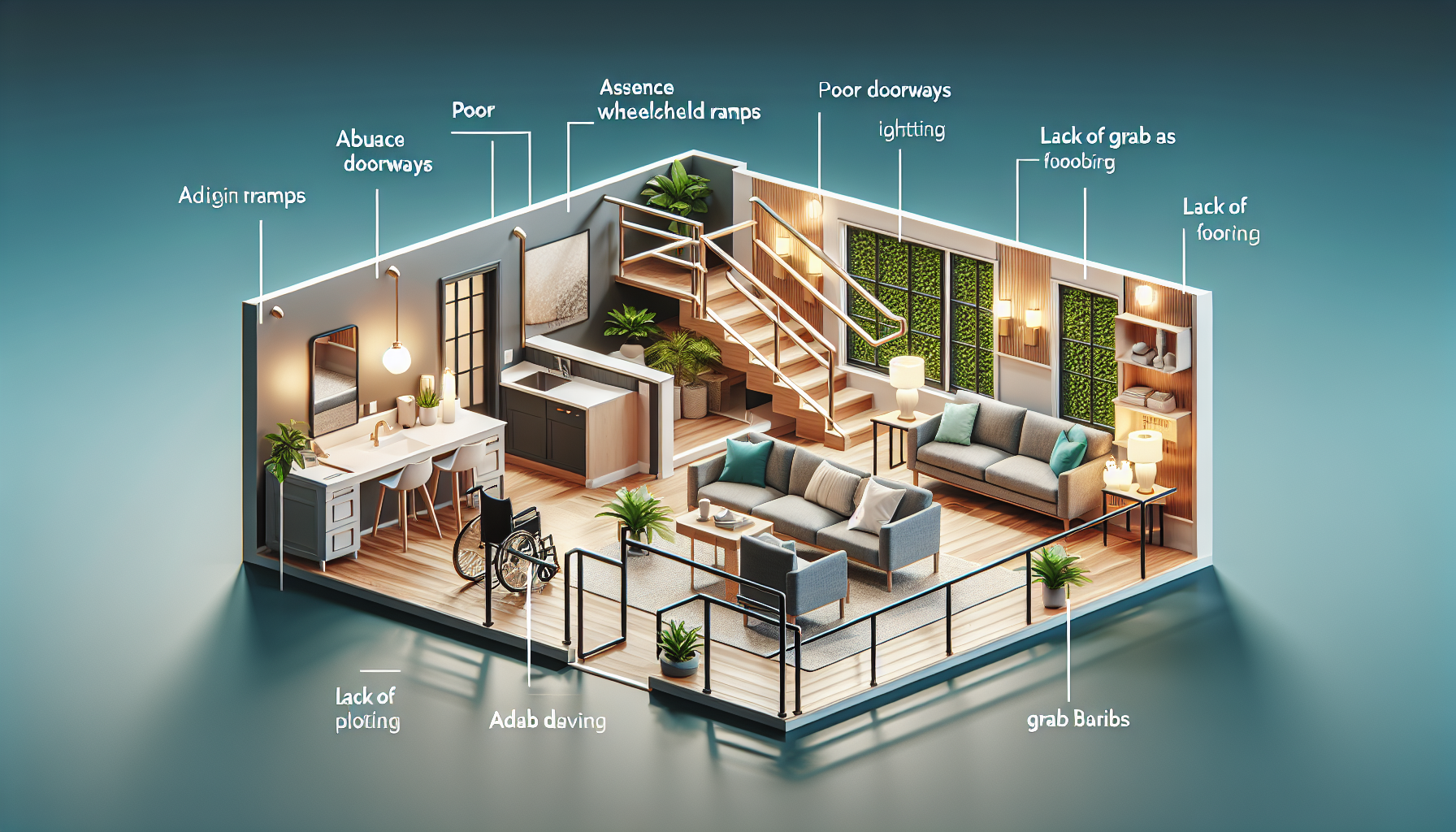
Because this page is a hub for bathroom and bedroom accessibility, it is important to treat the route between these spaces as part of the safety plan. Many nighttime falls occur not in the shower or at the toilet, but beside the bed or along the path to the bathroom. Bed height should allow the user’s feet to rest flat on the floor before standing. Adjustable beds, transfer poles, and bedside rails can help, but they must match the person’s transfer technique and should not create entrapment risk. Clear pathways, low-glare night lights, non-slip flooring, and reachable switches reduce nighttime confusion and instability.
Closet and dressing areas also influence bathroom safety. If a person struggles with dressing while standing on one leg, a stable chair with arms, nearby support surface, and organized storage can prevent falls before the bathroom routine even begins. For wheelchair users, door widths, threshold transitions, and turning clearances must be considered across both rooms. For people recovering from joint replacement, temporary equipment such as raised toilet seats, shower chairs, commodes, and bed assist handles may bridge the gap until strength returns. Long-term planning, however, usually favors durable permanent modifications installed in the correct location the first time.
Common placement mistakes and how professionals avoid them
The most common mistake is installing bars based on symmetry or appearance instead of movement analysis. Another is choosing fashionable towel bars or light-duty accessories that are not rated for body-weight support. I frequently see bars mounted too short for changing hand positions, too close to a shower door, or blocked by a soap niche, control trim, or swinging glass panel. In toilet areas, grab bars are sometimes centered on the fixture rather than positioned where the user can actually bear down during standing. In bedrooms, bed rails may be added without checking mattress height, bed frame stability, or whether the user can roll safely without entrapment.
Professionals avoid these errors by measuring clearances, marking mock-up positions with painter’s tape, and having the user test reach and leverage before drilling. Occupational therapists bring insight into biomechanics and daily routines; certified aging-in-place specialists and experienced remodelers translate those needs into constructible details. Product selection also matters. Stainless steel bars are durable and common in wet zones. Peened or textured finishes improve grip. Contrasting finishes can help low-vision users find the bar quickly. When aesthetics matter, many manufacturers now offer bars integrated with shelves, toilet paper holders, or designer trim, but function and load rating must remain the first filter.
Choosing the right expert and next steps for a safer home
The best grab bar placement plan comes from assessment, not guesswork. If the user has a neurological condition, recent surgery, progressive weakness, or a history of falls, start with an occupational therapist or physical therapist who understands transfers and home safety. Then involve a qualified contractor who has real experience with accessible remodeling, waterproofing, tile retrofits, and structural backing. Ask specific questions: How will you determine placement? What substrate will support the bar? Which products are rated for this installation? Can you coordinate shower seating, handheld sprays, lighting, and door clearance at the same time? Good answers are concrete, not generic.
The bigger lesson is that bathroom and bedroom accessibility should be planned as one practical system centered on daily life. Experts recommend placing grab bars where the hand naturally needs support during toilets, showers, tubs, bedside transfers, and the route in between, then reinforcing those locations properly and designing the surrounding room to reduce strain. When these details are handled well, people stay safer, caregivers work with less risk, and the home feels more supportive without losing comfort or style. Review the highest-risk transitions in your home, mark likely support points, and schedule a professional assessment before the next close call becomes an avoidable injury.
Frequently Asked Questions
Where should grab bars be placed in a bathroom for the best safety and support?
Experts generally recommend placing grab bars wherever a person is most likely to lose balance or need controlled support during a transfer. In most bathrooms, that means the shower or tub, the toilet area, and sometimes along an open wall near the vanity or entry if additional stability is needed. Inside a shower, a horizontal grab bar is commonly installed on the control wall and on the back wall so the user has support while stepping in, turning, and standing during bathing. Near a tub, grab bars are often placed to assist with stepping over the tub wall and lowering into or rising from the bathing surface. Around the toilet, bars are positioned to help with sitting down and standing up safely, especially for people with reduced leg strength, balance limitations, or mobility challenges.
The best placement always depends on the user’s height, strength, movement pattern, and whether they transfer independently or with assistance. A well-placed bar should be reachable exactly when support is needed, without forcing awkward twisting, overreaching, or leaning. Professionals also look at door swings, fixture locations, shower doors, and the path of travel through the room so grab bars improve safety without creating obstacles. Rather than treating placement as one-size-fits-all, experts approach it as a function of daily routine and body mechanics. That is why an assessment of the user and the space is often more important than simply copying a standard layout.
What do experts recommend for grab bar placement around the toilet?
For the toilet area, experts usually recommend support on at least one side, and often on both sides when space allows. The goal is to make it easier to lower onto the seat with control and to push up safely to standing. A side-wall grab bar is often the most useful because it gives the user leverage during the sit-to-stand movement. If there is no adjacent wall on one side, professionals may consider a rear-wall bar, a fold-down bar, or another code-compliant support solution designed for the layout. The right configuration depends on the user’s preferred transfer technique, whether they use a walker or wheelchair, and how much assistance they need.
Experts also pay close attention to height, length, and distance from the toilet so the bar supports a natural arm position. A bar placed too far forward, too high, or too low may be difficult to use effectively and can even increase strain on the shoulders or wrists. In accessibility-focused design, the toilet area is not just about adding a bar somewhere nearby; it is about creating dependable support exactly where the user reaches during real movement. Secure anchoring is critical here because toilet transfers place significant force on the bar, especially when a person relies on it for most of their body weight during standing or lowering.
How high should bathroom grab bars be installed?
There is no universal height that works for every person, although many professionals begin with recognized accessibility guidelines and then adjust for the individual. In general, grab bars are installed at a height that allows the user to grasp them with the forearm and wrist in a comfortable, strong position. If the bar is too high, the user may have to elevate the shoulder or reach awkwardly. If it is too low, they may have to bend, lean, or pull from a mechanically weak position. In both cases, the bar may be present but not truly functional.
Experts recommend looking at how the user actually moves through the bathroom. A taller adult, a shorter adult, someone recovering from surgery, and a wheelchair user may all need different bar heights for the same fixture. Shower use is another important factor because support may be needed while standing, stepping over a threshold, or transitioning to a shower seat. For that reason, professionals often combine guideline-based starting points with on-site measurements, mock positioning, or occupational therapy input. The safest installation is one that matches real reach range and transfer needs, not just a default number selected without evaluation.
Are vertical, horizontal, or angled grab bars better in showers and tubs?
Each orientation can serve a different purpose, and experts choose based on the movement being supported. Horizontal grab bars are widely used because they provide stable support for standing, shifting position, and moving along a wall. They are especially common on the back wall and side walls of showers, where they help users maintain balance while bathing. Vertical grab bars are often helpful at shower or tub entries because they support the hand during step-in and step-out movements, which are among the highest-risk moments for slips and falls. An angled bar may work well for some users because it can support more than one hand position, but it must be selected and placed carefully to avoid encouraging unsafe pulling angles.
Experts do not usually talk about one style being universally best; they focus on which bar orientation matches the user’s actual sequence of movement. For example, someone stepping into a tub may benefit from a vertical bar near the entry and a horizontal bar inside for continued support. A person using a roll-in shower and seat may need horizontal bars positioned for seated stability and transfers instead. The safest solution often combines more than one bar in complementary locations. What matters most is that the bar supports the body where balance changes occur and that the user can grasp it naturally before instability begins.
Can grab bars be installed anywhere, or do they need special wall support?
Grab bars should never be installed as if they were simple towel bars or decorative accessories. Experts strongly recommend anchoring them into wall framing or approved structural backing that is designed to handle the load of a person pulling, pushing, or falling against the bar. Standard drywall anchors are not appropriate for true grab bar installation unless the specific product and wall assembly are engineered and rated for that use. In practical terms, this means the wall often needs studs in the right location or solid blocking installed behind the finished surface. Without that structural support, even a high-quality bar can fail when it is needed most.
This is one reason grab bar planning is so important in bathroom and bedroom accessibility work. When accessibility is considered during remodeling or new construction, backing can be placed strategically so bars can be installed in the ideal positions later, even if the user’s needs change over time. Retrofitting is still very possible, but it may require more investigation of wall construction and more careful product selection. Professionals also evaluate the wall surface, moisture conditions, bar diameter, clearance from the wall, and the user’s grip strength. A secure installation is not just about getting the bar onto the wall; it is about creating reliable support that functions as part of a safer, more independent daily routine.