Handicare stair lifts are a leading option for people who want to stay safe and independent at home, and they deserve close attention within any serious guide to top stair lift brands. A stair lift is a motorized chair or perch that travels along a rail fixed to a staircase, allowing a user to move between floors without climbing steps. Handicare is one of the most established names in this category, with a product line that covers straight stair lifts, curved stair lifts, outdoor models, and heavy-duty configurations. For buyers comparing the best stair lift brands, the company stands out for its broad dealer network, custom rail engineering, and practical feature set aimed at everyday use.
This matters because stair lifts are rarely impulse purchases. In most homes, the decision comes after a fall, a new diagnosis, a hospital discharge, or the gradual realization that stairs have become a daily barrier. I have worked with families evaluating mobility equipment after knee replacement surgery, stroke recovery, Parkinson’s progression, and advanced arthritis, and the same questions come up every time: Will it fit the staircase, how reliable is it, what will it cost, and is this brand worth trusting for years of use? Those questions make brand-level research essential. A stair lift is not just a product; it is a safety device, an accessibility upgrade, and often the difference between aging in place and moving out.
Within the wider market of top stair lift brands, Handicare competes with names such as Bruno, Stannah, Harmar, Acorn, and AmeriGlide. Each brand has strengths. Bruno is often praised for build quality and domestic manufacturing. Stannah has deep history and a strong custom reputation. Harmar offers broad dealer availability. Acorn emphasizes direct marketing and fast installation. Handicare’s position is distinctive because it combines a large model range with advanced curve options and a dealer-based installation approach that can better adapt to unusual stair geometry. For readers using this page as a hub within buying guides and product reviews, Handicare is a key brand to understand before diving into brand-specific comparisons, rental options, or stair lift cost breakdowns.
At a practical level, evaluating Handicare means looking at three areas: features, pricing, and tradeoffs. Features determine comfort, fit, and day-to-day usability. Pricing reveals whether the brand is competitive for straight and curved stairs, and whether used or rental units are realistic. Tradeoffs matter because no stair lift brand is best for every home. Some buyers need the smallest folded profile, others need the highest weight capacity, and others need the quickest install after a hospital discharge. This guide explains where Handicare performs well, where buyers should ask harder questions, and how it fits into the larger conversation about top stair lift brands.
Handicare Stair Lifts Overview and Core Product Line
Handicare is a long-established mobility manufacturer with operations in multiple international markets and a strong presence through authorized dealers in the United States. In the residential stair lift category, its lineup typically includes the 1000 straight stair lift, the 1100 straight stair lift, the Freecurve curved stair lift, and the 2000 custom curved stair lift, along with outdoor and heavy-duty variants depending on dealer offerings. That range matters because staircases vary more than most first-time buyers expect. A straight staircase with a standard landing is one thing; a staircase with turns, intermediate landings, narrow width, or a doorway near the bottom requires more specialized engineering.
The Handicare 1000 is widely known as a straight stair lift designed for standard residential stairs. It uses a slim rail and can often be installed quickly because straight rails do not require the same custom fabrication as curved systems. The Handicare 1100 is notable for its friction drive system, which eliminates a traditional gear rack and creates a sleek rail profile. In plain terms, that can mean less visible grease on the rail and a cleaner appearance, which many homeowners value when the staircase is in a main living area. For curved stairs, the Freecurve and 2000 systems are built to order. Dealers measure the staircase closely, then submit specifications for a rail tailored to that exact path.
Compared with other top stair lift brands, Handicare’s strength is flexibility. I have seen dealers use the Freecurve for tight staircases where seat positioning and parking options made the difference between a workable installation and a rejected quote. Handicare also offers options such as powered swivel seats, powered footrests, folding rails for avoiding door obstruction, and perch seating for users who struggle to bend their knees fully. Those options are not unique to Handicare, but the company packages them across multiple models in a way that makes it competitive for both common and complex installations.
As a hub page for top stair lift brands, it is useful to place Handicare in context. Straight lifts from nearly all major brands are simpler and cheaper than curved lifts. Curved stair lifts are where manufacturing precision, installation planning, and dealer competence matter most. Handicare has built much of its reputation on this custom side of the market. If your staircase is unusual, the brand deserves to be on any shortlist. If your staircase is straight and your budget is tight, Handicare is still relevant, but the comparison should be broader because rivals may be similarly capable.
Key Features Buyers Should Evaluate
When people ask what features matter most in a stair lift, the answer is simple: safety, fit, ease of transfer, and reliability. Handicare includes standard safety elements found across reputable top stair lift brands, including seat belts, obstruction sensors, armrests, footrests, and battery backup. Battery-powered operation is especially important because most residential stair lifts plug into household current to charge onboard batteries, then run from battery power. That means the lift can usually continue working during a power outage for a number of trips, assuming the batteries are healthy. In homes where storms or grid interruptions are common, this is a meaningful safety advantage.
Fit is the next major factor. Handicare offers seats in different sizes and configurations, including compact seats and higher-capacity options on some models. Seat height, armrest spacing, and swivel behavior all affect how easy it is to get on and off. A powered swivel can be especially useful for a user with weak balance or limited trunk rotation because it reduces the effort needed to exit safely onto the landing. Folding footrests are standard, but powered footrest options are worth considering for users who cannot bend easily. Remote call/send controls also help households where more than one person uses the staircase, because the chair can be parked out of the way.
Noise and ride quality are often overlooked until after installation. In my experience, buyers care less about motor type than about how smooth the start and stop feel in daily use. Handicare generally performs well here, particularly on newer models designed for gentle acceleration and deceleration. For curved lifts, custom programming can also affect how confidently the lift moves through turns. If a user is anxious, even small jolts feel magnified. That is why an in-home demonstration or dealer showroom test ride is so valuable.
| Feature Area | What Handicare Offers | Why It Matters |
|---|---|---|
| Straight stair options | 1000 and 1100 models | Supports fast installation and broader price flexibility |
| Curved stair options | Freecurve and 2000 custom systems | Fits turns, landings, and narrow or complex staircases |
| Battery backup | Standard on most residential lifts | Allows operation during many power outages |
| Seat and transfer upgrades | Powered swivel, powered footrest, perch seating | Improves safety for users with pain, weakness, or limited motion |
| Parking solutions | Call/send remotes and folding rail options | Keeps hallways, doors, and walkways clearer |
| Outdoor capability | Weather-resistant models through dealers | Extends accessibility to porches, garages, and exterior steps |
Another practical feature is the rail itself. The 1100’s grease-free friction drive rail is a specific Handicare talking point because traditional rack-and-pinion designs can leave lubricant residue. For some homes, that difference is mostly cosmetic; for others, especially where children, pets, or light-colored carpeting are nearby, it is a real housekeeping advantage. Buyers comparing top stair lift brands should still focus on dealer quality and service response, but feature-level details like this can shape long-term satisfaction.
Handicare Stair Lift Pricing and Cost Drivers
Handicare stair lift pricing follows the same broad pattern seen across top stair lift brands: straight lifts cost much less than curved lifts, and options can add significantly to the final quote. In today’s market, a new straight Handicare stair lift often falls in the rough range of $3,000 to $5,500 installed, depending on rail length, seat configuration, warranty terms, and local labor rates. A new curved Handicare stair lift commonly starts around $10,000 and can rise to $15,000 or more for complex staircases, long travel distances, or premium options. Outdoor units may carry additional cost because of weatherproofing and model limitations.
These numbers should be treated as planning figures, not universal price lists. Handicare works primarily through dealers, so actual quotes vary by region. I have seen meaningful differences between metro and rural markets, and between dealers that bundle service agreements versus those that price service separately. The main cost drivers are staircase type, rail customization, installation complexity, and optional powered features. Curved rails are the largest factor because they must be measured precisely and manufactured for one staircase only. That custom fabrication is why curved stair lifts have little resale value compared with straight lifts, even when the chair itself is in excellent condition.
Used and rental stair lifts can reduce costs, but the fit matters. Straight Handicare stair lifts are better candidates for reconditioned resale because a standard rail can be cut or adapted more easily. Curved models are much harder to reuse because the rail shape is staircase-specific. Some dealers offer temporary straight stair lift rentals, often with an upfront installation fee plus monthly charges. This can make sense after surgery or injury when the need is expected to last a few months. For long-term use, buying often becomes more economical than renting.
Insurance coverage is another area where buyers need realistic expectations. Original Medicare generally does not cover stair lifts because they are considered home modifications rather than durable medical equipment under standard Part B rules. Medicaid waiver programs, veterans’ benefits, state assistive technology programs, or local nonprofit grants may help in some cases, but availability varies widely. A good dealer should explain payment options clearly and never imply guaranteed insurance reimbursement. For households comparing top stair lift brands, honest pricing guidance is a sign of a trustworthy provider.
Pros, Cons, and How Handicare Compares With Other Top Stair Lift Brands
The main advantages of Handicare stair lifts are product breadth, strong curved-stair capability, useful comfort and transfer options, and a large authorized dealer network. Buyers with narrow stairs or complex layouts often benefit from the brand’s custom solutions, and the 1100 model gives Handicare a modern straight-lift option with a clean rail design. In many homes, the company can provide a more tailored fit than budget-focused brands that rely on fewer configurations. That is a real advantage when the user has mobility limitations that make transfer mechanics critical.
There are also limitations. Because Handicare usually sells through dealers rather than one centralized direct-sales system, the customer experience can vary. The product may be excellent while the local measurement, communication, or service turnaround is average. This is not unique to Handicare; it applies to many top stair lift brands that depend on dealer installation. Still, buyers should evaluate the local provider as carefully as the brand itself. Ask who performs repairs, what parts are stocked locally, what response times are typical, and whether annual maintenance is recommended or required to preserve warranty coverage.
Against Bruno, Handicare may offer more flexibility on some complex curved designs, while Bruno is often favored for premium feel and strong dealer reputation in many U.S. markets. Against Stannah, Handicare is competitive in custom curved applications, though Stannah has a long heritage and strong engineering reputation. Against Acorn, Handicare often feels more configurable and dealer-driven, while Acorn may appeal to buyers seeking fast national marketing response. Against Harmar and AmeriGlide, Handicare generally compares well on custom solutions but may not always be the lowest-price option. In short, Handicare is rarely the wrong brand to consider, but it is not automatically the best brand for every staircase or budget.
For most buyers, the smartest approach is to get at least two in-home quotes from reputable providers and compare not just price, but rail fit, seat comfort, warranty coverage, service terms, and installer credibility. That is the standard I use when advising families, and it consistently produces better outcomes than choosing based on headline price alone.
Who Should Buy a Handicare Stair Lift
Handicare is a strong fit for homeowners who need a customized solution, want multiple seat and rail options, or have a staircase that other companies describe as difficult. It is also a sensible choice for households that prioritize staying in a multilevel home rather than relocating, especially when the user’s condition is stable enough that the lift will be used for years. People with osteoarthritis, post-surgical weakness, chronic balance problems, multiple sclerosis, or cardiopulmonary limitations often benefit most when the transfer can be set up carefully with the right seat height and swivel function.
If you are shopping the top stair lift brands, use Handicare as a benchmark. Ask each provider how the lift handles narrow stairs, what weight capacities are available, how power outages are managed, what happens if the unit stops mid-rail, and how long custom curved manufacturing takes. A good answer should be specific and direct. Handicare usually performs well in these discussions because its lineup is mature and its dealers are accustomed to complex installations.
The key takeaway is straightforward: Handicare stair lifts offer a competitive blend of features, pricing flexibility, and custom capability, making them one of the most important brands in the stair lift market. They are especially compelling for curved staircases and homes where standard solutions fall short. As you continue exploring buying guides and product reviews in this hub, compare Handicare with Bruno, Stannah, Harmar, and Acorn using the same criteria: fit, safety, service, and total cost. Then schedule in-home assessments, ask detailed questions, and choose the lift that matches your staircase and mobility needs with the least compromise.
Frequently Asked Questions
What types of stair lifts does Handicare offer?
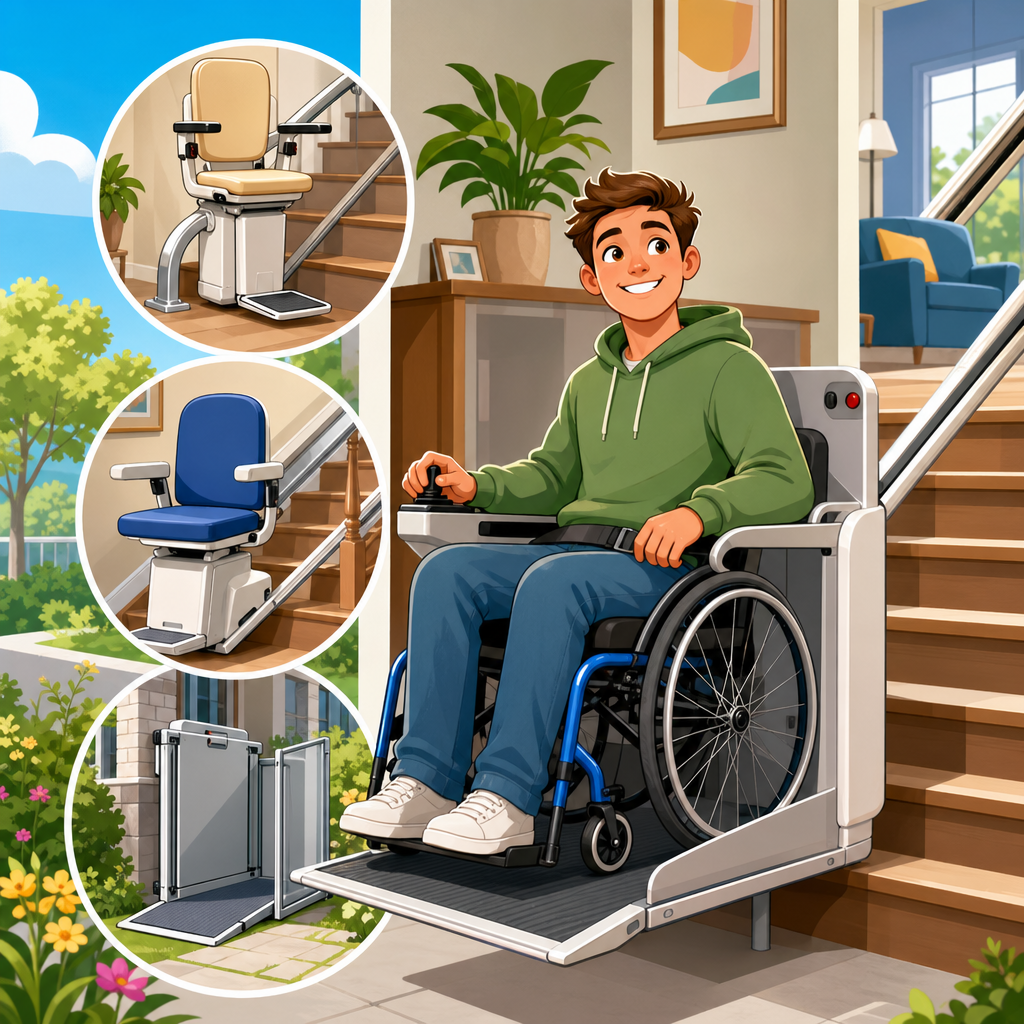
Handicare offers a broad range of stair lifts designed to fit different staircase layouts, mobility needs, and home environments. The brand is best known for its straight stair lifts, which are built for staircases that run in a single line without turns, landings, or curves. These models are typically the most straightforward to install and are often the most budget-friendly option for homeowners who need safe, reliable access between floors. Handicare also manufactures curved stair lifts, which are custom-made to follow staircases with bends, corners, intermediate landings, or spiral-style layouts. Because curved rails are tailored to the exact dimensions of the home, they usually involve more planning and a higher overall cost, but they allow users to maintain full use of staircases that would otherwise be difficult to navigate.
Beyond indoor models, Handicare also offers outdoor stair lifts for exterior steps, porches, decks, and entryways. These units are built with weather-resistant materials and protective covers to withstand rain, temperature changes, and outdoor wear. In addition, some Handicare systems are available with perch-style seating or alternative seat configurations for users who may have difficulty bending their knees or sitting fully. This variety is one of the reasons Handicare is frequently included in discussions of top stair lift brands: the company addresses common residential mobility challenges with solutions for straight, curved, and exterior stairways rather than relying on a one-size-fits-all approach.
What features make Handicare stair lifts stand out?
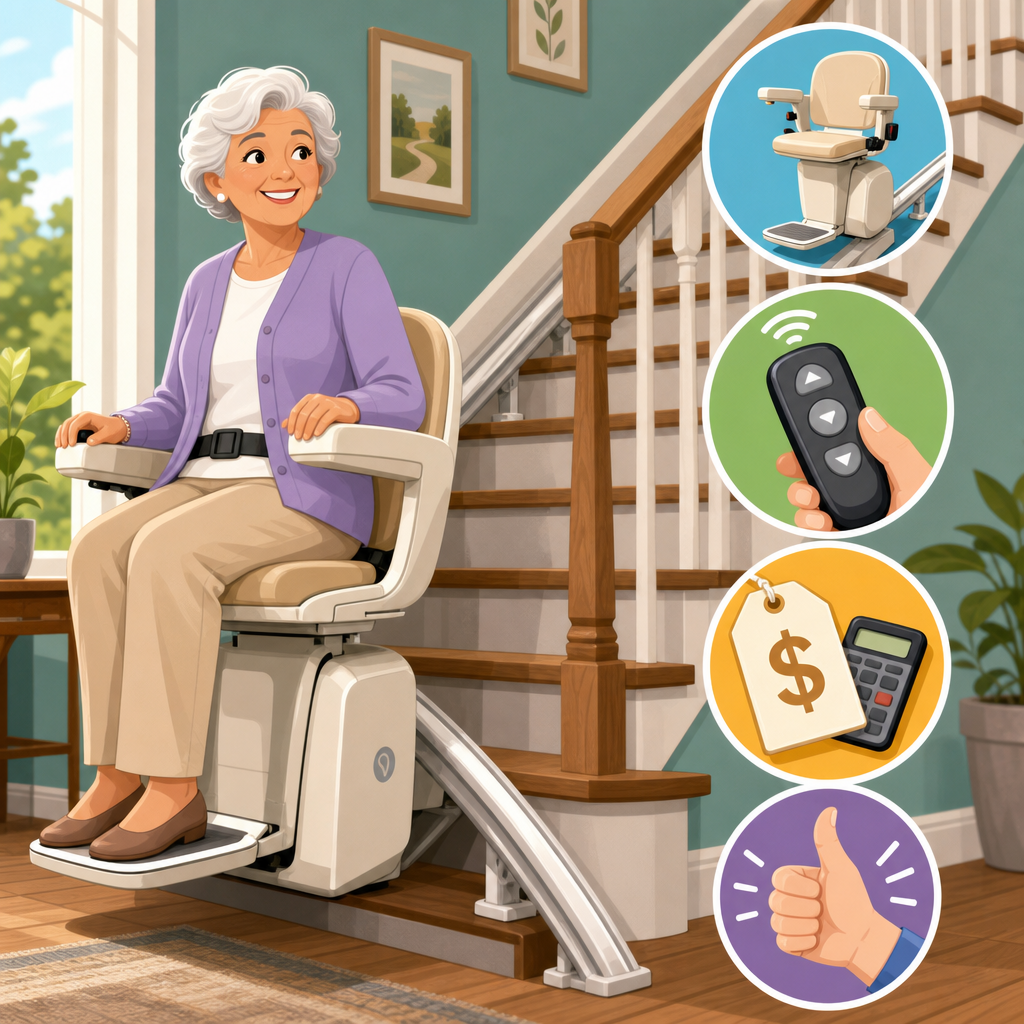
Handicare stair lifts are known for combining practical safety features with comfort and space-saving design. One of the biggest advantages is their ability to serve a wide range of users and staircase types. Many models include swivel seats that make it easier and safer to get on and off at the top landing, as well as seat belts, obstruction sensors, and easy-to-use controls. These safety-focused elements are important because they reduce the risk of slips, awkward transfers, or collisions with objects on the stairs. Handicare units are also often designed with foldable seats, footrests, and armrests, which helps preserve walking space for other household members when the lift is not in use.
Another standout feature is the brand’s attention to customization and usability. Handicare offers powered options on some models, such as powered swivel seats or footrests, which can be especially helpful for people with limited hand strength or flexibility. The controls are typically simple and intuitive, and most systems include call/send remotes so the chair can be moved between floors when needed. For homes with multiple users, this can make daily use much more convenient. Handicare is also well regarded for its twin-rail technology on many curved models, which can contribute to a compact profile and smooth ride. While exact features vary by model and dealer package, the overall impression is that Handicare focuses on dependable operation, user comfort, and adaptable design rather than unnecessary complexity.
How much does a Handicare stair lift typically cost?
The price of a Handicare stair lift depends heavily on the type of staircase, the model selected, and the level of customization required. In general, straight stair lifts are the most affordable option because they use standardized rails and are simpler to install. Curved stair lifts usually cost significantly more because the rail must be custom-built to match the precise shape and dimensions of the staircase. Outdoor stair lifts may also carry a premium over basic indoor straight models due to weatherproofing and specialized materials. In addition to the lift itself, pricing may include installation, service coverage, upgraded seats, power features, and other optional accessories.
For many buyers, the best way to think about pricing is in tiers rather than one fixed number. A basic straight Handicare stair lift may fall into an entry-level price range, while a curved system for a multi-landing staircase can move into a much higher bracket. The final quote can also be affected by the length of the rail, any parking or overrun sections, and whether the user needs premium controls or specialized seating. Because dealer networks often handle sales and installation, local labor rates and promotions can influence the final cost as well. Anyone comparing Handicare with other major stair lift brands should ask for an in-home assessment and a written estimate that clearly breaks down equipment, installation, warranty, and ongoing service so there are no surprises.
What are the main pros and potential drawbacks of choosing a Handicare stair lift?
One of the main advantages of choosing Handicare is the breadth of its product line. The company offers solutions for straight stairs, curved stairs, and outdoor applications, which makes it easier for many households to find a model that fits their exact situation. Handicare is also a recognized, established name in the stair lift industry, and that reputation can provide reassurance to buyers looking for proven equipment. Other notable benefits include user-friendly controls, strong safety features, and a generally compact design that helps preserve staircase space. For people who want to remain independent at home without undertaking major renovations, Handicare can be a practical and dependable option.
Potential drawbacks are similar to what buyers may encounter with any premium stair lift brand. Curved systems can become expensive, especially when the staircase has complex turns or landings. Availability of certain features, service responsiveness, and overall customer experience may also vary by local dealer, since installation and support are often handled through regional providers rather than directly through the manufacturer. Some users may find that comparing seating styles, weight capacities, and powered options across brands is necessary before making a final choice, particularly if they have more specialized mobility needs. In short, Handicare’s strengths are broad coverage, reliability, and convenience, but buyers should still compare model-specific details, service terms, and total ownership costs before committing.
Is a Handicare stair lift a good option for aging in place at home?
For many households, a Handicare stair lift can be an excellent aging-in-place solution because it addresses one of the most common barriers to staying in a multilevel home: the staircase itself. As mobility changes with age, stairs can become tiring, painful, or dangerous, especially for people managing arthritis, balance issues, joint weakness, or recovery from surgery. A stair lift allows a person to continue using both floors of the home without the physical strain of climbing steps, which can reduce fall risk and support greater day-to-day independence. Instead of moving to a single-level home or limiting living space to one floor, many people use a stair lift to preserve the home setup they already know and prefer.
That said, whether a Handicare stair lift is the right choice depends on the user’s specific needs. Buyers should consider seat comfort, weight capacity, transfer ability, and whether they need features such as a powered swivel seat, perch seat, or remote controls. It is also important to evaluate the staircase itself, since layout affects both model selection and cost. In many cases, a professional assessment can determine whether a straight, curved, or outdoor Handicare system is appropriate and how it will integrate into the home. When matched correctly to the user and the property, a Handicare stair lift can be a highly effective way to improve safety, extend independence, and make long-term home living more realistic and comfortable.