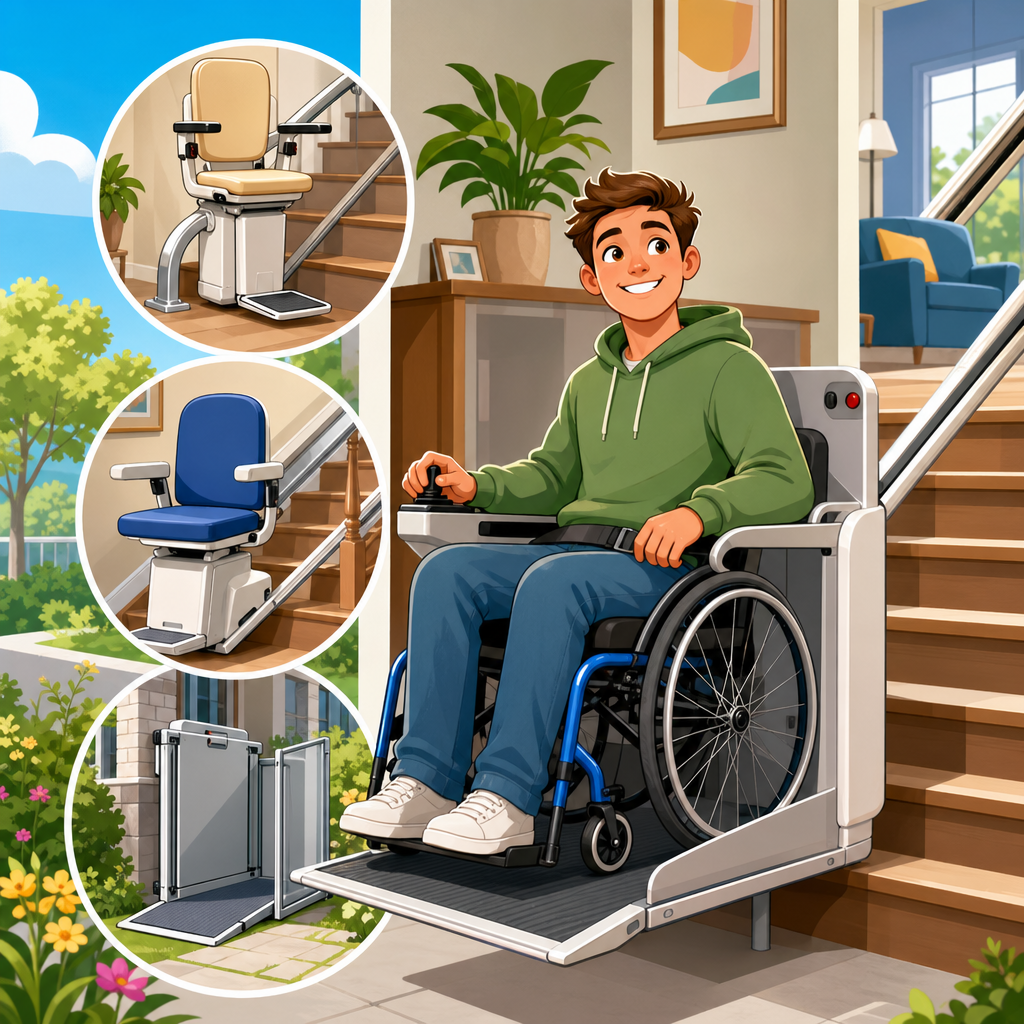
High-end stair lifts with app-controlled access are premium mobility systems that combine smooth mechanical travel, refined interior design, connected controls, and advanced safety features for homeowners who want accessibility without giving up comfort or aesthetics. In practical terms, these models go far beyond a basic seat moving on a rail. They often include custom upholstery, slim folded profiles, powered swivel seats, soft-start motors, diagnostic alerts, and smartphone apps that let owners call, park, lock, or monitor the lift remotely. For buyers researching luxury and premium models, the distinction matters because the purchase is no longer only about overcoming stairs; it is about preserving independence while matching the quality standards of a high-value home.
I have worked with clients comparing standard and premium stair lifts, and the gap is immediately visible in ride quality, fit-and-finish, and aftercare. A budget model may solve the mobility problem, but a high-end stair lift is engineered to feel integrated into the home rather than added as medical equipment. That difference becomes especially important in properties with curved staircases, designer finishes, multiple users, or part-time caregivers who need remote access management. As a hub guide for luxury and premium models, this article explains what app-controlled access means, which features justify the higher price, how leading brands differ, and how to evaluate installation, maintenance, and long-term value before buying.
What app-controlled access means in a premium stair lift
App-controlled access refers to the ability to interact with a stair lift through a mobile application, usually over Bluetooth, Wi-Fi, or a cellular-connected bridge depending on the manufacturer’s architecture. At the simplest level, the app functions like an advanced call/send control. A user can bring the lift to a floor, send it away to a charging point, or confirm status without physically touching a wall-mounted remote. In more advanced systems, the app can manage user permissions, enable lockout modes, display battery status, report faults, and notify a family member or service team when the unit requires attention.
In luxury installations, the app is valuable because it solves everyday friction points elegantly. For example, in a two-user household, one person may want the chair parked upstairs and out of sight, while another wants quick access from the entry level. With app control, either user can position the lift discreetly. In homes with caregivers, temporary permissions can prevent unauthorized operation while still allowing scheduled access. Some systems also support service diagnostics, which reduces downtime by helping technicians identify error codes before arriving. That matters because reliability is one of the main reasons buyers move into premium price ranges.
Not every connected feature has equal importance. In my experience, buyers should prioritize secure user authentication, clear manual override procedures, and dependable operation during internet loss. A stair lift must remain safe and functional even if a phone battery dies or a router fails. The best premium models keep primary travel controls on the chair and use the app as an added convenience layer, not as the only method of operation. This design principle aligns with established accessibility and product safety expectations: convenience can be modern, but core safety must remain simple, physical, and fail-safe.
Features that define true luxury and premium models
A true high-end stair lift earns its premium position through engineering, customization, and ownership experience. The first marker is ride quality. Better units use refined transmission systems, controlled acceleration, and smoother braking so the chair does not jolt at start or stop. The second marker is space efficiency. Premium rails and seat frames are often designed to reduce projection into the staircase, which is critical in narrow halls or formal staircases where appearance matters. The third marker is customization, especially on curved stairs. High-end manufacturers create made-to-measure rails based on detailed surveys, often using digital measurement tools to reduce installation error.
Material quality is another differentiator. Luxury stair lifts frequently offer automotive-grade upholstery, color-matched rails, anodized or powder-coated finishes, and compact arm and footrest designs that fold neatly. Practical premium features include powered footrests, powered hinge rails for door clearance, powered swivel seats for safer exits, and seat-height options tailored to the user’s mobility profile. App integration becomes more compelling when paired with these features, because users can position and prepare the lift without awkward bending or repeated transfers.
Safety remains central, and premium models usually expand the standard package. Expect seat belts, obstruction sensors on the carriage and footrest, overspeed governors, battery backup charging, and lockable controls. Better manufacturers also support routine diagnostics and preventive maintenance scheduling. In homes where design standards are strict, noise level matters too. A quieter drive system changes the daily experience significantly, particularly in open-plan homes where the staircase sits near living areas.
| Feature | Standard Stair Lift | High-End App-Controlled Stair Lift |
|---|---|---|
| Control options | Chair controls and basic remotes | Chair controls, remotes, app access, user permissions |
| Rail design | Mostly straight, limited finish options | Custom straight or curved rails, discreet finishes |
| Ride quality | Functional, sometimes abrupt starts | Soft start and stop, smoother transmission tuning |
| Seat configuration | Basic padding and manual fold | Premium upholstery, powered swivel and footrest options |
| Diagnostics | Basic fault indicators | Advanced status reporting and service support |
| Aesthetic integration | Medical look more common | Home-integrated styling with slimmer folded profiles |
Who should buy a luxury stair lift instead of a standard model
Luxury stair lifts are not necessary for every buyer, but they are the right choice in several clear situations. First, they suit homes where the staircase is architecturally prominent. If the stairs sit in a front hall, face a main entertaining area, or feature woodwork and finishes chosen by an interior designer, the visual compromise of a basic unit may be unacceptable. Second, premium models are appropriate for curved, multi-landing, or unusually narrow stairs. These environments demand precise rail fabrication and compact seat geometry, and that is where top-tier manufacturers consistently outperform entry-level options.
Third, app-controlled access is especially useful for households with more than one stakeholder. Adult children may want a way to confirm the lift is charged and parked correctly. Caregivers may need controlled access without sharing physical remotes. Users with limited grip strength may prefer calling the chair from a phone or tablet already in hand. I have also seen premium buyers choose connected stair lifts because they spend part of the year away from the property and want service visibility for an older relative staying in the home.
There are also cases where a standard model is the smarter buy. If the staircase is straight, the budget is fixed, and aesthetics are secondary to function, a well-installed conventional unit can provide safe mobility at a substantially lower cost. Premium should be chosen for concrete advantages: better fit, better comfort, better access management, and better integration into the home. It should not be chosen simply because the feature list is longer.
Leading brands, installation standards, and what to compare
Several established manufacturers dominate the premium stair lift market, though availability varies by region and dealer network. Stannah is widely recognized for custom curved lifts, refined engineering, and strong dealer support. Handicare offers premium models with powered options and broad staircase compatibility. Bruno is well regarded in North America for durable straight and curved units, especially where build quality and service reputation are priorities. Access BDD, Platinum, and Harmar may also appear in luxury comparisons depending on geography and project requirements. The best brand in theory is less important than the best authorized dealer in your service area, because survey accuracy, installation quality, and after-sales support determine the ownership experience.
Buyers should compare four things carefully. First, ask how the rail is measured and manufactured. Premium curved installations should be based on precise surveying, often digital, with clear tolerances and a defined lead time. Second, ask who services the unit after installation and what the response window is for fault calls. Third, examine the warranty terms in detail, separating motor, electronics, batteries, and labor. Batteries are consumables and usually have shorter coverage than structural components. Fourth, confirm compliance with relevant standards and local building considerations. In many markets, reputable manufacturers align with recognized machinery and accessibility safety requirements, but dealers should explain these clearly rather than offering vague assurances.
During showrooms and home assessments, I advise clients to test the seat comfort, swivel action, joystick or rocker ergonomics, folded width, and parking arrangements. If the lift includes app control, request a live demonstration. Buyers should see how pairing works, what permissions can be assigned, whether notifications are meaningful, and how the unit behaves if connectivity is interrupted. This is not a gadget purchase; interface quality directly affects usability and confidence.
Costs, maintenance, privacy, and long-term value
High-end stair lifts with app-controlled access cost more because the engineering and service model are more demanding. Straight premium lifts may start in the upper end of the mainstream market, while custom curved installations can rise significantly based on staircase complexity, powered options, upholstery choices, and smart connectivity features. In many real projects, the biggest cost driver is not the app itself but the made-to-measure rail and advanced seat package. Buyers should request itemized quotes so they can distinguish structural necessity from optional upgrades.
Maintenance planning is essential. Most stair lifts use rechargeable batteries that charge at parking points; these batteries eventually need replacement, commonly every few years depending on use patterns and environment. Premium units often include better diagnostics, which helps schedule service before a failure disrupts daily life. Annual servicing is a sensible baseline, and heavy-use households may benefit from more frequent checks. Ask whether software or firmware updates are supported and whether they are performed by the dealer or remotely through the connected system.
Privacy and cybersecurity deserve attention whenever app control enters the picture. Buyers should ask what data the system stores, whether communications are encrypted, whether multi-user access is logged, and how permissions are revoked. A premium manufacturer should provide clear answers. If the dealer cannot explain the architecture in plain language, that is a warning sign. In the home mobility category, secure design means limiting unnecessary data collection while keeping critical controls dependable.
Long-term value comes from sustained independence, reduced fall risk on stairs, better usability for caregivers, and a product that does not undermine the character of the home. Resale value is nuanced. A stair lift rarely adds direct dollar-for-dollar property value, but a discreet, removable, professionally installed premium system can make a home more livable for aging in place and easier to adapt for future needs. For many buyers, that practical flexibility is the real return.
High-end stair lifts with app-controlled access are worth considering when mobility, design, and daily convenience all matter at the same time. The strongest premium models combine smooth travel, compact engineering, custom finishes, dependable safety systems, and connected controls that solve real household problems rather than adding novelty. Buyers should focus on the fundamentals first: precise survey work, a reputable dealer, strong service coverage, comfortable seating, safe transfer at the top and bottom landings, and controls that remain simple even when smart features are added.
As the hub page for luxury and premium models, this guide highlights the core rule I have seen hold up across projects: buy the stair lift that fits the staircase, the user, and the support network, not just the brochure. App-controlled access can be genuinely useful for multi-user homes, caregivers, and owners who want discreet control and better status visibility, but it should sit on top of proven mechanical quality and clear maintenance planning. Compare brands carefully, request demonstrations, and insist on transparent warranty and privacy answers. If you are building a shortlist, the next step is simple: arrange an in-home assessment from a top-tier dealer and test premium models side by side before making your decision.
Frequently Asked Questions
1. What makes a high-end stair lift with app-controlled access different from a standard stair lift?
A high-end stair lift with app-controlled access differs from a standard model in several important ways: ride quality, design customization, smart connectivity, and premium safety features. A basic stair lift is primarily built to move a user up and down the stairs safely. A luxury model is designed to do that while also delivering a quieter, smoother, and more refined experience that fits seamlessly into the home. These systems often feature soft-start and soft-stop motors, more sophisticated drive technology, and improved suspension or rail engineering to reduce jolts and vibration during travel.
Another major distinction is aesthetics. Premium stair lifts are usually available with upgraded upholstery, designer finishes, slimmer rail profiles, and compact folding components so the lift blends into the staircase rather than dominating it. In homes where interior design matters, that can be a deciding factor. Many high-end units also include powered footrests, powered swivel seats, and one-touch folding features that make operation easier for users with limited strength or flexibility.
App-controlled access adds another layer of convenience and control. Instead of relying only on armrest buttons or wall-mounted remotes, homeowners can use a smartphone app to call the lift, send it to another floor, monitor status, or receive maintenance and diagnostic alerts. In some models, app settings can also help manage user permissions or customize ride preferences. Taken together, these features make a premium stair lift feel less like a medical device and more like an integrated, high-performance mobility solution for modern living.
2. How does app-controlled access work on a luxury stair lift?
App-controlled access typically works through a secure wireless connection that links the stair lift to a homeowner’s smartphone or tablet. Depending on the manufacturer, the system may use Bluetooth, Wi-Fi, or a combination of local and cloud-based connectivity. Once the lift is paired with the mobile app, the user can perform common tasks remotely, such as calling the chair to a specific landing, sending it away when not in use, checking whether the unit is parked properly, or confirming that it is ready to operate.
In higher-end systems, the app does more than function as a digital remote. It may display maintenance notifications, battery condition, diagnostic codes, usage history, and safety alerts. This can be especially useful for homeowners who want reassurance that the system is functioning correctly or for family members who help oversee mobility needs. Some manufacturers also design the app to support multiple users, meaning a spouse, caregiver, or adult child may be able to access certain controls based on permission settings.
Security is an important part of app-controlled access as well. Premium models often include encrypted communication, password-protected login, and restricted command functions to prevent unauthorized use. In practical day-to-day use, the app gives homeowners more flexibility and discretion. For example, if the lift is parked downstairs and the user is already upstairs, they can call it without needing someone else to assist. If guests are visiting, the chair can be sent to a less visible position to keep the staircase looking open and uncluttered. The result is a system that combines accessibility, convenience, and a more polished ownership experience.
3. Are high-end stair lifts safe and reliable for everyday use?
Yes, high-end stair lifts are designed to be very safe and reliable for everyday use, and in many cases they include more advanced protective features than entry-level models. Core safety components generally include seat belts, obstruction sensors, overspeed governors, secure footrests, locking swivel seats, and battery backup operation in case of a power outage. Luxury systems often expand on these essentials with smoother acceleration and braking, more precise stopping, and better sensor coverage to detect objects on or near the rail.
Reliability is closely tied to engineering quality and professional installation. Premium stair lifts are typically manufactured with durable transmissions, high-quality motors, and rails tailored to the staircase layout, whether straight or curved. Because these systems are often custom-built, the fit tends to be more exact, which helps reduce operational strain and improves long-term performance. Built-in diagnostics can also identify issues early, allowing homeowners to schedule service before a minor concern turns into a breakdown.
That said, safety and reliability still depend on proper use and maintenance. The best results come from choosing a reputable manufacturer, having the lift installed by trained technicians, and following the recommended service schedule. Homeowners should also make sure the user is comfortable with boarding, fastening the seat belt, operating the controls, and exiting safely at the landing. When selected and maintained properly, a premium stair lift can provide dependable daily mobility while also offering the comfort, confidence, and peace of mind expected from a high-end home accessibility solution.
4. Can a luxury stair lift be customized to match my home’s style and staircase layout?
In most cases, yes. One of the biggest advantages of a high-end stair lift is the level of customization available for both appearance and fit. Unlike basic units that prioritize utility above all else, premium models are often designed with architecture and interior aesthetics in mind. Homeowners can frequently choose from a range of seat materials, upholstery colors, trim finishes, and rail options to better coordinate with surrounding flooring, wall color, woodwork, and overall decor. Some designs are intentionally minimal, with slim seats and folded profiles that reduce visual impact when the lift is not in use.
Customization also extends to functionality. Many luxury stair lifts offer powered swivel seats, automatic folding rails, hinged rail sections for doorways, adjustable seat heights, and upgraded armrest controls. These features can be tailored to the user’s mobility needs and to the realities of the staircase itself. If the home has a curved staircase, intermediate landing, narrow width, or unusual entry and exit points, a custom rail can be engineered to follow the staircase more precisely. That is especially important in higher-end homes where preserving flow, sightlines, and convenience matters just as much as accessibility.
The best way to approach customization is through an in-home assessment. A qualified dealer or installer will measure the staircase, review clearance needs, discuss the user’s comfort requirements, and recommend finishes and features that suit the space. This process helps ensure the final system does not feel like an afterthought. Instead, it becomes a tailored mobility upgrade that supports independence while respecting the design standards of the home.
5. Is a high-end app-controlled stair lift worth the investment?
For many homeowners, the answer is yes, especially when long-term comfort, independence, and home usability are top priorities. A premium stair lift costs more upfront than a basic model, but the added value often comes from a combination of smoother operation, better ergonomics, smart controls, stronger design integration, and enhanced safety technology. If the lift will be used every day, those differences can significantly improve the overall experience. A quieter ride, easier transfers, intuitive controls, and less visual intrusion can make the system feel far more natural to live with over time.
App-controlled access can also add practical value beyond convenience. Being able to monitor system status, receive service alerts, and control the lift remotely can reduce frustration and simplify daily routines. For households with more than one user or with family members assisting from time to time, connected features can make the system easier to manage. In some cases, premium engineering and diagnostics may also contribute to more predictable performance and better service planning, which matters when the lift is an essential part of everyday mobility.
Whether it is worth the investment depends on the user’s needs, the home’s layout, and how important aesthetics and advanced features are to the household. For someone seeking only the lowest-cost way to navigate stairs, a basic model may be sufficient. But for homeowners who want accessibility without sacrificing comfort, technology, or interior appeal, a high-end stair lift can be an excellent investment. It supports aging in place, protects independence, and helps preserve full use of a multi-level home in a way that feels thoughtful, elegant, and highly functional.