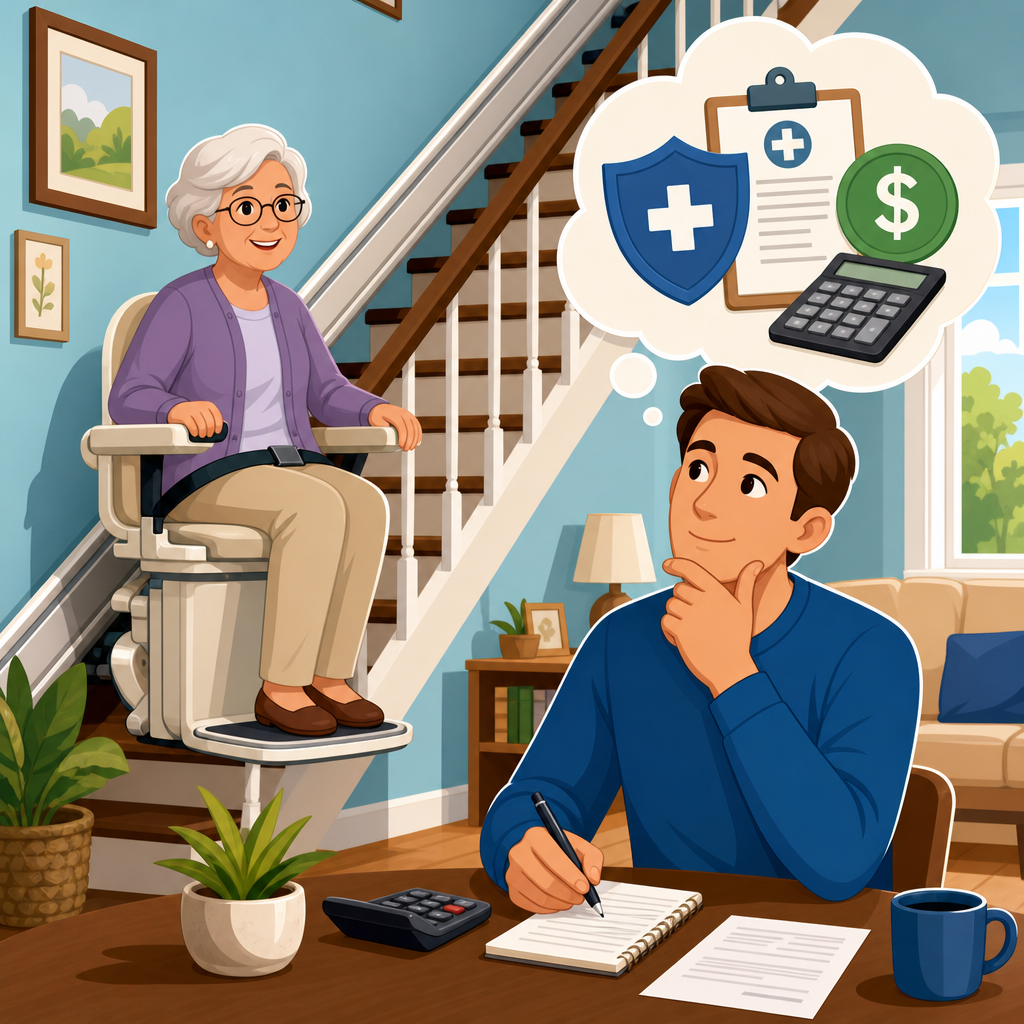
Choosing between a home equity loan and stair lift financing starts with one question: which option delivers the lowest total cost without creating unnecessary risk for your household? In practice, the answer depends on more than the monthly payment. It depends on interest rate structure, loan term, closing costs, repayment flexibility, speed of approval, and how long you plan to stay in the home.
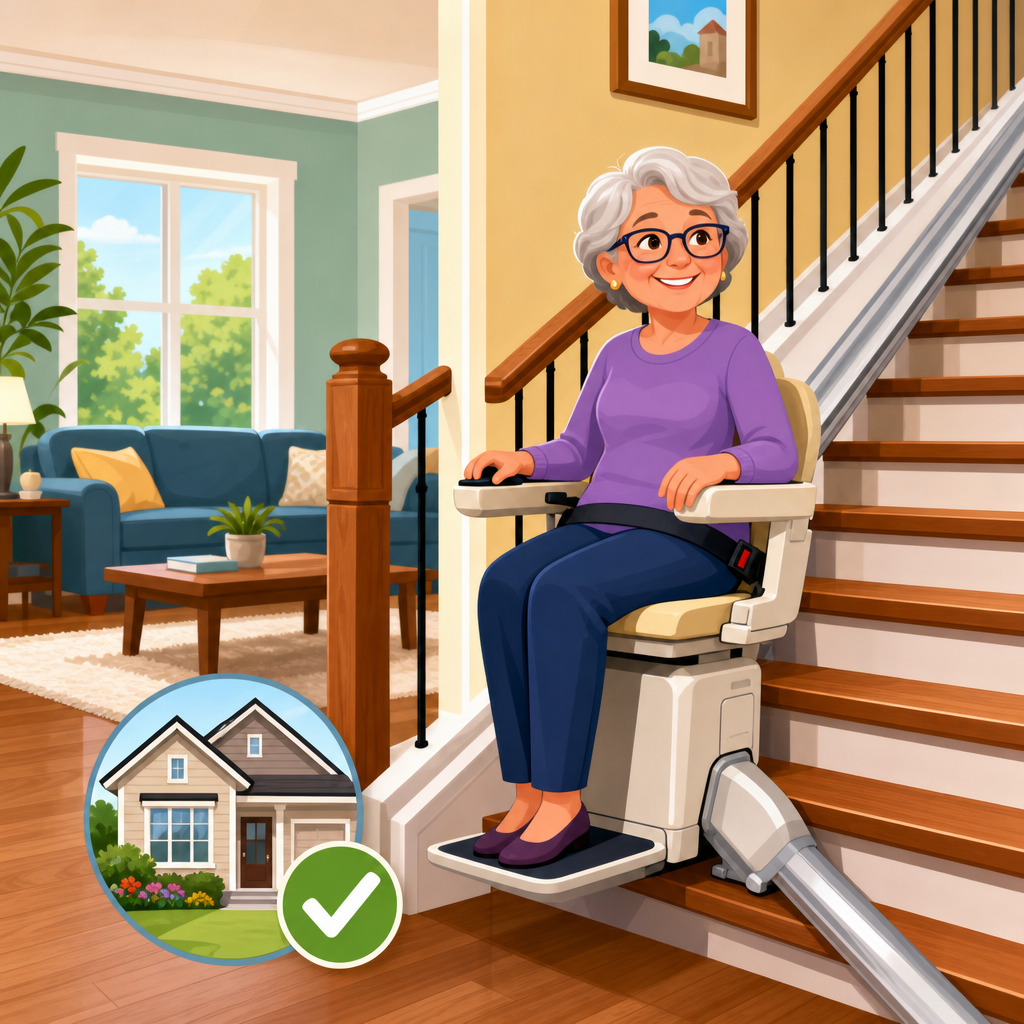
A stair lift is a motorized chair that travels along a rail attached to a staircase, helping a person move safely between floors. Financing refers to any arrangement that spreads the cost over time rather than paying cash upfront. A home equity loan uses the value built up in your home as collateral and usually provides a lump sum at a fixed interest rate. Stair lift financing usually means a dealer-arranged installment loan, medical equipment financing plan, or promotional payment program tied directly to the purchase and installation of the lift.
I have worked with families comparing both paths, and the mistake I see most often is focusing only on the sticker price of the lift. The real cost picture includes installation, service coverage, battery replacement, permit requirements in some jurisdictions, and the financing charges attached to each funding source. A straight stair lift often costs less than a curved model because curved rails are custom built. Outdoor units cost more because they need weather-resistant materials. Those product differences matter because financing terms that look manageable on a smaller purchase can become expensive on a custom installation.
This comparison matters because mobility equipment is rarely a discretionary purchase. Many buyers are responding to a fall risk, a hospital discharge plan, progressive arthritis, or a desire to avoid moving out of a multilevel home. They need a solution quickly, but speed should not lead to a costly financing decision. A well-chosen loan can preserve cash flow and make aging in place affordable. A poorly chosen one can add thousands in interest or put the home itself at risk if repayment becomes difficult.
What a home equity loan really costs
A home equity loan lets you borrow against your ownership stake in the property and receive funds in one lump sum. Because the house secures the loan, interest rates are typically lower than unsecured financing. Most home equity loans carry fixed rates and fixed monthly payments, which makes budgeting straightforward. For a stair lift purchase, that predictability is attractive, especially for retirees living on pension or Social Security income.
The lower rate, however, does not automatically make a home equity loan cheaper. Total borrowing cost depends on fees and term length. Many lenders charge appraisal fees, title search fees, document preparation fees, recording fees, and sometimes an origination fee. Even if the rate is favorable, these upfront costs can materially change the math on a relatively modest purchase. When the equipment cost is small, loan fees consume a larger percentage of the amount borrowed.
For example, a homeowner financing a $7,500 straight stair lift through a home equity loan may qualify for a rate several points below a dealer-arranged medical financing plan. But if the bank charges $800 to $1,500 in combined closing costs, the savings can disappear unless the borrower keeps the loan long enough for the lower interest rate to offset those fees. On larger projects, such as a $15,000 to $20,000 curved stair lift installation, the economics improve because the fixed fees are spread across a bigger loan amount.
There are also timing considerations. Home equity loans usually involve underwriting, income verification, and property review. That process can take longer than point-of-sale financing. If a family needs a stair lift installed within days, a bank loan may simply move too slowly. In addition, missed payments carry higher stakes because the debt is secured by the home. While foreclosure is not the likely outcome for a small equipment loan, the collateral risk is real and should be treated seriously.
How stair lift financing works at the point of sale
Stair lift financing is designed around convenience and speed. Many dealers partner with lenders that specialize in healthcare financing, home accessibility products, or consumer installment loans. The application is often completed during the quote process, and approvals can arrive quickly. For families facing an urgent mobility need, that speed is a meaningful benefit.
The tradeoff is cost variability. Some plans offer zero-interest promotional periods if the balance is paid within a short window. Others are fixed-rate installment loans with terms from 12 to 84 months. Some programs defer interest but charge all accumulated interest retroactively if the promotional balance is not fully paid by the deadline. That deferred-interest feature catches borrowers off guard more often than it should. It is not the same as a true zero-interest loan.
Dealer financing can still be the better choice when the amount needed is modest or the homeowner wants to avoid bank closing costs. It can also work well when the installer bundles labor, warranty options, rail customization, and service into one contract and one payment stream. In those cases, the borrower gets a fast, equipment-specific funding solution without tapping home equity.
Another practical advantage is fit. Stair lift dealers understand the product categories, including straight, curved, standing, heavy-duty, and outdoor lifts. Financing matched to the equipment can be easier to structure when the lender routinely handles accessibility purchases. I have seen point-of-sale loans approved for clients who had substantial home equity but did not want the paperwork, timeline, or collateral obligations of a bank product.
Side-by-side cost comparison factors
The best comparison method is to look at total cost of ownership, not just total financed cost. That means reviewing the purchase price, financing charges, required fees, maintenance expectations, and how the loan term interacts with the useful life of the lift. A stair lift can last many years, but batteries, seat components, and service visits are normal ownership costs.
| Factor | Home Equity Loan | Stair Lift Financing |
|---|---|---|
| Interest rate | Usually lower, often fixed | Often higher, varies by lender and promo terms |
| Upfront fees | May include appraisal, title, and closing costs | Often low or none, but may include origination fees |
| Approval speed | Slower, with full underwriting | Faster, often same day or within days |
| Collateral | Home secures the debt | Usually unsecured consumer financing |
| Best use case | Larger projects or borrowers seeking lower long-term rates | Urgent purchases or smaller projects needing simple approval |
Consider a simple scenario. Borrow $12,000 for a curved stair lift. A home equity loan at a lower fixed rate over five years may produce a lower monthly payment and less interest, but only if closing costs stay reasonable. A dealer loan approved the same week might carry a higher rate, yet still cost less overall if there are no bank fees and the borrower plans to repay early without penalty. The numbers, not assumptions, should decide it.
Ask every lender for the annual percentage rate, not just the note rate. APR captures certain fees and gives a more realistic comparison. Also ask whether there is a prepayment penalty, whether promotional terms convert to a higher rate later, and whether late fees are fixed or percentage based. These details routinely change the final outcome.
When each option makes the most financial sense
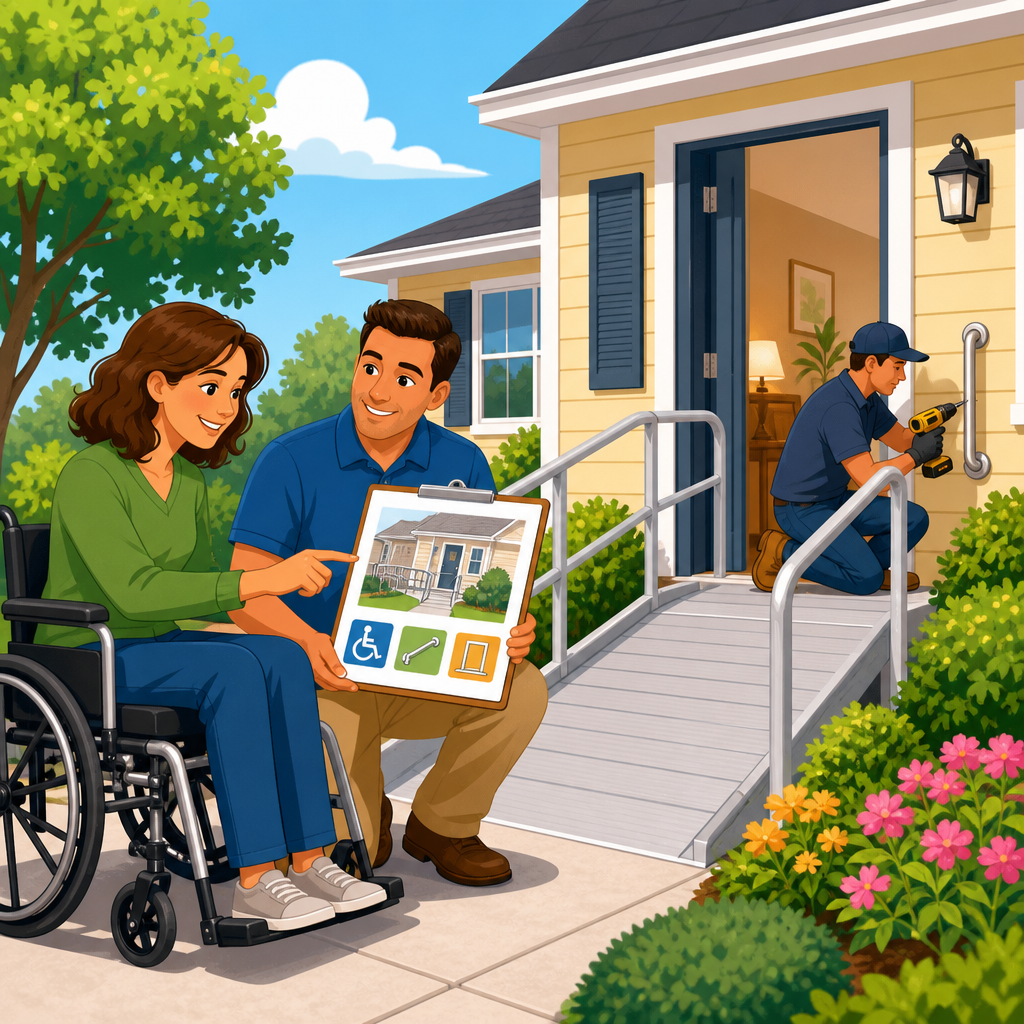
A home equity loan tends to make the most sense when the project cost is high, the homeowner has strong equity, and there is time to complete underwriting. It is especially sensible if the borrower values fixed payments and plans to stay in the home long enough to justify the setup costs. Families also choose this route when they are combining the stair lift with other accessibility improvements such as grab bars, a ramp, widened doorways, or a walk-in shower, because one larger loan can be more efficient than multiple smaller financing plans.
Stair lift financing tends to make the most sense when the need is immediate, the amount borrowed is relatively small, or the borrower wants to keep the house out of the transaction. It can also be the better answer for people who expect to pay off the balance quickly, especially if they qualify for a true no-interest promotion and are disciplined enough to clear the balance before the deadline. In those cases, the convenience premium may be small or nonexistent.
There is also a psychological factor that matters. Some homeowners strongly prefer not to borrow against their property for equipment that may be removed later. Others prefer the lower bank rate even if the process takes longer. Neither instinct is wrong. Financing works best when the structure aligns with both the budget and the borrower’s risk tolerance.
Questions to ask before signing any financing agreement
Before signing, ask for an itemized proposal that separates equipment price, custom rail costs, power supply work, installation labor, service plan charges, and taxes. Then match that quote against the financing contract. I have seen borrowers assume they financed a warranty only to learn it was optional and excluded. I have also seen service call coverage bundled into the first year and then billed separately later.
Confirm whether the stair lift is new, refurbished, or rental-based. Financing a refurbished unit can still be a good decision, but the loan term should reflect the expected remaining life of the equipment. Borrowers should not be making long payments on a unit likely to be replaced sooner. If the home has a curved staircase, verify whether the rail is custom and whether it has resale value. Custom components typically have limited reuse value, which affects long-term economics.
Ask about warranty duration, battery type, weight capacity, and local service availability. A low financed payment loses its appeal if repairs are slow or replacement parts are hard to source. Established brands such as Bruno, Harmar, Savaria, Handicare, and Stannah differ in dealer network strength, model lineup, and warranty terms by market. Product support is part of financing value because downtime has real quality-of-life costs.
How this fits into a broader payment strategy
Homeowners should also evaluate alternatives alongside these two paths. Health savings account funds may be usable in some circumstances if the purchase qualifies as a medical expense and documentation supports it. Veterans may have access to home modification benefits through VA programs. State assistive technology programs, local Area Agencies on Aging, nonprofit grants, and Medicaid waiver programs in certain states can reduce the amount that must be financed. These programs are not universal, but they are worth checking before borrowing.
The smartest payment strategy often blends sources. A household might use savings for the deposit, a short promotional financing plan for the remainder, and reserve home equity for larger renovations later. Another family may choose a home equity loan because they are already updating the bathroom and entryway, making one consolidated accessibility budget easier to manage. The hub topic here is financing and payment plans, and the central principle is simple: match the funding tool to the size, urgency, and lifespan of the purchase.
Comparing a home equity loan vs. stair lift financing comes down to total cost, speed, and risk. Home equity loans usually win on interest rate and payment stability, especially for larger accessibility projects, but they can lose ground when fees are high or installation is urgent. Stair lift financing usually wins on convenience and fast approval, and it can be cost-effective for smaller purchases or short repayment timelines, but borrowers need to watch for higher rates and deferred-interest traps.
The strongest decision is the one made from a full written comparison. Get a detailed stair lift quote, request APR and fee disclosures from every lender, and calculate the all-in cost over the actual time you expect to repay. If you do that, you will choose financing that supports safe mobility at home without paying more than necessary. Start by gathering two dealer quotes and one bank loan estimate, then compare them line by line.
Frequently Asked Questions
Is a home equity loan usually cheaper than stair lift financing?
A home equity loan can be cheaper in total cost, but it is not automatically the better deal for every household. In many cases, home equity loans offer lower interest rates than unsecured stair lift financing because the loan is backed by your home. A lower rate can reduce the total amount of interest you pay over time, especially if you need to finance a larger installation or combine the stair lift with other home accessibility upgrades. However, the rate alone does not tell the full story. Home equity loans may come with closing costs, appraisal fees, lender fees, and a longer underwriting process, all of which can increase the true cost of borrowing.
Stair lift financing, by contrast, is often simpler and faster. Some dealers or financing partners offer promotional terms, fixed monthly payments, or no large upfront closing costs. That can make stair lift financing more affordable in the short term, even if the interest rate is higher. The key comparison is total borrowing cost, not just the advertised payment. You should look at the annual percentage rate, the repayment term, all fees, and the full amount repaid by the end of the loan. If a home equity loan saves you on interest but adds substantial upfront costs, the savings may be smaller than expected. If stair lift financing has a higher rate but a shorter term and fewer fees, it may end up being competitive or even less expensive overall.
What costs should I compare besides the monthly payment?
The monthly payment is important, but it can be misleading if you do not also compare the total structure of each loan. Start with the interest rate and whether it is fixed or variable. A fixed rate gives predictability, while a variable rate can increase your cost later. Next, review the loan term. A longer term usually lowers the monthly payment, but it often increases the total interest paid over the life of the loan. This is one of the most common reasons borrowers choose what looks like the cheaper option and later discover they paid much more in total.
You should also compare closing costs, origination fees, application fees, appraisal fees, dealer fees, and any prepayment penalties. For home equity loans, these costs can materially change the economics of the loan. For stair lift financing, it is important to check whether promotional offers expire, whether deferred interest applies, and whether the rate changes after an introductory period. It also helps to evaluate repayment flexibility. Can you make extra payments without penalty? Can you pay the balance off early if your financial situation improves? Finally, consider timing and convenience. If you need the stair lift quickly for safety or mobility reasons, a slower but slightly cheaper loan may not be the most practical choice. A complete cost comparison should include both dollars and real-life urgency.
When does a home equity loan make more sense for a stair lift purchase?
A home equity loan tends to make more sense when you have strong equity in your home, can qualify for favorable terms, and plan to stay in the property long enough to justify the upfront borrowing costs. It is often a stronger fit when the project cost is larger than a basic stair lift installation. For example, if you are also adding ramps, widening doorways, updating a bathroom for accessibility, or making other aging-in-place improvements, a home equity loan may provide enough funding at a lower rate than point-of-sale financing. In that situation, spreading fixed costs across a larger loan amount can make the loan more efficient.
It can also be a better choice for borrowers who want stable, predictable repayment. Many home equity loans have fixed interest rates and equal monthly payments, which can help with long-term budgeting. That said, using home equity means putting your house on the line as collateral. Even if the payment is manageable today, you should consider whether the loan still fits your budget if income changes, healthcare costs rise, or household expenses increase. A home equity loan works best when the borrower values rate stability, understands the fee structure, and is comfortable taking on secured debt for a mobility-related upgrade that supports staying safely at home.
When is stair lift financing the better option?
Stair lift financing is often the better option when speed, simplicity, and lower upfront friction matter more than obtaining the absolute lowest interest rate. If someone in the home needs improved mobility right away, waiting weeks for a home equity application, appraisal, and closing may not be realistic. Dealer-arranged or specialty financing can move faster, which may be crucial if the stair lift is needed to reduce fall risk or restore access to a bedroom or bathroom. In that sense, convenience is not just a luxury factor. It can be part of the overall value.
Stair lift financing may also make sense if you do not want to use your home as collateral, if you have limited available equity, or if the project amount is relatively modest. Borrowers sometimes overcomplicate a small purchase by using a loan product designed for larger home projects. If the financed amount is not large enough to justify home equity loan fees, a simpler financing plan could be the smarter move. It can also be preferable for homeowners who expect to repay the balance quickly and want to avoid the added paperwork and transaction costs of borrowing against their home. The most important step is to read the financing terms carefully. Some plans are straightforward and competitive, while others rely on teaser rates or terms that become expensive if the balance is not repaid within a certain timeframe.
How does the time you plan to stay in your home affect the best financing choice?
How long you expect to remain in the home can significantly affect which financing option is more cost-effective. If you plan to stay for many years, a home equity loan may be easier to justify because you have more time to benefit from a lower fixed rate and spread out upfront costs. Long-term homeowners are often more focused on total cost and stable budgeting than on immediate convenience alone. If the stair lift is part of a broader strategy to age in place, financing the improvement through home equity can align with that long-range plan, provided the terms are favorable and affordable.
If you may move in the near future, the calculation changes. Upfront fees become harder to recover, and taking on secured debt may be less appealing if the loan will be paid off when the home is sold. In that case, a shorter-term stair lift financing arrangement with minimal fees may be the cleaner choice, even if the rate is somewhat higher. The same logic applies if the stair lift need may be temporary or if a used, rental, or lower-cost installation is under consideration. In short, the longer you stay, the more a low-rate, fee-heavy option may work in your favor. The shorter your time horizon, the more valuable flexibility, lower setup costs, and quick approval usually become.