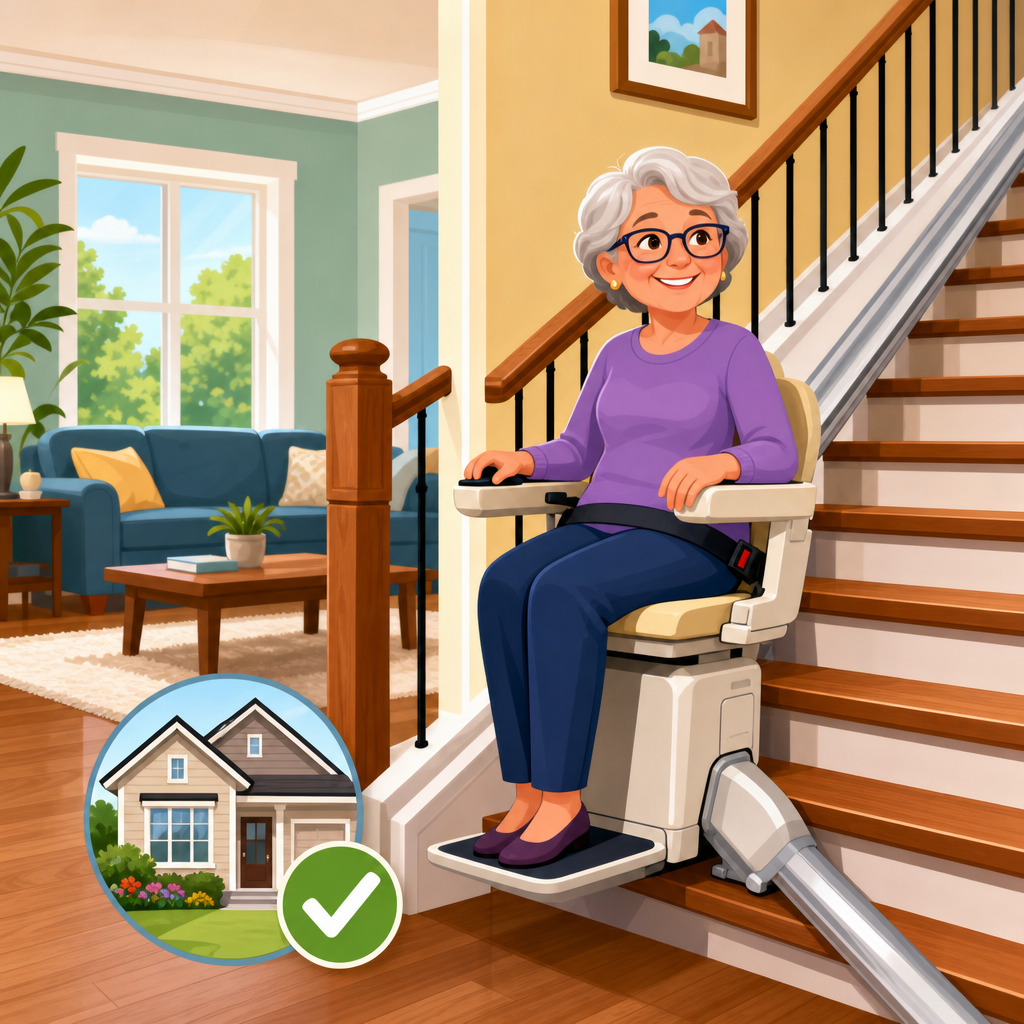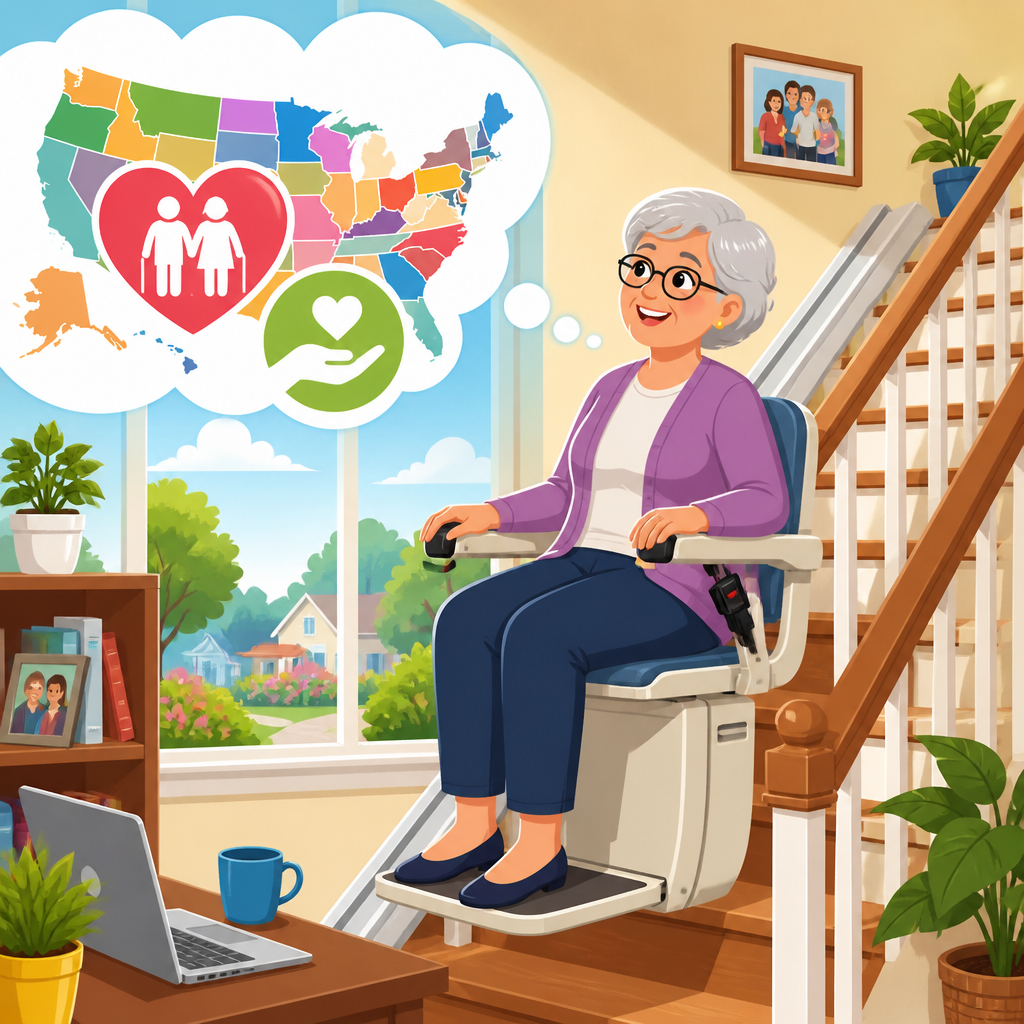
Finding stair lift grants for seniors in your state starts with understanding where funding actually comes from, who qualifies, and how local rules affect every application. Stair lifts are motorized chairs or standing platforms mounted to a staircase rail, designed to help people with limited mobility move safely between floors. For many older adults, a stair lift is not a convenience purchase. It is a fall-prevention device that supports aging in place, reduces caregiver strain, and can delay or eliminate the need for a costly move to assisted living. Yet the price is significant. A straight stair lift often costs several thousand dollars installed, while a curved model can cost much more because the rail is custom built for the exact staircase. That cost is why so many families search for stair lift grants for seniors, disability home modification funds, and state assistance programs.
In practice, there is no single national grant that every senior can claim. Funding is usually fragmented across federal programs administered locally, state housing agencies, Medicaid waivers, veterans benefits, nonprofit groups, and disease-specific charities. I have helped families sort through these programs, and the biggest mistake is assuming that “grant” means a simple online form. Most aid is tied to income limits, disability documentation, homeownership status, or a case manager referral. Some programs offer true grants that do not need to be repaid. Others provide forgivable loans, low-interest financing, or equipment reuse. Knowing the difference saves time and disappointment.
This hub explains how to find stair lift grants for seniors in your state, where to search first, what agencies to contact, and how to compare grants, waivers, loans, and nonprofit help. It also answers the practical questions people ask most: Does Medicare pay for a stair lift? Can Medicaid help? What if the senior rents? Are veterans eligible? By the end, you will have a clear roadmap for locating grants and assistance programs, narrowing the best options, and building a stronger application.
Start with the programs most likely to fund stair lifts
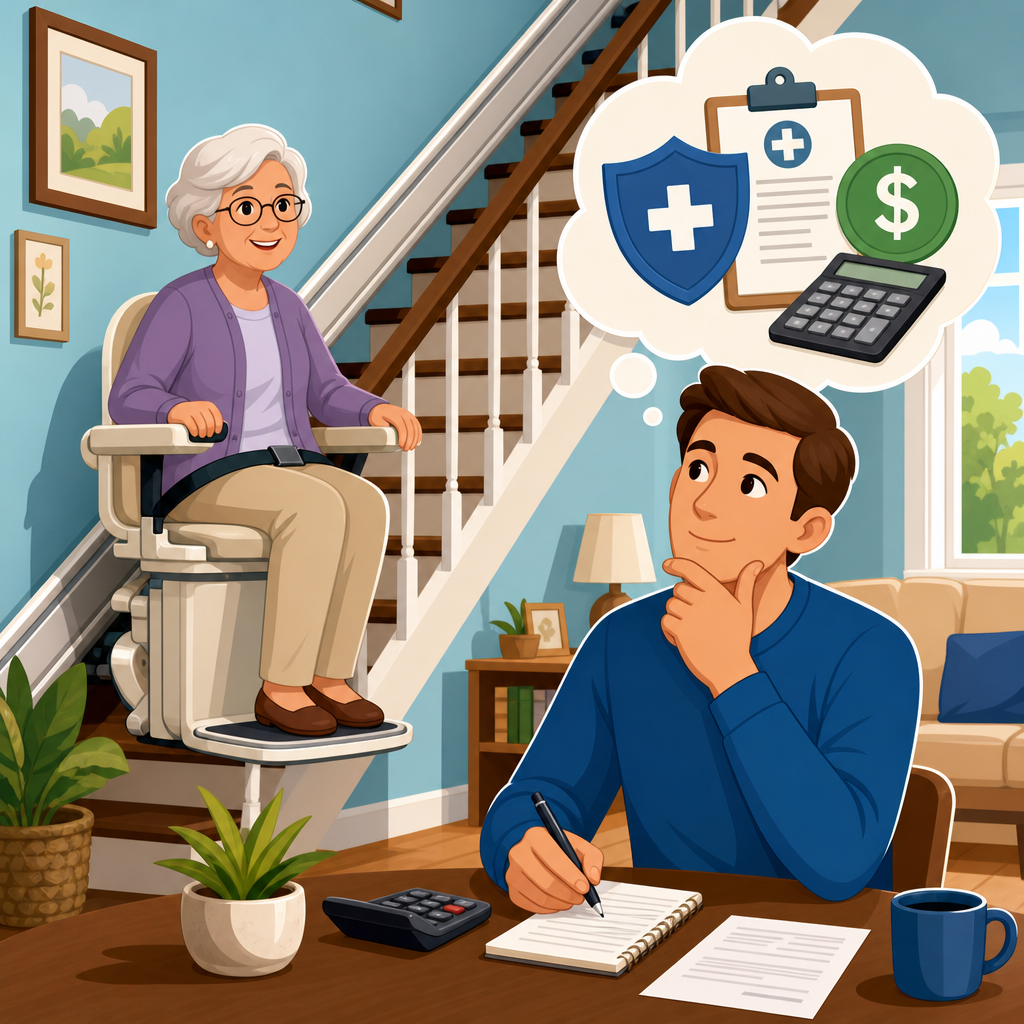
The fastest way to find stair lift grants is to begin with programs that already pay for home accessibility modifications. In most states, the strongest leads are Medicaid Home and Community-Based Services waivers, state Assistive Technology Act programs, Area Agencies on Aging, and state housing rehabilitation offices. These programs exist because public policy increasingly favors aging in place over institutional care. A stair lift may be approved when it is medically necessary, cost effective, and part of a broader plan to keep someone safely at home.
Medicaid is often the first place to check, but coverage is not automatic and varies sharply by state. Traditional Medicaid rarely covers stair lifts as standard durable medical equipment because a stair lift is attached to the home, not simply used in the home. However, many state waivers and managed long-term services programs may fund environmental accessibility adaptations if they prevent nursing home placement. Terms differ by state, so look for phrases such as “home modifications,” “environmental accessibility adaptations,” or “assistive technology.” Approval usually requires an assessment, a care plan, and proof that the modification is not for general home improvement.
Area Agencies on Aging are another high-value contact. Every state has a network of local aging agencies supported in part through the Older Americans Act. These agencies do not always directly pay for stair lifts, but they know county-level grants, nonprofit funds, and waiting-list programs that do not show up in broad web searches. In real cases, a local aging office can be the connector that points a family to weatherization plus accessibility programs, caregiver respite funds that free up cash, or small emergency repair grants administered through community action agencies.
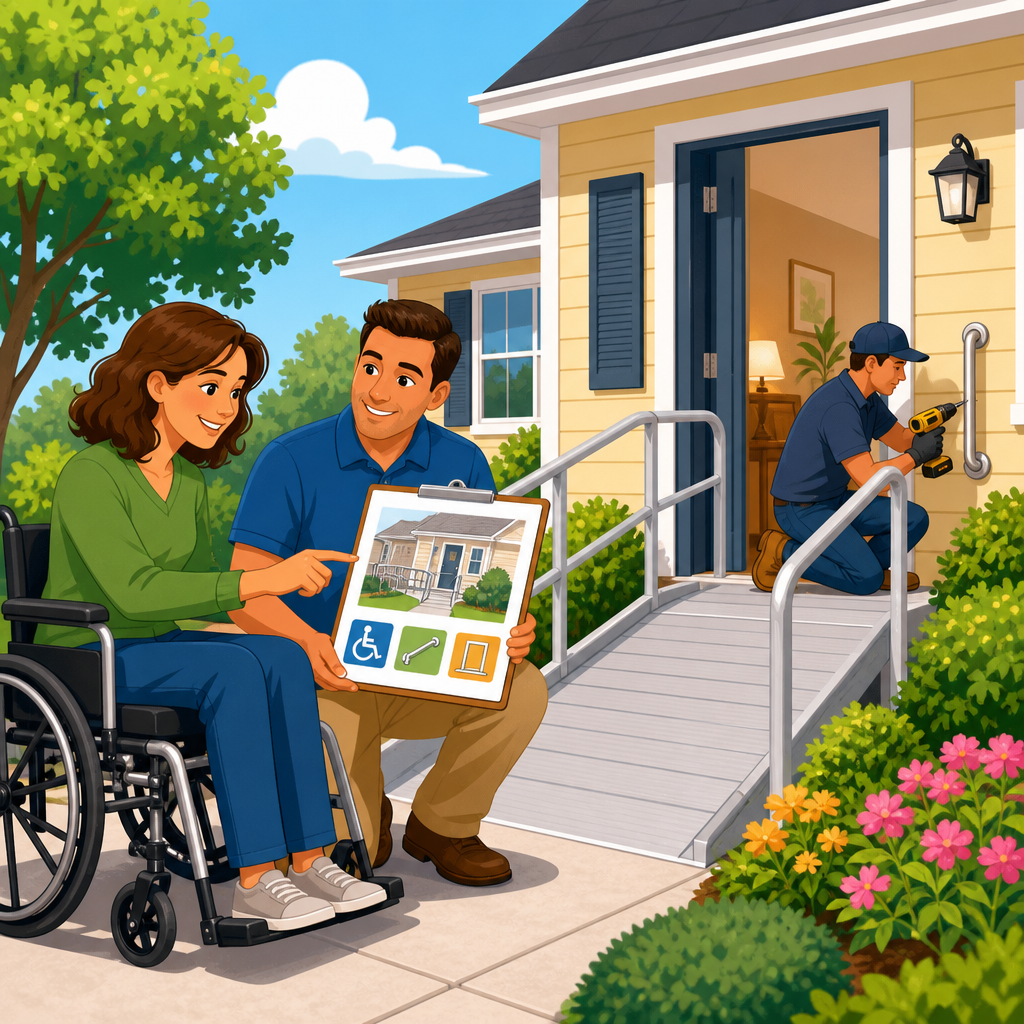
State housing and community development agencies also matter. Many run home repair or accessibility modification programs for low-income homeowners, often using Community Development Block Grant funds, HOME funds, or state housing trust money. These programs may cover ramps, grab bars, bathroom conversions, and sometimes stair lifts when supported by medical documentation. County rehabilitation offices can be even more relevant than the state website because implementation is usually local. If you are searching online, pair your state name with terms like home modification grant, accessibility repair program, or senior housing rehabilitation.
Understand the major funding sources by category
Most stair lift assistance falls into a small number of categories. Knowing them helps you search efficiently and ask the right questions.
| Funding source | What it may cover | Typical eligibility factors | Best first contact |
|---|---|---|---|
| Medicaid waivers | Home modifications tied to care plans | Low income, functional need, state waiver enrollment | State Medicaid office or waiver case manager |
| State housing rehab programs | Accessibility upgrades, sometimes stair lifts | Income limits, homeowner status, property standards | County housing department |
| Veterans programs | Home access improvements and disability adaptations | Service connection, clinical need, VA enrollment | VA prosthetics office or social worker |
| Assistive Technology programs | Device loans, reuse, financing, referrals | State residency, disability need | State AT Act program |
| Nonprofits and charities | Small grants, case-by-case assistance | Diagnosis, age, financial hardship, geography | Disease charity or local nonprofit |
| Forgivable or low-interest loans | Installation costs not covered by grants | Credit, income, homeownership, repayment ability | Housing finance agency or credit union |
Veterans should investigate benefits early because eligibility can unlock meaningful support. The U.S. Department of Veterans Affairs offers several home adaptation pathways, including grants such as HISA for medically necessary improvements and larger housing adaptation grants for certain service-connected disabilities. Not every veteran needing a stair lift will qualify, and stair lifts are not guaranteed under every program, but VA clinicians and prosthetics departments can clarify whether the device meets medical necessity standards. In my experience, veterans who approach the VA through a care team rather than a general information line get clearer direction faster.
Assistive Technology Act programs, available in every state and territory, are underused but valuable. These programs often do not write a grant check for a stair lift, yet they can offer device demonstrations, short-term loans, refurbished equipment listings, and alternative financing programs. If a family cannot secure full grant funding, an AT program may help reduce the final cost through equipment exchange or a low-interest loan partnered with a community lender.
Use a state-by-state search method that surfaces local programs
If you want to find stair lift grants for seniors in your state, use a layered search process instead of relying on one keyword query. Start with statewide agencies, then drill down to county and city programs. Search your state Medicaid agency for waiver manuals and provider bulletins. Search your state department of aging, housing finance agency, and department of community affairs. Then search your county name with senior home repair program, accessibility grant, or housing rehabilitation. Many useful programs are buried in PDF guidelines, annual action plans, or local application packets rather than prominent web pages.
A practical search stack looks like this: state name plus “Medicaid waiver home modifications,” state name plus “assistive technology program,” county name plus “home rehabilitation accessibility,” city name plus “CDBG senior repair,” and “Area Agency on Aging” plus your ZIP code. Add “stair lift” only after you identify programs, because many agencies fund accessibility modifications broadly but never list stair lifts by name. If you search too narrowly, you will miss programs that can approve one on review.
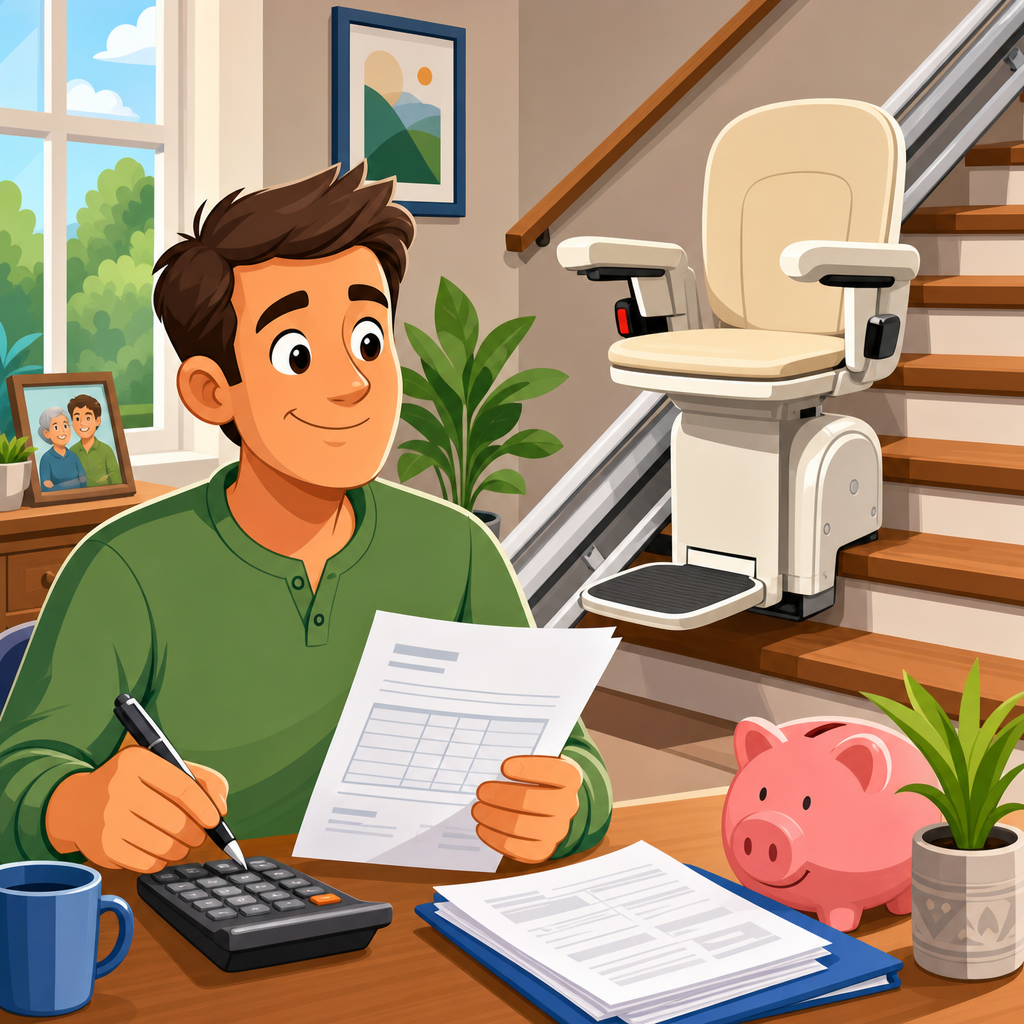
Also check 211, BenefitsCheckUp from the National Council on Aging, Eldercare Locator from the U.S. Administration on Aging, and your state’s no-wrong-door aging and disability resource portal if one exists. These directories are not perfect, but they help uncover regional contacts. I often tell families to create a simple spreadsheet with agency name, contact person, date called, program type, and required documents. That level of organization matters because grant hunting usually involves multiple callbacks, waitlists, and referrals across systems that do not coordinate well.
Renters face a different path. Many homeowner rehab grants exclude rental properties, but that does not mean help is unavailable. Seniors who rent should ask about reasonable accommodations under the Fair Housing Act, landlord approval for modifications, state assistive technology financing, Medicaid waiver funding, and nonprofit support. A landlord may permit installation if the tenant funds it or if a program covers it. In some cases, a stair lift is less feasible in a rental, and agencies may suggest alternative solutions such as relocating essential living space to the first floor or helping with a move to an accessible unit.
Prepare the documents that make applications stronger
Programs approve stair lift assistance when the file clearly shows need, feasibility, and financial eligibility. The most persuasive applications usually include a physician or therapist statement describing mobility limitations, fall risk, and why stairs create a barrier to safe daily living. Occupational therapists are especially helpful because they can connect the stair lift to functional goals such as bathing, sleeping in a second-floor bedroom, or accessing laundry needed for continence care. Vague notes saying a patient “would benefit” are weaker than detailed statements linking the equipment to safety and independence.
Most agencies also require proof of income, assets in some cases, identification, proof of residency, and proof of homeownership if the program is property based. For housing programs, expect requests for tax records, homeowners insurance, mortgage status, contractor estimates, and photographs of the staircase. Some agencies insist on using approved contractors or obtaining multiple bids. That is normal. It protects public funds and helps verify that the requested stair lift is the right type for the home.
Get an in-home assessment before locking into a model. Straight stair lifts are less expensive and quicker to install because they fit a standard linear rail. Curved stair lifts require custom measurements and manufacturing, which increases cost and timeline. If the user has limited ability to transfer, seat height, swivel function, and call-send controls matter. If the staircase is narrow, code clearance and folded profile become important. Agencies are more comfortable funding a device when the recommendation comes with a professional assessment and a specific bid.
Know the limits of Medicare, private insurance, and grant alternatives
Many families ask whether Medicare pays for a stair lift. In most cases, original Medicare does not cover stair lifts because they are typically considered home modifications rather than covered durable medical equipment. Some Medicare Advantage plans may offer broader supplemental benefits, but that is plan specific and still uncommon for full stair lift coverage. Private health insurance is similarly limited. This is why grants and assistance programs matter so much in this category.
When grants are not available, look at alternatives without assuming they are inferior. A forgivable loan from a city housing department can function much like a grant if the senior remains in the home for a required term. A state housing finance agency may offer low-rate accessibility loans. Some stair lift dealers provide certified pre-owned models for straight stairs, rental programs for short-term needs, or financing through third-party lenders. Reused equipment can cut costs substantially, though curved systems still require custom rails and professional installation.
Nonprofit aid can bridge smaller gaps. Disease-specific organizations focused on multiple sclerosis, ALS, Parkinson’s disease, or spinal cord injury sometimes maintain emergency funds or equipment programs. Faith-based charities, United Way partners, and civic groups occasionally support home access projects when a case manager documents hardship. The strongest outcomes usually come from stacking resources: a housing grant for part of the cost, a nonprofit payment toward the remainder, and a dealer discount on installation.
Build a follow-up plan and avoid common mistakes
The families who succeed are rarely the ones who submit one form and wait. They follow up consistently, ask whether a denial can be appealed, and request referrals to adjacent programs. If a Medicaid waiver says no, ask whether another waiver, managed care benefit, or state-funded aging program handles environmental modifications. If a housing program excludes stair lifts, ask whether it can fund electrical work or structural changes while another source funds the unit itself. Agencies often work within narrow rules, and the right question can reveal a path that an initial “no” did not explain.
Avoid three common mistakes. First, do not buy a stair lift before checking program rules, because retroactive reimbursement is often prohibited. Second, do not assume online lists are current; many programs open and close with annual funding cycles. Third, do not use the word grant as a catchall when speaking with agencies. Ask specifically about home modification grants, accessibility rehabilitation funds, waiver-covered environmental adaptations, and low-interest accessibility loans. Precise language gets better answers.
Finding stair lift grants for seniors in your state takes persistence, but the process is manageable when you know where to look and what each program can realistically do. Start with Medicaid waivers, Area Agencies on Aging, state housing rehabilitation offices, veterans benefits, and Assistive Technology programs. Gather strong medical documentation, obtain a professional assessment, and search locally as well as statewide. If a true grant is unavailable, consider forgivable loans, nonprofit help, reused equipment, or combined funding sources. The main benefit is simple: the right assistance can turn an unsafe staircase into a usable part of the home and help an older adult remain independent longer. Make a contact list today, start calling your local aging and housing agencies, and move the search forward one program at a time.
Frequently Asked Questions
What types of stair lift grants or financial assistance programs are available for seniors?
Seniors looking for help paying for a stair lift will usually find that funding comes from several different sources rather than one single national grant program. In many states, the most common options include Medicaid Home and Community-Based Services waivers, state assistive technology programs, local Area Agencies on Aging, nonprofit organizations, veterans’ benefits, and community-based housing or disability assistance funds. Some programs offer direct grants, while others provide low-interest loans, refurbished equipment, cost-sharing assistance, or help with home modifications that may include a stair lift.
It is important to understand that a stair lift is often categorized as a home accessibility modification rather than standard medical equipment. That means traditional health insurance or Medicare may not automatically pay for it, even when the need is legitimate and safety-related. However, state-specific Medicaid waiver programs may cover all or part of the cost if the stair lift helps the applicant remain safely at home instead of moving into a facility. In addition, some states operate assistive technology financing programs that help older adults obtain devices through grants, demonstrations, exchanges, or alternative financing.
Beyond public programs, local nonprofits, faith-based charities, disease-specific foundations, and civic groups may also provide aid. For example, an organization serving people with multiple sclerosis, arthritis, stroke recovery needs, or mobility limitations may help fund accessibility improvements. Veterans and surviving spouses may also qualify for support through the Department of Veterans Affairs, especially when the stair lift is tied to mobility, disability, or aging-in-place needs. The best approach is to think broadly: grants can come from state agencies, county programs, disability networks, senior services offices, and charitable organizations, all of which may have different eligibility standards and application cycles.
Who typically qualifies for stair lift assistance in a specific state?
Eligibility usually depends on a combination of factors, including age, income, disability or medical need, home environment, and residency within the state or local service area. In many programs, applicants must demonstrate that they have difficulty climbing stairs safely because of a mobility limitation, chronic condition, injury, or age-related decline. A doctor, occupational therapist, case manager, or social worker may need to document that the stair lift is necessary to reduce fall risk and support safe access to essential areas of the home, such as a bedroom or bathroom.
Income is another major factor. Many state and local grant programs are designed for low-income or moderate-income seniors, so applicants may be asked to provide tax returns, benefit statements, bank information, or proof of participation in public assistance programs. Some programs prioritize individuals who would otherwise be at risk of institutional care, while others focus on homeowners, though renters may qualify if the landlord approves the installation. In certain states, priority may go to people on Medicaid waivers, veterans, adults with disabilities, or seniors returning home after hospitalization or rehabilitation.
State rules matter because no two programs operate exactly the same way. One state may fund stair lifts through a home modification waiver, while another may exclude them but support ramps, grab bars, or bathroom changes instead. Some local programs also have waitlists, annual funding caps, or rules limiting assistance to primary residences. That is why applicants should not assume they are ineligible based on a general internet search. A senior may qualify under one state-administered program, a county aging office fund, or a nonprofit source even if another agency says no. The key is to ask how the stair lift is classified, what documentation is required, and whether there are alternative pathways if the first application is denied.
How can seniors find stair lift grants in their own state?
The most effective way to find stair lift grants in a specific state is to start with agencies that coordinate aging, disability, and long-term care services. A senior or caregiver should contact the state department on aging, the state Medicaid office, and the local Area Agency on Aging first. These offices often know which waiver programs, home modification funds, and local partner agencies are currently active. They can also explain whether stair lifts are covered directly, considered on a case-by-case basis, or excluded under certain funding rules.
From there, it helps to expand the search to Centers for Independent Living, state assistive technology programs, county human services departments, and nonprofit disability organizations. These groups may know about smaller or lesser-known resources, including equipment reuse programs, charitable grants, and regional accessibility initiatives. Veterans should also contact a local VA office or veterans service officer, because benefits and adaptation programs may be available depending on service history and disability status.
When researching, seniors should ask precise questions instead of just requesting “stair lift grants.” A better approach is to ask whether the program funds home accessibility modifications, fall-prevention equipment, mobility-related home safety improvements, or aging-in-place adaptations. Sometimes a stair lift is funded under broader categories, and using the right terminology can make a big difference. It is also smart to request a written list of application requirements, deadlines, and acceptable vendor documentation. Keeping a simple folder with medical records, income verification, home photos, and contractor estimates can speed up the process and make follow-up easier if multiple applications are submitted at the same time.
What documents and information are usually needed when applying for a stair lift grant?
Most applications require proof that the stair lift is both medically necessary and financially justified. Seniors are commonly asked to submit identification, proof of state residency, proof of age, and documentation of income or assets. This may include Social Security statements, pension records, tax returns, bank statements, or benefit award letters. If the program is income-based, complete and accurate financial paperwork is especially important because missing details can delay a decision or cause the application to be rejected.
Medical support is often just as important as financial proof. Many programs want a letter of medical necessity from a physician, therapist, or other qualified professional explaining why the applicant cannot safely use the stairs and how the stair lift would help prevent falls and support independent living. Some agencies may also require a home assessment from an occupational therapist, case manager, or accessibility specialist. This assessment can show why the equipment is needed, whether the staircase can accommodate installation, and whether other modifications are also necessary.
Applicants may also need written estimates from licensed stair lift dealers or contractors, photographs of the staircase, landlord permission for rental properties, and confirmation that the home is the applicant’s primary residence. In some states, the funding agency requires approval before purchase, so seniors should avoid paying out of pocket too early unless they are certain reimbursement is allowed. To improve the odds of approval, it helps to provide a complete package from the start: a clear explanation of need, solid medical documentation, accurate financial records, and detailed installation estimates. A well-prepared application signals urgency, legitimacy, and readiness to move forward.
What if a senior is denied a stair lift grant or cannot find full funding?
A denial does not always mean the process is over. In many cases, the issue is not the need for the stair lift but the funding category, missing paperwork, or limited program money. Seniors should first ask why the application was denied and whether there is an appeal process, a waitlist, or a way to reapply with additional documentation. Sometimes a stronger letter of medical necessity, a more detailed home assessment, or updated financial records can change the outcome. It is also possible that the wrong program was targeted and another state or local source may be a better fit.
If full grant funding is not available, partial assistance can still make a stair lift affordable. Some organizations help with only a portion of the cost, such as installation, used equipment, or rail modifications. Others may offer payment plans, low-interest loans, or referrals to refurbished stair lift dealers. Community fundraising, disease-specific charities, religious organizations, and local service clubs can sometimes help bridge the remaining gap. In certain situations, families combine several smaller funding sources rather than relying on one grant to cover everything.
It is also worth asking whether there are temporary alternatives while funding is being pursued. A case manager or occupational therapist may suggest interim safety measures, but if the stairs remain a major fall hazard, the urgency should be emphasized in every conversation with agencies and providers. Stair lifts are not merely convenience items for many seniors; they can be critical tools for preventing injury, preserving independence, reducing caregiver strain, and delaying a move into institutional care. Persistence matters. Many successful applicants secure help only after making multiple calls, exploring several programs, and following up consistently until the right source of assistance is found.