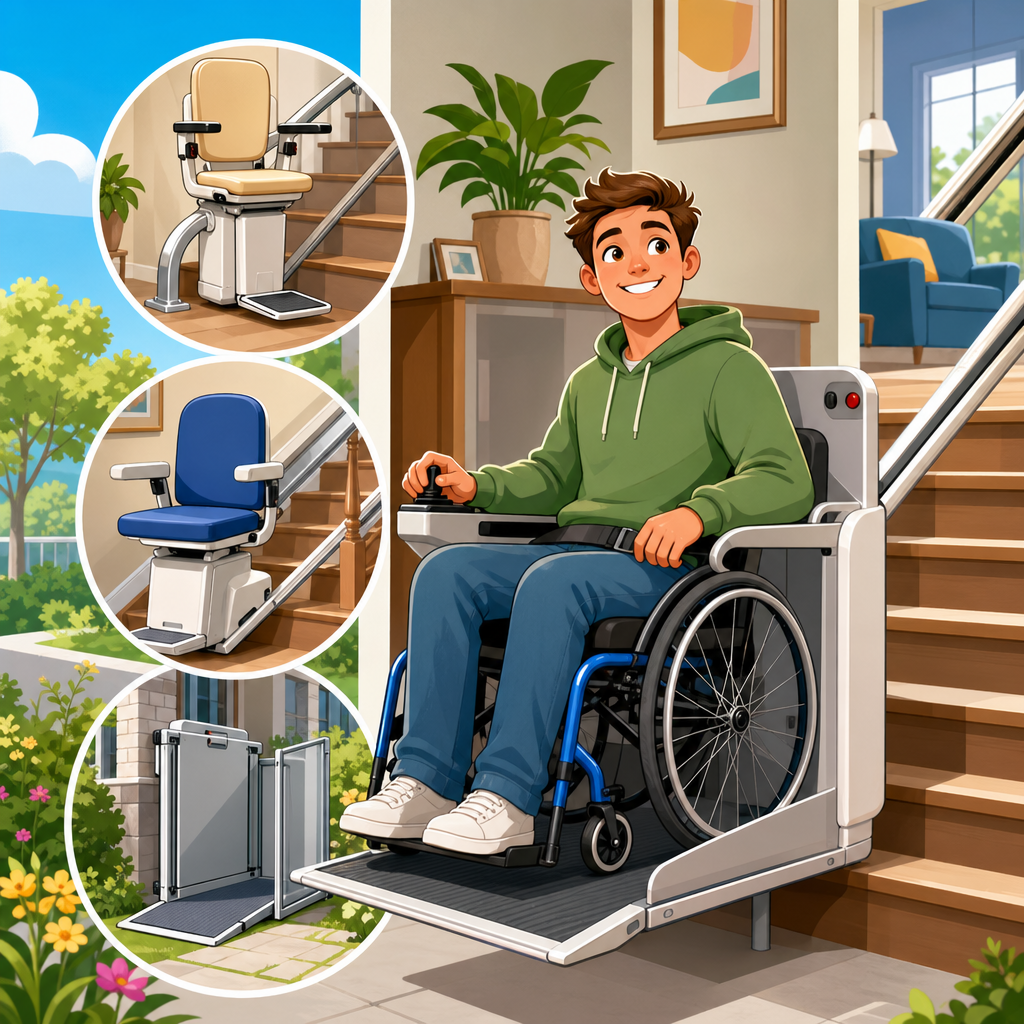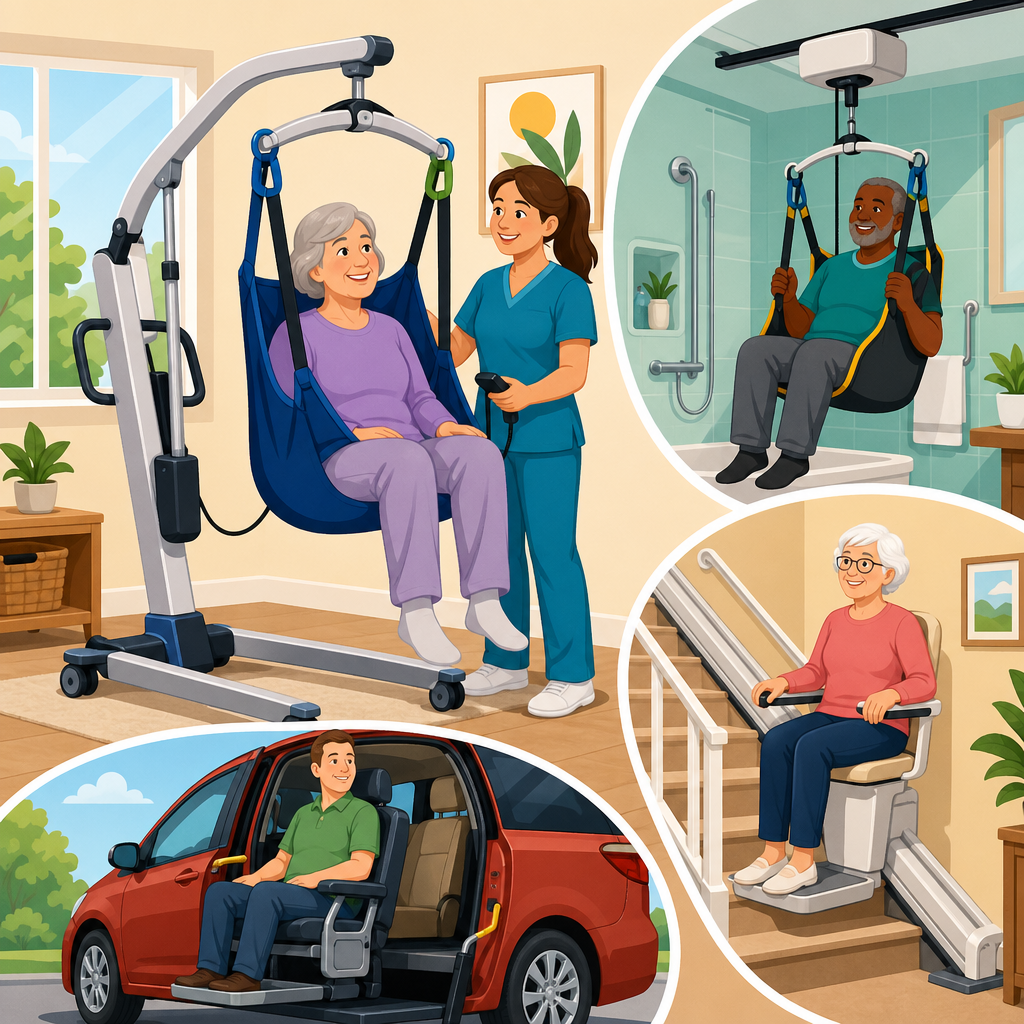
Buying a used lift can save substantial money, but only when the inspection process is disciplined, technical, and documented. In this guide, “used and refurbished chair lifts” refers to pre-owned accessibility lifts that have either been resold as-is or reconditioned with replacement parts, testing, and limited warranty coverage. I have inspected enough secondhand stair lifts, platform lifts, and patient transfer chairs to know that cosmetic appearance tells you very little about actual service life. What matters is mechanical wear, electrical reliability, safety compliance, installation suitability, and parts support. A strong inspection checklist protects buyers from expensive retrofits, unsafe operation, and equipment that cannot be legally or practically installed in the home. It also helps families compare sellers objectively instead of relying on vague assurances.
Used chair lifts matter because accessibility equipment is expensive, demand is rising with an aging population, and many buyers need a fast solution after surgery, injury, or a change in mobility. A properly refurbished unit can deliver excellent value, especially for straight staircases where rail systems are standardized and replacement components are widely available. A poor purchase, however, can create recurring faults, emergency removal costs, and serious risk during transfer. Before anyone buys, they should understand the core categories. Stair lifts move a seated user up and down stairs on a rail. Vertical platform lifts raise a wheelchair user between levels. Portable patient lifts help caregivers transfer people from bed to chair, though they are not architectural lifts. The inspection checklist differs by type, but the buying principles are consistent: verify compatibility, confirm condition, review service history, test every safety feature, and calculate the true installed cost.
This article serves as a hub for the used and refurbished chair lifts topic by covering the full buying process from first screening to final approval. If you are researching straight stair lifts, curved stair lifts, reconditioned units, or seller vetting, start here and use each section as a decision framework. The goal is not simply to find the cheapest lift. The goal is to buy a lift that fits the staircase, supports the user’s weight and mobility needs, meets current safety expectations, and remains serviceable for years. That requires a structured inspection checklist.
Confirm the exact lift type, fit, and installation requirements
The first inspection step is confirming that the used lift matches the environment and the user. Many failed purchases happen before the physical inspection even starts because buyers assume one chair lift is much like another. It is not. A straight stair lift rail usually fits only a straight staircase with no intermediate landings, turns, or spiral sections. A curved stair lift is generally custom-built for one staircase and often cannot be reused economically on another home. In practice, that means most secondhand curved stair lifts are poor candidates unless the seller is supplying only reusable components such as the carriage, seat, charging system, and controls, while a new rail is fabricated.
Take staircase measurements before speaking seriously with a seller. Measure the total run, staircase width, clearance at the top and bottom landings, and any obstructions such as doors, radiators, trim, or handrails. Confirm whether the lift folds to preserve walkway width. For the user, verify seat height, swivel function, armrest shape, footrest dimensions, and weight capacity. Standard capacities often range from 250 to 350 pounds, while heavy-duty models can exceed that. If the buyer needs a perch seat, powered swivel, or hinged rail to avoid a doorway obstruction, note that immediately because those features affect both compatibility and repair cost.
Ask the seller for the exact make, model, serial number, age, and original installation manual. Trusted brands in the North American and European markets include Bruno, Harmar, Handicare, Acorn, Stannah, Savaria, and AmeriGlide, though support varies by region and model age. Once you have the model, check whether parts are still available and whether local dealers will service a secondhand unit. In my experience, this is one of the most important filters. A lift can be mechanically sound today but become a liability if batteries, control boards, gear racks, or seat assemblies are no longer supported.
Inspect structural condition, drive components, and signs of wear
After fit is confirmed, inspect the physical condition carefully. Start with the rail or mast. Look for dents, corrosion, misalignment, worn rack teeth, loose mounting brackets, or evidence of field modifications. A rail should be straight where intended, firmly anchored, and free from cracks around bracket points. Rust on surface fasteners is manageable; corrosion on structural components is not. If the unit was removed from a damp basement or exterior application, inspect more aggressively because moisture shortens the life of connectors, bearings, and metal finishes.
Move to the carriage and drive system. Listen for grinding, clicking, or irregular motor noise during operation. Excessive vibration often points to worn rollers, damaged gears, or poor rail alignment. Open service panels if permitted and inspect for oil leakage, frayed wiring, heat discoloration, dust buildup around electronics, and improvised repairs such as wire nuts, household screws, or mismatched fasteners. Refurbished should mean cleaned, tested, adjusted, and repaired with appropriate parts, not simply repainted. Check the seat frame for play, inspect armrests for secure attachment, and verify that folding mechanisms lock positively without binding.
Battery-powered stair lifts deserve special attention because many performance complaints come from weak batteries or poor charging contact. Most modern stair lifts use sealed lead-acid batteries located in the base, charging automatically at one or both ends of the rail. If the seller cannot document battery age, assume replacement may be due soon. During inspection, confirm that the charger is present, indicator lights behave normally, and charging contacts are clean and not badly pitted. A lift that runs well for one trip but slows on repeated cycles may already have battery capacity loss.
| Inspection area | What to check | Why it matters |
|---|---|---|
| Rail and brackets | Straightness, corrosion, secure mounts, intact rack teeth | Poor alignment causes rough travel, noise, and premature drive wear |
| Motor and gearbox | Smooth sound, no leaks, no overheating smell, consistent speed | Drive failure is one of the most expensive used-lift repairs |
| Batteries and charger | Battery age, charge indicators, clean contacts, repeated trip performance | Weak batteries mimic larger faults and strand users on the stairs |
| Seat and hinges | Rigid frame, secure armrests, footrest operation, swivel lock | Transfer safety depends on stable seating and predictable movement |
| Wiring and controls | Original connectors, no splices, responsive remotes, intact insulation | Electrical faults create intermittent shutdowns and service headaches |
Test safety systems, controls, and operational performance
A used lift should never be purchased without a full functional test under realistic conditions. Run the lift through multiple complete cycles with and without a rider, if safe to do so. The ride should be smooth, speed should remain consistent, and start-stop behavior should feel controlled rather than jerky. Test seat swivel locks at the upper landing because a weak or misaligned swivel mechanism increases fall risk during dismount. Confirm that the seat belt latches correctly and retracts or stows without damage.
Next, verify every safety edge and obstruction sensor. Most stair lifts have safety cutoffs on the footrest and carriage that stop movement if the lift contacts an object on the stairs. Use a soft test obstruction according to the manufacturer’s guidance and confirm immediate stopping. Test call-send controls from each landing. Check key switches, if equipped, to ensure the unit can be secured from unauthorized use. If the model includes powered folding footrests or powered seats, cycle those functions repeatedly. Intermittent operation is a warning sign, especially in older units where switches and harnesses degrade with age.
Ask whether the lift has fault codes or onboard diagnostics. Many modern lifts display error codes on the armrest, carriage, or control panel. Those codes can quickly reveal charging issues, seat not locked conditions, overspeed faults, or limit switch problems. If the seller claims the lift was refurbished, request a written test checklist showing what was inspected and whether load testing was performed. For platform lifts and patient transfer lifts, safety testing is even more critical because higher loads and more complex transfer situations increase consequences if a component fails.
Real-world example: I once inspected a straight stair lift that looked almost new, with fresh upholstery and a polished rail, but it stopped randomly midway because one landing charge contact had been bent during removal. The seller had focused on appearance, not function. In another case, a visibly older Bruno unit with documented battery replacement, service records, and a complete bench test proved the better buy. Operational testing consistently tells the truth.
Review age, refurbishment quality, service history, and seller credibility
Used and refurbished chair lifts vary dramatically in quality because the term refurbished has no universal meaning in resale listings. One seller may replace batteries, worn rollers, and upholstery, update firmware, and test all safety circuits. Another may wipe down the unit and call it refurbished. Ask for specifics. Which parts were replaced? Were OEM components used? Was the gearbox inspected? Were limit switches adjusted? Was the rail cut or modified? Is there a written warranty on parts and labor? A credible refurbisher answers these questions directly and provides records.
Age matters, but not in a simplistic way. A ten-year-old lift from a supported model line with regular maintenance can be a safer purchase than a newer discontinued model with no local service network. Request maintenance records, installation date, removal date, and reason for sale. Home removals after a short medical recovery can produce excellent used inventory. Equipment retired after repeated faults in a care setting is a very different proposition. Also ask whether the unit was stored indoors in a climate-controlled area. Long storage in garages or sheds often damages batteries and electronics.
Seller credibility is part of the inspection checklist. Prefer established mobility dealers, accessibility contractors, or specialist refurbishers over anonymous marketplace listings when the price difference is reasonable. Reputable dealers can usually confirm serial numbers, identify missing components, and provide installation support. They also understand local code issues, staircase survey requirements, and warranty expectations. If buying privately, insist on model documentation, photos of the lift while installed, a video showing full operation, and a clear inventory of every included part. Missing brackets, charging strips, remotes, or seat hardware can erase the savings of a bargain purchase.
Also verify whether installation by a licensed or factory-trained technician is required to keep any warranty valid. For vertical platform lifts and some patient lifts used in regulated care environments, inspection and servicing may need to align with local accessibility, electrical, or healthcare equipment standards. Buyers should not assume that secondhand status removes compliance obligations.
Calculate total cost, risk, and value before approving the purchase
The sticker price of a used lift is only one part of the decision. A proper buying checklist includes total acquisition cost: purchase price, disassembly, transport, new rail if needed, installation labor, batteries, replacement wear parts, permit requirements where applicable, and future service availability. Straight stair lifts often deliver the best secondhand value because rails are simpler and installation is more standardized. Curved stair lifts usually require new custom rails, making “used” savings far smaller than buyers expect. In those cases, buying a refurbished carriage package with a new rail from an authorized dealer may be the practical middle ground.
Compare the used option against a new budget model and against a rental if the need is temporary. I have seen families buy used equipment for a short recovery period only to discover that a rental with service included would have cost less and reduced risk. On the other hand, for a long-term need in a straightforward staircase, a well-supported refurbished straight stair lift can be an excellent financial decision. The key is disciplined comparison, not assumption.
Before approving the purchase, make sure the final checklist is complete: exact model confirmed, staircase fit verified, serial number checked, parts support available, safety systems tested, refurbishment records reviewed, installer identified, total installed cost calculated, and warranty terms understood. If any of those items remain uncertain, pause the transaction. Accessibility equipment should reduce stress, not create a maintenance project.
A careful inspection checklist turns the used lift buying process from guesswork into a manageable technical decision. Buyers who confirm fit first, inspect structural and electrical condition, test every safety function, verify service history, and calculate total cost are far more likely to end up with reliable equipment. The main benefit of buying used and refurbished chair lifts is not merely lower price; it is obtaining the right mobility solution at the right value without compromising safety or serviceability.
As the hub for used and refurbished chair lifts within buying guides and product reviews, this article gives you the framework to evaluate straight stair lifts, curved systems, platform lifts, and transfer equipment with confidence. Use it as your starting point, then build a model-specific shortlist, gather documentation, and insist on a real inspection before payment. If you are shopping now, turn this checklist into a printable worksheet and use it to compare every used lift side by side.
Frequently Asked Questions
What should be included in an inspection checklist before buying a used lift?
A proper inspection checklist for buying a used lift should cover far more than surface condition. Start with the basics: manufacturer, model number, serial number, age, rated capacity, intended application, and whether the unit is being sold used as-is or refurbished. From there, verify structural integrity by inspecting the frame, mounting points, rails, platform, seat base, armrests, footrests, hinges, and any welds for bending, cracking, corrosion, or unauthorized repairs. If the lift is a stair lift, check the rail alignment, carriage travel, charging points, and track joints. If it is a vertical platform lift or patient transfer chair, inspect the mast, platform gate or sling attachment system, base spread, wheels, and lifting arm geometry.
The electrical and mechanical sections of the checklist are just as important. Confirm battery age and charging performance, inspect wiring harnesses and connectors, test controls, safety sensors, emergency stop functions, limit switches, key switches, and manual lowering systems. Listen for abnormal motor noise, gear chatter, or inconsistent travel speed. Evaluate braking performance, start-stop smoothness, and whether the lift holds position under load. Documentation should also be part of the checklist: service logs, refurbishment records, parts replaced, test reports, owner’s manual, installation instructions, and warranty terms. A good checklist is not just a list of visible items; it is a structured process that confirms the lift is safe, serviceable, code-appropriate, and supported with parts and technical information.
How can I tell whether a used or refurbished chair lift is actually safe?
Safety is determined by function, condition, and documentation, not by fresh paint or a clean seat. A used or refurbished chair lift should complete a full operating cycle repeatedly without hesitation, drifting, stalling, or faulting out. Test every user-facing and safety-related feature: seat swivel locks, seat belt, obstruction sensors, call/send controls, final limit stops, overspeed protection if applicable, battery backup, charging contacts, and emergency stop functions. The lift should start smoothly, stop accurately, and remain stable during operation. If any motion feels jerky, noisy, delayed, or inconsistent, that is a warning sign that wear may exist in the drivetrain, control board, wiring, or rail system.
Beyond the functional test, ask for evidence of a disciplined refurbishment or maintenance process. A truly refurbished unit should have a documented list of components that were inspected, repaired, or replaced, such as batteries, rollers, switches, carriage parts, upholstery, or control modules. You also want to know whether the unit was load-tested and whether replacement parts used were original manufacturer components or acceptable equivalents. It is also wise to confirm current parts availability and service support in your area. Even a lift that works today can become a poor purchase if critical components are obsolete or no technician will service it. In practical terms, a safe used lift is one that performs correctly, passes inspection under realistic conditions, and comes with enough service history and technical support to remain safe after installation.
What mechanical and electrical problems are most commonly missed during a used lift inspection?
Some of the most commonly missed mechanical issues are hidden wear points that do not stand out during a quick visual review. On stair lifts, buyers often overlook carriage roller wear, rail misalignment, gear rack damage, loose mounting brackets, and excessive play in the seat post or swivel mechanism. On platform lifts and transfer chairs, inspectors may miss stress cracks near pivot points, caster wear, base instability, worn actuator mounts, or deformation caused by overloading. These problems may not look dramatic, but they can affect ride quality, load handling, and long-term reliability. Another frequently missed issue is evidence of previous improper installation, such as extra drilled holes, improvised fasteners, shims, or nonstandard brackets.
Electrical problems are just as easy to underestimate. Weak batteries can appear acceptable during a short demonstration yet fail under normal daily use. Intermittent charging faults, corroded terminals, pinched wiring, damaged insulation, and aging control boards may only reveal themselves after repeated cycling. Buyers also sometimes forget to test all control inputs individually, including remote call stations, onboard controls, key switches, and safety interlocks. A lift that runs in one direction but hesitates in the other, or one that operates unloaded but struggles under rated demand, may have deeper electrical or drive-related problems. The best way to avoid missing these defects is to inspect the lift systematically, run multiple full cycles, test it under appropriate load conditions, and compare actual operation against manufacturer specifications whenever possible.
Is it better to buy a used lift as-is or a refurbished one with records and warranty coverage?
In most cases, a refurbished lift with clear records and at least limited warranty coverage is the better value, even if the upfront price is higher. Buying as-is may look attractive because of the lower purchase cost, but the savings can disappear quickly if the lift needs batteries, control components, drive repairs, rail modifications, or professional troubleshooting immediately after installation. An as-is unit also carries more uncertainty because you may not know how it was removed, stored, transported, or previously maintained. If the seller cannot explain the service history, identify replaced parts, or demonstrate all safety functions in a credible way, you are accepting a much higher risk profile.
A legitimate refurbished lift should come with specifics, not vague promises. You want to see which parts were replaced, what testing was performed, whether the unit was cleaned and adjusted beyond cosmetic touch-up, and what the warranty actually covers. Some sellers use the word refurbished loosely when they really mean cleaned and resold. A better seller will provide serial information, service documentation, functional test results, and a clear explanation of compatibility with your installation environment. If budget matters, the right question is not simply “Which is cheaper?” but “Which option gives me the safest and most predictable total cost?” In many real-world cases, a properly refurbished lift with support, documentation, and warranty terms is the smarter purchase.
What documents and seller questions should I review before committing to a used lift purchase?
Before you commit, request all available documentation tied to the exact lift you are considering. This includes the manufacturer name, model and serial number, original specifications, owner’s manual, installation manual, maintenance records, refurbishment checklist, load test results if available, and details of any parts replaced. You should also ask whether the lift has ever been involved in a failure, removed from service for safety reasons, exposed to moisture or corrosion, or modified from its original configuration. If the unit is a refurbished accessibility lift, clarify whether the refurbishment included functional testing only or also preventive replacement of common wear items such as batteries, rollers, switches, upholstery, actuators, belts, or wiring components.
The seller should also be able to answer practical ownership questions. Ask whether replacement parts are still available, who can service the lift locally, whether installation hardware is included, and whether the unit is suitable for your specific staircase, platform height, patient handling needs, or accessibility layout. Confirm the return policy, warranty duration, labor coverage, and whether the warranty begins at purchase or after installation. It is also smart to ask for a live demonstration video or in-person test showing start-up, travel in both directions, charging behavior, safety stop operation, and emergency lowering or backup features. The more specific and transparent the answers are, the more confidence you can have in the purchase. When a seller avoids documentation or gives broad, unverified claims, that is usually a sign to slow down and inspect more carefully.