
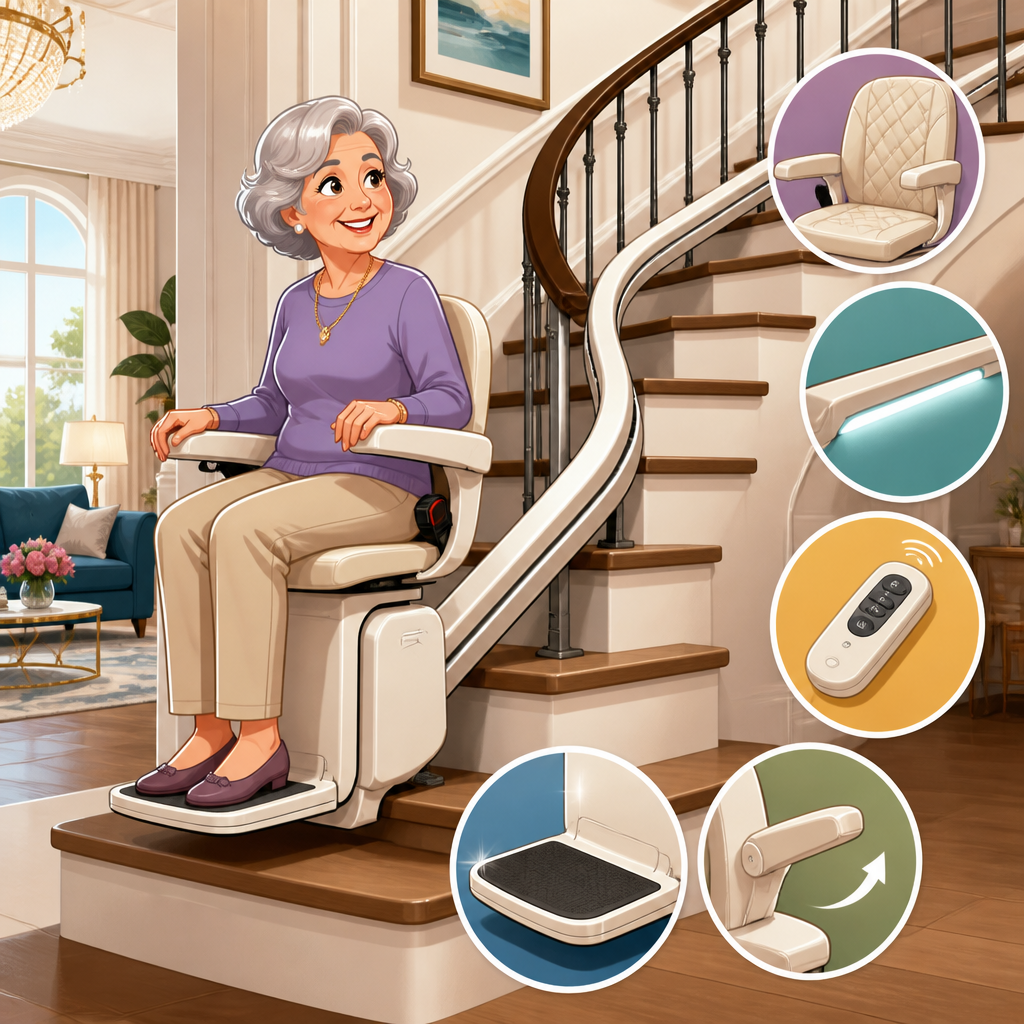
Luxury stair lifts promise more than basic mobility. They combine accessibility, safety, comfort, and design in ways that can make a daily necessity feel discreet, dependable, and tailored to the home. In this luxury stair lift buying guide, the central question is simple: which upgrades are worth paying for, and which features sound impressive but add little real value? After helping families compare premium stair lift options in traditional homes, waterfront condos, and architect-designed remodels, I have seen the same pattern repeatedly: the best luxury purchase is not the model with the longest brochure, but the one with upgrades that solve real movement, fit, and usability problems.
A stair lift is a motorized chair or perch that travels along a rail fixed to the staircase, allowing a person with limited mobility to move between floors safely. Luxury or premium stair lifts sit at the top of the market. They typically offer smoother ride quality, better upholstery, slimmer folded profiles, power swivel seats, advanced safety sensors, custom rail finishes, quieter drive systems, and stronger warranty coverage than entry-level models. Common names in this segment include Bruno, Stannah, Handicare, Savaria, and Access BDD, though feature availability varies by dealer region and staircase design.
This topic matters because premium stair lifts can cost significantly more than standard units. A straight stair lift often starts around the lower thousands, while custom curved premium models can rise well into five figures once installation and upgrades are included. Buyers therefore need a clear framework. The right luxury stair lift should improve quality of life every day, reduce transfer risk, support long-term use, and fit the home without dominating it visually. The wrong upgrade list can drain budget from the features that actually affect comfort and safety.
The most useful way to evaluate a premium model is to separate core performance from cosmetic appeal. Core performance includes rail engineering, drive quality, weight capacity, seat ergonomics, battery backup, control layout, and reliability of moving parts. Cosmetic appeal includes upholstery choices, rail color, trim details, and parking position concealment. Both can matter in a high-end purchase, especially in formal interiors, but they do not carry equal value. If a buyer understands where the money goes and how each upgrade changes everyday use, choosing a luxury stair lift becomes far more practical.
Start with the upgrades that affect daily safety and transfer ease
The best premium stair lift upgrades are the ones that reduce risk during boarding, riding, and exiting. In practice, that starts with a power swivel seat, a powered footrest, and a well-designed seat height. A power swivel rotates the chair at the top landing so the user exits onto the floor rather than toward the stairs. On paper this can look like a convenience feature. In real homes, especially where hip weakness, balance issues, or knee pain are involved, it can be the difference between an easy transfer and a dangerous twisting motion. I recommend paying for it whenever the user has limited trunk rotation or reduced confidence standing.
A powered footrest is another upgrade worth serious consideration. Manual footrests require bending or lifting with a toe lever, which many older adults find surprisingly difficult. Powered versions let the user raise or lower the platform with a control, preserving energy and reducing fall risk. This matters more than showroom buyers expect because every stair lift trip begins and ends with setup. If using the lift feels physically taxing, adherence drops. The safest equipment is the equipment someone will use consistently.
Premium armrests, seat contours, and seatbelt design also deserve attention. Better models offer firmer support, easier grip surfaces, and retractable or ergonomically positioned belts. Some users do best with a standard lap belt; others benefit from a five-point or more supportive harness style, particularly when posture control is reduced. These are not glamorous features, but they directly influence whether the rider feels stable. Any luxury stair lift buying guide should place them above decorative upgrades.
Safety sensors are standard across much of the market, but sensor coverage and stopping behavior differ. Premium stair lifts often include more responsive obstruction detection on the footrest and carriage. Ask exactly what happens when the lift meets an object on the stairs. The safest systems stop smoothly and predictably, without abrupt jolts. Also ask how the unit behaves during a power outage. Battery-powered systems that continue to run for multiple trips are now the preferred standard, and I consider strong battery backup essential rather than optional in a premium purchase.
Ride quality, quiet operation, and rail engineering justify premium pricing
If one upgrade category consistently earns its price, it is the mechanical quality the user feels on every ride. Better premium stair lifts start and stop more gently, track more smoothly through curves, and produce less vibration through the seat base. These differences come from motor tuning, transmission design, carriage construction, and rail precision. Buyers often notice upholstery first in a showroom, but after installation, what they live with is the movement quality.
For curved staircases, rail engineering matters even more. A custom curved rail should match the staircase tightly, preserve walking space, and position the chair correctly at landings. High-end manufacturers use detailed photo measurement or digital surveying to fabricate rails to exact dimensions. In older homes with uneven walls or ornamental banisters, this precision is not a luxury in the superficial sense; it is what makes a safe installation possible. Poor rail fit can create awkward parking positions, tighter knee clearance, or more visible hardware than expected.
Noise level is another upgrade worth paying for, especially in open-plan homes or when bedrooms are near the staircase. Rack-and-pinion systems are common, but refinement varies. The quietest models pair solid rail construction with smoother gear engagement and better seat isolation. During consultations, I advise clients to request a live demonstration, not just a brochure claim. A stair lift that sounds acceptable in a showroom can feel intrusive in a quiet home at night.
Folded profile and parking options also connect to engineering quality. In premium homes with narrow staircases, the chair, arms, and footrest should fold compactly without awkward protrusions. Some luxury models offer parking bends or hinged rails to keep hallways and doorways clear. These upgrades are worth paying for when the lower rail end would otherwise block a passage, create a trip hazard, or interfere with a front door. When they solve a genuine space problem, they add value every single day.
Comfort, aesthetics, and customization: where premium choices help most
Luxury stair lift buyers often care deeply about how the lift looks in the home, and that is reasonable. In a formal foyer, a visible assistive device affects not only function but also the feel of the space. The most useful aesthetic upgrades are the ones that reduce visual bulk: slim rails, tailored upholstery, coordinated rail colors, and cleaner carriage design. Premium manufacturers now offer neutral fabrics, vinyls, and leathers that blend better with upscale interiors than the medical-looking finishes that defined older stair lifts.
That said, not every appearance package is worth the upcharge. Decorative stitching, premium wood accents, or special-order trim can be worthwhile in a high-design environment, but only after core ergonomics and fit are resolved. I have advised buyers who initially focused on upholstery swatches, then discovered that a wider seat made transfers more difficult or that a decorative rail finish delayed installation. A beautiful stair lift that is harder to use is not a luxury product in any meaningful sense.
Seat size and posture support should be customized to the user, not just selected from a brochure. Petite users may need a seat depth that allows their back to contact the rest fully while keeping feet supported. Taller users often need more knee room and higher arm positioning. Some premium lines offer perch seats for users who struggle to sit fully, though these are more niche and must be matched carefully to strength and balance. The point is straightforward: comfort is biomechanical before it is decorative.
| Upgrade | Usually worth paying for? | Why it matters |
|---|---|---|
| Power swivel seat | Yes | Reduces twisting and improves safe exit at the top landing |
| Powered footrest | Yes | Eliminates bending and makes daily use easier for weak or painful joints |
| Custom rail color | Sometimes | Helps the lift blend into premium interiors but does not change function |
| Parking bend or hinged rail | Yes, when space is tight | Prevents blocked doorways, trip hazards, and awkward hall circulation |
| Premium upholstery package | Sometimes | Improves appearance, but comfort and cleanability matter more than luxury finish |
| Higher weight capacity chassis | Yes, if needed | Improves safety, stability, and future usability for heavier riders |
Cleanability is another overlooked premium feature. Homes with pets, grandchildren, or frequent guests benefit from materials that resist cracking and wipe down easily. High-end vinyls can outperform leather in this respect. Ask how upholstery holds up to sunlight, friction, and cleaning products. Luxury should include durability, not just a richer look on day one.
Advanced options, service quality, and ownership costs separate smart upgrades from expensive extras
Some of the most important premium differences appear after installation. Warranty coverage, dealer service responsiveness, maintenance access, and parts availability often justify choosing one upper-tier brand over another. A long rail and custom seat mean little if a homeowner waits weeks for a technician. In my experience, the dealer network matters almost as much as the product. Ask who performs installation, whether they are factory-trained, how emergency service is handled, and what typical response times look like in your ZIP code.
Remote call/send controls are standard and genuinely useful in two-person households. Multiple remotes or wall-mounted controls can be worth paying for if more than one person uses the stairs or if the chair must be parked away from a formal entry. By contrast, highly branded electronic extras that duplicate basic functions rarely improve daily life. Focus on controls that make the lift easier to summon, park, and operate with limited hand strength.
Weight capacity upgrades deserve careful scrutiny. Standard capacities may work for many users, but premium heavy-duty models typically offer wider seats, reinforced components, and stronger motors. These are worth paying for when needed because operating a lift near its maximum rating every day is not ideal for rider comfort or long-term wear. The right capacity should include a reasonable margin, not just the minimum necessary number.
Outdoor-rated premium stair lifts are a separate category, but many luxury buyers compare them for pool decks, garden steps, or coastal homes. Here, weatherproof covers, marine-grade finishes, sealed controls, and corrosion resistance are absolutely worth the money. Salt air, humidity, and sun exposure punish standard materials quickly. A premium outdoor model should be selected specifically for that environment rather than adapted from an indoor unit.
Finally, evaluate total ownership cost. Custom curved installations usually have limited resale transferability because rails are staircase-specific. That makes first-time fit even more important. Financing, rental options for temporary need, and home modification alternatives such as through-floor lifts or small residential elevators should all be part of the conversation. A luxury stair lift is often the right answer, but only when the staircase, user condition, and expected length of need align.
The smartest way to buy a luxury stair lift is to treat upgrades as tools, not status markers. Features that improve transfer safety, reduce bending, preserve walking space, support the user’s body, and deliver a quieter, smoother ride are usually worth paying for. Power swivel seats, powered footrests, precise custom rails, compact folding designs, battery backup, and dependable service support consistently provide real value. For many buyers, these upgrades turn the lift from an awkward necessity into equipment they trust and use with confidence.
Cosmetic upgrades matter too, especially in well-designed homes, but they should come second. Rail color, upholstery, and trim are worthwhile when they help the lift blend into the interior without compromising ergonomics, cleaning, or installation timing. The right premium model should feel secure, intuitive, and appropriately discreet. It should match the user first and the décor second, never the other way around.
If you are comparing luxury and premium models, start by requesting an in-home assessment from a dealer with strong local service, then ask which upgrades solve your specific mobility and space challenges. Use this luxury stair lift buying guide as your checklist, prioritize function over flash, and you will invest in features that earn their price every day.
Frequently Asked Questions
Which luxury stair lift upgrades are actually worth paying for?
The upgrades most often worth the investment are the ones that improve daily comfort, long-term reliability, and how well the lift integrates into the home. In practice, that usually means a custom rail designed specifically for the staircase, a higher-end seat with better cushioning and ergonomic support, a powered swivel seat, powered footrest, and quiet-start, quiet-stop operation. These features are not just cosmetic. They can make a significant difference for users who rely on the lift multiple times a day, especially if balance, hip mobility, knee flexibility, or fatigue are concerns.
Safety-related upgrades also tend to justify their cost. Advanced obstruction sensors, seat belt options that are easier to fasten, battery backup, and smooth braking systems provide meaningful value because they directly affect confidence and usability. If the home loses power during a storm or the user needs a steadier transfer at the top landing, these features matter far more than purely decorative add-ons.
By contrast, the best way to judge any premium feature is to ask whether it improves one of four things: safety, comfort, convenience, or visual discretion. If an upgrade does not clearly support one of those goals, it may be more marketing than meaningful value. Luxury stair lifts should feel personalized, but the smartest spending usually goes toward features the homeowner will notice every single day rather than finishes that sound impressive in a showroom.
Are premium upholstery, designer finishes, and custom styling worth it, or are they mostly cosmetic?
They can be worth it, but only in the right setting. In a highly designed home, a waterfront condo with open sightlines, or an architect-led renovation where every visible element has been carefully selected, aesthetics are not a trivial concern. A stair lift that clashes with the interior can feel institutional and visually disruptive, while one with tailored upholstery, slimmer lines, color-matched components, and a cleaner rail profile can blend in far more gracefully. For many buyers, that visual integration is a real quality-of-life benefit because it reduces the sense that the home has been medically retrofitted.
That said, not all styling upgrades offer equal value. Materials that are easier to clean, resist wear, and stay comfortable in different temperatures often deliver more practical benefit than purely decorative embellishments. A premium vinyl or performance fabric, for example, may be more useful than a luxury-look surface that requires delicate maintenance. Likewise, a well-designed compact seat that folds tightly may be more valuable than an expensive finish if the staircase is visible from main living areas and preserving openness matters.
The strongest case for paying more for design upgrades is when the stair lift is installed in a prominent part of the home and will be used for years. If the lift is front and center, custom styling can preserve the home’s character and make the equipment feel intentional rather than intrusive. If the lift is tucked into a secondary stairwell, buyers are often better served by prioritizing comfort, quiet operation, and ease of use over premium decorative options.
What comfort and convenience upgrades make the biggest difference in everyday use?
The most valuable comfort upgrades are the ones that reduce strain during transfers and make repeated use feel natural rather than tiring. A powered swivel seat is one of the most important examples. At the top of the stairs, it helps the user turn into a safer exit position without twisting awkwardly. For people with arthritis, limited core strength, or reduced balance, this can be a major improvement. A powered footrest is also more useful than many buyers initially expect because it eliminates the need to bend down before or after each ride.
Seat size, back support, armrest shape, and padding quality also deserve serious attention. A stair lift may only be used for short trips, but comfort still matters because discomfort encourages inconsistent use. The best premium models feel steady, supportive, and easy to sit in, with controls that are intuitive and responsive. Soft-start and soft-stop technology is another excellent upgrade because it prevents the jolt that can make some users feel unsteady or anxious.
Convenience upgrades such as remote call/send controls, folding rails, and app-connected diagnostics can also be worthwhile depending on the home. In a multi-user household, call/send controls are extremely practical. In a narrow foyer or condo entry, a hinged rail may be essential to prevent blocking a doorway or walkway. Remote monitoring and diagnostic systems can be helpful for owners who want proactive service support, though they are most valuable when backed by a responsive local dealer. In general, the best convenience upgrades are the ones that make the lift easier to access, easier to store, and easier to maintain without adding complexity for the person using it.
Are advanced safety features on a luxury stair lift worth the extra cost?
In most cases, yes. Safety features are among the easiest upgrades to justify because they are tied directly to user confidence and risk reduction. Modern premium stair lifts often include seat belt systems, overspeed governors, obstruction sensors on the carriage and footrest, lockable controls, and battery backup. While some of these may be standard on quality models, more advanced versions can improve responsiveness, smoothness, and peace of mind. For households where the user is frail, recovering from surgery, or dealing with progressive mobility changes, these details are especially important.
Battery backup is one of the most practical safety-related features because it keeps the lift operational during a power outage. In storm-prone areas or buildings where outages are not uncommon, this can be essential rather than optional. A powered swivel with secure locking positions at the top landing is another standout feature because safe entry and exit are often where falls are most likely to happen. Obstruction sensors that stop the lift immediately if an object is detected on the stairs can also protect both the user and others in the home.
The key is to separate truly functional safety engineering from feature lists designed to sound impressive. Buyers should ask how the feature works in real use, whether it addresses a genuine mobility challenge, and whether the installer can demonstrate it clearly. A reputable dealer should be able to explain not only what is included, but which features are standard, which are optional, and which upgrades would be recommended based on the user’s physical needs and the staircase layout. In a luxury stair lift, safety should feel seamless, not complicated.
How can buyers tell which stair lift upgrades are worth paying for in their specific home?
The best approach is to evaluate upgrades through the lens of the user, the staircase, and the home’s design priorities. Start with the user’s real physical needs, not an idealized version of them. If standing from a seated position is difficult, seat height, arm support, and swivel assistance become more important. If bending is painful, a powered footrest may be worth every dollar. If the person using the lift tires easily or feels anxious with motion, smooth ride quality and better seat support should move higher on the list.
Next, look at the staircase itself. Straight staircases may require fewer specialized upgrades, while curved, narrow, or visually prominent staircases often benefit from custom rail work, compact seat designs, or folding rail sections. In luxury homes, the installation quality and visual integration matter as much as the feature sheet. A beautifully engineered custom fit that preserves traffic flow and minimizes visual clutter often provides more value than several small add-ons that do not improve function.
Finally, consider service, warranty, and dealer expertise as part of the upgrade decision. A premium stair lift is not just a product purchase; it is a long-term mobility system. Better diagnostic support, stronger local service coverage, and a more comprehensive warranty can be more valuable than a cosmetic package. The smartest buyers ask for an in-home assessment, a clear explanation of which upgrades solve specific problems, and an honest opinion about which extras can be skipped. That is usually where the real value appears: not in buying the most expensive model, but in selecting the combination of features that fits the home beautifully and supports safe, comfortable daily use for years.





