Choosing the most durable stair lift brands in 2025 means looking beyond glossy brochures and focusing on engineering, service infrastructure, and the realities of daily use. A stair lift is a powered chair or perch that travels on a rail fixed to the staircase, restoring safe access between floors for older adults, people recovering from surgery, and anyone with limited mobility. Durability, in this context, is not just about how long the seat fabric lasts. It includes motor reliability, gearbox strength, battery performance, rail stability, diagnostic systems, weather resistance for outdoor units, and the manufacturer’s ability to supply parts years after installation.
I have reviewed stair lift proposals with families, compared service records from dealers, and seen the difference between a unit that merely works on installation day and one that still runs smoothly after thousands of trips. That difference matters because a stair lift is often used multiple times every day in a critical path of the home. Failure is not a minor inconvenience. It can cut off access to a bedroom, bathroom, or front door. In 2025, buyers are also asking a more sophisticated question: which brands hold up best over time, especially when installed on complex staircases or used by heavier riders?
The short answer is that the most durable stair lift brands in 2025 are Bruno, Stannah, Harmar, Acorn, Handicare, and Savaria, with niche strength from Access BDD and some regional specialists. They do not all excel in the same way. Bruno is known for robust build quality and strong outdoor performance. Stannah stands out for engineering consistency and refined ride quality. Harmar offers broad dealer support and dependable heavy-duty options. Acorn remains prominent for simple, fast installations, while Handicare and Savaria serve buyers who need custom configurations or platform solutions. To choose wisely, you need to match brand strengths to your staircase, user weight, maintenance expectations, and budget.
This guide serves as a hub for the top stair lift brands topic by explaining what makes a stair lift durable, how the leading brands compare, and which factors matter most before purchase. If you are narrowing options for a straight stair lift, curved stair lift, outdoor model, or heavy-duty chair, start here. Then use this page as your foundation before moving into brand-specific reviews, installation guides, pricing breakdowns, and maintenance articles.
What Durability Really Means in a Stair Lift
When shoppers ask for the most durable stair lift brands, they are usually asking three different questions at once. First, will the lift keep running for years without frequent breakdowns? Second, will it remain safe and stable under repeated daily use? Third, if something fails, can it be repaired quickly with available parts and trained technicians? All three matter. A chair lift with a solid motor but weak service coverage is not truly durable in practical terms.
In the field, the components that most influence longevity are the drive system, transmission, batteries, rail design, charge points, seat swivel mechanism, footrest hinges, and onboard diagnostics. Most modern stair lifts run on rechargeable batteries, even though the rail plugs into household power. That battery-backed design allows continued use during a power outage and reduces dependence on continuous mains current to the motor. The best brands pair sealed battery systems with reliable charge contacts, because many “dead lift” service calls are really charging issues rather than catastrophic motor failure.
Build quality also shows up in subtle ways. A durable stair lift starts smoothly, stops accurately, and does not develop rail vibration or seat wobble after regular use. Better manufacturers use tighter tolerances, stronger carriage assemblies, and more refined overspeed governors and obstruction sensors. Standards also matter. Reputable stair lifts are typically designed and tested to recognized safety requirements such as ASME A18.1 in North America and relevant European standards used by global manufacturers. Compliance alone does not guarantee superior durability, but serious brands engineer around these standards rather than treating them as a minimum checkbox.
Top Stair Lift Brands in 2025 Compared
The leading stair lift brands in 2025 separate themselves by track record, product range, and dealer support. The table below summarizes how the most recognized names compare on durability-related criteria buyers actually feel after installation.
| Brand | Best Known For | Strongest Use Case | Durability Advantage | Potential Limitation |
|---|---|---|---|---|
| Bruno | Heavy-duty construction and outdoor lifts | Straight stairs, high-capacity users, exterior steps | Robust rails, strong chassis, long-standing parts support | Curved options depend heavily on dealer design and cost more |
| Stannah | Refined engineering and custom curved systems | Complex staircases and premium residential installs | Smooth ride, precise manufacturing, strong long-term reliability | Pricing is often premium and availability varies by market |
| Harmar | Wide U.S. dealer network and product variety | Straight lifts, heavy-duty models, accessible service | Good parts availability and dependable performance | Finish and ride refinement can vary by model line |
| Acorn | Fast installation and straightforward designs | Standard residential straight and curved stairs | Simple system architecture with broad brand recognition | Service experience depends heavily on local support quality |
| Handicare | Custom solutions and modular configurations | Tight stairs, hinged rails, tailored installs | Flexible engineering for unusual home layouts | Model complexity can increase service sensitivity |
| Savaria | Accessibility portfolio beyond stair lifts | Homes comparing chair lifts with vertical platforms | Established accessibility manufacturer with custom capability | In some markets, stair lift dealer depth is thinner |
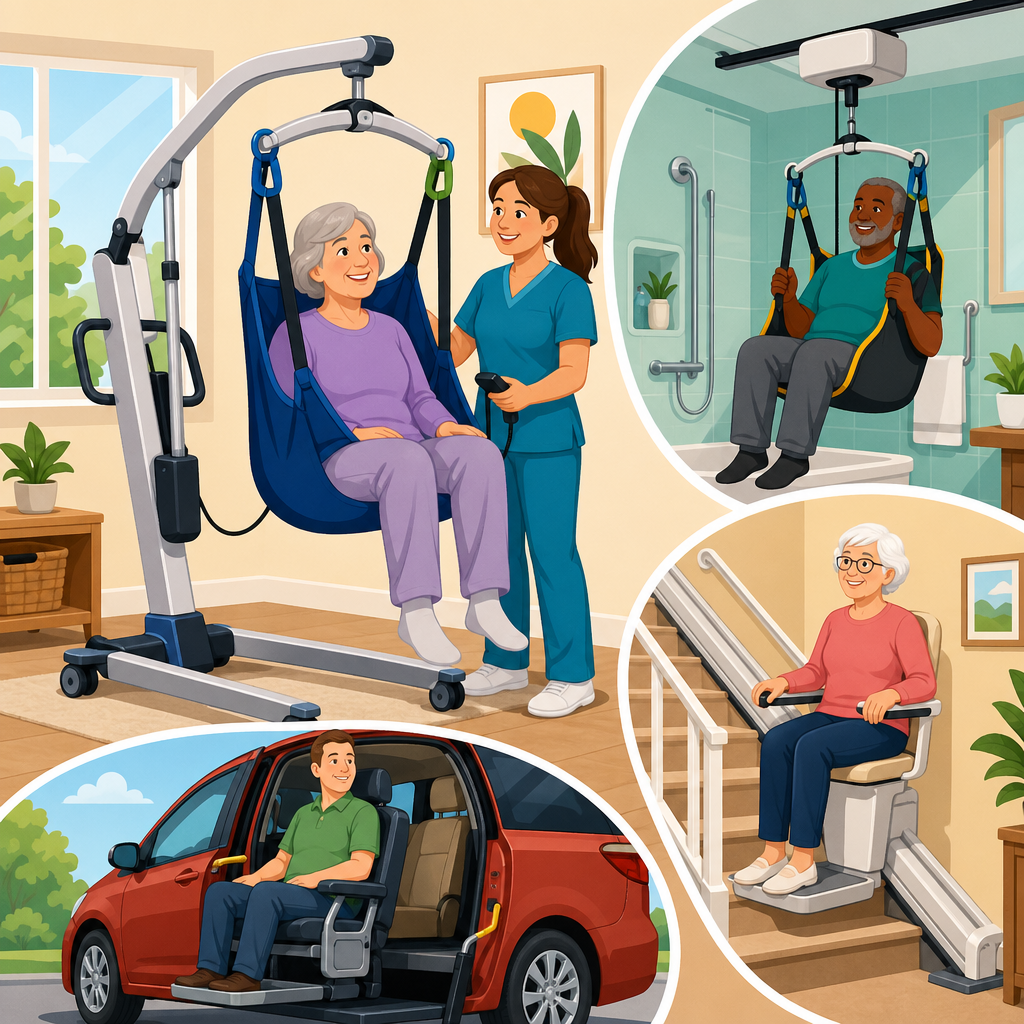
For most buyers focused purely on durability, Bruno and Stannah are the two brands that come up most often for good reason, though they excel in different settings. Harmar sits close behind because dealer access and repairability are part of real-world durability. Acorn remains a major player, especially where homeowners need a quick solution on a straight staircase. Handicare and Savaria deserve serious consideration when the layout is challenging or when the broader accessibility plan may eventually include ramps, platform lifts, or transfer equipment.
Bruno and Stannah: The Durability Benchmarks
Bruno has earned its reputation by building stair lifts that feel overbuilt in the best sense of the word. Its straight stair lifts, especially the Elite line, are commonly specified for users who want a higher weight capacity and a rigid, confidence-inspiring ride. Bruno outdoor stair lifts also stand out because outdoor durability is hard to fake. Exposure to moisture, heat swings, pollen, and debris quickly reveals weaknesses in seals, finishes, and charging systems. Bruno’s weather-resistant covers, marine-grade vinyl in some configurations, and sturdy rail construction give it a practical edge for exterior steps.
Stannah, by contrast, wins on precision and consistency. On curved staircases, where the rail must match the home exactly, manufacturing accuracy directly affects wear patterns, start-stop quality, and long-term user confidence. Stannah has decades of experience with bespoke rail fabrication and a strong reputation for smooth carriage travel. In homes with landings, turns, or narrow stair geometry, a well-engineered curved lift often proves more durable over time because it is not forcing a generic solution onto a staircase that needs precision.
If I had to summarize the distinction plainly, Bruno is often the durable workhorse choice for straightforward strength, while Stannah is the durable premium choice for engineering finesse and difficult staircases. Neither brand is automatically right for every buyer. A basic straight staircase may not require the cost of a high-end curved system, while a complex staircase can punish a lower-precision install with recurring adjustments and user frustration.
Harmar, Acorn, Handicare, and Savaria: Where They Fit Best
Harmar is one of the strongest practical options in the U.S. market because it combines a broad product catalog with a sizable dealer network. Durability is partly about uptime, and uptime improves when service technicians can get parts quickly and already know the platform. Harmar’s Pinnacle series has been popular for years because it balances compact rail design with solid reliability. The brand also offers heavy-duty models that appeal to buyers above standard weight limits. For many households, Harmar represents the best blend of proven hardware and accessible after-sale support.
Acorn remains highly visible and often appeals to homeowners who want fast turnaround. Its lifts are widely marketed, and the company emphasizes rapid installation with minimal structural disruption. Straight stair lifts from Acorn can perform well when the staircase is standard and the user’s needs are uncomplicated. The caution is that long-term satisfaction depends heavily on service responsiveness in the buyer’s area. A durable design still needs consistent maintenance, battery replacement, and occasional adjustment by competent technicians.
Handicare is especially relevant when the home creates installation constraints. Hinged rails, parking options, and tailored seat arrangements can make the difference between a usable lift and one that blocks a doorway or hallway. Savaria brings value through its broader accessibility expertise. If a homeowner is deciding between a stair lift and other mobility solutions, Savaria dealers often understand the full range of options. That matters because the most durable purchase is sometimes the one that best fits future mobility, not just current stairs.
Straight vs. Curved vs. Outdoor: Brand Strength Depends on Stair Type
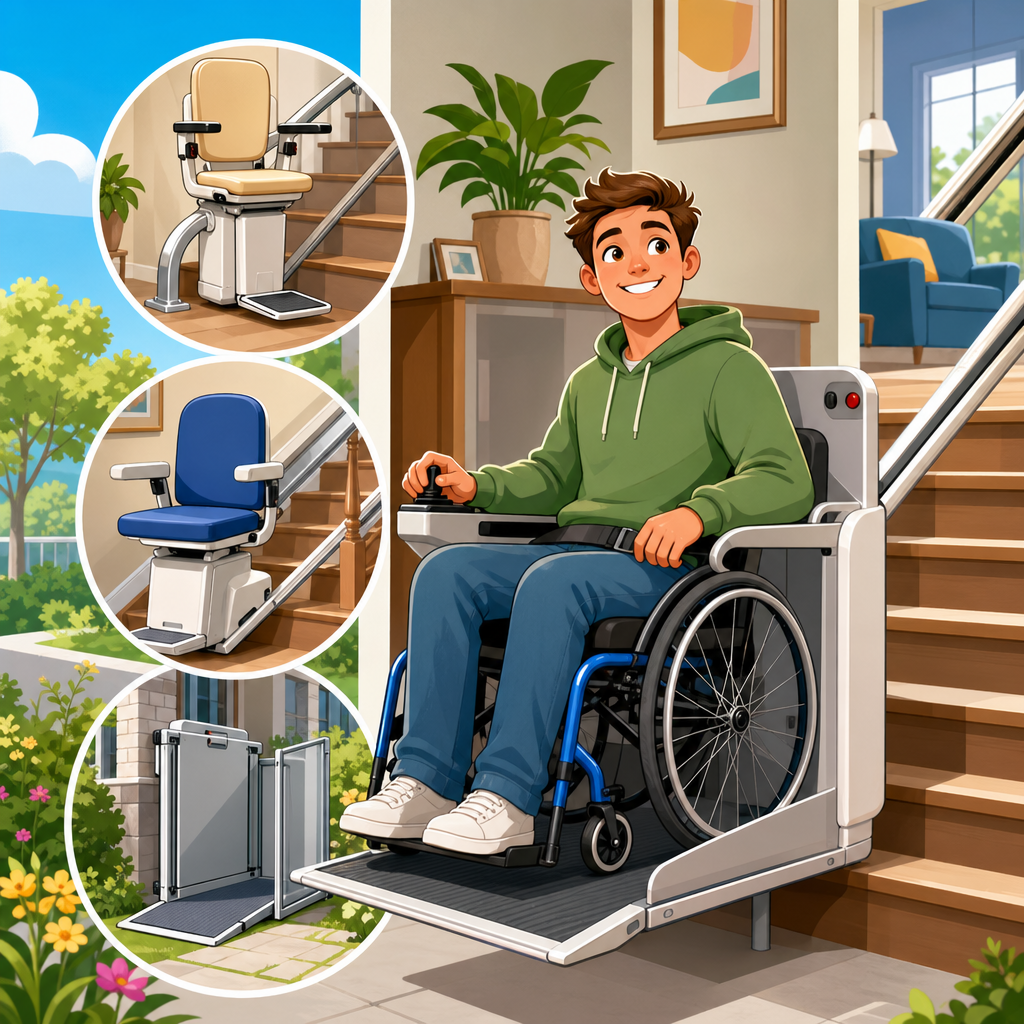
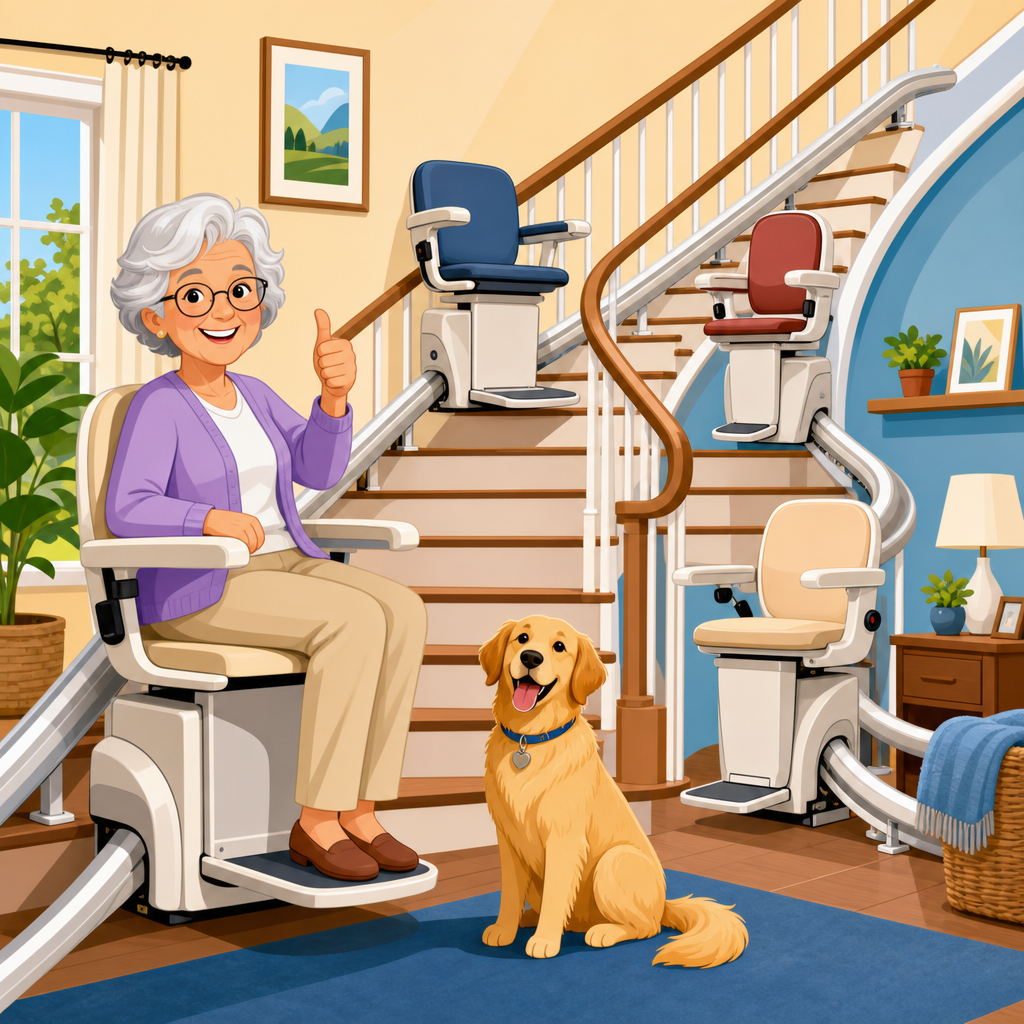
Brand rankings change when you separate straight, curved, and outdoor stair lifts. Straight lifts are simpler mechanically and typically faster to install because the rail uses standardized sections cut to length. Here, Bruno, Harmar, Acorn, and Stannah all compete well, with Bruno and Harmar often favored for higher-capacity and serviceable U.S. installations. Curved lifts require a custom rail built from measurements or digital scans of the staircase. Stannah, Handicare, Savaria, and Access BDD have stronger reputations in this category because custom fabrication and route planning are central to the product.
Outdoor lifts deserve their own category because weather exposure shortens the life of weak components. Powder coating quality, sealed controls, UV-resistant upholstery, and protected charging contacts matter far more outside than inside. Bruno is frequently the first brand dealers mention for outdoor durability, though Harmar and some other manufacturers also offer capable exterior models. A buyer should ask not only whether the lift is rated for outdoor use, but also how it handles snow, driving rain, salt air, and seasonal disuse.
Weight capacity is another differentiator. Standard residential lifts commonly support around 300 to 350 pounds, while heavy-duty models may reach 400 pounds or more. Higher-capacity systems need stronger seats, carriage assemblies, and rails. A brand that performs well for average-use straight stairs may not be the best choice for bariatric use or frequent all-day cycling in a multigenerational household.
How to Judge Long-Term Reliability Before You Buy
The best way to evaluate a stair lift brand is to look past the brochure and ask installation-specific questions. Start with the rail and carriage warranty, then ask what parts typically need replacement within five years. Batteries are consumables, so their eventual replacement is normal. What you want to know is whether the brand has recurring issues with charge contacts, seat swivel interlocks, footrest switches, or board failures. A trustworthy dealer will answer directly instead of insisting that every model is maintenance-free.
Ask who performs service in your ZIP code, how quickly emergency calls are handled, and whether the dealer stocks common parts locally. Request the exact model name, not just the brand. Large manufacturers often sell multiple lines with different performance characteristics. Also ask how the lift will be measured. For curved lifts, digital photo measurement systems and precise surveying reduce the risk of fit issues. For outdoor lifts, confirm how the dealer protects the power supply, rail, and charger from moisture intrusion.
Finally, think like an owner, not just a shopper. Test the seat comfort, arm spacing, swivel action, control ergonomics, and ride noise. A durable stair lift should feel solid every trip, not merely impressive in a showroom. Use this hub as your starting point, then compare brand-specific reviews, installation guides, and maintenance resources before signing a contract. The right stair lift brand in 2025 is the one that matches your staircase, your body, and your service market for years of dependable use.
Frequently Asked Questions
What makes a stair lift brand truly durable in 2025?
A durable stair lift brand in 2025 is defined by much more than cosmetics or marketing claims. Real durability starts with the core mechanical system: the motor, transmission, gearbox, rail design, charging system, and the quality of the electronics that control starts, stops, and safety sensors. The most dependable brands tend to use proven drive systems, robust components, and rails engineered to handle daily use over many years without excessive vibration, noise, or premature wear. In practical terms, that means smooth travel, consistent performance, and fewer service interruptions as the unit ages.
Just as important is how well the lift holds up under normal household conditions. A stair lift may be used several times a day, every day, by one or multiple users. Durable brands design for that reality by building stable seat frames, reliable swivel mechanisms, strong footrests, and batteries that can tolerate repeated charging cycles. If a unit is installed on a curved staircase, durability also depends on the precision of the rail fabrication and how well the system handles transitions, bends, and parking positions without placing extra strain on the motor or carriage.
Brand durability also includes long-term serviceability. The best stair lift brands maintain a strong dealer and technician network, keep replacement parts available, and offer support that continues well after installation. Even a well-built machine will eventually need maintenance, so a durable brand is one that can still be supported years later. In short, when comparing the most durable stair lift brands in 2025, buyers should focus on engineering quality, reliability history, installation standards, and after-sales support—not just surface features or price tags.
How can you tell whether a stair lift brand has reliable long-term performance?
The best way to judge long-term performance is to look for evidence that goes beyond brochures. Start with the brand’s track record in the mobility industry. Companies with a long history of manufacturing stair lifts often have products that have been refined across multiple generations, which usually leads to better reliability. Pay attention to whether the brand is known for both straight and curved stair lifts, whether it has a reputation among dealers and accessibility professionals, and whether it is commonly recommended for high-use households.
Next, look closely at warranty terms and what they actually cover. A strong warranty does not guarantee perfection, but it can signal confidence in the product. You should also ask how often the lift typically requires service, whether batteries are easy to replace, and how available parts are in your area. Reliable long-term brands usually have clear maintenance expectations and established repair procedures rather than vague promises. Dealer feedback can be especially useful here, because local installers often know which brands generate fewer callbacks and which units are easiest to maintain over time.
Another useful indicator is how the lift performs in real-world use. Ask about ride quality, start-and-stop smoothness, battery backup performance during power outages, and whether the seat, armrests, and controls remain solid after years of operation. Reviews from actual owners can help, but they should be balanced with professional input, since many reliability issues are tied to installation quality as much as the machine itself. In the end, a stair lift brand demonstrates reliable long-term performance when its products continue working safely, can be serviced efficiently, and remain dependable after thousands of trips.
Are more expensive stair lift brands always more durable?
Not necessarily. Higher-priced stair lift brands can offer better engineering, more refined ride quality, quieter operation, and stronger customization options, but cost alone does not automatically equal durability. In some cases, a premium price reflects advanced features, a highly customized curved rail, upgraded upholstery, or a compact folding design rather than a major improvement in long-term toughness. A simpler stair lift from a reputable manufacturer may outlast a more expensive model if it has a proven drive system, quality installation, and proper maintenance.
Durability is better understood as a combination of design quality, manufacturing standards, and support infrastructure. For example, a mid-priced stair lift brand with a dependable motor, sturdy chassis, and excellent parts availability may be a smarter long-term investment than a premium brand with limited service coverage in your area. Installation also matters a great deal. Even a very expensive stair lift can develop issues if the rail is not mounted correctly, the staircase measurements are off, or the system is not configured properly for the user’s weight, mobility level, and home layout.
That said, budget options should be approached carefully. Very low-cost stair lifts can sometimes save money upfront by using less robust materials, offering weaker warranties, or relying on thinner service networks. The result may be more repairs, shorter component life, and higher ownership costs over time. The smartest approach is to compare value rather than sticker price alone. Look for a brand with a strong reliability reputation, accessible service, and a model that fits your staircase and daily usage demands. In many cases, the most durable stair lift is not the most expensive one—it is the one built well, installed correctly, and backed properly.
Which parts of a stair lift usually wear out first, and how do durable brands address that?
In most stair lifts, the components that see the most wear are the batteries, seat swivel mechanisms, safety edges and sensors, call/send controls, and moving carriage parts that handle daily travel along the rail. Batteries are especially important because most modern stair lifts run on battery power and charge at designated points on the rail. Over time, repeated charging cycles reduce battery capacity, which can affect performance if the unit is not charging consistently. Durable brands address this by using reliable battery systems, designing dependable charge contacts, and making battery replacement straightforward for technicians.
Mechanical wear can also show up in the seat and user-contact components. The swivel seat, armrests, footrest hinges, and folding parts are all handled frequently, so they need to feel stable and secure year after year. Better stair lift brands use stronger materials, tighter tolerances, and more durable locking mechanisms to reduce wobble and premature loosening. On the drive side, the motor and gearbox are central to long-term durability. High-quality brands engineer these systems to reduce strain, maintain smooth acceleration, and minimize shock during stopping and starting, which helps preserve the internal components over time.
Electronics and safety systems are another key area. Stair lifts rely on obstruction sensors, limit switches, seat-position detection, and charging circuits to operate safely. Durable brands typically invest in reliable control boards and build in diagnostic features that make problems easier to identify before they become major failures. They also tend to support their products with available parts and trained service technicians, which matters because even normal wear items need timely replacement. In practice, the strongest brands do not eliminate wear altogether—they manage it through thoughtful engineering, easy maintenance, and systems designed for years of regular household use.
What should buyers ask before choosing one of the most durable stair lift brands in 2025?
Before choosing a stair lift brand, buyers should ask detailed questions about durability, service, and suitability for their specific home. Start with the basics: How long has this brand been making stair lifts? Is this model designed for heavy daily use? What is the expected lifespan of the motor, batteries, and major drive components? You should also ask whether the lift is intended for a straight or curved staircase, how the rail is manufactured, and whether the installer is factory-trained or highly experienced with that specific brand. These questions help separate well-supported systems from products that only look impressive in a showroom.
Service-related questions are just as important. Ask who performs maintenance and repairs locally, how quickly service calls are handled, and whether replacement parts are stocked nearby. Find out what the warranty includes, what is excluded, and whether there are optional service plans. A durable brand should have clear answers on parts availability, technician training, and long-term support. It is also wise to ask about common repair issues for that model, battery replacement intervals, and whether the dealer offers annual maintenance inspections to keep the lift operating smoothly.
Finally, ask questions that connect durability to real-life use. What is the weight capacity? How does the lift perform during power outages? How smooth is the ride for someone with back, hip, or balance issues? Can the seat, armrests, and footrest tolerate frequent folding and unfolding without becoming loose? If more than one person will use the lift, is the model suited for repeated daily trips? The most durable stair lift brand in 2025 is not simply the one with the strongest marketing message. It is the one that fits your staircase accurately, meets the user’s physical needs, has a strong reliability record, and comes with dependable local support for the years ahead.