Finding the most reliable budget chair lifts on the market starts with understanding what “budget” and “reliable” really mean in a home mobility context. A budget chair lift is not simply the cheapest model advertised online; it is a stair lift that delivers safe everyday operation, acceptable comfort, and manageable ownership costs without unnecessary premium features. Reliability means the unit starts consistently, stops level with the landing, maintains battery performance during power outages, and can be serviced without long delays or impossible-to-find parts. In practical terms, the right low-cost chair lift helps a user stay independent at home while reducing fall risk on stairs, which remains one of the most common causes of serious injury for older adults.
In my experience reviewing home accessibility equipment and comparing dealer quotes, the price spread in this category is wider than most buyers expect. A straight stair lift often ranges from about $2,000 to $5,000 installed, while curved models frequently jump to $10,000 or more because the rail is custom-built. That gap matters because many shoppers searching for budget-friendly options are trying to solve one urgent problem: reaching a bedroom, bathroom, or main living area safely without taking on a major remodeling project. For those households, a dependable straight lift from an established manufacturer can be far more cost-effective than moving, renovating, or living with daily staircase risk.
This guide serves as a hub for budget-friendly options within buying guides and product reviews, so it focuses on the core questions shoppers ask before they speak to a dealer. Which brands have the best service records? Is a used or reconditioned lift worth considering? What features are essential, and which ones mainly raise the invoice? How do you compare entry-level models when many brochures use similar language? By answering those questions directly, this article helps you narrow the market to chair lifts that balance affordability, safety, and long-term support. It also gives you a framework for evaluating dealer promises, warranty terms, and installation constraints before you commit to a specific unit.
Most importantly, reliability in the budget segment comes from proven engineering and local service infrastructure, not marketing claims. The best-value lifts usually come from brands with long operating histories, standardized parts, solid battery systems, and broad dealer networks. Features such as swivel seats, folding footrests, obstruction sensors, seat belts, and call/send controls are now standard on many affordable units and should not be treated as luxury upgrades. On the other hand, powered folding rails, heavy custom upholstery, advanced aesthetic packages, and app-connected diagnostics may add cost without improving the user’s day-to-day safety. A smart buyer knows where to spend and where to simplify.
What Makes a Budget Chair Lift Reliable
A reliable budget chair lift combines mechanical consistency, battery-backed operation, straightforward controls, and dependable post-sale support. The drive system should move smoothly without jerking, the seat should lock firmly in the travel position, and the carriage should stop accurately at the top and bottom charging points. Nearly all modern residential lifts in this segment use battery-powered DC motors that charge continuously from the rail. That design is important because it allows the lift to keep working during a household power outage, provided the batteries are healthy and the unit is parked on a charging contact.
From a review standpoint, I look first at practical durability indicators rather than cosmetic impressions. Can the model handle daily use for years? Are replacement batteries common and reasonably priced? Does the dealer stock service parts locally, or do owners wait weeks for a simple repair? Established names such as Bruno, Harmar, Stannah, Handicare, and Access BDD repeatedly appear in serious buying conversations because they pair recognized manufacturing standards with service networks that can support products beyond the initial installation. For budget buyers, support access often matters more than small differences in top speed or upholstery texture.
Another marker of reliability is fit for the home. Straight stair lifts are generally the most dependable budget option because the rail is standardized and installation is simpler. The lift mounts to stair treads rather than the wall in most cases, which reduces structural complexity. A curved staircase, landing turn, or split-level layout changes the cost equation dramatically because the rail must be measured precisely and fabricated to match the stair path. If your staircase is straight and wide enough to meet the manufacturer’s requirements, you are in the strongest position to buy an affordable model with fewer variables and lower service risk.
Best Types of Budget-Friendly Chair Lifts for Most Homes
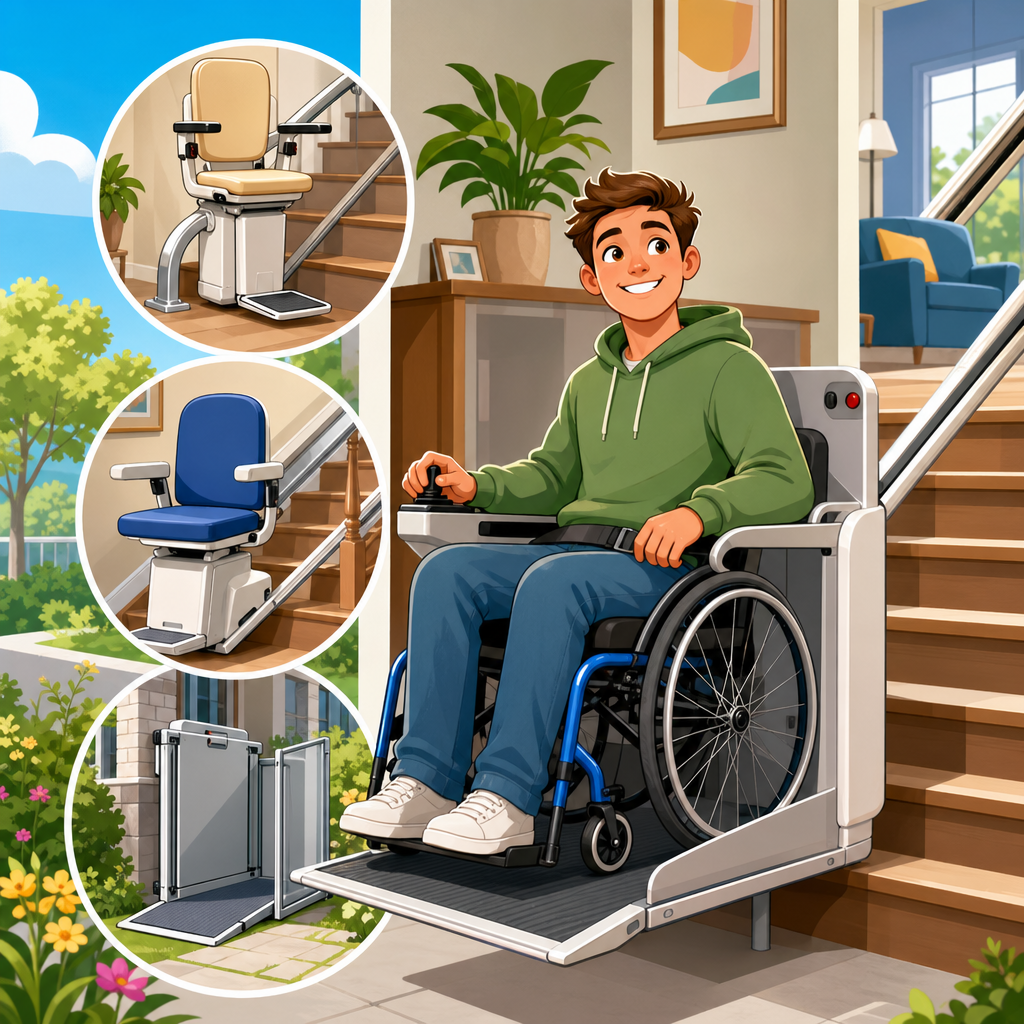
The most dependable low-cost category is the straight indoor stair lift. It is widely available, easier to install, and often offered in new, rental, and certified reconditioned versions. For a shopper who needs immediate access between two floors, this type usually provides the best combination of low price and predictable performance. Outdoor stair lifts can also be good values, but weatherproofing, covers, corrosion-resistant materials, and exposure to temperature swings raise maintenance demands. Curved lifts are rarely “budget” products unless purchased used for a very specific configuration, and even then compatibility is limited.
Rental lifts deserve special attention in any budget chair lift guide. If the need is temporary, such as post-surgery recovery or hospice care, renting a straight stair lift can make financial sense. Dealers may charge an installation fee plus monthly rent, and maintenance is often included. Over a long period, renting usually costs more than buying, but for short timelines it lowers upfront cash requirements. Reconditioned lifts sit between new and rental options. A quality reconditioned unit from a reputable dealer can be an excellent value if the rail fits your staircase and the warranty is clear, but buyers should verify battery age, seat condition, and service history.
| Option | Typical Cost Range | Best For | Main Reliability Consideration |
|---|---|---|---|
| New straight lift | $2,000–$5,000 installed | Long-term home use | Strongest parts availability and warranty support |
| Reconditioned straight lift | $1,500–$3,500 installed | Lower upfront budget | Depends heavily on dealer refurbishment standards |
| Rental straight lift | Setup fee plus monthly charge | Short-term recovery needs | Service terms must be included in writing |
| Curved lift | $10,000+ | Complex staircases | Custom rail increases cost and replacement complexity |
Brands Commonly Considered the Most Reliable Budget Chair Lifts
Several manufacturers consistently stand out when shoppers ask for reliable budget chair lifts. Bruno is often recommended because its straight lifts have a strong reputation for build quality, simple controls, and solid dealer support in the United States. Harmar competes aggressively in the affordable segment and is widely seen in dealer showrooms, making it easier to compare packages locally. Stannah has long-standing name recognition and a reputation for smooth operation, though pricing can vary by market and dealer configuration. Handicare and Access BDD also appear frequently in value-focused comparisons, particularly where dealer coverage is strong.
No brand is automatically the cheapest in every region, and dealer quality can influence your experience as much as the equipment itself. I have seen the same model quoted hundreds or even thousands of dollars apart depending on labor rates, rail length, warranty inclusions, and whether the dealer handles service in-house. That is why the most reliable budget choice is often the best-supported model in your area rather than the nominally lowest sticker price online. A manufacturer can build a durable stair lift, but if local response times are poor or technicians are subcontracted inconsistently, the ownership experience suffers quickly.
When comparing specific models, ask direct questions. What is the weight capacity: 300 pounds, 350 pounds, or higher? Does the standard price include a manual swivel seat, folding arms, seat belt, and remote call/send controls? Are batteries covered under warranty, and for how long? How many service calls does the dealer handle in your county each month? The answers reveal whether a chair lift is truly budget-friendly or just priced low at the start. For shoppers weighing multiple quotes, those details matter more than glossy brochures or broad “premium” language.
Features You Should Not Skip to Save Money
Some cost-cutting decisions are sensible, but certain features should be considered nonnegotiable in a reliable stair lift. Battery backup is essential because it keeps the lift operational during an outage. Obstruction sensors are equally important; they stop the unit if it contacts an object on the stairs. A seat belt, secure swivel mechanism at the top landing, and lockable armrests all contribute directly to user safety. Folding seat, arms, and footrest features are also valuable because they preserve stair access for other household members and reduce tripping hazards when the lift is parked.
Comfort matters too, especially for users with arthritis, reduced trunk stability, or limited hand strength. A chair that is too narrow, too high, or difficult to rotate can turn a low-cost purchase into a daily struggle. Reliable budget models usually offer straightforward rocker-switch or paddle controls that are easier to operate than tiny buttons. If the user has limited mobility, a powered swivel or powered footrest may be worth the extra expense because it reduces bending and twisting at the most dangerous part of the ride: getting on and off near the landing. Budget shopping should never ignore transfer safety.
One feature buyers often underestimate is the hinged rail or folding rail at the bottom of the staircase. If a standard rail would block a doorway, hallway, or walking path, a hinged section may be necessary. It adds cost, but it can be the difference between a useful installation and one that interferes with everyday movement in the home. The right approach is not to chase the bare minimum specification. It is to spend on features that solve real access problems and decline upgrades that mainly change appearance or add convenience without improving safety or fit.
How to Lower Chair Lift Costs Without Sacrificing Dependability
The most effective way to save money is to match the product to the need. If the staircase is straight, choose a straight rail. If the need is temporary, price rentals alongside purchases. If the user’s weight and body size fit a standard seat safely, avoid heavy-duty models that add unnecessary cost. Also ask dealers whether they have certified reconditioned inventory or showroom units available. Some companies receive lightly used straight lifts from prior removals, replace wear components, install new batteries, and resell them with limited warranties. Done properly, that can be one of the best values in the market.
Always request an itemized quote. A proper estimate should separate equipment cost, rail length, installation, electrical needs if any, warranty coverage, and optional accessories. Itemization makes it easier to compare offers across dealers and helps identify hidden costs. Ask whether permit requirements apply in your municipality and whether haul-away of old equipment is included. Funding options may also reduce out-of-pocket expense. Depending on location and circumstances, buyers may explore Medicaid waiver programs, Veterans benefits, state assistive technology programs, nonprofit grants, or tax-related deductions tied to medical necessity. Availability varies widely, so local confirmation is essential.
Do not make the mistake of buying solely from a national lead form or online listing without verifying local support. A low advertised price can collapse once installation, rail customization, travel charges, and future service are added. The dependable budget route is usually to get at least three quotes from established local or regional dealers, ask each one to assess the staircase in person, and compare both the equipment and the service commitments. If you want a deeper breakdown of pricing variables, installation factors, or funding sources, build internal comparisons around those topics within your broader buying guide cluster.
Common Mistakes Buyers Make in the Budget Segment
The biggest mistake is assuming every stair lift performs roughly the same. On paper, most straight lifts share similar basics, but the differences show up in service response, seat ergonomics, ride quality, noise, and how well the dealer handles problems after installation. Another common error is underestimating staircase measurements. Narrow stairs, overrun needs at the top or bottom landing, and door conflicts can change what is feasible. A quick phone quote based on rough dimensions is useful only as a starting point; dependable recommendations require an on-site survey.
Buyers also get caught by short-term pricing that ignores long-term ownership. Replacing batteries every few years is normal, but if parts availability is poor, a simple replacement can become expensive and disruptive. Used lifts purchased privately can seem like bargains, yet I rarely recommend them for most households because the rail may not fit, the installation may not meet manufacturer guidance, and there is often no service support. The result can be a lower initial bill but a much higher real-world risk. In accessibility equipment, unsupported savings are not true savings.
Finally, some families delay too long while searching for the perfect deal. If stair use is already unsafe, waiting months for a small discount may expose the user to falls, emergency medical costs, and loss of independence. A reliable budget chair lift is valuable because it solves an immediate safety issue with predictable operation and manageable maintenance. Start with straight models from established brands, compare dealer support carefully, and ask detailed questions before signing. Then use this budget-friendly options hub to explore deeper reviews, brand comparisons, and installation guides so you can choose with confidence and act quickly.
The most reliable budget chair lifts on the market are usually straightforward products: well-supported straight stair lifts from established manufacturers, sold and installed by dealers who can service them locally. Reliability comes from proven drive systems, battery-backed operation, standard safety sensors, and available parts. Affordability comes from avoiding unnecessary upgrades, considering reconditioned or rental units when appropriate, and insisting on clear, itemized quotes. When those elements line up, a budget chair lift can deliver the same core benefit as a premium model: safe, consistent access to the home’s essential spaces.
For most buyers, the smart path is clear. Start by confirming whether your staircase is straight or curved, identify the user’s mobility needs, and gather at least three in-home estimates from reputable local dealers. Focus on service coverage, warranty terms, essential safety features, and total installed cost rather than headline price alone. If you are building out your research within the broader buying guide category, use this hub as your starting point for deeper comparisons on pricing, rentals, used models, and top brands. The right budget-friendly chair lift is not just cheaper; it is dependable enough to trust every day.
Frequently Asked Questions
What makes a budget chair lift reliable rather than just cheap?
A reliable budget chair lift is one that balances affordability with safe, consistent day-to-day performance. In practical terms, that means the lift should start smoothly, stop accurately at the top and bottom landings, and continue operating dependably over time without frequent service calls. The lowest-priced model is not always the best value if it sacrifices build quality, battery backup, seat stability, or safety features that matter in everyday use. Reliability also includes how well the unit performs during common household conditions, such as minor power interruptions, repeated use throughout the week, and normal wear on the rail, carriage, and charging system.
When comparing models, focus on essentials instead of premium extras. A good budget chair lift should have dependable battery-powered operation, obstruction sensors, a secure seat belt, swivel seat functionality for safer exits, and easy-to-use controls. It should also come from a manufacturer or dealer with a strong service reputation, because long-term reliability depends not only on the product itself but also on installation quality and access to maintenance. In short, a reliable budget chair lift is not the one with the fewest features or the lowest sticker price; it is the one that delivers safe operation, acceptable comfort, and manageable ownership costs for years.
Are budget chair lifts safe for everyday use in a home?
Yes, many budget chair lifts are absolutely safe for everyday residential use, provided they are properly installed and come from a reputable manufacturer. Modern stair lifts, including lower-cost models, are generally designed with core safety systems that are considered standard rather than optional. These often include seat belts, footrest safety sensors, obstruction detection, lockable controls, and battery backup so the lift can still operate during a power outage. For most homeowners, these practical safety features are far more important than luxury upgrades such as powered folding seats or custom upholstery.
That said, safety is about more than the brochure. The safest budget chair lift is one that matches the staircase correctly and is installed by trained professionals. An inexpensive lift installed poorly can create more problems than a mid-range unit installed correctly. Homeowners should also consider user-specific needs such as weight capacity, seat height, ease of transferring on and off the chair, and whether the user has balance limitations that make a swivel seat especially important. Routine inspections, keeping the track clear, and replacing worn batteries when needed also help maintain safe daily performance. Budget models can be very safe, but the real key is choosing a basic model that does the fundamentals well.
How long do reliable budget chair lifts usually last?
A reliable budget chair lift can often last 10 years or more, and in some cases significantly longer, if it is well built, properly installed, and maintained on schedule. The exact lifespan depends on several factors, including frequency of use, staircase type, total travel distance, environmental conditions in the home, and the quality of the drive system and batteries. Straight stair lifts tend to be simpler mechanically than curved models, so reliable budget versions in this category often offer very good longevity for the price. Components such as batteries, seat upholstery, and remote controls may need replacement earlier than the main rail or motor system, but that does not mean the entire lift is nearing the end of its useful life.
For buyers focused on long-term value, it helps to think in terms of total cost of ownership rather than initial price alone. A slightly more expensive budget chair lift with better service support and more durable components may cost less over time than a bargain model that needs frequent repairs. Ask about expected battery life, maintenance intervals, warranty coverage, and the availability of replacement parts. A manufacturer with an established track record is usually a safer bet than an unknown low-cost brand with limited support. In most homes, the combination of regular maintenance, proper charging, and prompt attention to small issues is what allows a budget chair lift to remain reliable for many years.
Do budget chair lifts still work during a power outage?
Most reliable budget chair lifts are designed to operate on rechargeable batteries, which means they typically continue working during a power outage as long as the batteries are in good condition. This is one of the most important features to verify before buying, because a stair lift is often most critical when mobility is limited and stairs cannot be used safely without assistance. In battery-powered systems, the lift charges automatically when parked at designated charging points, and the stored power allows multiple trips even if household electricity is temporarily unavailable.
However, not all battery systems perform equally well. Reliability during a power outage depends on battery age, charging consistency, and the condition of the electrical contacts and charger. A chair lift that technically includes battery backup but has weak or aging batteries may not provide the same level of confidence as a well-maintained unit from a trusted brand. Buyers should ask how many trips the lift can typically make during an outage, how often batteries usually need replacement, and whether the system gives a clear low-battery warning. For most households, dependable battery backup is not a premium luxury feature; it is a core part of what makes a budget chair lift truly reliable.
What should I look for when comparing the most reliable budget chair lifts on the market?
Start with the fundamentals: safety, fit, service support, and ongoing cost. The most reliable budget chair lifts on the market usually come from established brands that offer straightforward designs, consistent parts availability, and solid warranties. Look for standard safety features such as a seat belt, swivel seat, obstruction sensors, battery-powered operation, and simple controls that are easy for the user to understand. Weight capacity should suit the intended user comfortably, not just meet the bare minimum. You should also confirm that the model is appropriate for your staircase, because straight stair lifts are generally more affordable and easier to maintain than custom curved systems.
Beyond the hardware, compare the dealer and installation process just as carefully as the chair lift itself. A good installer will assess the staircase, explain clearances, review transfer safety at the top and bottom landings, and discuss maintenance expectations honestly. Ask whether service calls are handled locally, how quickly repairs are typically scheduled, and what is included in the warranty. It is also wise to request a full breakdown of costs, including installation, battery replacement, service plans, and any optional features. The best budget chair lift is rarely the one with the most aggressive advertised price; it is the one that delivers dependable operation, safe access, and predictable ownership costs over the long run.