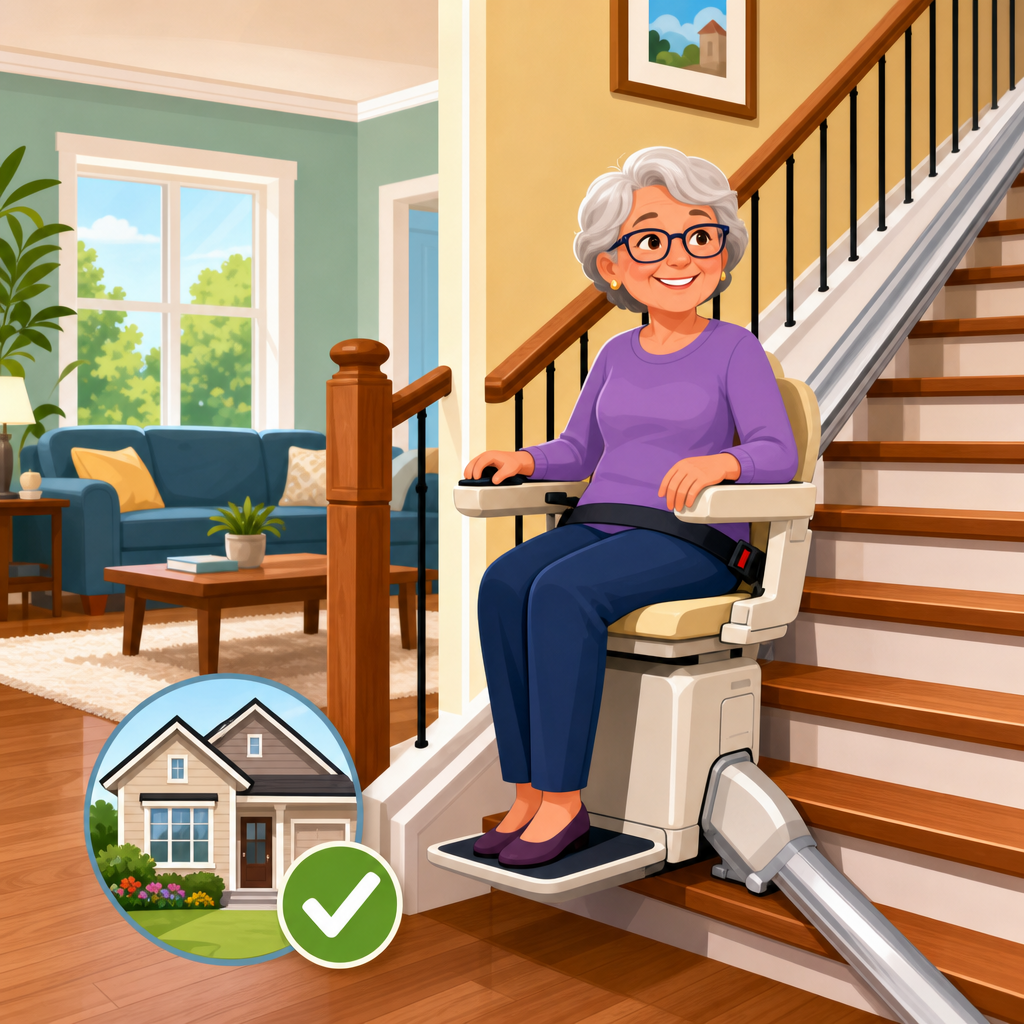
The resale and trade-in value of used chair lifts plays a major role in the true cost of ownership over time, yet many buyers focus only on the purchase price and installation invoice. A chair lift, sometimes called a stair lift, is a powered seat that travels along a rail mounted to a staircase, helping people move safely between levels when stairs become difficult or dangerous. In practice, total ownership cost includes far more than the upfront check: maintenance, battery replacement, removal, warranty coverage, transferability, and the amount an owner can recover through resale or a dealer trade-in all affect the long-term financial picture.
I have worked with families comparing new and used lifts, dealers pricing trade-ins, and contractors removing units from homes after a move or estate transition. The pattern is consistent. Two lifts with the same original selling price can have very different ownership costs after three or five years because one retains value while the other is effectively worth only parts and scrap. Straight lifts from major brands often keep some secondary-market value because rails are standardized and installation is simpler. Curved lifts usually depreciate much faster because the rail was custom built for one staircase and cannot easily be reused elsewhere.
This matters because chair lifts are usually purchased during a stressful life stage. A buyer may be balancing medical bills, caregiving costs, remodeling expenses, and a need for immediate accessibility. Understanding depreciation, secondary-market demand, and trade-in policies helps households choose the option with the lowest net cost rather than the lowest sticker price. It also helps sellers set realistic expectations. Used mobility equipment does not behave like used cars. Safety, code compliance, model support, and local dealer service matter more than age alone.
As the hub for cost of ownership over time, this guide explains how used chair lift value is calculated, which factors raise or reduce that value, what trade-in programs typically look like, and when resale makes financial sense. It also points to the practical questions every owner should ask before buying: Is the rail reusable? Are replacement parts still available? Does the brand have local service support? Can the unit be legally and safely transferred? Those answers determine whether a lift remains an asset, becomes a limited-value used product, or turns into a removal cost when it is no longer needed.
How chair lift depreciation works over time
Chair lift depreciation is the decline in market value from the day a unit is installed to the day it is resold, traded in, or removed. The first and most important rule is that labor and customization rarely hold value. Buyers often remember spending several thousand dollars on consultation, shipping, rail cutting, electrical work, and installation. The secondary market usually does not reimburse those sunk costs. What retains value is the reusable equipment itself: carriage, seat assembly, charging system, remote controls, and, for some straight models, the rail if it fits a new site.
In most markets, a straight stair lift from a recognized manufacturer such as Bruno, Harmar, Stannah, or Access BDD retains modest value for the first several years if it is clean, functioning, and still supported with parts. A common real-world pattern is this: a straight lift purchased new for several thousand dollars may privately resell for a fraction of that amount after three to five years, while dealer trade-in value is usually lower because the dealer must inspect, store, refurbish, warranty, and reinstall it. Curved lifts are different. Because the rail is custom fabricated to one staircase geometry, the carriage may still have value, but the rail often does not.
Battery-powered lifts also depreciate according to service history. Most residential units use sealed batteries that commonly need replacement every few years depending on usage, charging consistency, and power quality. A used lift with fresh batteries, documented service, and smooth operation commands more attention than one sold “as is.” In my experience, buyers immediately discount units with weak batteries, missing remotes, noisy gearboxes, torn upholstery, or intermittent charging because each problem signals hidden refurbishment costs.
What determines the resale value of a used chair lift
Resale value depends on a mix of technical, market, and practical factors. Brand support is at the top of the list. A ten-year-old lift from a manufacturer with active dealer networks and available parts may be easier to sell than a newer unit from a discontinued line. Model type matters almost as much. Straight lifts are easier to relocate because the rail can sometimes be cut to length or replaced at manageable cost. Curved lifts are usually harder to repurpose because a new custom rail can erase the savings of buying used equipment.
Condition is not just cosmetic. Prospective buyers and dealers look for diagnostic fault history, seat swivel function, obstruction sensors, final limit operation, call/send controls, charging contact condition, and rail wear. A lift that has been professionally serviced and removed carefully retains more value than one taken apart by an untrained handyman. Documentation also matters. Original manuals, purchase records, model numbers, serial numbers, and service invoices reduce uncertainty and speed valuation.
Local demand can swing prices more than many owners expect. In regions with older housing stock and many two-story homes, straight used lifts may move quickly. In markets dominated by ranch homes, demand is smaller. Timing also plays a role. Families often need a lift immediately after a fall, surgery, or mobility decline. That urgency favors local dealer inventory over private-party listings, which is one reason dealer trade-in offers are conservative.
| Factor | Effect on Value | Why It Matters |
|---|---|---|
| Straight vs. curved rail | Straight holds value better | Straight rails are easier to reuse or replace |
| Brand and parts support | Supported brands sell faster | Buyers need service access and replacement components |
| Age and service history | Well-maintained older units can outperform neglected newer ones | Maintenance lowers perceived risk |
| Battery and charger condition | Fresh power components improve price | Immediate repair costs reduce buyer willingness |
| Professional removal | Higher retained value | Improper removal can damage rails, wiring, and covers |
| Local market demand | Can raise or depress resale value sharply | Mobility equipment is usually sold within a service area |
Trade-in programs: what dealers actually evaluate
Trade-in value is usually lower than private resale value, but it offers speed, safety, and convenience. When dealers evaluate a used chair lift, they do not start with the original retail invoice. They begin with recoverable components and expected reconditioning cost. The checklist often includes manufacturer, model generation, age, rail type, availability of key parts, signs of water exposure, firmware or control-board compatibility, upholstery condition, and whether the unit has been modified.
Most dealers will only consider trade-ins from brands they already service. That limitation is practical, not arbitrary. A dealer can stand behind a refurbished lift only if technicians know the platform, diagnostic procedures are available, and replacement parts can be sourced reliably. Many dealers will not trade in older curved systems at all, because the custom rail is site-specific and the carriage may not justify storage and refurbishment expense.
In real transactions, trade-in offers are also shaped by inventory needs. If a dealer already has several refurbished straight lifts in stock, the offer may drop. If demand is strong and lead times for new units are long, trade-in values can improve slightly. Some companies apply trade-in value only toward another purchase, such as replacing an aging lift with a newer model or moving from a straight to a curved system after a home change. Others treat the transaction as removal plus salvage, especially if the equipment is beyond its most marketable life.
Owners should also understand the hidden services included in a trade-in. The dealer usually handles safe deinstallation, transport, testing, battery disposal, cosmetic cleanup, and sometimes a short resale warranty to the next customer. Those costs explain why trade-in numbers often feel low compared with online asking prices. Asking prices are not sale prices, and mobility equipment with safety implications typically sells only after inspection and support are factored in.
Straight lifts, curved lifts, and why reuse is so different
The biggest divider in used chair lift value is whether the unit is straight or curved. Straight stair lifts run on a simple incline and are built around more standardized rail sections. That makes them the most practical category for resale, refurbishment, and trade-in. A dealer can often remove a straight lift, test the carriage, replace wear items, fit a suitable rail for another staircase, and reinstall it with predictable labor.
Curved stair lifts, by contrast, are engineered to the exact turns, landings, and overrun requirements of one staircase. The custom rail is the expensive part, and it is usually not transferable to another home. I have seen owners assume a premium curved lift should command strong resale value because the original purchase price was high. In reality, the custom rail often contributes almost no recoverable value outside that specific home. The carriage, seat, and some electronics may be reusable, but a buyer still needs a newly fabricated rail, which can make a used curved package economically unattractive.
There are exceptions. If a dealer can reuse components within the same product family, or if a nearly identical staircase match exists in a rare case, value may improve. But for planning purposes, owners should assume straight lifts have a meaningful secondary market while curved lifts have limited resale prospects. This distinction should influence the original buying decision. If a household expects a short ownership period, renting or buying a straight unit with strong local dealer support may have a lower net cost than purchasing a custom curved system outright.
Private resale versus dealer trade-in
Private resale can produce a higher gross price, but it requires more work and carries more risk. The seller must identify the exact model, verify operational status, photograph the rail and carriage clearly, disclose defects, respond to inquiries, and coordinate removal. Serious buyers typically ask whether the lift is still installed, whether it can be demonstrated under power, when batteries were last changed, and whether local technicians will service a secondhand unit. If the answer to that last question is no, the pool of buyers shrinks quickly.
Dealer trade-in is simpler. The owner receives one number, one schedule, and one party responsible for removal. For families settling an estate or preparing a home for sale, that convenience often outweighs the possibility of a slightly better private sale. I generally advise owners to compare net proceeds, not headline price. A private buyer offering more money may still expect the seller to cover removal, storage, missing parts, or post-sale problems. A dealer offer may look lower but can become the better financial result once logistics are included.
Another factor is liability. While rules vary by state and provider, some companies will not reinstall customer-supplied used lifts, and some manufacturers limit warranty transfer or refuse support on certain older systems. A private seller should disclose this clearly. The strongest listings are factual: manufacturer, model, age, rail length, seat width, fold dimensions, maintenance records, fault-free operation, and whether professional removal is included.
Cost of ownership over time: the hub view buyers need
To understand chair lift cost of ownership over time, subtract recoverable value from total spending, then add ongoing operating and service costs. This is the framework I use when helping clients compare new, used, and rental options. Start with purchase and installation. Add maintenance visits, battery replacements, remote replacements, and any repairs outside warranty. Include removal costs if the lift may not be wanted later. Then estimate realistic resale or trade-in proceeds, not optimistic online prices.
For example, a supported straight lift with routine maintenance may produce a reasonable net ownership cost over four years because part of the equipment value can be recovered. A custom curved lift used for the same period may have a higher net cost even if it performed perfectly, simply because secondary-market recovery is limited. Rentals fit a different pattern: the monthly outlay can be attractive for short-term recovery from surgery, but over long periods rental costs may exceed ownership without leaving any residual value.
This is why the best buying decision is not always the cheapest initial quote. Buyers should ask about transferability, local service coverage, battery life expectations, annual maintenance plans, removal charges, and trade-in policies before signing. A transparent dealer will explain these items clearly. If a seller avoids the question of end-of-life value, assume the answer is unfavorable. Planning for exit value at the beginning is one of the simplest ways to control long-term accessibility costs.
How to protect resale value before you buy and while you own
Owners can improve future resale and trade-in outcomes with a few disciplined steps. Choose a brand with an established dealer network and ongoing parts support. Keep all manuals, invoices, and serial numbers. Schedule preventive service rather than waiting for failure. Replace batteries promptly when performance drops. Avoid unauthorized modifications to seat belts, charging systems, or controls. If a move or removal is coming, hire technicians who know the model and can preserve rails, brackets, and covers without damage.
Cleanliness and storage matter too. A removed lift stored in a dry, climate-controlled space holds value better than one left in a damp garage. Label hardware, remotes, and charging components so the next installer is not guessing. Most important, be realistic. Used chair lifts can return some money, especially straight models from major brands, but they should be viewed as depreciating medical-accessibility equipment, not durable consumer goods with broad resale markets.
The key takeaway is simple: when evaluating the resale and trade-in value of used chair lifts, focus on net ownership cost, not just initial price. Straight lifts generally offer the best chance of recovery. Curved lifts usually deliver the weakest resale performance because customization destroys transferability. Brand support, condition, documentation, and local service access drive real value more than original retail cost. If you are comparing options now, ask every dealer for a clear explanation of maintenance, removal, and trade-in terms before you buy.
Frequently Asked Questions
What factors have the biggest impact on the resale value of a used chair lift?
The resale value of a used chair lift depends on a combination of product condition, brand reputation, age, configuration, and local demand. In most cases, buyers and dealers place the highest value on lifts from well-known manufacturers with a track record for reliability, available replacement parts, and ongoing service support. A chair lift that has been regularly maintained, kept clean, and used in a normal residential setting will usually hold more value than one with visible wear, battery issues, or inconsistent operation.
Staircase type matters as well. Straight stair lifts generally have better resale potential because the rail is easier to remove, transport, and reinstall in another home. Curved chair lifts are far more customized, and the rail is often built specifically for one staircase layout, which sharply limits reuse and resale options. Features such as powered swivel seats, folding rails, upgraded safety sensors, and heavy-duty weight capacity can also influence value, but only if the next buyer actually needs them.
Another major factor is whether the lift can be safely reinstalled under current service standards. If a unit is too old, no longer supported by the manufacturer, or missing key components, its resale value may be modest even if it still runs. Documentation helps too. Original purchase records, service history, user manuals, and proof of professional installation can reassure buyers that the lift has been cared for properly. In short, the strongest resale value usually comes from a newer, straight-rail lift from a recognized brand that has been professionally maintained and remains easy to service.
Do straight and curved stair lifts hold their value differently?
Yes, and the difference is significant. Straight stair lifts typically retain more practical resale value because they are designed for standard staircases and can often be removed and reused in another home with relatively minor adjustments. Since straight rails are not custom-built to the same extent as curved systems, there is a larger pool of potential buyers, refurbishers, and dealers willing to consider them for resale or trade-in. That broader market tends to support stronger secondhand demand.
Curved stair lifts are different because they are highly customized to the exact turns, landings, and dimensions of one specific staircase. While the chair, motor, and some mechanical components may still have reusable value, the rail itself may have little value outside the original installation. In many cases, that means a curved lift’s resale potential is based more on parts recovery or dealer refurbishment programs than on a straightforward person-to-person sale. Buyers should understand this before purchase, because a curved system often has a higher upfront cost and a lower proportion of recoverable value later.
That does not mean curved lifts are a poor investment if they are medically necessary or the only practical mobility solution. It simply means their ownership economics are different. When evaluating total cost, it is smart to compare not just purchase and installation costs, but also likely removal fees, possible trade-in credit, and whether the manufacturer or installer offers any buyback options. For many households, this bigger picture is more useful than looking at sticker price alone.
Can you trade in a used chair lift, and how do trade-in programs usually work?
In some cases, yes, but trade-in availability depends heavily on the dealer, manufacturer, model, age, and condition of the lift. Many people assume chair lifts work like automobiles, where trade-ins are common and values are easy to estimate. In reality, trade-in programs for stair lifts are much more selective. Dealers are usually most interested in newer straight lifts from brands they already sell and service, because those units are easier to inspect, refurbish, and reinstall. Older models, discontinued systems, or highly customized curved lifts may receive little or no trade-in credit.
When a trade-in is offered, the dealer typically evaluates several things: whether the unit is fully operational, whether parts are still available, how much cosmetic wear is present, whether the rail can be reused, and how much labor will be required for removal and refurbishment. The dealer also considers local market demand. In some situations, the quoted trade-in amount may seem low because it reflects not just the equipment’s remaining value, but also the costs of disassembly, transport, cleaning, testing, battery replacement, and warranty risk on resale.
It is also important to ask what the trade-in actually covers. Some companies apply a direct credit toward a replacement lift, while others frame the offer as reduced removal cost or a package discount on a new installation. Always request a written breakdown so you can distinguish between true equipment value and promotional pricing. If maximizing value is a priority, it often makes sense to compare the dealer’s trade-in offer with private resale options, donation benefits, and the cost of keeping the unit in place for future household needs.
How do maintenance, battery condition, and removal costs affect the true cost of ownership?
These factors are central to understanding what a chair lift really costs over time. Many buyers focus on the initial purchase price and installation invoice, but ownership expenses continue long after the lift is installed. Routine maintenance helps preserve safe operation and can protect resale value by demonstrating that the unit has been professionally serviced. A neglected lift may still move up and down the stairs, but issues such as worn seat components, unreliable charging, noisy drive systems, or inconsistent safety sensors can reduce buyer confidence and lower what someone is willing to pay.
Battery condition is especially important because most chair lifts rely on rechargeable batteries even when connected to household power. As batteries age, performance can decline, resulting in shorter run times, slower operation, or failure during power outages. Replacing batteries is a normal ownership cost, but if a lift is being evaluated for resale or trade-in, weak batteries may immediately reduce its value because the next owner or dealer will have to absorb replacement expense. A recently serviced lift with strong batteries and clean charging contacts is usually much more attractive in the secondary market.
Removal costs are another often-overlooked part of the equation. Taking out a chair lift is not always a simple do-it-yourself task, particularly if the owner wants the staircase restored neatly and the system preserved for resale. Professional removal may involve labor, transportation, rail disassembly, and disposal or storage fees. In some situations, those costs can offset a meaningful portion of the resale proceeds. That is why the true cost of ownership should be calculated as purchase price plus maintenance, repairs, battery replacement, and eventual removal, minus whatever resale, trade-in, or donation value can realistically be recovered.
Is it better to resell, trade in, donate, or keep a used chair lift after it is no longer needed?
The best option depends on the type of lift, its condition, and your goals. If the lift is a newer straight model in good working order, private resale or dealer-assisted resale may produce the highest return. This approach usually works best when the brand is recognizable, parts are available, and the unit can be professionally removed and reinstalled. However, private sales can take time and may require coordinating inspection, transport, and installation details with the buyer. For some families, the added effort is worthwhile; for others, convenience matters more than squeezing out every possible dollar.
Trade-in can be a practical choice if you are replacing one lift with another or working with a dealer who offers credit toward a new system. It is usually simpler than a private sale and may reduce administrative hassle, though the value offered may be lower. Donation can also be a strong option, particularly if resale value is limited but the lift still has usable life. Some organizations, refurbishers, or community programs accept mobility equipment, though acceptance varies based on age, safety standards, and serviceability. In those cases, the social benefit or potential tax deduction may outweigh a modest resale price.
Keeping the lift in place can make sense if future mobility needs are uncertain or likely to return. For households planning to age in place, retaining a functioning chair lift may avoid the cost of reinstallation later. The key is to weigh likely future use against ongoing maintenance and the possibility that the lift will depreciate further while sitting unused. In general, the smartest decision comes from comparing convenience, financial return, timing, and future accessibility needs rather than assuming resale is always the best path.