Stair lift cost per foot is a question many homeowners ask when they start comparing mobility solutions, but the answer is more nuanced than a simple linear formula. In my experience helping families evaluate home accessibility upgrades, staircase length absolutely affects price, yet it is only one part of how much chair lifts cost. A stair lift, sometimes called a chair lift for stairs, is a motorized seat that travels along a rail mounted to stair treads, allowing a user to move safely between floors without climbing. Buyers often search for a price by the foot because that feels similar to flooring, fencing, or carpeting, but stair lifts are priced more like custom equipment than raw building materials.
Understanding the real cost matters because a stair lift is usually purchased at a stressful moment: after a fall, after surgery, during a diagnosis of arthritis, Parkinson’s disease, multiple sclerosis, or general age-related mobility decline. In those situations, families need fast, accurate budgeting. A basic straight stair lift in the United States often starts around $2,500 to $5,500 installed, while curved models commonly range from $10,000 to $20,000 or more because the rail is custom fabricated. Outdoor units, standing models, and heavy-duty systems can cost more. Those numbers make it clear that staircase length matters, but rail design, power system, seat configuration, weight capacity, and installation complexity often matter just as much.
This article serves as a complete hub for the question, “How much do chair lifts cost?” with a special focus on stair lift cost per foot and whether a longer staircase automatically means a much higher price. You will learn what is included in a stair lift quote, how straight and curved systems are priced, where per-foot estimates are useful, what hidden costs to watch for, and how financing options can reduce upfront pressure. By the end, you should be able to read a quote, compare brands intelligently, and decide whether a stair lift, rental, or alternative accessibility upgrade makes the most financial sense for your home.
What Determines Stair Lift Cost?
The biggest pricing mistake I see is assuming the chair, motor, and rail are separate retail items with a fixed menu price. In practice, stair lift pricing is a bundled installed cost. A quote usually includes an in-home assessment, rail measurement, the lift unit, mounting hardware, professional installation, testing, and basic user instruction. Some dealers also include a limited labor warranty, a manufacturer parts warranty, and a first service visit if adjustment is needed. That is why two lifts with the same stair length can still differ by several thousand dollars.
There are five core variables. First is rail type: straight rails are standardized and easier to ship, while curved rails are custom engineered to the exact angles, landings, and turns of a staircase. Second is staircase length, which affects material use and sometimes shipping. Third is feature set, including powered swivel seats, folding rails, seat upholstery upgrades, call-send controls, and automatic folding footrests. Fourth is structural and layout complexity, such as narrow stairs, doorways near the bottom landing, or obstructions that require a hinged rail. Fifth is service geography, because labor rates and dealer availability vary by region.
A practical way to think about chair lift pricing is to separate base cost from length-sensitive cost. The base cost covers the drive system, chair assembly, electronics, batteries, charger, standard installation, and dealer overhead. The length-sensitive portion primarily relates to the rail. This distinction explains why adding several feet to a straight staircase may raise the total modestly, while changing from straight to curved can double or triple the project cost. It also explains why per-foot averages can be informative for rough budgeting but misleading for final purchasing decisions.
Does Staircase Length Affect the Price?
Yes, staircase length affects the price, but not in a pure one-foot-equals-one-price way. For straight stair lifts, additional rail length usually increases cost incrementally after the standard rail allowance included by the manufacturer or dealer. Many entry-level straight lifts are priced to cover a typical residential staircase, often around 12 to 16 feet of rail, though this varies by brand. If the staircase is longer, the dealer may add a per-foot or per-section charge. In that narrow sense, length directly affects cost.
However, length is rarely the dominant cost driver unless the staircase is unusually long. A 13-foot straight staircase and a 16-foot straight staircase may have a relatively small price difference compared with the jump caused by adding a powered hinge rail or upgrading to a higher weight capacity model. For curved stair lifts, the rail is manufactured to template, so price is influenced by every bend, intermediate landing, parking angle, and overrun. A shorter but highly complex curved staircase can cost more than a longer but simpler curved staircase.
The bottom line is straightforward: longer stairs generally mean a higher stair lift price, but the relationship is uneven because the rail is only one component of total installed cost. If you are estimating quickly, length is useful. If you are making a purchase decision, layout and configuration matter more.
Average Stair Lift Cost by Type
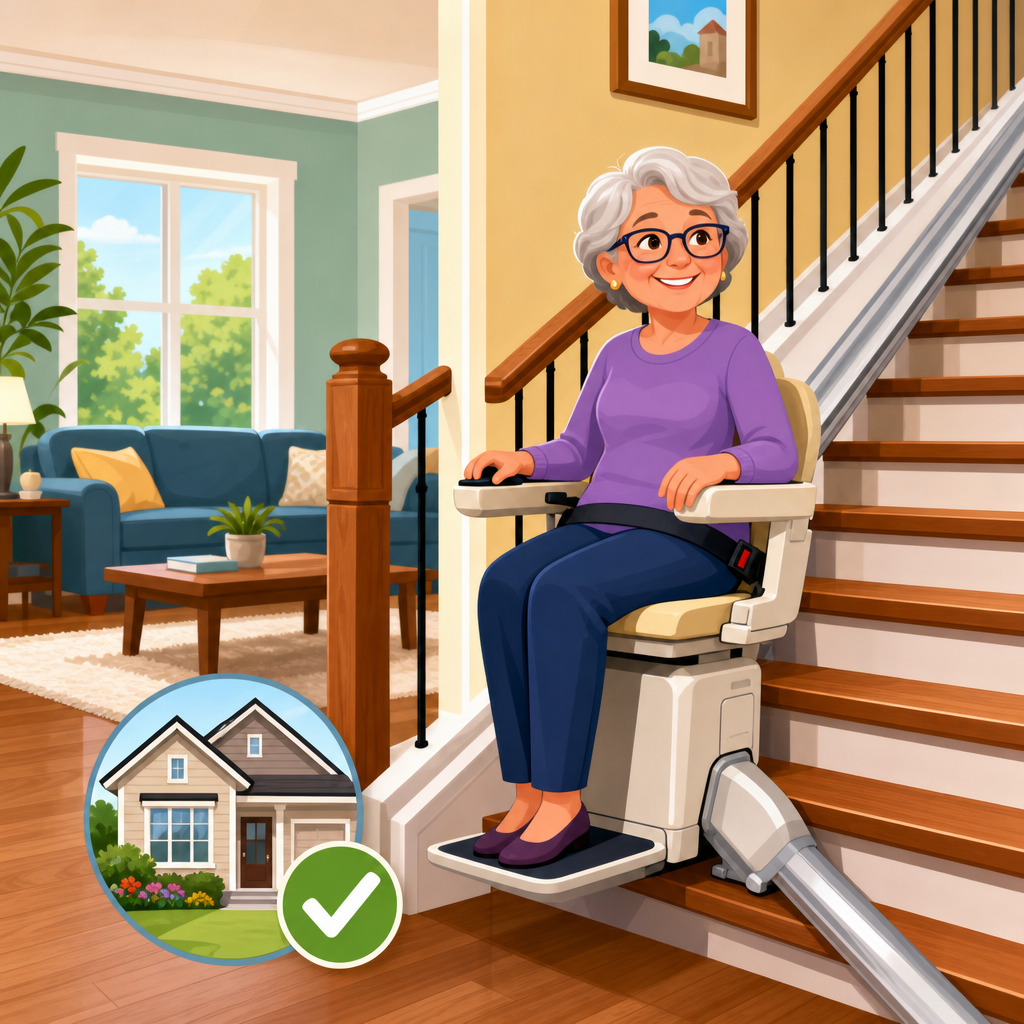
The clearest way to answer “How much do chair lifts cost?” is by lift category. Straight stair lifts are the most affordable because they use modular rails and standardized carriage systems. In most markets, a professionally installed straight lift costs about $2,500 to $5,500. Premium straight models with power options, higher capacities, or premium upholstery may reach $6,000 or slightly more. Refurbished straight lifts can sometimes reduce the price to roughly $2,000 to $3,500 installed, depending on warranty and local inventory.
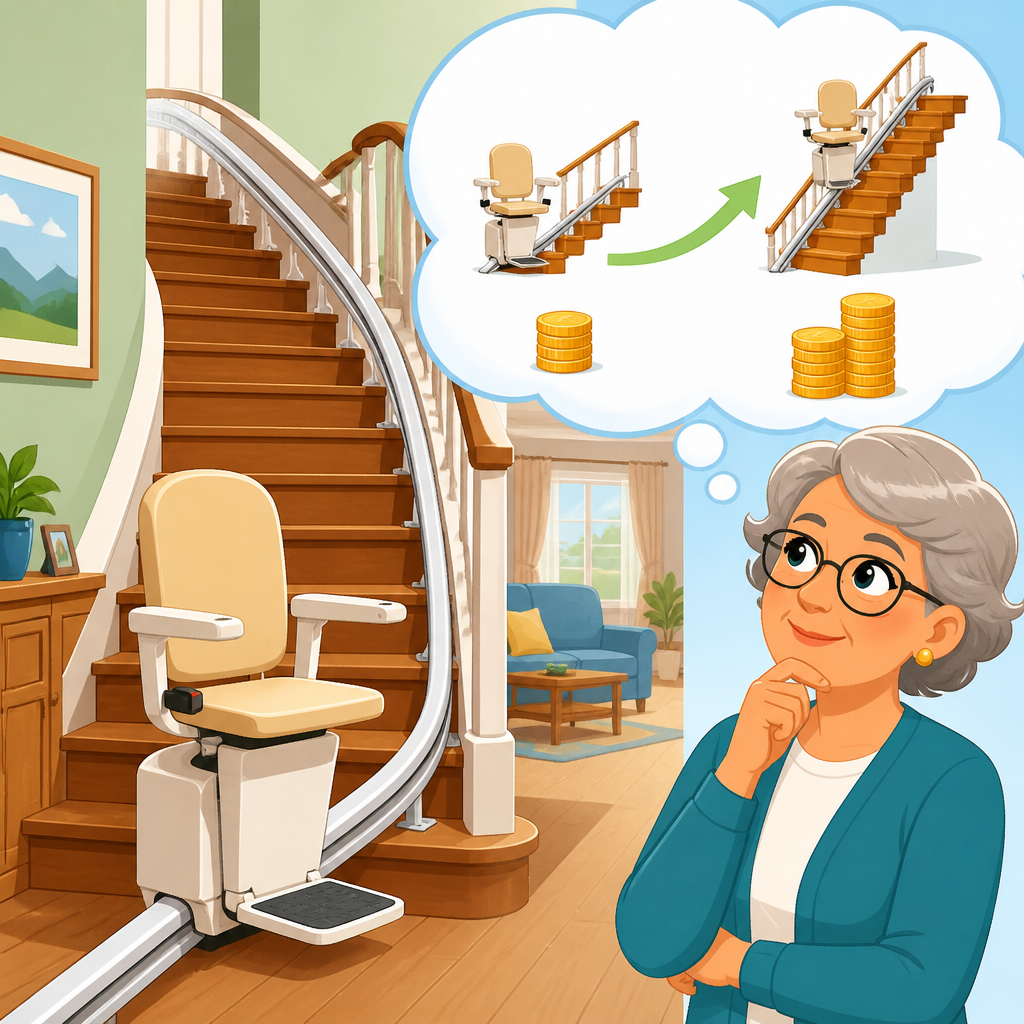
Curved stair lifts almost always cost substantially more. Typical pricing begins around $10,000 and commonly lands between $12,000 and $18,000, with some custom configurations exceeding $20,000. The reason is not just extra rail. Curved systems require detailed measurement, custom fabrication, engineering review, and more complex installation. Each turn in the staircase changes rail geometry, bracket spacing, and carriage travel requirements.
Outdoor stair lifts often start around $4,000 for straight exterior stairs and increase from there based on weatherproofing features, protective covers, and corrosion-resistant materials. Heavy-duty models, built for larger users and wider seats, often begin around $4,500 to $7,000 on straight stairs. Standing or perch lifts for users with limited knee flexion can also command premium pricing because they are more specialized and not every dealer stocks them.
| Lift type | Typical installed cost | How staircase length affects price |
|---|---|---|
| Straight indoor | $2,500–$5,500 | Usually modest increase after standard rail length |
| Curved indoor | $10,000–$20,000+ | Length matters, but turns and landings matter more |
| Outdoor straight | $4,000–$7,000+ | Extra rail adds cost, weatherproof components raise base price |
| Heavy-duty straight | $4,500–$7,000+ | Longer rail adds cost, higher capacity raises base price |
| Refurbished straight | $2,000–$3,500 | Rail length still matters, stock availability limits options |
How Per-Foot Pricing Works in the Real World
Consumers ask for stair lift cost per foot because they want a quick budgeting shortcut, and there is some value in that approach if you understand the limits. On straight lifts, dealers may internally treat rail beyond a standard included length as an add-on measured by the foot or by rail segment. That means a rough per-foot estimate can help compare a short staircase with a much longer one. For example, if a straight lift quote is $3,500 for a standard run and an extra-long staircase requires four additional feet of rail, the total might rise by a few hundred dollars rather than thousands.
What buyers should not do is divide the total price by staircase length and assume every project will scale at that rate. A $4,000 straight stair lift on a 14-foot staircase does not mean the lift costs $285 per foot in a predictable way. Most of that $4,000 is not rail material. It is the chair, drivetrain, controls, battery system, installation labor, travel time, warranty support, and dealer margin. The per-foot method becomes even less reliable for curved lifts because design complexity overwhelms simple length measurement.
When I review quotes with clients, I use per-foot thinking only as a secondary check. If two straight staircases are similar in layout and one is dramatically longer, the quote should be somewhat higher, but not wildly higher. If a dealer claims length alone doubles the cost on a standard straight install, that deserves a closer look. Ask how much rail is included, what the overage rate is, and whether the increase is caused by features rather than length.
Cost Factors Beyond Length That Change the Final Quote
Several common features can add more to the final price than extra staircase length. A powered hinge rail is a classic example. If a rail would block a doorway or walkway at the bottom of the stairs, the lower section can fold up automatically. This is often worth the money for safety and convenience, but it increases both equipment and installation cost. A manual swivel seat may be standard, while a powered swivel seat can add to the quote for users who cannot rotate comfortably. Powered footrests, upgraded upholstery, and automatic folding arms may also increase the price.
Battery operation is standard on most modern lifts, and that is a good thing. Battery-powered lifts continue to work during a household power outage because the charger keeps the batteries topped up while parked. Batteries eventually need replacement, typically every few years depending on usage and maintenance. That is not usually a major upfront cost, but it is part of lifetime ownership cost.
Home layout matters too. Very narrow stairs may require a specific seat size or a rail mounted to preserve walking clearance. Top and bottom overruns, which move the user away from the staircase edge for safer boarding, can change rail length and price. On curved systems, parking locations, intermediate landings, and seat orientation can significantly alter fabrication. Brand selection also matters. Bruno, Harmar, Stannah, Handicare, Acorn, and Savaria all have recognizable product lines, but dealers vary in service quality, installation practices, and warranty execution.
Installation, Maintenance, and Ownership Costs
Installation is usually included in stair lift pricing, but buyers should confirm exactly what that means. A standard straight stair lift can often be installed in a few hours because the rail mounts to stair treads, not typically to the wall. That reduces structural disruption and makes removal easier if the lift is no longer needed. Curved installations take longer and involve more setup precision because the custom rail must match the staircase geometry exactly.
Maintenance costs are generally manageable, especially for indoor straight lifts. Routine owner care includes keeping the rail clean, ensuring the charging points remain unobstructed, and reporting beeps or fault codes promptly. Professional service may be needed for battery replacement, seat switch issues, charger faults, or carriage adjustments. Depending on the brand and dealer, an annual service plan may be optional. Extended warranties can provide peace of mind, but buyers should read the terms carefully to see whether batteries, labor, or service travel are excluded.
Removal and resale are also worth considering. Straight lifts have a healthier used market because rails are modular and easier to repurpose. Curved lifts are harder to resell because the rail is custom built for one staircase. If the need is temporary, such as recovery after joint replacement surgery, a straight stair lift rental may be more economical than purchasing new. Rental programs often include installation, removal, and service, though monthly fees can add up over time.
How to Budget, Compare Quotes, and Explore Financing
The smartest way to budget for a chair lift is to request multiple in-home assessments and compare total installed value, not just sticker price. Ask each dealer whether the quote includes measurement, installation, permit handling if needed, warranty coverage, service response, and any required rail modifications. Have them explain what is standard and what is optional. A low initial number can become expensive if critical features are excluded.
Financing options vary. Some dealers offer promotional financing through third-party lenders. Health savings accounts or flexible spending accounts may help in some cases if documentation supports medical necessity. Veterans may qualify for assistance through certain VA programs depending on eligibility and the nature of the disability. State assistive technology programs, local aging agencies, Medicaid waiver programs, nonprofit grants, and area councils on aging can sometimes help, though availability is highly regional. Medicare generally does not cover stair lifts because they are usually classified as home modifications rather than durable medical equipment for standard coverage purposes.
Before signing, ask one final practical question: is a stair lift the right solution compared with alternatives such as a home elevator, vertical platform lift, first-floor bedroom conversion, or ramp? In many two-story homes, a stair lift is the fastest and most cost-effective accessibility upgrade. The benefit is immediate: safer access to the full home at a price far below an elevator. Measure your staircase, schedule local estimates, and use this cost framework to choose with confidence.
Frequently Asked Questions
Is stair lift cost calculated by the foot like flooring or carpet?
Not usually. While staircase length does affect the price of a stair lift, most companies do not price chair lifts for stairs using a simple cost-per-foot formula. The total cost is typically based on the type of staircase, the rail system needed, the lift model, and any custom features required for the user and the home. In practical terms, a longer staircase generally needs more rail, which increases material and installation costs, but two staircases with the same length can still have very different prices if one is straight and the other has turns, landings, or tight clearances.
That is why homeowners often find online “per foot” estimates helpful only as a rough starting point. A straight staircase with a standard rail is typically much more predictable in pricing than a curved staircase, where the rail must be custom manufactured to match the exact layout. So yes, length matters, but it is best to think of it as one pricing factor within a larger quote rather than the single number that determines the final cost.
How much does staircase length actually affect stair lift pricing?
Staircase length has a direct impact because a longer run requires more rail, and rail length is one of the core physical components of the system. On a straight stair lift, the effect of added length is usually more straightforward. A short, standard staircase may fall near the lower end of the price range, while a longer staircase can increase the quote due to additional track, labor, and sometimes a higher-capacity motor setup depending on the incline and usage needs.
However, length alone does not tell the whole story. Installers also evaluate the number of steps, the angle of the staircase, the available space at the top and bottom, and whether a rail overrun is needed to improve safety when getting on and off the seat. Even a moderately long staircase may remain fairly affordable if it is straight and uncomplicated, while a shorter staircase with unusual dimensions or a difficult installation area may cost more. In other words, length influences price meaningfully, but it works together with design and installation complexity.
Why do curved stair lifts cost so much more than straight stair lifts, even on shorter staircases?
Curved stair lifts are more expensive because they require a custom-built rail designed specifically for the exact shape of the staircase. If the stairs include turns, intermediate landings, spiral sections, or any non-linear path, the rail cannot simply be cut from a standard stock piece. It must be measured precisely, engineered for the layout, and manufactured to fit the home. That custom fabrication is one of the biggest reasons curved models cost significantly more than straight lifts, even when the staircase itself is not especially long.
There is also more planning involved in the installation. The lift must travel smoothly through bends and transitions while maintaining safe seat positioning and proper clearance from walls, handrails, and obstructions. As a result, the price reflects not just the amount of rail but the complexity of design, production, and setup. This is why homeowners comparing “stair lift cost per foot” often discover that a short curved staircase can cost far more than a long straight one. The shape of the stairs often matters just as much as, or more than, the total length.
What other factors besides staircase length affect how much a stair lift costs?
Several important factors influence total stair lift cost. First is the type of lift itself: straight stair lifts are typically the most affordable, while curved models, outdoor units, and heavy-duty lifts cost more. Weight capacity also matters, since higher-capacity systems may require different seat designs, reinforced components, or upgraded drive systems. Features such as powered swivel seats, folding footrests, call/send controls, safety sensors, and upgraded upholstery can also raise the price.
Installation conditions inside the home are another major factor. Narrow staircases, unusual tread shapes, limited landing space, or the need for electrical adjustments can affect labor and setup time. Brand reputation, warranty coverage, dealer support, and whether the unit is new, refurbished, or rented may also change the overall cost. In many cases, homeowners are not just paying for a piece of equipment but for customization, professional installation, long-term service, and peace of mind. That is why comparing quotes carefully is often more useful than focusing only on a per-foot estimate.
How can homeowners get the most accurate estimate for a stair lift?
The best way to get an accurate estimate is to schedule an in-home assessment with a qualified stair lift provider. During that visit, the company can measure the staircase precisely, evaluate whether the stairs are straight or curved, check for obstacles and clearance issues, and discuss the user’s mobility needs. This allows the provider to recommend the right chair lift for stairs and prepare a quote based on the actual home layout rather than a generic average.
It is also smart to ask what is included in the quoted price. Homeowners should confirm whether the estimate covers the rail, seat, installation, warranty, service support, and any optional features such as powered folding components or track overruns. If budget is a concern, ask about refurbished models, financing, or short-term rental options when appropriate. A careful quote review helps avoid surprises and gives a much clearer picture than relying on a broad “stair lift cost per foot” number found online. In most cases, the most accurate price comes from matching the equipment to the staircase and the person who will use it every day.