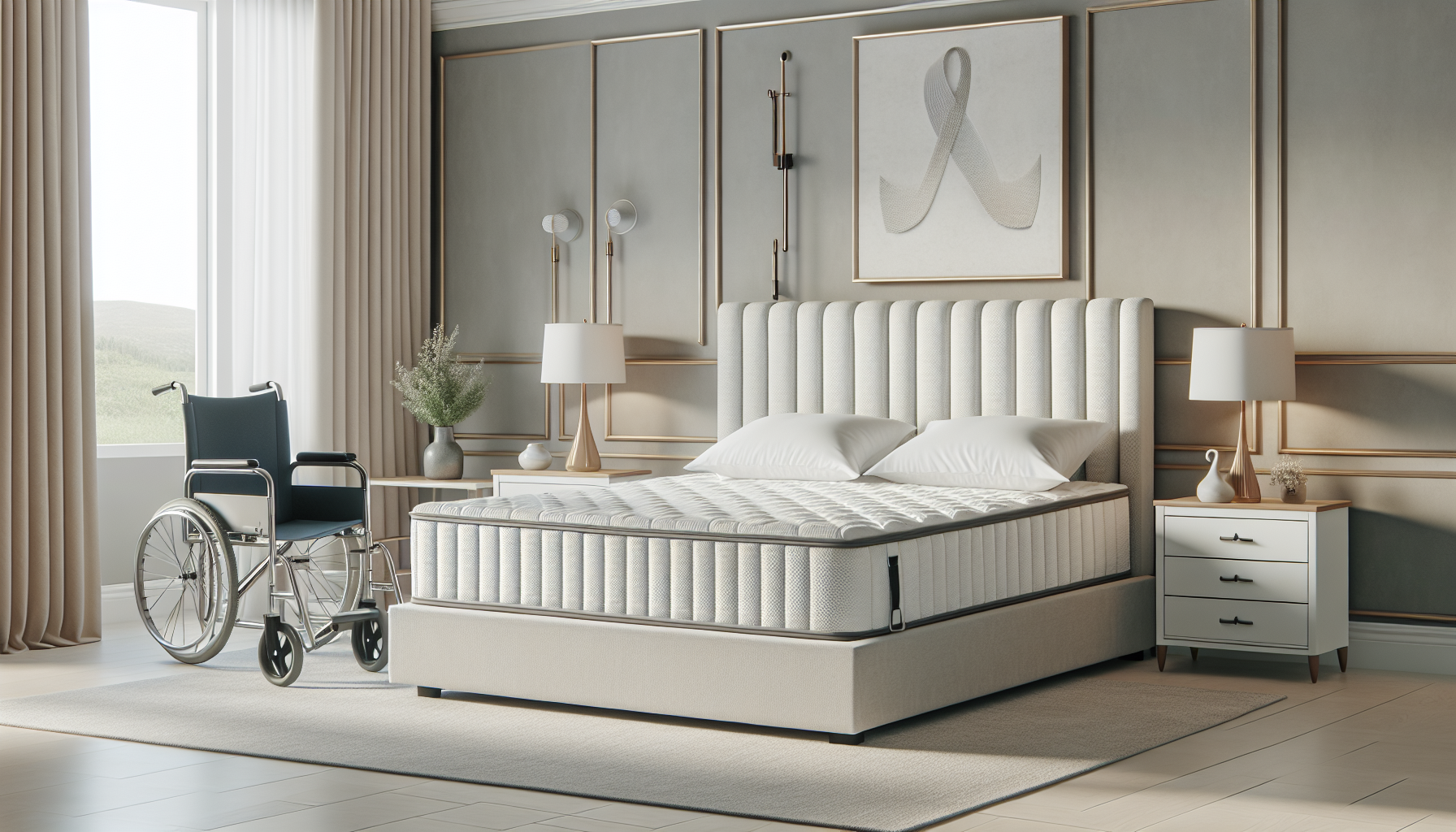
Choosing the best mattresses for people with mobility issues is not just about softness or support; it is about making every transfer, turn, and night’s sleep safer, easier, and less exhausting. In accessibility planning, a mattress sits at the center of bedroom function because it affects how someone gets into bed, repositions during the night, relieves pressure, and exits in the morning. When I evaluate bedroom accessibility setups, I look at the whole transfer system: mattress height, edge support, firmness, base compatibility, sheet friction, nearby grab points, flooring, and the path to an accessible bathroom. A mattress that feels luxurious in a showroom can become a daily obstacle if it collapses at the edge, traps the sleeper in deep foam, or sits too high for a wheelchair transfer. For people living with arthritis, Parkinson’s disease, multiple sclerosis, stroke recovery, chronic pain, balance problems, obesity, or age-related weakness, the wrong mattress can increase fall risk and caregiver strain.
Mobility issues vary widely, so the right mattress depends on specific functional limitations. Someone with hip arthritis may need a surface that cushions joints yet still allows easy turning. A person using a walker may need firmer edge support and a predictable bed height. A wheelchair user often needs a stable transfer surface with minimal sink and an adjustable base that changes upper-body and knee position. People managing incontinence, nighttime toileting, or frequent bathroom trips need surfaces and bed setups that reduce effort and speed transfers. Because this article serves as a hub for bathroom and bedroom accessibility, it connects mattress selection to related decisions such as bed rails, adjustable bases, transfer aids, commodes, raised toilet seats, grab bars, shower access, and nighttime lighting. When these elements work together, independence improves. When they do not, even a high-end mattress can undermine a carefully designed accessible home.
The best approach is practical rather than trend-driven. Mattress marketing often focuses on cooling gels, luxury finishes, and vague promises of pressure relief, but people with mobility concerns need measurable performance characteristics. Those include medium-firm to firm support, reinforced perimeter construction, responsive materials such as latex or zoned hybrid coils, low motion drag during repositioning, and compatibility with adjustable bases if prescribed or helpful. In many real homes, the ideal solution is not the plushest model; it is the one that supports safe movement while still protecting skin integrity and reducing pain. Understanding those priorities helps buyers avoid costly mistakes and build a bedroom that supports safer bathing, dressing, toileting, and sleep routines every day.
What mattress features matter most for mobility and transfer safety
The most important mattress feature for mobility is surface response. A mattress that allows the body to sink too deeply creates what therapists often call an entrapment or “stuck” feeling, making bed mobility harder. I have seen this repeatedly with thick memory foam models marketed as pressure-relieving. They may feel comfortable at first, but for someone with weak core strength or limited arm use, deep contouring can make rolling and sit-to-stand transfers noticeably harder. A responsive mattress pushes back quickly when weight shifts. Natural latex, latex hybrids, and supportive innerspring hybrids generally perform better here than slow-response foam.
Firmness is the second major factor. For most people with mobility limitations, medium-firm is the safest starting point because it balances pressure distribution with ease of movement. Very firm mattresses can aggravate shoulder and hip pressure, especially in side sleepers, but very soft beds increase effort during turns and standing. The right firmness also depends on body weight. Heavier individuals typically need firmer support and stronger coils to prevent sagging, while lighter individuals may need a slightly softer top layer to avoid pressure buildup. Edge support is equally critical. During transfers, many users sit at the mattress perimeter before standing or pivoting to a wheelchair. If the edge collapses significantly, stability is reduced and the transfer becomes less predictable.
Height matters more than many shoppers realize. Safe transfer height is usually determined by the user’s lower leg length, wheelchair seat height, and whether they transfer independently or with assistance. As a rule, when seated on the bed edge, feet should rest flat on the floor with knees around 90 degrees. Beds that are too high can force sliding down; beds that are too low can demand excessive leg and arm strength. Mattress thickness, bed frame height, and base style all contribute. I often recommend measuring from floor to top of mattress before purchase and comparing it to the user’s seated transfer mechanics rather than buying a mattress in isolation.
Best mattress types for common mobility-related needs
Latex mattresses are often the best all-around choice for people with mild to moderate mobility limitations because they are responsive, durable, and easier to move on than memory foam. Latex compresses under pressure but rebounds immediately, which supports turning and repositioning. It also tends to sleep cooler than dense foam. Hybrid mattresses are another strong option, especially models with zoned coils and reinforced edges. The coil unit gives structure and transfer stability, while the comfort layer can be selected for pressure relief. In my experience, a medium-firm hybrid with strong perimeter reinforcement works well for many older adults, walker users, and people who need balance between comfort and movement.
Traditional memory foam can be useful for people at elevated risk of pressure injury, but it must be chosen carefully. Slow-response foam reduces peak pressure, yet thick plush layers often hinder movement. If pressure management is the top priority, a firmer memory foam hybrid is usually more practical than an all-foam bed. Adjustable air mattresses have a role in specialized situations, particularly when one partner needs a firmer side and the other needs softer pressure relief. However, they are not automatically the best accessibility choice. Some air systems have unstable edges or variable surface feel that complicates transfers. Bariatric users generally need high-weight-capacity hybrids or medical-grade support surfaces with reinforced structures rather than consumer mattresses that quickly develop impressions.
For people using hospital-style adjustable beds at home, compatibility becomes essential. Not every mattress bends safely with an articulating base. Latex, segmented foam, and flexible hybrids typically perform well, while very rigid innerspring units may not. If the user has advanced mobility loss, pressure injury risk, or needs frequent position changes, a clinical support surface may be more appropriate than a standard retail mattress. In those cases, advice from an occupational therapist, physical therapist, ATP, or wound care clinician can prevent expensive mismatches and improve both comfort and care safety.
How to match mattress design to specific conditions and symptoms
Different diagnoses create different mattress needs. People with arthritis often benefit from medium-firm support with a pressure-relieving top layer that cushions hips, knees, and shoulders without deep sink. Responsive latex and hybrid designs usually work well because they reduce the effort required to turn. People with Parkinson’s disease may need a stable edge and a surface that does not trap movement, especially if rigidity or freezing affects bed mobility. Stroke survivors often need transfer consistency, especially when one side is weaker. In those cases, I prioritize edge stability, moderate firmness, and enough surface traction to feel secure without making pivoting difficult.
For multiple sclerosis, fatigue and temperature sensitivity matter alongside mobility. A mattress that sleeps cooler and supports easier repositioning can reduce nighttime discomfort. People with chronic low back pain usually need spinal alignment more than extra softness; a supportive hybrid with zoning under the lumbar area often performs better than a plush foam bed. Users with obesity need durable coil systems, dense foams, and verified weight capacity. Without those features, the surface softens prematurely, increasing transfer difficulty and pain. Individuals at risk for pressure ulcers need careful assessment of shear, microclimate, nutrition, continence, and turning ability; no consumer mattress alone solves pressure management if those factors are ignored.
| Need or condition | Best mattress traits | Watch-outs |
|---|---|---|
| Arthritis | Medium-firm, responsive comfort layer, pressure relief at joints | Overly firm surfaces can worsen hip and shoulder pain |
| Wheelchair transfers | Strong edge support, stable height, low sink | Soft edges increase sliding and transfer risk |
| Pressure injury risk | Pressure redistribution, adjustable base compatibility, moisture protection | Deep contouring can make movement harder |
| Obesity | Reinforced hybrid, high weight capacity, dense foams | Consumer foam beds may sag quickly |
| Frequent nighttime toileting | Predictable edge, easy sit-up support, correct bed height | High pillow-tops can slow exits |
Sleep position still matters, but function comes first. A side sleeper with severe transfer difficulty may still need a firmer mattress than they would choose based on comfort alone. The goal is not perfection in one category; it is the best compromise between pain relief, skin protection, and safe movement. That is why trial periods, in-home setup testing, and measurements are so important.
Bedroom accessibility beyond the mattress
A mattress works only as well as the bedroom around it. Accessible bedroom design starts with clearance. Wheelchair users generally need enough space beside the bed for parallel or angled transfers, and walker users need an uncluttered approach path with non-slip flooring. Bed frames should be stable, with no sharp corners in transfer zones. If underbed clearance is needed for a lift, that requirement should be checked before buying the frame. Adjustable bases can be transformative for some users because elevating the head of bed can reduce the effort of moving to sitting, while knee elevation can improve comfort for edema or back pain. But they also raise overall bed height, so the combined system has to be measured carefully.
Bed rails, transfer poles, and bedside handles require caution. These products can improve leverage, but poorly fitted rails can create entrapment hazards, especially for people with cognitive impairment, involuntary movement, or nighttime confusion. The U.S. Food and Drug Administration has published repeated warnings about adult portable bed rails, and many clinicians recommend selecting products that meet ASTM F3186 when applicable and that are installed exactly as directed. In practice, a floor-to-ceiling transfer pole or a securely mounted assist handle is often safer than an improvised rail. Lighting is another major accessibility tool. Motion-activated night lights, illuminated switch controls, and clear contrast between flooring and furniture reduce fall risk during nighttime bathroom trips.
Small details matter. Satin sheets may help some users turn more easily, but they can also increase sliding risk during transfers. Waterproof protectors are helpful for continence management, though some trap heat. Bedside organizers, reachable call devices, medication storage, and stable surfaces for glasses or a phone improve independence. If a person uses CPAP, oxygen, or charging medical equipment, cable management should be part of the room plan to prevent tangles and trips.
Connecting mattress choices to bathroom accessibility
Bedroom accessibility cannot be separated from bathroom accessibility because many mobility-related sleep disruptions involve toileting, bathing preparation, and overnight transfers. A mattress that is easy to exit loses value if the route to the bathroom is dark, narrow, or obstructed. In home assessments, I treat the bed-to-bathroom path as one continuous task. That means checking doorway widths, threshold height, floor traction, walker turning space, and the location of grab bars at the toilet and shower. If the bathroom is far away or difficult to access, a bedside commode may be safer than repeated long walks at night.
Toilet height and bed height should work together. If the bed is significantly lower than the toilet, repeated transitions can become tiring and awkward. Raised toilet seats, comfort-height toilets, and securely installed grab bars help create similar transfer mechanics in both spaces. Shower access matters too. Many people with mobility limitations bathe less often than they want because fatigue and pain accumulate overnight, starting with a poor mattress and difficult morning rise. A supportive mattress combined with an adjustable bed, shower chair, handheld shower, zero-threshold entry, and well-placed grab bars can meaningfully reduce morning effort.
This hub topic naturally leads to deeper bedroom and bathroom accessibility articles. Related subjects include the best adjustable beds for seniors, how to measure bed height for wheelchair transfers, safe alternatives to bed rails, pressure-relieving cushions and overlays, accessible nightstand setup, bathroom grab bar placement, shower seating options, walk-in tub versus roll-in shower decisions, and fall prevention lighting. Thinking in systems instead of products produces the best outcomes. The mattress is foundational, but it should never be selected without considering bathing, dressing, and toileting routines.
How to shop, test, and compare mattresses effectively
The best mattress buying process starts with a needs assessment, not a brand list. Measure current bed height, note transfer method, record pain points during turning and rising, and list any medical equipment or caregiver needs. If possible, involve an occupational therapist or physical therapist, especially after surgery, stroke, or major functional decline. When shopping in store, do not only lie down. Sit on the edge, move from lying to sitting, and simulate the way the person actually transfers. Test with shoes off if that matches home use. If an adjustable base is part of the plan, test the mattress on that base rather than on a flat platform.
Look beyond marketing labels like “orthopedic” or “luxury firm,” which are not standardized. Ask for coil count only in context of coil gauge, zoning, and overall construction; coil count alone tells very little. Check foam density where disclosed, especially in support layers, because low-density foams tend to soften faster. Review warranty language, but understand that body impressions often must reach a specific depth before they qualify, and functional decline can occur before that threshold. Delivery setup and old mattress removal are important accessibility services. A mattress that arrives compressed in a box may still be heavy and difficult to position safely without help.
Trial periods are valuable, but they are not all equal. Confirm return fees, minimum trial days, and whether the company arranges pickup. For people with mobility issues, in-home testing over several nights is more meaningful than a ten-minute showroom test. The best outcome usually comes from choosing a mattress with stable support, then fine-tuning comfort using a thin topper if necessary, rather than buying an overly soft bed and hoping support improves later.
The best mattresses for people with mobility issues support two goals at once: healthy sleep and safer movement. The ideal model is usually responsive, medium-firm, stable at the edges, correctly sized for transfer height, and compatible with the rest of the bedroom setup. Latex and supportive hybrids are often the strongest starting points, while deep, slow-sinking foam is frequently harder to live with for users who need leverage and predictable movement. The right choice also depends on diagnosis, body weight, pressure risk, and whether the person transfers independently or with assistance.
Just as important, mattress selection should be integrated with the broader bathroom and bedroom accessibility plan. Bed frames, lighting, transfer aids, flooring, toilet height, grab bars, shower seating, and the path between rooms all affect whether the mattress truly improves daily life. When these pieces are aligned, people conserve energy, reduce fall risk, and maintain independence longer. Start by measuring transfer height, identifying the biggest movement barrier, and comparing mattress designs based on function instead of showroom feel. Then build outward from the bed to the bathroom so every part of the routine works together.
Frequently Asked Questions
What mattress features matter most for people with mobility issues?
The most important mattress features are usually support, height, edge stability, pressure relief, and ease of movement. For someone with mobility limitations, a mattress is not only a sleep surface; it is part of the transfer process. A bed that is too soft can make it difficult to roll, reposition, or push up to a seated position, while a mattress that is too firm can increase pressure on the hips, shoulders, and lower back. In most cases, a medium-firm to firm feel offers the best balance because it keeps the body supported without allowing excessive sink.
Mattress height also plays a major role in safety and independence. The right height allows a person to sit on the edge of the bed with feet flat on the floor and knees at a comfortable angle, which can make standing up or transferring from a wheelchair much easier. Edge support is equally important because weak edges can collapse under body weight during sitting or transfers. Many people also benefit from materials that reduce friction and make changing positions less tiring, such as responsive latex or supportive hybrid constructions rather than very slow-moving memory foam. When evaluating options, it is best to think beyond comfort alone and focus on how the mattress performs during sitting, turning, getting in, and getting out.
Is a firmer mattress better for transfers and getting out of bed?
In many cases, yes, but the answer depends on the person’s needs, body type, and medical conditions. A firmer mattress generally makes transfers easier because it provides a more stable surface for sitting, shifting weight, and pushing up to stand. If the mattress is too plush, the body sinks deeply into the bed, which can create extra effort during repositioning and make it harder to maintain balance at the edge. This can be especially frustrating for people with reduced leg strength, joint pain, neurological conditions, or anyone who relies on assistive devices.
That said, firmer is not always automatically better. A mattress that is too hard may increase pressure points and discomfort, especially for side sleepers or people at risk of pressure injuries. The goal is not maximum firmness; it is functional support. Many people with mobility issues do best on a mattress that feels medium-firm or firm on top but still offers enough cushioning to protect sensitive areas. Hybrid and latex mattresses often work well because they combine stability with some pressure relief and a more responsive surface. The best choice is one that makes transfers easier without sacrificing overnight comfort or skin protection.
How important is mattress height for wheelchair transfers and safer bed access?
Mattress height is one of the most overlooked but most important parts of an accessible sleep setup. Even an excellent mattress can become difficult to use if the final bed height is wrong. For wheelchair transfers, many people need the top of the mattress to be close to wheelchair seat height, although the ideal position varies depending on transfer technique, strength, and whether a caregiver assists. If the bed is too high, getting onto it may feel unstable or require more lifting effort. If it is too low, standing up, pivoting, or lateral transfers can become more demanding and less safe.
It is also important to remember that mattress thickness is only one part of the equation. Bed frame height, foundation height, and whether an adjustable base is used all affect the final transfer height. A practical approach is to measure the total height from the floor to the top of the mattress and compare it to the user’s seated height and transfer needs. Ideally, a person should be able to sit with good posture and stable foot placement before standing or repositioning. For households planning around long-term accessibility, height should be treated as a key design feature, not an afterthought. Small changes in bed height can make a significant difference in comfort, safety, and independence.
Are memory foam mattresses a good choice for people with mobility challenges?
Memory foam can be helpful in some situations, but it is not always the easiest option for people with mobility issues. Its biggest advantage is pressure relief. Memory foam contours closely to the body, which can reduce stress on joints and bony areas and may improve comfort for people with chronic pain. However, traditional memory foam can also create a “stuck” feeling because it responds slowly and allows deeper sink. That can make rolling over, adjusting position, or moving toward the edge of the bed more difficult, especially for someone with limited strength or coordination.
For that reason, many people with mobility concerns do better with a mattress that has a more responsive feel. Latex, responsive foams, and many hybrid models tend to be easier to move on because they provide support without the same degree of body-hugging resistance. If someone prefers foam, it is usually better to look for a design with moderate contouring rather than a very plush, slow-recovery surface. Edge support also matters here, since all-foam models vary widely in how stable they feel when sitting on the side. Memory foam is not off the table, but it should be chosen carefully with movement, transfers, and daily function in mind, not just softness.
Should people with mobility issues consider an adjustable bed with their mattress?
Yes, in many cases an adjustable bed base can significantly improve comfort, accessibility, and daily ease of use. Being able to raise the head of the bed can help someone move from lying down to a seated position with less strain, which is especially useful for people with reduced core strength, arthritis, post-surgical limitations, or chronic pain. Elevating the legs may also improve comfort, circulation, and swelling for some users. From a practical standpoint, adjustable positioning can reduce the effort needed to change posture and may support safer, more controlled bed exits.
However, mattress compatibility is essential. Not every mattress works well on an adjustable base. The mattress must be flexible enough to bend properly without losing support or becoming damaged. Latex, foam, and many hybrid mattresses are often compatible, while some innerspring designs are less suitable. It is also worth looking at overall setup details such as final bed height, side rail compatibility if needed, and whether the user can operate the remote or controls independently. An adjustable base does not replace the need for proper mattress support, but when paired with the right mattress, it can make the bedroom much more functional for someone with mobility limitations.