Top home layout mistakes that affect accessibility often hide in plain sight, shaping whether a house feels safe, usable, and dignified for the people who live there. In home accessibility modifications, layout refers to how rooms connect, how people move through them, and whether everyday tasks can be completed without unnecessary strain or risk. Accessibility means more than wheelchair clearance. It includes reach ranges, turning space, lighting, floor traction, bathroom transfer support, stair safety, and the ability to navigate a home with a walker, cane, scooter, limited vision, arthritis, or reduced balance. After walking dozens of homeowners through accessibility reviews, I have seen the same problem repeatedly: families focus on a single product, such as a grab bar or stair lift, while the underlying layout still forces awkward turns, narrow passes, and dangerous transitions.
This matters because the built environment directly affects independence, injury risk, caregiver effort, and long-term housing costs. The Centers for Disease Control and Prevention consistently identifies falls as a leading cause of injury among older adults, and the home is where many of those incidents occur. Good home accessibility modifications reduce hazards before a crisis forces rushed remodeling. They also support aging in place, post-surgery recovery, multigenerational living, and temporary mobility limitations. A well-planned accessible home layout does not need to look institutional. The best designs quietly remove friction from daily routines. This hub explains the most common layout errors, why they create barriers, and which modifications usually solve them, so readers can prioritize upgrades and explore each room in greater depth through related accessibility and mobility solutions content.
Ignoring circulation width and turning space
The most common home layout mistake is underestimating how much clear floor area people need to move safely. Hallways, door approaches, kitchen aisles, and bedroom paths often work for an able-bodied adult but fail as soon as someone uses a walker or wheelchair. In practice, I look for whether a person can move forward naturally, pivot without backing into furniture, and approach doors, cabinets, and fixtures head-on. The Americans with Disabilities Act is not a residential code for private homes, but its dimensions remain useful benchmarks: about 36 inches for accessible routes and roughly 60 inches for a wheelchair turning circle. Existing homes may not meet those exact numbers, yet they still need workable clearance.
Typical problems include oversized sectionals narrowing a living room route, islands that leave less than 40 inches of kitchen aisle width, and bedroom furniture placed so tightly that transfers from wheelchair to bed happen at awkward angles. Even small bottlenecks matter. A narrow turn entering a bathroom can make an otherwise accessible shower unusable. The fix may involve more than widening a doorway. It can mean rethinking furniture scale, removing decorative consoles, reversing a door swing, or borrowing inches from an adjacent closet. Accessibility starts with circulation, because every later modification depends on a person being able to reach and use the space without complex maneuvering.
Creating level changes and unstable flooring
Another major mistake is allowing flooring transitions, thresholds, and surface choices to interrupt safe movement. Many homes accumulate small height differences over time: a raised threshold at an exterior door, a step down into a sunken living room, a tile lip between bathroom and hall, or a rug pad that creates a soft edge. These details seem minor until someone shuffles, uses a cane, or has limited toe clearance. In fall-risk assessments, I regularly find that a half-inch change in level causes more daily anxiety than a dramatic staircase, because it appears in the path to the bathroom, kitchen, or front door.
Flooring material also affects accessibility. High-pile carpet can drag against walkers and wheelchairs. Highly polished stone becomes slippery when wet. Uneven hardwood planks can catch mobility device wheels. The safer approach is a firm, stable, slip-resistant surface with minimal glare and consistent traction throughout the main living areas. Luxury vinyl plank, low-pile carpet tile, cork in selected spaces, and textured porcelain with appropriate coefficient of friction ratings are common choices. Exterior entries deserve equal attention: if drainage sends water across a ramp or porch, even good traction fails. Effective home accessibility modifications aim for flush transitions, beveled thresholds, and flooring continuity so movement feels predictable from room to room.
Designing bathrooms around fixtures instead of transfers
Bathrooms cause some of the most serious accessibility problems because they combine tight layouts, water, and frequent transfers. A common mistake is treating accessibility as a checklist item, such as adding a grab bar beside a tub, without studying how a person actually enters, turns, reaches, and transfers. Standard residential bathrooms often leave too little room beside the toilet, place vanities where knees need clearance, and rely on tubs with high aprons that become impractical after surgery or with age-related mobility loss. If a person cannot approach the toilet or shower in a straight, stable position, every other feature becomes secondary.
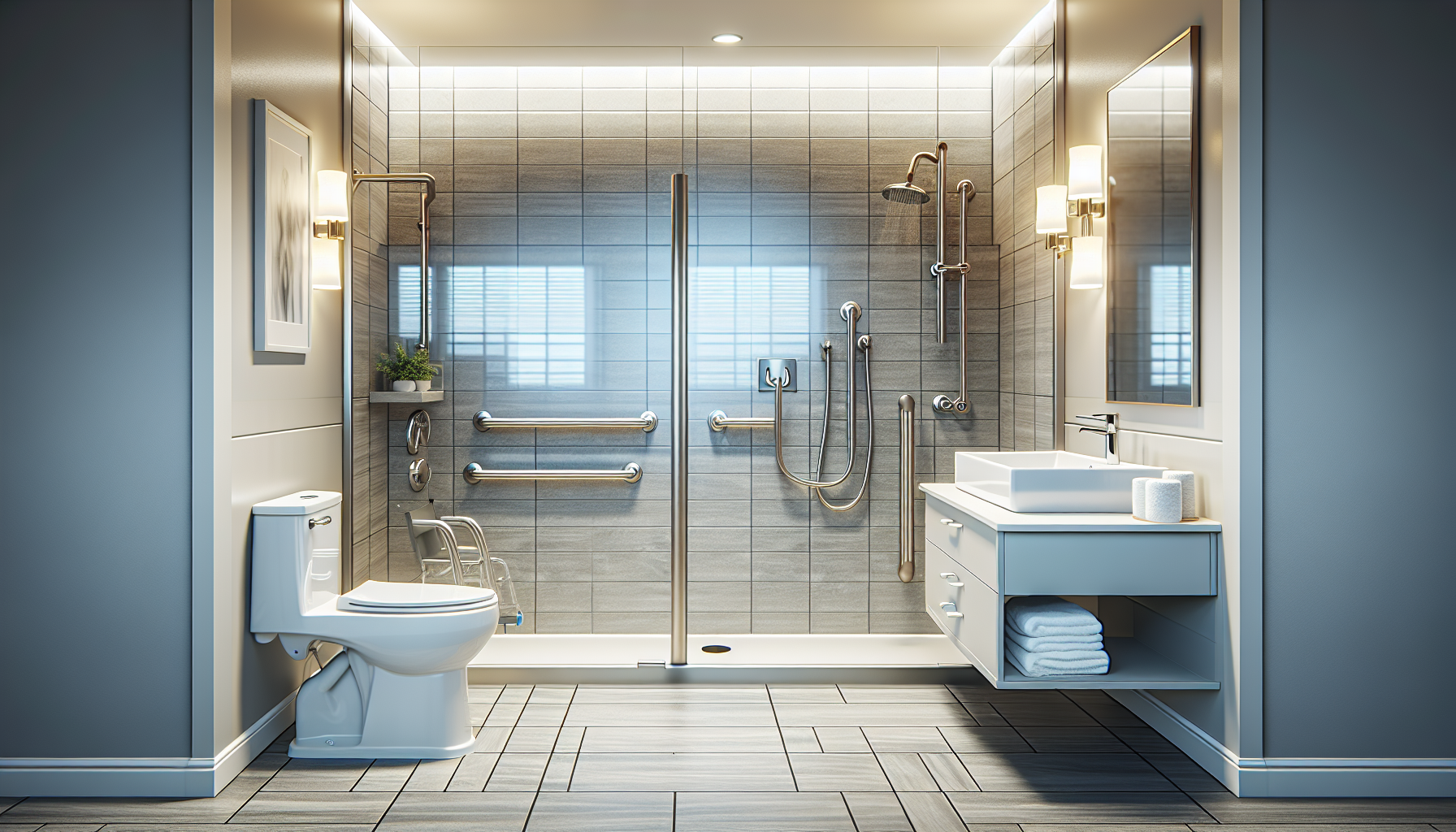
Curbless showers are one of the most effective home accessibility modifications, but only when the entire layout supports them. The shower entry needs enough clear space for a walker, wheelchair, or caregiver. Controls should be reachable from outside the spray area. A handheld shower on a slide bar, a properly anchored fold-down or built-in seat, blocking for future grab bars, and drainage that prevents water migration all matter. Toilets often need more side clearance than homeowners expect, especially for lateral transfers. Vanities should consider seated use, insulated pipes, mirror height, and task lighting. In real remodels, shifting a wall six inches or converting a hall bath into a wet-room style space often delivers more accessibility value than expensive fixtures alone.
Overlooking kitchen work triangles, reach ranges, and seated use
Kitchens frequently look spacious yet remain inaccessible because the layout assumes standing reach, full grip strength, and unrestricted turning. Traditional kitchen design emphasizes the sink-stove-refrigerator triangle, but for accessibility the priority is uninterrupted circulation and the ability to complete tasks from multiple positions. I often see islands that block approach to appliances, base cabinets that eliminate knee space at one usable work surface, and wall cabinets mounted so high that everyday dishes require overhead reaching. Side-hinged ovens, deep corner cabinets, and heavy refrigerator doors can also create barriers for people with limited shoulder mobility or reduced hand strength.
Accessible kitchen planning works best when zones are deliberately designed. A prep area with 30 inches wide of lowered counter and knee clearance supports seated chopping or mixing. Pull-out shelves reduce bending. D-shaped pulls are easier than small knobs. Induction cooktops lower burn risk because the surface cools faster around the pan area. A microwave drawer or wall oven with side access can be safer than an over-range microwave. Lever or touch faucets help users with arthritis. Good lighting under cabinets and over countertops reduces errors when handling knives and measuring ingredients. Home accessibility modifications in the kitchen should support one-handed use, seated use, and simple route planning, not just broader aisles.
| Area | Common layout mistake | Why it limits accessibility | Better modification |
|---|---|---|---|
| Entry | Step at front door with narrow landing | Blocks walkers, wheelchairs, and safe package handling | Zero-step entry, wider landing, beveled threshold |
| Hallway | Decor and furniture reduce passage width | Creates turning conflicts and fall hazards | Maintain clear route, relocate storage and tables |
| Bathroom | Tub-shower combo in tight alcove | Difficult transfer, high slip risk | Curbless shower with grab bars and seat |
| Kitchen | Island leaves narrow aisle | Prevents wheelchair rotation and walker access | Wider work aisle and seated prep station |
| Bedroom | Bed pushed against wall | Complicates transfers and caregiver assistance | Clearance on both sides and direct path to bath |
Failing to create a step-free, well-lit entry sequence
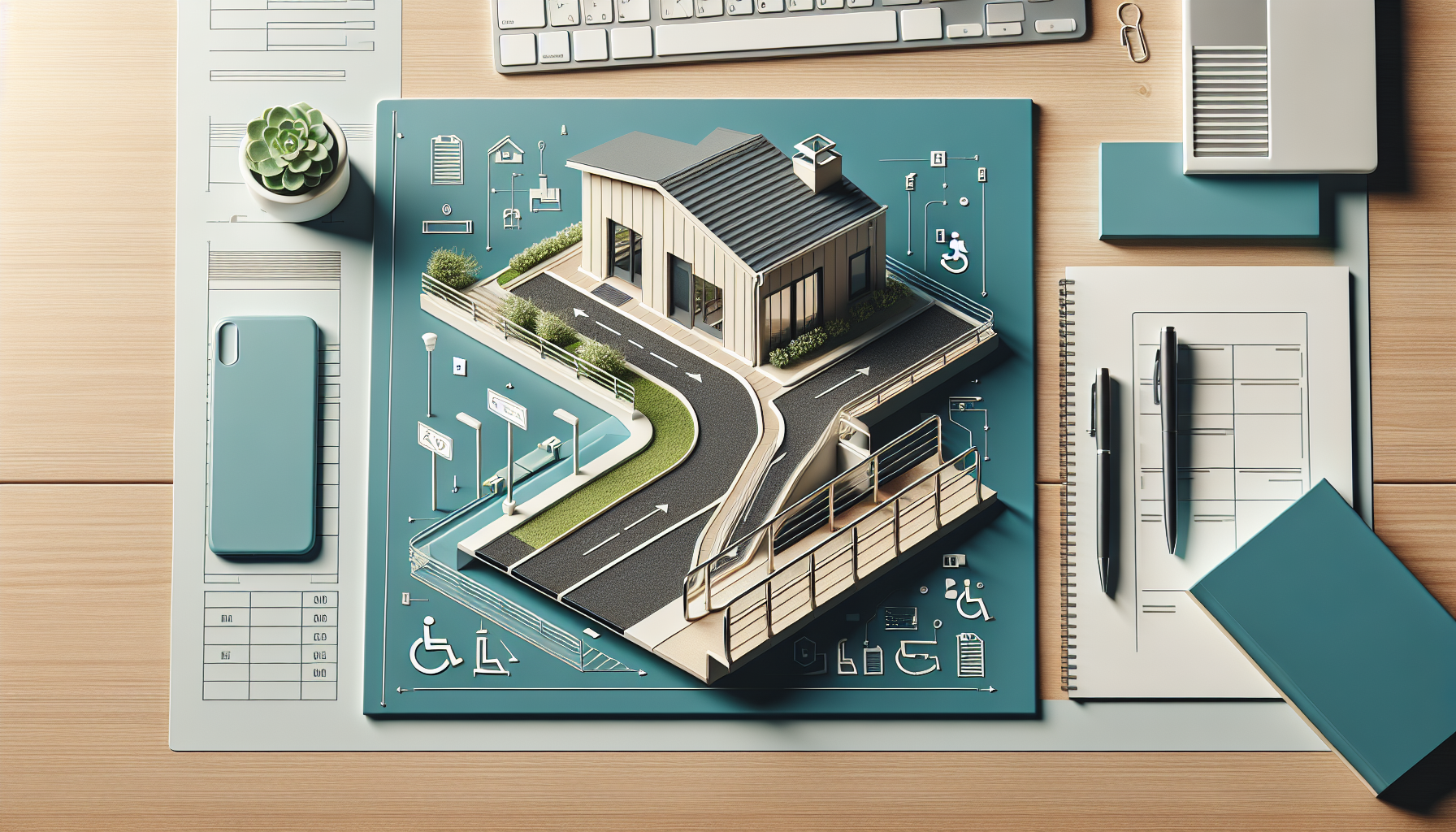
Many homes become inaccessible before a person even reaches the front door. A classic mistake is assuming one ramp solves entry access while ignoring parking distance, walkway width, landing size, door hardware, lighting, and weather exposure. The best entry sequence begins where someone exits a car or mobility van and continues in one smooth route to the interior floor. Gravel drives, cracked pavers, steep cross slopes, and poorly placed planters interrupt that route. Even one step at a side door can force a resident to depend on assistance every time they enter or leave.
Zero-step entries are usually the strongest long-term solution, whether integrated into a front porch redesign, garage entry, or rear patio. Landings should allow a person to stop, balance, unlock the door, and open it without rolling backward. Door widths, offset hinges, lever handles, smart locks, and low-force closers all improve usability. Lighting is equally important. I recommend layered illumination at the parking area, path, house numbers, and threshold, with minimal glare and consistent color temperature. Motion sensors can help, but they should activate early enough for safe approach. Good entry design also supports deliveries, emergency access, and everyday tasks like carrying groceries while using a cane or walker.
Placing essential living functions on different floors
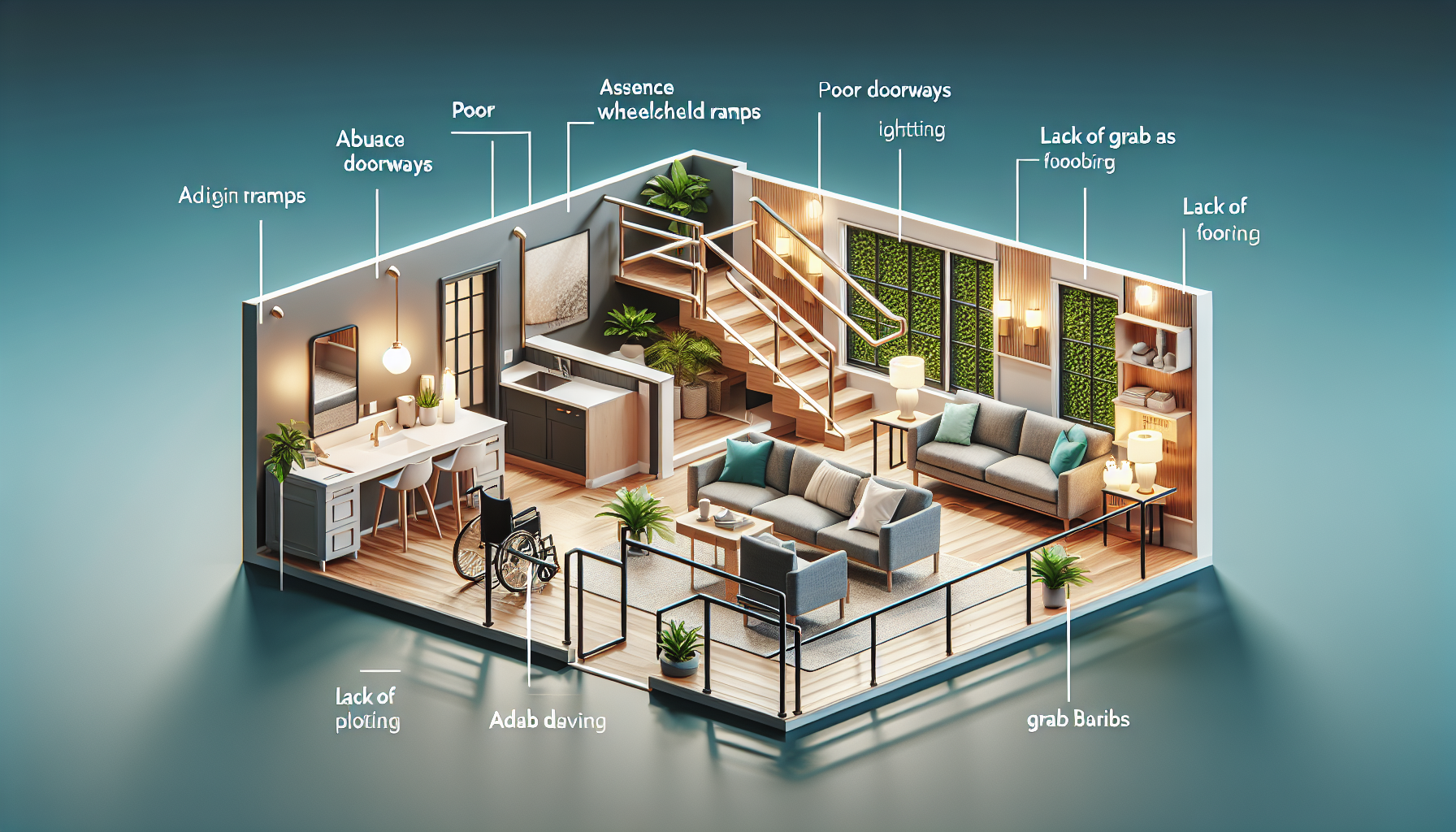
A layout error with major long-term consequences is separating essential daily activities across multiple levels. In many two-story homes, the kitchen and laundry sit on the main floor while bedrooms and full bathrooms are upstairs, or the only step-free entrance leads to a basement level. This arrangement may feel normal until an injury, joint replacement, neurological condition, or simple fatigue makes repeated stair use unrealistic. When that happens, families often scramble for equipment rather than recognizing the true problem: the house does not support single-level living.
The most effective home accessibility modifications prioritize an accessible path connecting sleeping, bathing, cooking, dining, and entry on one level. Sometimes that means converting a den into a bedroom, adding a full bath to the first floor, relocating laundry from basement to main level, or creating a compact accessory suite. Stair lifts can be excellent in the right context, but they are not a substitute for a comprehensive plan if transfer ability declines further. Residential elevators and vertical platform lifts may be appropriate in larger renovations, particularly when the homeowner expects progressive mobility changes. Thinking in terms of daily function clusters helps avoid piecemeal spending and keeps the home adaptable over many years.
Underestimating door, hardware, and control placement
Accessibility problems are often created by elements that seem too small to matter: round doorknobs, high light switches, heavy interior doors, awkward thermostat placement, and outlets hidden behind furniture. Yet these details determine whether someone can use a room independently. A lever handle can be operated with a closed fist, elbow, or limited grip. A knob often cannot. Pocket doors save swing space, but poor hardware selection can make them difficult to grasp. Barn doors solve some clearance issues but usually offer less privacy and weaker acoustic separation in bathrooms and bedrooms.
Placement standards should follow actual use patterns. Light switches near room entrances and bed locations reduce nighttime walking. Rocker switches and smart controls help users with dexterity limitations. Outlets mounted higher on walls reduce bending, while USB and USB-C integrated receptacles simplify charging for medical devices and phones. Window hardware should be reachable from seated height. Closet rods may need dual heights or pull-down systems. In several projects, the most appreciated upgrade was not a major structural change but a coordinated package of lever hardware, smart lighting, contrasting switch plates, and reduced door-opening force. These modifications are relatively affordable and greatly improve independence when combined with good overall layout planning.
Neglecting lighting, contrast, and sensory wayfinding
Home accessibility is not only about mobility devices. Poor visual and sensory design creates barriers for people with low vision, cognitive changes, vestibular disorders, and anyone moving through the house at night. One common mistake is relying on decorative ambient lighting while leaving task areas dim and circulation routes shadowed. Another is choosing finishes with low contrast, such as white walls, white trim, white counters, and pale flooring, making edges and depth changes harder to perceive. Glossy surfaces can add reflected glare, which is especially difficult for aging eyes.
Effective wayfinding uses consistent, layered lighting and clear visual cues. Stairs need even illumination from top to bottom, with contrasting nosings where appropriate. Bathrooms benefit from bright vertical lighting at the mirror and gentle nighttime path lights. Kitchens need task lighting at counters, sinks, and appliance controls. Contrasting colors between walls, floors, counters, and door frames make spaces easier to interpret quickly. For people with cognitive impairment, simple room sequencing and visible landmarks can be more helpful than complex open plans. Acoustic comfort matters too: excessive echo in large hard-surface spaces can make communication difficult for hearing aid users. A truly accessible home layout supports orientation as well as movement.
Skipping future-proofing and whole-home planning
The final and most expensive mistake is making isolated upgrades without a whole-home accessibility plan. Homeowners often install a walk-in tub, replace one doorway, or add a single ramp because a current problem feels urgent. Those products may help temporarily, but they can also lock the home into a layout that remains inefficient or unsafe. In my experience, the strongest results come from phased planning. First assess the resident’s present and likely future needs. Then map priority routes, essential rooms, structural constraints, and budget. That process reveals whether to spend on widening halls, reworking a bathroom, improving the entry, or creating first-floor living before selecting specialty equipment.
Qualified occupational therapists, aging-in-place specialists, universal design professionals, and licensed contractors each contribute useful perspectives. The best plans consider caregiver access, emergency egress, local building codes, moisture control, electrical capacity for lifts, and blocking in walls for future supports. They also balance accessibility with resale by using attractive, integrated solutions rather than obvious retrofits whenever possible. Home accessibility modifications work best when they create dignity, not dependence. Start with a walkthrough of the routes you use every day, note each pinch point or risky transition, and build a room-by-room upgrade plan that turns your home into a safer, more flexible place to live.
Frequently Asked Questions
What are the most common home layout mistakes that reduce accessibility?
Some of the biggest accessibility problems come from layout decisions that seem normal until someone has limited mobility, balance issues, reduced vision, or lower strength. Common examples include narrow hallways, tight doorways, crowded furniture placement, step-down living areas, poorly planned bathroom clearances, and kitchens that require too much reaching, bending, or twisting. Another frequent issue is forcing people to make unnecessary transitions between levels for daily tasks such as bathing, sleeping, laundry, or cooking. A home may look attractive on paper, but if it requires constant workarounds just to move from room to room or complete basic routines, the layout is not truly accessible.
Many homeowners also overlook circulation space. It is not enough for a person to technically fit through a room; they need enough space to turn, approach fixtures, transfer safely, and move without hitting furniture or walls. Inaccessible layouts often create pinch points near beds, toilets, islands, and entry doors. Poor lighting, slippery flooring transitions, and storage placed too high or too low add another layer of difficulty. In practice, accessibility is about reducing physical strain and preserving independence. A well-planned layout supports smooth movement, safer daily use, and long-term livability for a wide range of needs.
Why is accessibility about more than wheelchair clearance?
Wheelchair turning radius and doorway width are important, but accessibility goes much further than that. A home can technically provide enough clearance for mobility equipment and still be difficult or unsafe to use. Accessibility also includes how far someone must reach for switches, whether they can approach a sink without awkward body positioning, whether they have enough leverage to stand from a toilet, and whether lighting helps them see floor changes, edges, and obstacles. It also involves balance support, slip resistance, ease of navigation, and the physical effort required to complete ordinary tasks.
This is why good accessible design looks at the entire user experience. Someone may walk independently but need wider paths for a walker. Another person may not use a wheelchair at all but struggle with stairs, glare, poor contrast, deep cabinets, or low seating. People with arthritis may find knobs and tight turning spaces difficult. Those with low vision may be affected more by lighting and visual clutter than by dimensions alone. True accessibility addresses movement, safety, comfort, and dignity across many conditions, not just one type of mobility need. The best home layouts are flexible enough to support changing abilities over time.
How does poor room-to-room flow affect safety and independence at home?
Room-to-room flow has a direct impact on whether a home feels manageable or exhausting. When essential spaces are disconnected, daily life becomes harder than it should be. For example, if the only full bathroom is upstairs, or the laundry room is located down a narrow flight of stairs, a person may need to take unnecessary risks simply to complete routine tasks. If hallways are long, tight, dimly lit, or interrupted by level changes, movement through the home becomes less predictable and more fatiguing. These layout issues increase fall risk, reduce confidence, and often force people to depend on others for activities they might otherwise handle independently.
Good flow means the home supports natural, efficient movement between the spaces used most often. Bedrooms, bathrooms, kitchen areas, and main living spaces should connect in a way that minimizes obstacles and physical strain. The path between them should be wide enough, well lit, and free of abrupt flooring transitions or awkward door swings. This matters not only for current needs but for future adaptability. If the layout allows someone to access the spaces they need every day without stairs, tight turns, or unsafe transfers, they are more likely to remain comfortable and self-sufficient in their home. In accessibility planning, circulation is not a luxury feature; it is fundamental to how safely the home functions.
Which areas of the home tend to create the biggest accessibility problems?
Bathrooms, kitchens, entries, stairways, and bedrooms are usually where layout-related accessibility problems show up most clearly. Bathrooms are especially challenging because they combine water, hard surfaces, tight clearances, and multiple transfers. A toilet placed too close to a wall, a vanity that blocks approach space, or a shower with a high curb can turn a necessary daily activity into a hazard. Kitchens often create problems through cramped work triangles, narrow aisles, upper storage that requires reaching, and appliance placement that forces bending or carrying hot items across tight spaces.
Entries are another major concern because they set the tone for how easily a person can enter and leave the home. Steps without alternative access, inadequate landing space, heavy doors, and poor exterior lighting can all create barriers. Stairways become critical when the home requires constant use of different levels for essential functions. Bedrooms may seem simple, but they often lack adequate clearance around the bed for walking aids, caregivers, or transfers. These areas deserve close attention because they are used every day and often under time pressure. Improving the layout in these key zones can dramatically increase safety, comfort, and overall usability throughout the home.
How can homeowners fix accessibility layout mistakes without doing a full remodel?
Not every accessibility issue requires moving walls or rebuilding the entire home. In many cases, meaningful improvements start with better space planning. Rearranging furniture to create wider pathways, removing unnecessary pieces, and opening up turning areas can immediately improve circulation. Reversing a door swing, installing better lighting, reducing clutter, and replacing slippery rugs or uneven flooring transitions can make a home safer right away. In bathrooms, adding properly placed grab bars, using a comfort-height toilet, and improving transfer space around fixtures can significantly increase usability even if the room footprint stays the same.
Homeowners can also focus on function-first updates in the areas used most often. This may include creating a main-floor living setup, improving bedroom clearance, adjusting storage to place everyday items within safer reach, or changing hardware to easier-to-use lever handles. In kitchens, lowering a work surface, improving aisle clearance, or repositioning frequently used items can reduce strain. The most effective approach is to evaluate how the person actually lives in the space rather than relying only on generic measurements. An accessibility-focused contractor, occupational therapist, or certified aging-in-place professional can help identify which layout changes will have the biggest impact. Small targeted improvements often produce major gains in safety, independence, and long-term comfort.