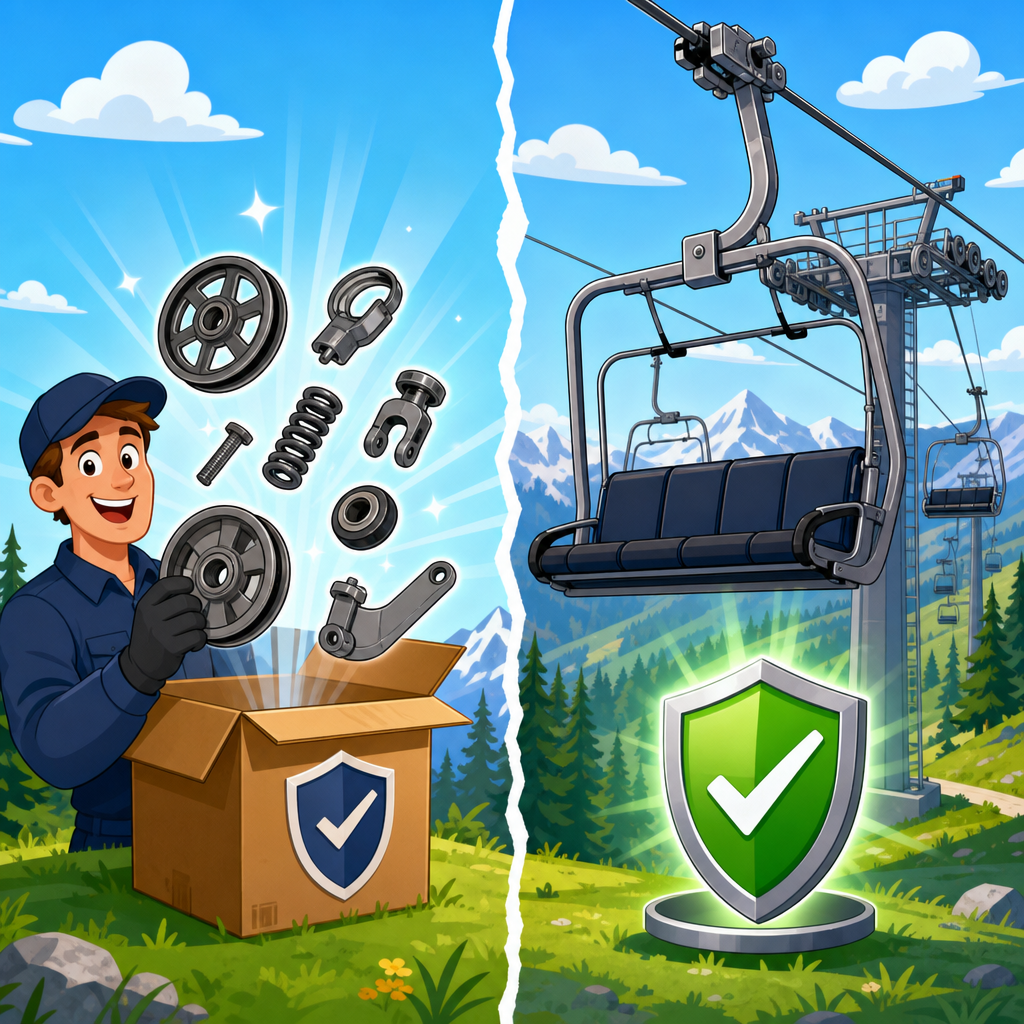
Shopping for a stair lift is not just about rail design, seat comfort, or installation speed. Warranties on parts vs. full chair lift systems often determine the real long-term cost of ownership, the speed of repairs, and how much risk stays with the buyer after installation. In this buying guide, “parts” means individual components such as batteries, circuit boards, motors, gear racks, call stations, footrests, and seat swivels. A “full chair lift system” warranty covers the assembled unit as sold and installed, usually including core drive components, the carriage, rail sections, and sometimes labor for a defined period. Return policies are different again: they define whether the purchase can be canceled, removed, refunded, or exchanged, and under what conditions.
This distinction matters because stair lifts are semi-custom mobility devices, not boxed consumer electronics. In my work reviewing lift proposals and service agreements, I have seen buyers assume a “lifetime warranty” protected everything, only to learn later that batteries were prorated, labor ended after one year, and outdoor upholstery was excluded. I have also seen the opposite: a modest-looking warranty turned out to be strong because the dealer handled diagnostics quickly, stocked common replacement parts, and documented transferability for home resale. A strong warranty and fair return policy reduce downtime, protect cash flow, and make competing quotes easier to compare on equal terms.
Most buyers ask the same practical questions. What breaks most often? Are parts and labor covered together? Does a full system warranty include the rail? Can you return a custom curved lift if it does not fit your needs? How does dealer support affect manufacturer coverage? This hub article answers those questions directly and gives you the framework to evaluate any warranty and return policy in the chair lift market.
What Parts Warranties Usually Cover, and What They Exclude
A parts warranty promises replacement of defective components, but not always the technician time to diagnose or install them. On stair lifts, the highest-frequency wear items are batteries, seat switches, charging contacts, remotes, and occasionally hinge assemblies on powered footrests. Core components such as the motor, gearbox, PCB, and transmission may carry longer terms because they fail less often under normal use. Manufacturers commonly separate these categories because wear, environmental exposure, and user handling affect them differently. Outdoor lifts often have narrower coverage for cosmetic fading, weather seals, and corrosion unless the product is specifically rated and maintained according to the manual.
The biggest mistake buyers make is reading “parts covered for five years” as “everything is taken care of for five years.” It rarely means that. Many agreements exclude consumables, misuse, water intrusion, damage from power surges, and service calls outside normal business hours. Some brands require annual maintenance by an authorized dealer to keep certain coverage active. Others reserve the right to use refurbished equivalent parts for repairs. None of those terms are inherently bad, but they change value materially. A five-year parts-only warranty can still leave the owner paying several hundred dollars for diagnostics and labor, especially in rural areas where travel charges are high.
Ask specifically how a claim works. If a chair stops charging, does the dealer first test batteries, charger output, and contact strips? Are shipping costs for replacement boards included? If a component is discontinued, will the brand provide a compatible assembly or issue credit toward a new lift? These operational details separate useful coverage from marketing language. A good parts warranty is transparent about exclusions and paired with a service network that can actually deliver repairs quickly.
What a Full Chair Lift System Warranty Means in Practice
A full chair lift system warranty is broader because it applies to the installed product as a complete mobility solution. The strongest versions cover the rail, carriage, motor, transmission, seat assembly, and safety circuits together, with labor included for at least an initial period. This matters because stair lifts fail as systems, not just as isolated parts. A charging fault may involve rail contacts, alignment, software settings, or installation variables. A seat swivel issue may stem from a lock mechanism, frame stress, or user transfer habits. System-level coverage recognizes that diagnosis is part of the repair.
However, “full system” still does not mean unlimited protection. Nearly every policy distinguishes manufacturing defects from wear, abuse, and site conditions. For example, if the household electrical outlet is ungrounded or on a failing circuit, charger damage may not be covered. If a lift is installed on stairs later modified with carpet tack strips, loose trim, or water-damaged treads, alignment issues may fall outside warranty. Curved stair lifts introduce another nuance: the rail is custom fabricated to measured dimensions, so defects in manufacturing may be covered while returns for preference changes usually are not.
In the field, the best full-system warranties are valuable because they reduce disputes between manufacturer and dealer. When coverage is clearly written, the dealer does not have to argue whether the rail, carriage, or installation caused the fault; the provider simply resolves the problem under the policy. Buyers should still confirm whether labor and travel are covered for the same duration as components. A “lifetime” promise on the drivetrain sounds excellent, but if labor ends after 12 months, ownership costs can rise noticeably in years two through five.
Comparing Parts-Only, Full-System, and Return Policy Terms
The easiest way to compare stair lift warranty and return policy terms is to separate coverage into components, labor, service logistics, and cancellation rights. That prevents a weak quote from looking stronger simply because one line item says “lifetime.”
| Policy area | What to verify | Why it matters | Common buyer risk |
|---|---|---|---|
| Parts warranty | Term by component: batteries, motor, gearbox, PCB, rail, seat | Short coverage often applies to wear items that fail most | Assuming one term covers every component |
| Labor warranty | Length, travel fees, emergency visit rates, diagnostics | Labor can cost as much as the part on minor repairs | Discovering service calls are billable after year one |
| Full system coverage | Whether installed rail, carriage, and controls are treated as one system | Reduces disputes over root cause | Rail or installation-related faults excluded |
| Return policy | Cancellation window, restocking fee, removal charges, custom order rules | Most curved lifts are nonreturnable once fabrication starts | Losing deposit after measurements are approved |
| Transferability | Can the warranty transfer to a new homeowner? | Helps preserve value during resale | Coverage ends when the original purchaser moves |
Use this structure on every quote. It forces comparable answers and highlights which company is standing behind the whole product rather than just mailing parts. It also helps families budgeting for aging in place, because a lower purchase price with weak labor and return terms is not always the cheaper option over five years.
Why Return Policies Are Often Stricter Than Buyers Expect
Return policies for stair lifts are strict because many units are ordered to fit a specific home, staircase angle, landing space, and user profile. Straight stair lifts are sometimes easier to return or exchange because rails can be cut to length from standard stock and reused more easily. Even then, installers may charge removal fees, patching is usually not included, and returned equipment may need inspection before any refund is issued. Curved stair lifts are different. Once the home is measured and the rail enters fabrication, the product is usually considered custom and nonreturnable except for defect, shipping damage, or an installation failure attributable to the seller.
Deposits are another major point. Some dealers treat the deposit as fully refundable until a site survey is completed. Others make it nonrefundable once drawings are approved or the purchase order is sent to the factory. That is reasonable if disclosed clearly, but many buyers focus on the equipment and miss the cancellation timeline. I always recommend asking for the exact trigger point in writing: quote acceptance, measurement appointment, factory submission, fabrication start, shipping, or installation day. Those milestones determine your leverage if plans change because of hospitalization, home sale, or a move to assisted living.
Returns also intersect with hygiene and safety. Seats, belts, and armrests are mobility-contact surfaces, so dealers may limit returns after installation for sanitation reasons. If you want flexibility, negotiate it before purchase. Some companies will agree to an exchange into a different model, credit toward a rental, or a partial refund within a short window if the fit proves unsuitable. Those concessions are far more likely when discussed up front than requested after the rail is on the stairs.
How Manufacturer Warranties and Dealer Promises Work Together
In stair lifts, the manufacturer writes the base warranty, but the dealer controls much of the experience. That is why two buyers with the same brand can have very different outcomes. A strong local dealer keeps certified technicians, common spare parts, and direct access to technical support. A weak dealer may rely on one installer, order parts only after diagnosis, and route all claims through a slow administrative process. The written warranty is the floor; dealer capability determines how smoothly it performs in real life.
This is also where buyers need to distinguish “dealer warranty” from “manufacturer warranty.” Dealer labor coverage may be more generous than the manufacturer’s terms, but it can disappear if the dealership closes or changes ownership. Manufacturer parts coverage may still remain, yet you could be responsible for finding another authorized servicer. Ask who pays if the original installer is no longer in business. Reputable brands usually maintain authorized networks, but response times vary by region and product line. National coverage looks reassuring on paper, though actual service density matters more than map marketing.
Request documentation, not verbal reassurance. You want the manufacturer warranty, dealer labor warranty, maintenance requirements, and return policy in the same packet. If a salesperson says, “We take care of everything,” ask them to point to the clause covering travel, emergency calls, and battery replacement. Experienced buyers know that written specifics prevent frustration later and make dispute resolution straightforward if service expectations are not met.
Evaluating Warranty Strength by Product Type and Use Case
Not all chair lift systems deserve the same warranty expectations. Straight indoor lifts are mechanically simpler, use standardized rails, and usually offer the most predictable support. Curved lifts are custom engineered, have more complex installation variables, and carry higher replacement costs, so terms around fabrication defects, rail fit, and change orders deserve extra scrutiny. Outdoor lifts face moisture, temperature swings, UV exposure, and debris, so shorter cosmetic coverage and stricter maintenance obligations are common. Heavy-duty models built for higher weight capacities can be robust, but higher loads also make proper installation and routine adjustment more important to keeping warranty protection intact.
Your household usage pattern matters too. A lift used six times daily by one person places different demands on batteries and swivel hardware than one used twenty times daily by multiple family members. Homes in coastal areas should ask specifically about corrosion exclusions and weather covers. Homes with frequent power outages should clarify surge protection expectations and whether the charger or control board is vulnerable without a dedicated protector. If the user relies on the lift as the only way to reach a bedroom or bathroom, response time becomes almost as important as coverage length. In that case, a shorter warranty backed by same-day local service may be better than a longer warranty with distant support.
Look for policies that match the real risk profile of the installation. Strong coverage is not just broad; it is relevant. The best warranty for your chair lift system is the one that protects the components most likely to fail in your home, under your usage conditions, with service you can access quickly.
Questions to Ask Before You Sign Any Stair Lift Agreement
Before signing, ask direct, closed-ended questions that force concrete answers. What is covered for parts, by component, and for how long? What is covered for labor, travel, and after-hours calls? Are batteries considered consumables? Is the rail covered for manufacturing defects for the same term as the carriage? What maintenance is required to keep coverage valid? Can the warranty transfer to a future homeowner? What events make the deposit nonrefundable? Is a custom curved order returnable for any reason other than defect? How long does the dealer typically take to respond to a nonworking lift claim?
You should also ask for examples. If the gearbox fails in year three, who pays for the part, labor, and travel? If the seat switch fails in month eighteen, what would my bill be? If the lift is noisy after installation, is adjustment included? Concrete scenarios expose policy gaps quickly. In my experience, the best sales teams answer these questions without defensiveness because they handle them every day. Vague answers are a warning sign, especially on expensive custom systems.
Finally, read the service and return language as carefully as the product brochure. Stair lifts are critical home accessibility devices. A clear warranty and return policy protects more than the purchase price; it protects continuity, safety, and independence for the person who depends on the lift.
Warranties on parts vs. full chair lift systems are not a minor detail added at the end of a quote. They are central to the buying decision because they determine what happens after the installer leaves, when the equipment ages, or when a family’s plans change. Parts warranties can be useful, but they often leave buyers exposed to labor, travel, and diagnostic charges. Full system warranties are usually stronger because they treat the chair lift as an integrated device, though they still need careful review for exclusions, maintenance obligations, and term differences between components and labor.
Return policies deserve equal attention. Straight lifts may allow limited cancellation or exchange options, while custom curved lifts are commonly nonreturnable once fabrication begins. Deposits, removal fees, and timing triggers should always be confirmed in writing. The quality of the dealer matters as much as the wording of the manufacturer warranty, because local service capacity determines how quickly a covered repair actually gets done.
Use this hub as your baseline when comparing quotes under the broader Buying Guides & Product Reviews topic. Review each proposal by component coverage, labor duration, return conditions, transferability, and dealer service capability. Then move to the supporting articles in this subtopic to compare specific brand terms, battery coverage, labor plans, custom-order cancellations, and service contracts. If you are evaluating a stair lift now, ask for the full warranty packet before you pay a deposit and compare every promise line by line.
Frequently Asked Questions
What is the difference between a parts warranty and a full chair lift system warranty?
A parts warranty covers specific components of the stair lift if those components fail because of a defect in materials or manufacturing. In practical terms, that usually means items such as batteries, circuit boards, motors, gear racks, seat swivels, footrests, call stations, and other replaceable pieces are covered for a stated period. If one of those parts stops working within the warranty window and the failure meets the manufacturer’s terms, the company may provide a replacement part at no charge or at a reduced cost. However, a parts-only warranty often does not automatically include labor, service call fees, diagnostic time, travel charges, or expedited shipping. That distinction matters because a “free” replacement board or battery can still result in a meaningful repair bill once technician time is added.
A full chair lift system warranty is broader. It typically applies to the assembled unit as sold and installed, rather than only to a list of individual components. Depending on the manufacturer and dealer, that may include the drive system, rail, carriage, seat assembly, controls, and integrated safety features working together as a system. In stronger warranty programs, coverage may also include labor for certain repairs during the initial years, making ownership more predictable. For buyers, the key takeaway is simple: a parts warranty protects pieces of the lift, while a full system warranty is intended to protect the stair lift as a functioning whole. When comparing quotes, ask whether the coverage is limited to parts replacement or whether it also addresses diagnosis, labor, and the cost of getting the lift back into service.
Why do warranties have such a big impact on the true long-term cost of owning a stair lift?
The purchase price is only one part of the total cost of ownership. Over time, stair lifts may require battery replacement, switch adjustments, service visits, or repairs related to electronics and drive components. If the warranty only covers parts, the owner may still be responsible for technician labor, in-home service fees, travel charges, and emergency visits. Those costs can add up quickly, especially if the lift is used daily by someone who cannot safely manage stairs without it. A warranty that looks generous on paper may feel far less valuable if every repair requires out-of-pocket payment for diagnosis and installation.
Broader system coverage can reduce financial surprises. When labor is included, or when there is a clearly defined service agreement tied to the warranty, the owner has a better sense of what repairs will actually cost during the covered period. This matters even more for households buying a stair lift as a medical necessity rather than a convenience. Downtime may create urgent access problems, and urgent service often costs more. A good warranty does not just reduce potential repair expense; it can also shorten decision-making when something goes wrong because the owner already knows who to call, what is covered, and whether additional charges are likely. In short, warranties influence repair cost, downtime, convenience, and risk transfer, which is why they are central to the real value of the purchase.
Are all stair lift components covered for the same length of time under warranty?
No. In many stair lift warranty programs, different components have different coverage periods. The motor or drivetrain may be covered for several years, the rail may have longer structural coverage, and consumable or high-wear items such as batteries may have much shorter terms. Electronics like circuit boards, charge contacts, remote controls, and call stations may each have separate warranty durations or exclusions. Seat upholstery, cosmetic trim, and finish-related issues may also be treated differently from mechanical or electrical defects. That means buyers should avoid relying on a single headline phrase like “lifetime warranty” without reading what that lifetime coverage actually applies to.
This is one of the most important areas to clarify before purchase. Ask for a written breakdown that lists each major category: motor, gearbox, rail, batteries, electronics, seat assembly, footrest, swivel mechanism, remotes, and labor. Also ask when the warranty period begins, whether it is based on installation date or purchase date, and whether replacement parts inherit the original warranty or receive a new one. A stair lift can have excellent coverage in one area and limited protection in another, so the smartest comparison is a line-by-line review rather than a marketing-level summary. Buyers who do this are much less likely to be surprised later.
Does a full system warranty usually include labor, service calls, and in-home repairs?
Not always. This is one of the most common misunderstandings in stair lift shopping. Some full system warranties do include labor for a limited time, especially during the first year or two. Others cover only the hardware but still charge for technician visits, diagnosis, removal and installation of parts, or travel to the home. In some cases, the manufacturer supplies the part while the local dealer controls labor pricing. That arrangement can create a gap between what sounds covered and what the customer actually pays when a repair is needed.
The best way to evaluate this is to ask very specific questions. If the lift stops working, who pays for the service call? Is troubleshooting covered? Is labor included for all covered component failures, or only certain ones? Are after-hours, weekend, or rural travel charges extra? If a replacement part is backordered, is there any priority handling or loaner option? Also ask whether the installer, dealer, or manufacturer is the primary point of contact for claims. A warranty is far more valuable when the path to service is clear and the labor terms are spelled out in writing. For many households, labor coverage is the difference between a modest inconvenience and a major unexpected expense, so it deserves as much attention as the parts coverage itself.
What should buyers look for in the warranty before choosing one stair lift over another?
Start with scope. Determine whether the warranty covers only parts, the full assembled chair lift system, or both the system and labor for a certain period. Then review component-by-component details: batteries, motor, transmission or gearbox, circuit boards, rail, seat swivel, footrest sensors, remotes, and charging system. Next, look at exclusions. Many warranties exclude normal wear, misuse, accidental damage, power-related issues, water exposure, unauthorized repairs, and problems caused by inadequate maintenance or modifications. Some also limit coverage for used, rental, or reconditioned stair lifts, so buyers considering lower-cost options should pay especially close attention.
After that, assess how service actually works. A strong warranty is not just broad in theory; it is practical in execution. Ask how quickly repairs are typically scheduled, whether replacement parts are stocked locally, and whether the dealer who installs the lift will remain responsible for support. Transferability may matter if the home is sold, and cancellation or removal terms may matter if the lift is intended for temporary use. Finally, get everything in writing and compare warranties side by side rather than assuming the lowest purchase price is the best value. The stair lift that costs a bit more upfront may offer substantially better protection against repair costs, downtime, and ownership risk over the years. In this category, warranty quality is not a minor detail; it is a major buying factor.