Chair lift financing depends less on one magic number and more on how lenders assess risk, monthly affordability, medical necessity, and the equipment being installed, but most applicants see the best options when their credit score is 670 or higher. For many families, that simple answer is only the starting point. A stair lift or vertical platform lift often becomes urgent after a fall, surgery, stroke, or worsening arthritis, which means buyers are not shopping casually. They are trying to make a home safe quickly, while balancing upfront cost, interest rates, and long-term household budgets.
In practice, chair lift financing usually refers to funding for stair lifts, porch lifts, wheelchair platform lifts, and sometimes reclining lift chairs sold through mobility dealers. Costs vary widely. A straight stair lift may run from roughly $2,500 to $6,000 installed, while a curved stair lift can exceed $10,000 because the rail is custom built. Platform lifts and porch lifts may cost even more once electrical work, permits, and structural adjustments are included. Because many households cannot or do not want to pay cash, financing and payment plans become central to the purchase decision.
When I have helped families compare financing offers, the biggest mistake has been focusing only on approval odds. Approval matters, but the better question is: what total borrowing cost can you carry without creating financial stress? A borrower with fair credit may still qualify, yet pay a much higher annual percentage rate than someone with strong credit. The result can be hundreds or thousands of dollars in extra cost over the life of the loan. Understanding the credit score ranges, lender criteria, and financing alternatives helps you choose more carefully.
This guide explains what credit score you typically need for chair lift financing, how lenders evaluate applications, what rates and terms are common, and which alternatives may work if your score is below prime range. It also serves as a hub for the broader financing and payment plans topic, so each section addresses the questions buyers usually ask before they commit.
What Credit Score Do You Need for Chair Lift Financing?
The short answer is that many chair lift financing programs start considering applicants around a 580 to 620 credit score, but the most competitive offers usually go to borrowers at 670, 700, or above. Some dealers work with lenders that approve subprime borrowers below 580, though those programs often come with higher rates, lower borrowing limits, down payment requirements, or shorter repayment terms. There is no universal minimum because each finance company sets its own underwriting rules.
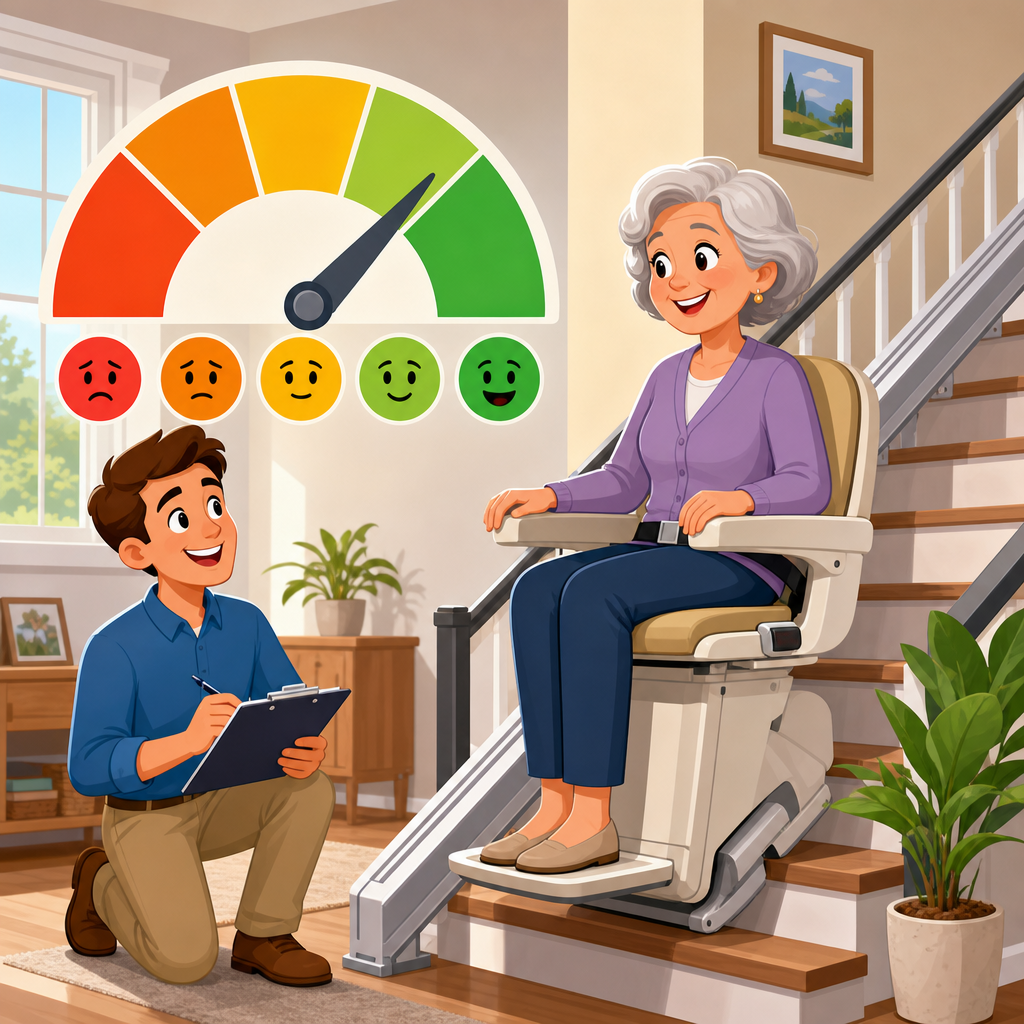
Most lenders group borrowers by risk tiers. A score below 580 is generally seen as poor credit. Scores from 580 to 669 are often considered fair. Scores from 670 to 739 are usually good. Scores from 740 to 799 are very good, and 800 plus is exceptional. For chair lift financing, moving from fair to good credit can materially change your offer. You may qualify for a lower APR, a longer term, or a larger amount that covers installation and accessories instead of only the base equipment.
That said, credit score alone does not decide approval. I have seen applicants with scores around 640 approved because they had stable income, low existing debt, and a modest straight stair lift purchase. I have also seen applicants with higher scores receive weaker terms because their debt-to-income ratio was stretched or their credit file showed recent late payments. Lenders are buying a risk profile, not just a number.
How Lenders Evaluate Chair Lift Financing Applications
When a lender reviews a chair lift financing application, it usually looks at five core factors: credit score, income, debt-to-income ratio, payment history, and the amount being financed. Some lenders also consider time at residence, employment stability, and whether the equipment is standard or custom. A custom curved stair lift carries different resale value than a straight rail unit, so that can affect how cautious a lender becomes.
Debt-to-income ratio is especially important. This is the share of your monthly gross income already committed to debt payments such as mortgages, car loans, credit cards, and personal loans. Even with a decent credit score, a high debt load can reduce approval odds. For example, a borrower earning $5,000 per month with $2,200 in existing monthly debt has a 44 percent debt-to-income ratio before adding the new lift payment. Many lenders prefer lower ratios because they indicate more room in the budget.
Payment history also carries significant weight. A single isolated late payment from two years ago is usually less damaging than multiple late payments in the past six months. Collections, charge-offs, repossessions, and bankruptcies can trigger either denial or a more expensive loan. If your file has blemishes, it helps to gather supporting information in advance, especially if the need for the lift is immediate and tied to discharge planning or aging in place.
The equipment quote matters too. Lenders and dealer finance partners typically finance the full installed project amount, not just the rail or chair. That means taxes, labor, and sometimes service plans may be part of the financed balance. Before applying, ask for an itemized quote so you know exactly what amount is being submitted.
Typical Rates, Terms, and Monthly Payment Ranges
Chair lift financing is commonly offered through unsecured personal loans, dealer financing platforms, medical credit accounts, credit cards with promotional rates, or home equity products. Terms often range from 12 to 84 months depending on lender, credit profile, and project size. Straight stair lifts often fit into shorter unsecured plans, while large platform lift projects may push borrowers toward longer terms or secured borrowing.
The APR can vary dramatically. Prime borrowers may see promotional plans near 0 percent for a limited term through dealer-arranged financing, or single-digit rates from strong personal loan lenders. Fair-credit borrowers may face APRs in the teens or higher. Subprime programs can exceed 20 percent APR, which is why monthly payment comparisons matter less than total repayment cost. A low monthly payment stretched over a long term can still be expensive.
| Credit Range | Typical Financing Outlook | Possible APR Range | Common Term Range |
|---|---|---|---|
| 740+ | Best approval odds and strongest promotional offers | 0% to 10% | 12 to 84 months |
| 670 to 739 | Good access to mainstream financing | 6% to 18% | 12 to 72 months |
| 580 to 669 | Approval often possible with higher cost | 12% to 29% | 12 to 60 months |
| Below 580 | Limited programs, cosigner may help | 18%+ | 12 to 48 months |
These ranges are not guarantees, but they reflect how risk-based pricing usually works in the market. On a $5,000 straight stair lift, the difference between 8 percent APR over 48 months and 24 percent APR over the same term is substantial. The lower-rate loan costs far less in interest and often leaves the borrower with more flexibility for maintenance, batteries, or future home modifications.
Financing Options Beyond Standard Credit-Based Loans
If your credit score is not ideal, chair lift financing can still be possible through alternatives that rely less on prime credit. Dealer payment plans are often the first place to look because many mobility dealers partner with several finance companies and can match applicants to different tiers. Some also offer in-house installment arrangements for smaller balances or temporary bridge needs, though these are less common for larger custom projects.
Medical credit lines are another option, especially when the dealer accepts them. These accounts may offer deferred interest or no-interest promotional periods. Read the terms carefully. Deferred interest is not the same as true zero-interest financing. If the balance is not paid in full by the end of the promotional period, interest may be charged retroactively from the purchase date.
Home equity loans and home equity lines of credit can be appropriate when the lift is part of a broader accessibility renovation. Because the debt is secured by the home, rates may be lower than unsecured borrowing. The tradeoff is that approval can take longer, closing costs may apply, and your home is collateral. For an urgent hospital discharge, that timeline may not work.
Families should also consider community resources. Area Agencies on Aging, state assistive technology programs, Medicaid waiver programs in some states, Veterans Affairs benefits for eligible veterans, and nonprofit grant funds may reduce the amount that needs financing. Medicare generally does not cover stair lifts as durable medical equipment, which surprises many buyers, but that makes alternate funding sources even more important to review.
How to Improve Your Approval Odds Before You Apply
If you have a little time before purchase, a few targeted actions can improve your financing outcome. First, check your credit reports from all three major bureaus and dispute any errors. A wrongly reported late payment or collection can depress your score and change your APR. Second, pay down revolving credit card balances if possible. Lower utilization often helps scores and improves debt-to-income calculations.
Third, avoid applying for multiple unrelated credit products in the weeks before seeking chair lift financing. New hard inquiries and fresh debt can weaken your file temporarily. Fourth, consider a cosigner if your income is solid but your score is low. A strong cosigner can improve approval odds and may reduce the rate, although that person becomes legally responsible for repayment if you default.
Documentation matters as well. Have pay stubs, benefit statements, tax returns if self-employed, and the itemized equipment estimate ready. Lenders move faster when the file is complete. I also advise buyers to compare the full financing package, not just the monthly payment. Ask about APR, origination fees, prepayment penalties, promotional expiration dates, and whether service plans are optional or bundled into the financed amount.
Finally, get multiple quotes for the equipment itself. If one dealer quotes $4,200 for a straight lift and another quotes $5,800 for a similar model and warranty, financing the lower-cost project may improve both approval and affordability. The borrowing decision and the product decision should always be evaluated together.
Choosing the Right Payment Plan for Your Household
The best chair lift payment plan is the one that solves the safety problem without undermining the rest of your finances. For some households, that means taking a short promotional plan and paying it off aggressively before interest starts. For others, a fixed-rate installment loan with a predictable payment is safer, even if the nominal rate is higher, because the budget remains stable month after month.
Consider how long the equipment is likely to be used. If the lift is expected to serve a permanent aging-in-place plan, paying for quality installation and a reputable service network matters more than chasing the absolute lowest monthly payment. If the need may be temporary after surgery, renting a straight stair lift could cost less than financing a purchase. Rental availability varies by market and is less common for curved stair lifts, but it is worth asking.
This financing and payment plans hub should also guide your next steps across related topics: no-credit-check options, dealer financing versus personal loans, using HSA or FSA funds for eligible expenses, veteran benefits, refinancing accessibility equipment debt, and understanding total cost of ownership. The central lesson is clear. A good credit score improves your choices, but it is not the only path to obtaining a needed chair lift. Compare lenders, confirm the full installed cost, explore assistance programs, and choose a plan you can comfortably repay. Start by requesting itemized quotes and financing terms from two or three qualified mobility dealers in your area today.
Frequently Asked Questions
What credit score do you usually need for chair lift financing?
There is not one universal minimum credit score for chair lift financing, because lenders use different approval models and weigh several factors beyond the score itself. That said, many applicants tend to see the strongest financing options when their credit score is 670 or higher. In that range, borrowers are more likely to qualify for lower interest rates, more flexible repayment terms, and fewer documentation hurdles. A score below that does not automatically mean you will be denied, but it may reduce your options or lead to higher borrowing costs.
In practice, lenders typically look at the full risk picture. They may review your income, current monthly debts, payment history, debt-to-income ratio, recent credit inquiries, and whether the equipment is considered medically necessary. Because stair lifts and vertical platform lifts are often needed after a fall, surgery, stroke, or declining mobility, some financing programs are designed to serve borrowers who need fast approval rather than perfect credit. The key point is that your credit score matters, but it is only one part of the decision.
Can you get approved for chair lift financing with fair or bad credit?
Yes, approval is still possible with fair or bad credit, although the financing terms may not be as favorable. Some lenders specialize in borrowers with lower scores and may focus more on steady income, the ability to handle monthly payments, and the urgency of the accessibility need. If you have fair credit, you may still qualify for installment financing, but you could see a higher interest rate, a shorter repayment term, or a lower approved amount. With poor credit, the lender may ask for a larger down payment or require a co-borrower.
Families should also remember that chair lift financing is different from financing a luxury purchase. Accessibility equipment is often essential for safety and independence, and lenders know these purchases are tied to real-life medical and mobility concerns. Even if your credit file is not ideal, you may improve your chances by reducing existing balances, correcting errors on your credit report, showing proof of stable income, or applying with a qualified co-signer. It is also worth comparing medical financing companies, personal loan providers, and local accessibility dealers that offer in-house payment plans.
What do lenders look at besides your credit score?
Lenders usually evaluate much more than the three-digit score. One of the biggest factors is affordability, which often means reviewing your debt-to-income ratio to see whether you can reasonably manage another monthly payment. They may also look at your income source, how long you have been employed or receiving benefits, your recent payment history, and whether you have any collections, charge-offs, or bankruptcies. A borrower with a moderate score but strong income and low monthly debt may be viewed more favorably than someone with a higher score but heavier financial obligations.
They may also consider the type of lift being financed and the total project cost. A straight stair lift generally costs less than a curved stair lift or vertical platform lift, so the loan amount may influence approval and terms. In some cases, lenders or dealers may ask whether the lift is tied to a documented medical need, especially if there are specialized financing or assistance programs involved. This broader review is why two applicants with the same credit score can receive very different offers. The lender is trying to determine overall repayment risk, not just react to one number.
Will a higher credit score help you get better chair lift financing terms?
Yes, in most cases a higher credit score can significantly improve the financing terms available to you. Borrowers with stronger credit often qualify for lower annual percentage rates, longer repayment periods, smaller required down payments, and higher approved loan amounts. These advantages can make a major difference in the total cost of the purchase, especially for more expensive installations such as curved stair lifts, outdoor lifts, or platform lifts that require additional construction or customization.
Better credit can also make the approval process smoother. Applicants with higher scores may be offered faster decisions, fewer conditions, and more lender choices. That matters when the need for a chair lift is urgent and the family is trying to avoid another fall or make a home accessible after surgery or hospitalization. While a high credit score is not the only path to approval, it often creates more flexibility and lowers the long-term financial burden. For many households, even a modest score improvement before applying can lead to more affordable monthly payments.
If your credit is not strong, what are the best ways to improve your chances of getting financing?
If your credit is less than ideal, the best strategy is to strengthen every other part of the application. Start by reviewing your credit reports for errors and disputing any inaccurate late payments, account balances, or collections. Then focus on reducing revolving credit card balances, because high utilization can hurt both your score and your debt-to-income ratio. If possible, avoid applying for multiple new credit accounts right before seeking chair lift financing, since recent hard inquiries can raise lender concerns. Having proof of stable income, benefit statements, or other reliable payment sources can also help support your application.
You can also improve your odds by considering a co-signer or co-borrower with stronger credit, making a down payment, or requesting quotes for equipment that fits your actual needs without adding unnecessary features. Some families also explore assistance from nonprofit organizations, veterans programs, state accessibility grants, Medicaid waiver programs where available, or dealer financing promotions. Comparing several offers is especially important when credit is weaker, because approval standards and pricing can vary widely. Even if your first offer is expensive, another lender may be more flexible once they see that the equipment is necessary for safe mobility at home.